Ayreon fans can rejoice: even though the official release date for the compact disc of The Theory of Everything is November 2, the digital version is available today (October 29). You can purchase it at iTunes, but the best deal is at Amazon. For $16.99, you can order the 2-disc album and get all 42 tracks in mp3 format to listen to now. If you prefer to go digital only, the price is a mere $6.99!
Last month, we posted Haken’s very entertaining “Cockroach King” video. Here’s the official video to another song from their excellent TheMountain album, the epic “Pareidolia”. Blending Indian and Greek elements (bouzoukis anyone?) with scorching guitars and tremendous vocals, Haken has come up with a prog/metal classic.
Pareidolia “is a psychological phenomenon involving a vague and random stimulus (often an image or sound) being perceived as significant” (according to Wikipedia). You can watch the curling smoke and cascading light in the video and experience your very own pareidolia.
Fans of Rush, Dream Theater, Ayreon, Riverside, and Devin Townsend will be all over this album.
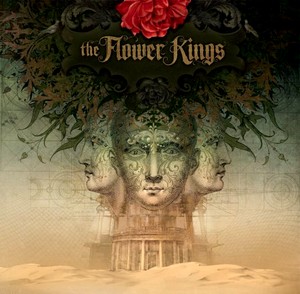
Unlike Eric Perry in his earlier, excellent review, I approached the new Flower Kings album from a position of relative ignorance. I greatly admire Roine Stolt’s work with Transatlantic, but I do not have any Flower Kings in my music library. However, after listening closely to Desolation Rose the past few days, that is about to change!
21st century media provide wonderful benefits (could something like Progarchy have even existed 15 years ago?), but any technology can also be perverted into something terribly harmful. Desolation Rose is a dark and brooding jeremiad on the dangers of corrupt media and government, perpetual war and violence, and religious fanaticism. Freedom is not a given, and Desolation Rose is a dire warning to those who would trade it for “security”, whether by indiscriminately believing what governments and mainstream media tell us, or by neglecting critical thinking when it comes to the claims of deceptive religious figures. Each song segues seamlessly into the next, reinforcing the overall impact of the lyrics. It may take a few listens for them to take hold, but once they do, they are very powerful.
A sampling of some of the most memorable lines (as best I can decipher them; I do not have a lyrics booklet):
“Lies bring comfort to the king and his nation/Like fools, we just stare at the sun.” (‘Tower ONE’)
“In the silent soil of Eden lie the bones of a predator/From the sun and the stars, a dreamless penitentiary.” (‘Sleeping Bones’)
“In silent graveyards we look for saviors/A promised land beyond our prayers” (‘Desolation Road’)
“So if you follow, go look beyond the lies/A brand new kingdom will brighten up the skies/Close to the sea, the river’s getting wider/Take off the blinders, and love will take you higher” (‘Resurrected Judas’)
“We are just the silent masses/The things you need are out of fashion/And so the clock keeps ticking out of time” (‘Silent Masses’)
“When a man is not a man, but hostage to machinery/Will they ever let you out from this dreamless penitentiary?” ‘(Last Carnivore’)
“So the state has become the offender/To the point where there’s no turning back/Now you dream of your new independence/While they tighten their grip round your neck” (‘Dark Fascist Skies’)
“We are stardust and we’re sun-kissed/We are brothers and still we’re strangers” (‘Blood of Eden’)
Just as words and phrases are repeated in the songs, musical themes recur throughout, making the album a remarkably cohesive work. The propulsive drumming of Felix Lehrmann is terrific; Tomas Bodin’s manic organ locks horns with Roine Stolt’s lead guitar and musical sparks result. Hasse Froberg’s vocals are outstanding – full of dark menace one moment, and aching lament the next. Jonas Reingold’s bass work is as melodic and inventive as Geddy Lee’s.
Highlights are ‘Resurrected Judas’, which has a nice “Trick of the Tail”-era Genesis vibe and a graceful, loping guitar solo; the straight-ahead rocker ‘Silent Masses’, with its jaunty piano riff and nimble bass line; and ‘Last Carnivore’, which is very dark and oppressive until a key change brings relief and light. ‘Last Carnivore’ is representative of the album as a whole – from the first track, the band creates an atmosphere of conflict, darkness, and oppression which isn’t relieved until the beautiful and stately ‘Blood of Eden’ makes its appearance near the end. Hearing it is like seeing clouds part and the sun shine through after a violent thunderstorm. However, lest we think everything’s going to be fine, the ‘Silent Graveyards’ show up one last time in a musical coda that ties together the various themes masterfully. Froberg’s voice rises as if he’s framing a question, and it is unsettling to realize that ‘Dark Fascist Skies’ are always lurking around the corner.
With Desolation Rose, the Flower Kings have produced an album of extraordinary power and depth. Lyrics and music combine to pack an emotional punch that cannot be ignored. Detta är en att älska.
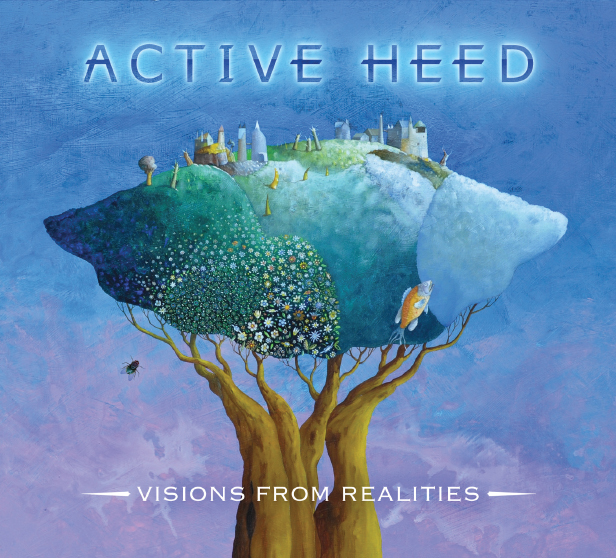
If you are in the mood for something fun and light, I recommend Active Heed. The band is the brainchild of Umberto Pagnini, and their new album is Visions From Realities. Stylistically, it is all over the map, and I mean that in a good way. I hear a strong ’60s folk/rock influence in songs like “FFF Flashing Fast Forward”:
While the gorgeous “The Weakness of Our Spinning” sounds like an outtake from Lindsey Buckingham:
Listening to the album in its entirety gives me the sense that I’m peeking into an artist’s sketchbook; most songs are relatively brief, and the melodies have a charming, playfully raw feel to them. Take a listen to the under-two-minute pop blast of “Awake?!”:
The band has generously posted the complete album on Soundcloud, and you can listen to it here. Visions From Realities is more evidence that we are in the midst of a historic explosion of excellent progressive music, and they certainly deserve a wide audience. It would be a shame for this gem to be missed.
Sometimes you have to put aside the extended epics and experience the simple pleasure of a nicely crafted pop song. With that in mind, here’s a playlist of recently released pop-like songs that prog-lovers can enjoy without guilt:
1. Sound Of Contact: “Not Coming Down”. Coming from their extraordinary album, Dimensionaut, this catchy tune has all the right ingredients: wall-of-sound production, rich vocal harmonies, an eminently hummable chorus, and they even sneak in a Beatlesque bridge. Take a listen, if you don’t believe me:
2. Days Between Stations: “The Man Who Died Two Times”. I’ve written about the wonderful album this track appears on in a previous post, and it features a delightful cameo by XTC’s Colin Moulding. It has an irresistible beat married to an insistent synthesizer riff, with Moulding’s multitracked, wry vocals floating over the controlled chaos. Think classic Alan Parsons Project mashed with 10CC, and you get a glimmer of the genius of this song. Go ahead and spend a buck for the mp3 of it here. You won’t be disappointed.
3. Sanguine Hum: “The Weight of The World”. Okay, this one is almost 15 minutes long, which qualifies it as a genuine epic, but it is so effortlessly melodic and uplifting I have to include it. I’ve always thought Sanguine Hum’s secret influence was Jellyfish, and it’s hard to deny that here. If Jellyfish and “One Size Fits All”- era Mothers of Invention had a child, it would be this track. It lilts, it waltzes, it almost skitters out of control, but it never loses its pop appeal. The first 37 seconds of their promo for the album are taken from this near-perfect song:
4. Big Big Train: “Uncle Jack”. I defy anyone to listen to this song and not end up grinning ear to ear. A jaunty tempo provides a fertile bed for lush vocals that sing the joy of taking a walk outdoors. And when the counter-melody hits at 2:40, you’re transported to paradise. Listen below (but buy the whole album, English Electric Part One):
5. Arjen Lucassen: “E-Police”. It can’t be an accident that Lucassen’s “E-Police” recalls the glories of late-70s Cheap Trick (“Dream Police”?). A big helping of glam rock that will leave you hitting Repeat on your player.
6. Gazpacho: “Mary Celeste”. A Norwegian band does Celtic music, and creates a pop masterpiece. A delicate intro on mandolin and piano blossoms into a full-blown production that includes accordion, guitars, violin, and masterful vocals. It doesn’t hurt that the melody compels you to get up and move.
So there you have it – a playlist that you can use to seduce your friends who are woefully ignorant of prog into the beauty of that genre, or one that you can use yourself when the occasion calls for some sing-at-the-top-of-your-lungs music. Enjoy.
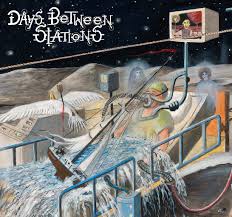
2013 has already shaped up to be one of the most bountiful years ever for prog. Consider a few of the outstanding albums that have already been released: Big Big Train’s English Electric 2, Cosmograf’s The Man Left In Space, Bruce Soord/Jonas Renkse’s The Wisdom Of Crowds, KingBathmat’s Overcoming the Monster, Sanguine Hum’s The Weight of the World, Sound of Contact’s Dimensionaut. Add to that list Days Between Stations’ In Extremis, which has taken up permanent residence in my home CD player and my iPod.
Days Between Stations, based in Los Angeles, is Oscar Fuentes Bills (keyboards) and Sepand Samzadeh (guitars). In Extremis is only their second release, but it possesses the maturity and excellence of a far more experienced group. Their 2007 self-titled debut consists of five extended instrumentals with some wordless vocals (plus two “intermissions” of sampled conversations), and is top-notch prog in its own right. The opening track, Requiem for the Living, begins with a beautiful yet mournful theme on synths and piano, which eventually develops into a slide guitar workout that would do David Gilmour proud. According to Samzadeh, it was inspired by Gorecki’s Third Symphony, also known as his Symphony of Sorrowful Songs. The album concludes with the epic Laudanum, which never loses focus or power over the course of its 22 minutes. It includes ambient textures, jazz fusion, and, of course, lots of prog guitar!
While Bills and Samzadeh were ably assisted on their first album by Jeremy Castillo (guitars), Jon Mattox (drums), and Vivi Rama (bass), for In Extremis, they have taken things to an entirely new level. Billy Sherwood (Yes) is sharing production duties with Bills and Samzadeh, Tony Levin (King Crimson, Peter Gabriel, and many others) is on Stick and bass, Colin Moulding (XTC) lends his voice to a song, and Rick Wakeman (Yes, etc.) contributes some mellotron and minimoog. In a fitting way, the late Peter Banks (Yes, guitar) adds his magic to several songs. As a matter of fact, these are Banks’ last recorded performances.
In Extremis begins with a massive fanfare featuring the Angel City Orchestra that becomes the overture for the album. The most obvious difference with this set of songs is that we now have vocalists singing lyrics! Billy Sherwood sings in the Floydian Visionary, Eggshell Man, and the title track. Thematically, the lyrics convey the loss and regret of someone near the end of his life:
There’s no replacing what’s been left behind
There’s no returning to that place and time
In sight were all the distant horizons
In flight were all the dreams alive
(From Visionary)
A high point is Colin Moulding’s marvelous vocals on the wry pop of The Man Who Died Two Times. Set to an irresistible, bouncy ’80s vibe, Moulding sings of
All the angels cried
For the man who died two times
And they wiped away tears of laughter
And helped him survive
Going station to station
Always ready to revive
Next up is a touching string quartet piece dedicated to Peter Banks, which is followed by the crowning glory of the entire album, Eggshell Man. It features a delicate accoustic guitar intro with gorgeous vocals by Sherwood and a mellotron flute solo by Wakeman. It soon picks up speed and intensity, including a section with some Middle Eastern flair. The tempo ebbs and flows over the course of twelve minutes, Wakeman has a terrific minimoog solo, Levin is rock-solid on bass, and Sherwood sings of “best laid plans” and empires returning to dust. It’s one of the finest songs released this year.
Believe it or not, there is still the title track to come, and it’s a monster, clocking in at 21:37. In Extremis is a requiem for a man (the Eggshell Man?) who realizes too late the brevity and preciousness of life:
Images upon the screen
Recanting all the memories
From the first breath
To the last goodbye
Dust dancing on beams of light
Most groups would give anything to achieve a track like In Extremis. Days Between Stations pulls it off with ease, and manages to precede it with seven other tracks that are its equal.
There have been some extraordinary releases in prog music this year, and Days Between Stations’ In Extremis is near the top of the heap. This is an album not to be missed.
Kscope Music puts out an entertaining and informative monthly podcast featuring conversations with and performances by the label’s artists. It’s free, and you can subscribe to it via iTunes, or listen to it here.
This month’s podcast focuses on Nosound’s new release, Afterthoughts (see our review of this extraordinary album here). It features interviews with Giancarlo Erra and Chris Maitland, and we’ve embedded it below for your convenience!
I’m a music addict. When I buy an album, it’s as much to get that rush of anticipation before I first hear the music as it is to actually listen to it. So, it’s wonderful to discover a new artist whose work more than justifies that initial hope of musical pleasure. Tim Morse is such an artist. His latest album, Faithscience, is an outstanding collection of progressive rock. I had never heard of him, but Faithscience showed up in the Progarchy Dropbox folder, I had a lot of yardwork to do, so I downloaded it onto the trusty iPod.
Four consecutive listens later, I’m still as excited about this guy’s music as I was the first time I discovered Spock’s Beard. (By the way, Tim is not related to Neal Morse.) My initial impression was of a definite Yes influence, and after I did a little research I found I wasn’t too far off-base; Tim is the author of Yesstories, a track-by-track history of that band. However, if you listen to Faithscience with the deliberate attention it deserves, you’ll notice a host of other influences; I hear Ty Tabor (King’s X), Roine Stolt (Flower Kings & Transatlantic), Toy Matinee (featuring the late, great Kevin Gilbert), some 70s Kansas and Genesis, and a lot of classic Todd Rundgren (think “A Wizard A True Star” era). Morse is a multi-instrumentalist who sings and plays keyboards, as well as acoustic & electric guitar.
That’s not to say Mr. Morse is merely an imitator of those influences. They serve as a springboard to create an incredibly beautiful work that is as individual and groundbreaking as any prog classic. On his website, Tim says the initial idea was to produce an album based on the life of Charles Lindbergh. However, the songs soon expanded to embrace a much larger concept. The first two-thirds explore different aspect of journeys, while the final third is about farewells.
The first highlight is “Voyager” which is about Lindbergh’s transatlantic flight. It features some very nice keyboard solos in the vein of classic Pink Floyd and Weather Report(!). Next is “Closer”, which features a beautiful piano motif that reappears throughout the song. At first, it seems to be a standard song about getting close to a romantic partner, but it ends up having a spiritual aspect to it. It also features a killer guitar solo (video below). This is followed by a classical guitar interlude accompanied by evening crickets that segues into “Numb”, which is inspired by the Lindbergh baby kidnapping and chronicles the emotional devastation that follows a personal tragedy. It’s an acoustic piece, and it is incredibly moving.
“Myth” is an Orwellian warning about the dangers of an all-powerful state.
It’s an iron fist inside a velvet glove
I despise everything we’ve come to love.
…And it’s no mystery how this myth
Becomes our history.
Let us help you.
Truth shall make you free.
Next up is “Found It”, which features some warm, 80’s-era synths before the guitars come crashing in. It’s about leaving behind old ways of life in the search for salvation. Morse’s collaborator, Mark Dean, lays down the best guitar solos of the album on this track.
In “Rome”, Morse laments the decadence and complacence of our times by comparing them to the end times of the Roman Empire. This might be my favorite track, with the lyrics
The empire is crumbling
Sending castles into the sea.
Opportunity dissolving
Still believing we are free.
“Rome” also features a terrific violin solo by Kansas’ David Ragsdale (video below).
“The Last Wave” is a mostly instrumental track that consists of various riffs and melodies thrown together La Villa Strangiato style. We’ve got jazz vibes and trumpet, metal guitar, prog keys, and some crazy time changes on this one.
Wrapping things up are two tracks that complement each other, “Afterword”, and “The Corners”. The former is a poignant farewell to a soul mate, while the latter is a heartbreaking song about the brevity of life on a beautiful world that few truly appreciate.
Self-produced, Faithscience is a triumph. It is amazing to me that a musician is able to put together an album of this quality without any major label support. Do yourself a favor and support his art by picking up this album now. You won’t be disappointed.
Continuing its series of top-quality reissues of The Pineapple Thief’s back catalog, Kscope Music has just released their sophomore effort, One Three Seven. It’s a surprisingly mature and accomplished set of songs. Bruce Soord’s vocals are reminiscent of Thom Yorke’s, but distinctive enough to not be derivative. The first track, “Lay On The Tracks” and the sixth, “Ster”, are among the poppiest songs he’s ever written. “Perpetual Night Shift” features a laconic melody with a droning bass line. I like it a lot. “Kid Chameleon” was included on the 2009 compilation 3000 Days, and it is outstanding. In it, Soord channels David Gilmour for an exquisite guitar solo that perfectly complements a memorable song. “Release the Tether” is an instrumental raveup that is relentless in its drive.
There isn’t a single clunker among the thirteen tracks, but the highlight is the nearly twelve-minute track, “pvs”, which begins with a beautiful acoustic setting, transforms into Led Zep heaviness, and ends with a classically styled piano/cello/guitar coda.
Originally performed, recorded, and mixed by Soord between June 2000 and March 2001, 137 is fascinating to listen to as a document of him developing his minimalist technique of composition. My initial impression is one of immediacy – Soord is a man with something to prove, and he isn’t afraid to get in your face, both musically and lyrically. The album features some of his most aggressive guitar work, along with lyrics like this:
it’s taking a while he said
keep shouting at the wall
never get out, he said
unless you take the fall
taking too long, i said
i cannot climb this wall
it’s taking too long, i said
watch me as i fall….
If you’ve not heard The Pineapple Thief, 137 is an excellent entry point. It nicely balances Bruce Soord’s deft pop touch with his heavier side. Having a length of more than 70 minutes, this is a lot of music to absorb, but it never drags. And hey, you have to admire a band that uses a Fermat spiral for the cover art!
“I think it’s slightly more complex with Porcupine Tree, which can’t really happen without me instigating it and being the main writer and director of that situation — so, that’s more problematic,” Wilson added. “I don’t have time in my life to do that, and what I’m doing now. So, I guess I have made the decision, right now, to concentrate on the solo career. But that’s not to say that the band has broken up or anything like that. It’s always conceivable that we could get back together in a year or five years, or 10 years. I really can’t say. There are no plans at the moment.”


 Kscope Music
 Continuing its series of top-quality reissues of The Pineapple Thief’s back catalog,
  Prog Magazine has just reported
 Progarchy