Steve Adey – ‘All Things Real’ – a personal highlight


 Image


As a long time Blue Nile fan, and in particular their wonderful, evocative, rain-swept masterpiece that is ‘Hats’, their later recordings were something of a disappointment as Paul Buchanan moved towards an almost cabaret style of pared down and rather drab songs seeming to rely on past glories. Their earlier recordings told micro-stories of moving ordinariness of wet, dreary Glasgow streets and city life in winter with characters struggling against day to day life.

One the best pieces of music bar none to listen to whilst driving along a city street, in the dark, in the rain is ‘Headlights on the Parade’ – I could quite simply have this on repeat for hours on end it’s that good.

‘The Downtown Lights’ is a must-listen with the stunning semi-spoken section driven along by the synths and electro-drum beats a real highlight: 

The neon’s and the cigarettes

Rented rooms and rented cars

The crowded streets, the empty bars

Chimney tops and trumpets 

The golden lights, the loving prayers

The colored shoes, the empty trains

I’m tired of crying on the stairs

The downtown lights


What made me notice Steve Adey’s magnificent album several years ago was the producer – none other than Calum Malcolm who mastered the Blue Nile albums.  I’m a bit of a sucker for good production and have often followed the producer rather than the artist.  Daniel Lanois being a good example as I remember the fantastic sound of the Joshua Tree by U2 which he produced.  He then added the same magic to Emmylou Harris’ ‘The Wrecking Ball’ which led me onto his own albums and a brief sojourn with Creole music.  The way music trails twist and turn and take you down, sometimes blind, alleys never ceases to amaze me.

The other startling thing about ‘All Things Real’ is the similarity to the Blue Nile sound, not surprising considering the producer, and in particular the vocals.  Steve Adey’s voice has the same timbre as Paul Buchanans but also has a deeper warmth – both sharing the same knack for extracting every ounce of emotion from each note.

‘All Things Real’ is a beautifully produced piece of work. The sound is very ‘close up’, you can hear fingers scrape on guitar strings, you can hear the air in the harmonium, you can hear breathing between words – you can almost hear the creak of wood in the chairs as the musicians shuffle around whilst recording.

The album has a very organic feel as though it was laid down with only a few takes,  if not just one take in some cases, and it resonates with a sombre, seriousness that to some ears could come across as maudlin.  To my ears it is beautiful, deep and rewarding.

There are elements of Talk Talk in the hushed drama and great swathes of the Blue Nile in the vocals and production qualities. But the overall feeling is of high quality, structured songs put together with absolute love and care.

Take the two cover versions that bestride this album – ‘I See a Darkness’ and ‘Shelter From the Storm’.  Adey does not just play it by the book, he strips these two classics down, re-builds them and makes them entirely his own.

Dylans ‘Shelter From the Storm’ takes on epic proportions as Adey slows it down to an almost funereal pace with each verse adding extra layers as the drama of the song unfolds – at one point you can sense him almost spitting out the words in barely controlled emotion.  This is a stunning track.

A re-working of Will Oldham’s ‘I See a Darkness’ is no less stunning and is my personal favourite on the album – a brooding, dark masterpiece that is quite frankly a huge improvement on the original and also on the Johnny Cash version. This is a sweeping and emotional tour-de-force and being the second track on the album makes you wonder how it can go on. The power is quite intense as he sings …..


         Many times

            We’ve been out drinking

            Many times we’ve shared our thoughts

            But did you ever, ever notice

            The kind of thoughts I had


Well go on it does – there is not a weak track.  There is a rolling version of a sea-shanty with ‘The Lost Boat Song’ which carries on the mournful feel throughout the album and there are also very intense moments of simple personal feelings, ‘Tonight’ being a good example.


Tonight

This very silent night

I give it all to you

I render it to you

Through love and war and hate

And tomorrow I must fight

Amazed and bleeding child

I send my love to you


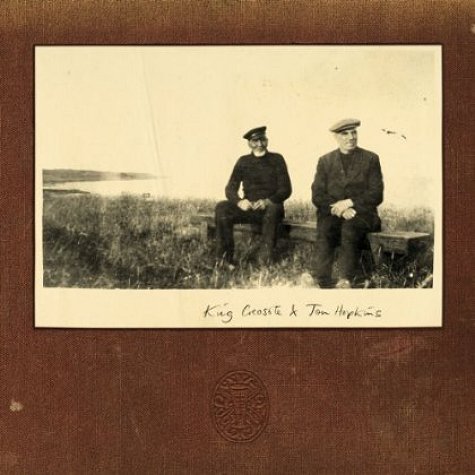
This is one of those albums I find hard to categorise when someone says ‘what type of music is it ?’. In many respects it is folk, with the same home-spun vibe as, say, King Creole & Jon Hopkins’ ‘Diamond Mine’.  In other respects it has the sweeping panorama of earlier Blue Nile which is definitely not folk.

The best thing is to simply recommend it and let you, the listener, decide which, if any category it sits.

I hope you are rewarded as much as I have been over the last six years.


Powerful, moving, emotional – but not Prog

Henryk Gorecki

Symphony No 3 – Symphony of Sorrowful Songs

 Image


I’ve had this album for many years now, I can’t recall what drew me to it but I’m thankful for whatever or whoever did.

Quite simply this an astonishingly moving piece of work and one which, if not listened to in the right mindset, could quite easily be emotionally devastating. 

I’m not going to critique this album from a musical or technical point of view as I do not have those skills, nor do I profess to know enough about this genre to compare this to other classical works. 

The title is enough to warn you this is not music to listen if you are looking for upbeat, stirring music.  For that look elsewhere. For a deeply profound and challenging hour where you can lose yourself entirely I highly recommend you set time aside and connect with this work of beauty.

There are three movements with each one based on motherhood, separation and loss.

The first and third movements are from the perspective of a mother mourning a lost son whilst the second movement (my personal highlight) is from the perspective of a young 18 year old girl mourning separation from her parents whilst in a Gestapo cell. 

The piece starts very quietly and as described in the liner notes :


“the instrumental voices enter in a stairway of fifths that rises through four octaves and eventually encompasses all eight pitches in the Aeolian mode (on E) characteristic of the 24-bar cantus firmus


If that description is too technical (it is for me…) all I can is you are drawn into the music by gentle waves of gorgeously textured strings that lap at your consciousness. Then at the 13 minute mark the soaring soprano voice of Dawn Upshaw is like sun breaking through the clouds, illuminating darkened hills then just as quickly, the clouds form again and we are left with the sweeping vocals dripping with sorrow, pain and longing.

The build-up of tension is almost unbearable and yet quite, quite beautiful.

The words to this first lament include the heart-breaking words as follows :-


My son, my chosen and beloved

Share your wounds  with your mother

And because, dear Son, I have always carried you in my heart

And always served you faithfully

Speak to your Mother, to make her happy

Although you are already leaving me, my cherished hope


After this powerful vocal recital which at 16 minutes in reaches a hugely powerful and moving section, we are left with graceful strings like deep ocean waves swelling and surging but never breaking, giving us time to reflect and gather our thoughts.  Eventually the sonorous cello’s draw this stunning movement to a close.

The second movement is based on an inscription found in a Gestapo cell in Zakopane written by an imprisoned 18 year old girl which read :


         No, Mother, do not weep

            Most chaste Queen of Heaven

            Support me always

            “Zdrowas Mario”   (‘Ave Maria” in Polish)


This is my favourite piece.

Tere is a surprisingly bright start, to reflect the youth of the subject matter perhaps, but then events take a dramatic turn very quickly as the soprano of Dawn Upshaw comes in early on adding a foreboding tone alluding to the darkness of the cell.  The notes refer to an ‘imprisoned tone’ in her voice but which provides “a single shaft of vernal sunlight’ as the piece progresses.

I understand this movement was performed live in almost complete darkness with subtle lighting effects. I cannot imagine how moving this piece must be in a darkened concert hall.

Again, the only way I can describe this is like waves or looking at a range of mountains that endlessly roll on and on.  It is soothing yet haunting, peaceful yet disturbing.  There is an aching sense of loss and grief that can be overwhelming at times.

The third and last movement continues the themes of sorrow and loss and is based on a Silesian folk song of a mother looking for her son after the Silesian uprisings.

The overall theme musically is similar and continues the ebb and flow of lush sweeping strings and soaring soprano but there is a little more complexity in this piece which provides a further 17 minutes of stunning, powerful music.


So, I highly recommend this work and as a more modern counter-part, I would also recommend the works of MONO – a Japanese group who utilise many of the same moods, tones and swathes of tidal sound, albeit with more modern instruments.


Thanks for listening !

A quick review of a lovely album …

King Creosote and Jon Hopkins – Diamond Mine

Just a quick recommendation for a wonderful album full of beauty and stillness and warmth ….

From the opening recording of a local café where locals are just simply being friendly and going about their business we are drawn into a cosy,  world of cardigans, low-fi, old boats, relationships, struggles and raw life from Scotland.

There are little stories and reflections on going old :

“I’ve gone silver in my travels

Growing silver in my sideburns ….”

.. and snippets of real life

“You and I we once looked great

You and I sounded so fine …”

…tinged with pure love and grief

“I won’t let you fall as low as I’ve been…”

There are beautiful soft harmonies, hushed and plucked strings, earthy violins and jaunty banjoes softly backed with subtle percussion.

Highly recommended.

A journey that continues…..

My earliest recollection of being ‘into’ music was as a young teenager and listening to the Beach Boys. I loved their stuff when everyone else was into T-Rex, Roy Wood, Wizard the Slade and all those other 70’s icons. 

As much as liked the happy surf vibe I remember being drawn to the sadder and minor-chord tinged tracks such as ‘Don’t Worry Baby’ and ‘In My Room’ – a particular favourite to this day. Even back then I would delve into an artists catalogue, God knows how back then, but I did.  I recall searching in record shops for albums that were less popular and seeing the cover for ‘Surfs Up’ – a haunting figure of a wilted man on a tired horse in sepia-blue tints.

This was a major discovery.

Dark and dense, involving and difficult, the music was stunning and the definite weirdness of the title track, ‘Feel Flows’ and ‘A Day in the Life of a Tree’ would define my musical journey in the coming years. Odd time signatures, raw emotion, depth of feeling and musicality would all surface on most of my discoveries.

The re-emergence of Brian Wilson in the past few years has been a welcome sight and it is good too see his genius recognised whilst at the same time another genius of the same surname is making his mark in the modern prog world. 

I remember the day I was listening to a stunning track (‘Leaving This Town’) on the Beach Boys’ less well-known album , Holland, when my older brother popped his head round the door and said “Hey, titch, listen to this..” 

The next few moments were to define the rest of my teenage years and were probably responsible for me making a complete mess of my Grammar school education !

‘Dark Side of the Moon’ was playing, can’t remember which track, but I remember standing there thinking how stunning yet strangely familiar this music was.  Needless to say the whole Floyd thing was huge – they are still one of my favourites and recently seeing Brit Floyd live (and doing more than justice to the original band) just reminds you how strong and involving this music is 30 years later.

‘Animals’ stood out for me as it was released at the height of punk in the UK and created a huge stir, even to the extent of NME (New Musical Express) eulogising about it at a time when the Floyd, Genesis etc were seen as dinasours.

Perhaps the next milestone was the Rush era.

As ever, I seemed to be into something only a few other ‘chosen’ people understood but the chancing upon ‘2112’ was as strong a feeling as the Pink Floyd moment. I’ve mentioned this on tweet before, but we even queued outside Manchester Apollo overnight, on the pavement, in sleeping bags to get tickets for their ‘Farewell to Kings’ tour. We had races across the road to keep ourselves entertained, hopping like idiots in our sleeping bags.

We got tickets for the front row for the first three nights and also tickets for the front row of the circle for the last two nights so we could watch the lightshow !!  Five nights in a row – and I remember being amazed by ‘Xanadu’ each time.

Brilliant times and again,  glad to see them doing so well now even if my enjoyment of them now is not quite the same.

The dead years intervened when kids, career and growing up got in the way of music but not without regular forays into post-rock (Godspeed You Black Emporer, Mono, Explosions in the Sky et al) and more avant-garde stuff like Sigur Ros in their earlier days (Aegetis Byrun and ()  ).  Even trips down alt-Americana way proved fruitful with magnificent artists like The Willard Grant Conspiracy, The Walkabouts and others showing you don’t need to stick rigidly to one genre.

And so to the present, and what a bloody fantastic present time it is with an overflowing and wonderfully euphoric progressive rock scene.

A chance reading of a Sunday Times article which mentioned someone called Steven Wilson led to the Pandora’s Box of Porcupine Tree which is about as good a back-catalogue as you will find. A massively deep collection of stunning tracks with wide-ranging influences that just get better with each listen.  A whole scene has been re-discovered and a scene that is lively, modern, relevant yet harks back to the days when music was made for music’s sake and not just to fill stadiums and top the charts.

I recently saw The Pineapple Thief live in Manchester, standing on the front row, about two feet away from them, and was stunned by how skilful, committed and talented the people in this scene are.

And finally, in this brief whirlwind tale of JD’s musical journey, we come to what is quite simply the best music I have ever heard – Big Big Train.

Those who may know me from Twitter will probably know that I run, bike and hike on the hills in my area and I have never known music that connects so sublimely to what I do and what I like.  ‘The Underfall Yard’ has a collection of tales that paint a gloriously evocative picture of the engineers that built England. Heroic characters propping up cathedrals and teams of men digging tunnels through the landscape, set to the most note-perfect and emotion-wrenching music you can imagine. 

Their recent masterpiece ‘English Electric Pt 1‘ has been detailed enough in these pages (and by a certain Bradley J. Birzer) that I cannot improve on the reviews or details provided by better people than me !

So there you go, a snapshot of 35 years or so condensed into a few words.

Thanks for listening !  There will be more to come ….. J