A Brief 2013 Albums Of The Year List

I’ve been keeping an “Album Of The Year” list going back to 1977 or so, before which I didn’t own or properly listen to any music of note. Since then, there has usually been one album every year that stood above the others, or, if I’m lucky, an album that I’d truly cherish for years to come.

Over the last 10 years, I’ve been fortunate to have encountered a few such albums: “Everything Must Go” by Steely Dan, “Everybody Loves A Happy Ending” by Tears For Fears, “Milliontown” by Frost*, “English Electric Part 1” by Big Big Train, and “The Tall Ships” by It Bites. Unfortunately, there have been a few years where I’ve had to pretty much force myself to pick an album that might not otherwise top a “best of” list, simply because nothing really spoke to me that year…let’s not list those, eh?

For 2013, I can list three albums that meets at least one of two criteria: Will I want to listen to these again in 2014 and/or will it be an album I treasure for a lifetime.

They are:

“English Electric Full Power” – Big Big Train

Yes, nearly half of this album was the Album Of The Year for many in 2012 (including myself), and I’m not sure “English Electric 2” would have topped my AotY list by itself – it’d have been a strong #2 for sure – but to hear the new tracks from “Full Power” arranged among the revised tracklisting for this, the band’s final statement for this project, makes this an album that easily meet both criteria noted above.

Despite “English Electric” not being a concept album in a story sense, I do struggle a bit with how the leadoff track, “Make Some Noise,” fits in with the rest of the album, but having been that kid they sing about, I simply imagine how carefree life was in the summers of my youth, being able to play music with friends, before true responsibility knocked.

I can’t really add any meaningful superlatives to my appreciation of this album that haven’t been said time and again by others. Suffice to say: It’s magnificent.

“Dream Theater” – Dream Theater

Despite my glowing review of “The Enemy Inside,” the first single from Dream Theater’s self-titled album, I began to think that if I was in for an album-length assault in the vein of that track, this wouldn’t be a standout album for me. It’s obvious that I hadn’t learned to listen to an entire album before judging it, because this album stands out as one of their finest and a fine successor to “A Dramatic Turn Of Events.”

With the talent stockpiled in this band – especially now with a drummer in Mike Mangini possessing the technique and training on par with Jordan Rudess – it would have been easy for Dream Theater to overplay in every time signature for 75 minutes straight, but what we get instead is an incredibly balanced effort that keeps the technical playing mostly in check, letting the music breathe.

If I have any gripes – and this may be my problem – it’s that while each section of “Illumination Theory” is fantastic on its own (how about the section with the strings!), I was hoping the end of the track would reprise the themes from the beginning. Otherwise, it feels to me as if they took us out on a journey and didn’t quite bring us back (of course, that’s well within their rights as artists). Yes, I do hear the reference to one of the early guitar riffs later in the track, but somehow the end didn’t “tie the room together.” 🙂

However, I reserve the right to be wrong here, so fellow progheads, I’m counting on you to set me straight if I’m missing something!  In any case, don’t miss this album.

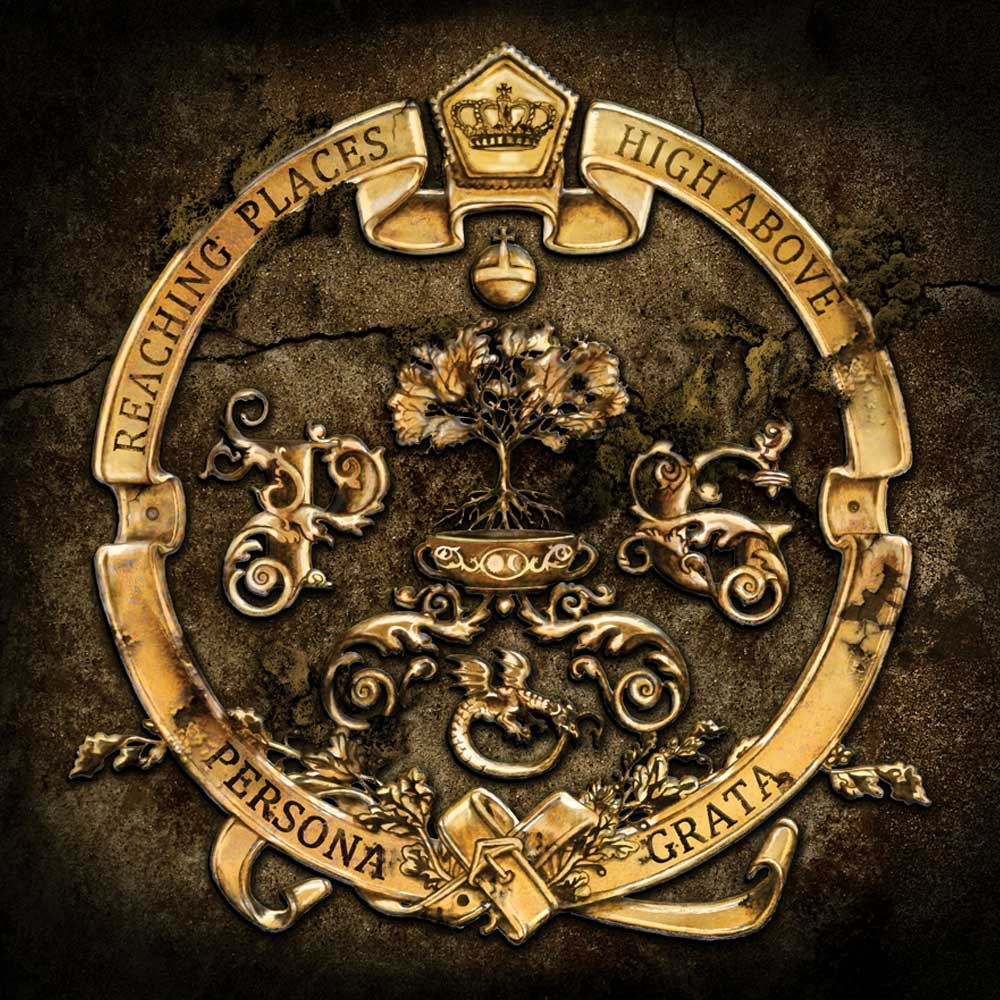
“Reaching Places High Above” – Persona Grata

Just as Big Big Train’s “English Electric 1” was a late-in-the-year find for me in 2012, this release from Bratislava’s Persona Grata (nice rhyme there) was that way this year. This six-song effort features three prog tunes in the vein of Dream Theater, plus a three-track instrumental arc in the middle that takes you on a thematic journey paralleling the titles of the tunes.

Beyond the writing, singing and playing on this album, I was most impressed with their attention to the arrangements.  Of the many prog albums that I gave a spins to this year, “Reaching Places High Above” grabbed me from the first listen.

******

Finally, if I have a single of the year award to bestow, it’s for “Pale Blue Dot” by Sound Of Contact, part of a fine overall album. I dare you not to have Simon Collins’ melodies from the verses and chorus stuck in your head for days on end.  Great track!

Of course, there are many more albums out there likely deserving inclusion on my list, but these three (and Sound Of Contact) will be the ones that I’ll be spinning for years on end. Since our community of proggers is a tight-knit one that includes both artists and fans in a way that I doubt most other genres do, artists should note that I’m often a “late bloomer” with many albums, whether because it was completely off or under my radar, so don’t be surprised if I someday anoint your album as AotY that was released years before, like I did with “Once Around The World” by It Bites; it “only” took me some 20 years to learn who they were!

Another brilliant year for progressive rock, to be sure!

Rush’s “Clockwork Angels Tour” Straddles The 80’s and The Now

Rush CA

Long ago, a live album from Rush was, for many of us fans, on par with a studio release from our heroes.  They followed a pattern of a live album following four studio albums, and so it was from “All The World’s A Stage” through “Different Stages.”  We’d make sure to tune into rock radio hoping to hear cuts from the new live album and we were certainly in front of the record shop on release day to snap up a copy to hear our favorite band bring it live.

Setlists aside, we remember “All The World’s A Stage” for showcasing the raw power of a young power trio on the “2112” tour, we remember “Exit…Stage Left” as being the slick, overdubbed effort chronicling the “Moving Pictures” tour (ever notice that the crowd cheer on “The Spirit Of Radio” is the same as the cheer following the song?), we remember “A Show Of Hands” capping off the synth/sequencer-heavy era of the 80’s, and we remember “Different Stages Live” as a possible swan song for the band following the “Test For Echo” tour and the well-documented tragedies in the personal life of Neil Peart.

Since reforming with “Vapor Trails,” Rush has made live albums a regular post-tour offering, and so for this fan, they’re a bit hit and miss with me as they don’t differ a ton beyond the new music and them throwing in select tunes from the past such as “Natural Science, The Camera Eye,” and others.  I own “Rush In Rio” and “R30,” but have skipped the last two just as I skipped those tours, though I *have* bought the DVD’s knowing their live show is as much to be seen as to be heard.

With “Clockwork Angels Tour,” my interest was more in the 80’s material than the new material as I was one of the few who really didn’t embrace the “Clockwork Angels” album. Producer Nick Raskulinecz, a professed Rush fanboy, has been good at coaxing great performances from a band that could go on autopilot at this point of their career, but the one trap this fan thinks he falls into is attempting to pull them all the way back their more raw, power trio days, playing up major chords and hard rock concept of Rush instead of the more epic, progressive route they took in the late 70’s and the melodic route they took during the 80’s.

“Clockwork Angels” saw Rush executing an album-length concept for the first time, and by its release, I found the concept a bit tired from the release of the first two tracks a few years before, the tour that followed those two tracks, and the companion book. I honestly gave “Clockwork Angels” a fair shake, but aside from “Caravan” and the incredible finale that was “The Garden,” the album really didn’t resonate with me, though of course, a decent Rush album is better than most bands’ best efforts, right?

“Clockwork Angels Tour” – let’s refer to it as “CAT” – kicks off with 1982’s “Subdivisions,” the leadoff track from “Signals” and a change in how Rush concerts start, followed by another album-opener in “The Big Money,” which like “Subdivisions” is a faithful reading all the way down to the synth patches, Simmons drum patches and all the keyboard “touches” found on “Power Windows.”

Rush continues its march through the 80’s leadoff tracks with “Force Ten” from 1987’s “Hold Your Fire,” which along with the previous two tracks are staples of previous tours.  With so many Rush live albums to judge “CAT” against and knowing they’re playing better than ever, it really comes down to setlists and the few ways the songs differ from the originals, for Rush rarely ventures away from the recorded versions of their songs.  With “Force Ten,” Alex Lifeson treats us to a guitar solo that’s much more involved and extended than the album version.

The 80’s theme really kicks in with “Grand Designs,” the second track off “Power Windows” and likely not played live since their 1986 tour.  Had I attended this outing, this would have been the point of the show where I’d have jumped out of my seat. “Grace Under Pressure” is next represented as “The Body Electric” continues the show’s romp through the 80’s. It doesn’t seem to hold up terribly well live until the solo section, where it’s full gallop by the band.

With a rhythm undoubtedly inspired from Frankie Goes To Hollywood’s “Two Tribes” (did I just say that?), we’re treated to “Territories,” which us old-timers know as the first track on side two of “Power Windows.”  It’s a grooving track and the band does a fine job with this reading, especially Peart, who has quite the rhythmic workout with all the percussion he triggers during the song.

From there it’s yet another 80’s favorite, “The Analog Kid,” which I believe saw it’s revival during the Test For Echo tour. The song served as a scorching counterpoint to the lush “Subdivisions” on “Signals” and, as expected, Lifeson is fierce with his solo on this one.  I’ve said this for years now, but with each tour, Rush simply get better and tighter with every outing, if that’s possible for band some 40-plus years into its career.

The band then jumps into the 90’s with what I think is one of their finest tunes in “Bravado” from “Roll The Bones.”  The high notes following the solo prove to be a strain for Geddy Lee’s voice, which is actually somewhat contrasted by his sampled background vocals, likely taken from the album.  We stay with “Roll The Bones” via “Where’s My Thing,” featuring Lee vamping a sweet bass solo before the familiar intro from Lifeson gets the band going. Midway through, Peart jumps into one of several drum solos in the show.  Though the man who my main drumming influence growing up has, IMO, long since been leapfrogged by other drummers in progressive rock, his solos are a show unto themselves.  “Far Cry” ends the set, after which the volume fades.

Signaling the start of “Clockwork Angels,” Rush dives into “Caravan” and we’re treated to band’s string ensemble, marking the first time ever the band was joined by backing musicians – if you can really call them that – for a full tour.  They help bring tracks such as “Caravan” and the album’s title track – one of my favorites – to life.  The band tears through the standout tracks from “Clockwork Angels” with fire; as is the case with many Rush tracks, they take on an additional energy when played live. Peart breaks up “Headlong Flight” with a cool drum solo break before Lifeson gives us the “By-Tor”-esque solo.

One of the highlights of any Rush tour is something new to our ears, and boy, do we get it here with “Peke’s Repose,” a lovely guitar solo from Lifeson that leads us into “Halo Effect.”  The solo is awash in effects but simply sparkles. They continue driving through “Clockwork Angels” and finally bring us to “The Garden.” Lee’s voice seems worn by this point in the show, but it’s a magnificent song, one that I think they could end their career on, though I suspect they’re not done yet.

The string section sticks around after the “Clockwork Angels” set to add flourishes to “Dreamline” from “Roll The Bones,” then we get what is arguably the most creative and melodic (!) solo of Peart’s career in “The Percussor.” Something tells me he’s got at least an EP in him of this sort of melodic drumming.

After revisiting the 80’s with “Red Sector A,” we get another highlight with the string section as they help take “YYZ” to another level, then the band finishes off the set with the trifecta of landmark tracks in “The Spirit Of Radio,” “Tom Sawyer” and the bookends of “2112.”  The album includes bonus tracks including a soundcheck recording of “Limelight” along with live takes of “Middletown Dreams” – one of my favorite tunes from the 80’s – “The Pass” and finally “Manhattan Project.”  “Power Windows” was certainly represented on this tour, huh?

If I have any criticism to make – and this is likely beyond his control – it’s that sadly, Geddy Lee’s singing is starting to morph into some sort of falsetto, likely from age and the toll of so many shows.  I started noticing this watching video of the “Time Machine” tour, but it’s all over this album.

For this Rush fan who cut his teeth on the band with “Moving Pictures,” “Clockwork Angels Tour” works beautifully for me as the band clearly wished to revisit their 80’s catalog.  The “Clockwork Angels” tracks are delivered with gusto and augmented beautifully by the strings, plus we’re treated to instrumental surprises by all three guys along the way. With this tour’s emphasis on the 80’s one wonders if the next tour – if there is one – might focus on tracks from “Presto,” “Roll The Bones,” the largely-ignored-but-fabulous “Counterparts,” and “Test For Echo.” Until then, this release with its bonus track are well worth picking up.

Scaling The Heights Of Heavy Prog – Persona Grata’s “Reaching Places High Above”

Reaching Places High Above

It’s probably a blessing and a curse that I tend to compartmentalize progressive rock into sub-genres in order to sort out what I’m hearing.  It’s likely a blessing in terms of having “signposts” of historical reference when trying to determine where a band’s music fits within the prog category, but perhaps a curse that I feel the need to shoehorn the band and music into a sub-genre in the first place, for we all know that progressive music rarely fits neatly into one “slot.”

No matter the reasoning, let’s just say that the Slovak proggers Persona Grata surprised the heck out of me with their new release, “Reaching Places High Above,” which for this prog fan fits nicely into the sub-genre where Dream Theater camps out – one that I’ll call “heavy prog” – and made this album an absolute pleasure to listen to.

“Reaching Places High Above” is at times aggressive, intricate, mellow, adventurous, and dynamic, but always progressive in scope, and a delight to listen to. Sound a bit like Dream Theater there?

It should. Listeners will be treated to a group that, like DT, fires on all cylinders with tight songwriting and arrangements, along with the technical prowess that easily puts them in a league with top-tier prog bands.  It’s worth mentioning in advance that the album is produced and mixed wonderfully, which can’t always be said for up-and-coming groups. It’s a big plus.

“Ace” preps us for the places we’ll go with some airline samples and radio dial tuning, eventually morphing into the track’s intro.  Those who may not be a fan of the two vocal wails at the beginning, fear not – it’s not indicative of what’s exclusively in store from the vocals department; singer/guitarist Martin Stavrovsky has plenty of range and, unlike some capable of wailing in prog, he doesn’t loiter in the high register all that much. The band moves from section to section in rapid pace with plenty of playing that’ll impress anyone who fancies quite a bit of playing in their prog.  However, they steer clear of what sometimes turns people off about virtuosic prog – shredding for shredding’s sake. The band does a fine job of keeping the song in check thematically and the song seems over before it starts.

“Edge Of Insanity” brings things down a notch with an intro electric guitar and flute (man, the flute sure is back in prog, innit?), moving to a first verse that features a lovely male/female harmony verse. The band then crescendoes with layers of aggressiveness for the next set of verses before heading back to the harmony vocals of the first verse. However, dust never settles on Persona Grata, for the prog returns almost as quickly, building to a heavy section of soloing.  Halfway though the track, the band pulls back to a section of acoustic guitar, flute and synth that brings us back to the feel of a couple of the early verses. They build back up to full-tilt, heavy prog, but seeing the bigger picture of arrangement, they bring it back down to reprise the intro.  Fab track.

The band then takes us on a three-instrumental, cross continental-themed musical journey starting with the brief “Istanbul,” which calls to mind elements of DT’s “Home” with sitar/guitar playing over a Tool-esque drum pattern. We’re then taken aboard the “Orient Express,” full of twists and turns in the vein of “The Dance Of Eternity” at nearly 10 minutes in length, then the band brings things to a close with the concluding “Venice” piece, done on harpsichord.

The album’s epic ender, “I Am You,” has an ambient start, then sees the band floating over an intricate, 5/4 piano part, then moving to a heavy yet cinematic feel that’s all ear candy.  Again, the band has a great ear for arrangements, never bleeding a riff to death and flowing from one section to another naturally. The song’s halfway point sees the band put the brakes on the heaviness a la Frost*, giving way to plucked strings that build into a full instrumental section. The harpsichord from “Venice” is back for part of the section and after one more “drop out” to a quiet section, the band cranks up to a fever pitch, followed by the obligatory anthemic finish, fading out to the ambient keyboards we heard at the beginning.

It seems like every year brings a surprise for me amidst the mass of prog releases; last year it was Big Big Train – truly a once-every-decade find for me – and this year has brought Persona Grata to the forefront of my new music listening.  Those bands certainly occupy two different sub-genres of prog, but neither lack in creativity. With “Reaching Places High Above,” Persona Grata have put themselves near the summit of the the heavy prog-rock peak.

More information: http://personagrataofficial.tumblr.com

“Flying Colors – Live In Europe” Streaming Now!

cover-bluray

Only 12 hours removed from seeing The Winery Dogs in my hometown, I was greeted this morning with news that Prog Magazine is streaming the new live album from my favorite Mike Portnoy band, Flying Colors.

Recorded last year in The Netherlands, the album captures the lineup of Neal Morse, Casey McPherson, Steve Morse, Dave LaRue, and Portnoy playing their debut album – a blend of rock, pop and, yes, prog – and rounding out their performance with tracks from the members’ previous bands, such as Spock’s Beard’s “June” and Dream Theater’s “Repentance,” which DT fans will know as part of Portnoy’s “12-Step AA suite,” featuring Portnoy on lead vocals.

Prog fans will no doubt enjoy the closing track, “Infinite Fire,” the 12-minute epic showcasing the vocal and instrumental talents of the entire group.

“Flying Colors: Live In Europe” will be released in numerous audio and video formats the week of October 13th. You can listen to the stream here: http://www.progrockmag.com/stream/premiere-flying-colors-live-album-in-full/


An aside: Having saw The Winery Dogs last night, I can’t recommend them enough if you like a lot of playing in a hard rock format, plus you’ll never see a harder-working rhythm section than Billy Sheehan and Portnoy, who treated last night’s club setting as if it was Radio City Music Hall.

Rush’s “Clockwork Angels” Concert Video To Be Released November 19th

Image

Attention Rush fans: Have room on your media shelf for yet another Rush concert tour video?

In what is now a familiar pattern of documenting every tour, the recent Rock & Roll Hall of Fame inductees announced a concert video from their 2012-13 Clockwork Angels tour over the summer.  Today, the 2-DVD/single BluRay received a release date: November 19th.

Captured in November 2012 at the American Airlines Arena in Dallas, the “Clockwork Angels” setlist pulls heavily from Rush’s 80’s output with tracks such as “Middletown Dreams,” “The Body Electric” and “Grand Designs,” as well as a predictable, heavy dose of material from “Clockwork Angels,” Rush’s first-ever concept album, released last year.

Of course, Rush fans know that a highlight of this tour was the eight-piece string ensemble that added their touch to the “Clockwork Angels” music as well as classic Rush tracks such as “YYZ,” marking the first time in their career that the trio brought additional musicians on tour to enhance their music.

Another big highlight was not one, but three drum solos from Neil Peart, all of which are featured in the video.  What’s more, fans will be treated to numerous special features including a new documentary, “Can’t Stop Thinking Big,” profiling the behind the scenes goings-on.

For years, Rush fans lamented how few DVD’s the group released, but since “Vapor Trails,” the group has been prolific in getting both current and past releases out. “Clockwork Angels” figures to be a must-have for both hardcore Rush fans and prog enthusiasts.

You can view the trailer here.

DVD/Bluray tracklisting:

Set One
Subdivisions
The Big Money
Force Ten
Grand Designs
The Body Electric
Territories
The Analog Kid
Bravado
Where’s My Thing?/Drum Solo #1
Far Cry

Set Two
Caravan
Clockwork Angels
The Anarchist
Carnies
The Wreckers
Headlong Flight/Drum Solo #2
Peke’s Repose/Halo Effect
Seven Cities of Gold
Wish Them Well
The Garden
Dreamline
Drum Solo #3
Red Sector A
YYZ
The Spirit of Radio
Encore
Tom Sawyer
2112

Bonus Tracks
Limelight (soundcheck recording)
Middletown Dreams
The Pass
Manhattan Project

Special Features
Can’t Stop Thinking Big (tour documentary)
Behind The Scenes
Outtakes
Interview With Dwush
Family Goy
Family Sawyer
The Watchmaker (intermission tour film)
Office Of The Watchmaker (closing tour film)

First Listen: Dream Theater’s new single, “The Enemy Inside”

Dream Theater’s last effort, “A Dramatic Turn Of Events,” was, as usual, welcomed by many and likely shunned by just as many, for different reasons.  Whether fans wanted to hear more of the heaviness from previous efforts such as “Black Clouds And Silver Linings” or “Systematic Chaos,” or if they were predisposed to not like any Dream Theater effort without co-founder Mike Portnoy behind the kit, “A Dramatic Turn Of Events” might not have been their cup of tea.

I certainly didn’t share that sentiment.  The balance Dream Theater struck between the heavy and the melodic on nearly every track of “A Dramatic Turn Of Events” – even with the obvious (and oft-written) comparisons to the song structures from their landmark “Images And Words” album – was music to this DT enthusiast’s ears who actually was tiring of the increasingly heavy music from the DT camp.  Though he didn’t have a hand in the songwriting process, Mike Mangini provided a musical jolt not unlike what we saw when Jordan Rudess made his DT album debut on “Six Degrees Of Inner Turbulence” with the type of pyrotechnics reserved for clinics and rarely on major album releases.

The band recently announced their self-titled follow-up to “ADTOE,” which will be released in September, but they soon followed up that announcement with news that the first single, “The Enemy Inside,” the second track from the forthcoming album, would make its debut via USA Today’s online music section.

The opening 25 seconds of “The Enemy Inside” is a full-on assault starting with a blistering riff by John Petrucci, soon joined by bassist John Myung and Mangini thundering away.  A second riff gets things going but left me wondering where Rudess was (likely answer: doubling Petrucci with a guitar patch on keys?), but he arrives in the main intro to the song with a string part floating over the rhythm section thundering away.  On first listen, it’s a “classic,” heavy DT riff setting up vocalist James LaBrie’s first verse.

The chorus is soaring – a perfect counterpoint to the thunderous verse sections – and it immediately grabbed me in the same way that “On The Backs Of Angels” did from “ADTOE.” It’s then followed by a keyboard riff very reminiscent of a run from “ADTOE.”

Following another verse and chorus, a B-part verse breaks things up with its half-time start, which then builds to the solo sections. Rudess and Petrucci start things off with one of their usual dizzying solo runs that builds and leads to a Rudess keyboard solo with a percussive patch, followed by Petrucci matching Rudess in intensity and melody with his own solo, then back to the chorus for a short time, leading out to a reprise of the intro riff to finish us off.

“The Enemy Inside” features all the elements of a classic DT song in a concise format (just over six minutes; short by DT standards).  To these ears, it’s not a groundbreaking track but also not a regression to the heavier metal edge that began to disinterest this fan prior to “ADTOE.”  The track does exactly what it’s supposed to do: Get me fired up for the album release this fall.  Done!

Are Albums Sometimes Too Long for Their Own Good?

(Note: This post has been on my personal blog for some time, but in light of having recently read two columns about this topic, I figured, “Perhaps it’s not just me” and decided to share it here)

There’s one thing that seems to be common among most albums I listen to these days:

Most of them are long – certainly longer than the albums of my youth – and that’s not always a good thing.

Believe me, I’ve never taken an album’s length into consideration before purchasing and don’t plan to, but I’ve come to realize that the longer an album is, the greater the possibility that it won’t be one that’s treasured by this listener.

For most prog/rock/pop albums I truly love, the total running time isn’t a consideration, but when I think about the landmark albums of the last 40 years – especially progressive rock albums, being my favorite genre – you figure that many of them were recorded back when LP’s and cassettes were the norm and, by design, resulted in shorter-length albums unless a band thought they needed a double album to get the point/concept/noodling across.

I’ve posted elsewhere about this phenomenon of albums sometimes suffering from being too long and was usually met with some ridicule from a few respondents, though I should have polled their ages to see if they were even alive before the CD format; did they know anything other than a physical format that could hold over 70 minutes of music?  

Perhaps it’s conditioning. Perhaps it’s a shorter attention span on the part of this author.

However, I kept thinking there was something to my point.

That point was driven home for me by Rush’s latest album, “Clockwork Angels.” As with pretty much all of their albums since “Test For Echo,” I haven’t liked more than, say, half of the tracks, whereas I adored 75-100 percent of everything they did through “Counterparts.”

After numerous spins of “Clockwork Angels” and finding that I was skipping through several tracks every time – just as I was doing with most of their work since “Test For Echo” – I began to wonder how long the album was and how long it’d be if the tracks I didn’t like weren’t on it. In turn, that again got me thinking about the trend of albums more or less getting longer since the advent of the CD – do bands really have that much great music in them every time out?

To illustrate, I’ll “pick on” my all-time favorite band and their album lengths since 1976 (according to Wikipedia):

2112 – 38:46
A Farewell To Kings – 37:37
Hemispheres – 36:14
Permanent Waves – 35:35
Moving Pictures – 40:07
Signals – 42:18
Grace Under Pressure – 39:23
Power Windows – 44:44

(CD format taking hold around this time)

Hold Your Fire – 50:21
Presto – 52:11
Roll The Bones – 48:04
Counterparts – 54:17
Test For Echo – 53:25

(following the five-year break)

Vapor Trails – 67:15
Snakes And Arrows – 62:45
Clockwork Angels – 66:04

Now, if I take out my least favorite tracks from “Clockwork Angels” – the ones I will likely skip over every time – the album would be around 46 minutes.  That’s with me losing “The Anarchist,” “Carnies,” “Seven Cities Of Gold,” and “BU2B2.”  That’d put the album length near “Power Windows” and “Hold Your Fire,” and then I’d likely say that “Clockwork Angels” was their best effort since “Roll The Bones,” which so happens to be their shortest-length album between 1987 and 1996 (and my favorite from that time span).  Then again, I’d be killing the concept of “Clockwork Angels” as released.

There should be little argument among fellow progheads that Rush’s “landmark” period was from 1976 to 1981.  The first three albums, while progressing in scope each time, aren’t spoken of with the reverence that the “2112” through “Moving Pictures” albums are. Some of you may wish to add albums around that period to that list, but as we all know, “2112” was the turning point in Rush’s career and the epic-length tracks were gone starting with 1982’s “Signals.” I’ve enjoyed all of Rush’s albums since then, but not treasured them the way I do the ones from, in my case, 1977 through 1981 (sorry, gang, I’m not the biggest “2112” nut).

Okay, I’ll stop picking on the recent Rock & Roll Hall of Fame inductees…how about some other prog bands and popular albums they made?

  • Yes’ “90125” came in at 44 minutes while “The Ladder” (randomly chosen) was 60…and for those who can’t believe I cited a “YesWest” release, it bears noting that “The Yes Album” and “Fragile” were under 42 minutes, and “Close To The Edge” was under 37 minutes.
  • Dream Theater’s “Images & Words” was 57 minutes while “Systematic Chaos” (randomly chosen) was 78.
  • Saga’s “Worlds Apart” was 43 minutes while some of their latest efforts have been over 50…okay, not a big difference there.
  • “Beware of Darkness” by Spock’s Beard was 58 minutes…”X?” Nearly 80 minutes. Their new album is generating glowing reviews (and new fans, judging by some reviews) and it clocks in at a “mere” 55 minutes.

You’ll undoubtedly cite some worthy exceptions to this premise but like I said, we all have favorite albums and pay no mind to how long they might be. I randomly chose five of my “Albums Of The Year” from the last 10 years and the average length was exactly 60 minutes – nearly an album side longer than the LP format.

Now that digital downloads have become more popular than physical sales, it’ll be interesting to see if, in the future, album lengths contract, stay the same or expand due to an artist having no physical media restraints.

From Out Of A Progarchist’s Hometown: Tim Morse’s “Faithscience”

faithscience_album

I’ve never been a huge follower or fan of Sacramento’s music scene. Even with popular groups such as Cake and Tesla hailing from my hometown, the only local group ever I really dug was ’80s eclectic pop group Bourgeois Tagg (I highly recommend their two albums).

So, some 25 years later, it was a lovely surprise to see that Tim Morse’s second CD, ‘Faithscience,” the follow-up to his 2005 debut album, “Transformation,” was generating buzz among fellow progheads.

I’ve known of Morse for years through his involvement with Parallels, a Yes tribute band that I believe I once spoke to him about drumming for (but regrettably skipped out on). Since then, Morse has occasionally popped up on my radar either for Parallels or for After The Beatles, a group that covers the solo work of the Fab Four.

So, it’s fitting and with a strong dose of local pride that “Faithscience” is my first album review.

Initially conceived as a concept album about the life of Charles Lindbergh, the themes on “Faithscience” grew to include themes of love, spirituality and loss taken from Morse’s real-life experiences.  It kicks off with an instrumental opener, “Descent,” calling to mind a Neal Morse/Spock’s Beard overture. It’s clear that Morse has no shortage of ideas to present and here he makes a bold statement about his progressive rock prowess.

“Voyager” feels much like a a two-movement track. The first part combines traditional prog stylings with a tight, song-oriented arrangement, leading to a dense, anthemic solo section – a chill-inducing moment.  As the section gradually winds down, one would think the next song is about to begin. Rather, a second section of “Voyager” begins, fueled by a melodic bass line, leading to some fine soloing before an intricate synth sequence picks up an earlier acoustic guitar pattern and leads us out.

“Closer” is another prog showcase with its many twists, tuns and tones, and just when I think the track might leave us in a sonic place far from where it began seven minutes prior, Morse reprises the song’s intro to wrap things up nicely.

Morse provides a soft landing to the thrill ride that are the first three tracks with “Window,” a nylon-string guitar interlude that immediately reminded me how Steve Howe’s “Masquerade” on Yes’ “Union” – yes, a “Union” reference; sue me – broke up “I Would Have Waited Forever” and “Shock To The System” on one side and “Lift Me Up” on the other.  The accompanying crickets provide a dreamy background for the guitar to lull us into a daydream, which Morse then extends with “Numb,” the companion to “Window,” that features wonderful piano/acoustic guitar interplay accented by strings and oboe.

“Myth” shakes us from the daydream with an arena rock intro, haunting verses sections and even a touch of “prog swing” – Progarchists, I hold a copyright on that term – to lead us out.  “Found It” and “Rome” are tracks where Morse’s songwriting skills really stand out. He kicks off “Found It” with a MiniMoog-esque solo over a synth soundscape, then thunders into the track with arguably the heaviest riffs on the album, plus we’re treated to fantastic guitar soloing over the last half of the song.

“Rome” gives us a lyric delivery reminiscent of the late, great Kevin Gilbert in the verses and chorus. Again, Morse has no shortage of ideas in his “prog arsenal” but I found these more traditional song arrangements more to my taste.  The track closes with a fine violin solo courtesy of guest David Ragsdale of Kansas, blending soulful playing with technical prowess.

Morse throws the proverbial kitchen sink at the instrumental “The Last Wave,” kicking off with a Beard-like section of stops and starts, along with syncopated melodies and rhythms. A quieter guitar section takes over in the vein of “Thrak”-era King Crimson with its chorsed, delayed guitar parts, and from there it’s more prog goodness to the end.  This one is really all over the place yet Morse makes it work, ending with a heavy riff we heard at the start.

The album closes on emotional notes, first with the soulful “Afterword,” a tribute to those who help shape one’s life, beginning as a ballad and ending on an more upbeat tone. Finally, Morse brings us to “The Corners,” inspired by the tragic death of a former student of Morse’s and somewhat structurally reminiscent of “Exit Song,” the emotional epilogue to It Bites’ “Map Of The Past.” An oft-quoted passage from Thornton Wilder’s play, “Our Town,” is spoken over a moving piano part – perfectly fitting for this – then transforms into an anthemic, symphonic conclusion, taking us from grief to a sense of hope…all in just under two minutes. Beautiful.

The fine collection of progressive rock songs on “Faithscience” showcase Morse’s command of the genre. My hometown is all the much better with a talent like Tim Morse making great music in it and we’re all better off that he shares his talents with us. Do give it a listen.