Grateful for my beloved wife, son, daughter-in-law, grandchildren and siblings. Also a lover of theology, music, history, philosophy, classic novels, science fiction, fantasy and Looney Tunes.
Judy Dyble, whose crystalline vocals were key contributions to the early days of folk-rock legends Fairport Convention and progressive pioneers King Crimson, has died at the age of 71, following a late-life musical renaissance as a solo artist.
Dyble, who titled her 2016 memoir An Accidental Musician, grew up in North London. Drawn to the ferment of the Smoke’s music scene, she fell in with Ashley Hutchings, Simon Nicol, Martin Lamble, fellow singer Ian Matthews and Richard Thompson, who eventually became Fairport Convention. Their kick-off single “If I Had a Ribbon Bow”, a oddball update of a 1940s big band shuffle, was a prime example of the early Fairport’s wildly eclectic style:
The band’s first self-titled album from 1968 featured a vivid mix of originals and covers (of Bob Dylan and Joni Mitchell among others), but Dyble was shuffled out of the band soon after, briefly joining an embryonic version of King Crimson (then trading as Giles, Giles and Fripp):
Following a final stint with cult duo Trader Horne, Dyble drifted away from singing, marrying music critic/record shop owner Simon Stable, then moving to the country and raising a family. Invited to the occasional Fairport Convention reunion at the Cropredy Festival, she began singing in public again after her husband’s death. A trilogy of electronica-based collaborations with Australasia’s Marc Swordfish eased Dyble back into songwriting — which led to 2009’s marvelous Talking with Strangers, co-produced by Tim Bowness of No-Man and Alistair Murphy (aka the Curator) and featuring contributions from Nicol, Fripp, and a starry host of other guests on the acoustic-prog epic “Harpsong.”
Further solo albums and guest appearances followed, including a vocal on Big Big Train’s “The Ivy Gate” from the Grimspound album. Her latest effort Between a Breath and a Breath, a collaboration with David Longdon featuring contributions from the rest of BBT, has just been announced as a late September release. While fighting her final illness, Dyble penned these reflections on the new album, showing both her unquenchable spirit and her wickedly impish sense of humor:
The lyrics for these songs virtually wrote themselves, with minor tweaks, as music grew around them. All were written before I was diagnosed and before the dreadful virus stamped its footprint on our world.
“Quite a few of my lyrics have a touch of sadness about them but always with an optimism for the future and a desire to know what happens next. France, Whisper and Obedience tell stories suggested in conversations and Between A Breath And A Breath is sheer magic. Astrologers was a simple ‘Hmmpph! Stop it!, while Heartwashing and Tidying Away were just poems which wrote themselves.
David Longdon has written a tribute to Dyble which appears on the front page of Big Big Train’s website. Two songs from the Dyble/Longdon sessions not included on Between a Breath and a Breath will be released as Bandcamp downloads later this year, with proceeds benefiting Dyble’s favorite charity, The Barley Greyhound Sanctuary. A selection of Dyble’s albums (including a freshly released live recording from 2016, Weavings of a Silver Magic) are most easily available from Burning Shed and Amazon UK.
Oddly enough, I’d been celebrating the upcoming release of Between a Breath and a Breath last night, listening to Talking with Strangers again and re-reading An Accidental Musician. So Dyble’s final words in her memoir have an uncanny resonance today:
There may be trouble ahead, but while there’s poetry and starlight and mellow autumn colour in the woods and a dog at my side, I’ll face the music and slightly dance. To be continued. I expect …
For all those who sorrow at Judy Dyble’s passing, I wish them comfort as they remember her life with gratitude, as well as continued delight in the beautiful music she made.
Whether contributing to Clive Nolan’s Arena and Jem Godfrey’s Frost*, driving the bus in collaborations like Kino and the latter day It Bites, or helming his own Lonely Robot project, John Mitchell has brought the progressive rock world tons of cool music in the last decade-plus. His irresistible melodic hooks, exciting riffage, heart-on-sleeve lyrics, passionate singing and meticulous craftsmanship are instantly recognizable and (at least for me) guaranteed to raise a smile.
Mitchell’s latest album, Lonely Robot’s Feelings Are Good, pivots from the high-concept themes of the Astronaut Trilogy (2015’s Please Come Home, 2017’s The Big Dream and 2019’s Under Stars), refocusing his sharp observational eye on the rich, sometimes heart-stopping drama of daily life — while resculpting the music to match, aided and abetted by ace drummer Craig Blundell. Released by Inside Out on July 17th on CD, LP and download, Feelings Are Good is a thrilling, wildly eclectic, moving, just plain fun listen.
Getting the chance to interview John Mitchell was just as much fun — he’s warm, humorous and gregarious, serious about his art and at ease with himself. And as you’ll see in the video below, he was definitely having a better hair day than me! An edited transcript of our talk follows the jump.
Hardly breaking stride, Inside Out Music ramps up their summer schedule with a fistful of new releases (some of which had to be rescheduled due to manufacturing delays). Unless otherwise noted, links go to CD versions of these upcoming albums available at Burning Shed; LP and download editions will also be available.
Lonely Robot, Feelings Are Good(July 17). The Astronaut returns to earth. Watch for The Progarchy Interview with Lonely Robot mastermind John Mitchell coming soon!
Pain of Salvation, Panther (August 28). Two years in the making, the latest installment of prog metal plus from Daniel Gildenlow and company.
The Tangent, Auto Reconaissance (August 21) From the ever-fertile mind and fingers of Andy Tillison and his cohorts: jazz, humor, narrative, modern R&B, pop, funk/soul, and a 28-minute epic about England.
A welcome sighting in the latest issue of Prog Magazine: a feature on the debut effort from Three Colours Dark, a collaboration between vocalist Rachel Cohen (Karnataka, The Reasoning) and keyboardist/guitarist Jonathan Edwards (Karnataka, Panic Room).
Back in the heady early days of Prog, the magazine tapped both Panic Room and The Reasoning as hot new bands with fresh ideas and the potential for broader appeal. While both groups had talent aplenty and made consistently solid albums, the big breakouts never quite came to pass; The Reasoning dissolved in 2014, while Panic Room seems in limbo following their live effort Screens. And while PR’s leader Anne-Marie Helder still pops up on occasion, The Reasoning’s Rachel Cohen pursued a fruitful new career in academic mental health research. Thankfully, Cohen recently re-connected with Edwards, who proved ready and willing to collaborate on new music; Three Colours Dark is the welcome result.
On first listen, The Science of Goodbye proves elegant, introspective and strangely irresistible, with a brooding power to the music and a darkly compelling lyrical vision to match. Edwards’ lush, primarily acoustic soundscapes enfold subtle hints of unease, spacious enough to be warmly inviting, but suffused with enough fear and melancholy to disconcert. They’re perfect settings for Cohen’s brave, quietly harrowing narratives of pain, bewilderment, and self-doubt. Abetted by multi-instrumentalist Tim Cahill and stunning guest shots from — among others — blues guitarist Chantal McGregor, trumpeter Nathan Bray, and XTC/Big Big Train legend Dave Gregory (on a marvelous cover of Richard Thompson’s “Ghosts in the Wind”), you’re sucked into a tight, almost suffocating place — and you wonder how you’ll make it out.
Which is what makes the album’s last two tracks — as Cohen’s protagonist names, then frees herself from her nemesis in the heavy, throbbing “Monster,” then strikes out for open country in the soaring title track — deeply, delightfully cathartic. From its claustrophobic onset to its inspiring end, The Science of Goodbye rings true as both testimony and art; spying the “crack in everything” Leonard Cohen sang about in “Anthem,” Three Colours Dark follows the light that gets in to a new day. A great listen from a great new duo, well worth your time and your cash.
Back in March, something cool showed up online: an official Porcupine Tree Bandcamp page. Today, Bandcamp spilled the beans to the world by featuring Porcupine Tree on their Daily blog. (Though the snarky tone of the listicle left something to be desired — as is all too often the case. Oh well, all publicity is good publicity, right?).
So what’s on Bandcamp for your listening and downloading pleasure?
XM and XM2, recorded live in studio for satellite radio. XM, recorded in 2002, focuses on songs from the then-new In Absentia, while 2003’s XM2 delves into the back catalog.
Back on March 20, Bandcamp waived its share of all sales, in order to support artists whose livelihoods were effected by the COVID-19 pandemic (especially because of cancelled live shows and tours). The results were astonishing: $4,300,000 in sales of downloads, CDs, LPs and merch, 15 times a normal Friday’s take.
On May 1, June 5, and July 3 (the first Friday of each month), we’re waiving our revenue share for all sales on Bandcamp, from midnight to midnight PDT on each day.
(Over 150 artists and labels are offering discounts, exclusive items, merch bundles, and more this Friday.)
It may sound simple, but the best way to help artists is with your direct financial support, and we hope you’ll join us through the coming months as we work to support artists in this challenging time.
And, in case you’re wondering, there’s tons of recorded goodness available at Bandcamp from these Progarchy-favored artists:
Little did Glass Hammer masterminds Fred Schendel and Steve Babb know the uphill climb their new effort Dreaming City would face. Not only has the album’s release taken a hit from the coronavirus pandemic’s overall toll on the music industry— Schendel and Babb have also been dealing with the aftermath of a 1500-yard wide tornado that hit Chattanooga, Tennessee on Easter Sunday.
Nevertheless, they’re persisting — and well they should. Dreaming City is another fine, fine Glass Hammer album; its thrilling musical voyages mesh marvelously with an unexpectedly apropos narrative, and the result is surprisingly suited for these unprecedented times.
The big news here (and the big hook for me) is how Dreaming City’s concept channels a very specific vibe — the vintage fantasy paperbacks that glutted newsstands and drugstores in prog rock’s golden era. No, not the thick multi-part epics that sprouted like kudzu after The Lord of the Rings’ mass market breakout — I’m talking about the 200-pagers (frequently mash-ups of short stories) that leaned toward the grittier “sword and sorcery” end of the genre. Steve Babb’s story steers directly for the classic archetypes of Michael Moorcock’s Elric saga and Robert E. Howard’s Conan tales: an alienated adventurer battling beastly creatures and fiendish wizards, racing against time to save a damsel in distress from a horrific fate — and armed with a mystical sword, no less. Books like these were a major thrill of my middle school years (and still provide the occasional pleasurable re-read) , so I’m delighted by Babb’s tapping into them for inspiration here.
The varied musical palette pairs perfectly with the ups and downs of the story; especially compared to the winning, poppy sheen of 2018’s Chronomonaut, Dreaming City is a moodier, more ferocious beast. The core team of Babb (bass, keys, lead and backing vocals) Schendel (keys, guitars and backing vocals) and Aaron Raulston (drums) rock hard from the start, summoning the ghosts of synth-heavy Rush (the title track, “Cold Star”) and Hydra-era Toto (“Terminus”) but giving each multi-sectioned tune an up-to-date spin. The menacing drone of “The Lurker Beneath,” the monstrously heavy “Pagarna” and the Floydian soundscape “At the Threshold of Dreams” downshift into the spacious mid-tempo reveries “This Lonely World” and “October Ballad” (the latter featuring yet another standout Susie Bogdanowicz vocal). Ramping up via the tangerine-dreamy “The Tower” and the menacing doom-synth crescendo of “A Desperate Man”, the stage seems set for a stereotypical final confrontation. But the riff-go-round of “The Key” doesn’t just upend musical expectations (check out Barry Serroff’s stunning flute work), it serves up a deft, unlooked-for plot twist, leaving the protagonist bereft in a way you’d least expect.
And that’s where the final, towering epic “The Watchman on the Wall” builds from. Musically, it pulls off another nifty Rush tribute — kicking off as a long-lost Moving Pictures outtake, but somehow winding up in 2112/A Farewell to Kings territory before its big finish. Lyrically, it’s a classic Glass Hammer closer, retconning the hero’s adventure into an ongoing spiritual quest: heading into an uncertain future, but ready to “Find hope in the morning/Even in the dark of night”.
There are plenty of other cool moments to enjoy on Dreaming City — guest shots from vocalists Reese Boyd, John Beagley and Joe Logan, guitar work by Brian Brewer and James Byron Schoen, Schendel’s delightfully spindly organ and synth solos. All these details slot into a powerful portrait of determination and hope in the face of adversity and devastation. That’s what makes Glass Hammer’s latest not just another winning album, but — just maybe — a work of art to inspire everyone with ears to hear during this strange season.
Dreaming City is available directly from Glass Hammer.
When Pure Reason Revolution’s The Dark Third was released in 2006, it hit like a bolt from the proverbial blue. At a time when the progressive rock renaissance was still thin on the ground (Porcupine Tree, Neal Morse, Spock’s Beard, and not much else), here was a band that specialized in effortlessly evolving long-form suites, set off by a sweet-and-sour pairing of lush harmonies and aggressive grooves. Signed to InsideOut after the debut album on Sony, PRR added hardcore electronica to their palette on 2009’s Amor Vincit Omnia and 2011’s Hammer and Anvil, after which band mainstays Jon Courtney (vocals, guitars, keyboards) and Chloë Alper (vocals, basses, keyboards) went their separate ways.
Come 2020, PRR is back with Eupnea (a medical term for quiet, normal breathing) — which gave us the opportunity to check in with Jon Courtney. In this expansive interview (lightly edited for clarity), Jon talks about what makes a song a Pure Reason Revelation song, reveals the inspiration behind the new album’s lyrics and artwork, and unravels the unlikely tale of the debut album’s out-of-nowhere success.
So, you have a great new album from Pure Reason Revolution! How did this album happen?
So, If I rewind a little bit … I had this project Bullet Height and that happened after Pure Reason Revolution the first time. So, we made the record and then we toured it a little bit in the UK and did a few shows in Germany. And then it got to the time of “well, I guess it’s time to make another record!” And I think sort of around this time I sort of … I took quite a big break from music anyway, cause I wasn’t too sure what the direction was gonna be and exactly what I wanted to do.
So, I took a break for maybe three to six months and then when I finally did come back into the studio and started recording demos, the demos didn’t really sound like Bullet Height. They sounded more progressive and sounded more like Pure Reason Revolution. And then as these demos progressed a little more, I thought: “Well, you know, this is definitely sounding like Pure Reason Revolution, and if it’s gonna do something and come out as Pure Reason Revolution, then I need to speak to Chloë!”
So that’s when I sent Chloë a message and said, “Look, I’ve been working on these demos … are you free to meet up and have a talk about them?” And then she said, “Yes, it sounds like a great idea to do Pure Reason Revolution again.”
To your mind, what do you see as making a track, a piece of music, a Pure Reason Revolution track? What do you think are the essential ingredients?
(Laughs) The essential ingredient is definitely sort of the vocal interplay with Chloë and I. So that’s a big part. And then, if one of us is doing a lead, then the harmony parts. That’s sort of an essential part of PRR.
What else is essential with a PRR song? I think sort of unexpected moments. I mean, some of the songs do sort of take on a traditional songwriting form, of sort of verse, chorus, verse, chorus, middle eight, blah blah. But you’re always gonna get other surprises on an album, where the songs are more sort of journey songs – there’s ups and downs, there’s light and shade, there’s heavy aggressive moments, and then there’s moments of beauty, really, with light piano parts. So, we always like to take the listener on a journey and have these surprises along the way.
As you say, the way you and Chloë harmonize is a core piece of the PRR sound. What else does she bring to the party?
On this record … the initial demos, it was me sort of jamming away in my studio in Berlin, just with the computer, just recording … I’d come up with some ideas on guitar and piano, then I’d record them in, and then the tracks just developed from there and built and built.
I had Greg Jong, who was the original guitarist from PRR. He came over to Berlin for a couple of weeks; he’s based actually in Portland in your country, and we collaborated on a couple of tracks. And, while recording, stuff would get sent over to Chloë.
I think Chloë and I, she did a couple of vocal sessions together; we did a UK session and then a Berlin session on vocals. But a lot of the vocals were sort of sent via Internet; I’d send her some parts, and she’d have a play around with those, singing those parts, and then send them back to me. Then there would new stuff to sing, new harmony parts, all that kind of thing. So, a lot of Chloë and I’s collaboration was not in the same room, if you like, but via Internet. The main collaboration on the music was when Greg came over here for a couple of weeks.
I’ve always found her bass playing to be a very powerful part [of the sound]; it really gives [your music] that low end drive.
On the album, there’s various basses: there’s bass guitar, there’s programmed bass as well. There’s a brilliant bass module I use called Trillian. It’s basically a software instrument for all things bass: you can dial up things like Fender Precisions or Stingrays; you can put them through different amplifiers. But there’s also things from Moog Prodigys through to Prophets to just loads of cool synthesizers – but all sort of based around the bass sounds.
So, I think the album’s a real mix of the bass guitar and this bass module Trillian. But yeah, the bass is obviously a big part of the music.
And it also strikes me that the integration of the vintage sounds with the more modern structures and beats – and then you throw you and Chloë’s harmonies on top – that’s really what makes the whole pudding come together, so to speak.
Yeah, the vintage sounds … we unashamedly have progressive rock influences, be that from Pink Floyd to King Crimson to Yes or whatever. But through to bands like Air as well, or Massive Attack or whatever. There’s a real mix of influences in there, from ’60s/’70s stuff through to modern productions now. And we do take influence from some of these ’70s bands.
But we always want to make it sound like a modern production; we don’t wanna make records that sound like they were made back then. We take influences from multiple genres and areas, and then it goes into sort of this bubbling pot, and then you get Pure Reason Revolution.
So, your new album is called Eupnea – how does that word portray the album? What does it say about what we’re gonna hear or what you’re trying to convey?
I’m not too sure! I heard this term when – so, lyrically, a lot of the album comes from an era just after my daughter was born. Because she was born very early. So, we went into intensive care, ‘cause she came at 32 weeks. And she needed this stuff to go into the lungs to open up the lungs, and she had these breathing issues. And this was one of the terms I heard when we were in hospital.
So, yeah, I heard this word and then the album’s lyrical content reflects a lot of the highs and lows we had, the uncertainty that we went through as parents, totally helpless to do anything. We had this magical moment of her arriving, and then steps forward, steps back.
I think the album sort of reflects these highs and lows, and some of the sort of more heavy, more doom moments reflect the worry, uncertainty and some of the chaos. And then there’s moments of beauty as well, where a bit more light came onto situations, and we had more hope about how things were gonna go. And she is now a healthy 2 ½ year old, so we’re very, very grateful for what happened.
I’m so glad to hear she came through. From my initial listen to the album, what you say about the content, that makes a lot of sense; that locks in the emotional content for me. How does the cover art play into the picture? Was it just, “Hunh, this is a cool-looking picture,” or is it related to the content?
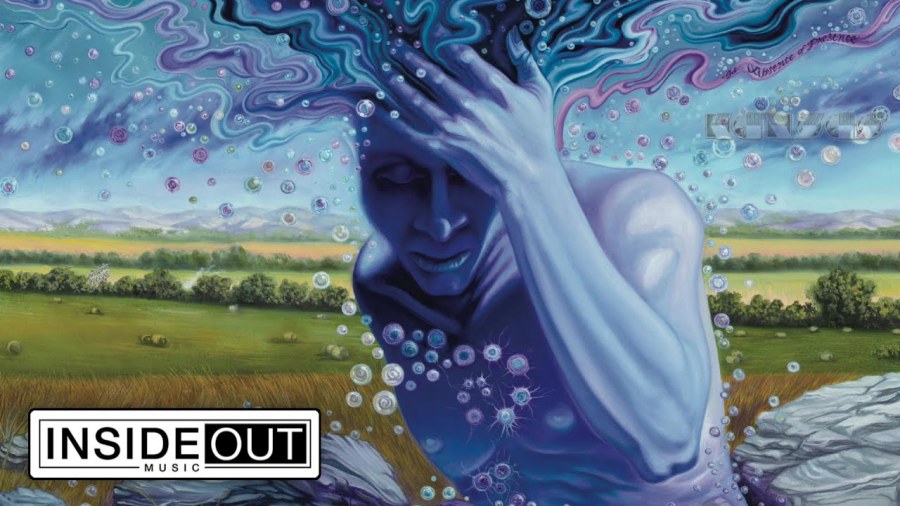
It is absolutely! So, this connects directly to what I was just talking about. So, one day I was in the hospital late with Jessie and she was in this incubator, and I could put my hands through and just put my hand on her. I was sitting by this incubator and one of the nurses came over, and she said, “Jessie, she’ll make it through; she’s strong like a little lion.”
And that night when I got home, I was flicking through some social media, just trying to switch off. And then I saw this painting, and it was by a friend of mine, Jill Doherty. And so, soon as I saw it, I just thought “Wow! This connects with this lion thing earlier.” And to me it was a lion breathing.
So, I then sent Jill a message saying, “Look, I had this experience today, and then I saw your painting, which I think is amazing, by the way.” And I had a screenshot of this picture and it was in my mind. But then as the material progressed, I thought, “You know, this painting really connects with the material.” So then I got in touch with Jill and I said, “Look, Jill, I’d really love to use this for the album.” And she said, “Yeah! I’d love you to use it.” She said it’s actually a lion roaring, not a lion breathing, but that doesn’t matter, and she really loved that that was my interpretation of it.
And again, that helps that piece of the puzzle fall into place. It’s a powerful, dramatic painting; it’s not a take it or leave it circumstance. And again, it ties in with your subject matter and what you’re trying to convey.
And what I also liked about the painting is that, if you look at the detail, if you sort of scan in on the mane of the lion, it shows real skill, it shows real craftsmanship. And I really like the way that, with the music — we didn’t sort of record this album in an afternoon. It took a long time to work on this record, to layer up the harmonies, to play things in precisely, to get it mixed really nice. I like the way that [the painting] slightly mirrors that; there’s a lot of craftsmanship and you can see there’s time spent on both things. And that’s what I like.
In the era of Napoleon, the Prussian diplomat Klemens Wenzel Furst von Metternich coined the phrase, “When France sneezes, the whole of Europe catches a cold.” Like all good clichés, it’s been re-purposed endlessly since the 1800s. Which leads to today’s question: when the music industry of 2020 catches COVID-19, what does the progressive music scene come down with?
In the last few weeks, the toll of the current pandemic has been steadily mounting, with the postponement or cancellation of tours by Yes, Steve Hackett, Tool and Big Big Train (plus this year’s Cruise to the Edge) at the tip of the iceberg.
The tale of Leonardo Pavkovic, impresario of MoonJune Records and MoonJune Music (Bookings and Management) is all too grimly typical; since the outbreak of coronavirus, eight MoonJune-booked tours have been cancelled at a loss of about $250,000 to the artists, with many more tours now in jeopardy. MoonJune artists Stick Men lost 8 of 9 concerts in Asia, plus their US spring tour; touch guitarist Markus Reuter resorted to GoFundMe in order to make up for the loss of six months’ income.
To raise even more awareness around the pandemic’s impact on musicians everywhere, we’re waiving our revenue share on sales this Friday, March 20 (from midnight to midnight Pacific Time), and rallying the Bandcamp community to put much needed money directly into artists’ pockets.
So (if your situation allows it), who can you support via downloads, CDs, LPs and merch bought on Bandcamp this Friday? Well, you could start with four fine new albums I’ve reviewed this year:
Best of all, the music keeps on giving. Leonardo Pavkovic is already sharing details about his next MoonJune albums: a live set from Stick Men’s only uncancelled Asian concert, plus an album of improvisational duets by Markus Reuter and pianist Gary Husband recorded during down time in Tokyo. And jazz-rock master John McLaughlin has made his most recent album (Is That So with vocalist Shankar Mahadevan and tabla player Zakir Hussain) available as a free download.
Whither the music industry in time of pandemic? As with everything else, it’s way too soon to tell. But, if all of the above is any indication, progressive music — due to the indefatigable, awe-inspiring musicians who make it — will survive.
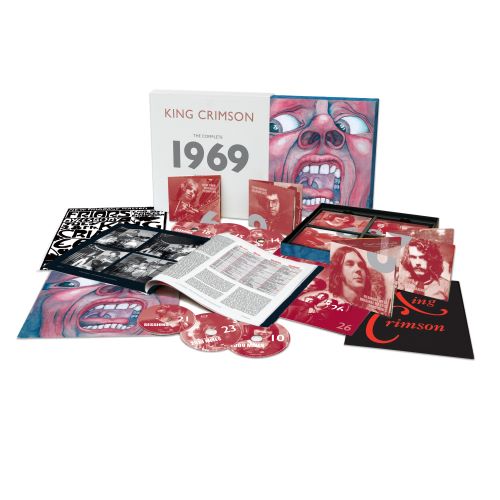
As mentioned in this space a few weeks back, King Crimson and The Zappa Band (alumni of the late great Frank Zappa’s bands) will be touring North America this June & July, mostly at outdoor amphitheaters. Tour dates are as follows:
June 4 – Clearwater, FL – Ruth Eckerd Hall
June 5 – St. Augustine, FL – St Augustine Amphitheatre
June 6 – Miami, FL – Mizner Park Amphitheatre
June 8 – Orlando, FL – Dr. Phillips Walt Disney
June 9 – New Orleans, LA – Saenger Theatre
June 10 – Memphis, TN – Graceland Soundstage
June 12 – Cary, NC – Koka Booth Amphitheatre
June 13 – Portsmouth, VA – Union Bank Pavilion
June 14 – Philadelphia, PA – The Mann Center
June 16 – Glens Falls, NY – Cool Insuring Arena
June 18 – Boston, MA – Rockland Trust Pavilion
June 19 – New York, NY – Forest Hills Stadium
June 20 – New Haven, CT – Westville Music Bowl
June 22 – New Brunswick, NJ – State Theatre
June 24 – Huber Heights, OH – Rose Music Center @ The Heights
June 25 – Louisville, KY – Palace Theatre
June 26 – Detroit, MI – Meadowbrook Amp
June 28 – Baltimore, MD – MECU Pavillion
June 30 – Vienna, VA – Wolf Trap
July 1 – Buffalo, NY – Artpark
July 5 – Chicago, IL – Ravinia
July 7 – Montreal, QC – Salle Wilfrid-Pelletier – Palace des Arts
July 9 – Quebec City, QC – Festival d’ete
July 11 – Ottawa, ON – Bluesfest
July 12 – Rama, ON – Casino Rama
VIP tickets (“Royal Packages”) will go on sale through DGM Live soon; tickets for most shows go on sale through Ticketmaster on Friday, March 13. More details are available at Crimson’s website. I’m looking forward to my tenth evening with the mighty Crim (and my second time hearing Zappa Band musical director Mike Keneally) on Friday, June 26!