And Then There Was One…

I’ve heard a lot of great Genesis covers, but this single-handed version of “Supper’s Ready” has got to take the prize.

It is yet more evidence that Canada is a prog paradise… O, Canada! Land of Rush.

Okay, maybe I should have called this post, “And Then There Were Two,” because although it is a one man band doing all the instruments,  the vocals are done by a second dude.

But I wanted to emphasize the insanely great instrumental skills on display in this video…

The Future of Prog

The end of the year will soon be here. At Progarchy.com, we are beginning to reflect back on this great year of music. Between now and then, our writers will be posting their “Best of 2013” lists.

As we look back, we also look forward to the future with hope. There are many kids out there who will pick up the torch of musical excellence in the future. Check out the video below (H/T Kevin Miller): if this is what they’re doing in grade school these days, can you imagine what could happen when these kids graduate and turn to prog?

2013 has been a great year filled with much that we can pass on to the next generation as musical example. I look forward to what they will do with this legacy. Do you not think that we will have many years of great music ahead of us?

Honest Affection

This music video by Kye Kye for their single “Honest Affection”—a foretaste of their upcoming LP Fantasize—is a real work of art. It’s easily one of the best music videos I have seen in a long time. And it’s an excellent fit for this very fine tune.

And check out their cover of U2’s “With or Without You” below. Clearly, this is a very talented electronic/alternative band of musicians. Keep your ears pointed in their direction. I sense great things are to come! Prepare to be dazzled.

In the meantime, why not also partake of their enjoyable disc Young Love or some of its remixes? Or another great song from the forthcoming LP, “Dreams (2AM)”?

Metal on Ice: Hockey Pucks and Heavy Metal from the Great White North

This month, the Canadian Prime Minister, Stephen Harper, has released his epic historical treatment of Canada’s national game.

Not only that, but the Canadian guitarist Sean Kelly has written a memoir that takes us through the history of Canada’s heavy metal scene in the 80s: Metal on Ice: Tales from Canada’s Hard Rock and Heavy Metal Heroes (also available in the USA and the UK).

Kelly got Canuck metal fans to pledge funds to produce a companion musical document to his book: the Metal On Ice EP, which now contains Kelly’s brand new 2013 re-recordings of classic Canadian metal anthems.

This awesome EP is now readily available. On its new versions of classic metal it features absolutely killer guest vocals from top talent: Brian Vollmer of Helix (track 1: “Heavy Metal Love”), Lee Aaron (the ultimate 80s “Metal Queen” who contributes a stunning new rendition of her world-famous epic on track 2), Nick Walsh of Slik Toxik (track 3: Kick Axe’s “On the Road to Rock”), Carl Dixon of Coney Hatch (track 4: “Hey Operator”), Darby Mills of Headpins (track 5: “Don’t It Make Ya Feel”), and Russ Dwarf of Killer Dwarfs (track 6: “Keep the Spirit Alive”).

There is also a special seventh track composed by Kelly and Walsh: “Metal On Ice”, featuring a group of the EP’s special guest vocalists paying tribute to the greatness of the Canadian heavy metal scene.

Here is a list of the EP’s 2013 remakes, along with the dates of the original versions given in square brackets for historical interest:

1. Heavy Metal Love [1983 – Helix, No Rest for the Wicked LP]
2. Metal Queen [1984 – Lee Aaron, Metal Queen LP]
3. On The Road To Rock [1984 – Kick Axe, Vices LP]
4. Hey Operator [1982 – Coney Hatch, Coney Hatch LP]
5. Don’t It Make Ya Feel [1982 – Headpins, Turn It Loud LP]
6. Keep The Spirit Alive [1986 – Killer Dwarfs, Stand Tall LP]
7. Metal On Ice [2013 – Sean Kelly, Metal on Ice EP]

Brian Vollmer – Vocals (Track 1);
Lee Aaron – Vocals (Track 2);
Nick Walsh – Vocals (Track 3);
Carl Dixon – Vocals (Track 4);
Darby Mills – Vocals (Track 5);
Russ Dwarf – Vocals (Track 6);
Sean Kelly – Guitars (All tracks);
Dave Langguth – Drums (All tracks);
Daryl Gray – Bass (Tracks 1, 2, 4, 5 and 6);
Victor Langen – Bass (Track 3);
Nick Walsh – Bass (Track 7)

I highly recommend this nostalgic EP to all you cosmopolitan Progarchists out there, especially those of you with prog metal tastes. That’s because the EP makes a nice palate cleanser when slipped in-between any two of 2013’s awesome prog metal masterpieces (e.g., the new discs from Haken and Caligula’s Horse). 

Everything on the EP is excellent, but my favorite trips down memory lane are: tracks 2, 5, and 6.

By the way, I have dropped the EP into a playlist of other terrific nostalgic EPs released in 2013—by Halestorm, Anthrax, and Adrenaline Mob—that contain updated cover versions of classic hard rock tunes.

Have some fun and grab yourself this formidable Metal On Ice EP today!

O, Canada…

Count Floyd meets Socrates: Leah on All Hallow’s Eve

It is All Hallow’s Eve.

Socrates walks into the SCTV studio and sees Count Floyd listening to a new CD.

Socrates: Count Floyd! We meet again…

Count Floyd: Socrates! Ow-ow-owooooo! How are you this scaaaaary evening?

Socrates: I was outside the the Second City Television studios and then I heard some very loud music playing. I thought I would investigate.

Count Floyd: Brrr… that was me, listening to Leah sing with Eric Peterson on “Dreamland“… it’s a very scaaaary song!

Socrates: It doesn’t sound very scary right now. It’s just a pleasant female vocalist singing over top of some piano, with some atmospheric sounds of rainy weather.

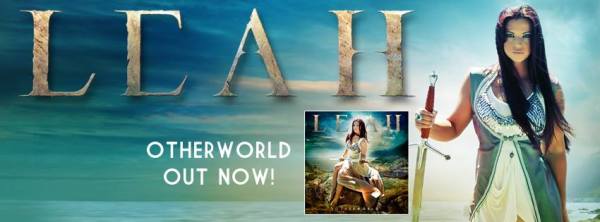
Count Floyd: That’s because it is another song right now. The one you heard outside was “Dreamland” — the track with Eric Peterson’s scaaaary vocals. That one was the fifth and final track on this new EP from Leah, called Otherworld. But now I have started to listen to the EP all over again. This EP is so good, it’s scaaaary how good it is! Ow-ow-ow-owoooooooo!

Socrates: So this is the first song?

Count Floyd: Yes, and it’s called… “Shores of Your Lies.” Brrrr!

Socrates: This Leah has a remarkable voice. It is so pure and enchanting.

Count Floyd: Yes, it gives me chills. Brrrr! Do you hear how scaaaaary this song is?

Socrates: The piano accompaniment is highly effective. What a beautiful melodic sense this songstress has.

Count Floyd: Yes, but scaaaary too. Don’t you hear? She is singing about a “whispering ghost”…. brrr!

Socrates: But she is singing how life goes by and accordingly how the mind erodes… it is a metaphor, Floyd: “like a whispering ghost” is what she sings.

Count Floyd: I don’t know what that means… but it sure sounds scaaaaary. But, I see that you want to dialogue with me. Well, OK, Socrates: if you say it is a metaphor, then what is the thing that is likened by her to a “whispering ghost”?

Socrates: I believe it is the vicissitudes of life.

Count Floyd: Ow-ow-ow-owooooo!

Socrates: Floyd, why are you howling?

Count Floyd: I don’t know what “vicissitudes” are.

Socrates: She is singing about a life full of troubles. All the various disasters of her life are “haunting” her, but in a very quiet and relentless way—”like a whispering ghost”.

Count Floyd: It is such a beautiful song that enfolds such scaaaary subject matter.

Socrates: Yes, it is just the sort irony that I can really appreciate.

Count Floyd: Hmmmmm. She is singing about how her life is a train-wreck.

Socrates: No, Floyd, I believe she says it is like a “shipwreck.”

Count Floyd: Yes! She is “shipwrecked,” she sings, “on the shores of your lies”! Well, who is this that she is singing about?

Socrates: She doesn’t say, but whoever it is, she loyally sings that she will “still hold on to you for dear life.”

Count Floyd: So, apparently she is bringing forth something beautiful, bringing it forth even from a disastrous situation.

Socrates: Yes, and the beauty of the music itself formally mirrors that idea.

Count Floyd: I don’t know. Sounds to me like a scaaaary situation that she is in.

Socrates: It reminds me of my own experience with the Athenian democracy. I myself was shipwrecked on “the shores of their lies.” But, I refused to abandon Athens. I would not abandon my post and leave town.

Count Floyd: Brrr. Scaaaary.

Socrates: Well, I think something good and beautiful came out of it. In any case, I know that it is far worse to do wrong than to suffer wrong. And now, by the song, I am reminded of the “shipwreck” of  Alcibiades’ Sicilian expedition. Say, what’s this new song that’s now begun playing?

Count Floyd: It’s the second track: “Northern Edge.”

Socrates: Her ethereal vocals are floating about the chugging metallic guitar sounds… with a dancing keyboard melody! What astonishing contrasts! But it all fits together somehow. This is tremendously masterful musical artistry! Why do more people not know of this incredibly talented songwriter and musician?

Count Floyd: It gives me chills when she sings that line about “this labyrinth of the dead”…. she sings it with such a “Northern edge” to her voice!

Socrates: Like you, she is from Canada—the Great White North?

Count Floyd: Yes, and it is chilling—brrrr!—chilling how good the vocal line sounds, when she switches into her rock goddess voice and howls, “we befall and we ascend”! Ow-ow-ow-owooooo!

Socrates: Yes, I agree. It is like each song keeps getting better and better. And now… this third track is also yet more astonishing!

Count Floyd: Yes, “Surrounded.” I think it is perhaps the best track on this EP. Her intricate vocal performance on this track is so good it’s scaaaary.

Socrates: Yes, Floyd, I hear what you mean. She goes through so many variations. What a remarkable singer she is!

Count Floyd: And the music is very scaaaaary on this one. Just when you feel safe in the verses with the atmospheric synths—ow-ow-ow-owoooo!—the heavy metal guitars come in on the choruses…. this is so scaaaary every time….. and then when the shredding guitars shift into double-time, brrrr, I cannot tell you how scaaaary that is.

Socrates: It is very exciting musically, Floyd. But I don’t think the guitars are all that scary. They sound too mechanical, like a sort of chugging, not so much a shredding. There is no hot edge to them. So, I think it is safe for children to listen to this very artistic, Celtic metal music.

Count Floyd: You have a point there, Socrates, about the guitar sound. But I think you have been listening to too much Dream Theater these days, so you are spoiled. Only someone used to drinking hemlock, like you, can stand such face-melting guitar sounds on a regular basis. Leah has the right mix of gentle and scaaaary overall, I would say.

Socrates: Speaking of gentle, what is this fourth track? It is so stunningly beautiful! There are no guitars here, but what a sublime melody.

Count Floyd: “Do Not Stand At My Grave And Weep”…. what a scaaaaaary title for a song!

Socrates: But it is a beautifully poetic meditation… listen to those lyrics!

Count Floyd: I get chills—brrr!—when she sings the line: “I am the sunlight on ripened grain.”

Socrates: Her voice is very powerful and achieves a kaleidoscope of emotional effects. In addition, there are some interesting vocal effects on the multi-tracked vocals here. Wow, I think I have just become her newest fan. I wonder if Plato has heard about her? This is the sort of thing he would like… it would give his soul wings…

Count Floyd: Wait, Socrates, don’t leave… there is still one more track… “Dreamland”!

Socrates: Oh, yes, it has that demonic voice that I heard from outside the building. How bizarre that this Celtic songstress—who is an ambassador of the heavenly realm—would end this EP of hers with such an ugly voice!

Count Floyd: It’s so scaaaary—oh, how can you stand it! Brrr! I have chills again! Ow-ow-owooooo!

Socrates: Actually, Floyd, I don’t find these “death metal” vocals scary at all. They are just silly. So, I wonder. Why would this fine artist take such a bizarre turn in her songwriting and collaborate with such a fellow?

Count Floyd: Well, next you will be telling Count Floyd that he is not scaaaary himself! That it is silly for a grown man to dress up every day of the year and act scaaaary! Ow-ow-owooooo!

Socrates: You said it, Floyd. Your words, not mine. But why does the EP end with this “scary” sort of thing, as you call it?

Count Floyd: Well, Socrates, I am sure that the fans of Leah like you—people who simply love every song you have ever heard her sing—will be surprised and shocked by this song. But, it may also win over some new fans who will then come and listen to her other songs. These new people might be won over to her superior Celtic enchantments.

Socrates: I see what you mean, Floyd. And as I listen more carefully to this song, I understand now what is going on. I think I really like this!

Count Floyd: Yes! Oh, yes! Now you hear it! It is the power of scaaaaaary! Ow-ow-owoooo! Socrates likes the scaaaary!

Socrates: Well, to be more precise, Floyd, what I like here is the alternation between Leah’s heavenly vocals and the hellish Eric Peterson character in the song—”the king of this Underworld.” What we have here is a remarkable depiction of the twofold destination of the dead—much like in The Myth of Er, at the end of Plato’s Republic.

Count Floyd: Is that a scaaaary story too, like this scaaaary song?

Socrates: Yes. And notice how this song mentions the “shores of your lies” phrase again… which makes me think again about the soul of Alcibiades… what do you think his destination was in the afterlife?

Count Floyd: I never knew this Alcibiades fellow… but his name sure sounds scaaaary!

Socrates: Well, in any case, thank you for playing your music so loud, Floyd. I am glad that it attracted me inside to your studio, so that I could learn about this amazing Canadian songstress. This EP is one that I will recommend to Plato, and to all my other young friends who enjoy beautiful poetry and inspired artistic craft. I really do love how this EP tells a musical story by moving through five stages, in five tracks. Remarkable!

Count Floyd: What story is that, Socrates? Is it scaaaary?

Socrates: The story of Otherworld, as I understand it, is this: [1] Being challenged by the difficulties of life (“Shores of Your Lies”); [2] trying to fight back (“Northern Edge”); [3] then, after the battle is done, surrendering spiritually to a Higher Power (“Surrounded”), thereby turning the physical defeat into a spiritual victory (hence, the title has a lovely twofold meaning); [4] then, from this higher vantage point, singing from beyond the grave—to those still alive—about the “Otherworld”—the hope of the resurrection of the dead (“Do Not Stand At My Grave And Weep”); and, finally, [5] a “saving tale” of the sort that Plato tells—a myth that just might shock your soul into taking your life seriously (“Dreamland”).

Count Floyd: A very scaaaary myth!

Socrates: Yes, and sometimes that is the only way we can hope to communicate the higher truths to most souls. Plato does this very well.

Count Floyd: Well, I really like Leah.

Socrates: I do too, Floyd. Happy All Saints Day, and good luck with your own salutary tales.

Count Floyd: Ow-ow-ow-owoooo! Socrates, I always knew you rocked. Ow-ow-ow-owoooooo!

Translated from the lost ancient Greek manuscript by C.S. Morrissey

Count Floyd reviews the new Leah

Happy Halloween, Progarchists.

Stay tuned, because later today Count Floyd will be here to review the new Leah album: Otherworld.

You can look forward to a very scaaaaaaaaary review.

In the meantime, if it’s not too scaaaaaaaary for you to listen to, here is Leah meeting the King of the Underworld.

Ow-ow-ow-ow-owooooooooooooooooooooooo!

UPDATE: You can now find Count Floyd’s review here.

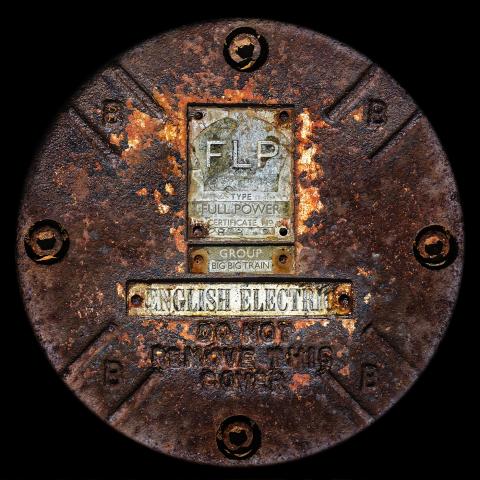
Full Power Drumming

Over at The Prog Report, “Nick D’Virgilio, drummer for Big Big Train, talks to The Prog Report about his time as Spock’s Beard frontman, his work with Genesis and Tears For Fears and his love for golf”, in what Greg Spawton calls a “prog-length interview (25 minutes)”:

The Musical Universe

Peter Kalkavage makes an important observation about “the musical universe”:

We love music because of how it makes us feel. We listen to some works more than others because we want to experience the feelings they stir in us. But feeling is not primary in music, nor is it always the reason why we listen. Most of the time we listen to a piece of music because, well, we want to hear it. We take pleasure in the hearing. But the pleasure is not in the pleasure, as though music were a drug used only to produce a “rush.” The pleasure is in what we are hearing, in the distinctive aisthêton or object of perception. Sometimes we listen to a musical work because we wish to hear a quality or perfection that is present in it. We listen for the sake of an active, even strenuous, contemplation in which we participate in, are one with, the life and shape of the musical object. To be sure, feelings are aroused, but these are grounded in, and prompted by, what we perceive in the tones, in what is there in the phenomenon we call music. We might say that in responding to music we perceive feelingly and feel perceptively. But in saying this, we must bear in mind that perception is primary. We do not, except incidentally, hear musical sounds and associate them with various feelings, images, or experiences. On the contrary, we perceive what is there and take on the condition that rhythms and tones communicate to us. [See Victor Zuckerkandl, “Words and Tones in Song,” Chapter 3 of Man, the Musician, Bollingen Series, Princeton: Princeton University Press, 1973, pp. 31-43.]

Kalkavage then quotes Paul Valery, from whose lecture (“Poetry and Abstract Thought”) he took the phrase:

The musician is … in possession of a perfect system of well-defined means which exactly match sensations with acts. From this it results that music has formed a domain absolutely its own. The world of the art of music, a world of sounds, is distinct from the world of noises. Whereas a noise merely rouses in us some isolated event—a dog, a door, a motor car—a sound evokes, of itself, the musical universe. If, in this hall, where I am speaking to you and where you hear the noise of my voice, a tuning fork or a well-tempered instrument began to vibrate, you would at once, as soon as you were affected by this pure and exceptional noise that cannot be confused with others, have the sensation of a beginning, the beginning of a world; a quite different atmosphere would immediately be created, a new order would arise, and you yourselves would unconsciously organize yourselves to receive it. [The lecture can be found in Paul Valéry, An Anthology, Bollingen Series, Princeton: Princeton University Press, 1977, pp. 136-165.]

I find this highly interesting because of the uncanny way that the musical universe of Rush is evoked for me at many points whenever I listen to the new Dream Theater album.

When I hear the interplay between guitar and drums on “The Looking Glass,” for example, the world of “Limelight” is evoked for me; or when I hear “Surrender to Reason,” the world of “Natural Science” is evoked for me. Either way, I enter into a Rush-like universe.

Kalkavage describes the experience well when he says that what gives me please is “the distinctive aisthêton or object of perception”, because what is happening is that I am not feeling certain things created by Rush-like noises. Instead, I perceive a Rush-like “musical universe” that is only indirectly evoked by some musical activity that takes my perception there—which then brings about certain magical feelings.

There are no direct quotations of Rush; there is only a display of a highly refined musical sensibility (all hail the gentlemen of Dream Theater!) that is able to perceive a certain musical universe of meaning, and then to take me there—me, along for the ride.

LEAH’s “Otherworld” Preview

Here’s A Health to the Company!

Buy Otherworld via digital download.

The Prog-Rock Orchestra

Jason Warburg has an excellent review of Full Power over at The Daily Vault.

I really love how he starts it off:

I remember when an album was much more than just a collection of songs. Those old LPs, with their gatefold covers and thick booklets of detailed liner notes, were gateways into alternate realities, with artwork and presentation that enveloped the listener in a new experience, propelling you down the rabbit-hole.

Big Big Train remembers that feeling, too.

In fact, remembering is at the core of Big Big Train’s very identity …

And later on Jason makes an interesting observation about BBT’s orchestral arrangements:

Big Big Train often feels like a prog-rock orchestra even when the brass and strings are absent. There is a density of sound, sophistication and seriousness of purpose here that can only be achieved with careful attention to every detail of each arrangement and performance.