

From WSJ.com: Today starting at 3:30 p.m. EST, Geddy Lee and Alex Lifeson of Rush will be answering fan questions LIVE.

From WSJ.com: Today starting at 3:30 p.m. EST, Geddy Lee and Alex Lifeson of Rush will be answering fan questions LIVE.
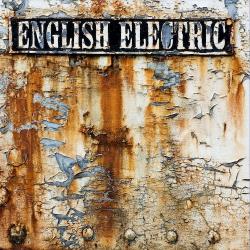
As a companion piece to my “liner notes” post on English Electric—Part 2, here is a compilation of some virtual “liner notes” that expand a bit more upon the ones that are already available at Big Big Train’s album page for English Electric—Part 1:
1. The First Rebreather is “the true story of a man called Alexander Lambert who dived heroically into the flooded Severn Tunnel in 1880. The navvies who built the tunnel and who were hard-drinking fearless chaps were terrified that the river would break in and drown them all. However, when the tunnel flooded, the water was found to be fresh rather than tidal. The navvies had, in fact, struck an immense underwater spring which flowed through a fault in the rock (they called it The Great Spring). Conventional diving equipment was used to try to close an iron door in the tunnel to hold the water back. The equipment failed due to the air-hose continually being snagged.
The tunnel engineer had heard of a man called Henry Fleuss who had developed an experimental diving apparatus called a Rebreather (in effect, it was the first aqua-lung.) Fleuss was persuaded to make an attempt on the tunnel but was so frightened that he turned back and said he would not return to the darkness ‘for £10,000 or more.’ The equipment was handed over to Diver Lambert who carried out a number of dives which involved swimming 1000ft up the flooded tunnel in complete darkness. Lambert, The First Rebreather, confronts his fear in the tunnel whilst the workmen await his return.
‘The first rebreather’ is a strange phrase which sounds almost super-heroic which, indeed, Lambert was. So, I decided that, for the purposes of the song, The First Rebreather would be seen as a sort of superhuman creature come to save the navvies from the Great Spring.
Lambert would, of course, have looked very odd in his diving gear and, to the superstitious men, I’ve imagined that he would have looked like a Mummer (also known as a Souler). Mummers’ plays generally feature a character who brings back to life a dead person, so that fitted quite nicely as Lambert tries to bring air back to the lungs of the tunnel.
In the song, The Great Spring has also become a character. I remember being frightened as a child by the story of Beowulf swimming into the mere to slay the beast and again, I’ve used that imagery. In Beowulf, his men waited by the water for him to return. He returned ‘at the ninth hour’. The closing vocal section of the lyrics is about the workmen waiting for Lambert to swim back to the surface. As The First Rebreather is also a direct follow-up to Winchester Diver, I have also worked in some references to The Divine Comedy.” [GS]
2. Uncle Jack is about David Longdon’s uncle, John Henry Herring, who was a collier who “worked in the pits around the Heanor (Derbyshire:UK) area. He spent so much time beneath the ground that he truly valued his time on the surface. Jack would walk his dog (Peg) and would take notice of all that was happening around him in the natural world. The changing of the seasons, birdsong, woodland wildlife and the ‘bustle in your hedgerow.’” [DL]
3. Winchester From St Giles’ Hill is about the mutual influence of geography and history; namely, “the development of the city with its place in the landscape.” Greg Spawton explains: “Winchester is a beautiful and historic city in the south of England. St Giles’ Hill lies to the east of the city and forms part of the western edge of the South Downs. From the top of the hill you can see all of Winchester, and the song is an historical view of the development of the city and of (as Peter Ackroyd calls it) the ‘long song’ of England.
Winchester stands at a number of crossroads in time and provides a narrative of British and English history in miniature. There was a prehistoric settlement at Oram’s Arbour, then it became a Roman town and afterwards, a Saxon capital and stronghold. The Normans built a castle and a massive cathedral. It became a centre of learning with the opening of Winchester College and, in Victorian times, the railways came and with them the modern age.” [GS]
4. Judas Unrepentant is about Tom Keating, “an art restorer who eventually turned to art forgery after failing to break into the art market. He was on a personal crusade to destabalise the art world by forging works to fool the experts. He deliberately planted clues in the works that would reveal them as forgeries. He also cunningly managed to falsify provenances for his forgeries.” [DL]
5. Summoned By Bells is about memories from Greg Spawton’s mother “who grew up in a working class area of Leicester called Highfields.” After a family trip to revisit the area, Greg was inspired to write the song by this episode: “As we drove away, we stopped to let a young girl cross the road. If we had been able to stand in that spot 70 years before, that little girl could have been my mum on her way down to Spinney Hill park. With this image in my mind, more clear to me than the changes in Highfields, was the golden thread of continuity running down from the past.” [GS]
6. Upton Heath is “a moment of calm amidst the frantic, flamboyant and epic moments elsewhere. Some Big Big Train songs can be lengthy, dynamic and intense, Upton Heath is none of these things, it is uplifting, relaxed and has its own sense of peace.” Note that “Upton Heath is a place in Dorset, UK and Greg has chosen this title because it is one of his favourite places to go walking.” [DL]
7. A Boy in Darkness is about the children and young people employed in the colleries who “were expected to work down the mines in hard conditions once they had left school”, as well as all “children who suffer at the hand of those to whom they are entrusted.” David Longdon says the song’s message is: “Don’t be afraid to shine bright light into dark corners.” [DL]
8. Hedgerow picks up where Uncle Jack left off, with “a collier’s love of nature, seasons and hedgerows”. David Longdon explains: “It is about my Uncle Jack once again only this time it focusses on the contrast between his life on the earth’s surface and his working life below. The song has an anthemic feel to it as it develops. It includes great musical contributions from Rachel Hall who adds layered violin. Backing vocalists Lily Adams and Violet Adams reprise their nursery rhyme-like list of the sort of things that you would expect to find in a British hedgerow, previously featured in Uncle Jack (track two).” [DL]

Big Big Train is keeping the art of the album alive. We may not buy gatefold vinyl anymore, but in conjunction with our CDs or digital downloads, we can nevertheless read blog posts which function to create a set of virtual “liner notes.”
To aid you with your forthcoming enjoyment of the masterpiece that is English Electric—Part 2, here is a compilation of the virtual “liner notes” that Greg Spawton [GS] and David Longdon [DL] have made available on their blogs. And for the last three songs, I also quote from the recent Progarchy interview with the band:
English Electric—Part 2
1. East Coast Racer is about how “75 years ago, on 3rd July 1938, a streamlined locomotive called Mallard set the world speed record for steam trains, travelling at 126mph on a straight, downhill stretch of the East Coast Mainline.” Greg Spawton observes that “it wasn’t so much Mallard but the people who designed, made, fired and drove her that interested me. And it is their tale we tell over the 15 minutes or so of East Coast Racer.
It is a story with a wonderful list of main characters; designer Sir Nigel Gresley, his assistant Oliver Bulleid, fireman Tommy Bray and driver Joe Duddington. Alongside those with starring roles was a community of engineers and railwaymen who all played a part in the making of a legend.
But, in the end, we come back to Mallard.
Émile Zola said: ‘Somewhere in the course of manufacture, a hammer blow or a deft mechanic’s hand imparts to a locomotive a soul of its own’.
In this short sentence, Zola puts his finger on the connection between the maker and the machine. Mallard has outlived its creators but in it, this company of men and the work they carried out, lives on.” [GS]
2. Swan Hunter is “a song about the inevitable changing world and how these changes impact directly upon local communities.” Inspired by a letter from BBT artist Jim Trainer to Greg Spawton, the song is an evocation of the men in Jim’s family, many of whom shared the same name; the song thus imaginatively “centres around a main character. Let’s call him Jim. Jim is now an old man and he is reflecting back on his life as a shipbuilder who worked at Swan Hunter in the Neptune Yard. Imagine Jim, sitting by his fireside and recounting tales to his son about how it all once was and how much life has changed. Jim accepts the impermanence of material things and the inevitable passing of time.” [DL]
3. Worked Out is about “the mining industry of the Midlands (which featured as a setting in Uncle Jack, Hedgerow and A Boy in Darkness on Part One).
It is difficult to contemplate the immense scale of coal mining in Britain before its relatively recent decline. In the 1920s, there were more than a million coal-miners and the number was still at around 700,000 into the 1950s. By 1994, there were just 20,000 coal-miners.
The loss of so many mines was a disaster for communities which relied on the industry for work. Some have recovered but others still suffer very low levels of employment with all of the problems that lack of work brings.
Worked Out tells the story of a community from a mine which lasted longer than most. The colliery was called Birch Coppice and mined the Warwickshire coalfield until 1987. In the end, the colliery was closed because of a faultline in the coalface rather than for political or economic reasons.” Greg Spawton reflects on the changing landscape, as nature reclaims the sites and greens over the hills, covering up what lies beneath: “Underneath the ground are the remains from over 150 years of mining. … The same type of story can be found in the landscape all over Britain as the physical remnants of the gigantic undertaking that was the Industrial Revolution are lost. Worked Out is a song about the miners of Birch Coppice but it could be about any of the mining communities which have seen the closure of the pits and the loss of a way of life.” [GS]
4. Leopards is a love story “about two people who had gone their separate ways after the end of their relationship. Years pass until one day, by chance, the pair meet again. Their mutual feelings are rekindled and they carefully begin to rebuild their relationship. Inevitably, they both have their insecurities, their baggage and fears.
On the eve of her birthday, he presents her with a small ornate jewellery box which when opened, contains a beautiful Cartier Panther brooch. The jewelled body of the beast sparkles in the light. It must have cost a fortune. She pins the bejewelled feline to the lapel of her dress and as she stands to admire it in the large mirror above the mantlepiece, he drapes her shawl around her shoulders. He gently kisses the nape of her neck as he does so. It may be the champagne or the high emotion of the moment but she finds herself lost for a while in her reverie.
‘Happy birthday darling’ he whispers.
But she is troubled by her rekindled love towards her former lover. Back then she loved him dearly and afterwards she then had to learn to live without him. She remembers her terrible sorrow and it has taken time and courage to learn to trust and to give again.
Her dilemma is this:- He tells her that he was a fool to leave her. He says that not one single day had passed since they parted without him thinking of her and regretting his selfish act. He also says that he has changed but the question she asks herself is this:- Are we really able to change?
On one hand, if she does not surrender herself, she will never know what could be. On the other, will her fear of being hurt all over again outweigh her overwhelming desire to love him and be loved by him? …
The leopard metaphor within the title concerns itself of course with the old proverbial question ‘can a leopard change its spots?’” [DL]
5. “Keeper of Abbeys is about a chap I met at a ruined abbey in the north of England. This man worked from dawn until dusk every day, tending to the stones. I got to know him a little bit but used my imagination to join up the missing parts of his story.” “A few years back we visited the North Yorkshire Moors. We stayed for a few days at an English Heritage cottage within the grounds of an abbey at Rievaulx.” [GS]
6. “The Permanent Way is the pivotal track where we try to bring everything together.” The title phrase “is a Victorian expression which means the finished track and bed of a railway. … On The Permanent Way, which is the penultimate track on the album, we have brought together the stories of the individuals and communities working on and under the land who, along with inescapable geological forces, helped to forge the British landscape. … Where people have helped to shape the landscape it is at the hands of ordinary folk that this has been done. Sometimes this has been at the behest of powerful land-owners and at other times it has been due to the vision of those far-sighted men-of-iron. But in the end it all comes down to ordinary men and women, in communities past and present, working on the land.” [GS]
7. “Curator of Butterflies is inspired by a woman called Blanca Huertas who is the Curator Lepidoptera at the Natural History Museum. I read an article about her where she said the study of butterflies can allow so many tales to be told. The song is about how narrow the line is between life and death. I was very anxious about it sounding trite and so I wove a character into it to make it a story and tempt me away from spouting platitudes.” Life and death: “The song is about the fine line between those two extremes. As I grow older I become more aware of my mortality and the mortality of my family and friends. The knowledge that we hold about our mortality means that life can be a beautiful burden.” [GS]
Remember Leah? There’s a great new interview with her over at Louder Than Hell.
Here’s a sample, from which you can get an idea of what she’s currently up to:
LTH: What can your fans expect from your shows? What aspect of your band brings in crowds?
In the future, fans can expect to see more records from me, and special projects. I’m very experimental, so you may see medieval Christmas songs, or electronica, or symphony orchestras. Nothing is off the table with me. I do hope to tour in the future, and I know it will be an amazing show, though I can’t promise any dates at this time.
LTH: Chemistry within a band very is important. When the band originally formed, what was it about playing with the other musicians that made you the most impressed? What is it about the chemistry between the members that makes the band unique?
In my particular music career, the songs came first, and the players came after. Most of the musicians on my record were people I brought in specifically for my project. And because I’ve mainly been a recording artist, not a performing artist, I haven’t had a solid band line-up. As of now, I am putting together my band for special performances. In the future I’d love to have a solid, long-term band that will collaborate with writing and create a whole new sound together. In any band, chemistry is important. It’s amazing how you can connect with players musically, but you might not connect with them in other areas of life. That’s what I love about music: it brings down barriers and brings people together.
LTH: Thank you for taking the time to speak with us about your music. Do you have a special event like a concert or tour coming up that you’d like to discuss? What’s next for the band?
What’s next for me is developing my live show, writing and recording more albums, hopefully doing some music videos, and a little side project I have with Eric Peterson from Testament and Dragonlord! I’m very excited about that project and am looking forward to beginning our writing sessions for that very soon!
Carlton Wilkinson reflects on the nature of music, arriving at a fundamental principle, which helps him think about the future of music:
Music is inherently live and therefore inherently local. The future of the music business is not in product sales, but in the service of that artist-listener relationship. Artists are thinking about tech. They’re embracing it and using it to reach their audiences directly.
He does this in “Pandora’s Box Is Open and the Music Biz Will Never Be the Same“, which develops a fascinating argument about how music is not a commodity:
It’s not a product that can be assembled in a production line or held in your hands. It’s something that comes naturally from every living person — some better than others — and can be enjoyed by every living person, for free as long as the musician is willing, with no other assistance needed.
The standard business model, perfected in the age of vinyl recordings, presented music as a tangible thing — a record — that a businessman could manufacture and sell like any other widget. But the music on those records is only a captured bit of the ephemeral, constantly changing musical experience.
A Bruce Springsteen song is never exactly the same two concerts in a row. A performance of Beethoven or Bach sounds different depending on who is playing, and were those composers themselves to play their most famous music for us, we would likely hear shocking differences from the versions we know — more radical than any modern interpreter would dare.
The experience of music is determined by its creators and by its listeners. By definition it is never completely recreated, but is created anew every time. It happens in the moment and will change in the next moment.
The traditional music business, built around the sale of fixed music recordings, handles manufacturing, packaging and distributing, middlemen selling something they didn’t make themselves, something never really theirs to begin with.
These days, though, tech is trashing that model, by fits and starts turning the business of music from a product-based market into something more like a social media service directly connecting artists and listeners.
Wilkinson earlier made his impassioned point that music is not a commodity in an insightful review of the music that Obama put on display for his second inaugural, “Obama’s Hit Parade“:
… I can overlook the lip-synching. What’s more disturbing, what I find harder to forgive, is the programming emphasis on pop music performers, including Beyonce and Kelly Clarkson, at the ceremony and elsewhere. …
The world of pop music has always revolved around money, the more the better. Money’s influence alters not just the way the music is presented, but the way it is created and the expectations of the creators and the audience. Success in this field is a dollar figure.
Classical and jazz don’t work that way. The musicians need to get paid, sure, and most aren’t above playing weddings or in some ways tailoring their music to suit their audience. Money pressures exist, but they don’t dominate the art form. Success here is rooted in technical accomplishment and in the musical experience itself.
When a classical artist verges on mass popularity, like Yo-Yo Ma, companies like Sony will maneuver themselves into a position to profit from it. But Ma didn’t get where he is by thinking about money — he got there by being a terrific cellist, and an inquisitive musician, constantly challenging himself, branching into new areas. His success was established long before big money entered the picture and continues largely because he is able to rely on his true artistic nature and ignore the role of money.
Pop musicians sometimes emulate that model, ignoring the financial rewards and following where talent and curiosity lead. Often they find themselves in a better place as a result, connecting more easily and honestly with audiences, developing a longer career trajectory.
They don’t let the money get in the way. …
Early in his first term, Obama made a commitment to present the U.S. cultural landscape in all its diversity. At that first inauguration, he shared the podium with Ma, Itzhak Perlman, Gabriela Montero and Anthony McGill playing a John Williams variation on the Shaker hymn “Simple Gifts.” He followed up on his promise by hosting workshops and concerts in various styles at the White House during the first year or two he was in office.
But at this year’s inaugural, that broader cultural perspective seems to have gone missing, narrowed to focus more fully on the most common commercial tendencies, music as a commodity.
Geddy Lee recently appeared on a TV sitcom in which the episode mocked Canadian culture as backwards, the fictional case in point being that its culture was transformed only much later by grunge. (In reality, of course, Rush’s prog metal had already allowed Canada to transform the musical world. Thus, Lee’s fake testimony on the sitcom imparts a delicious taste of irony to the self-deprecating joke being made at Canada’s expense.) Part of being able to get the joke was being able to comprehend the standard narrative that grunge changed the world of rock forever.
But Jason Notte, inspired by Wilkinson, debunks that standard narrative in “Nirvana’s ‘Nevermind’ and The Death of Guy Rock” by arguing that Nirvana in fact provided a negative example, by making clear only what rock cannot exclusively become—namely, grunge and grunge alone:
So where does Nirvana fit into all of this? Well, the familiar narrative says they did the world a big, huge favor by ridding it of hair bands and arena rock and making it safe for garage bands again. That’s not quite how it played out. The grunge and post-grunge era music world was filled with as much belabored growling, on-stage preening and aggro nonsense as ever, as evidenced by the lineup, fires and ensuing rioting and rapes that engulfed the ill-fated Woodstock ’99.
What Kurt Cobain and, later, Dave Grohl taught and most folks didn’t hear until Napster gave away much of the music and Woodstock ’99 made it very clear was that “rock” and, more importantly, pop music can’t be an exclusionary club filled with angry boys. …
Without making a concerted effort to do so, Cobain was being as inclusionary as he could within the confines of his genre. It’s something you hear echoes of in Jack White’s work and in his previous albums with the White Stripes and it’s something the Black Keys have reached for in their own blues-based fuzz rock and their collaborations with artists from various genres.
Inclusion is the common thread. …
That’s ultimately the key lesson from Nirvana and Smells Like Teen Spirit: It changed music and, more specifically, rock music by making “rock” sound nothing like Nirvana.
In other words, rock continues to progress. And it does so in its history by discovering innovative ways to facilitate inclusion and participation.
And that, arguably, is why progressive rock is the exemplary flower of the rock genre. Because, as is suggested by its lengthy songs and its display of musical virtuosity within the framework of group dynamics, it offers the greatest musical space for the flowering of inclusion and participation and a satisfying local experience.
Witness the relationship between the artists and the listeners of progressive rock. In our own time, Big Big Train is showing us how music, not as a commodity, but as a work of art that invites listeners to an immersive and unrepeatable experience, can bypass the music industry and allow rock to be what it is supposed to be according to its essence: namely, a musical experience of transcendence.
As Greg Spawton has observed:
In The Music’s All That Matters, Paul Stump makes some very interesting observations. Early on in the book, he correctly identifies that the main problem with progressive rock is its name (he calls it ‘the most self-consciously adjectival genre in all rock’). Another point that Paul Stump makes is about what unites the musicians of the genre. He says they have ‘a hankering after the transcendent’. I really like that phrase as it can take on a broader meaning than ‘progressive’. In Big Big Train, we combine our influences in a way, which is often original. But trying to do something different isn’t the be-all-and-end-all. What we are really trying to do is to make extraordinary music.
There’s only one way that prog rock can touch you.
And that is: in the present moment.
So why don’t you let it?
Now, now, now…
The unstoppably awesome Leslie Hunt is giving away downloads of her last two albums at her online store.
This is amazing music by a rare talent, so grab it while you can!
If you like prog phenom District 97, you’ll really enjoy comparing Leslie’s 2009 version of “Open Your Eyes” (track #13 on Your Hair is On Fire) with District 97‘s 2012 version.
If you’re like me, you can’t get enough of both!
Thanks, Leslie, for the gift of your superb music.

I pre-ordered my copy this week. You should too. It sounds terrific!

G.K Chesterton is the alleged source for Yes’ terrific 90125 song, “Hold On.”
Frank Weathers cites personal correspondence between Jon Anderson and a friend of his, in which Anderson attributes the song’s inspiration to this quotation:
In the struggle for existence, it is only on those who hang on for ten minutes after all is hopeless, that hope begins to dawn.
I searched the Internet and this quote is all over the place, attributed to Chesterton, as if writing thus in The Speaker on February 2, 1901.
Of course, that doesn’t mean Chesterton actually wrote it. There are lots of fake quotations propagated by the Internet.
And the way the “struggle for existence” phrase is placed in that sentence doesn’t sound like Chesterton to me.
I did a search through the Collected Works of Chesterton published by Ignatius Press but I have been unable to verify the quotation.
In addition, my scouring of Chesterton books via the tremendous power of Google Books yields no results.
Is there anyone out there who can cite me a published source, in order to verify this Chesterton quotation?
Until then, I will have to conclude that it is fake.
Still, this would be a marvelous case of felix culpa…
Marvelous that Anderson could read a simple fake quotation somewhere and then spin a glorious Yes song out of it.
Perhaps it would not be too much to say that Anderson had a connatural understanding of Chesterton on this one point, in somewhat the same way that Chesterton himself had an intuitive grasp of Thomas Aquinas by way of connaturality, as Marshall McLuhan has argued in his “Introduction” to Hugh Kenner’s Paradox in Chesterton:
[Chesterton] seems never to have reached any position by dialectic or doctrine, but to have enjoyed a kind of connaturality with every kind of reasonableness.
According to Weathers’ friend, Anderson apparently had this to say about his inspiration:
He told me that the song was about pressing forward into a new world—like moving from black and white into technicolor. We could either accept the end of the world, war, corruption, the extermination of mankind, or we could work toward a bright, peaceful world based on “common sense.”
He wrote—and this is why I’ve always remembered it—that “hang on” doesn’t sound as pleasing when sung as “hold on.”
Sounds connatural to me…
After all, Chesterton is the Apostle of Common Sense.

British Columbia band Paper House has released a preview of their forthcoming second EP, Whistles and Missiles (Feb 1, 2013): namely, track #2, “Urban Jungle.”
It’s nice retro rock that you may find refreshing. Their prog rock-flavoured first EP is available over at Bandcamp.
But if you are interested in the theological reasoning behind the statement “all dogs go to heaven,” you’ll want to download Paper House’s hilarious country rock track, “Lucky (In Memoriam).”
And you can also download their track “Movie B.S. Theme,” which makes for a nice one-minute palate cleanser between the lengthier hyper-epic prog tracks on your playlists.

Did you know that Marshall McLuhan recorded a prog album?
And this rare album is now available again as a handsome reissue CD. (I would recommend owning the CD because of the gatefold cover and nifty booklet, rather than simply downloading the MP3 files.)
The album consists of two tracks, each one taking up a whole side of a vinyl LP: track one is 19:21 in length, and track two is 23:15.
You may wish to classify it as Spoken Word Prog, since the focus is arguably on McLuhan’s words. But there is such an interesting blend of music, other voices, and sound effects, that — by design! — the LP seems to defy that categorization. Perhaps it is better simply to classify it as Proto-Prog, because of the date at which it was recorded.
DJ Spooky (who even did a 3:07 remix as an audio abstract of the album) writes in the liner notes for the reissue:
Mcluhan wrote his stunningly prescient monumental work, one of twelve books and hundreds of articles, Understanding Media: The Extensions of Man, in 1964. He followed up with The Medium is The Massage: An Inventory of Effects in 1967. The record you hear arrived after that, but it embodied the same ideas. The baseline subject that would preoccupy almost all of McLuhan’s career was the task of understanding the effects of technology as it contextualized popular culture, and how this in turn affected human beings and their relations with one another in communities. For him, everything was connected. Because he was one of the first to sound the idea that electronic media and pop culture were eerily interconnected, McLuhan gained the status of a cult hero and “high priest of pop-culture”.
Acoustic space, pattern recognition: boundless, infinite play of text and thought — that’s what you need to think about when you listen to this album. The record version of the “Medium is the Massage: An Inventory of Effects” project was meant to embody some of the issues that the graphic design and radical use of new fonts and images to enhance the text of the book and create a dynamic linkage between how the collision of fonts and graphics would work and how they could be represented in sound. The whole thing is presented as an audio collage focused around McLuhan’s own voice reading parts of the book. There are other “character” voices—’the old man’, ‘the Hippie chick’, ‘the Irishman’, ‘Mom’, ‘the little girl’, etc.—who utter McLuhanisms, snatches from Pop culture, and excerpts from Finnegans Wake and The Iliad. Weaving amongst these is a very 1960s selection of jazz, classical, and psychedelic pop musics. This is all topped off with incursions from the recording engineer, backwards tape effects, sped-up and slowed-down voices, ambient recordings, and a whole jungle of other Foley and sound FX. One could argue that the book was as much about the graphics as it was about creating a place where the images could embody the philosophy graphic design that Mcluhan advocated — the record was the audio version of the same process. As Mcluhan once said: “For tribal man space was the uncontrollable mystery. For technological man it is time that occupies the same role.”
The record version of the “Medium is the Massage” presents that as a DJ mix — it presents the entire book as a series of samples, just like a mix-tape.
Think of this record as a collection of some of Mcluhan’s spoken texts recorded, collaged, cut-up, spliced, diced, ripped, mixed, and burned. It’s a mix tape made in a different era — before the rise of digital media files, but it has the same kind of resonance of a mix of any current sound art project one could care to name.

 Progarchy