Does Fun Belong in Music? Frank Zappa – Finer Moments

zappa-finer-momentsFiner Moments is a new release from the seemingly bottomless vaults of Frank Zappa’s music.  It’s been very interesting watching some of the early response to this release, as available detailed information regarding the recordings included on this 2-CD compilation has been sparse.  The hard-core fans are adulatory, of course, but I’ve also seen those predictable lukewarm comments to the effect that this is a release that is “only for the most serious fan.”  Translation:  “I think this is crap, but hey, I understand that if you’re a serious fan of X, then you will even want X’s crap.”

If you see responses like that, do not be fooled!  They come from folks who may appreciate some of Zappa’s work, but who do not really have the patience to plumb the sort of aggressively transgressive creativity that Zappa represented.  The recordings on Finer Moments, mostly (but not all) recorded live, are from the years of the original Mothers of Invention, between 1967 and 1972.  As with most of the best of Zappa’s output, they dance deftly along a fine line between composed and improvised.  They display very effectively, to my ear, the way in which Zappa flourished as a composer (which was primarily the way he understood himself) and as a serious artist (with a sense of humor rivaling that of Erik Satie) within the (in those days) strange and evolving framework of the popular “rock band.”

Indeed, though there are no “funny songs” (read: off-color and/or politically incorrect ditties) here, my most profound impression on listening is that this music is “in your face” in simultaneously wholly serious and wholly fun ways.  Listeners who love Frank’s orchestral and chamber works, and his work with synclavier, will be best prepared for what stirs in these early recordings.  There is an ethos of music-making here which insists upon the compatibility of an aesthetic gravity with a philosophical levity.  The enthusiastic involvement of the early members of the Mothers ensures that what Zappa called “the eyebrows” (what he noted was missing when he used the synclavier rather than live musicians) is amply manifested.

I’ve seen Zappa categorized as “Avant-Prog,” and whoever might want to argue in favor of that classification will find plenty of support on Finer Moments.  But I’m inclined to say that what it shares with all of the best so-called “prog” is its humor-laced and fun-filled but rigorous refusal of categorization.  Even if you don’t consider yourself a Zappa fan — perhaps especially if you don’t — give this a listen and see what you think.

 

Not Yet Knowing The Words (Part Two)

Songs have lyrics.  Unless they don’t.  And music doesn’t have to have lyrics.  Unless it does.

tool_lateralusWhat I’m thinking about again today is words (words, between the lines of age, as Neil Young sang).  “Beyond words” or “I can’t put it into words” are ways of calling attention to the wordiness of words, to the way in which words only word (sure, let’s verbify it too) when they waft and waver, when they have a warp and woof with those tiny spaces where something can dwell that’s not words but more like fervent wishes.  Tool’s Lateralus had words that arrested me on first exposure.  My rights were read to me by the first three songs I heard from that album (“The Grudge,” “The Patient,” and “Schism”), first passing by me like strangers that ignored me (and I them) but then they frisked me, cuffed me, and shoved me into the back of a completely unexpected and soundless squad car.  Wondering about the words, I went to the web.  There they were, all wordy and flat and what the hell is this anyway and it’s not like it strikes you as poetry when you read it there,  so there must have been some mistake.  But back to the music and there were the words again, but in the music Maynard made love to them.  Keenan keened them, you might say, and they writhed with a painpleasure that no “PARENTAL ADVISORY” sticker would ever cover.  It was the singer and the song locked in a tense embrace that made the meaning manifest.

All of this is about that clearing that I mentioned before, and it’s really about Spock’s Beard that I was talking before, and not about Tool at all.  It’s about the way in which the meaning that I want remains aloof, remains Other.  It’s about the way in which Nick D’Virgilio’s voice does the same sort of work with words that I encountered a while back in Maynard James Keenan.  A work with words in which the words are emphatically not tools.  They’re not simply “used” or “employed” in order to bring forth something else.  That’s the way we tend to think of words when we’re doing our everyday-saying, when we’re not singing but talking (hear Adrian Belew now?  It’s oooooooooonly TALK!), as if talking were something infinitely distant from singing.  (It’s really not, but we need the supposed contrast as a provisional intuition pump.)

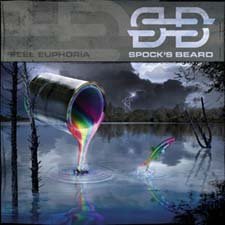
SpocksBeardFeelEuphoria (1)

I’m listening today to Feel Euphoria, and the comparison to my first encounter with Tool (not tools) is like an insistent throbbing.  Throbbing, pulsing, thumping.  The drumming!  Of course!  The drumming and the singing are on especially intimate terms here.  That was going on in Tool in amazing ways, but here it’s amazing while also being much more subtle, a sumptuous sort of subtle.  And I would say even more tensely intimate, in a wondrous, meaning-making sense.  The artfully restrained but deeply athletic sonic synthesis of Alan’s Guitars, Dave’s bass and Ryo’s keys are a luxurious garden through which Nick’s percussion and vocalization can dance together, hand in hand.

And TENSIONS.  Such richly meaningful tensions arise here:  “Onomatopoeia” is blissful tension, because what “sounds alike” never truly sounds alike.  “The Bottom Line” is tension because the singer who looks for it is himself found by it.  “East of Eden, West of Memphis” is a glorious geographical tension.  And then there’s that guy named Sid.  Of course he’s an enigmatic tension (if I insert a Y and allude to Syd, can you Barrett?).  Nick sings in the first person, but at least part of the tension here is with that “first” designation.  It’s him, or it’s someone else I know or remember, or perhaps it’s even me, myself (an I).  Or it’s all of us.  Or maybe not any one of us in particular.  And the closing call to “Carry On”:

When your whole world comes apart
There’s a place for you to start

This was my place to start with Spock’s Beard, my place to go back and pick up on the words that, in my prior post, I did not yet know.  Today Tool provided a tool, but only a tool.  It was really about SB.  And another tension, too:  It was really about how we might listen to any words when they are words to a song.  But that’s not to say that such listening will always be rewarded, which is why it was really about SB, and (not to elevate unduly, but) about NdV.

So, those of you who’ve known all along:  Does this all sound right?  Or does it sound just wrong enough to make a tension that might be right?  Does it help to talk of the tension that emerges when one sings rather than talking?

Song Reflection: A Boy in Darkness

In the liner notes for English Electric (Part One), Big Big Train’s members offer us this comment on “A Boy in Darkness”:

Uncle Jack told David the true stories of how children suffered in the mines in the 19th century. Although there has been considerable progress there are still plenty of dark corners where children may suffer. This song is about shining light into those dark places.

Darkness.  I listen to this song, and questions bubble up from somewhere deep, dark, and hot.  I think of another song about darkness, with what I’ve always taken to be an allusion to the turning off (loss?) of a television:

Tube’s gone, darkness, darkness, darkness
No color no contrast
(Joni Mitchell, “The Hissing of Summer Lawns”)

It seems lame, making more words here from their already complete sonic poetry.  (“Lame” as my daughters pronounced many things when they were teenagers, but even more as in “the halt and the lame.”)  Will you forgive me this?  If it gets to be too much, and you stop reading, I’ll understand.

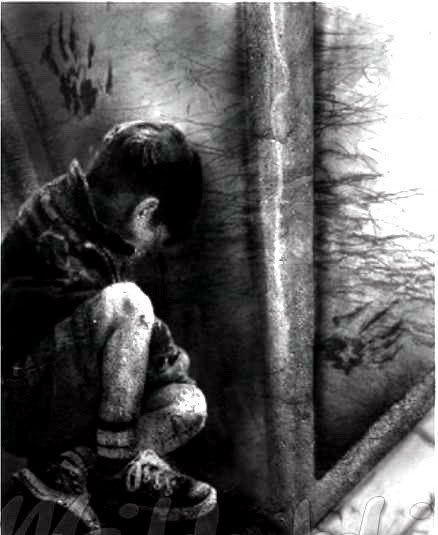
“Little Boy in Darkness”
(from photobucket.com)

Comparing one darkness with another is always such a problematic endeavor.  But here in this song we can hear more than one darkness, if we will listen.  If “progress” brings light to any darkness, it is always to some particular bit of darkness at a given time.  Even the light itself — the light that we literally see, anyway — makes shadows when it shines.  Shadows somewhere.

David Longdon’s voice rings in my ears with a pain that I don’t fully know myself.  But I have known well some who have known that pain, and so I am never more than one step away.  A friend, a family member.  I don’t know Godfrey Fletcher, but I do know this one, that one, and another one whom I cannot name here.  I cannot name them because their pain has in each case become a part of who she or he is, a self-shadow that will always follow.  It seems as though they must wear it like a kind of shame, even though the shame is really that of someone else.

Dark places.  A sense of place should be a sense of home, a sense of belonging.  One’s hearth.

Dark corners.  Corners are where one must stand, having been naughty.  When the darkness is brought by an Other, it becomes a verb, and one is cornered.

As I listened to this song this time, I heard an insistent silence that asked me what I might give to fuel the light.  I can watch news programs (“no color no contrast”), read online reports, furrow my brow and shake my head gravely for abstract children.  But how can I help to shine this light that is so desperately needed?  I KNOW persons — real, breathing, potentially bleeding friends, relatives, acquaintances — who must deal with darkness that is in no way abstract.  Could I be to them a light, yet also some relief from the heat?  A cooling light?

Mines are dark places where not everyone goes, where many did (and still do) avoid going.  Will I take this song as a call to go into some mine?  Will I know which mine I should enter?  Will I be able to see it as a mine?  Can I love a structure, call it home, if this means owning its dark corners?

Does something of me need to burn in order to bring some light?  Do I dare to face a part of myself that might have turned out not as father, but as “this hunter”?

Heart(h) of Darkness?

“The horror!  The horror!”

Chanson d’infini (a poem)

CHANSON D’INFINI

I hear the sweetly palpable texture there,
As if, like hands, my ears could bathe and splash
In each new note he plays, in each new word
He sings, or rather, vocally caresses.

Betwixt his tones, in interstitial mystery
There lies a deep, unsingable sort of tune.
Between two notes, infinity, unbroken
Sleeps, content with natural, sharp, or flat,
All alphabetical, until an unbound voice
Can bend between and wake the pure durée.

Singers often sing their songs, and we
The hearers, listen near as often too;
But when it is a song that sings a singer,
Then…
Then we have Heard.

.

(Originally written in 1996, I think this was when I had first really gotten hold of that wonderful word, ‘interstitial,’ in relation to hearing music.)

Old-Timer’s Corner: 2012 Minus 40

English ElectricOkay, so my top pick for 2012 is Big Big Train’s English Electric (Part One).  I’m the old-timer who’s not drinking from the fire hose, so there’s not a full list coming.  Sorry.  I’m still working slowly with early to middle Spock’s Beard, sipping and savoring.  I’ll get back to you on that.

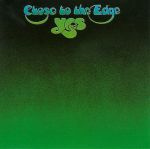
But since I don’t have a list (and since the world did not end yesterday), here’s a quick reminder of what kind of year was coming to a close at this time forty years ago.  THE prog album of 1972 was, of course, Close to the Edge (Yes).  But I thought it might be interesting to some of you to remember what else came out during the year of Watergate.

Yes-closeHaving jogged my memory with some careful research (i.e., a few minutes on Wikipedia) here’s my list (alphabetical by artist) of favored prog and (arguably) prog-related albums from that heady year, excluding Yes’ aforementioned masterpiece (this sentence didn’t have enough parenthetical comments, so here’s one more):

  • David Bowie, The Rise and Fall of Ziggy Stardust and the Spiders from Mars
  • Edgar Winter Group, They Only Come Out at Night (if only for “Frankenstein”)
  • Emerson, Lake & Palmer, Trilogy
  • Genesis, Foxtrot (Ok, I’d definitely put this at number 2)
  • Gentle Giant, Three Friends AND Octopus
  • Jethro Tull, Thick as a Brick AND Living in the Past
  • King Crimson, Earthbound
  • Pink Floyd, Obscured by Clouds
  • Lou Reed, Transformer
  • Roxy Music, Roxy Music
  • Strawbs, Grave New World
  • Uriah Heep, Demons and Wizards AND The Magician’s Birthday
  • Wishbone Ash, Argus (yes, this falls under the “arguably prog-related,” IMHO)

Foxtrot72To put some broader perspective on it, that was about when pop radio was dominated by Summer Breeze (Seals and Crofts).  Frank Zappa was moving from the quasi-prog of the early Mothers closer to jazz with Waka/Jawaka and The Grand Wazoo.  Todd Rundgren scored big with Something/Anything? (his bend toward prog was coming soon).  Bebop Deluxe, Captain Beyond, Devo, Oingo Boingo, Pavlov’s Dog, Steely Dan, and Styx were all formed that year.  If, like me, you recall early “Jesus rock,” that was also the year that Petra was born.  Other non-prog landmarks from 1972 include Paul Simon’s amazing eponymous album, ditto from the Eagles, Exile on Main Street (Stones), Harvest (Neil Young), Honky Chateau (Elton John) and Sail Away (Randy Newman).

Wishbone_Ash_-_Argus

If this has whetted your appetite for more of a history review, and you prefer having a link to doing your own search, here’s the link.  Otherwise, having an especially soft spot for 70’s Wishbone Ash, I recommend you go back and give a listen to Argus again.

Now, back to our regularly-scheduled transition from 2012 to 2013.  Watch for BBT’s English Electric (Part Two), coming in March!

Not Yet Knowing The Words

“Drinking from the firehose.”  I know whereof eheter writes.  I probably hesitate a lot more than some of my colleagues here so to drink, remembering those early years fondly and too exclusively.  Sometimes when I stoop for a sample from that ongoing gusher, I’m less than enthused.  I’d mostly rather keep writing of auld lang syne.  But sometimes it’s a new, startling kind of refreshment.

Lately it’s Spock’s Beard.  I missed them long because I was wandering rather far from any prog congregation.  What I’ve sampled over the last couple of weeks is the après Neal Morse SB, dominated (though that’s not quite the word) by Nick D’Virgilio. (Should I be ashamed to say that he’s like a new aural fixation, an object of would-be bromance for my ears?)  While hardly a “review,” what follows is prompted by first listens to Feel Euphoria (2003), Octane (2005) and Spock’s Beard (2006).  Peace!  Peace, friends who are more at home directly in front of the hose’s flow!  I’ll probably get to what you will urge upon me for comparison, but slowly I expect.

SpocksBeardFeelEuphoria

There’s a place where my listening or my mind (or whatever it should be called) sometimes goes.  It’s like an interface, or maybe an interstice, but no huge gulf to be bridged; more a tiny fissure across which some kind of synapse recklessly leaps.  It’s where a sonic upsurge, apparently threatening figuratively to deafen, meets/adjoins/enters an enigmatic lyrical field or opening.  I expect the meaning to be there, in the opening.  I expect it to present itself to me on bended knee, to wash into my cognition as if it had been at home there already for time without beginning.  But it stands aloof.  It regards me suspiciously, as if waiting to see if I am actually worthy of what it has to tell me.  The cleavage (a cut but also a holding contiguous and tight) between the song and its lyric rarely hits me this way, but when it sometimes does, I am a bit undone.

I can glimpse that fugitive sens lurking in the clearing just behind the sumptuous sound of this band.  Band?  Travelers?  Wanderers?  Of course, not all who wander are lost (Tolkein), and this band seems anything but lost.  But I must reach for this meaning that is not yet close enough for me to have under my hand for an actual touch.  The beauty of the music (by musicians acquainted with Muses) has me longing to draw closer to it.  Not to GRASP it as if it could be “held” by the likes of me, but to become a novitiate in its order.

So much more pretentiously verbose, perhaps, than “THESE GUYS ROCK!”

Hey, but they do.

Leave me now if you will, for a while, in this clearing with this beauty.  The words therein elude me for the present, and I must have another go to see what they bring.  I might say more, if the more turns out to be anything that can be put into words.

Or, perhaps you could join me in the clearing if you can, if it opens for you too.

Thinking is the Best Way to Travel

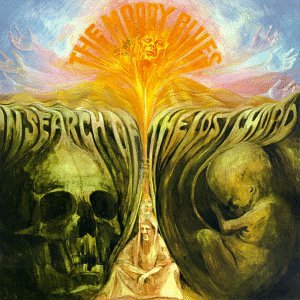
Okay, I remembered another one of my “generic” 8-tracks from the early 70’s (see my prior post).  In Search of the Lost Chord by the Moody Blues (1968).  (Yes, I’ve owned at least two legitimate copies since.)  My experience with it was in many ways comparable to that with King Crimson’s Islands (discovered at nearly the same time, if not the same day).

My entrée into a high orbit around the notion of “prog” had not been through radio airplay, and I was only beginning to discover the wonders of WMMS in Cleveland (in its Golden Age).  As with King Crimson, I was not yet familiar with the Moody Blues’ first two albums, so Chord was my point of entrance, and has remained a sort of fulcrum in my perception of the band.  I heard the music first without the impact of cover art.  And to be quite honest, the art didn’t do that much for me when I eventually saw it.

I love the whole album, partly because of its place in my early listening life.  But this “mini-review” is really about one song, the one that has most profoundly stuck with me from then to now:  “The Best Way to Travel” (credited to Mike Pinder).

In the early 7o’s, I was rather blissfully naive regarding drugs, so I didn’t hear that I could “fly high as a kite” as others might have heard it.  Oh, I knew vaguely who Timothy Leary was, but my general intake of the album’s search-and-discovery motif was uncluttered with chemical enhancement experience.  Others were often more aware than I was of my apparent destiny as an academic and an intellectual (in 7th grade, several other kids at school called me “Professor”).  Nonetheless, what I heard was that thinking…  THINKING…   is the best way to travel.

Texture in music is almost always uppermost to my ears, as if it were a surface to caress or to palpate.  This is one of those songs with a texture that carries its lyric with an ease or a naturalness that approaches perfection.  (Other examples of this:  “Jerusalem” by ELP, “Earn Enough for Us” by XTC, and several Genesis songs, including “The Colony of Slippermen” and “Squonk.”)  The texture conveys precisely the sort of “travel” to which the lyric alludes.  Bold, dense, percussive acoustic guitars that propel whatever is the vessel (seesaw?) on which we ride.  Yet they hesitate dramatically to allow us to regain a fix on the ethereal “beep,” reminiscent of radar, which may or may not be some sort of guide.  We may need to follow a bit in order to find out.

Four decades later, I still believe every strum and every word.  Thinking is the best way to travel.

Islands of Sound, Sea of Silence

Islands Trifid Nebula

King Crimson, Islands (1971)

When I think of silence as a part of sound, I often think of this specific album.  Its “silence” was in fact the hiss of a pirated tape.

For a while in the early 1970’s, I remember being able to buy 8-track copies of “popular” albums at the grocery store.  They resembled the early “generic” food products, with the plain white label and black printing.  (I remember how compelling those white cans looked, with only the word “BEER” on the side.)  This was before changes in copyright law of the mid-70’s, and the tapes were simply recorded from the albums and sold, presumably always without permission or payment.

I probably only ever had a small handful of these, and now I only remember one of them.  I had picked up Islands by King Crimson, not yet knowing anything about them at that point, but finding myself intrigued by both the band name and the album title.

Now, this was still very early in my awakening to prog.  Imagine this naive young American teen from rural Ohio, listening to “Ladies of the Road.”  Then listening to it again.  Then again.  As many critics have suspected, it probably didn’t help with my intensely awkward, ignorantly misogynistic adolescent confrontations with my sexuality.  But oh man, that saxophone entrance!

I think it was at least a week before I really listened to the whole album with the same level of attention that I gave to LOTR.  (If I use that abbreviation, it will probably drive Brad Birzer crazy, which will be totally worth it.)  The second song on the album that began to reverberate deeply was “Song of the Gulls.”  What’s up with this?  All strings?  Like a “classical” piece?

Remember how those 8-tracks worked?  If I remember right, at that point I could just listen to the third section of the tape over and over.

By the time the entire album had me entwined in its tendrils, I had repented and bought a legitimate copy.  Removed the shrink wrap, so there was no band name or title, and it was another one of THOSE covers: Peter Sinfield’s original “Islands” painting.  My third (second legitimate) copy eventually had the Trifid Nebula cover.

Once I had immersed myself in the remainder of the album’s tracks, I began to feel the importance of pauses, of “silence” (I would learn a bit later from John Cage the relativity of “silence”).  It was this album, as much as any early “prog” album, that got me to notice the role of silence in music, of “negative space” in aural texture.

It was also a bit later when I went back to the earlier King Crimson, once I had made the connection that this was where Greg Lake had come from.  The transitional character of Islands gave its music greater depth for me.  It prepared the way for the coming adventures with Wetton, Bruford, and Cross, which are actually my favorite Crimson albums overall.  But Islands remains my point of entrance, and so inescapably a sort of benchmark for my sojourn with Robert Fripp.

Listen again to Islands, and notice the surrounding sea.

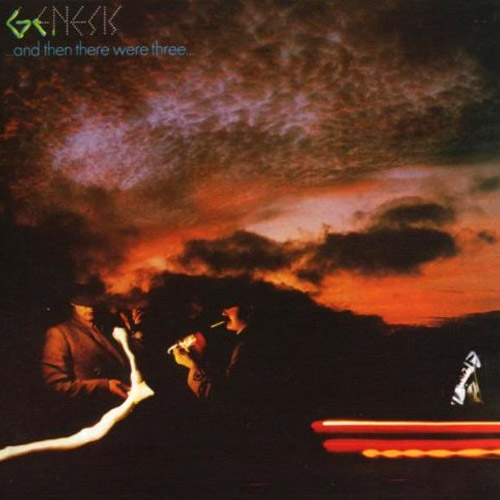
Underrated Albums Corner – Genesis, …And Then There Were Three

The top ten reasons to listen again to
…And Then There Were Three (1978):

10. Tony Banks’ keyboard work

9. Phil Collins’ drumming

8. Mike Rutherford’s bass work

7. The TEXTURE of the production

6. The rest of the songs are much more interesting than “Follow You Follow Me”

5. The strange but fascinating premises of most of the songs

4. Phil Collins singing about an American cowboy.

3. The TEXTURE of the production

2. How astonishingly well these guys do musically, even without Steve Hackett

1. The TEXTURE of the production!

These Birds Have Flown

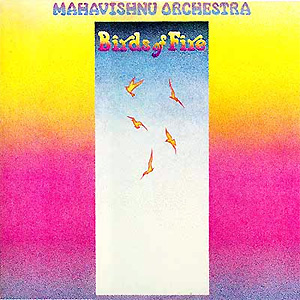
Remembering:  Mahavishnu Orchestra, Birds of Fire (1973)

One of THE touchstones for the merging of jazz and rock sensibilities in the 1970’s.  Birds of Fire arguably brought the jazz impulses of the players closer to the hearts of rock fans than had their prior album (The Inner Mounting Flame), by capitalizing explicitly on a short song format for maximization of intensity and impact.  Yet within that more restrained format, John McLaughlin’s range, in both composition and performance, insistently burns with its trademark spiritual glow.

And “that album cover”!  (See my prior post on this topic.)  The flame is there, and its center burns white-hot, but its presence on that cover has an uncanny subtlety and softness.  It’s a flame to which we are invited; it beckons quietly into the not-so-quiet world of sound within.  I remember the impulse to hug the album to my chest, hoping to fly with those birds, while realizing once I heard the music that in doing so, I would have burned my hands.  When I listen now, I still feel the heat.

But the album also never loses sight of the implied silence that sound transgresses, or of the darkness without which the glow of the fire could not be made manifest.  Sri Chinmoy’s poem seeks to capture the passage:

No more my heart shall sob or grieve.
My days and nights dissolve in God’s own Light.
Above the toil of life my soul
Is a Bird of Fire winging the Infinite.

These birds have flown.  Listen, and they might fly again.  Isn’t it good?