
I always say that it’s about breaking the rules. But the secret of breaking rules in a way that works is understanding what the rules are in the first place.
— Rick Wakeman
I always say that it’s about breaking the rules. But the secret of breaking rules in a way that works is understanding what the rules are in the first place.
— Rick Wakeman
“…[I]n diatonic harmony, when upper partials are added to a chord, it becomes tenser, and more demanding of a resolution — the more the rhythm of a line rubs against the implied basic time, the more “statistical tension” is generated.
The creation and destruction of harmonic and “statistical” tensions is essential to the maintenance of compositional drama. Any composition (or improvisation) which remains consonant and “regular” throughout is, for me, equivalent to watching a movie with only ‘good guys’ in it, or eating cottage cheese.”
Frank Zappa (1940-1993)
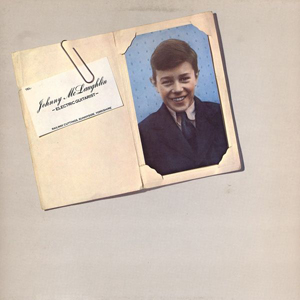 A “gateway drug” is what I’m tempted to call this album. It was that in my experience, anyway. I bought it when it was released, during the period when my musical tastes, rooted in 70’s prog, began really to open out. Here was my first encounter with a solo album from John McLaughlin, who had amazed me via televised appearances of the Mahavishnu Orchestra (was it on Don Kirshner’s Rock Concert? The Midnight Special? Both?), and the appropriately legendary Birds of Fire (1973). That limited exposure set my expectations, and pushed me to buy the album “blind,” as we used to say.
I listened. So much for my expectations. As I look back now at the remarkable list of musicians playing with McLaughlin on this album (you can see that list here on Wikipedia), it stands out as a landmark in my gradual awakening to the wonders of artists who refused to be confined by a genre. Sure, the jazz elements are often prominent, but always — in every song — in the service of a work of art, and never simply subservient to defined protocols that I was associating with jazz at the time. I did not really come to understand the term “fusion” until later; Coryell, for example, was for me a taste more slowly acquired. Appreciation for the importance of Miles Davis in this historical trajectory also came later.
Such appreciation did indeed come, but it was in no small measure through a McLaughlin threshold. His skills and stylistic range are breathtaking in general, and if you’ve not partaken deeply before, Electric Guitarist is a mighty fine place to begin. The music curves in an irresistible arc, beginning with the amazing “New York On My Mind,” and culminating in an extraordinarily subtle and moving rendition of “My Foolish Heart.” If you remember it, go listen again; if you haven’t heard it, I would urge you to add it to your queue.
I remember still being an atheist when I procured my first copy of ELP’s Brain Salad Surgery when it came out in 1974. I had spent my middle school years saying that I was an atheist, for reasons not completely clear to me in retrospect. It was probably partly because I had read Erich von Däniken, and was very taken with what would eventually become known as “ancient astronaut theory.” It was probably also partly because I was just rebelling against my perceptions of the small-town midwestern Methodism in which I was raised.
But whatever else it might have been, I’m quite sure that it was partly from listening to Greg Lake sing “The Only Way” (on Tarkus). In other words, it seemed cool to be an atheist. My mother (who was certainly no atheist, but was quite open-minded), instead of trying to convince me to abandon my supposed conviction, warned me that I would need to be aware that openly discussing this could lead to VERY negative reactions from others. Fairly wise advice, given that I was just coming out of junior high school, and was already frequently persecuted for being a “queer” (i.e., I read a lot, was overweight and bespectacled, was not at all athletic, and had only recently put together the broad outlines of the whole “birds and bees” thing).
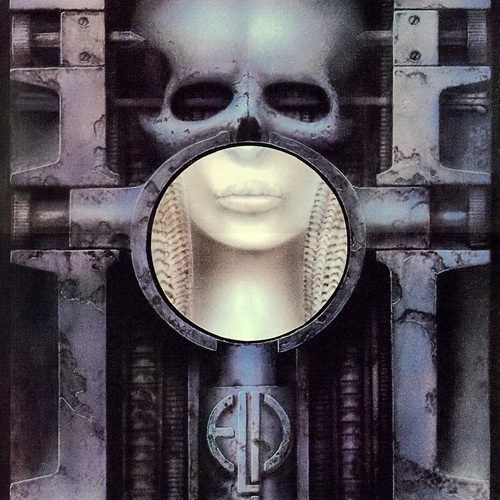 It was into the midst of that ostensibly “cool” youthful atheism that ELP’s recording of “Jerusalem” was dropped like a dirty bomb. It remains THE single ELP track that can almost immediately liquefy my spine and reduce me to a puddle of awe. Here was Greg Lake, singing about Jesus (albeit in England). I was not previously familiar with the poem or its hymn setting. Since becoming familiar with the hymn, my sense of the near-perfection of arrangement and of sonic texture has only been confirmed.
The reverberations of “Jerusalem” followed me through high school, which is to say that they followed me from my “cool” atheism of early adolescence to the Bible-thumping obnoxiousness of my later adolescence. What were some of those reverberations?
One was that savory but unsettling phrasing, “dark satanic mills.” Even after I dove head-first into fundamentalism, the sense for the importance of darkness haunted me. It was only much later that I actually found believers in God who seemed willing to approach it. Most notably, Canadian singer/songwriter Bruce Cockburn would later grab at the same region of my heart, singing about how we’ve “got to kick at the darkness ’til it bleeds daylight.”
Another reverberation was the triumphalist feel of the song, which was delivered with such arresting aesthetic sincerity, while also being… I don’t think that the word ‘ironic’ quite covers it; that’s the word that comes to mind right now. The building of a New Jerusalem has seemed so central to Christianity, both as I have at times rejected it and at other times embraced it. The sort of Christianity that I drifted into over time (Anabaptist/Mennonite) questions the triumphalist, empire-building feel of some major streams within Christianity more broadly. Thus, I still listen to “Jerusalem” and hear this resonance as a friendly one.
A third, and (for purposes of this post) final resonance is that the darkness of these mills (I didn’t know at first what “mills” were being referenced; I still can’t hear the song with the emphasis on that word) desperately call for something that is not darkness. This is now how I understand the “religious” feel of “The Only Way” as well as of “Jerusalem.” Perhaps this is part of what made Genesis’ “Supper’s Ready”–released earlier, but not on my radar until a bit later–another revelatory listen.
No, I’m not going to present some kind of argument that this music should push you in a certain direction religiously (or spiritually, if you prefer). I share this vignette from my path, hoping that you might nod with understanding, remembering and treasuring the resonances that such rich music and poetry have had along your path as well.
The JACK Quartet, Live in Kalamazoo Michigan, 10/19/2012
(Wellspring Theater, EPIC Center).
Taking seriously prog guru Birzer’s marching orders, and addressing “any music that is good, true, and beautiful,” I’d like to make sure that all of you know JACK. (I would NOT want anyone to be able to say that readers of Progarchy don’t know JACK!)
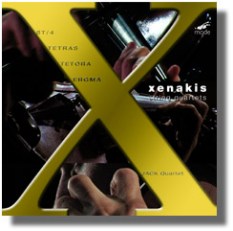
If you don’t know JACK yet, they are a string quartet (violinists Christopher Otto and Ari Streisfeld, violist John Pickford Richards, and cellist Kevin McFarland), and they have been making a fairly big splash over the last few years over in the more “academic” “new music” bins. They have already developed an international reputation, especially through their revelatory recordings of Iannis Xenakis’ quartets. Their name is an acronym composed of the first letters of the members’ first names, but they very much live up to the musical impetuousness that the name suggests.
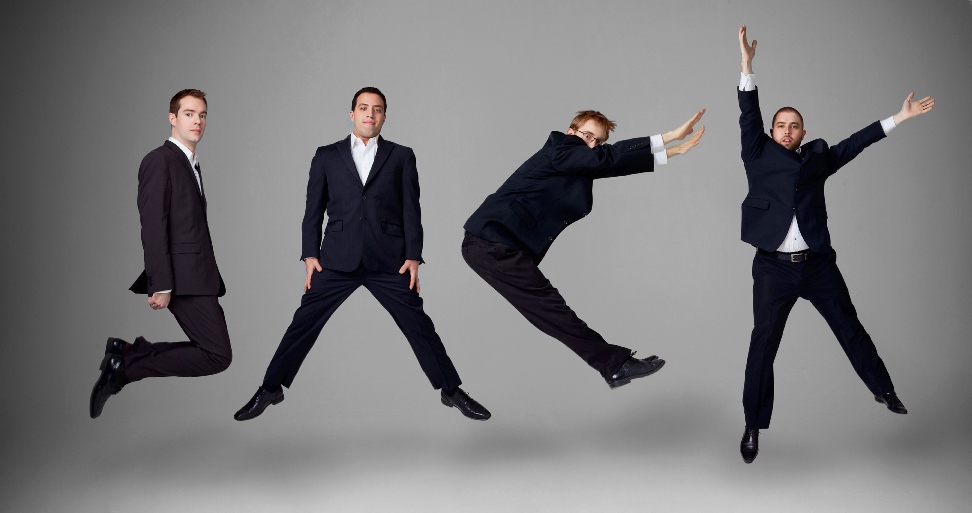
I’ve known about them for a while, but last Friday night in Kalamazoo Michigan, I got to see them perform in person for the first time. It was one of those nights when multiple accidents on the Interstate bring the traffic to a halt, so the 45 minute lead-time I had planned on between arrival and concert time was obliterated, and I had to walk in fifteen minutes after they started. Hence, I unfortunately missed their rendition of three pieces by Guillaume de Machaut, arranged by violinist Ari Streisfeld.
But then they launched into the 5th string quartet by Philip Glass, and any frustration about having to walk in late melted away. Glass has been one of the most visible composers in recent years working at (and often obliterating) the boundaries of more “academic” composition and supposedly more “popular” genres of music. To watch the total bodily involvement of the members of JACK in the performance of this music was breathtaking. If you know what it looks like to see a great string player absorbed in an excellent classical piece, and also what it looks like to see the head begin to nod and the posture pulsate in that serious rock-aficionado sort of way, imagine BOTH sorts of movement brought towards you on the crest of the wave that I consider one of Glass’ most subtle and engaging pieces. I have rarely seen a more striking embodiment (as opposed to a mere presentation) of Glass’ music.
After a break, they returned with a fascinating reading of Guillaume Dufay’s Moribus et genere, an “isorhythmic motet” from the 1400’s arranged for strings by JACK violist John Pickford Richards. I do not consider myself much of an early music fan, but Richards’ arrangement and JACK’s performance very nicely highlighted the resonance of some early compositional techniques with contemporary composition. Appropriately more restrained, and nicely showing JACK’s professional polish.
But finally, the highlight: Tetras by Xenakis. I have heard a fair number of recordings by Xenakis, and even seen some pieces performed. But I have never been so profoundly struck by the way in which the members of JACK seem to understand Xenakis, to be able to live his music in performance, as opposed to “presenting” it. All of the sounds (many of which still tend to strike some listeners only as “noise”) were profoundly musical sounds, irreducibly beautiful sounds. The precision of the chamber ensemble performance was thoroughly energized by the primal level at which the players “got” the music, and pushed us as listeners to “get” it as well.
After the concert, I had a chance to talk to the members of JACK. Ari Streisfeld enthusiastically agreed with my assessment that skillful transgression of genre divisions is at the heart of what is most exciting and inspiring in music today. This has already been true for decades in music by Glass, Xenakis, and a host of other recent composers. Kronos and others have made the transgression increasingly visible in accessible and popular ways. Watching JACK perform, however, reinforces my sense that young musicians are increasingly feeling this excitement at a more visceral level, breathing this inspiration as well as grasping it well at the theoretical and performance levels, making it their dwelling, their home. These are guys who have been weaned on Bach and John Zorn.
If you have not yet heard JACK’s excellent recording of Iannis Xenakis’ quartets (the Xenakis Edition, volume 10, on Mode), consider bringing your prog-sensitized ears to it as soon as you can!
JACK’s website: http://www.jackquartet.com
JACK on Facebook: https://www.facebook.com/jackquartet
The Xenakis quartets on video at Amazon (also available on CD and digital download):
http://www.amazon.com/The-JACK-Quartet-Xenakis-Quartets/dp/B001SGVDQK
I remember it being a “nice” day in the small town where I grew up. I’m not sure what time of year it was; it might have been Spring. I’m guessing it may have been the Spring of 1972, in which case I would have been twelve years old.
I had a friend. He was one of those friends you have when you’re younger, who seems to know so much more than you do about so many things. He seems to have been places, to have experienced things. THINGS, in a pregnant sense (in German one would say Sachen). We went into his house, and into his room. I don’t remember any details about how we became friends, or what had happened before we went into his house.
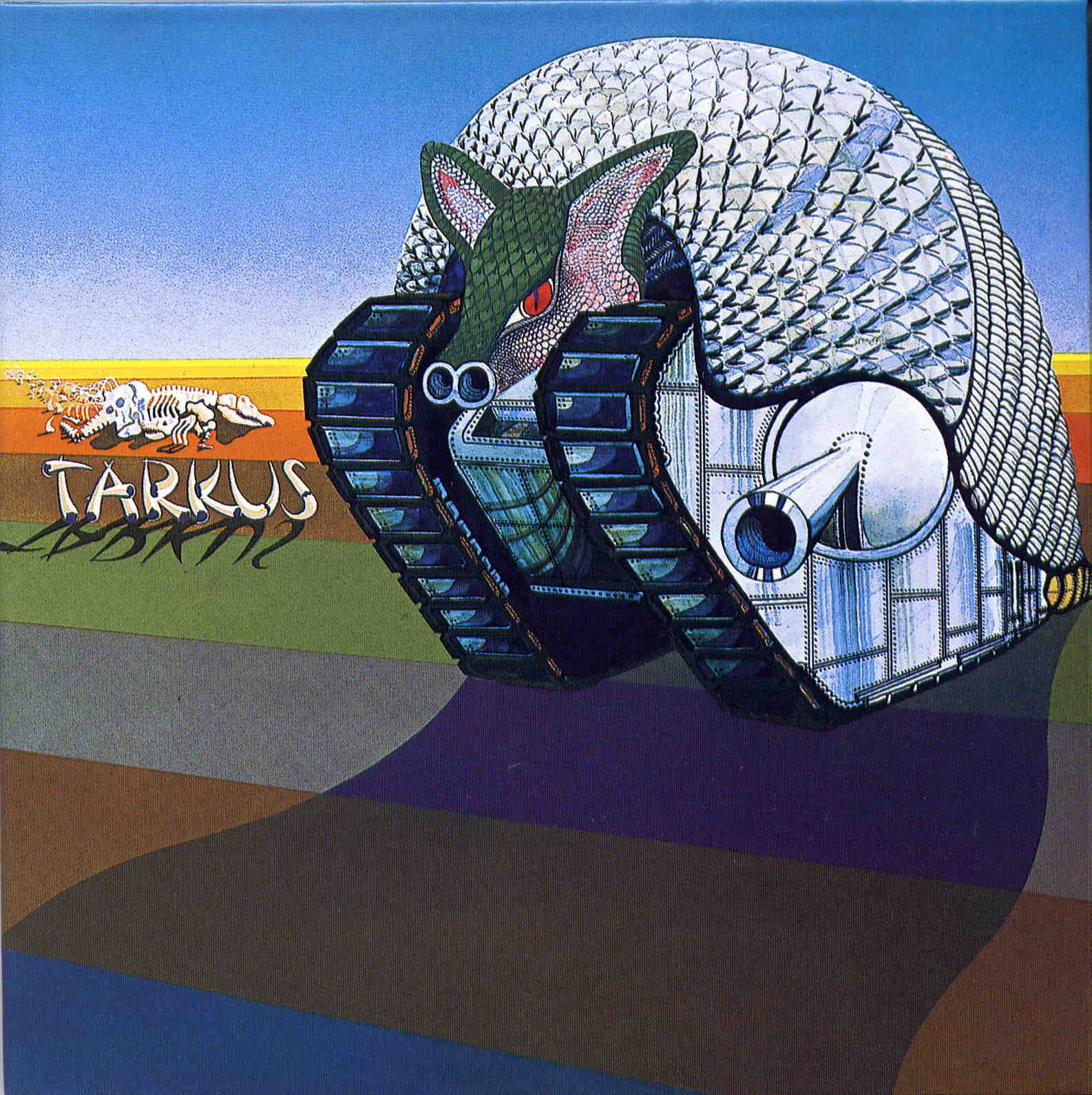 But I remember those album covers.
Oh, sure, we had albums at home, including a few that were mine, which I played on my little portable (mono) record player. The Beatles, Herb Alpert and the Tijuana Brass (remember Whipped Cream and Other Delights?), Glenn Gould’s Goldberg Variations, The Beach Boys, Simon & Garfunkel. But the album covers that my friend showed me that day were different. Two of them stand out in my memory especially vividly: Tarkus (Emerson, Lake & Palmer), and Fragile (Yes), both released in 1971. As I look back on it now, seeing those two album covers corresponded with some kind of awakening within me. I knew not only that these were different, but also that the difference was important. This was not “popular” music that I had heard on the radio. Nor was it “classical,” the other main category in my classification schema at the time. When my friend played them, I was not at all surprised that they sounded like something totally new (to my ears, at least).
What was so special about those covers? Admittedly, the background against which they seemed special to me was quite limited. My exposure even to the Beatles was rather spotty; I was vaguely aware of how their covers had gotten more strange, but I think the main one that I actually owned at the time was the U.S.-only release, The Beatles Again (a.k.a. Hey Jude). I was used to covers on which the most prominent features were images of the performers. When I first saw both Tarkus and Fragile, I experienced something that I wouldn’t have the vocabulary to describe until a number of years later. Phenomenologists like to talk about the play of presence and absence, how an absence can be a presence of a sort. The absence of an image of “the band” leaped out at me from both covers. It was a palpable presence for which I was not prepared. The absence of an image provided a springboard from which the art on both albums could leap, seemingly not only into my eyes but maybe (so it felt) into my soul.
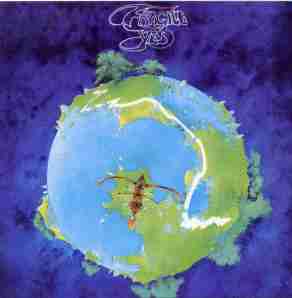 But it wasn’t just “artwork.” The images on these album covers (by William Neal and Roger Dean, respectively) were fantastic, in the root sense of that term. They violently insinuated themselves into my perception as essentially interstitial things. What I mean is that they had a “between” feel to them that was jarring, piercing, disconcerting, but also deeply attractive. It was not simply that I did not have a category for them; they both seemed to shine with some sort of resistance to categorization. Both immediately suggested a narrative that unfolded in some world or time or dimension that both was and was not this one.
They most emphatically were not “psychedelic” (think Iron Butterfly’s In-A-Gadda-Da-Vida). Even later, when I knew a little bit more about performance- (and listening-) enhancing drugs, there was never a point where those covers became anything that could be captured by any hushed murmuring of “Wow, far out!” They were not simply abstract, either.
As I remember those covers, and the revelatory feel of that day when I first saw them, I think about the “genre” to which they supposedly belonged. (It was that same friend who introduced me to the term “progressive rock,” though I’m not sure whether it was on that day or a bit later.) I think about how I tried to talk, in early high school, as if “prog” were the only kind of music worthy of the name ‘music.’ I think of how that label seemed to submerge into the miasma of my later teenage years, but also to rear its head here and there. I think of how it came to seem an historical curiosity and an object of nostalgia. I think of how it has reemerged in my life by way of certain friends whose fealty to the concept of “prog” apparently never flagged or wavered as much as my own did.
I recognize the inescapability of talk of genres, but I often find myself very skeptical of them nowadays. Arguments regarding what is and what is not “prog,” which I once would have entered into passionately, now seem tiresome to me. They often strike me as little more than specific manifestations of the need to bolster the goodness (sacredness?) of what I love by way of establishing the profanity (usually just the “suckiness”) of what Others (“They”) love.
But since I’ve been thinking lately about those two album covers, I find that something of that youthful fealty still stirs in my breast. I wonder if this remainder, this echo of a love for something that tries to escape any particular bin in the record store that might be aimed at a taste, considered as a marketing target, is still somehow important. I wonder if there is perhaps a resistance in prog to particular sociopolitical “bins” that is also essential. Since having my attention called to the later work of Rush, to the wondrous explorations of Big Big Train, I wonder if there’s a vital resistance, a stubborn but honorable refusal, that has gone by the name ‘Prog’ over these recent decades, that is more a flame to be kept lit than a curiosity to be archived and displayed.
It’s an aesthetic hope to which I give voice, not a claim that I make. I remember that day in 1972 now as a sort of birthday of that hope. May it live long, and may it be more than simply an aesthetic hope.
 Progarchy