Sometimes you have to put aside the extended epics and experience the simple pleasure of a nicely crafted pop song. With that in mind, here’s a playlist of recently released pop-like songs that prog-lovers can enjoy without guilt:
1. Sound Of Contact: “Not Coming Down”. Coming from their extraordinary album, Dimensionaut, this catchy tune has all the right ingredients: wall-of-sound production, rich vocal harmonies, an eminently hummable chorus, and they even sneak in a Beatlesque bridge. Take a listen, if you don’t believe me:
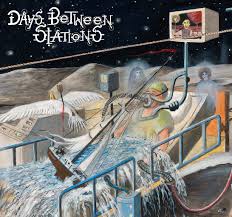
2. Days Between Stations: “The Man Who Died Two Times”. I’ve written about the wonderful album this track appears on in a previous post, and it features a delightful cameo by XTC’s Colin Moulding. It has an irresistible beat married to an insistent synthesizer riff, with Moulding’s multitracked, wry vocals floating over the controlled chaos. Think classic Alan Parsons Project mashed with 10CC, and you get a glimmer of the genius of this song. Go ahead and spend a buck for the mp3 of it here. You won’t be disappointed.
3. Sanguine Hum: “The Weight of The World”. Okay, this one is almost 15 minutes long, which qualifies it as a genuine epic, but it is so effortlessly melodic and uplifting I have to include it. I’ve always thought Sanguine Hum’s secret influence was Jellyfish, and it’s hard to deny that here. If Jellyfish and “One Size Fits All”- era Mothers of Invention had a child, it would be this track. It lilts, it waltzes, it almost skitters out of control, but it never loses its pop appeal. The first 37 seconds of their promo for the album are taken from this near-perfect song:
4. Big Big Train: “Uncle Jack”. I defy anyone to listen to this song and not end up grinning ear to ear. A jaunty tempo provides a fertile bed for lush vocals that sing the joy of taking a walk outdoors. And when the counter-melody hits at 2:40, you’re transported to paradise. Listen below (but buy the whole album, English Electric Part One):
5. Arjen Lucassen: “E-Police”. It can’t be an accident that Lucassen’s “E-Police” recalls the glories of late-70s Cheap Trick (“Dream Police”?). A big helping of glam rock that will leave you hitting Repeat on your player.
6. Gazpacho: “Mary Celeste”. A Norwegian band does Celtic music, and creates a pop masterpiece. A delicate intro on mandolin and piano blossoms into a full-blown production that includes accordion, guitars, violin, and masterful vocals. It doesn’t hurt that the melody compels you to get up and move.
So there you have it – a playlist that you can use to seduce your friends who are woefully ignorant of prog into the beauty of that genre, or one that you can use yourself when the occasion calls for some sing-at-the-top-of-your-lungs music. Enjoy.
My dad served on the merit badge review board for our local Scout troop. I’ll never forget the night he complained to me about one of my fellow Scouts who was trying to pass the requirements for the music merit badge, which included so many hours listening to and writing about classical music. “You know what he told me?” asked my agitated father.
“’I’ve listened to the Moody Blues and Emerson, Lake & Palmer.’ And I told him, ‘Young man, that ain’t classical music.’”
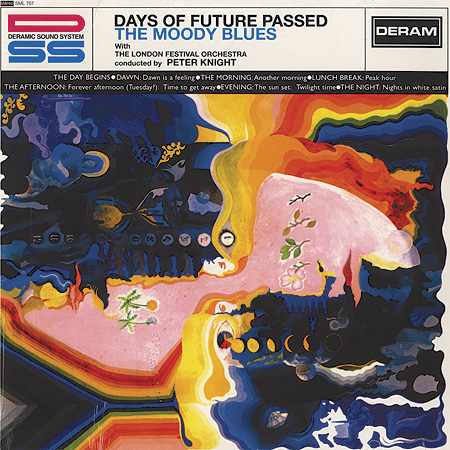
I was filled with embarrassment, both for my dad and my buddy. I knew where they were each coming from, and knew nothing I would say could bridge the generation gap. But I did tell my friend that the London Festival Orchestra on a pop album and ELP’s blistering cover of Pictures at an Exhibition were no substitutes (in Scouting) for the real thing, i.e. original arrangements.
The London Festival Orchestra’s appearance on Days of Future Passed was more a novelty than an innovation. Band legend has it that Deram Records wanted the Moodies to cover Dvořák’s 9th Symphony. That story is disputed. If true (and acted upon), the Moody Blues would have pre-empted “Rondo” and Pictures. Either way, Days of Future Passed (1967), while not a prog album in the strict sense, opened up possibilities that energized the emerging prog scene.
Technically this is a psychedelic pop record adorned with orchestral cinemascapes. Apart from the opening and closing motif (drawn from the chorus of “Nights in White Satin”) the symphonic sections seem almost thematically disconnected from the band’s songs themselves. In fact, the listener can detect a difference in the audio quality of the rock songs. It has the feel of two different musical works mashed together. To the mind’s eye this is visually a day in the life of any city, punctuated by trippy music videos.
The most memorable songs here are Justin Hayward’s “Tuesday Afternoon” and Ray Thomas’ marvelous, pulsating gem, “Twilight Time.” John Lodge’s “Time to Get Away” underscores the latent pastoral psyche of Britain, unbound by place or time (though the Tiny Tim-like falsettos are my least favorite moments). And then there is Graeme Edge’s poetry, introduced here with great effect by Mike Pinder’s reading – a voice befitting a medieval bard, looking down on the city’s humdrum routine with both an ethereal sagacity and sympathetic proximity.
Being worked out here were elements that would fall seamlessly into place with On the Threshold of a Dream (1969). Regardless of whether the Dvořák story is true or not, the band realized the mythic proportions that orchestral sensibility could bring to their music. More importantly, they learned to master the arrangements themselves and temper the elements into cohesive statements.
It would be a stretch in my mind to herald Days of Future Passed as the prototypical prog album. But it put the Moody Blues on a trajectory to inspire the first generation prog artists, waiting in the wings to unleash beauty worth not missing.
2013 has already shaped up to be one of the most bountiful years ever for prog. Consider a few of the outstanding albums that have already been released: Big Big Train’s English Electric 2, Cosmograf’s The Man Left In Space, Bruce Soord/Jonas Renkse’s The Wisdom Of Crowds, KingBathmat’s Overcoming the Monster, Sanguine Hum’s The Weight of the World, Sound of Contact’s Dimensionaut. Add to that list Days Between Stations’ In Extremis, which has taken up permanent residence in my home CD player and my iPod.
Days Between Stations, based in Los Angeles, is Oscar Fuentes Bills (keyboards) and Sepand Samzadeh (guitars). In Extremis is only their second release, but it possesses the maturity and excellence of a far more experienced group. Their 2007 self-titled debut consists of five extended instrumentals with some wordless vocals (plus two “intermissions” of sampled conversations), and is top-notch prog in its own right. The opening track, Requiem for the Living, begins with a beautiful yet mournful theme on synths and piano, which eventually develops into a slide guitar workout that would do David Gilmour proud. According to Samzadeh, it was inspired by Gorecki’s Third Symphony, also known as his Symphony of Sorrowful Songs. The album concludes with the epic Laudanum, which never loses focus or power over the course of its 22 minutes. It includes ambient textures, jazz fusion, and, of course, lots of prog guitar!
While Bills and Samzadeh were ably assisted on their first album by Jeremy Castillo (guitars), Jon Mattox (drums), and Vivi Rama (bass), for In Extremis, they have taken things to an entirely new level. Billy Sherwood (Yes) is sharing production duties with Bills and Samzadeh, Tony Levin (King Crimson, Peter Gabriel, and many others) is on Stick and bass, Colin Moulding (XTC) lends his voice to a song, and Rick Wakeman (Yes, etc.) contributes some mellotron and minimoog. In a fitting way, the late Peter Banks (Yes, guitar) adds his magic to several songs. As a matter of fact, these are Banks’ last recorded performances.
In Extremis begins with a massive fanfare featuring the Angel City Orchestra that becomes the overture for the album. The most obvious difference with this set of songs is that we now have vocalists singing lyrics! Billy Sherwood sings in the Floydian Visionary, Eggshell Man, and the title track. Thematically, the lyrics convey the loss and regret of someone near the end of his life:
There’s no replacing what’s been left behind
There’s no returning to that place and time
In sight were all the distant horizons
In flight were all the dreams alive
(From Visionary)
A high point is Colin Moulding’s marvelous vocals on the wry pop of The Man Who Died Two Times. Set to an irresistible, bouncy ’80s vibe, Moulding sings of
All the angels cried
For the man who died two times
And they wiped away tears of laughter
And helped him survive
Going station to station
Always ready to revive
Next up is a touching string quartet piece dedicated to Peter Banks, which is followed by the crowning glory of the entire album, Eggshell Man. It features a delicate accoustic guitar intro with gorgeous vocals by Sherwood and a mellotron flute solo by Wakeman. It soon picks up speed and intensity, including a section with some Middle Eastern flair. The tempo ebbs and flows over the course of twelve minutes, Wakeman has a terrific minimoog solo, Levin is rock-solid on bass, and Sherwood sings of “best laid plans” and empires returning to dust. It’s one of the finest songs released this year.
Believe it or not, there is still the title track to come, and it’s a monster, clocking in at 21:37. In Extremis is a requiem for a man (the Eggshell Man?) who realizes too late the brevity and preciousness of life:
Images upon the screen
Recanting all the memories
From the first breath
To the last goodbye
Dust dancing on beams of light
Most groups would give anything to achieve a track like In Extremis. Days Between Stations pulls it off with ease, and manages to precede it with seven other tracks that are its equal.
There have been some extraordinary releases in prog music this year, and Days Between Stations’ In Extremis is near the top of the heap. This is an album not to be missed.
For those about to read, this is a summary of my visit to the Night of the Prog festival in Loreley, Germany on 13th and 14th July 2013. It’s quite long and is effectively in three parts…The Journey and Site; Day 1 and Day 2. I hope you enjoy it.
Introduction
Since I got back ‘into’ music about 10 years ago I’ve always had an urge to spread my wings, venture outside our ‘Green and Pleasant Land’ and travel to a European festival. The opportunity arose when I saw the initial line-up of Night of the Prog (8) and this was reinforced with the late addition of Amplifier (a personal favourite). The line-up announced was an unusual mix, with the classic Canterbury sound of Caravan sharing the stage with young post-rock upstarts Maybeshewill. The biggest name in Prog, Steve Wilson may have been headlining on Day 1 but we had Prog Death Metal giants Opeth from Sweden finishing proceedings on Day 2, preceded by metal specialist Devin Townsend. This interesting combination had, according to organiser Win, not helped with ticket sales. Certainly the festival was not replete with Classic Prog artists and for those who weren’t aware of the line-up, here it is:
Day 1Day 2
Sanguine Hum Anima Mundi
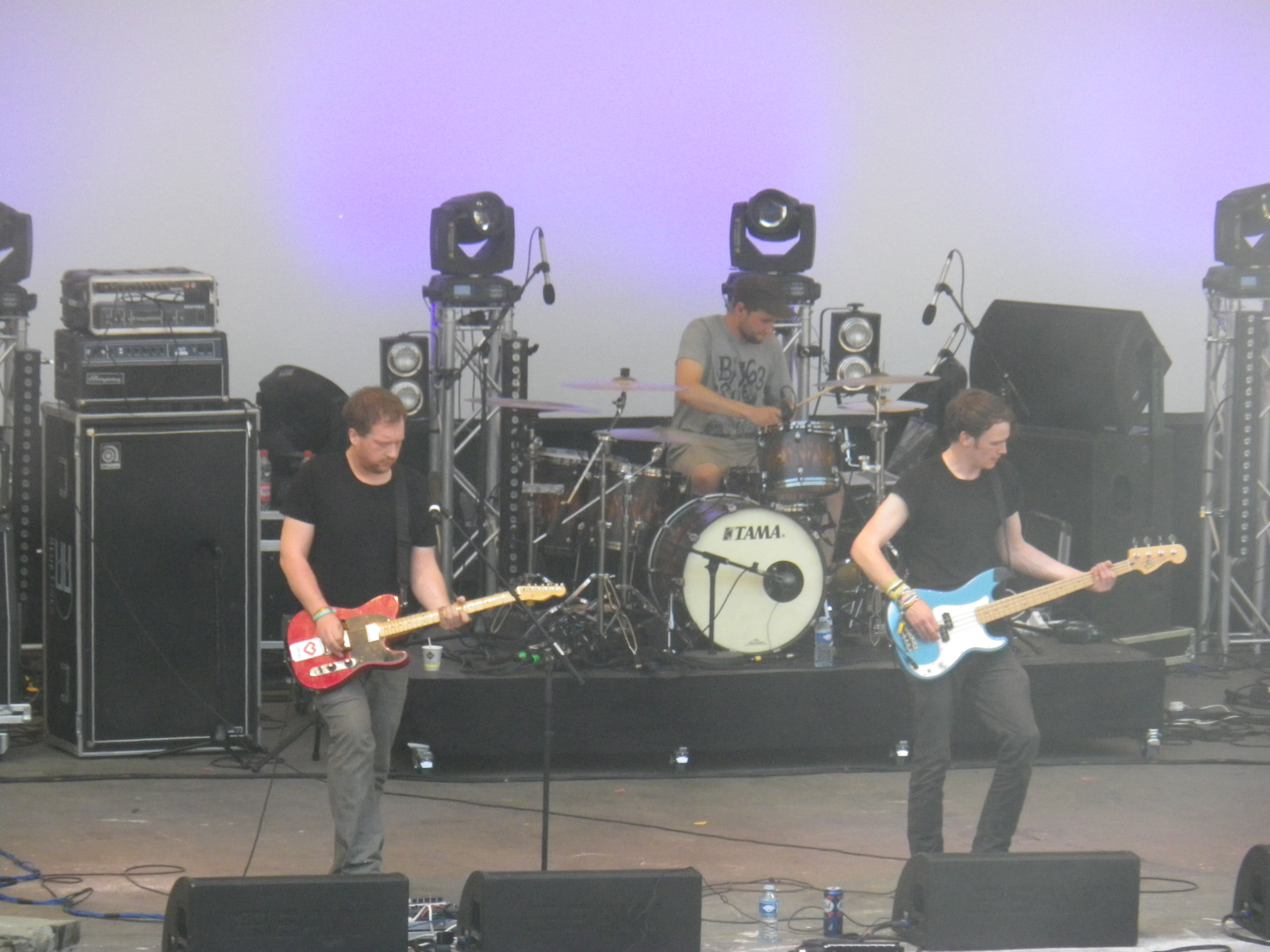
Sound of Contact Maybeshewill
The Pineapple Thief Anglagard
Crippled Black Phoenix Amplifier
Magma Caravan
Steve Wilson The Devin Townsend Project
. Opeth
On day 1 we had the complex Prog sound of Sanguine Hum; the contemporary, slightly ‘commercial’ Sound of Contact; the power pop-prog of The Pineapple Thief; the ‘blended’ rock mix of CBP; Magma’s own unique ‘Zeul’ genre and the dark vision of Steve Wilson.
On day 2 Anima Mundi would kick things off with some symphonic prog; Maybeshewill would follow up with instrumental, guitar laden post-rock; Anglagard would make a rare appearance to grace us with their angular but beautifully haunting sound. Amplifier would rock us out with their heavy, spacey vision; Caravan would share their classic, playful Canterbury sound. I’m sure the DTP would try to blow our eardrums with his wall of sound metal and Opeth would hopefully surprise us with a curious mix of death metal growling (the old stuff) and the newer, more standard prog vibe.
To me a perfect mix with something for everyone. And for those ‘one dimensionauts’ (?) an opportunity to broaden their listening habits and possibly ‘acquire the taste’ for other genres.
The ‘Trip’
We left early on Friday 12th knowing the 475 mile trip would take most of the day. With all our victuals safely onboard my German car we arrived without incident at Folkestone to catch ‘Le Shuttle’. Why we were singled out for a drug inspection is beyond me. We were on a road trip, no other type. No drugs detected we safely embarked on the train and proceeded without incident to France. Trusting in Ms Sat Nav we drove through the flatlands of northern France and Belgium, passing Dunkirk and the fields of Flanders, the scene of so much carnage in two World Wars. Passing Brussels to the north and joining the A314, the Sat Nav perked up and said ‘Follow this road FOR A LONG WAY’. Yes indeed and we finally entered Germany. If I thought there was one country with a hassle free road system it would be this country famed for its efficiency. Unfortunately due to incessant road works and traffic jams we crawled into Koblenz. My co-driver was literally ‘Sleeping in Traffic’ as I listened to my favourite 35 minute track!
Everything in Germany appears big, large-scale. From the monstrous power stations we passed to the sheer scale of the river and other valleys spanned by hugely impressive engineering feats of construction. The countryside in this part of Germany is detritus fee and all the cars seem clean and new. There’s a sense of opulence. I lost count of how many large, black Mercedes passed us by effortlessly.
As we approached Koblenz the Sat Nav came into its own as we traversed a myriad of A and B roads until we found ourselves on the East bank of the Rhine (and that’s very important to get right travelling to Loreley). We climbed up the heights enveloping the river before the road bent down towards the river bank. A ten mile drive along the winding Rhine, resplendent in sunshine, we passed numerous charming villages at each bend.
Arriving at St Goarshausen, the village below the Loreley heights, we abruptly stopped and were ensnared in the ‘Muse’ traffic. The world-famous band was playing the venue that very night. There is only one way up to Loreley and we snaked our way up the steep road in a file of traffic and finally arrived at the world famous site at around 1900 hours. A long journey completed we were in definite need of succour.
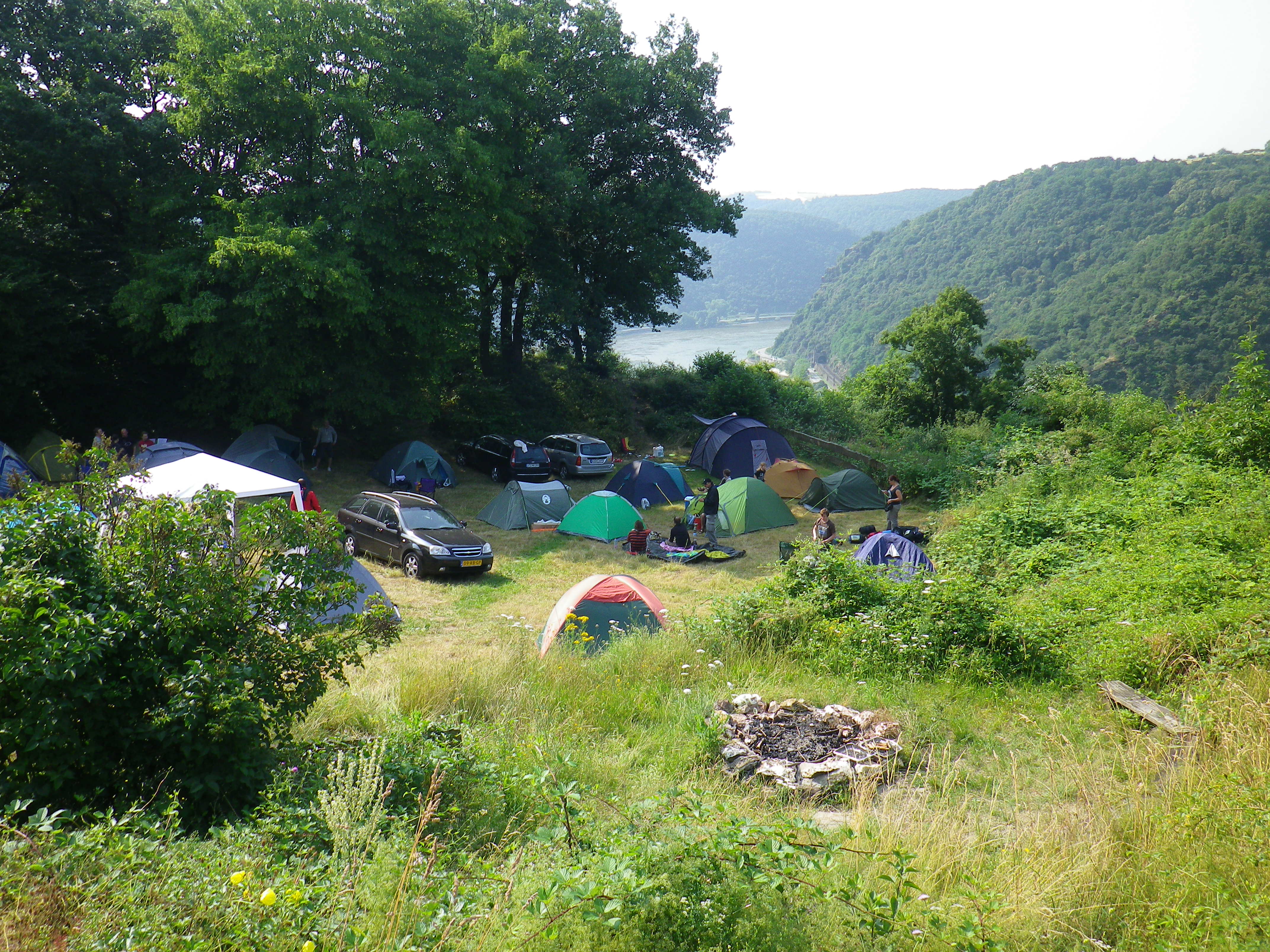
The Campsite
The fact that we were only aware of Muse’s presence shortly before the event meant we didn’t have tickets and this was a major bummer. Muse gets a lot of bad press from Prog fans but I have a great admiration for them both as musicians and for their somewhat bombastic rock.
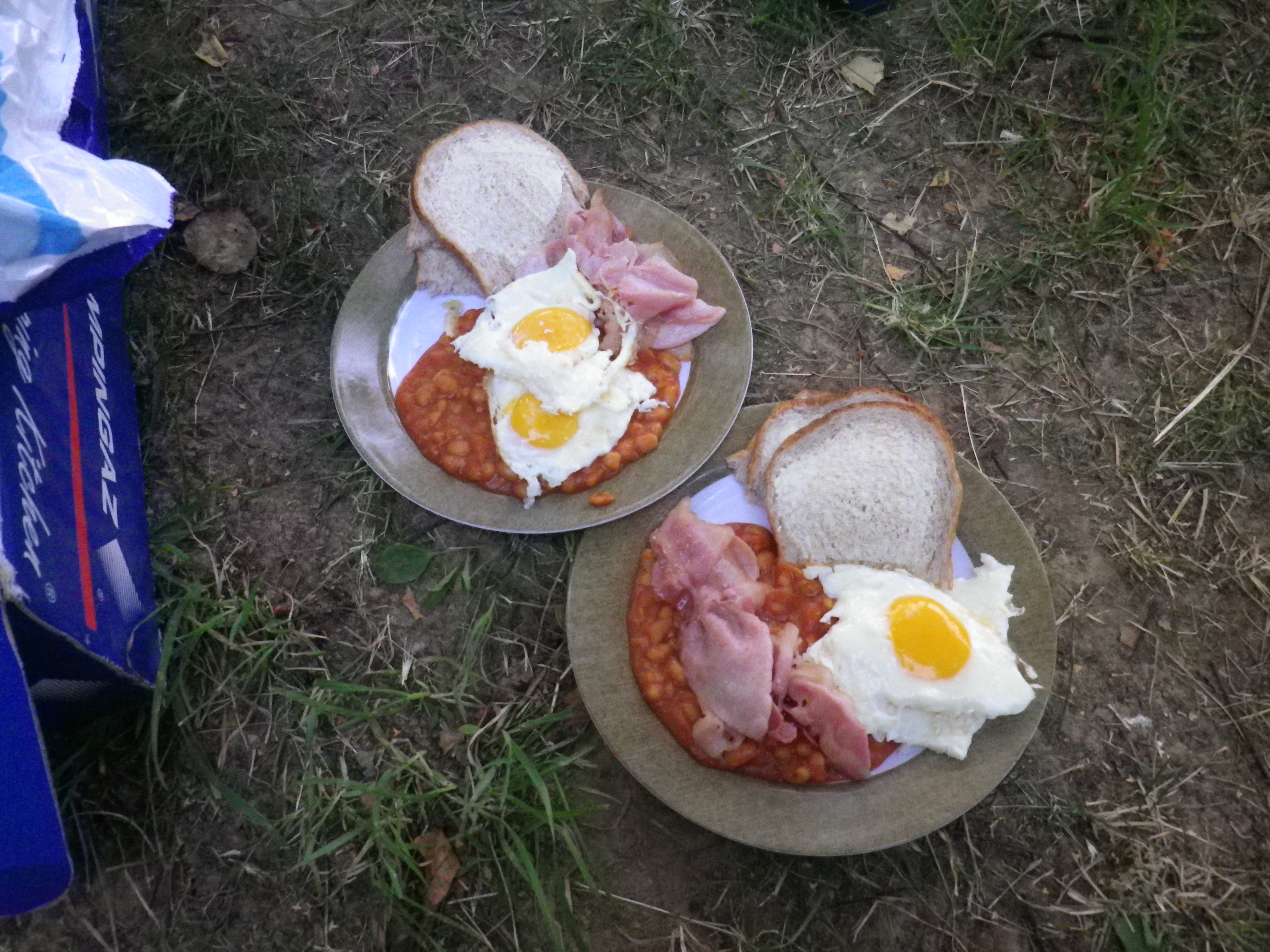
By the time we had erected our tent and had a bite to eat (a very late full English breakfast) the site had exploded into the shuddering power of Muse’s stadium rock.
The campsite was only about 300 metres from the Amphitheatre and the acoustics are such that you almost feel you are sat watching with the paying fans. So we heard Muse perform a greatest hits collection, with a fantastic cover version of Man with a Harmonica from Sergio Leone’s Once Upon a Time in the West as an intro to Knights of Cydonia. Listening to this immense soundtrack to this classic Spaghetti Western is recommended.
Muse finished around 2300 hours and this was followed by chaotic scenes as cars, vans and tour buses tried to leave through the one narrow exit. Although I was tired, sleep was impossible so I texted Nic Dewulf, a fellow Big Big Train fan from Belgium, and we met up on the campsite. We had a good Prog chinwag with Nic and his friends. Nic is keeping the flag flying amongst the youth of today (he’s only 23…a prog babe in arms!).
The returning Muse fans were a little ‘wired’ and this coupled with Prog fans excited with the prospect of a superb weekend in glorious weather, led to a barmy late evening. However, somehow I managed to dose off only to be woken up to what seemed to be Symphonic Prog to the left of me and a Metalfest to the right of me. I have to say that in a masochistic way I enjoyed the surprisingly melodious power of a German baritone accompanied by two tenors singing an unrepeatable (i.e. very rude) chorus from a metal song I knew but just couldn’t place. Glorious stuff!
I eventually returned to slumber, awoke early at 0645 and had an early shower and shave. Generally I found the facilities pretty good at the campsite but there did seem to be a lack of toilet paper (always a camping essential) and there’s little room for modesty as the main shower block was unisex! A nice English cup of tea was imbibed followed by another as I seem to need a couple to get me going in the morning nowadays. This restored me to a semblance of health and my invigorated body felt capable of enjoying the Day 1 festivities.
The Loreley site
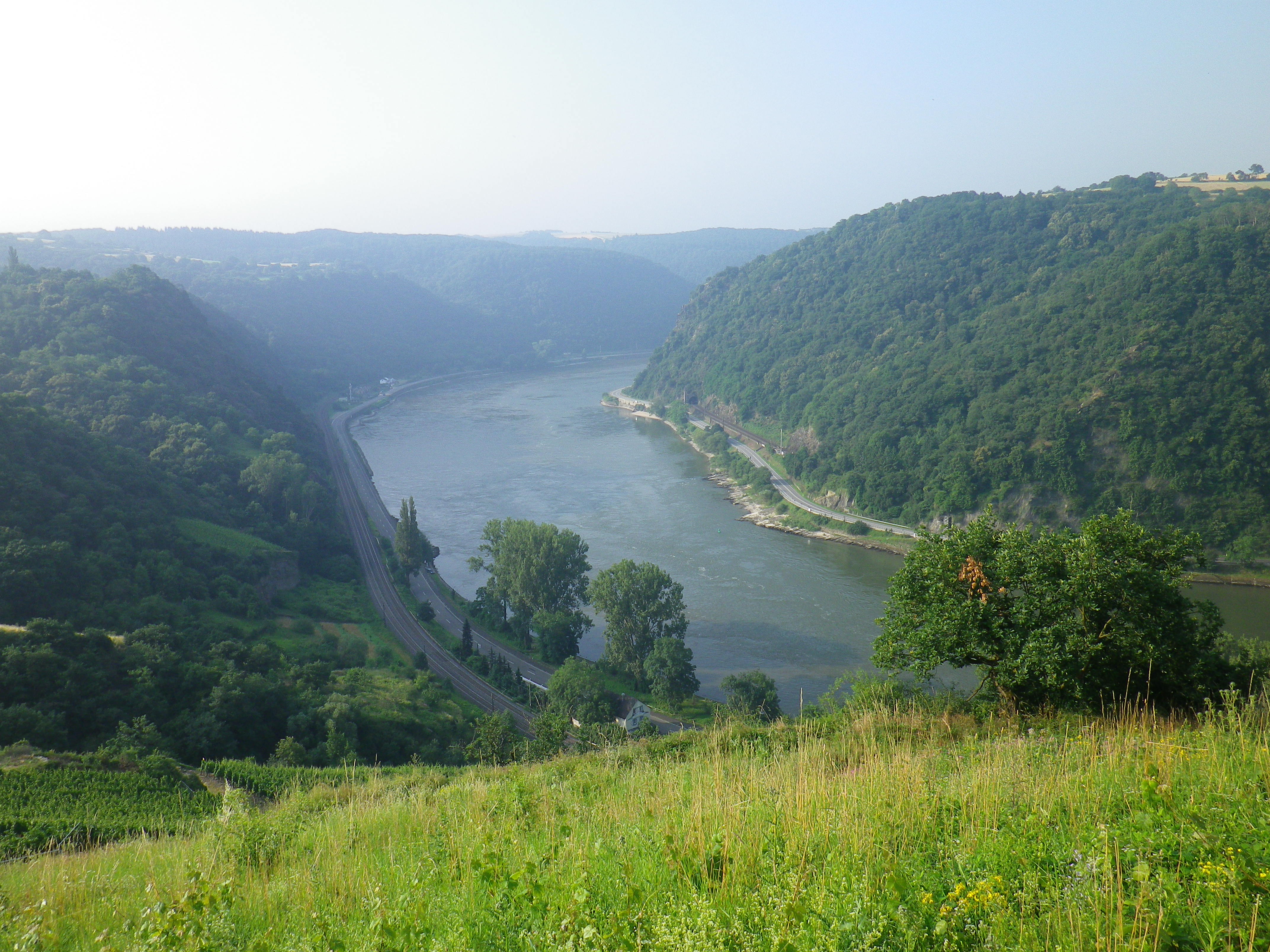
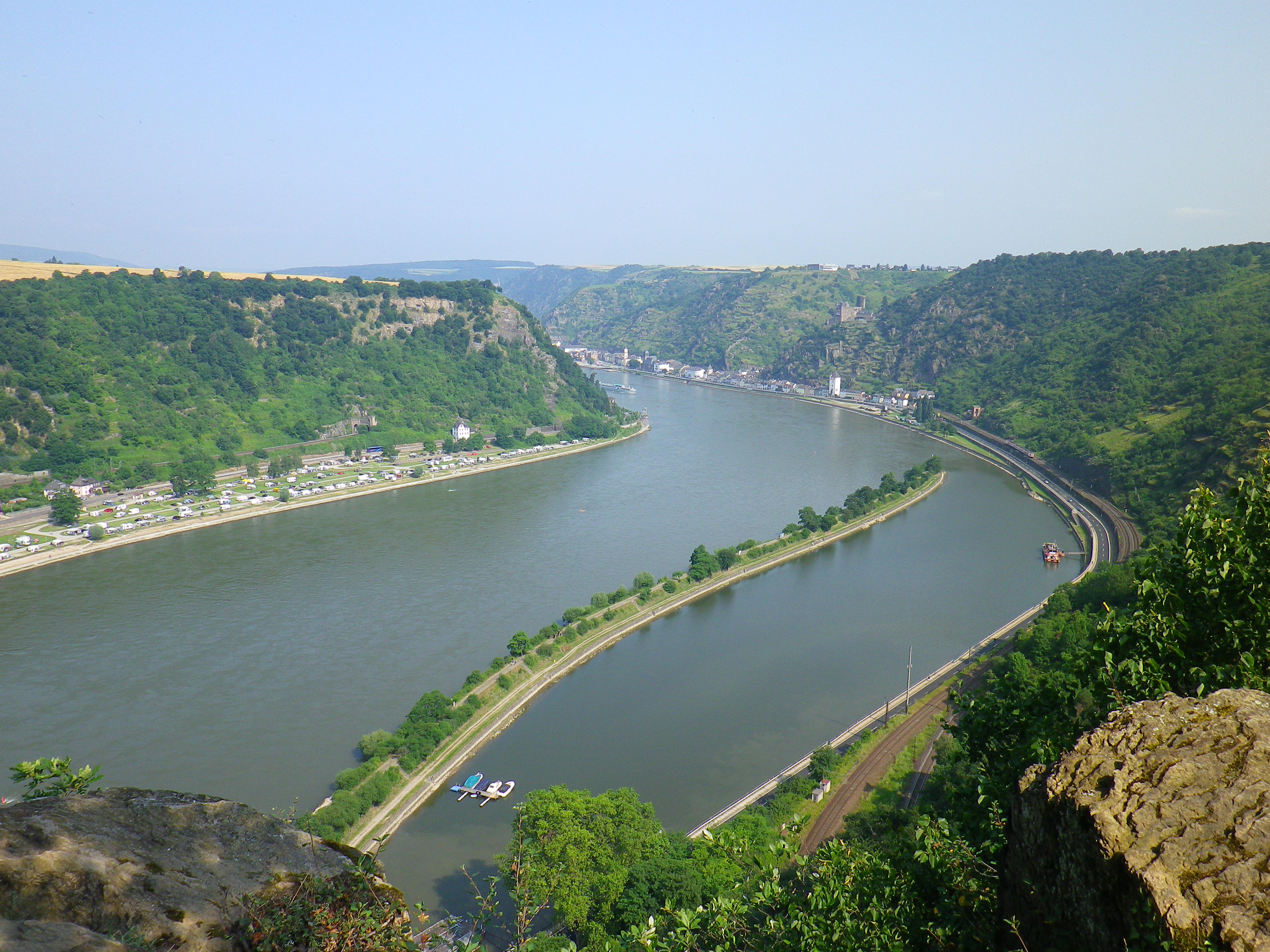
It was a beautiful morning and with proceedings not commencing until 1400 hours we decided to enjoy the world famous views. Loreley is part of a UNESCO World Heritage Site situated on the east bank of the Rhine at a sharp bend in the river. The natural cliff face is approximately 120 metres high and the sheer drop has little protection with only a few nominated viewpoints having railings. The campsite is literally on the edge of the cliff face.
The vista is stunning, clearly displaying the natural beauty of this part of the Rhine, which is a walkers’ paradise. Roads run along the edge of both sides of the river as the Rhine cuts through the natural gorge in the countryside. To the north there are beautiful views of picture postcard towns, villages and castles flanking the river. The river traffic is frequent with many huge long barges carrying various trade cargoes and sightseeing boats traversing their course. The river is fairly narrow at this point and navigation is difficult. I have attached some pictures but they cannot do justice to the impressive beauty of this area of the Rhine.
DAY 1 – The Bands
The venue itself was built in the 1930s as a Nazi ‘Thingplatze’ to host cultural events and can hold a maximum of 18,000 with 5,000 seats. Over the next two days the number of attendees was slightly disappointing with perhaps 3000-4000 people enjoying the music. From the back the Amphitheatre slopes quite steeply with the grassy banks offering shade for the weary festival goer. There were the usual official merchandise tents together with CD and vinyl stalls offering the best of European Prog music. Beer and even a cocktail tent provided refreshment. Food stalls mainly provided local cuisine with varieties of ‘Wurst’ on offer.
The stone, semi-circular seating provided both an excellent view and sore bottoms, with various innovative ways being used to provide a comfortable perch.
Sanguine Hum
First up were Sanguine Hum who have been receiving critical acclaim for their last two albums Diving Bell and The Weight of the World, the latter being played in its entirety (I think). This was the second time I have seen them and I would like to report I really like them but I’m still undecided! Their music is full of complex time signatures and lacks the sort of fluidity I like. Joff Winks’ vocals are light and a touch fragile at times. Technically demanding to play with intricate arrangements, it’s clever, inventive music that the band delivers with aplomb but whilst it’s interesting contemporary progressive music, it doesn’t press enough of my musical buttons…at the moment. I need to spend a little more time listening to their recordings, methinks.
In terms of the set, it’s always difficult being the first band and I felt they were slightly in awe of the surroundings. I think Joff Winks, who is obviously a modest chap, seemed almost apologetic to be on stage and could try to engage a bit more with the audience.
Sound of Contact
The brainchild of David Kerzner and Simon Collins (yes Phil is his dad!), Sound of Contact have been kicking up a bit of a storm with their new concept album, Dimensionaut. Once again, my second live listen, the band commenced with a short instrumental number and followed up with three tracks that I would consider almost ‘commercial’ in sound and structure (God forbid!). Simon Collins sounds very similar to his father, with similar looks and mannerisms to boot. A little AOR for my taste, particularly Pale Blue Dot, but nonetheless engaging. They finished with Mobius Slip, a classic long ‘proggy’ track with the middle section reminding me of Porcupine Tree in their heavier period. They are newcomers and I’m sure their sound will develop (and become more progressive?). They performed confidently live and were better than when I saw them at the Garage in London recently supporting Spocks Beard. Good luck to them on their extensive European and North American tour.
The Pineapple Thief
Third up was Bruce Soord’s vehicle, The Pineapple Thief, who were determined to add some more energy into proceedings. The crowd were, like me, beginning to flag in the heat. Bruce Soord has been around a long time and is beginning to receive the acclaim he deserves. I was interested to see how they would perform in a venue that for them was seriously large. I saw them last year at the tiny Barfly club in Camden and you could hardly swing a cat in there.
The latest output Someone Here is Missing and All the Wars is Prog-pop with simple repetitive riffs and this provided the bulk of the set. The band displayed a lot of energy on stage and the crowd responded with chorus singing, clapping in 6/8 time and some dodgy ‘swaying’ at times (or were these people hallucinating as the heat radiated off the stone seating!). I’m a great fan of TPTs output over the years and they delivered an invigorating set that revitalised me. A well deserved standing ovation and the first encore.
Crippled Black Phoenix
A sort of UK supergroup, CPB released their first album in 2006 and has gone through numerous line-up changes over the years. Their sound combines elements of heavy/blues based rock, post-rock and at times a ‘stoner’ sound and they mix instrumental only with standard verse, chorus tracks. I thought they were a little slow to get going at first but when they did they totally commanded the stage and produced a killer set. I particularly liked their cover of ‘Of a Lifetime’ by Journey but that was on the ‘softer’ side of things. I own a couple of their albums, one of which is quite mellow, but live, with the luxury of 7 members and notably 3 guitarists, they produced a much heavier, very powerful, almost ‘wall of sound’. It was slow, head-banging stuff to me. They finished incredibly strongly and literally rocked the amphitheatre down, receiving a prolonged standing ovation as they brought the set to a dramatic, stunning conclusion with the anthemic ‘Burnt Reynolds’. Definitely a band I would see again and one I recommend as a live act. I was so impressed I went to the ‘merch’ desk and bought one of their albums on vinyl.
Magma
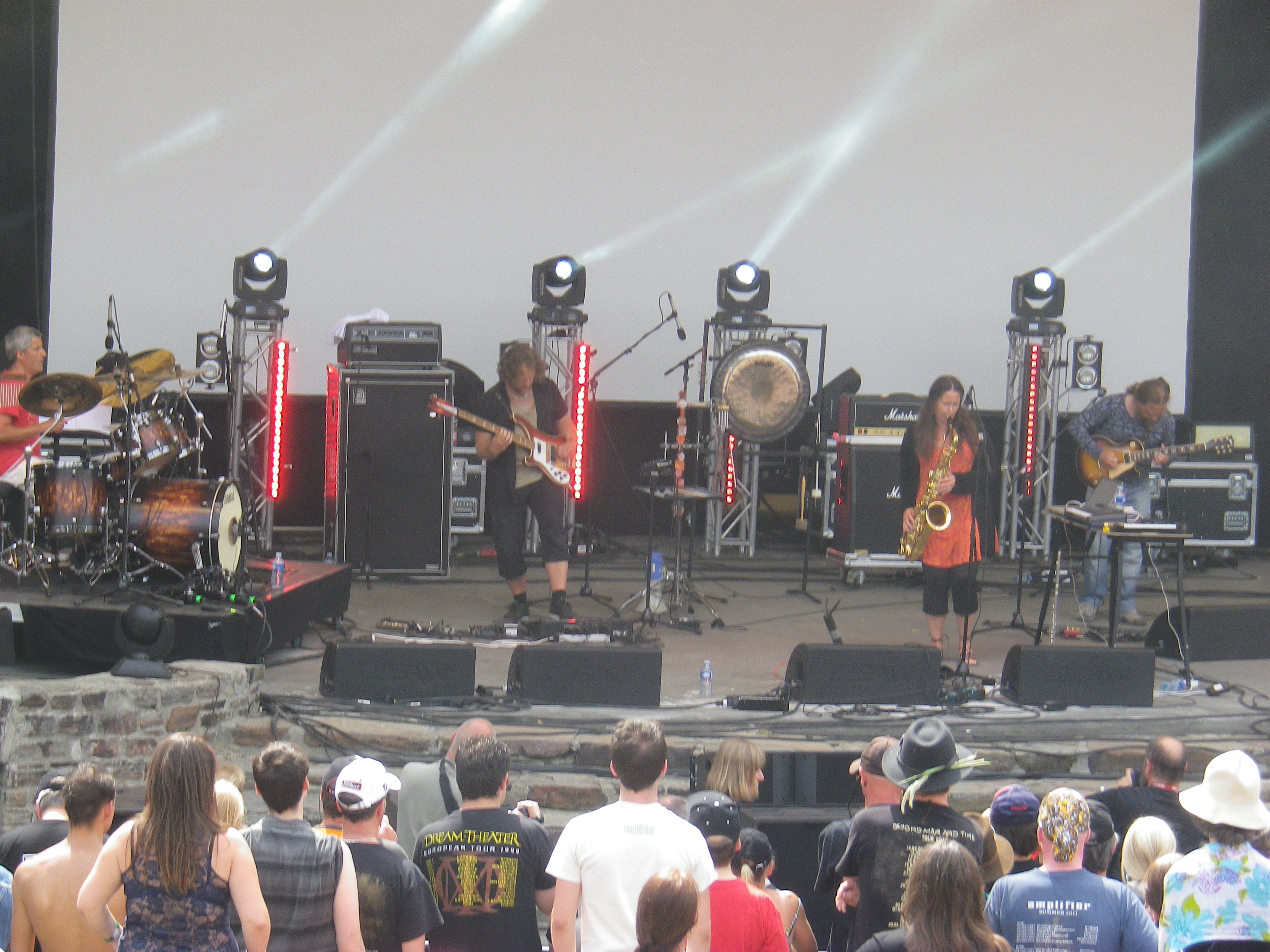
Magma are the vision of Christian Vander and have been granted their own musical genre called ‘Zeuhl’ and sing in their own made-up language ‘Kobaian’. Heralding from the classic era of Prog in the 70s they sound absolutely nothing like their contemporaries. Magma deliver a truly unique musical sound, with a classical music structure, dominated by repetitive chanting. I was really looking forward to hearing them after being left intrigued by their classic ‘Mekanik Destruktiw Kommandoh’ (MDK) on vinyl recently (essential preparation I was told!). This album is part 1 of their cult sci-fi trilogy.
Let’s be honest here, the music is bizarre and you have to be a little bit weird, perhaps even insane to like this stuff. However as I can stomach, and at times like, acts such as Captain Beefhart, Zappa , Mr Bungle and The Residents I am probably ‘certified’ myself.
The set commenced with a track from a new but as yet unreleased album which was driven along nicely with a single pulse-like bass line and was even a little funky at times. Was Mr Vander going a bit soft in his old age? Certainly not, as the set took us into increasingly darker and bizarre territory, exposing us to tribal themes and culminated in the whole of MDK itself. The chanting, both unrelenting and severe, was delivered by three accomplished singers (one man, two women). It’s somewhat like Carmina Burana on drugs. The language itself sounds very Germanic and quite harsh to my ear. The music is multi-layered with a strong drum (at times tribal) and bass line throughout. Everything is quite repetitive, particularly the vocal chanting that as it increases in intensity has a hypnotic, even trance-like quality. At times I felt like a drug-induced disciple of Dionysus being whipped into a frenzied state of heightened self-awareness (it was NOT sexual ecstasy!) And, before you ask, I hadn’t imbibed in anything more than a few weak German beers.
One has to admire Mr Vander for maintaining his vision and there is no doubt that all the musicians are talented but it’s a difficult listen and comes over as quite awkward, even uncomfortable at times. If you haven’t heard Magma then I think it’s fair to say you will not have heard anything like it before…well I haven’t that’s for sure.
However, in a strangely masochistic way I actually enjoyed
it. I’ve always been intrigued by challenging music that break boundaries. It speaks volumes for Magma’s reputation that a lot of the other musicians (notably Steven Wilson and Opeth’s Mikael Akerfeldt) watched the set alongside the audience.
Steven Wilson
So we came to the headline act, the Prog God himself, Mr Steven Wilson, who was the main attraction to all the attendees I had spoken to. I had already seen the show in London earlier in the year and I know of no-one who wasn’t blown away by that evening, even some of the SW sceptics. The Raven That Refused To Sing is SW’s latest solo offering and he had assembled an array of amazing talent to support him (I won’t repeat them here). The new album shows that SW is quite willing to tinker with his previous winning formula as TRTRTS has a much more jazzy edge to it. I’m a great admirer of most of SW’s work from the early ‘psychedelic’ phase of Porcupine Tree through the ‘heavier’ years to the darker social commentary of his later work. I’m presuming most people at Loreley had not seen the show before. I was hoping for a little variation from the London set but there were only marginal changes. Basically he played the whole of TRTRTS and finished with the old Porcupine Tree favourite Radioactive Toy.
So how good was it? Technically it was almost flawless, like listening to CD quality on a high-spec hi-fi system. The show is a stunning audio and visual experience. The videos are superb, although rather unsettling, but that’s not surprising considering the album’s supernatural themes. But I was slightly disappointed with the lack of interaction with the crowd. The man himself delivered a few quips and witticisms but there was little ‘on-stage’ involvement from the rest of the band who just seemed to ‘get on with it’. There is no doubt in my mind that SW is a real ‘mover and shaker’ in the Prog world and his latest offering is a ‘tour de force’ (especially live). But for me the second offering was a little bit flat compared to my first experience. I like the uncertainties surrounding a live setting with the possibility of hearing a slightly different interpretation of songs but it seemed all very calculated to me. Having said this, the crowd absolutely loved it and they were right to do so.
A great finish to Day 1 with events closing at 1245 in the morning.
Day 2
Oh dear, that pork burger and spicy fries backfired on me the next morning. Even a quick walk, a caffeine fix and shower wouldn’t do the trick so I lay on my carry mat feeling a tad sorry for myself until gone 11am. With events commencing at midday on Sunday, 7 bands performing and a 2300 hours curfew, I shook myself out of my self-induced stupor and arrived shortly after Anima Mundi had started the festivities on day 2.
Anima Mundi
Now these guys (and gals) hail from Cuba and have being trawling a lonely furrow in their home country since for over ten years. I had purchased their latest CD titled ‘The Way’ following a taster on ‘The Prog Dog’ show, hosted by the incorrigible Geoff Banks and Jon Patrick. Anima Mundi means ‘spirit of the world’ and hailing from Cuba they evidenced the growing cosmopolitan reach of progressive music. A five piece with extra percussion and clarinet at times, they deliver a neo symphonic rock full of swathing synth and melody. They clearly loved having the opportunity to expose their craft to a wider audience and played with a refreshing passion and energy. I only recognised the last track, ‘Cosmic Man’ from ‘The Way’ but thoroughly enjoyed the whole set which was significantly heavier and rockier than I had heard on cd. A great start to the day.
Maybeshewill
I think a few eyebrows were raised when MSW were announced as an act as they are a young band delivering purely instrumental post-rock with some limited vocal sampling. Certainly their youthful looks and general attire appeared slightly out of place in the surroundings and, occasionally, they looked slightly uncomfortable. Their sound is quite straightforward with two guitars pounding out short, punchy power riffs and these dominate at the expense of the keyboards, although there were a few nice soft, usually ‘intro’, keyboard passages. Many of the riffs were very catchy, if a bit ‘samey’ and I found myself foot-tapping along. I’m a great post-rock fan with one of my favourite bands in any genre being Mogwai and I also get absorbed into the darker themes produced by Godspeed You! Black Emperor and This Will Destroy You.
I felt that the crowd reaction, who did their best to warm to these youngsters put before them, was not helped by the polite but very taciturn nature of the lead singer. I know it’s the ‘done thing’ for youngsters to be a lit bit distant from the older generation (believe me – I have kids of 18 and 20) but music should, and indeed does, help to break down age barriers. So a piece of advice to the band, if I may be so bold… us old-timers are an accommodating, tolerant bunch and more engagement would help your performance and enhance our enjoyment. Overall , I’m glad they were invited as variety in festivals is important.
Anglagard
I think there was a huge expectation surrounding Anglagard’s appearance. Legendary in prog-circles, particularly in Scandinavia, a cult band who released two acclaimed albums in the early ‘90s before breaking up. A hugely long hiatus was broken with one of my favourite albums of last year, Viljans Oga.
Anglagard produce beautifully constructed pastoral yet angular music with an eerie, mystical feel, redolent of the deep, dark forests of their native Sweden, full of the supernatural.
The band took a long time setting up and this was understandable considering the scarcity of their live performances. They opened with a specially arranged piece, typical of their canon. What a stark contrast between the complexity of Anglagard and the simplicity of Maybeshewill (and that’s not a criticism of ‘simple’).
The live performance lost none of the immense beauty of their haunting music. Truly sublime with excellent performances by all members of the band. The mesmeric flute playing was a highlight for me.
Amplifier
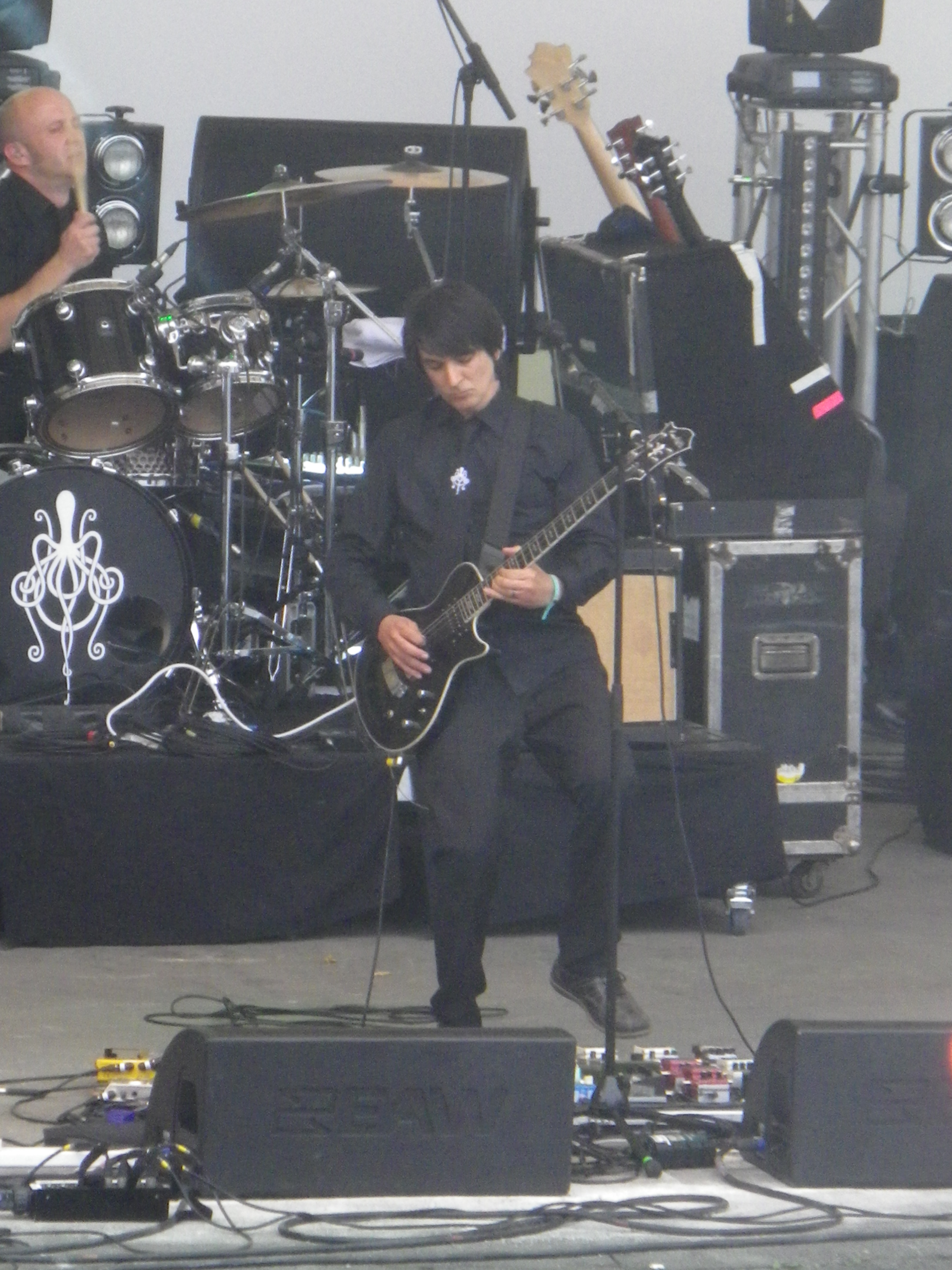
The creation of Sel Balamir, Amplifier are another band who have been around for a fair while and are now getting deserved attention. Their latest offering, the mellower ‘Echo Street’ has been nominated as Album of the Year in the Classic Prog Awards. The band came to my notice after they released (through their own endeavours after four years of hard toil) the two hour concept album, The Octopus, in 2011. The Octopus literally takes you on a trip ‘to another dimension’.
This was my fourth live gig in less than two years, so yes I like them! Amplifier gig extensively throughout Europe and are definitely more popular here than in the UK.
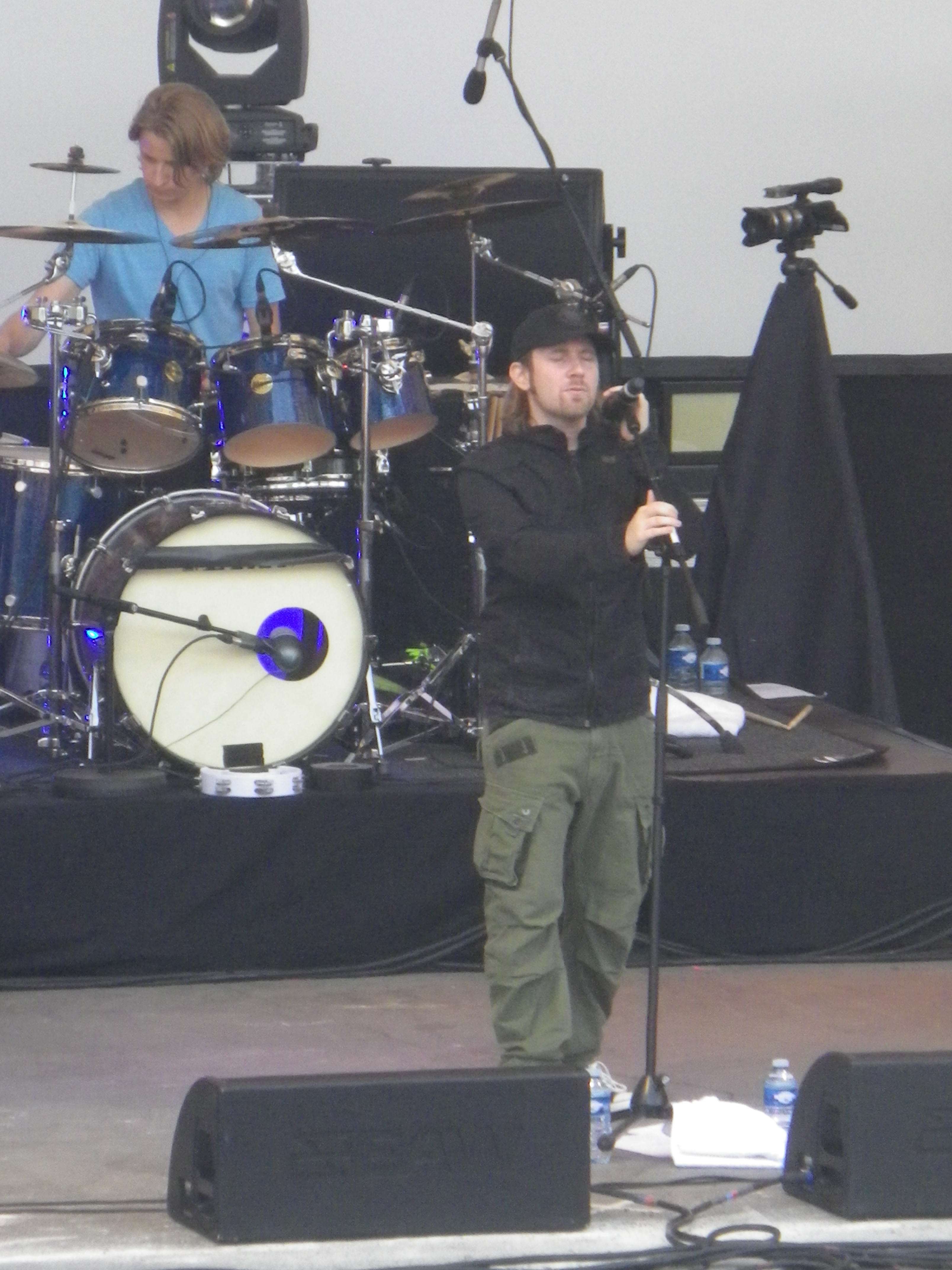
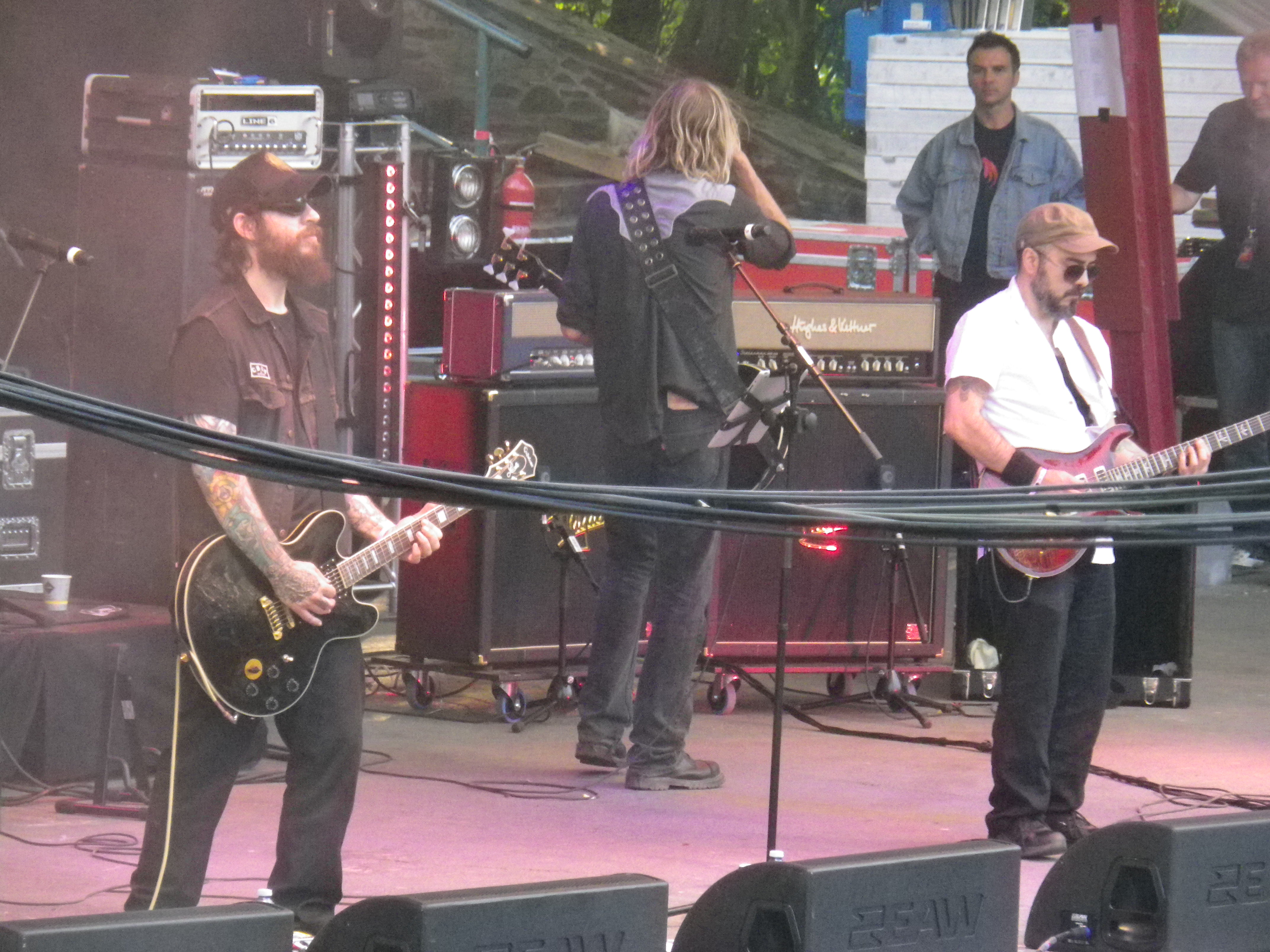
Sel Balamir in full flow
Amplifier deliver Space Rock full of heavy effects-laden guitar riffs and solos. What I’ve always liked about Amplifier’s sound is the heavy driving bass and rhythm guitar coupled with some intricate, subtle lead guitar. This combination produces a huge soundscape that fills my head in a spectacular way. However this is a difficult combination to crack when the volume of all instruments is set at LOUD. I’ve yet to hear them actually nail it totally in a live setting and a combination of sound problems, coupled with the introduction of a third guitar player and a bass on LOUD PLUS, totally drowned out all the subtlety. I’m not a fan of the third guitar and I’ve heard them better with only two. But who am I to judge.
They started with Spaceman from their recent Sunriders EP, followed by the brilliantly riffy, if slightly repetitive and overlong, The Wheel, from Echo Street. They continued with numerous fans’ favourites such as Interglacial Spell, The Wave and Interstellar (what a track that is!), all from The Octopus. As the festival was running behind schedule they had to foreshorten their appearance and finished with the anthemic Airborne from their eponymous first album. Amplifier always give it their all and are dedicated to all that is The Octopus (why always the black shirts and special logo ties?). I’m a stickler for sound so overall I was a bit disappointed but I recommend them live if you like your music at the heavier, spacey end of the prog spectrum.
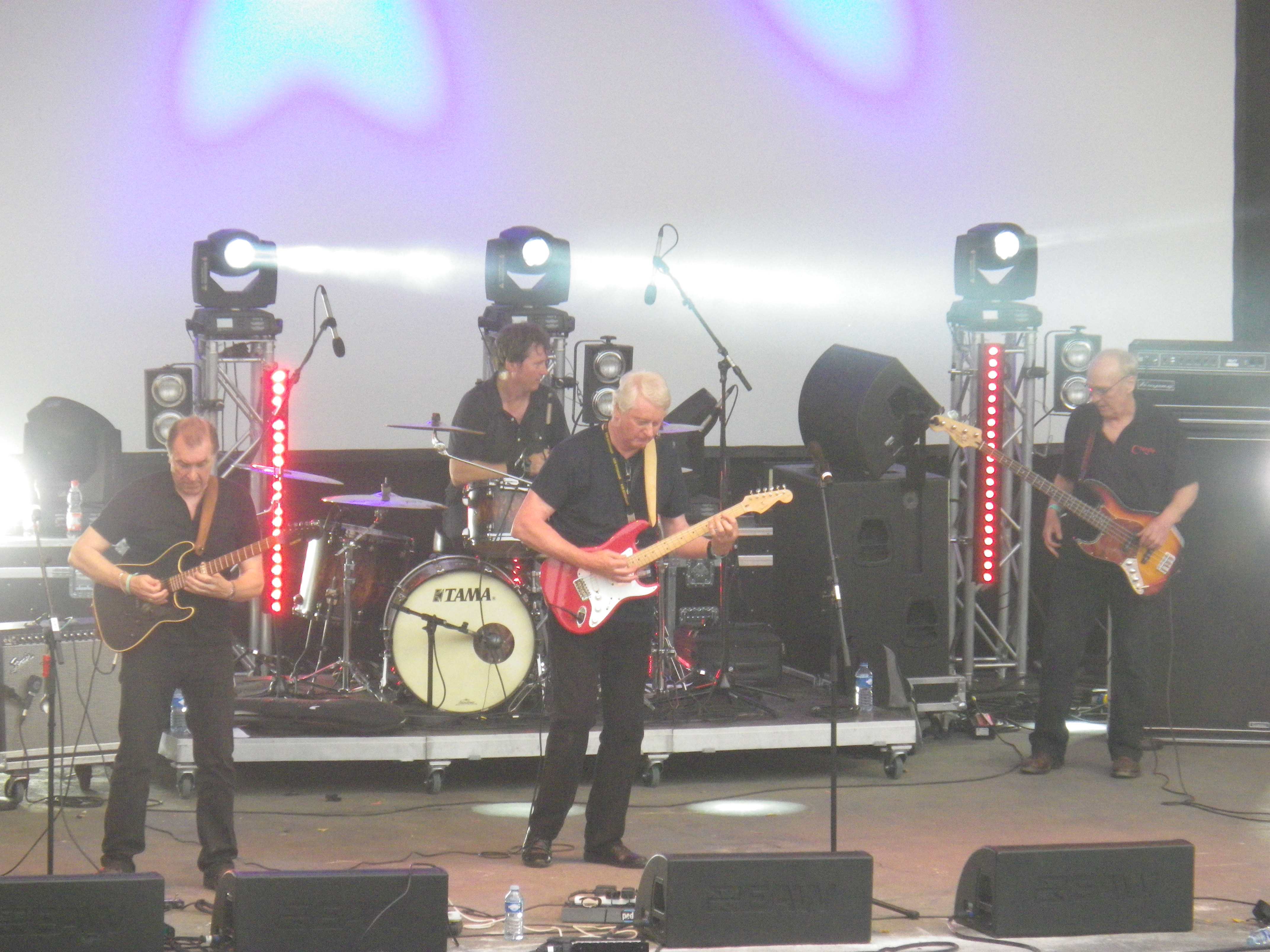
Caravan
No sound problems for these old warriors of the Canterbury scene. It was pure plug and play. A greatest hits was delivered with classic tracks from For Girls who Grow Plump in the Night (Memory Lain, Hugh/Headloss, The Dog The Dog He’s At It Again) and from In The Land Of Grey and Pink we had Golf Girl and the classic Nine Feet Underground.
Consummate professionals, they know how to work an audience with plenty of witty banter and the entertainment included skilful playing of spoons and washboard! Always playful but with some clever social comment, I’m never sure whether to take them seriously and how can one with some of the most politically incorrect album and song titles ever put to paper. Ten out of ten; superb entertainment and the crowd loved them.
Devin Townsend Project
I know little or nothing about Mr Townsend and I missed part of the set to ’freshen up’ after another eight hours of hot sun, beer and loud music. When I returned I noticed the following:
The band produced a huge sound for a three piece
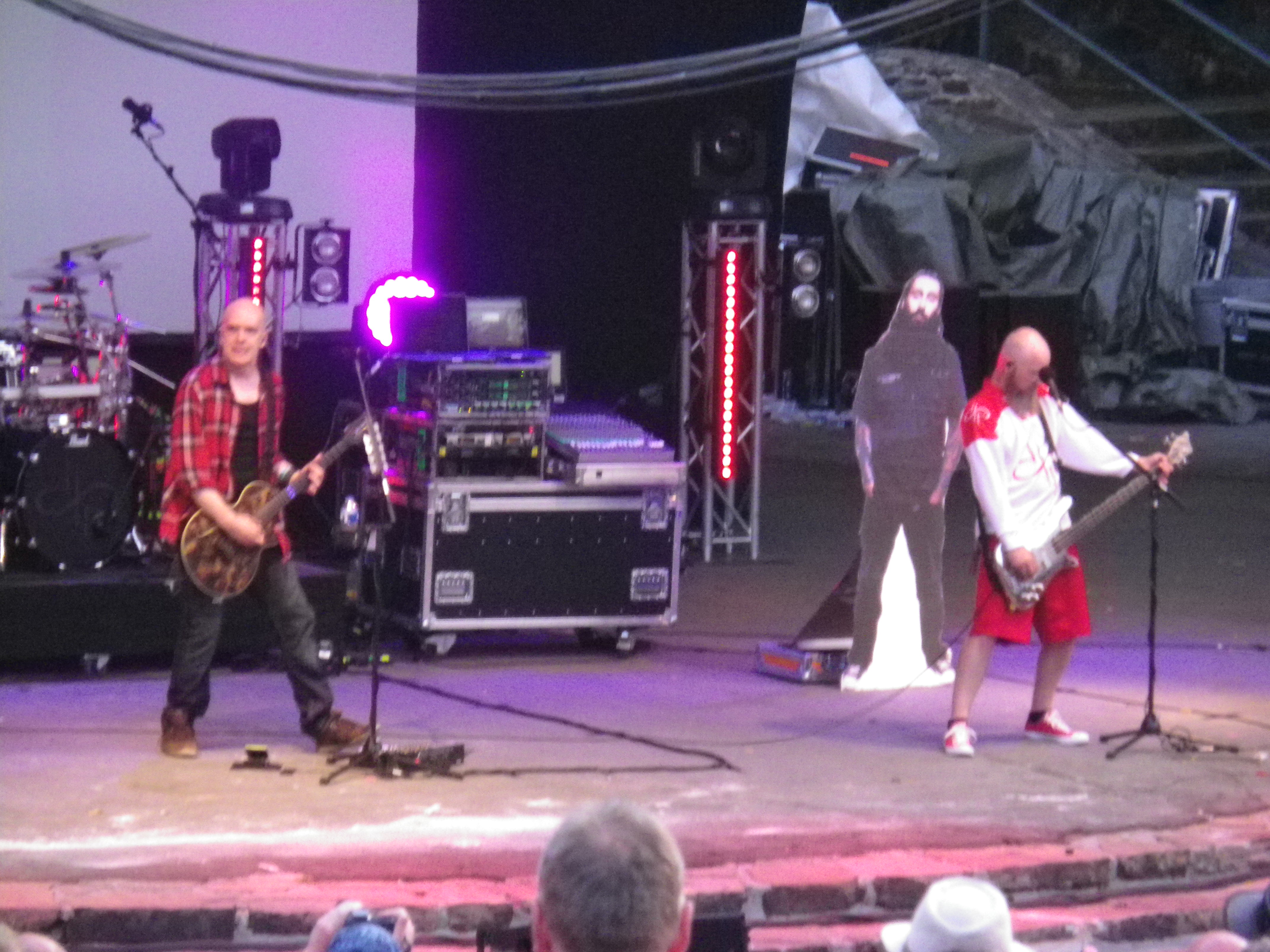
There was a cardboard cut-out of a band member on stage
As a lead guitarist and vocalist, Devin Townsend didn’t seem to take himself too seriously and worked the crowd well.
The sound was hard rock and metal; unfortunately the band were missing a guitarist (or was it a keyboard player?) and a huge amount of backing tapes were being used to the extent I didn’t know what was live and what was pre-recorded. Good fun but not really my cup of tea.
Opeth
To conclude proceedings we had Opeth. Now I like heavy rock but i’m not a death metal fan. I had been recommended the band’s last offering ‘Heritage’ which is a big departure for Opeth, leading them into more mainstream Prog territory (and apparently took a lot of their diehard fans well outside their comfort zone). Band leader Mikael Akerfeldt, on guitar and lead vocals was quick to point out that he understood that there were fans from both ‘camps’ and therefore the set would be a mix of old and new. So we could expect some death metal growling but no apologies would be offered. Mr Akerfeldt introduced each track with wit and intelligence and this was appreciated by all concerned.
Starting with ‘The Devil’s Orchard’ from Heritage, an excellent track with a jazz fusion vibe but a dark edge, the tone was immediately changed as the band hammered out a classic death metal track from Ghost Reveries titled Ghost of Perdition. As the set continued I was intrigued by the juxtaposition of light and subtle with abrupt changes to intensely heavy within each death metal track. And it worked very well to my ears.
I was truly impressed with the quality of musicianship and the eclectic mix of death metal, prog rock, psychedelic and even folk music. Opeth delivered tracks with Oriental influences and Spanish guitar. And Mikael Akerfeldt has a tremendously versatile voice.
Opeth have obviously experimented throughout their career that spans over 20 years and 10 albums and the variety put together for this set was both inspirational and a triumph. I’m certain to re-visit some of their older stuff and would love a DVD of their performance to close Night of the Prog.
Final thoughts
So we came to the end of proceedings at 2300 hours on Sunday evening. Night of the Prog 8 had been a superb event, providing me with a perfect mix of old and new; heavy and light; simple and complex.
Highlights for me were numerous. Crippled Black Phoenix seemed infinitely better live than on cd. It was a privilege to see rare appearances from Magma and Anglagard. Witnessing the simplicity of Caravan in a world full of complex sound effects and large show pyrotechnics was refreshing. And finally the surprisingly enjoyable Opeth.
A huge thanks to Win for continuing to organise it. I doubt if any music festival is situated in such beautiful surroundings and the weather was perfect. Thanks also to Nigel Barham for being subtlety cajoled into accepting my invitation. And it was great to actually meet up with some Facebook friends in person.
Roll-on next year. If Win is reading this my request would be Big Big Train, Echolyn, Beardfish, Motorpsycho, Kraan and a re-formed Oceansize!
Here’s hoping 🙂
Oh, and finally a few tips if you are planning to go:-
Bring a cushion as those stone seats don’t half give one a sore a*se.
Take time out to view the stunning landscape
Ignore the rules about bringing food and drink into the event…food selection is limited and you need plenty of water AND ‘security’ seemed happy to allow stuff through.
Mattias Olsson, drummer/percussionist extraordinaire formerly in Änglagård, is a busy man. He runs his own studio in Stockholm, called Roth Händle Studios, he collaborates musically with lots of people, he lends his talents to other progressive rock outfits such as Norway’s finest – White Willow and he kicks off projects in many directions.
One of the newest projects of his is Walrus – a band which in a tongue-in-cheek manner is described like this on its Facebook-page.
Kraut Rock / Progressive Rock Group from Stockholm, Sweden. Instigators and prime movers of that immensly popular style, Polar Kraut. Two drummers, one bass player, one cello player, one keyboard player, and one chord – what more do you need?
bakgrund
September, 2010 A.DThe scene:A dark bar at the End of the World, on the shores of the Polar Sea, in the Far North of Norway. The result of some highly spirited, wine induced bragging, five strangers find themselves sharing a stage under the assumed name WALRUS. The lights go on, and there, on the spot, they have to make up some music that can live up to the brazen boasts that got them on stage.The cast:An Organ Player who can turn from lyrical to mechanical in a moment, from shimmering to abrasive, from the dead calm of the ocean to the death rattle of an orca. A remarkable Cello Player with angelic features, who seems to be having a loud on-stage argument with his instrument, always teetering on the brink of a sonic fist-fight. A Bass Player who plays in an almost geometrically meditative fashion, angular, repetitive and hypnotic, and whose fuzzed out sounds could turn iron into rust. And then there’s the two-headed beast: Two manic Drummers playing the same, sprawling double drum kit, but attacking it from different sides and angles.The sound:While early German Electronic Kraut Rock seems to be in the band’s collective DNA, that’s just a small part of it. The roots of their music may be firmly planted in age old Psychedelic and Progressive Rock, but their branches reach well into the future – to a new kind of Post-Rock perhaps. And theirs is a sound that changes constantly. Going from pastoral and emotional to jugular aggression in mere seconds, the band ebbs and flows, back and forth, creating spectacular atmospheres and moods. Building tension and tearing it down, telling stories and painting pictures. There is nothing quite like it.The denouement:
Well, shaking their heads in disbelief after the show, they quickly decided that this group, albeit still half imaginary, was too good not to be true. And in tribute to the remote part of the world where their band and their music had been born, they named their particular brand of music ‘Polar Kraut.’
Epilogue:
Some time later they reconvened in one of Stockholm’s oldest and finest active recording studios to capture the music they had been improvising on their first few concerts, using equipment from the Golden Age of Recording on both sides of the glass. And after months of meticulous editing, Bitches Brew-style, four stately compositions had been thawed out of the ice (as it were) and were ready to be let out into the World South Of The Arctic Circle.
Beskrivning
Renowned film music composer and piano player Matti Bye on Hammond & Farfisa Organs, Mellotron and Wurlitzer Piano. The Tiny and Gul 3 member Leo Svensson on Cello and Minimoog. Producer and composer Kristian Holmgren on Electric Bass and Fuzz Bass. Mattias Olsson of Änglagård on drums, with Henrik Olsson of Gul 3 and Harr joining him at their double drum kit, The Sprawl.
The studio mentioned is the legendary Atlantis studio which really is a survivor in the music biz providing real old-school recording facilities.
Mattias is a funny guy regularly posting somewhat crazy YouTube-snippets from ongoing recording projects (right now Necromonkey) from his own Roth Händle studios. Matti Bye who is also in Walrus is a renowned Swedish composer of film scores. He’s a fine pianist with great improvisational skills! The film Maria Larssons eviga ögonblick which he wrote the score for was an Academy Award nominee 2008.
For listening and buying Bandcamp is a great place to go!
I’ve never been a huge follower or fan of Sacramento’s music scene. Even with popular groups such as Cake and Tesla hailing from my hometown, the only local group ever I really dug was ’80s eclectic pop group Bourgeois Tagg (I highly recommend their two albums).
So, some 25 years later, it was a lovely surprise to see that Tim Morse’s second CD, ‘Faithscience,” the follow-up to his 2005 debut album, “Transformation,” was generating buzz among fellow progheads.
I’ve known of Morse for years through his involvement with Parallels, a Yes tribute band that I believe I once spoke to him about drumming for (but regrettably skipped out on). Since then, Morse has occasionally popped up on my radar either for Parallels or for After The Beatles, a group that covers the solo work of the Fab Four.
So, it’s fitting and with a strong dose of local pride that “Faithscience” is my first album review.
Initially conceived as a concept album about the life of Charles Lindbergh, the themes on “Faithscience” grew to include themes of love, spirituality and loss taken from Morse’s real-life experiences. It kicks off with an instrumental opener, “Descent,” calling to mind a Neal Morse/Spock’s Beard overture. It’s clear that Morse has no shortage of ideas to present and here he makes a bold statement about his progressive rock prowess.
“Voyager” feels much like a a two-movement track. The first part combines traditional prog stylings with a tight, song-oriented arrangement, leading to a dense, anthemic solo section – a chill-inducing moment. As the section gradually winds down, one would think the next song is about to begin. Rather, a second section of “Voyager” begins, fueled by a melodic bass line, leading to some fine soloing before an intricate synth sequence picks up an earlier acoustic guitar pattern and leads us out.
“Closer” is another prog showcase with its many twists, tuns and tones, and just when I think the track might leave us in a sonic place far from where it began seven minutes prior, Morse reprises the song’s intro to wrap things up nicely.
Morse provides a soft landing to the thrill ride that are the first three tracks with “Window,” a nylon-string guitar interlude that immediately reminded me how Steve Howe’s “Masquerade” on Yes’ “Union” – yes, a “Union” reference; sue me – broke up “I Would Have Waited Forever” and “Shock To The System” on one side and “Lift Me Up” on the other. The accompanying crickets provide a dreamy background for the guitar to lull us into a daydream, which Morse then extends with “Numb,” the companion to “Window,” that features wonderful piano/acoustic guitar interplay accented by strings and oboe.
“Myth” shakes us from the daydream with an arena rock intro, haunting verses sections and even a touch of “prog swing” – Progarchists, I hold a copyright on that term – to lead us out. “Found It” and “Rome” are tracks where Morse’s songwriting skills really stand out. He kicks off “Found It” with a MiniMoog-esque solo over a synth soundscape, then thunders into the track with arguably the heaviest riffs on the album, plus we’re treated to fantastic guitar soloing over the last half of the song.
“Rome” gives us a lyric delivery reminiscent of the late, great Kevin Gilbert in the verses and chorus. Again, Morse has no shortage of ideas in his “prog arsenal” but I found these more traditional song arrangements more to my taste. The track closes with a fine violin solo courtesy of guest David Ragsdale of Kansas, blending soulful playing with technical prowess.
Morse throws the proverbial kitchen sink at the instrumental “The Last Wave,” kicking off with a Beard-like section of stops and starts, along with syncopated melodies and rhythms. A quieter guitar section takes over in the vein of “Thrak”-era King Crimson with its chorsed, delayed guitar parts, and from there it’s more prog goodness to the end. This one is really all over the place yet Morse makes it work, ending with a heavy riff we heard at the start.
The album closes on emotional notes, first with the soulful “Afterword,” a tribute to those who help shape one’s life, beginning as a ballad and ending on an more upbeat tone. Finally, Morse brings us to “The Corners,” inspired by the tragic death of a former student of Morse’s and somewhat structurally reminiscent of “Exit Song,” the emotional epilogue to It Bites’ “Map Of The Past.” An oft-quoted passage from Thornton Wilder’s play, “Our Town,” is spoken over a moving piano part – perfectly fitting for this – then transforms into an anthemic, symphonic conclusion, taking us from grief to a sense of hope…all in just under two minutes. Beautiful.
The fine collection of progressive rock songs on “Faithscience” showcase Morse’s command of the genre. My hometown is all the much better with a talent like Tim Morse making great music in it and we’re all better off that he shares his talents with us. Do give it a listen.
Kscope Music puts out an entertaining and informative monthly podcast featuring conversations with and performances by the label’s artists. It’s free, and you can subscribe to it via iTunes, or listen to it here.
This month’s podcast focuses on Nosound’s new release, Afterthoughts (see our review of this extraordinary album here). It features interviews with Giancarlo Erra and Chris Maitland, and we’ve embedded it below for your convenience!
Sonar are from Switzerland and their first album, ‘A Flaw of Nature’ was released last year . I liked it so much it entered my Top 12 Progressive Rock albums of 2102 at number 6.
“Experimental, minimalist, instrumental post/math rock. Simply hypnotic. Specially tuned guitars produce an unusual harmonic sound. The more I listen, the more I like this album. Pretty awesome actually.”
The 4 tracks that could not make it onto the album were released on an EP recently called “Skeleton Groove” . This EP saw the band start moving away from a strictly minimalist slower ‘groove’ to a faster tempo and slightly rockier sound, particularly in the tracks ‘Broken Symmetry’ and ‘String Geometry’.
Sonar (short for Sonic Architecture) like mathematical/technical references in their song titles. Their first album includes track titles such ‘Mobius Loop’; ‘Structure 3.7’ and ‘Tritone Harmonics’. This is not surprising when one considers their lead guitarist Stefan Thelen has a PHD in Mathematics and the band’s sound is based upon tuning their guitars to tritones (‘diabolus in musica’). This creates a somewhat unusual and unique sound, described by the band itself as tritone harmonics.
I had messaged the band to encourage them to visit London as I was intrigued to hear what the band would sound like live. Stefan had said ‘watch this space’ and sure enough after returning from Norway following the recording of new material for their forthcoming sophomore album, they had arranged a short European tour that included a gig at the Vortex Jazz Club in Dalston, North London. This was a venue new to me.
Arriving somewhat early, before 8pm, we found the club closed (well it was a bit early for a Jazz club!). Standing around the post-modern looking Square upon which the club faced, I was lucky enough to bump into the band itself and had a chat with Christian Kuntner, bassist and a Facebook friend. Christian is instantly recognizable with his tall, gaunt and shaven headed Germanic looks. We talked about how the recording had gone in Norway (very successful) but he made no commitment about a release date and assured me that releasing the new album on vinyl was just too expensive !
Finally getting into the club we ascended some stairs that opened up into a very small cosy room with a small stage at one end and bar at the other. In between were about 25 small round tables with marble tops and wrought iron legs. Each table was candlelit and could fit a cosy threesome at best. With a small amount of extra standing room, the venue could fit no more than 100 people at a push….we were the first in and tables had name tags on them ! So a far cry from most venues I frequent but not unusual for a Jazz club. It had the necessary Jazz ambience, a French ‘look and feel’, dark and intimate. Beers in hand, Stephan Thelen introduced himself and we talked about his influences, he is a major Robert Fripp/early King Crimson fan and his views on the new album (in his words ‘more playful’)…more about that later. The set would consist of old and new tracks.
However, first up were a band called MooV and they entered stage left (well through the audience actually) and we (now about 30 people) were treated to an intriguing mix of piano sequencer ; cello; bass and vocals for about 45 minutes.
A five piece band, billed as a three piece, but performed as a four piece !…rather confusing but that’s what we got. Colin Riley, pianist and main composer, explained that MooV’s music was malleable and open-ended and this allowed them to perform with a varied number of band members. So tonight there was no percussion but equally on some occasions there maybe no cello. MooV have been around since 2005 and made only two albums and had only performed 16 gigs…that’s only about 2 per year so not a vast output. However, as I found out afterwards, the band members are involved in numerous projects. We were told all this after the first track but, if we were concerned that this might affect their live performance, then we need not have worried. To describe their music is challenging as it appears to have may influences without any one dominating. So I enlisted some support by accessing the band’s web page and got:
‘The final product is absolutely unclassifiable’ (London Jazz Blog) .
Oh well that wasn’t much help !…so let’s have a go anyway:
Arty but not Art Rock
Jazzy but not Jazz
progressive but certainly not Prog Rock
poppy but not pop
electronic but not electronica
a sense of chamber music but not chamber music
does that help ?…probably not
Experimental and avant garde and certainly creative and stimulating; unpredictable, even random; with enigmatic, intimate lyrics with a dark edge. The use of sequencing effects and constant changes in pitch (musical and vocal) and rhythm create the backbone of the music. At times angular and unsettling but at other times ethereal and beautifully soft. Sparse and minimalistic. I cannot think of comparisons but perhaps think of Sigur Ros’s simpler tracks unplugged with a folksy edge with Bjork’s vocals (not sure that makes sense!). There is certainly a Scandinavian ‘feel’ at times. The vocalist, Elisabeth Nygard has Scandinavian roots, being from Norway. She has a hypnotic, breathy and fragile voice in the delivery of both word and sound (e.g. wailing/sighing etc.) She appears totally immersed and connected to the music.
Having bought their latest album and in view of Colin Riley’s words, it is also fair to say that listening to their music on cd compared to a live setting is a very different experience. Only live do you truly feel the power and emotional intensity; the darkness; the light. Whether this music has a wide audience I doubt it as, at times, it is almost inaccessible. But to listen is to experience and whether the feelings and emotions produced are good or bad, it is still worth experiencing. Thanks to Colin, Elisabeth, Natalie (cello) and Pete (bass).
Afterwards I managed to speak with the lead singer Elisabeth Nygard and discovered that her major influences were classical, chamber music and folk. She recommended their latest album ‘Here’ but we could speak no longer as we were both in respective toilet queues !
So after 45 minutes of hearing something I was not expecting and, at the time, felt was almost impossible to describe, we grabbed another beer before the main attraction..
By the time Sonar arrived on stage the club was nearly full and there was a healthy buzz about the place. To be honest I was a little apprehensive as to whether the music would come across as too sparse for a live setting. Known for their minimalist style, their set was also minimalist in nature with each guitar having a small miked up amp. No frills here.
No ‘movin’ but plenty of ‘groovin’
They commenced with probably their most well-known track, Tromso, from their first album. At over 11 minutes long it is typical of their style. Complex interwoven polyrhythmic guitar motifs, superbly played throughout, supported by staccato bass lines and varied percussion. One clear characteristic of their musical style is how the percussion (just a basic drum kit) drives the tempo of each track. The drum is more than a single instrument. Accenting; snare comping; rim shots(?); cross sticking; the effective use of cymbals and a variety of drumsticks, added an extra dynamic that was/is critical to the delivery of each track. Manuel Pasquinelli is indeed a top class drummer with exceptional timing. However the diversity of bass playing techniques and unusual effects was also noticeable and from the top draw.
The use of crescendo and decrescendos is equally noticeable as is the constant use of complex and layered polyrhythms.
After playing a couple of tracks from their first album, the rest of the set focussed on new material. Track 3 titled ‘Static Motion’ was a standout for me. Generally I felt the new output is less minimalistic; has more complexity; is driven along at a faster tempo; has more groove and at times has a rocky and very occasionally a funky edge. I personally like this subtle change in direction and really look forward to the release of the new album later this year.
As the set continued one could sense the developing satisfaction and enjoyment amongst the band members as their confidence increased. This was appreciated by an audience who increasingly warmed to the set. After an hour the set closed but demands for more were accepted. At the end of the first encore we were in danger of missing the last train home, so we not only missed the end of the set but also a beer with the band afterwards. Maybe next time Stefan.
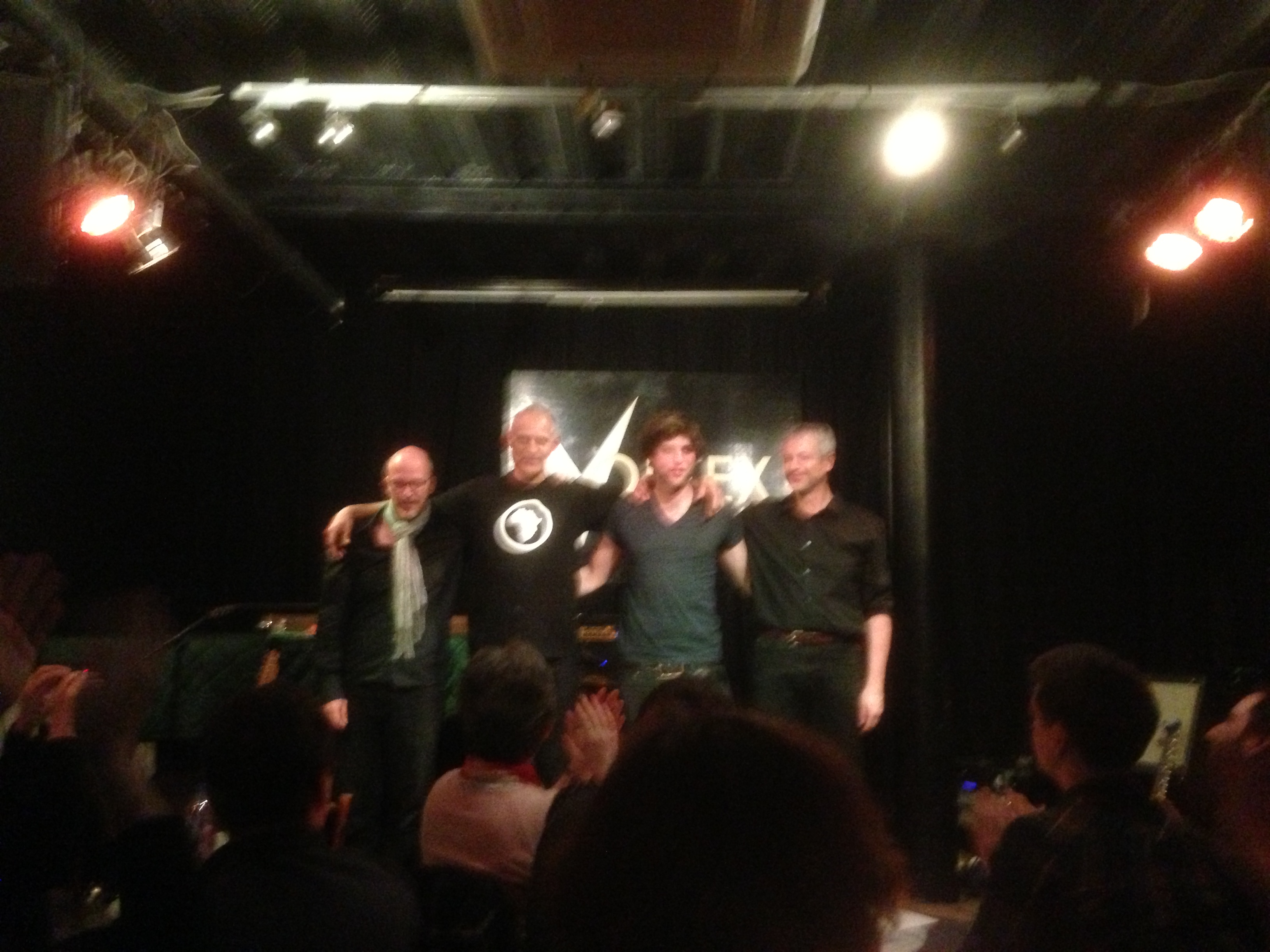
Take a bow
Sonar are a group of accomplished musicians carving out a unique furrow in the prog jazz scene. An essential live experience. Thank you Stefan, Christian, Bernhard and Manuel.
Just one week after a long-overdue induction into the Rock and Roll Hall of Fame, Rush opened the second leg of their ‘Clockwork Angels’ tour – and fortunately for myself and thousands of other Texans, they did it right here in Austin.
For long-time Rush fans, a Rush concert is more than just an event where we see musicians performing their catalog in a live setting. For us, it is something that gets into us the way dye gets into a shirt and alters its color; something that affects each of us right down to the molecular level. This show certainly did that for me, more for reasons I will get into below.
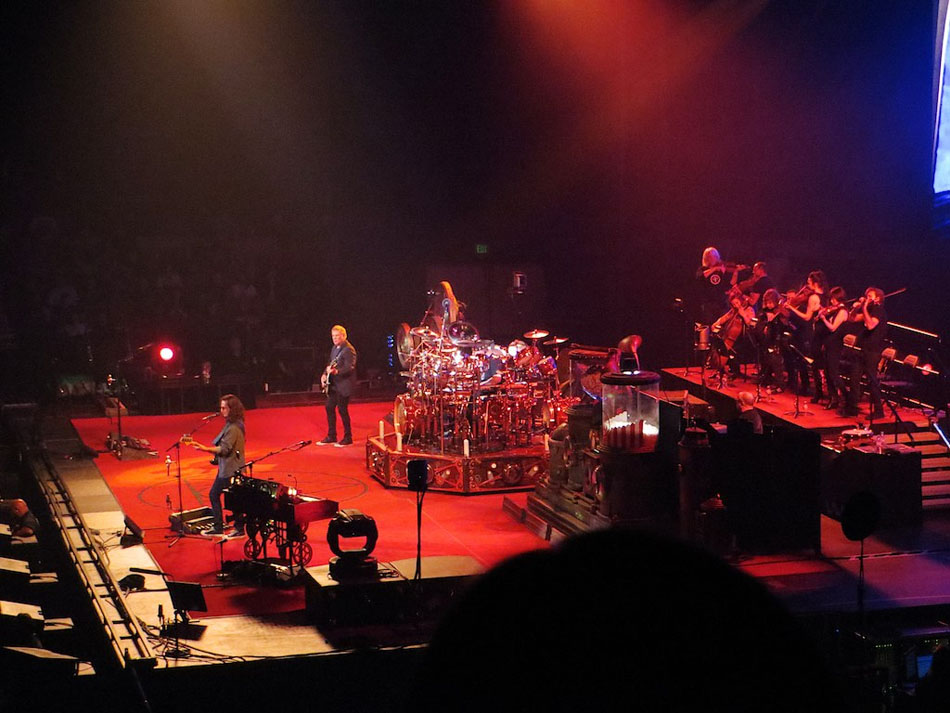
The steampunk aesthetic of the stage setup was spectacular. It was refreshing to see a big visual presentation to accompany the music, which is a rare thing these days. In contrast to the 70’s, when progressive rock was bigger and had more backing by the record companies, most contemporary prog shows are played in smaller venues without the type of visuals as were present in some of the gargantuan shows of that earlier time (think ‘Yes’ on the ‘Relayer’ tour). Rush is the rare band from that era that can still play large venues with a corresponding stage set and light show that turns the presentation into more of an event than just a live music performance.
After a long break from the road, the band seemed rested, recharged, and ready to go. Some of Rush’s typically humorous opening video greeted the audience when the lights went down, featuring the band’s trademarked slightly bizarre humor. The concert proper then opened with a rousing version of ‘Subdivisions’, followed a number of 80’s works. In the first set, they did three songs from ‘Power Windows’, including ‘The Big Money’, ‘Grand Designs’, and ‘Territories’, while also managing to squeeze in ‘Limelight’, ‘Force Ten’, and ‘The Analog Kid’. After the latter tune, the band moved into the 90’s with ‘Bravado’ and ‘Where’s My Thing’ and then into the 00’s with ‘Far Cry’, which closed out the first set.
After a short break, the band returned to the stage, this time with eight additional musicians collectively known as ‘The Clockwork Angels String Ensemble’. This tour has been the first in which Rush has brought extra musicians on stage, and they were used to good effect here. The string ensemble filled in some spaces while enhancing others, remaining on stage throughout the performance of ‘Clockwork Angels’ and for several songs afterwards, including a blistering performance of ‘YYZ’, which is captured through a smartphone (not mine) here.
Beginning with another entertaining bizarro-humor video (with Neil, Alex, and Geddy playing dwarfs) the second half of the show kicked off with ‘Caravan’, and followed through with most of the songs from ‘Clockwork Angels’. Regrettably missing from that list was ‘BU2B’ and ‘Wish Them Well’, the latter being a favorite of mine not only for the music but for the life lesson within the lyrics. A guitar snafu during ‘The Anarchist’ was a minor hiccup that left Geddy alone without melodic accompaniment for a moment, but Alex and his guitar tech had the presence of mind to quickly swap out instruments. The performance of ‘Clockwork Angels’ concluded with a spectacular performance of ‘The Garden’, the visuals of video working great with the music here.
After concluding ‘Clockwork Angels’, the band went back into the 80’s again, with ‘Manhattan Project’, a short drum solo, ‘Red Sector A’, and ‘YYZ’. The string ensemble exited the stage and the band closed out the set with ‘The Spirit of Radio’. The band returned for an encore including ‘Tom Sawyer’ and ‘2112’ (‘Overture’, ‘The Temples of Syrinx’, and ‘Grand Finale’) before calling it a night for good.
I don’t have much to critique for the show, but I do have to say that the soundman could have done a better job with the mix. It was very bass-heavy, and this caused a bit of muffling of notes, particularly on a few of Alex’s guitar solos. But overall, that wasn’t enough to dampen the experience, which was still overwhelmingly positive.
All in all, an outstanding show, played with the energy and intensity that belied their age.
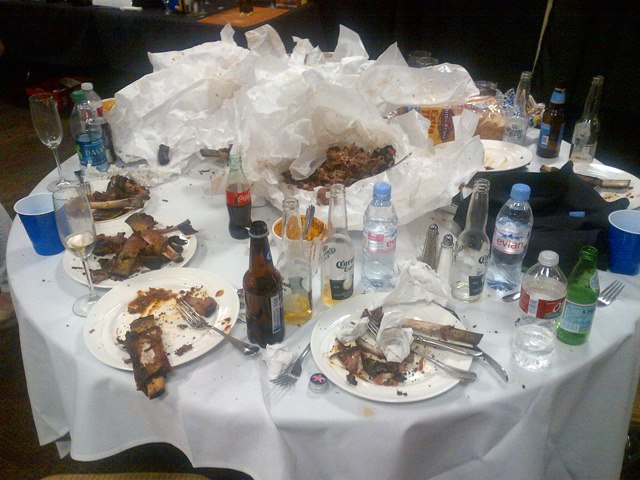
Afterward, according to their Facebook page, Neil, Alex, and Geddy got in touch with their inner cavemen by devouring some Texas barbeque, as shown in the photo. At this point of the review, you’ll have to excuse me while I go off on a tangent, but there is something in that photo that I think I need to address with the band members. Geddy, Alex, Neil – I’m glad you enjoyed your barbeque during your most recent visit to the Republic of Texas. The ribs and brisket are hard to beat. However, I have to say I am a little disturbed in looking at some of the bottles on the table. You three are Canadian boys, and therefore have Canadian genes – which means like other great Canadians, such as Bob and Doug McKenzie, you are drinkers of hearty beer. Thus, seeing several bottles of Corona on the table gives me pause. Corona is more or less a summertime beer – I could give you a pass on this if the gig was an outdoor gig during the sweltering months of July or August. But last night was an unseasonably cool April night, and thus I just cannot understand the Corona. Even more disturbing is what appears to be a bottle of Bud Light on the table. Perhaps one of you reached for a water bottle and didn’t notice the difference? Now, in fairness, toward the upper right corner, it does appear that some redemption is present, as I am about 90% confident that’s a bottle of Shiner Blonde. I’ve compared the portion of the label I can see in the picture to an actual bottle of the same in my refrigerator, and the lack of a bar code on my bottle appears to be the only difference. I’ll do more research of the label tomorrow night as I watch the NFL draft – just to be sure, you know. Nevertheless, Shiner Blonde is a beer befitting of your Canadian DNA, guys, so I would recommend you use that to wash down your next Texas barbeque dinner. Ok, tangent over.
This Rush concert was special in a way that says something both about Rush and their fans alike. Not only was this my fifth Rush show, but it was the fifth different decade in which I had seen them. Previously I had seen them in 1979 (Rupp Arena, Lexington, KY, Hemispheres tour), 1984 (Hampton Coliseum, Hampton VA, Grace Under Pressure tour), 1990 (Charlotte Coliseum, Charlotte, NC, Presto tour) and 2007 (Verizon Wireless Amphitheater, San Antonio, TX, Snakes and Arrows tour). The 70’s, 80’s, 90’s, and 00’s. Now I can add the 10’s. I’m comfortable in saying that I’m not alone among the Rush fan base, and in fact know there are fans that have seen many, many more shows than I have, and moreover, within the same five decades. There are not many bands out there that one can say the same about. There are even fewer (if any bands) that one can say that about while also saying that it was with the same lineup each time. That’s a testimony to their longevity, as well as to the loyalty of the fans that have stuck with them all of these years. As many of you will recognize, the title of this piece is drawn from the lyrics of ‘Marathon’ off of the ‘Power Windows’ album. And those words, written by their philosopher-drummer nearly 30 years ago, appear to be even more true now than when that album was released. Rush, despite some serious ups and downs, has persevered and continued to make great music far beyond the time when most bands lose their creative edge. And fans like myself and countless others, we’ve lived our lives and had our own ups and downs for all of these years, and yet we kept coming back, keep buying the albums, and keep going to the concerts because we appreciate the excellence, the professionalism, the creativity, and the wisdom inherent in the lyrics. That neither Rush nor their fans have burned out, that both have shown the endurance to stick with one another throughout the decades only proves the wisdom of the lyrics from which this review draws its title.
Thanks, guys. Not just for last night’s show. But for everything over all of these years.






 Kscope Music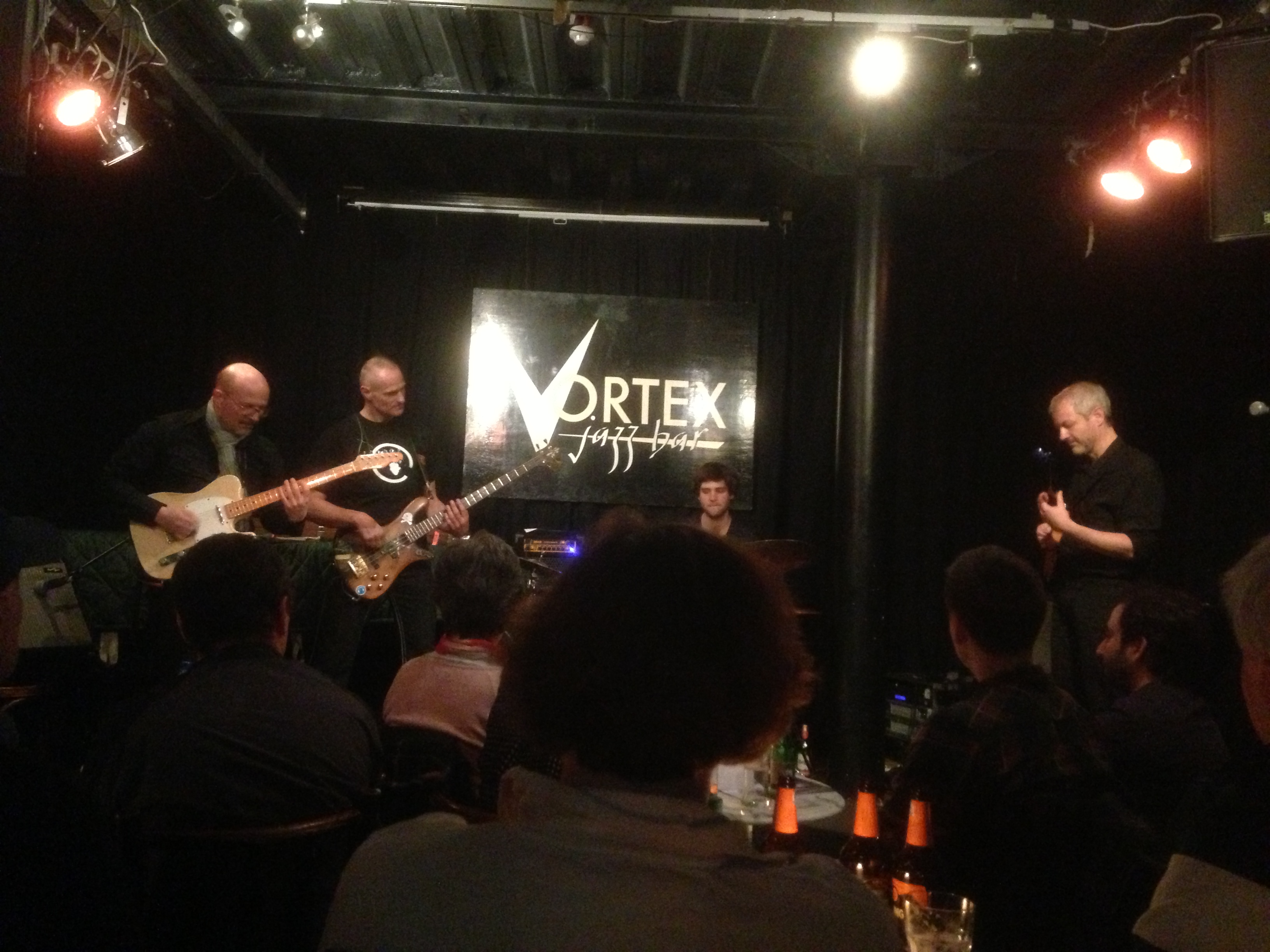
 Progarchy