soundstreamsunday: “An Ending (Ascent)” by Brian Eno

eno_obliquestrategyIn completing a year of soundstreamsunday, I turn away from the “infinite” in the project’s subtitle (“a weekly infinite linear mixtape”) and towards the analog finite-ness of the cassette mixes that so defined life pre-ipod.  In my early creative life this was my primary medium, the 90-minute blank TDK, bound to its two-sided loop, on which I could conduct a mix corralling the works of others.  The collage confines of the mixtape start with a four-cornered frame, defined beginnings and endings that are also transitional and act like the Mobius strip, so the loop, if constructed well, becomes more suggestive of a continuing spiral.  As the last two-sided audio medium developed, the eraseable cassette tape shouted its message: do what you will, the ending will take you to the beginning.
brianenovisualmusic6 - Edited

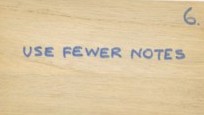
In this context, Brian Eno’s “An Ending (Ascent)” from Apollo: Atmospheres and Soundtracks (with Daniel Lanois and Roger Eno) is one of many possible natural links between U2’s “The Three Sunrises” and the first song in the series, Sun River’s “Esperanza Villanueva“; and, as I write this, it also occurs to me that the song’s title reflects what I’m trying to achieve, a pivot, a soft stop in a rising continuum.  In the words of one of Eno’s Oblique Strategies: “Repetition is a form of change.”

brianenovisualmusic9 - Edited

Eno is a theorist/strategist, a rock and roll Zelig moving through the histories of glam, punk, ambient, prog, and new wave.  His is an intention minus the contrivance.  He locates boundaries so as to cross them, so as to observe them, to flip the within and the without.  To conflate the end with the beginning.

*Images above of Eno’s “Oblique Strategies” cards. First published in 1975, the deck’s pithy advice on jumpstarting the creative process is one indicator of Eno’s wizardly musical midwifery.

soundstreamsunday presents one song or live set by an artist each week, and in theory wants to be an infinite linear mix tape where the songs relate and progress as a whole. For the complete playlist, go here: soundstreamsunday archive and playlist, or check related articles by clicking on”soundstreamsunday” in the tags section above.
Richard Barbieri’s Prog-Electronica Genius

richardbarbieriI was first exposed to that exotic, amorphous musical genre called “electronica” in junior high by a friend who listened to what we called “weird stuff”. I’m not even sure what it was; some of it was from Japan. It made a dent in my memory banks, however, because until then my musical interests had been confined to some classical (Brahms! Mozart! Good!), Top 40 rock (Queen! Also good!), and lots of mediocre CCM (Not good!). During my high school years I listened to a good deal of The Alan Parsons Project, in part because of the huge hit “Eye In the Sky”; I eventually collected all of the APP albums. Parsons, of course, has straddled the worlds of progressive rock and mainstream pop/rock with his production prowess, writing, and work with keyboards and Fairlight programming. In hindsight, his music opened the door in various ways to music that was more overtly electronic.
(A quick, semi-related aside: A good friend in high school, who spent a lot of money on a fabulous car stereo system, liked to alternate between playing—very loudly—the raunchy rap of 2 Live Crew and the muzak of Yanni: the first to demonstrate his system’s bass; the latter to show off it’s high end. I’m not sure which music scarred me more.)

In the late Eighties and early Nineties there was an explosion of so-called “New Age” music (which had been around since the Sixties and whose identity has been hotly debated for decades), much of which was ambient or involved whales bellowing, birds chirping, and flowers clapping their petals. I mostly  ignored it, but did eventually latch onto the music of Patrick O’Hearn, whose solo albums on the Private Music label were lush, complex, mysterious, evocative, and never boring, even at their most sedate. O’Hearn, like all of the finest electronica artists, is the master of tone and mood; the music is rarely about virtuosity—unlike wide swaths of prog rock—but about constructing layers and movements. I liken it to a painter who builds layers of luminosity into his work through patient precision (more on the visual arts parallel in a moment).

Not surprisingly, there was a lot of cross-pollination going on between some “New Age” artists and various progressive rock groups and musicians. O’Hearn, who has legit jazz chops—he studied with jazz giant and bassist Gary Peacock—played with Frank Zappa as a youngster, and then with the new-wave band Missing Persons; the Private Music label featured a number of musicians with deep ties to progressive rock. (Another good example of this relationship can be found in Jon Anderson’s albums with Kitaro and Vangelis.) In the 1990s I bought several albums by Moby, Portishead, Björk, Aphex Twin, and Massive Attack, even while I ignored (for whatever reason) other key artists (Brian Eno, for instance).

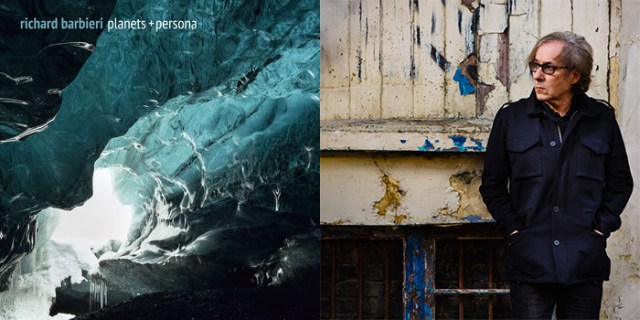
Richard Barbieri is, of course, no stranger to prog fans, being a key member of Japan and Porcupine Tree and having worked in a number of other settings. His new album “Planets + Persona” [Kscope Music] is his third solo album, following 2005’s “Things Buried” and 2008’s “Stranger Inside”, both of which I enjoyed quite a bit. The three albums are similar in many ways, but this new album seems, to me, to be warmer, more organic (or acoustic), and more contemplative. Geno Thackara, at AllAboutJazz.com, explains it so: Continue reading “Richard Barbieri’s Prog-Electronica Genius”

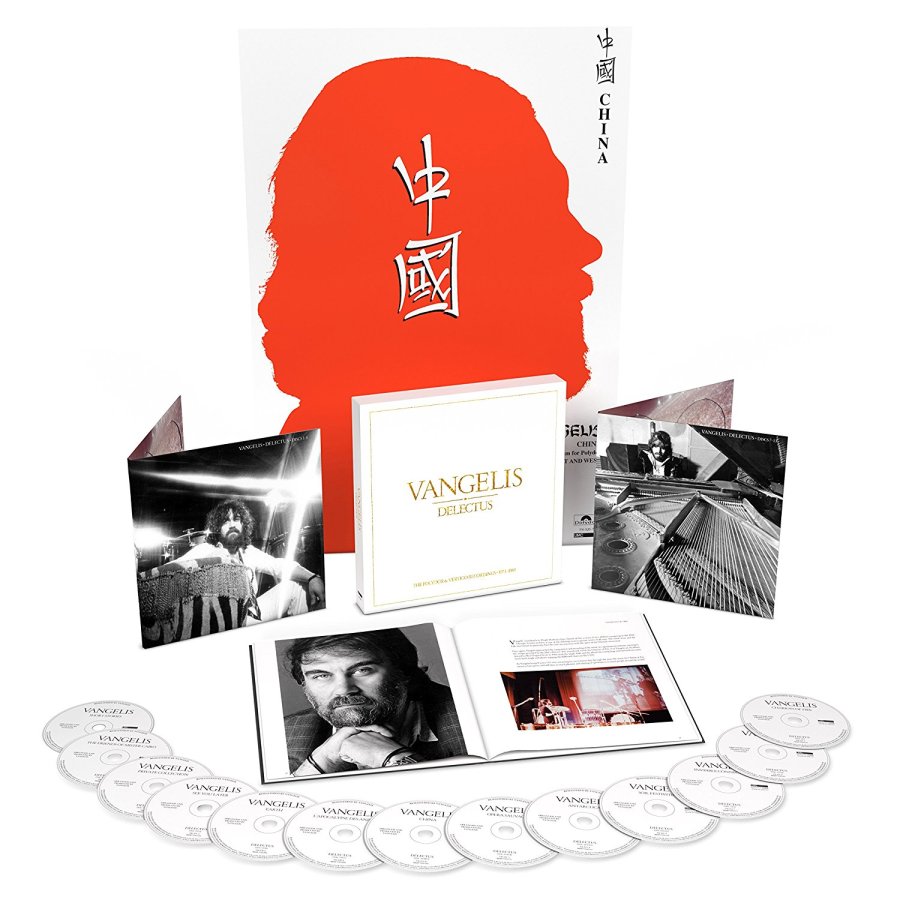
Vangelis Delectus

Delectus: A book of passages from Greek or Latin authors used for study.

When you hear the name Vangelis, depending on your age and musical affinity, you think of different things.

You think of the keyboard player of Aphrodite’s Child whose astonishing album 666 has to be heard to be believed, you think of the pioneer of electronic music whose albums were all groundbreaking in their own way, you think of the soundtrack king, in particular the unforgettable Chariots of Fire, or you think of the fact he was once invited to join Yes, and then produced three fantastic albums with Jon Anderson.

Continue reading “Vangelis Delectus”

Threeviews

Afternoon Progarchists, as someone who writes for a variety of different sites I find myself getting sent diverse and eclectic albums to listen to, all of which roughly fall into the margins of the progressive genre, and today I have three radically different releases, all of which have been bouncing round my brain as I ride the mean streets of Bristol on the bus to and from work. Two are freshly minted (one so fresh it’s not even officially released yet – but it’s one hell of a pre-order!) and one EP which has been out for a while, so without further ado, lets introduce today’s picks.

verity

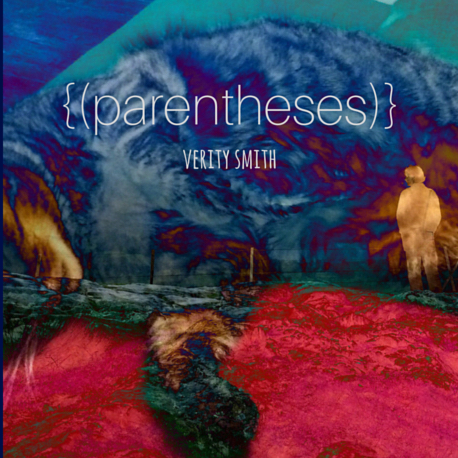
Verity Smith – Parenthesis

http://www.veritysmith.net

I first encountered Verity at the Classic Rock Society Awards back in 2014 where she was performing as part of Clive Nolan’s Alchemy musical, where she played the parts of Jane Muncey and Jessamine and was truck by her vocal prowess and stage presence.

Continue reading “Threeviews”

Honourable mention: 7sleepers — Grendel HeadQuarters

Check out the website (where you can get the music for free, or can ask for a cd): http://7sleepers.net/Free http://7sleepers.net/

Not so long ago, I posted an article about the fact that I I’m only into progressive rock music, and that I’m also open for a lot of other genres too. Suddenly I got a message on Twitter from someone named 7sleepers. He asked me if I was interested in reviewing his album, so I […]

via Honourable mention: 7sleepers — Grendel HeadQuarters

soundstreamsunday: “Isle of View (Music for Helicopter Pilots)” by Penguin Cafe Orchestra

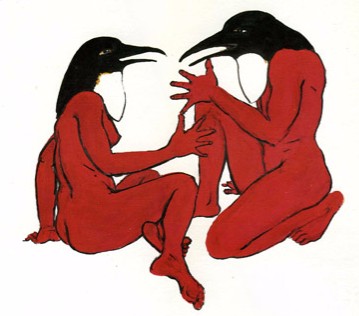
ThePenguinCafeOrchestraMiniAlbum(AlbumCover)One of the great tragedies in twentieth-century music was the death of Simon Jeffes, age 48, in 1997. As leader for 23 years of the classically-pedigreed Penguin Cafe Orchestra, his music was sly, mostly wordless, and while greedily snapped up by advertising firms and public radio stations looking to set a mood fast, in long form the melodic and meditative qualities of PCO’s songs ensure their enduring presence.  As one of Brian Eno’s first production projects following his exit from Roxy Music, PCO has a certain historical cachet, of being associated with the emergence of ambient music, although in many ways Jeffes’ compositions owe much more to the organic performances of his musicians than to the electronic manipulation of sounds that characterizes much of ambient. It’s a kind of extended minimalism, but with a smile (sardonic as it might sometimes be). “Isle of View (Music for Helicopter Pilots)” is from PCO’s third album, Broadcasting From Home (EG, 1984), a record that also featured the popular and much loved “Music for a Found Harmonium.”  The song captures a not atypical approach, a melodic loop of bass and guitars and ukeleles, that morphs slowly and underpins a sympathetic line, often just a simple sustained note, on the cello. Occasionally, as here, percussion adds untold dramatic effect. It is comfort music that is genre challenging, for “New” music should not be this accessible, and pop music should not feel this free.

PCO on Amazon

soundstreamsunday archive