

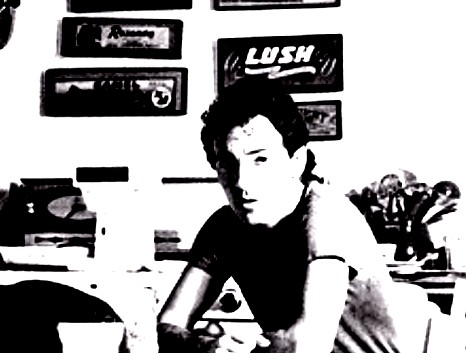
 In 2014, Bruce Springsteen covered Suicide‘s “Dream Baby Dream” on his album High Hopes, revealing common roots among artists you wouldn’t normally associate, and further illustrating Springsteen’s connections to the New York art punk scene of the mid and late 70s. His association with Patti Smith, through her interpretation of “Because the Night,” cross-pollinated rock and punk in a critical cultural moment. Then in 1980 Springsteen and Alan Vega of Suicide struck up a friendship while both were recording their respective albums in NYC, and he lent Suicide much-needed support when their second album elicited nothing but stony silence from their label execs. He later likened Vega’s voice, admiringly, to an exhumed Elvis. Springsteen’s rise to bona-fide-and-sanctified rock star in the mid 80s tends to mask that his rock and roll roots were essentially punk, street, to the degree that the nickname he earned early on in his career never sat well with him. He read in Elvis and the Sun brethren an unseating of authority. He was seduced, romanced by rock’s exalting of the everyman, and he built his songs from a society of sympathetic blue collar and rural down’n’outs that appeared fully sketched on record. This was and is his art.
“State Trooper” from Springsteen’s Nebraska (1982) most immediately links his work and Suicide’s, the acoustic blues rock stutter as lean as the song’s words, here exercised in relative economy (compared to, say, “Thunder Road” or “Blinded by the Light,” or, god forbid, “Rosalita”). The lo-fi slapback echo combined with the aesthetic of the cassette multitrack Springsteen was experimenting with to make demos — which he then decided to release rather than flesh-out with his E Street partners — smacks strongly of cheap electronic processing and a reaching towards Suicide’s elemental synthesizer rock.
Both Springsteen and Vega were writing characters deeply steeped in rock’s first wave, but the innuendo is gone, so that Suicide’s Frankie Teardrop and the first person of “State Trooper” — who’s holding on to that thing that’s “been bothering me my whole life” — share a spinning endgame. “Mister State Trooper, please don’t stop me…” is a plea to limit the damage that’s grown out of control, the high-pitched yawp at the conclusion, overloading the mic and my circuits, forever linking Springsteen and Suicide in a stylistic rock’n’roll entirety consisting of a road, a car, probably a gun, and not much time.
soundstreamsunday presents one song or live set by an artist each week, and in theory wants to be an infinite linear mix tape where the songs relate and progress as a whole. For the complete playlist, go here: soundstreamsunday archive and playlist, or check related articles by clicking on”soundstreamsunday” in the tags section.
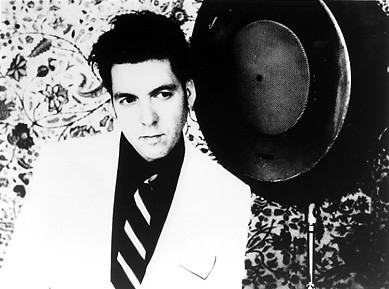 Joe Henry always tells it like it is. What this “it” is depends on his song or object of the moment, but if artistry is about honesty then here’s a man who can be a W. Eugene Smith one minute and a Romare Bearden the next. His is an Americana in context, wrought with a realism that has to, must, consider the world beyond the borders of his song. And yet his skill at creating a complexity of life within the three- or four-minute lengths typical of his work belies this, so that his portraits are breathtaking and you are standing next to him, watching and hearing him compose a complete picture.
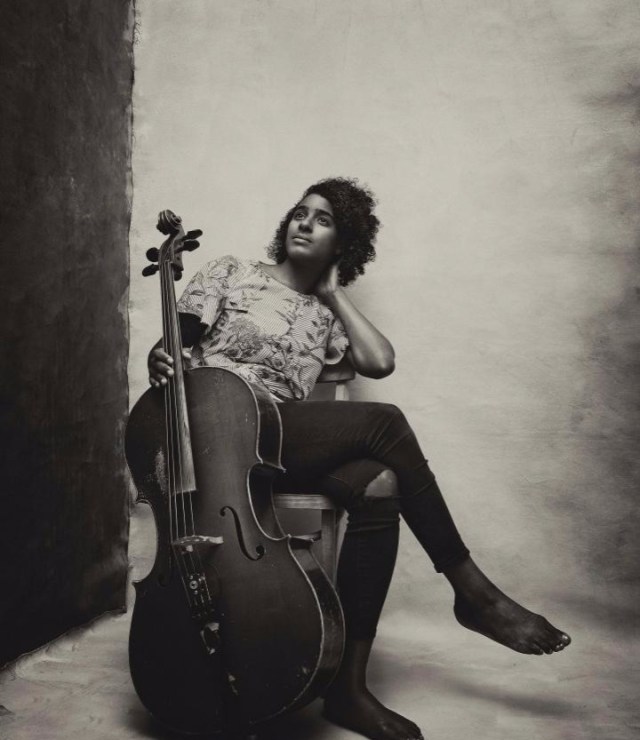 Free and blue and beautiful, those moorings Leyla McCalla holds to in her music sway and pitch like the gulf waters from Hispaniola to Lousiana, rolling through her cello and voice and coursing through her songs, lifeblood to an American music heart. In the weaving lines of the music she plays — a snaking, sliding creole so suited to, and perhaps partly a consequence of, the playing of fretless instruments — is the sound of an America taking shape as its many diasporas meet and mix and move, intersecting lines on a map that triangulate on New Orleans. Like the best Americana musicians, McCalla achieves something at once utterly contemporary but steeped in an authenticity of sound that says so much about the heart that makes the music. There’s no affected vocal, no hokum on the one hand or academic archness on the other. And there could have been, so easily. McCalla’s classically trained; she jumped from a New Jersey upbringing to a New Orleans residency; she’s an American born to Haitian rights activists in the thick of a struggle for democracy; she was an important member of the last incarnation of the much-loved Carolina Chocolate Drops. Her road was ripe for opportunity to leave the music behind in bringing a message that might not have resonated as strongly as it does. But instead she chose on her first solo record, Vari-Colored Songs (2014), to artfully adapt poetry by Langston Hughes and punctuate it with Haitian folk songs. Her second record, A Day for the Hunter, A Day for the Prey, is also cloaked in a music-first approach that makes the underlying messages — because they are indeed there, as they were in her curation of Hughes’s work — so much more compelling.
