
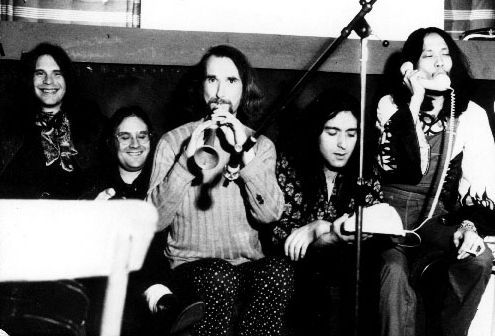
Across five albums and five years Can rendered the categories meaningless and set the bar for the kind of rock future that would make stars out of bands like Radiohead; there’s probably an argument that theirs is still the standard. Like the better so-called “krautrock” bands of the era, Can’s music sounds like little else, and the environment supporting such freedom became a magnet for American and British artists looking to stretch (Keith Jarrett, Brian Eno, David Bowie). But for such a self-styled experimental rock band, Can’s music is as accessible as it is confounding, a beautiful cut-and-paste mess controlled by disciplined musicianship (and editing). Noise, psychedelia, jazz, funk, world, new and no music vie for space in the grooves, battling, more often than not, to equal victory.
By the time Can came to make 1972’s Ege Bamyasi they’d navigated a path through narcotic claustrophobia (Monster Movie‘s V.U.-summoning “Father Cannot Yell,”), cling-clang guitar trance (Soundtracks‘ “Mother Sky”) and long-form boogie freakout (Tago Mago‘s “Halleluwah”) butted up against concrete pieces that, to paraphrase Julian Cope, were guaranteed to clear the room at parties. On Ege Bamyasi they tighten the bolts — at least on record, as live footage from the time shows vocalist Damo Suzuki doing everything to not play along, with varying degrees of success — and come up with an album that contains, in the context of Can’s musical universe, a slew of pop-shaded nuggets. “Spoon” distilled all previous impulses into a succinct 3-minute masterpiece of Suzuki no-sense, Jaki Liebzeit clockwork, and Michael Karoli string-slinging wizardry, with Holger Czukay and Irmin Schmidt binding it all together.
It’s the perfect mixtape “link” song: rhythmic, catchy, weird. It was a hit in Germany, adopted for a TV thriller and selling hundreds of thousands of copies. Successful bands have named themselves after it. It was and is — attractively to young, arty and ambitious Americans — roundly ignored in the States along with the rest of Can’s stunning catalog. And even unto itself it’s a marvelous thing.
soundstreamsunday presents one song or live set by an artist each week, and in theory wants to be an infinite linear mix tape where the songs relate and progress as a whole. For the complete playlist, go here: soundstreamsunday archive and playlist, or check related articles by clicking on”soundstreamsunday” in the tags section.
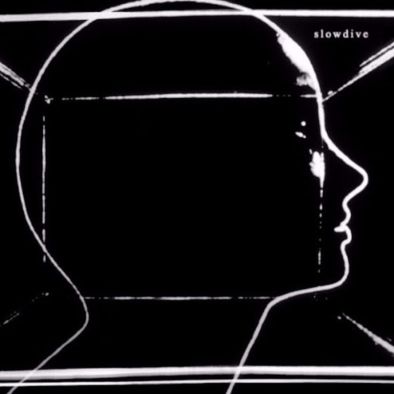 Reviewing Slowdive’s eponymous new album, their first in 22 years, Clash’s Robin Murray made a statement bound to pique the interest of progarchists:
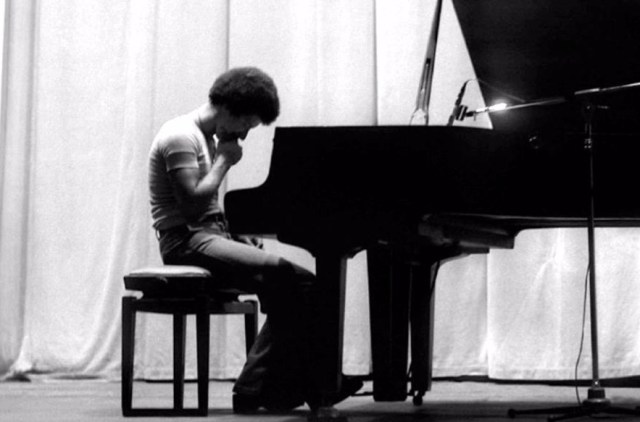 It’s 1975 and I’m nine years old. I’m lying on my back in Reservoir Park, a small city block of grass and oaks next to the University of Utah. In my head is a song that trips and travels as I run and play with friends. It’s a vision of sound, a strong impression of bright sun and moving clouds, a feeling on my skin, a growing chill in the air. Is it October? The song is a constant rhythm of consciousness and motion, a life in itself but also within me, as if I’m one of its many, many tributaries.
 Finding abandon in structure is what rock is about, but it’s rarely approached with such intentional power as on the live sets that Robert Fripp and David Sylvian played in Japan in 1993, which make up the album Damage and the film presented here, Road to Graceland: Live in Japan 1993. It’s not surprising that one of the great live albums in rock would come from a duo whose very distinct songwriting and voices meshed with such ease, but the precious vein they mined yielded such a small set of work and such little attention — after all, art rock/pop in the early 90s was in a far different place in the popular consciousness than it had been a decade earlier — that the record is nearly invisible today even if you’re fairly well-acquainted with the careers of both men. This is neither In the Court of the Crimson King (or Discipline) or Gentleman Take Polaroids (or Rain Tree Crow), but a striving towards something that summed higher, capturing two artists with deep histories and still in their prime. Fripp’s work here, as always, is masterful; a guitarist whose technical ability is matched by a uniquely creative sound and spirit and generosity, he creates space for Sylvian’s profoundly expressive voice and writing. Sylvian, in turn, doesn’t fill the frame either, yielding his significant presence when necessary to the outstanding band he’s playing with. This is my favorite pairing of Fripp with a vocalist, because as much as I like the work he did in King Crimson with Adrian Belew in the 80s and John Wetton in the 70s, he and Sylvian have a chemistry that gets to the center of their strengths, and, appropriately — given Fripp’s brief but incendiary participation in the Berlin Trilogy — summons the work of
 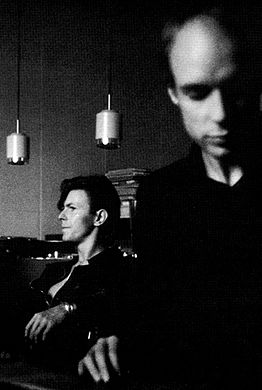 Forty years on it seems like it must have been inevitable, obvious even, the crossing paths of
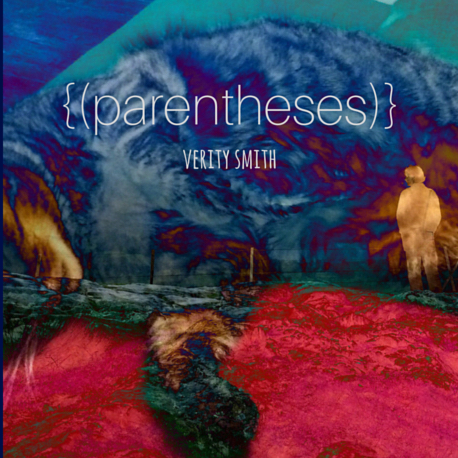
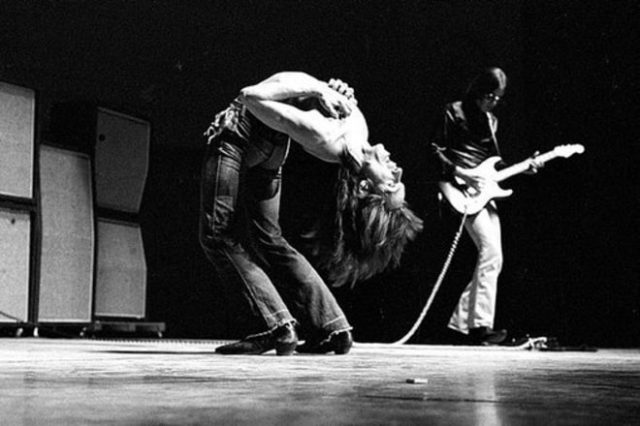 Three months after
 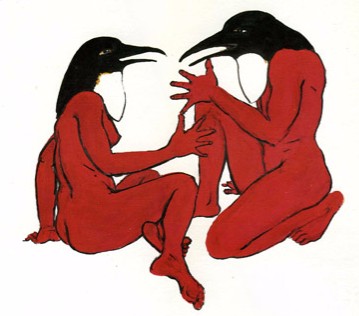 One of the great tragedies in twentieth-century music was the death of Simon Jeffes, age 48, in 1997. As leader for 23 years of the classically-pedigreed
 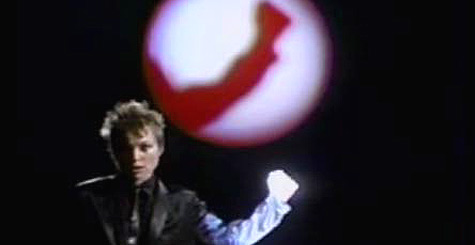 Progressive rock’s avant garde wing has always acted as a kind of disciplined version of its more mainstream cousin, dependent on self-imposed constraints, those kinds of “oblique strategies” that Brian Eno and his expanding circle of collaborators employed to spur, and rein in, their impulses. The cross-pollination of these two (sometimes warring) factions — at least as that dichotomy might have been posed by critics — was most evident in the 1970s, and was particularly expressed in the Venn diagram that was Roxy Music and King Crimson, the kind of built-in tension that ultimately made Eno and Fripp’s projects guilty of indulgence — often too smart for their own good — but also wildly interesting. Within this world landed Laurie Anderson, a New York-based performance artist whose albums in the 80s employed many of the aforementioned Eno/Crimson cast of characters (in addition to the No Wave artists Eno became associated with), and whose songs, due to their melodic charm, could work their way into the popular consciousness to such a degree that rare was the record collection by decade’s end that — if it included a Talking Heads or Belew-era Crimson album — didn’t include at least one of her works. Her influence is inestimable. “Gravity’s Angel” is from the album Mister Heartbreak, and captures her sound and approach: a partiality to electronic instruments, experimentation abetted by first-class Crimon-ish musos (Adrian Belew, Bill Laswell, Peter Gabriel), and an emphasis on finding a relief of humanity against a plane that could be coldly distant, i.e., exploring the human condition in the late 20th century. My understanding via Wikipedia is that she asked Thomas Pynchon if she could musical-ize Gravity’s Rainbow, and he replied, well, yes, if she could do so with only a banjo. That didn’t happen, but this did:
