I feel we reached a new level with the band with that song. It felt like I had broken some kind of code for the band in terms of communicating something emotional, atmosphere. We kept the rawness and aggression, but we managed to sneak in something more tender, a bit more fragile into the body of destruction, aggression and madness that extreme metal is about.
“Enslaved blends that melancholic overtones of ‘The Lamb Lies Down on Broadway’ with the ferocity of Viking metal….We can safely state; abstraction of the quirky melodic aspects of a ‘Selling England by the Pound’ and placing it within the context of 90s extreme metal has now been accomplished – with captivating surgical precision.”
Excuse the brazen self-promotion, but the mighty Ivar Bjørnson did sort of confirm my modest take. Or maybe it’s just my sleep deprivation and high blood caffeine levels talking — that 35000 ft perception – from a flight to the Atlantic coast for an Easter weekend with the likes of Incantation, Mayhem, At the Gates and Carcass.
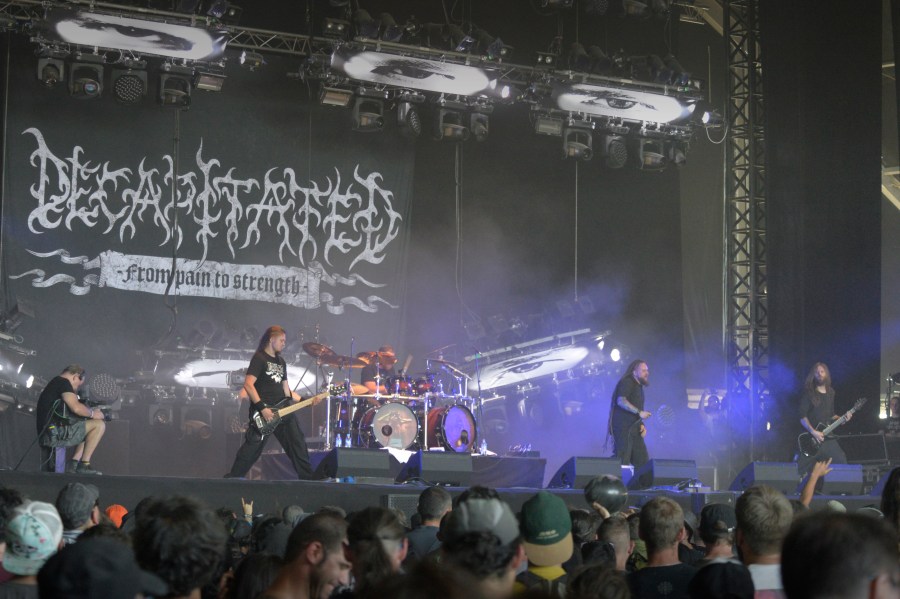
“I remember when I first heard DECAPITATED’s ‘Organic Hallucinosis’ and it just blew me away!!!!”–Tomas Haake, (MESHUGGAH). This was in the context of Vitek’sunfortunate death, at the age of 23.
Importance of Decapitated cannot be exaggerated. Intensity aside, that layered pattern of rhythm, leads and drumming — synchronized and complex. Whether it’s “Day 69”, “Post(?) Organic” or the intricately progressive “A Poem About an Old Prison Man” – Organic Hallucinosis shifts technical death into demanding musical terrains. And Decapitated accomplishes that by remaining rooted in old school structures.
Extending the scope of an established genre mandates more than just musical skill – a broader grasp of the context is equally crucial. Essentially, the album captures those alien progressive tendencies into the confines of a tried and tested death framework. Needless to say, it’s a surgical balancing act. Sheer progressive melody brewed into old school death — and without significant deviations from the genre playbook. In short, Organic Hallucinosis is a ruthless exhibition — of musical and aesthetic craftsmanship. A masterful swan song too.
Among the best to have emerged from Down Under is this band named Deströyer 666. Feels like they only entertain one single goal – destroy even the last remaining understated qualities in metal. And that’s exactly what they accomplish. Synthesized from black and thrash elements, Phoenix Rising takes extreme metal aesthetics to unprecedented loudness.
Rough harping choruses, over-the-top guitar melodies, black metal screams and galloping old school riffs. In short, 80s/90s heavy metal signatures exaggerated to the point of no return. From “Rise of the Predator“ to “I Am the Wargod” to “The Eternal Glory of War” – lyrics pretty much mirror exactly what the music conveys. With this brazen approach, they will manage to get through to even the most obtuse of listeners. With no frills old school structures, a style absolutely devoid of pretenses and adequate in substance – Deströyer 666 becomes that essential cross-over band to darker genres. Needless to say, album is rated 666/666.
Morbid Angel to Archspire is an interesting shift – from morbid dissonance to morbid like precision in about 30 years. There are numerous incremental steps between them, but this systematic dial up in technical intensity is a broader pattern evident across all metal genres. But, whether this is a progression or regression is a matter of perspective. Definitely there is no absolute hierarchy for benchmarks, they are always personal and often idiosyncratic.
These broader genre shifts are eventually propelled by all aspects of the music industry — listeners, artists, labels — everyone plays their own structural role. Within the economic constraints of the real world, music evolves only when all the involved factors reinforce each other. In other words, independent of our personal opinion, aggregate benchmarks are constantly emerging. It’s sort of a dispersed process with its own layered feedback loops. Artistic shifts experiencing positive feedback simply thrive. And in turn also become a factor propelling broader genre trajectories – just like any other interconnected ecosystem.
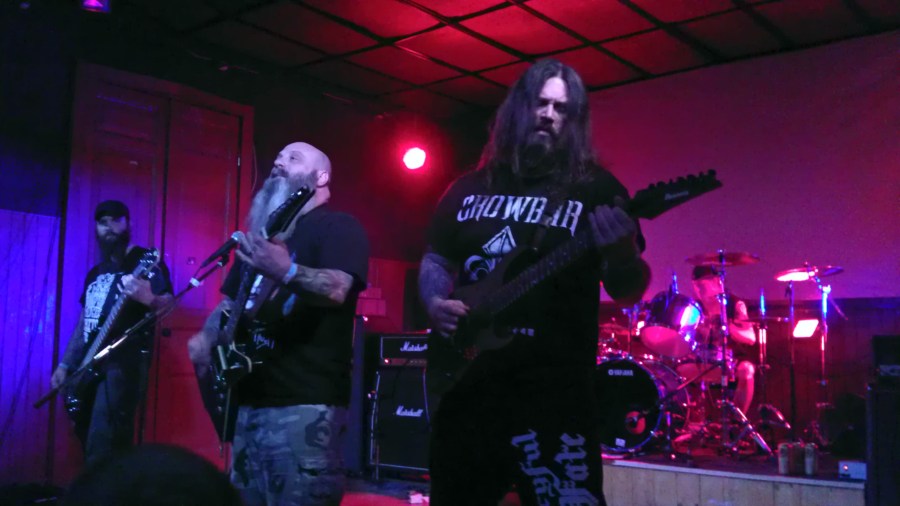
At New Orleans moderate temperatures, 70s Black Sabbath and hardcore punk riffs are known to fuse, forming what we now know as sludge. Crowbar simply crystallized it into a grinding atmospheric doom. It’s downtuned to the abyss and propelled by stocky hardcore punk riffs, usually dragged out to its limits. Rare bluesy strumming and more than adequate raspy vocals – “Slave to no one but your misery. Broken man lies where you used to be” – adds to the essential low. But even at this bleak pace, anyone can easily sense the grinding force that Crowbar inflicts.
These thoroughly grayed out hues may not be everyone’s delight. Crowbar’s creations are essentially tailored – to just fit into the two percentile of the brooding end of the emotional spectrum. But, if gloom is what you seek, ‘Odd Fellows Rest’ is splendid company.
Released in September 1979, Unleashed in the East, recorded on the Japanese leg of their Hell Bent for Leather tour, capped Judas Priest’s first long and storied decade, six months before their mainstream breakthrough British Steel. It’s a killer set, brightly produced, and enlivened some of their early material, which could tend towards studio stiffness. It was itself partly a studio effort, as singer Rob Halford had to add vocals after the fact, but anyone who loves this band or live records in general couldn’t, or shouldn’t, care less: live albums, live rock albums in particular, are by their nature a conceit of production.
This was Judas Priest’s moment: between 1976 and 1980 they released six defining albums, all the while with punk nipping at their heels — and, I think, the band was listening to what was happening on the street, just based on the evidence of Killing Machine/Hell Bent For Leather and British Steel. But metal audiences were coming into their own too, thanks in large part to Priest’s own tireless touring and a body of work that laid the foundation for the faster, thrashier, “New Wave of British Heavy Metal.” Having grown out of the same general scene as Black Sabbath, Judas Priest’s trajectory was away from the early 70s heavy stoner rock that drove so many of that era’s bands into extinction (including, eventually, Sabbath mach 1). After a middling initial effort, Priest (like Rush) found a signature metal sound early on that wasn’t Sabbath or Zep redux and that benefited from a progressive rock outlook, so that they were as comfortable covering Spooky Tooth or Joan Baez (“Diamonds and Rust,” their first real taste of success) as they were busting out such chestnuts as “Island of Domination.”
“Victim of Changes,” as it appears on Unleashed in the East, is the highlight of Priest in the 70s. Originally recorded for 1976’s Sad Wings of Destiny, the song is flagship NWOBHM, its galloping chug and dynamic shifts supporting metal’s best and darkest lyrical effort pre-Metallica, unwinding around themes of alcoholic deterioration and lost love that, as voiced by Halford in his keening wail, describe heart-rending loss. No sword and sorcery here, or southern crosses: the bedevilment in human relationships is fodder enough. Glenn Tipton and K.K. Downing, Priest’s twin guitar threat, are at their creative peak, with interplay both highly technical and soulful, while bassist Ian Hill and Les Binks (offering some early double bass drum action) lay down the solid propulsive core so important to Priest’s success. Heavy. Essential.
soundstreamsunday presents one song or live set by an artist each week, and in theory wants to be an infinite linear mix tape where the songs relate and progress as a whole. For the complete playlist, go here:soundstreamsunday archive and playlist, or check related articles by clicking on”soundstreamsunday” in the tags section.
Might sound like a cliché, but progression is the only constant in life, and this is especially true in music. In fact, incessant change is the norm in prog. For instance, Dream Theater used to define progressive metal. But it’s safe to say that benchmark is now comfortably buried — under layers of odd time signatures, robotic precision and polyrhythms.
But change is also an obvious broader pattern, manifesting over time and at numerous levels.
Both artists and their listeners tend to evolve, often in different trajectories. We are all simply wired differently and more importantly — we constantly learn. At least most of us do. In that sense, it’s also impossible to listen to the same song twice – because each iteration would be perceived through a slightly different neural filter.
Nothing illustrates this more than going back and listening to our decade old favorites. This will inevitably reveal a new facet to the very same sound, something which was never obvious before. Essentially, artistic experiences tend to forge new sets of mental connections, and this way we progressively develop our own individual palate.
A fellow metal-head and a Progarchy reader had recently managed to summarize her own progression, and that also in just about six artists. This sort of prompted me to jot down and share my own seven song list. Needless to say, Powerslave to Funeral Fog took a few years.
If they’re the only band on the infinite linear mixtape to be featured twice, and back-to-back at that, it’s because of the singularity of their two lead singers, who so influenced their respective versions of Black Sabbath that each iteration of the band made a distinct impact on rock and metal. Sabbath guitarist Tony Iommi has stated that the difference lay in writing for Ozzy Osbourne, who sang the melody of the riff, versus writing for Ronnie James Dio, a far more technically accomplished singer, who sang around the song’s chords. But even with Dio’s vocal expertise stretching Sabbath’s range, the core of Black Sabbath’s legacy really does belong to Ozzy, whose shakily intoned shriek conveyed — at least across their first six records, and before it became Ozzy’s schtick — the terror of a man trapped inside a nightmare.
When Sabbath took to the studio in October 1969 to make their first record, they were like dozens of other post-Cream British blues rock bands struggling to find their own voice. But, they had some advantages that maybe weren’t immediately apparent. Iommi’s short and ultimately unsuccessful stint in Jethro Tull in 1968 was an education, as that band was finding its own, heavier feet following the departure of Mick Abrams (Martin Barre, the definitive Tull guitarist, would be hired shortly after Iommi filled in, with a thunderingly loud but finessed guitar style not unlike Iommi’s). And Ian Anderson provided an object lesson for Iommi when Iommi went back to his band Earth: success would largely depend on the labor you put in. Tull worked for its fortune. As Earth transformed itself into Black Sabbath, Iommi demanded the band become a workhorse, and the group began developing a set of songs around bassist Geezer Butler’s night frights, a fascination with horror movies (e.g., Black Sabbath), and two significant technical issues that became key to a conceptual breakthrough: the tips of Iommi’s fingers on his right (fretting) hand had been shorn off in an accident in 1965, and it was while developing his newly renamed band’s sound and songs that he down-tuned his guitar to make it easier to play with the plastic tips he adhered to the tops of his fingers; also, Butler’s facility on bass was limited in their early days, so he ditched melodic runs and just mimicked Iommi, also down-tuning his bass. The result was literally diabolic. From the opening notes of “Black Sabbath,” the sound sends shivers, and it is here that heavy metal was born, out of imaginative use of limitation — such is Art — and the doom-laden tritone, the diabolus in musica, that Sabbath employed as its calling card. Iommi, riffing on Butler’s attempt to mimic Gustav Holst’s “Mars: The Bringer of War” from The Planets suite, produced a metal manifesto so potent that it resonates almost 50 years on, remaining a rock touchstone of its era as significant as Velvet Underground & Nico, Astral Weeks, Forever Changes, or Funhouse, ever begging the question: What is this that stands before me?
Studio version here but also the Paris ’70 version, with Ozzy jumping like Iggy.
There is, in fact, none more black.
soundstreamsunday presents one song or live set by an artist each week, and in theory wants to be an infinite linear mix tape where the songs relate and progress as a whole. For the complete playlist, go here:soundstreamsunday archive and playlist, or check related articles by clicking on”soundstreamsunday” in the tags section.
Metal is a tricky business. So is memory. I first heard “Children of the Sea” soon after it was released, I think, as a young teenager in 1980, tutored by an older sister in thrall to Rush’s Permanent Waves, Judas Priest’s Unleashed in the East, and, most of all, Black Sabbath’s Heaven and Hell. It was later that I learned of Sabbath’s late 70s identity crisis, their parting of ways with Ozzy Osbourne, and Ronnie James Dio’s efforts to help salvage a band worthy of his prowess. It couldn’t have been an easy road, and by all accounts wasn’t, BUT… the fruit of Osbourne’s dissolution, Dio’s post-Rainbow quest, and the Sabbath juggernaut’s need to produce a next record, was a pair of LPs blueprinting one way forward for metal: operatic vocal facility, pop-tinged melodies, subject matter less doom-and-gloom than dungeons-and-dragons. With, of course, guitars fully and thunderously intact. It was what Heart showed it could be with 1978’s “Mistral Wind,” and would be taken to its natural conclusion by Iron Maiden in the next decade; but, as the so-called New Wave of British Heavy Metal began to draw its borders as the 70s turned into the 80s, it was Black Sabbath, the original metal wellspring, still sitting in the center of the compass rose.
Of course, many die-hard Sabbath fans don’t acknowledge Dio’s Sabbath as the real Black Sabbath — a respectable point of view, in fairness, that such distinction can only come with the inclusion of Ozzy and in consideration of the first six, genre-defining, Sabbath LPs — and the band itself acknowledged this when reuniting for a tour and LP with Dio in 2007, calling themselves, naturally, “Heaven and Hell,” out of respect for both Dio and Ozzy. But for a certain generation of us the Dio-led band was the gateway to Black Sabbath, with Heaven and Hell and Mob Rules (1981) jewels in the crown equal in quality heaviosity to the First Six. And it turns out that Dio’s here-be-dragons sensibility was just what Sabbath and metal needed: dramatic vocal flights, lyrical escapism, and a feel for the sheer cliff riffs. I imagine too that his maturity (he was in his late 30s at the time, older than the rest of the band by at least six years) brought a steady, compositional, horns-flashing hand to a Sabbath dearly in need of it. Dio would set a solo course soon after Mob Rules but would never stray far from the tone he set in his work with Sabbath.
From the flawless first side of Heaven and Hell comes “Children of the Sea,” the kind of fantasy piece Dio trademarked, where the story lines are drawn vaguely enough to appeal broadly, and are there, ultimately, in support of the Riff King, for if there is one true hero in the story of metal, it is and will forever be Tony Iommi. Two versions here: the original studio take and, because it counts, the Heaven and Hell band version from 2007, with Dio, at the age of 65, still bringing every bit of showmanship to the legacy he was so justifiably proud of.
soundstreamsunday presents one song or live set by an artist each week, and in theory wants to be an infinite linear mix tape where the songs relate and progress as a whole. For the complete playlist, go here:soundstreamsunday archive and playlist, or check related articles by clicking on”soundstreamsunday” in the tags section.


 Released in September 1979, Unleashed in the East, recorded on the Japanese leg of their Hell Bent for Leather tour, capped Judas Priest’s first long and storied decade, six months before their mainstream breakthrough British Steel. It’s a killer set, brightly produced, and enlivened some of their early material, which could tend towards studio stiffness. It was itself partly a studio effort, as singer Rob Halford had to add vocals after the fact, but anyone who loves this band or live records in general couldn’t, or shouldn’t, care less: live albums, live rock albums in particular, are by their nature a conceit of production.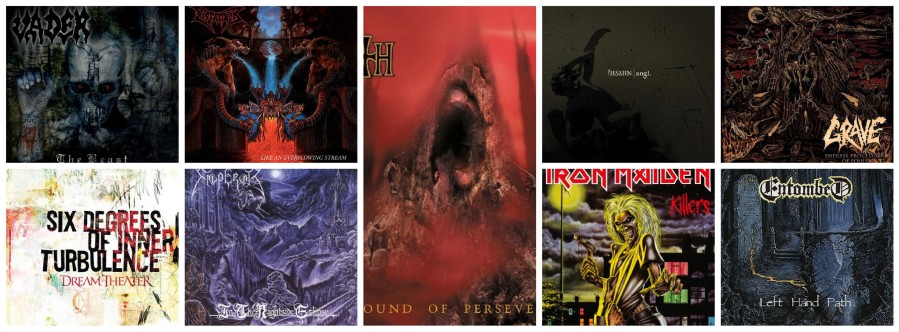
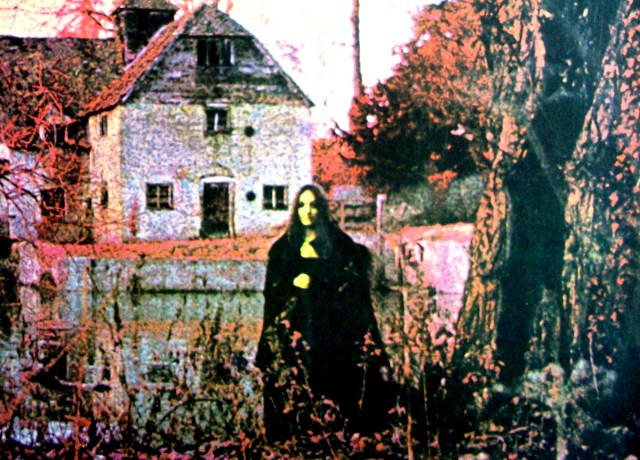 If they’re the only band on the infinite linear mixtape to be featured twice, and back-to-back at that, it’s because of the singularity of their two lead singers, who so influenced their respective versions of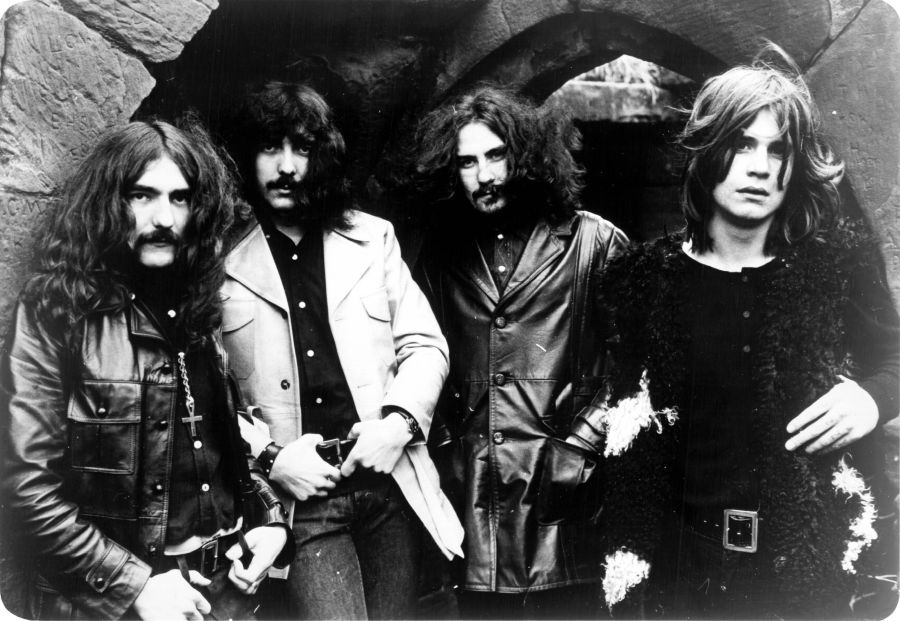
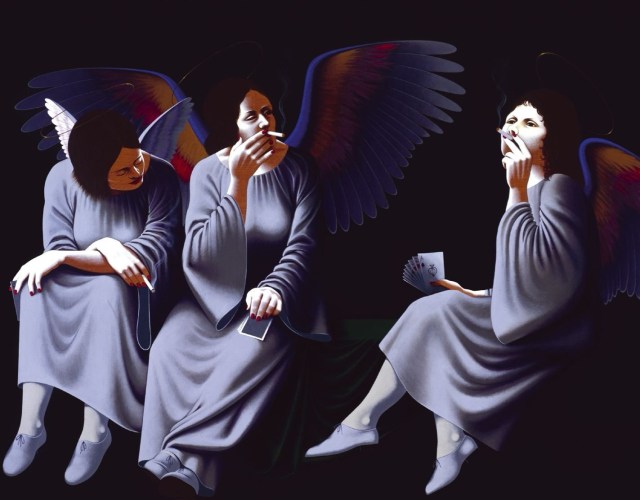 Metal is a tricky business. So is memory. I first heard “Children of the Sea” soon after it was released, I think, as a young teenager in 1980, tutored by an older sister in thrall to Rush’s Permanent Waves, Judas Priest’s Unleashed in the East, and, most of all, Black Sabbath’s Heaven and Hell. It was later that I learned of Sabbath’s late 70s identity crisis, their parting of ways with Ozzy Osbourne, and Ronnie James Dio’s efforts to help salvage a band worthy of his prowess. It couldn’t have been an easy road, and by all accounts wasn’t, BUT… the fruit of Osbourne’s dissolution, Dio’s post-Rainbow quest, and the Sabbath juggernaut’s need to produce a next record, was a pair of LPs blueprinting one way forward for metal: operatic vocal facility, pop-tinged melodies, subject matter less doom-and-gloom than dungeons-and-dragons. With, of course, guitars fully and thunderously intact. It was what Heart showed it could be with 1978’s
  Progarchy


