soundstreamsunday: “Asa Branca” by Gilberto Gil

10262012-Gilberto-Gil-1_t958In “I Can See Clearly Now,” Johnny Nash rejoices in the rain ending, the clouds parting.  In “Asa Branca,” Gilberto Gil brings the boogie down party to a song that prays for the rain to return.  Written in 1947 by Luiz Gonzaga and Humberto Teixeira, this oft-covered Brazilian chestnut — and Gonzaga’s own versions are pretty uniformly great — is about two lovers separated by the economic conditions of the drought-ravaged region of Sertão, forcing the narrator to leave his beloved Rosinha to find work in the city, with a promise to return.
I love Gil’s work.  Along with Tom Zé and Caetano Veloso, Gil was at the cutting edge of Brazilian music in the late 1960s and paid the political price, as did Zé and Veloso.  The music he continues to create and perform is remarkable, and when I saw him live several years ago, even at age 70 he played two hours, electric guitar over his shoulder and wicked band behind him, to a rapt crowd he kept dancing in the aisles.  He’s an ambassador without a badge, a teacher without a blackboard, and when he plays, he’s on fire.  Along with Caetano’s first four or five records and the albums by Os Mutantes, Gil carved a path for singular Brazilian expression. By 2003 he had become such a hero that he was named Brazil’s Minister of Culture. Sure, “Minister of Culture” sounds Orwellian to me too, but if you’re going to have one, by all means make it Gil.  Two hours.  70 years old.

Gil covered “Asa Branca” on his 2001 live album São João vivo, and it’s been a live staple for him ever since.  This version is from the live tour supporting his album Fé na festa, the same tour we saw, and while some record company minion got the upload video quality wrong, the audio is fine and the performance jaw-dropping.  So great.

soundstreamsunday presents one song or live set by an artist each week, and in theory wants to be an infinite linear mix tape where the songs relate and progress as a whole. For the complete playlist, go here: soundstreamsunday archive and playlist, or check related articles by clicking on”soundstreamsunday” in the tags section.

Rick’s Quick Takes: The Pineapple Thief, Where We Stood (In Concert)

by Rick Krueger

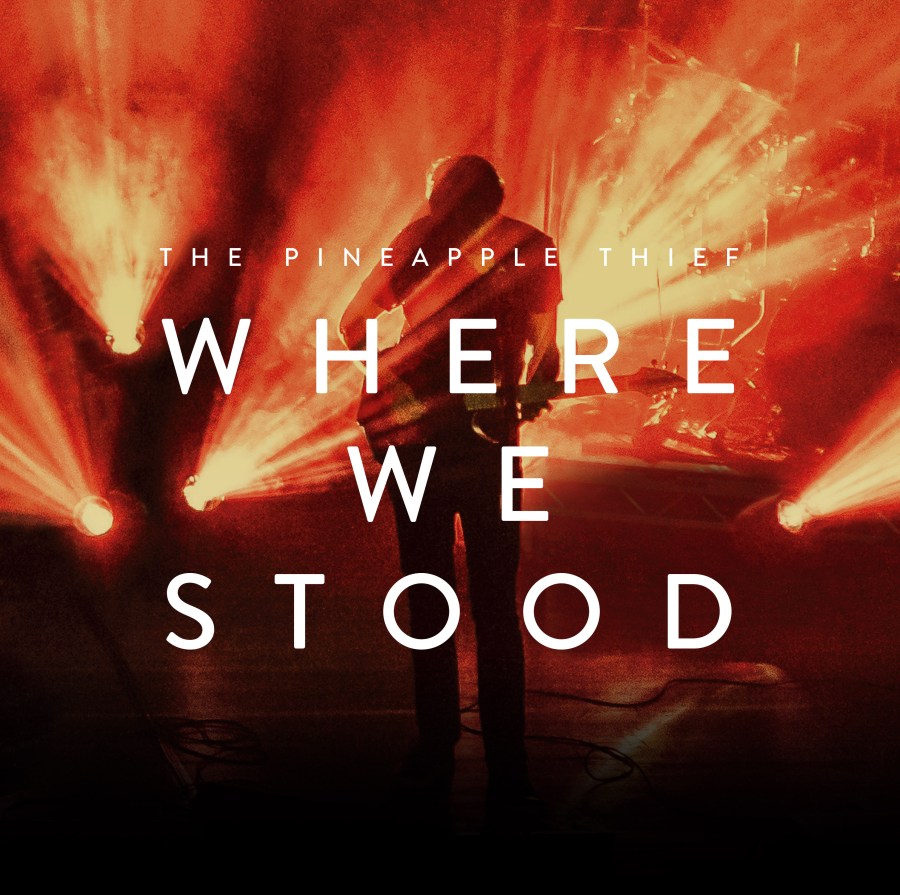
Today is — well, sort of —  the official release day for The Pineapple Thief’s Where We Stood concert video.  Turns out that, while vinyl and downloadable/streaming audio versions are now available, the Blu Ray, DVD and CD versions have been delayed until early October.  Kudos go to the fine folks at Burning Shed for sending along mp3s of the full concert to folks who pre-ordered in those formats!

After just one listen, I’m mightily impressed.  Back in my eMusic subscriber days, I ran across the Thief via the albums Tightly Unwound and Someone Here Is Missing, enjoying them thoroughly.  A decade ago, high quality new prog was still scarce enough that I absolutely delighted in hearing Bruce Soord and company plowing similar furrows to Steven Wilson in Porcupine Tree.  Unfortunately, the follow-ups All the Wars and Magnolia were, as our head Progarchist put it last year, good but bland.  Thankfully, 2016’s Your Wilderness was a major step back up, as Gavin Harrison’s stylish, tasty drumming slotted in with Soord’s sleek new tunes and moody guitar lines to hypnotic effect.

So Where We Stood is the right move at the right time, capturing the re-energized Pineapple Thief onstage in London, with an enthusiastic crowd egging them on.   Harrison is astonishing and impeccable as always, driving the band with relentless grooves and jaw-dropping fills, locking tight with Jon Sykes’ powerful bass lines.  While Steve Kitch’s keyboards conjure impressive atmosphere, Darran Charles and Soord seamlessly slide from badass surf music riffs to full-on metal chording, inspiring Soord to new heights of vocal power and expression.  This Thief rocks hard, with guts and class, in the service of first-rate songs from throughout their checkered career.

I’m optimistic that the visuals of Where We Stood will match the excellence of the music; in my opinion, the chance to see Gavin Harrison weaving his percussive magic in close-up is gonna be worth the wait all by itself.  Plus the Blu-Ray also includes Your Wilderness, 8 Years Later and bonus acoustic tracks in 24/96 stereo and surround.  If you haven’t ordered this baby yet, what are you waiting for?


King Crimson, Sailors’ Tales (1970-1972) and Earthbound (Expanded)

by Rick Krueger

Autumn is coming; can a Big Box Set o’ King Crimson be far behind?  In recent years, we’ve seen multiple-disc, multiple-format bundles based on Larks’ Tongues in Aspic, Red, Starless and Bible Black, and THRAK, along with a package focused on the 1980s albums (Discipline, Beat, Three of a Perfect Pair).  Each set has yielded an surfeit of riches: the 40th anniversary stereo and surround mixes of the studio albums; album rehearsals, outtakes and alternate mixes; and (for my money, the best part) more live performances, on both audio and video, than you can shake a stick at.

Robert Fripp has called the period covered by Sailors’ Tales (1970-1972) King Crimson’s “interregnum.”  After Ian McDonald, Michael Giles and Greg Lake left the original band, Fripp and lyricist Peter Sinfield struggled to assemble a Crimson that would stay together long enough to record and tour.  In the Wake of Poseidon (1970) mixed players and ideas from the 1969 band with new material and musicians, including stunning saxophone work from Mel Collins.  Lizard  (1971) spun in a more avant-garde direction; the cream of British free jazz players sat in, but vocalist Gordon Haskell quit before the album was even released.  (Is this why Yes’ Jon Anderson sings lead on one track?)  For Islands (1972), a solid line-up finally coalesced: Fripp, Collins, vocalist Boz Burrell (taught to play bass parrot-fashion for touring) and drummer Ian Wallace.  This Crimson proved ferocious live, but as they downplayed the new album’s pastel romanticism in favor of straight-up blues/jazz improv, friction mounted again.  Sinfield was forced out; the remaining quartet fell apart, then did a contractual-obligation US tour (documented on the bargain live album Earthbound), then tried to reform, then broke up for good.

No wonder Fripp basically disowned this era of Crimson for years; it took his 1990s reconciliation with Collins and Wallace, the release of multiple 1971-72 concerts through the King Crimson Collectors’ Club, and Steven Wilson’s revelatory remix of Lizard to ultimately change his mind.  With the current Crimson regularly performing music from all three albums (and Fripp and Collins both tearing up these selections onstage), the time is ripe for the rest of the world to find out why.

Thus, Sailors’ Tales.  As spelled out in the DGM press release:

  • 3 CDs feature Steven Wilson and Robert Fripp stereo mixes of In The Wake Of Poseidon, Lizard and Islands plus additional tracks.
  • 6 CDs feature the Islands line-up’s early concerts from Germany (new to CD) and the UK (1971).
  • 9 CDs feature live recordings (several new to CD and/or previously unreleased in any format) from the 1972 US tour, including a new stereo mix of Summit Studios and an expanded Earthbound.
  • 3 CDs feature auditions for the Islands band and two further, as yet, unidentified concerts from 1972 (all previously unreleased).
  • 3 Blu-Ray discs contain the main studio albums in 5.1 Surround Sound, recent stereo editions mixed by Steven Wilson and Robert Fripp, 30th anniversary masters of the original stereo albums mixes (all in 24/96 hi-res), plus extensive additional material with each disc also featuring a complete alternate album and a further selection of additional, related studio/live material in hi-res.
    • The Lizard Blu-Ray also contains the audition material from CDs 19/20.
    • The Islands Blu-Ray also contains the following concerts in stereo: Zoom Club (4 shows), Marquee Club, Plymouth, Glasgow, Detroit all from 1971.
  • A 4th, Earthbound Tour Blu-Ray disc features an expanded version of the original album, Summit Studios gig in Stereo and Quadraphonic (newly mixed), the “Schizoid Men” sequence from the Ladies of the Road album, 2 newly discovered concerts in hi-res stereo and every existing soundboard concert recording from the 1972 US tour: Wilmington, NYC (2 shows), Chicago (2 tracks only), Detroit, Jacksonville, Orlando, Pittsburgh, Milwaukee, Peoria, Indianapolis & Denver (2 shows).
  • 2 DVDs feature the expanded Earthbound, Summit Studios, “Schizoid Men,” New York 1972 and the recently discovered live concerts.
  • Presented in a 12” box with booklet, memorabilia, a further downloadable concert, and sleeve-notes by Sid Smith, Jakko Jakszyk and David Singleton.

Too much?  The budget option is a new CD/DVD edition of Earthbound, expanded from 5 to 12 tracks as on Sailors’ Tales, with the DVD also containing Summit Studios and “Schizoid Men.”

Both Sailors’ Tales and Earthbound are available for preorder from DGM and Burning Shed.  Release date is Friday, November 3 — my birthday.  Hmm … anybody feeling especially generous?

earthbound

Czukay Canned

The Grim Reaper continues to exact a heavy toll in 2017: now Holger Czukay, a founder member of the influential German band Can, has left us…

The Guardian has an excellent obituary, featuring this memorable quote:

The bass player’s like a king in chess… He doesn’t move much, but when he does he changes everything.

Happy 50th Birthday, Brad Birzer, Über-Progarchist!

bbirzer_1987Today is the birthday of Dr. Bradley Birzer, co-founder, lead editor, and driving force behind this little gem of a website. Happy Birthday, Brad!

Brad and I first met when I interviewed him about one of his many fine books (about Christopher Dawson, if I recall correctly), back in 2008. We quickly found out that we had much in common when it came to theology, philosophy, literature, and, yes, music. We began to share notes and thoughts about music, and eventually I suggested that we should consider putting together a site dedicated to any and all thoughts we had about music. The next day—the next day!—Brad sent me a link to Progarchy.com. Apparently he had stayed up most the night creating it. So when I think of Brad, these following descriptives come to mind: tireless, passionate, honest, brilliant, funny, self-effacing, joyful, and bursting with life.

I’m not sure of the exact date, but Brad created this site sometime in either late September or early October 2012. So we are now at the fifth anniversary. And anyone who pays attention to the site knows that Brad has been the heart and soul of what we do here. Thank you, Brad!

I hope Brad won’t mind, first, that I used one of his Facebook photos for this post: of the young Birzer in college thirty years ago. And, secondly, this playlist that he posted today:

Rush—Tom Sawyer
BBT-Hedgerow
World Party—Is it Like Today?
XTC—Then She Appeared
Beethoven’s 6th
Kevin McCormick—Solearas
Matt Stevens—Into the Sea
Cosmograf—The Vacuum That I Fly Through
The Tangent—The Canterbury Sequence
Echo—The Killing Moon
Flower Kings—I Am the Sun
King Bathmat—Sentinel
Mew—Snow Brigade
Marillion—Ocean Cloud
NAO—Wires
Peter Gabriel—Rhythm of the Heat
Porcupine Tree—Time Flies

Happy Birthday, Über-Progarchist!

Drifting Sun at Twilight: An Inter-Review

Drifting Sun, Twilight (2017)

Tracks: Twilight(9:27), Wings of Hope (5:13), Mystery of Lies (5:46), Soldiers (7:23), Summer Skies (10:49), Remedy (5:19), Outside (5:24), Remain, (8:11)

Drifting Sun have made another leap forward with their latest album, Twilight. With their last two albums both reviewed favorably here at Progarchy, that is no light praise. A UK based studio project, Drifting Sun has re-emerged over the last few years from their initial formation in the early 1990s to produce high-quality music worthy of any progressive rock fan’s collection.

The lineup has remained relatively stable since their last album, 2016’s Safe Asylum, with only one member changing: Mathieu Spaeter replaces Dan Storey on guitars. Other members include founder and keyboardist Pat Sanders, vocalist Peter Falconer, bassist Manu Michael, and drummer Will Jones. All of these guys are at the top of their game. Throughout the album I found myself thoroughly enjoying the musical complexity of drums, guitars, keyboards, and bass. New guitarist Spaeter adds a classic touch of rock brilliance to the band’s overall sound. Furthermore, Peter Falconer has a fantastic voice with a remarkable range. At times smooth and others times rough, his voice matches the music perfectly.

Continue reading “Drifting Sun at Twilight: An Inter-Review”

R.I.P. Walter Becker

Alas, another legend passes. Steely Dan co-founder Walter Becker died today, aged just 67.

Read Rolling Stone’s report of his passing, and Donald Fagen’s tribute.

Weezer delivers song of the summer as next album preview

The White Album was a total triumph last year from Weezer, usually a hit-and-miss kind of band. It got me excited about what every-track-is-fantastic album they might come up with next.

And then when in March of this year I heard “Feels Like Summer” as an advance preview track from their next album, well, let’s just say I couldn’t even get past the 30-second clip. It sounded so annoying and dopey. (Sort of like the new Taylor Swift single, which is much worse.)

So imagine my surprise when this month Weezer released the second preview track, “Mexican Fender,” which is truly superb and everything you want in a rockin’ summer tidal wave of power chords.

The song is so good it even got me to give “Feels Like Summer” a second chance, and it turns out now I kind of like it. (It gets better as it progresses and more power chords get mixed into the contemporary sonic novelties.)

Maybe it’s because my own Stratocaster is a Mexican Fender, but I like the lyrics to the song a lot. Really clever and catchy, it’s a perfect song about summer love.

Note that the video (thankfully) has nothing to do with the lyrics and story of the actual song. But it is nonetheless kind of a hilarious cartoon that should get people listening to the song, by way of its amusing visual tale.

Better yet, turn up the music and close your eyes to do air guitar. Who needs video when you have such great audio? Either way, I think this is the song of the summer, perfect for those convertible top-down cruises by the bay. (But keep your eyes open while driving.)

As for album of the summer, my vote goes to Lana Del Rey’s Lust for Life, which finally ascends into perfect songwriting and delivers on the previously unfulfilled promise of all her earlier albums. Every track shimmers with transcendent moments. But that’s a topic for another post. Meanwhile, enjoy Weezer’s brilliant guitar sunsets…

Evolution, Not Revolution: Inside “To The Bone”

Much has been written already about Steven Wilson’s supposed change of direction, with the great man himself talking up this new release as his “pop album”. Others have likened Wilson’s recent trajectory to that which took Peter Gabriel from the innovative, Fairlight-driven experiments of ‘4’ (or Security, if you prefer) to the more finely-honed commercialism of So.

Yet as I press Play for the umpteenth time, I’m not struck by any real sense of sonic revolution. To these ears, at least, To The Bone sounds like an entirely natural progression: a logical step further down a path he had oriented himself towards with 2015’s Hand. Cannot. Erase. The clues to how this new album sounds are there in HCE’s title track and in ‘Perfect Life’, and they are there in ‘Vermillioncore’ from the 2016 follow-up mini-album . There are pointers from further back in his career, too, should you care to look for them: ‘No Part Of Me’ on Grace For Drowning, ‘Abandoner’ on Insurgentes (echoed here in more up-beat fashion by ‘Song Of I’), even some of his work with Porcupine Tree and No-Man.

If anything, Wilson seems to be not so much moving in a new direction as he is circling back to revisit and revive influences that have been present only intermittently in recent years, bringing them to the forefront and giving them more room to breathe. But even that may be overstating the case.

All of which makes the whines of complaint from certain unenlightened denizens of Internet forums simply mystifying. How well do these people understand Wilson’s artistic credentials? Have they never listened to No-Man, or Blackfield, or his covers of Abba and Prince? Whilst not liking what he’s done here is fine, to suggest he’s ‘sold out’ or is somehow ‘betraying prog roots’ is frankly absurd.

I suppose this album could be described as more pop than prog in the sense that Wilson has taken the opportunity to rein in what some see as the bombast of earlier solo work. This is no Raven, which unashamedly flaunted the virtuosity of its stellar contributors. The closest it comes to excess is in the extended guitar wig-out of the nine-minute epic ‘Detonation’; barring that, this is an altogether more restrained and refined affair.

Which is not to say that To The Bone lacks drama or intensity. There is plenty of that on display – the thrilling sudden crescendo in ‘Pariah’ as Ninet Tayeb’s voice gloriously spans octaves stands out, as do the angry wails and unexpected profanity that open ‘People Who Eat Darkness’. But generally this album dials back the melancholy and strips away some of the concept album earnestness that permeates (permanates?) earlier work.

Be in no doubt that this is recognisably a Steven Wilson album, beautifully crafted and balanced, but with few real surprises. The biggest eyebrow-raiser by far – and the only genuine indulgence in pure straightforward pop to be found in the solid hour of music on offer here – is the pulsing three-and-a-half minute ‘Permanating’, an infectiously joyful earworm quite different from anything appearing on his earlier albums. Whisper it, but Steven could actually be having fun here… Yes, shocking, isn’t it?

If To The Bone isn’t quite as dense and audibly complex as earlier work, there are still many layers to explore. The production is impeccable, of course – we’ve come to expect nothing less – but it is the songcraft that shines through, more than Wilson’s customary nerdish attention to the minutiae of the recording process. This may not be the absolute pinnacle of his achievements, but it is surely his most accessible work to date: a hugely enjoyable album whose subtle charms deserve to be relished rather than dismissed.

Bank Holiday Beats

paperweight

Every genre has a holy trinity, for prog it’s Yes, King Crimson and Pink Floyd, metal is Led Zep, Deep Purple, Black Sabbath, NWOBH is Iron Maiden, Saxon, Def Leppard, neo prog has IQ, Marillion and Pallas and now Rushdenbeat has it’s trinity, you have the Fierce and the Dead, Orange Clocks and now presenting their debut EP, The Paperweight Array, the third leg to the mighty sound that is Rushdenbeat, which is, to my mind the defining sound of 2017.

After my review for Progarchy about Orange Clocks, I inadvertently coined the phrase ‘Rushdenbeat’ and suddenly it took a life of it’s own on, with a Facebook group and a # as well!

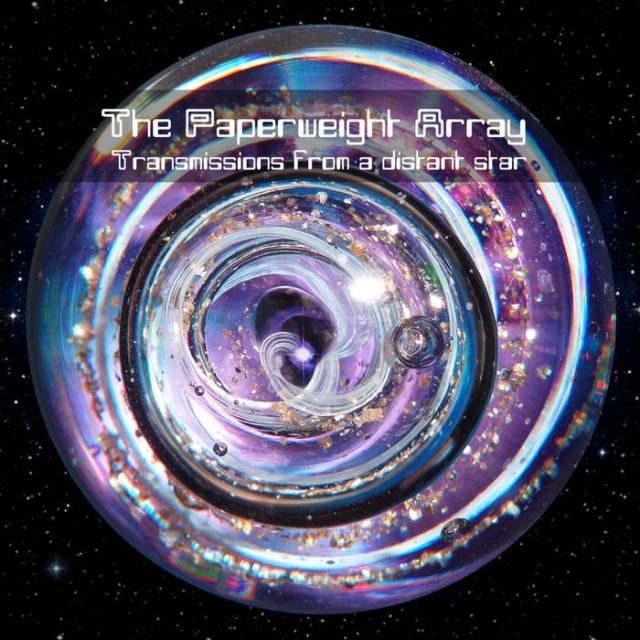
Following this Aaron Hemmington got in touch and sent me a copy of the bands debut EP Transmissions from a Distant Star, a three-track introduction to their psychedelic world.

For those who aren’t aware Rushden (as per our good friend Professor Wikipedia) is part of the county of Northamptonshire, and was home to such luminaries as H E Bates, darts player James Richardson, and of course (although Wikipedia needs updating) Matt Stevens.

What is it about small English towns that can be the epicentre of something new and exciting?

I grew up in Rotherham, where the best thing going for it was the road to Sheffield where all the decent record stores were, and yet from 1991 onwards Rotherham had been home to the Classic Rock Society, and a Northern pulse for progressive rock, handy if you happened to be 17, into prog and on a bus route into town!

It seems as Matt Stevens himself has questioned on Facebook, that pre-internet, when you were in a small town, certain things either passed you by, or you found yourself in a particular group of friends where certain locations and musical tastes influenced you.

I remember saving all my money from my summer job for a trip down to London because the record stores there would have far more rare and esoteric albums, and I wasn’t able to just log in using my smart phone, search them and then buy them.

I think the mid 90’s were the golden days of record collecting, where finding music was much more of a hunt, more of a chase, and you appreciated listening to it more because you had put so much more effort into it.

That is the same with bands from smaller towns, Rushden I would imagine, like Rotherham would be bypassed by all the big names, and so if you wanted to hear the music you liked, then the only way to do it would be to form a band and play it yourself.

That is the ethos that runs through Rushdenbeat and so many other small town bands making a big noise.

Transmissions from a Distant Star, starts with the title track, some fantastic spiky guitar work and then a wonderfully spacey chorus that brings to mind a whole mix of sounds, there’s elements of XTC, some Canterbury scene and a whole summer of ’67 vibe carrying through the sound.

A perfect way to introduce yourself and it makes a massive impact as you listen to it.

Going Back, showcases how the band works with each other, the Paperweight Array being an old school power trio, with Aaron on guitar, vocals and keys, Just on bass and keys and Dunc on drums and percussion.

Listening to the mighty sound they make you wouldn’t think there were only three of them!

Again there is a lot of power in the riffs and the interplay between all three of them is one of the EP’s strengths, you can tell these guys know how to play, and more importantly know how to play with each other to bring the best out of them.

Corporal Cameo is a neo gothic old school psychedelic story, with some fantastic lyrics, and some wonderfully trippy keyboard sounds, and another one of those brilliant guitar riffs.

Listening to their sound and performance on this one, and you’d think Corporal Cameo was a lost 60’s psych classic that Stuart Maconie had dug up for his Freak Zone on BBC Radio 6.

This is a fantastic introduction to where the band are coming from, and it has to be said encapsulates in the most positive way the small town atmosphere that has led to the creation of some of the most exciting music in the UK, and indeed probably throughout the world. Whilst it’s wonderful in this digital all connected age to be able to see beyond your horizons at the touch of a button, I wonder how much of an impact that will make on all the small town musicians sat in their bedrooms, using music as an escape?

Transmissions from a Distant Star is available here

https://thepaperweightarray.bandcamp.com/releases