They were on the verge of breaking out in the U.S. market in 1980. But a tragic accident suddenly interrupted their trajectory towards mega-stardom.
Guitarist and songwriter Gord Lewis suffered serious injuries. Although he later returned to the band, they spent the next four decades playing small gigs cross Canada.
In 2008, lead singer Frankie Venom died at 52 from throat cancer, leaving the band reeling in the wake of tragedy yet again.
The documentary begins with a stark juxtaposition. It shows the band in concert at the height of their success, and then in the present day with the band taking a limo ride to visit Frankie’s grave site.
They gaze at the words on Frankie’s tombstone: “Picture My Face.” It’s the name of the band’s smash hit first single, which appeared on their first album in Canada.
But in the documentary the phrase takes on a new meaning. Exploring the impact of death and suffering upon the lives of the band members, it expresses a loving remembrance.
Gord Lewis, still reeling from Frankie’s death and his own automobile accident, is shown struggling with severe depression. The band supplements Gord’s medical treatments with efforts to get Gord to record a new album with them and play live shows.
The documentary chronicles much of this real-life pain and struggle as it happens. We root for the band as Gord plays a triumphant live show again with them at the movie’s end.
The film’s central message is supplied by Gord’s brother, Father David Lewis, interviewed at his parish, St. Teresa of Avila Roman Catholic Church.
“I believe in Gord’s calling and I believe in my own,” says Father Lewis. As he listens to Teenage Head’s music on camera, he exclaims, “I love it! Love it. It’s of God! God is part of this.”
Father Lewis explains how he believes rock music “just gives strength.” He also reveals: “Gord and I have lost our parents, so we feel like orphans. And I think Gord felt like that when Frank died.”
The importance of this type of music? “Suffering. It’s about suffering,” announces Father Lewis. “I think that’s what produces rock and roll. You learn how to suffer.”
It’s an impromptu homily on the film’s central theme. “The blues and rock and roll are about suffering and expressing it with hope,” he says.
Eminently worth watching, this documentary will lead you to reflect on the presence of suffering and loss in your own life. Perhaps you’ll even start listening to old records from the 1980s.
This is probably old news to you by now, but Transatlantic announced their latest album, The Absolute Universe, is coming out in February on an abridged version and an extended version. I’m sure we’ll have more to say about that once we get a chance to hear both versions, but for now check out the press release:
TRANSATLANTIC – the Prog Supergroup of Neal Morse, Mike Portnoy, Roine Stolt & Pete Trewavas – are pleased to announce their fifth studio album ‘The Absolute Universe’, set for release on February 5th, 2021. Representing the band’s first new music since 2014’s ‘Kaleidoscope’, with ‘The Absolute Universe’ the band have done something unique and created two versions of the record: ‘The Absolute Universe: The Breath Of Life (Abridged Version)’ & ‘The Absolute Universe: Forevermore (Extended Version)’.As Mike Portnoy explains: “We’ve got two versions of this album. There is a two CD presentation, which is 90 minutes long, and a single one – that’s 60 minutes. However, the single CD is NOT merely an edited version of the double CD. They each contain alternate versions and even in some cases, new recordings. We wrote fresh lyrics and have different people singing on the single CD version tracks as compared to those on the double CD. Some of the song titles have also been changed, while others might remain the same, but compositionally what you’ll hear has been altered. You must appreciate that what we have done is unique. We revamped the songs to make the two versions different.” Pete Trewavas adds: “We did write some new music for the single CD,” adds Trewavas. “What’s more, there are also differences in the instruments used on some of the tracks across the two records.”Each album will be available on CD, LP & Digitally. But there will also be what has been called ‘The Absolute Universe: The Ultimate Edition’, which collects both versions together in one lavish package that includes 5LP’s, 3CD’s & a Blu-ray that contains a 5.1 surround sound mix with visuals & a behind the scenes documentary. All editions have unique artwork created by Thomas Ewerhard. The full list of formats is below, and pre-orders start on the 20thNovember:‘The Absolute Universe: The Breath Of Life (Abridged Version)’Special Edition CD DigipakGatefold 2LP+CDDigital Album‘The Absolute Universe: Forevermore (Extended Version)’Special Edition 2CD Digipak3LP+2CD BoxsetDigital Album‘The Absolute Universe: The Ultimate Edition’Limited Deluxe Clear 5LP+3CD+Blu-Ray Box-set – contained within a foil-finished lift-off box with extended 16-page LP booklet & 60x60cm poster
Initial tracking began in September 2019 when the band met up in Sweden to write and arrange the new material. As Portnoy explains: “Over a period of 10-14 days, we mapped out the songs. Then we all went back to our home studios and did the recording. That’s the way we always do it. At one point, though, it was suggested that instead of doing what was by that time going to be a double album, we should just be content to do a single CD.”“What happened was that everything kept expanding and expanding,” recalls Stolt. “Therefore we decided it made sense to make it a double album. It was Pete and Neal who then came out and said they felt this would be too long, and we should reduce it to one…But we were already recording, and it didn’t seem feasible to cut it back. There were so many pieces that each of us loved in what we were planning and didn’t want to lose. That’s when we ended up in discussions over the best way forward.”This album also marks a return to the concept album for Transatlantic. “Well, the idea of Transatlantic deciding to do a concept record this time around won’t shock anyone, right?” laughs Portnoy. “What we have is essentially one giant composition, split into chapters. The storyline is about the struggles facing everyone in society today.”“We didn’t start out with the idea of this being conceptual,” admits Stolt. “The way things work with us is that we have a load of ideas, and these are developed spontaneously when we meet up. Everything happens in the moment.”So, how does this new ground-breaking album compare to Transatlantic’s previous four albums?“I always try not to compare albums as much as possible,” insists Morse. “It’s very difficult when you’re trying to be creative, because your natural instinct is to constantly compare. But in order to create you have to kind of step away from that. Having said that, I would say this would have more in common with ‘The Whirlwind’ album (the band’s third, from 2009) than others that we’ve created.” For Trewavas, ‘The Absolute Universe’ is a momentous project.“I think it is right up there with the very finest albums we’ve done. As the others have said, it compares very well to ‘The Whirlwind’, which I believe represents Transatlantic at our best. As on that album, we took our time to write and arrange everything, and that shines through. I am very excited for people to hear it.”Transatlantic were originally formed in 1999, releasing their debut album ‘SMTPe’ the following year as well as its follow-up ‘Bridge Across Forever’ in 2001. Following a 7-year hiatus, the band reconvened to record and release the much-acclaimed epic 77-minute, single-track album ‘The Whirlwind’ followed by a world tour in 2010 which included an appearance at High Voltage Festival in London where they were joined by legendary Genesis guitarist Steve Hackett. The band’s fourth album ‘Kaleidoscope’ arrived in 2014, going on to win ‘Album Of The Year’ at the Progressive Music Awards.
Kerry Livgren has long been one of my favorite guitarists and lyricists. Next to Rush, Kansas was one of the first prog bands I ever heard. I think my first prog concert may have been Kansas (minus Livgren). I was so fascinated by Livgren and his conversion-to-Christianity-story that I wrote a paper about him for Dr. Brad Birzer’s Christian Humanism course in college in the fall of 2015. Besides Livgren’s magnificent lyrics, I also drew heavily from his autobiography, Seeds of Change, for that paper.
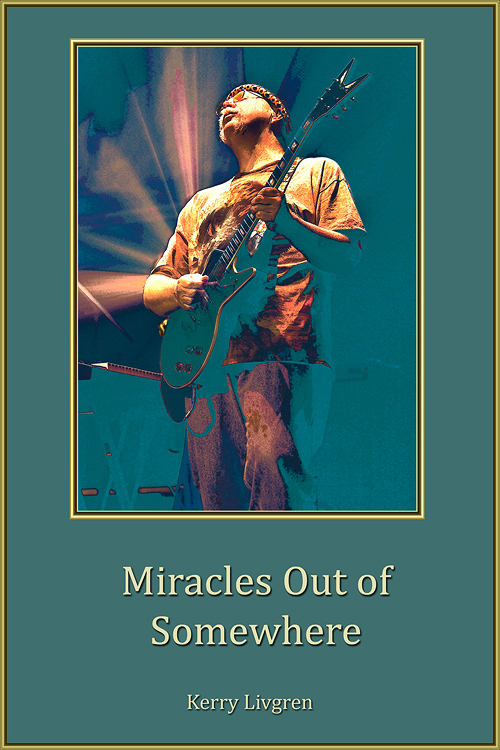
Back in August of this year, Livgren self-published, via his Numavox label, a new book entitled Miracles Out ofSomewhere. It isn’t a typical memoir or autobiography. It does not follow a chronological structure. Rather it is a collection of 40+ short personal stories that demonstrate examples of miraculous events in Livgren’s life. Most chapters are dedicated to one story, but there are some that contain multiple brief stories centered around one theme.
Stories range from what might be considered coincidences all the way to full-blown “only God could have done this” miracles. I had known about Livgren’s 2009 stroke, but I never knew how serious it was. The doctors told him it was as bad a stroke as a human could have. The initial brain scans after the stroke showed that half his brain tissue died. Brain scans taken two years later showed the majority of that tissue was alive and perfectly healthy. Even the doctor didn’t believe the medical explanation he came up with to explain it to fellow medical professionals. Livgren still struggles with some issues related to the stroke (he had to find a new way to play “Dust in the Wind” for an appearance with Kansas last year), but for the most part he made a miraculous recovery.
The book ends with excerpts from the last few years of his journal entries as his wife dealt with an equally serious health crisis: breast cancer and heart failure caused by the cancer treatment. The surgeries and treatments worked for the cancer, but her heart was initially left in very poor shape. But, just eleven months ago they found out her heart is now completely normal after she almost needed a heart transplant eight months earlier.
Stories range to the more lighthearted as well, such as Kerry’s first time driving the Kansas tour bus after he joined the band in their early days. The steering barely worked, and the brakes were almost non-existent. After cresting a hill they found themselves hurtling towards a freight train, forcing Kerry to stand on the brake pedal with all his weight. The bus stopped a mere three feet from the tracks. Robby Steinhardt caught the whole thing on audio recording, but sadly that tape is gone.
The story about Livgren being reunited with his “Dust in the Wind” guitar a few years back, after selling it decades ago, is also a fun story, as is the one about Kansas’ first LA party with industry bigwigs. Dave Hope decided to jokingly mock a girl with a Farrah Fawcett hairdo, so he shouted “Hey Farrah.” The girl turned around, and she turned out to be Farrah Fawcett.
Miracles out of Somewhere is hard to put down. Livgren’s writing is so inviting. I felt like I was having a conversation with him. Since the stories are arranged in no particular order, the book jumps around a lot. As such it helps to have a basic knowledge of Livgren’s life and the history of Kansas. Even so that isn’t required to make this an enjoyable read. The storytelling is so good that the reader is quickly drawn in and taken back in time.
Livgren’s faith is intimately embedded in these stories, but I wouldn’t call this a religious book. He’s just telling the stories from his perspective, and his faith is inseparable from that perspective. As a Christian myself I can’t help but appreciate that aspect of the stories, but even if you’re not a Christian, don’t let that stop you from reading this book. If you’re a fan of Kansas and Livgren, you’ll enjoy it.
The book itself is just a simple paperback, likely printed by a print shop near Livgren’s home in Kansas (it’s also available as an ebook). Perhaps it lacks from some grammatical editing that a publisher’s editor could’ve added, but we’re talking about a periodic missing apostrophe and a run-on sentence here and there. As it is, the book has the charm of someone writing these stories out as-is and sending them to you. In a way it made Livgren feel closer than if the book was highly polished by a big-name publisher.
For less than $15 (a little more if you live outside the US – for international shipping) this book is a bargain. It’s only $4 for the ebook. With everything going on I found it to be a welcome escape to a seemingly simpler time (no era is ever as simple as it can seem in hindsight). Some of the stories are heavy, but the miracles God has worked in Kerry’s life bring a smile to my face and peace to my heart. If you’re sick of the negativity and want rest for your soul… well, Kerry would be the first one to tell you to turn to Jesus. But after you’ve done that, give Miracles Out of Somewhere a go. It’s a must-read for Kansas fans, and it’ll brighten your day.
Good evening everyone. This is just a quick update to announce that Rick Krueger is now an editor here at Progarchy, joining myself and C. S. Morrissey. Rick will now be running our Facebook account, since he’s the only one of the three of us brave enough to enter that lion’s den. Thanks, Rick!
We’ve also changed our Contact page. Instead of having a separate email address that you’d have to type into your browser, we’ve added a contact form you can fill out directly on the page. We’re hoping this streamlines things and makes it easier for artists and labels to contact us. If you already have a direct email contact with us that you consistently use, then keep communicating with us that way.
We also turned our “Choice Cuts” page into a more general “About” page, moving some info from the old Contact page to this page. We still have a list of our favorite posts that we think welcomes newcomers to our site to help them understand what we’re all about here.
We’ve been up and running for eight years this month, and we’re so happy to have you as our readers. We love this music, and we’re grateful for the opportunity to tell people about it. Prog on!
There’s a title to attract your attention – just in time for All Hallows’ Eve. John Carpenter’s “Lost Themes III: Alive After Death” is scheduled for a February 2021 release date. If you enjoy 80s-inspired synth-driven compositions, his first two “Lost Themes” albums are also worth your time.
Reprise Records, my record company for about 50 years, underestimated the demand for Archives Volume II. We were all surprised. It is a beautiful package that I am proud to have made for you. I do feel badly that we did not deliver it to many who were waiting so long for it.
We don’t feel that offering more of a product sold as a limited edition is a good thing to do. Thank you to all who purchased this set.
In 2021 we will be offering more Archives Volume II products as Reprise had originally planned, available in all outlets. These, while not the boxed set, will offer all of the music and discs with a smaller book. The original large book will be available for separate sale.
Thanks! NYA
So what are the implications here? These thoughts hit me:
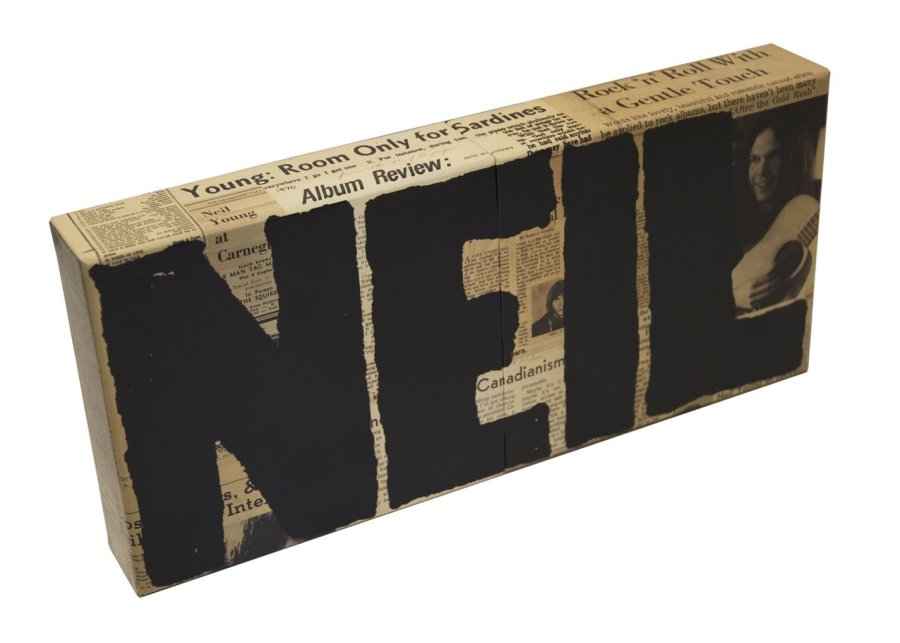
Note that Reprise was already planninga cheaper version of Archives II. Back in 2009, the basic edition of Archives I (pictured above) dropped the same week as the more expensive DVD & Blu-ray versions (which weren’t considered this time around due to the Archives‘ migration online). It’s arguable that this staged marketing effort was a major reason Archives II’s limited edition sold out; nobody told Neil Young fans that a lower-priced version would eventually be available! (Of course, I wanted the limited edition no matter what, so mission accomplished.)
As physical product’s market share in the recorded music industry has eroded, first in favor of downloads, then streaming subscriptions, marketing strategies have also shifted. For the big boys (tech companies and the three major labels) the industry’s physical product (7 percent of US sales in the first half of 2020, measured in dollars) is now mostly a means to wring maximum amounts out of legacy fans with money to spend. The mass market belongs to streaming (85 percent of US sales) — which furnishes them the lions’ share of those proceeds, through paid subscriptions and advertising. Hmm . . . that couldn’t have skewed Reprise’s estimates for Archives II’s limited edition sales, could it?
These new realities have also strengthened the power of major labels in relation to artists. If Neil Young — one of the true 800-pound gorillas of rock culture, absolutely used to throwing his weight around to get his way — can’t get Warner Music to pony up a second printing of the limited Archives II, what chance does a start-up artist have pushing back on anything against Warner, Universal or Sony BMG? As David Lowery famously wrote back in 2012, “meet the new boss; worse than the old boss.”
The focus on streaming has also changed how legacy musicians and their support staff (or their estates) conceive of box sets and high-end collections. For example, the new super-deluxe edition of Prince’s Sign O’ the Timeshas a bonus track listing explicitly designed so fans can assemble their own playlists without having to purchase digital or physical versions. And let’s face it, Neil Young wants to sell you a subscription to the Archives website if at all possible; in 2020, downloads (6 percent of US sales) and physical sales are the gravy on top, not the meat and potatoes.
In addition to streaming online, the relative shift to LPs offline (currently accounting for 62% of income from US physical sales — it’s the product with a higher value per unit, that outsells CDs about 3 to 1 at independent record stores and still has a small footprint for impulse purchases in big-box chains) has tilted manufacturing and distribution accordingly. What does it say about the industry’s current capacity for physical media that the new indie album by Wilco’s Jeff Tweedy, Love Is The Kingcame out online this past week, but CDs and LPs won’t be available until January? If the big guns are simultaneously bearish on physical sales and hogging CD and vinyl production, how do the little guys get a shot?
In some ways, all of the above is irrelevant to the main thrust of this website. Progressive music in all its forms is, whether we admit it or not, an incredibly small niche in today’s recorded music industry — but one that, between two solidly-funded labels that can get product to the mass market (KScope and Inside Out, which seems to have considerable freedom as part of Sony BMG), a multitude of independent and artist-run ventures and potent distribution channels like Bandcamp and Burning Shed, has proved remarkably resilient. The persistence of prog is a big part of why we love it so.
On the other hand, the music industry already caught one bug in 2020, with US physical sales declining in the second quarter of this year due to the first wave of the COVID pandemic. And if the Goliaths come down with another economic cold . . . could the fallout spread to the little guys with slingshots that we want to support?
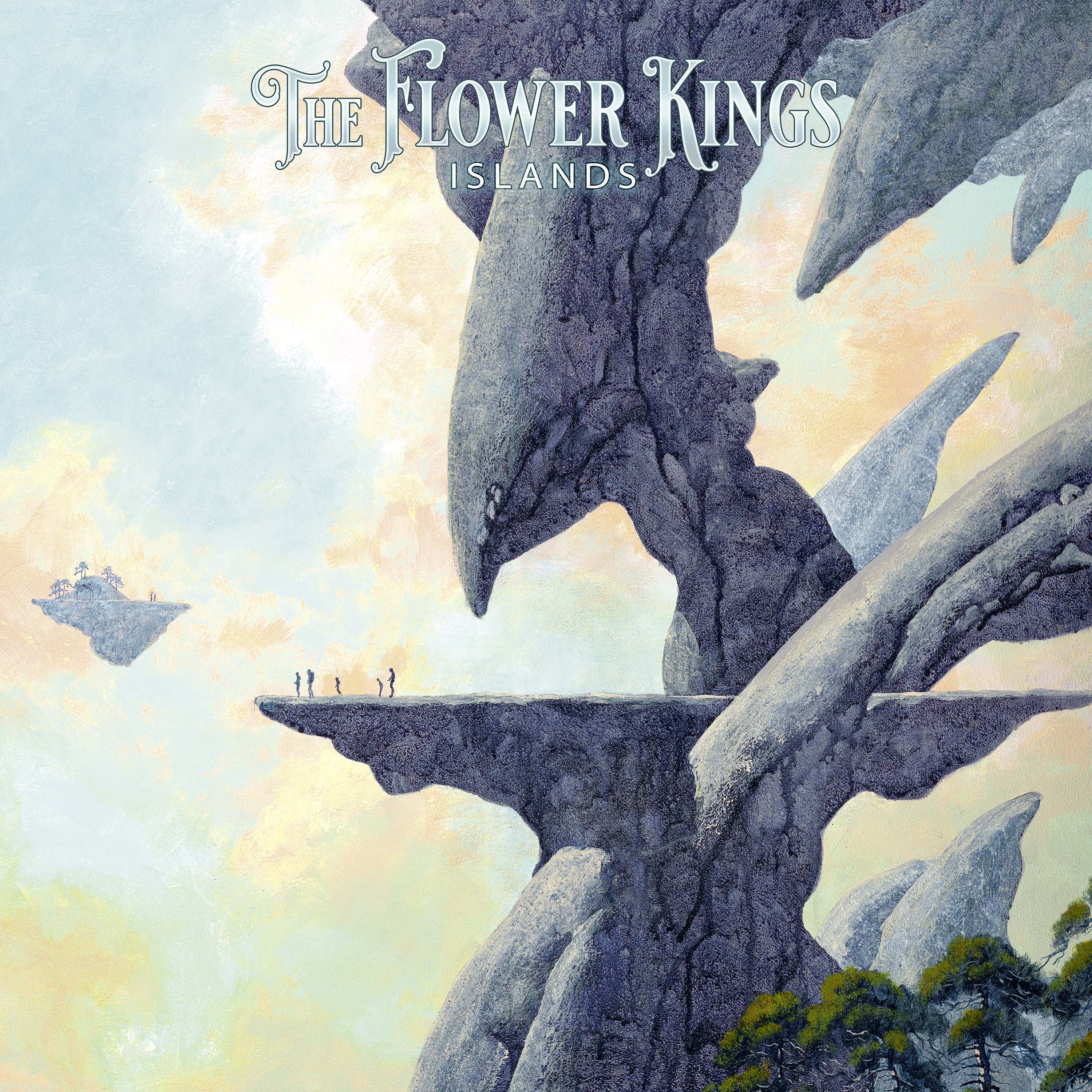
The Flower Kings – Islands – Inside Out Music, October 30, 2020 Tracks: CD 1 – 1. Racing With Blinders On (4:24), 2. From The Ground (4:02), 3. Black Swan (5:53), 4. Morning News (4:01) 5. Broken (6:38) 6. Goodbye Outrage (2:19), 7. Journeyman (1:43), 8. Tangerine (3:51), 9. Solaris (9:10), 10. Heart Of The Valley (4:18), 11. Man In A Two Peace Suit (3:21) CD 2 – 1. All I Need Is Love (5:48), 2. A New Species (5:45), 3. Northern Lights (5:43), 4. Hidden Angles (0:50), 5. Serpentine (3:52), 6. Looking For Answers (4:30), 7. Telescope (4:41), 8. Fool’s Gold (3:11), 9. Between Hope & Fear (4:29), 10. Islands (4:12)
In an effort to find some sort of silver lining in this ridiculously crappy year, I’ll point out that there have been a lot of great releases in the progressive rock world in 2020. The Flower Kings’ upcoming album, Islands, probably wouldn’t have been released this year if the year had unfolded as normal. With many countries in lockdown and bands unable to tour, numerous musicians have found themselves with, as Styx once put it, too much time on their hands.
Multinational band The Flower Kings chose to make the best of their extra free time and use the Internet to their advantage, recording their new album from homes in Sweden, Austria, California, Denmark, and Italy. Fittingly, the album emphasizes the many forms of isolation we experience in 2020 – beyond just the physical. Thus the title Islands.
I’m not an expert on The Flower Kings’ discography, but I generally like their music and appreciate the profound impact they have had on the rebirth of classic progressive rock starting in the 1990s. I didn’t particularly enjoy last year’s Waiting for Miracles. It was a little too political for my taste. The artwork alone was a bit obnoxious – an elephant standing on a house of cards while being hypnotized and surrounded by a bunch of oranges… that’s about as subtle as a political cartoon.
Roger Dean’s artwork for Islands, on the other hand, is fantastic. It’s too bad he hasn’t been doing their artwork all along, because it really fits their music. The lyrics “Upside down between earth and sky” from the track “Between Hope & Fear” are particularly reflected in the album art. Islands in particular has a lot of nods to Yes, which has probably always been in their music. Jonas Reingold’s bass stands out to me as being particularly Yes-like on this record.
When Jakko Jakszyk was 13 years old, he saw King Crimson play at Watford Town Hall — and it changed his life. Embarking on a globetrotting career that’s crossed paths with, among others, Level 42, The Kinks (he replaced Dave Davies for a week) and Steve Hackett, Jakszyk eventually found himself singing and playing guitar with founding members of Crimson in The 21st Century Schizoid Band. Which led in turn to The Scarcity of Miracles, a “King Crimson ProjeKct” with guitarist Robert Fripp and sax master Mel Collins — culminating in an invitation to join the current, career-spanning version of the band in 2013.
Since then, Jakszyk has been the voice of King Crimson in concert, tackling epics originally brought to life by Greg Lake, Boz Burrell, John Wetton and Adrian Belew with remarkable aplomb. And, if that wasn’t intimidating enough, simultaneously playing some of Fripp and Belew’s most challenging guitar parts. Oh, and co-writing knotty new Crimson pieces like “Suitable Grounds for the Blues,” “Meltdown” and “The Errors.” As a result, his undeniable melodic gifts, assured lyricism and instinct for the musical gut punch now have a bigger stage to play on than ever before.
All of this has beautifully set up Jakzsyk’s new solo album, Secrets and Lies. Released by Inside Out/Sony on October 23, it melds the yearning melancholy of 2007’s The Bruised Romantic Glee Club with the ferocious attack of present-day Crimson; fellow members Fripp, Collins, bass/Stick maestro Tony Levin and master drummer Gavin Harrison contribute along with Mark King (Level 42), Peter Hammill (Van Der Graaf Generator), John Giblin (Simple Minds, Brand X) and even Jakszyk’s daughter. It’s a poised, exhilarating album, a thoroughly compelling showcase for the man’s hard-won talents and thoughtful, well-honed viewpoint.
Having heard Jakko Jakszyk in concert three times with King Crimson (including the best rock concert I’ve ever attended), it was an undeniable thrill to speak with him about Secrets and Lies, his progress in the court of the Crimson King and more!
How the solo album took shape:
“I’d met Thomas Waber of Inside Out – I think it was at the launch of the album that Steve Hackett put out that I sang on [Genesis Revisited II; Jakszyk sings “Entangled”]. And then I kept bumping into him ’cause I did a number of gigs with Steve, and then there were some other events. And whenever I saw him he said, ‘Look, if ever you decide to do a solo record, we’d be really interested in working with you.’ I wasn’t sure it was a good idea; it had been such a long time since I made another one. So, it was partly down to him and his installing confidence into me, really.
“And then I made the decision – for the past seven years we’ve toured in biannual chunks; we do two months here and two months there throughout the year with Crimson. There’s lots of stuff: rehearsals and getting stuff together, so it becomes a full-time job. And then, this year was only one chunk of touring, in the middle of the year. So I thought, ‘This is probably a good time to do it.’
“And I’d already written some songs. I’ve written a load of stuff [for] Crimson, some that has been accepted as part of the repertoire. But there was a handful of others that I’d written that when I took to Robert [Fripp] – we started to have this in-joke where I’d play him some stuff and he’d say [assumes a West Country accent as he quotes Fripp] ‘I love this! It’s marvelous!! Ideal track for your next solo record!!!’ Which is not too subtle code for, ‘We’re not playing this, mate!’ So, I had a basis of an album there, material-wise. So I started recording it, I think, last summer, as in 2019, in between the Crimson tours. And writing lyrics and doing stuff while I was away. And I started on it in real earnest in the autumn – almost about a year ago.”
Secrets and Lies’ takes on obsession and betrayal:
“The opening track, which is called ‘Before I Met You,’ is based on a book by Julian Barnes [Before She Met Me]. And in that book, it tells the tale of a middle-aged man, I think he’s a college lecturer. And he meets this woman who’s a fair bit younger than him, and he leaves his wife and family for her. But he starts to get really obsessed with her and starts to fetishize objects that she might have had earlier that morning – a pen that she was writing with, or a cup or something.
“And he starts doing this very weird thing where – when she first left school, she became an actress, and she made a handful of mediocre movies. And although that was way in her past, he becomes so obsessed with her that he finds them. He finds little cinemas around London which are showing these old films. And he sits in the dark watching these, getting really wound up – because there’s his new love filming these love scenes. Which of course are not real, anyway; and anyway, they were before he even knew she existed! So, it’s a tale of a guy being so obsessed with someone that he ends up destroying the very thing that he loves.
“In terms of betrayal, there’s a song called ‘It Would All Make Sense.’ And it’s autobiographical, a song that happened to me, but something that happened to me a long time ago. So, totally with the benefit of hindsight and distance, you can write about it!
“But I guess it’s something that’s – unfortunately, many of us have been through. Which is the suspicion and the clues that someone you’re living with is having an affair. And the clues get more and more blatant, and more and more real, but you’re less likely to believe them, ‘cause you don’t want to. And you confront them and they deny it, and then you’re placated by that, because you don’t wanna believe it. And then other people say, ‘No, no, this is really happening.’ So hence the chorus of that tune. ‘It would all make sense; all of that makes sense much more than the stuff you’re telling me.'”
Songs on “the shifting grounds of contemporary politics:”
“[‘Uncertain Times’] was, again, was something that happened to me. The Brexit debate in England became incredibly divisive, and it split up families and friends. You get to a point where problems, be they political or personal, are invariably nuanced and complicated. And the trouble is that you reduce an issue to black and white like this, right or wrong. And it becomes a divisive concept, I think.
“On the day of the results, when it was announced that the Leave campaign had won, there was a place in Hammersmith in West London called the Polish Center, where I used to take my adoptive father when he was in his 80s. And it was a place that I have a great nostalgia for, ‘cause it’s a cultural center, and it’s got a café and a restaurant. And the night of the result it was covered in racist graffiti, which was discovered in the morning. This is a place that had been there for 56 years, partly in tribute to the contribution of the Poles during the Second World War.
“So, it was pretty upsetting, and I uncharacteristically posted something about it on Facebook. And everybody was very nice and very sympathetic, but after a while it started to get shared. And then people that weren’t my ‘friends’ in inverted commas started to read it, and for a couple of weeks I got really abusive emails, all along much the same lines. Which were ‘We won. You lost. Why don’t you eff off home?’
“Well, I’m the son of an Irish woman, born in London, so I’m not sure where they want me to go; but it seemed that I was getting abused because of the incorrect letters in my surname! And of course, it’s divisive, simplistic populist politics [which is] popping up all over the world, not least in Britain and America of course. And you have leaders that are just pumping out half-truths, untruths, downright lies. And appealing to this kind of populist notion of very simplistic answers to complicated questions. So, the song’s kind of about that.
“The other political song on the record is the thing that I wrote with Peter Hammill [‘Fool’s Mandate’]. And Pete Hammill actually was also partly responsible for me making a solo record. ‘Cause I kept bumping into him, and he kept saying, ‘Have you made your solo record yet?’ And I said, ‘No.’ ‘Well, have you even started?’ ‘Well, no, not really.’ ‘Look, you ought to; this is your moment! You must do it!’ So in the end, the last time he said it to me, I said, ‘Listen, Peter, I will make a solo album on condition you contribute; you’re on it.’ And he said, ‘Of course!’
“So, I sent him this track. He said, ‘Have you got any unfinished tracks?’ And I had a series of instrumental things that I was using as a kind of base to play guitar over on these videos that I do for PRS Guitars or some of the events that I play at. ‘Cause when I’d seen other guitar players do it, they were either kind of straight ahead rock things or fusion things. So I always tried to do something a little different.
“So, I had a collection of different ethnic-based pieces; this is based on traditional Middle Eastern music. And I sent that to Peter, and he sent back multi-tracked voices, bits of guitar, and a lyric that was kind of ambiguous. It could have meant anything, I guess. And it was about an individual, and what he might regret and what he might not regret.
“So, the combination of the stylistic nature of the music and that kind of vague lyric – I ended up writing it about an English politician called [Arthur James] Balfour, who at the turn of the last century was desperate to get the Arab nations onside, ‘cause the English were trying to defeat the Ottoman Empire. But at the same time, he was a Zionist, so he was negotiating behind their backs!
“And I was kind of intrigued by the number of unpleasant political and violent hotspots in the world, and how if you trace their origins, invariably there’s an Englishman [chuckles] at the bottom of it! So I ended up writing about that.”
Exploring “the tangled threads of family history:”
“You know, my background story is an ongoing thing, and I’ve discovered a lot more. in fact, exactly in the past twelve months, there’s been an extraordinary amount of discovery. I think it’s part of the reason I called the albums Secrets and Lies, because I discovered a lot more of both of those things.
“Actually on the album, there’s a thing called ‘The Borders We Traded,’ which is about my mother and myself, and how my mother abandoned me and went to another country – hence utilizing the geographical location as an additional metaphor for that separation.
“And I talk about two places really in that; one is where she ended up. My mother was quite a famous singer in Ireland in the ‘50s, and she came to England for her career. But she ended up getting married to an American serviceman; and I’m sure she had an idea about what America was like from many of the movies she must have seen at the time. But she ended up in a place called Bearden, Arkansas. And no disrespect to that location, but I’m not sure that’s what she was expecting.
“And so, I remember standing in Bearden, Arksansas when I first went there, to meet her for the very first time. And it was a very weird experience, where you’re standing in this place. And it’s quite a culture shock for someone that grew up just outside London, and had a reasonably cultured upbringing, and went to the theatre and worked in the arts. So, there was that really weird moment of thinking, ‘If she hadn’t had me adopted, I’d have been brought up here.’ And how much of who I am is innately who I am, and how much of it is subject to location. It’s that whole nurture/nature thing, I guess.
“So that song really was about that. And then there’s an instrumental that my daughter wrote, which I’ve kind of stuck them together, just because it felt like she kind of wrote it out of nowhere. And it’s this kind of connection to Ireland; it’s this very Celtic, Irish piece that she’s somehow channeling out of some kind of DNA or something, I don’t know!”
[The tale of Jakko M Jakszyk’s long and winding road to King Crimson follows the jump!]
From the very beginning, Progarchy has been a huge supporter of Big Big Train, and we’ll continue to support them come what may. I think the band is making by far the most interesting music in the music industry. You’d be hard-pressed to find another band or artist making such high quality music with such profound lyrics. You’d be hard-pressed to find a better vocalist than David Longdon.
At the beginning of the year the band released The Passengers Club, a subscribers-only site that gives hardcore fans an inside look at the past, present, and future of the band. Content seems to be provided primarily by Greg Spawton and David Longdon, as well as the band’s manager, Nick Shelton. We get demo track downloads, exclusive video content (including live footage from the earliest days of the band), blog articles, and photo albums. As a fan I’ve absolutely loved The Passengers Club. It’s been worth every penny, and it has brought some much-needed joy to an absolutely awful year.






 Progarchy