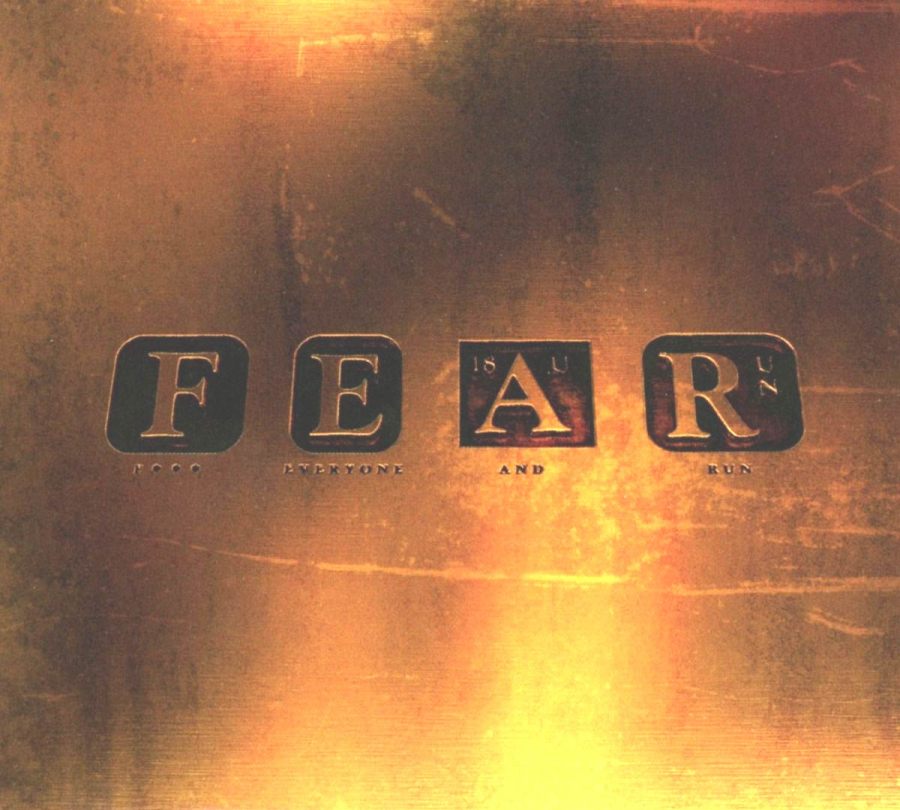
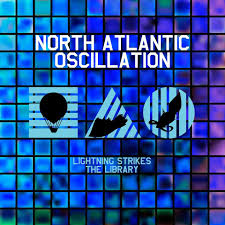
Our last glimpse of real beauty–NAO’s compilation album.
Sam Healy–while complying with Big Euro Brother laws, regulations, and microintrusions–offered a wonderful teaser/trailer for the forthcoming North Atlantic Oscillation album, coming sometime this year.
Granted, it’s only a full-eighteen seconds worth, but it’s eighteen more seconds then we had before. . .
Musically, the British are much better than us Americans at admitting the failures of modernity, especially as it relates to how we interact with each other as humans. Steven Wilson so brilliantly lamented the isolation of the city in his 2015 masterpiece Hand. Cannot. Erase. Before that, Andy Tillison of The Tangent masterfully critiqued the contemporary 9-5 lifestyle in 2013’s Le Sacre Du Travail. Long before either of these artists, however, The Moody Blues commented on typical modern life in their 1967 concept album, Days of Future Passed.
In part 1 of this series, I argued that King Crimson’s “21st Century Schizoid Man” started progressive rock as we came to know it. I still stand by that remark, but I’ll add that The Moody Blues were certainly an integral pioneering band in this genre. Looking back, Days of Future Passed is certainly a progressive rock album, but it is not prog as Yes, ELP, or Genesis later popularized the sub-genre. King Crimson sparked a very particular sound that The Moody Blues likely influenced but did not directly spark. What Black Sabbath did for heavy metal, King Crimson did for prog. With that said, Days of Future Passed deserves attention in this series. Specifically, I’m going to look at “Nights in White Satin,” the most well-known and probably most influential track on the album.
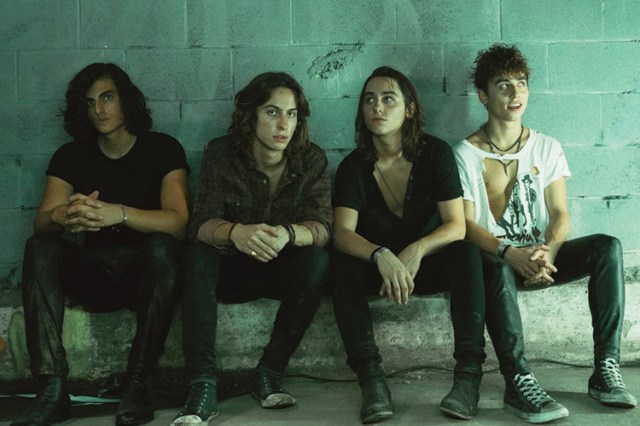
Fellow Progarchist Rick Krueger has already published a fine review of this young group, but here is my shout-out to Greta Van Fleet, up and coming rockers from the small town of Frankenmuth, Michigan. Inspired by Led Zeppelin, Eric Clapton, and other blues-based rockers, these boys (ranging in age from 19-22) are an emerging force to be reckoned with in the music world. Check out their live performance at Coachella from April of this year and try telling me that rock n roll has died…
In speaking of this desire for our own far off country, which we find in ourselves even now, I feel a certain shyness. I am almost committing an indecency. I am trying to rip open the inconsolable secret in each one of you—the secret which hurts so much that you take your revenge on it by calling it names like Nostalgia and Romanticism and Adolescence; the secret also which pierces with such sweetness that when, in very intimate conversation, the mention of it becomes imminent, we grow awkward and affect to laugh at ourselves; the secret we cannot hide and cannot tell, though we desire to do both. We cannot tell it because it is a desire for something that has never actually appeared in our experience. We cannot hide it because our experience is constantly suggesting it, and we betray ourselves like lovers at the mention of a name. Our commonest expedient is to call it beauty and behave as if that had settled the matter. Wordsworth’s expedient was to identify it with certain moments in his own past. But all this is a cheat. If Wordsworth had gone back to those moments in the past, he would not have found the thing itself, but only the reminder of it; what he remembered would turn out to be itself a remembering. The books or the music in which we thought the beauty was located will betray us if we trust to them; it was not in them, it only came through them, and what came through them was longing. These things—the beauty, the memory of our own past—are good images of what we really desire; but if they are mistaken for the thing itself they turn into dumb idols, breaking the hearts of their worshipers. For they are not the thing itself; they are only the scent of a flower we have not found, the echo of a tune we have not heard, news from a country we have never yet visited.
–C.S. Lewis, THE WEIGHT OF GLORY
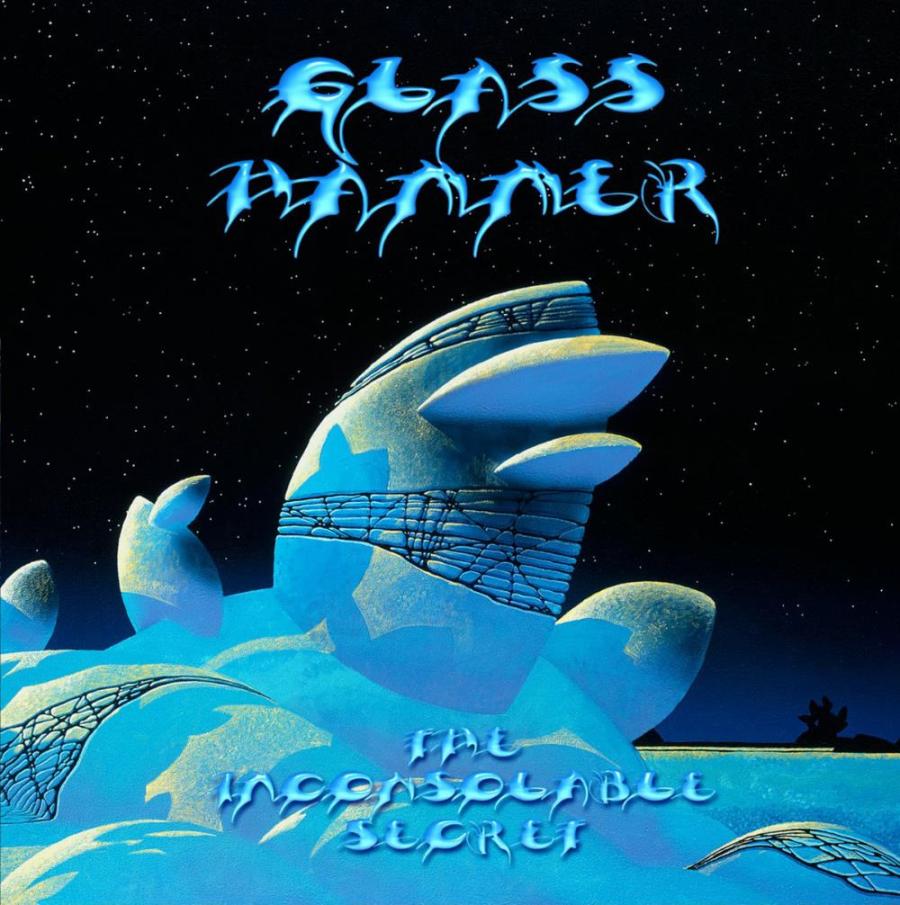
It’s time to celebrate the depths and widths of all wisdom. Time to pull out Glass Hammer’s 2005 masterpiece, The Inconsolable Secret.
Un’altra verità – Conqueror Introduction… The Conqueror’s last release to date came out in 2015. Though it’s not a studio release and is very much a live DVD/CD release that features the band back in 2014 at the Naxos on the 16th of May to which they was touring their last studio album to date […]
Artist: Amorphis Album Title: Queen Of Time Label: Nuclear Blast Date of Release: 18 May 2018 Just when you think that a band has reached their peak, they come along and prove you wrong. The moral of the story therefore, is never think that a band can’t improve upon a superb release, because they can. […]
What a surprise: another high-quality, take-no-prisoners live album from the current King Crimson. Recorded at Vienna’s Museumsquartier Halle E on December 1, 2016, it’s a worthy successor to 2015’s Live in Toronto and Radical Action to Unseat the Hold of Monkey Mind. In fact, it pales only in comparison to 2017’s brilliant Official Bootleg: Live in Chicago (although I’m definitely biased in favor of that show). Which is the main reason its release was postponed from last fall until now.
The biggest change for Crimson 2016 was adding British studio whiz Jeremy Stacey on drums and keyboards, temporarily replacing Bill Rieflin. Stacey (with credits including Squackett, Steven Wilson, and Roger Daltrey’s upcoming album) fit in so well that Crimson became an eight-headed beast in 2017, as Rieflin returned to play full-time keyboards. Stacey is inspired here, providing plenty of meaty thwack to complement Gavin Harrison’s stylish elegance and Pat Mastelotto’s anarchic onslaught, all immediately evident in the opening “Hell Hounds of Krim” and consistently displayed throughout the evening.
As a result, this version of Crimson rocks, loose, limber and hard. The band opener “Pictures of A City” is riveting; the drumline and Tony Levin lay down a loping, patient groove that the rest of the group rides with grace and power. Jakko Jakszyk punches out the vocals, Robert Fripp launches face-melting, angular guitar lines, and Mel Collins sketches a steamy, curvaceous sax solo. When the whole thing shudders to a halt, you realize that breathing would be a good idea — it’s that immersive.
Newer originals like “Suitable Grounds for the Blues” and “Meltdown” prowl and pounce; chunks of 1980s and 1990s Crimson (including a stab at “Indiscipline,” with Jakszyk tentatively scatting Adrian Belew’s lyrics) are stripped down for maximum impact. But the heart of Live in Vienna is unquestionably the band’s 1970s repertoire; the septet throws everything they’ve got into stately versions of “Dawn Song” and “Epitaph”, sprawling takes on “The Letters” and “Sailors Tale”, an “Easy Money” that nearly disintegrates before it gathers itself and roars back to life, a “Larks Tongues’ in Aspic Part Two” set afire by Collins’ incandescent playing, and of course “Starless”– lyrical, elegaic, edgy and irresistible as ever.
With the encores on a separate disc, David Bowie’s “Heroes” and “21st Century Schizoid Man” (in which Collins quotes Duke Ellington’s “Take the ‘A’ Train”!) are supplemented with a rare take on Starless and Bible Black’s “Fracture.” Recorded in Copenhagen, the 2016 version reimagines Fripp’s original guitar showcase as an ensemble piece — more controlled, but still heady and gutsy. The album even provides a post-concert comedown, with Fripp’s pre-show Soundscapes enhanced by Collins & Levin solos, a potent chaser to previous sound and fury.
Even at two years’ remove, Live in Vienna ably stakes out where King Crimson is now — committed, in Fripp’s words, to the proposition that “all the music is new, whenever it was written.” Be ready — the music may not go where you (and sometimes I) think it could, but it definitely goes somewhere special.
With Black Sabbath calling it a day in 2017, Judas Priest are now one of the oldest metal bands still on the go. They’re one of the genre’s most definitive, influential and original acts. But they’ve also been dogged by consistency problems for decades, making any new release equal parts exciting and fraught. While dodgy […]
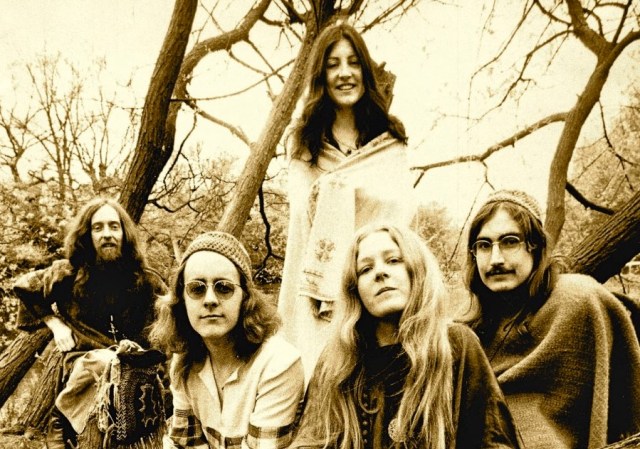
The CD reissue spree of the early 1990s benefited those lonely, cobwebbed corner obsessives who thought the longhairs of 70s British Isles folk rock had something good going. Those of us who scuttled after the bones the sinister Shanachie label threw to the U.S. through the ’80s were conditioned to nonexistent liner notes and brainwashed into believing the trad arr groups of the previous decade could be described by creative English anachronism on the one hand and Irish rebel songs on the other. Also-rans, like Mr. Fox or Mellow Candle or Trees, who were allowed to make records in the wake of Fairport’s and Steeleye’s success, and were good for an album or two before promptly dropping off the map, were roundly ignored in the States, to the extent that first, and typically only, pressings of their albums fetched exorbitant sums. So when the CD stamping plants got their head of steam and allowed for an economical digital reissue of Mellow Candle’s lone album release, Swaddling Songs (1972), listeners rejoiced and collectors, who’d dropped multiple benjamins for dog-eared decades-old vinyl, grumbled a bit but bought their infinitely copy-able copy so they could listen to the damn thing.
The album was rare but it was also more than just okay, meriting the whispered celebrations of the pre-internet folky cognoscenti. Swaddling Songs is a folk-inspired progressive rock gem, the brainchild of Clodagh Simonds and Alison Williams, whose Irish roots inform the record but never sink it beneath the weight of Heritage. And in this sense the album has more in common with Aqualung or Tubular Bells (Simonds, appropriately enough, would go on to work with Mike Oldfield) than The Tain or Morris On, as original, mostly keyboard-led tunes organically hang together around Simonds’ and Williams’ winding, commanding vocals, seamless, with contemporary touchstones like Joni Mitchell making themselves felt but also casting into the future toward Sinead O’Connor, Cranberries, Heidi Berry, Helium, Florence + the Machine. Framed by solid songwriting, unfussy arrangements and production, and outstanding musicianship, there’s a comfortable cosmic warmth to the album’s entirety. Of many prescient moments on Swaddling Songs, a favorite is “The Poet and the Witch,” the album’s rave-up palate-cleansing show-stopper, adding fierceness to the beauty.
Pity the poet who suffers to give
Sailing his friendship on oceans of love
Strange harbour soundwaves break out of his reach
Love is a foreigner to the Queen of the Beach
Queen of the Beach
Moonfilled and thunderful star-staggered eyes
She broke away to be one with the skies
She feeds his love to the nightmare she rides
Suffers her hunger to inherit the prize
Queen of the Skies
Thunder-stricken tempest strikes fire in the sky
Beacons of flame for the Queen as she flies
Blind to his ocean and deaf to his cries
She’s blind and she’s deaf but she’s Queen of the Skies
Queen of the Skies
King of the Seabed he sleeps on his own
The fishes have found him, the seaweed has grown
He slipped through the waves and he sank like a stone
Queens who have nightmares must be Queens on their own
Queens on their own
I’d picked up my CD copy of Swaddling Songs sometime in the mid 90s, and it was on heavy rotation for a while, in and out and around Can and the Incredible String Band, Amon Duul and Lal Waterson. Even as these pieces fit together in their way, Swaddling Songs seemed miles distant from anything approaching musical with-it-ness at century’s eclectic end, and yet as I stood at the back of the crowd at the Cat’s Cradle in Carrboro, North Carolina in 2001 and watched a muscular set by indie-rock cover boy Stephen Malkmus, late of Pavement, there was a deep, jaw-dropping sensibility to his cover of “The Poet and the Witch.” It was a surprise and a gift. Malkmus’s work is never less than genre-bending — he may be his own genre — and his sympathy for progressive rock is plain in both word (name-checking Geddy Lee in Pavement’s “Stereo”) and deed. He thought enough of his jaggedly jumbled, charming Mellow Candle cover to release it as a live bonus track on 2003’s Pig Lib. Leave it to Malkmus, and to a worldview acknowledging the fundamental interconnectedness of all things.
soundstreamsunday presents one song or live set by an artist each week, and in theory wants to be an infinite linear mix tape where the songs relate and progress as a whole. For the complete playlist, go here:soundstreamsunday archive and playlist, or check related articles by clicking on”soundstreamsunday” in the tags section.





 The CD reissue spree of the early 1990s benefited those lonely, cobwebbed corner obsessives who thought the longhairs of 70s British Isles folk rock had something good going. Those of us who scuttled after the bones the sinister Shanachie label threw to the U.S. through the ’80s were conditioned to nonexistent liner notes and brainwashed into believing the trad arr groups of the previous decade could be described by creative English anachronism on the one hand and Irish rebel songs on the other. Also-rans, like
  Progarchy