
This is one of my favorite tracks from Time Stands Still — the brilliant new 2015 album by Unleash the Archers.
It’s a killer dose of old-school metal awesomeness. Enjoy!
This is one of my favorite tracks from Time Stands Still — the brilliant new 2015 album by Unleash the Archers.
It’s a killer dose of old-school metal awesomeness. Enjoy!
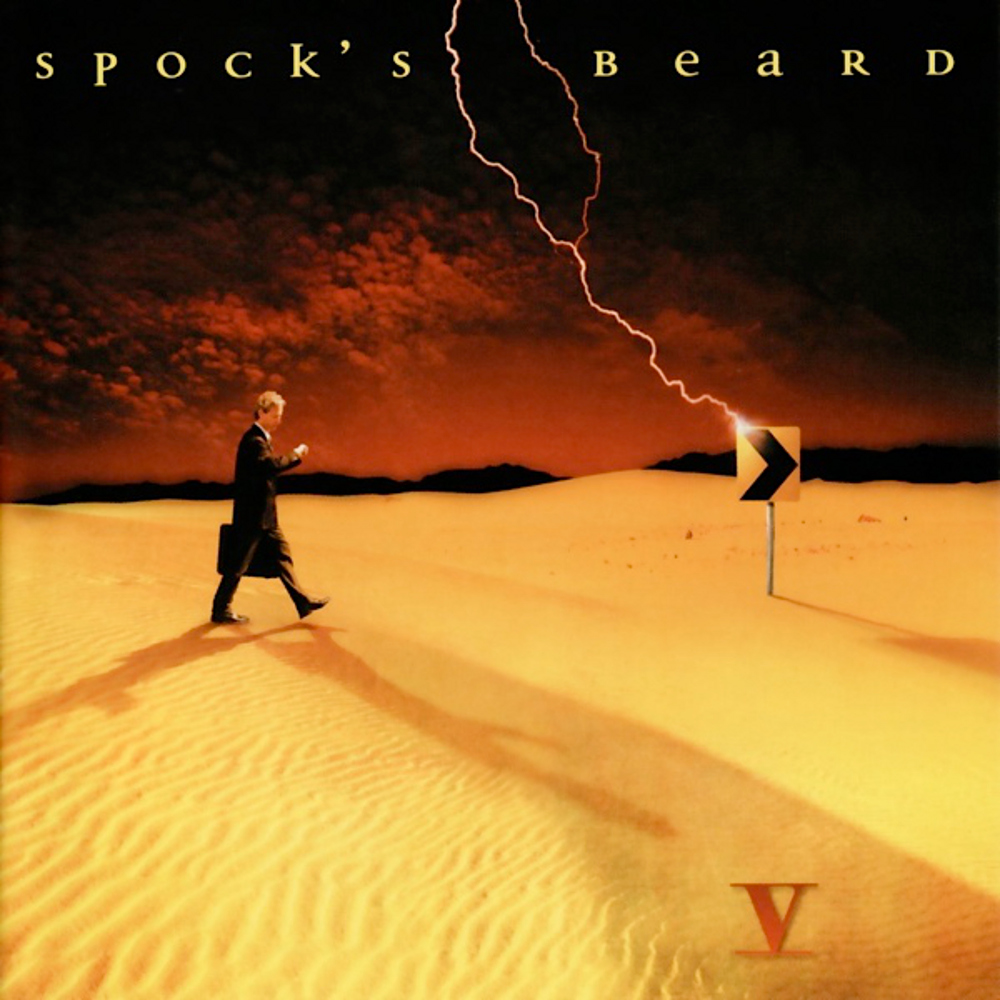
Retrospective on Spock’s Beard, V (Metal Blade/Radiant, 2000). Produced by Neal Morse and Spock’s Beard. Tracks: At the End of the Day; Revelation; Thoughts (Part II); All on a Sunday; Goodbye to Yesterday; and The Great Nothing.
All tracks written by Neal Morse except Thoughts (Part II), written by the Morse brothers; and Revelation, written by the Morse brothers, NDV, and Okumoto.
I was haunted continually by the cruel irony of it all; I had a gift to give to the world, but no recipient to pass it on to.
–Neal Morse, TESTIMONY (the book)
Two days ago, I posted my reflections on hearing Transatlantic’s SMPTe for the first time. I treasure those memories. At the time, I’d only been married about a year and half, I already had a one-year old son, and my wife was VERY pregnant with child #2 (who has grown up a serious Neal Morse fan). I was also in my second full year of college teaching, and I was working on my first biography.
It’s hard if not impossible for me to separate my love of Morse’s art from my own professional life. I’m pretty sure I was the first person in Bloomington, Indiana, to purchase THE LIGHT during graduate school, and Morse’s music has remained a constant soundtrack to all my writing—whether books or lectures. My entire family shares my love of Morse’s music, and my wife and I eagerly await joining in the celebration at Morsefest 2015.
And, as I mentioned in the previous post, Transatlantic’s SMPTe has hardly aged. Indeed, it sounds just as grand today as it did fifteen years ago. I ended that reflection of SMPTe thanking Transatlantic for introducing me to The Flower Kings. But, there’s more. So much more. It’s not just Transatlantic that came out of the year 2000. There’s Flying Colors as well, all of Neal Morse Band releases, Yellow Matter Custard, and the list goes on. . . .
And, yet, I’m not sure I should express any surprise that Morse has produced so much since Transatlantic’s first album. Think about the years between the release of THE LIGHT and SMPTe. In just one half of a decade, Spock’s Beard released five albums in five years, a cd of rarities, and four live albums. And, Neal Morse released a solo album. Morse is nothing if not full of energy. Ceaseless and abundant energy.
Equally impressive, just think about the astounding maturation of the sound of Spock’s Beard. It is nothing short of startling. Of course, THE LIGHT is a classic. But, compare it objectively to V. Spock’s Beard is a band that grew decades rather than years between 1995 and 2000.
Last night, I went back to look at the views of “V” from the time of its release, and I was rather surprised to see lots of criticism—that is, of the negative sort. SB is doing nothing new here. The band did this here or that there. Blah, blah, blather, blather. Not to be too rude, but give me a break. There was almost no discussion about the beauty of the album or Morse’s ability to evolve so quickly over such a short period of time or the excellence of NVD’s drumming or. . . the list goes one.
Bizarre.
V is, at least to my years, pretty much perfect. Whereas THE LIGHT was angry and angular, V is humble and organic. THE LIGHT is fascinating, but V is gorgeous. Suffice it state, I love both albums but for very different reasons. If someone asked me for the best Spock’s Beard album over the first five, there’d be no question that V would be it. I would proudly introduce them to this as the best of the first five SB releases as well as a masterpiece of third-wave Prog. I thought this in the year 2000, and I think it even more in the year 2015. V is a masterwork at every level. It’s playful without being childish, and it’s innovative without being quirky. Every musician gives his absolute all, and Morse ably mixes rock, pop, country, classical, and even some Latin. Yes, SB fans, fear not. Señor Valasco lurks somewhere around the corner of several passages.
V is the fulfillment and culmination of everything that came before it. And, in its textures and language, it is an intense and stunning thing.
I will also freely admit that no small amount of nostalgia makes me like this music from 2000. At age 47, it’s hard not to divide the world into pre 9/11 and post 9/11. The world before–at least in the U.S.–feels much more innocent. Compare the innocence of V with the rather angsty feel of SNOW or “We All Need Some Light” from LIVE IN AMERICA vs. LIVE IN EUROPE. The song might as well be an entirely new one after the horrific events of 9/11.
The editors of Progarchy and I have an agreement that we will avoid overt discussions of religion and politics. So, a trigger warning–and a request for forgiveness as I delve into the former. And, please know that what I offer is only personal speculation and nothing more.
Interestingly enough–and I have no idea how to account for this at any rational level–V turns out to be rather Christian in its feel as well as in its essence. Yet, when V came out, Morse was still 2 years away from his conversion. I might account for this by Morse seemingly much more comfortable with his own voice and his own failings (and, consequently his own successes) on V. The lyrics exude charity, honesty, humility, resignation, and Stoicism as well as passion. V might also be–at least from a Christian perspective–Morse lessening his will and preparing himself for the reception of grace. I’ve never met Morse, so I have no personal knowledge of any of this. All of this is merely a guess and a hunch. But, the prophetic path that Morse lays out is, to say the least, uncannily accurate on V.
You’re doing fine, it’s not too late
To lay your burden down
And walk through heaven’s gateTry to find a way
Try to say goodbye to yesterday
Goodbye to yesterday, say goodbyeTry to find a way
Try to say goodbye to yesterday
Goodbye to yesterday, say goodbye
You’ve got to find a way to say goodbye–Neal Morse, Spock’s Beard, “Say Goodbye to Yesterday”
And, “The Great Nothing” is a sequel, an answer really, to “The Light.” If The Light is anger and angular weirdness, “The Great Nothing” is resignation and guarded hope. Even in failure, doing the right thing is success. The “Great Nothing” is one of the best rock songs ever written. It is organic and whole. The lyrics describe so beautifully the unbought grace of life.
One note timeless
Came out of nowhere
It wailed like the wind and night
It sought no glory
It added no meaning
Not even a reason whyNo thought
No need to say something
No message to sell
It played without a buzz or a showing
Out of the great nothing
It came without fail–Neal Morse, Spock’s Beard, “The Great Nothing”
It’s also interesting to note that Morse was not alone in a transition. Think about the difference between Rush’s TEST FOR ECHO and VAPOR TRAILS at the same time. Granted, events threw Peart’s life into pure chaos, but the transitions occurred nonetheless. Or, more recently, thank about Steven Wilson’s move from Porcupine Tree to solo career. Morse transitioned from Morse 1.0 to Morse 2.0 between V and SNOW, and he gives full credit to his own conversion and acceptance of grace. Who are we to deny this? After all, the evidence suggests this is true, and whatever relationship Morse has with God is a rather intimate and personal one.
I, as one man, thank each profoundly for the gifts bestowed upon the world. V is a treasure. And, so is SNOW, TESTIMONY, ?, SECOND NATURE, and so many others.
Ladies and gentleman, Mr. Neal Morse, from Mars, Los Angeles, Nashville, and Heaven’s Gate.

Maybe it’s the professional historian in me, but I love dates, and I love anniversaries.
This year is the fifteenth anniversary of Transatlantic’s first album, the rather stunning and never aging SMPTe.
I’d not heard of the project until one of my students handed me a copy of the CD in the fall of 2000, about six months or so after its release. I knew Morse (I’d been one of the first–if not the first–persons in Bloomington, Indiana, to purchase THE LIGHT from Spock’s Beard), I knew Trewavas (having been a Marillion fan since BRAVE), and I knew Mike Portnoy, having purchased every Dream Theater release since 1992’s IMAGES AND WORDS. Roine Stolt? Didn’t have a clue at that point, though I’d heard of The Flower Kings.
My first reaction upon seeing the CD cover was one of elation. This looked like a very modernized Yes cover. And, of course, I loved the starship/blimp. I thought the album title, SMPTe, was kind of weird, as I didn’t quite get why the names of the members were so important, but, then, it was a “supergroup.”
Looking at the credits, I thought, “Ok, this is a Morse project. I wonder why he isn’t finding enough fulfillment in Spock’s Beard?” Not that I knew much about anything going on in any of the bands represented in Transatlantic. I knew the music, but I didn’t know any details about any of the bands.
In fact, the only real music news I kept up on at the time was for Rush, Yes, Tears for Fears, and Talk Talk. Admittedly, I did a very good job of keeping up with these bands, but I was aided by some really good user groups and news groups (remember those?!!?).
When I put the Transatlantic cd on my stereo, I was completely floored. The first minute of sound effects not only grabbed me, but all 31 minutes of the epic rooted me in place. I was utterly blown away. Yes had given us songs at 22-24 minutes, and Rush had come close, but 31 minutes? Holy schnikees. This was flat out amazing. Then, “We All Need Some Light,” which I thought sounded much like a Spock’s Beard song. Thus, I Iiked it. And, it was the perfect breather after “All of the Above.” I didn’t fall in love with this track, though, until I heard it live on LIVE IN AMERICA.
The third track, “Mystery Train,” really caught my attention as well, pulling me back into the depths of the album. I loved the psychedelia of it, and I was especially taken with the Beatle-esque refrain. This was an updated version of something off of the MAGICAL MYSTERY TOUR–yet it was an homage not a mimicry.
If I’d been captivated by tracks 1 and 3, I was once again thrown into a tizzy as I listened to the sixteen minutes of “My New World.” The references to the Doors and Jimi Hendrix sold me. And, I’m a sucker for Stolt’s voice. As soon as I heard this album, I immediately purchased all of The Flower Kings up to that point.
SPACE REVOLVER, by the way, became and remains one of my top ten favorite all-time albums.
As I looked back over the first four tracks of SMPTe, I came to realize how very different each song had been. There was no distinctive “Transatlantic” song. They each hit me in different ways.
Then, as though I deserved dessert (which I didn’t!), Transatlantic gave me a remake of one of the best Procol Harum songs ever written. Granted, it wasn’t “Simple Sister” but it was the next best thing.
When Transatlantic played live over the internet, I listened. When the live album of that recording, LIVE IN AMERICA, came out, I bought it–the day it came out. And, I’ve done the same with every single live or studio CD since. I will admit that I was horribly shocked by Portnoy’s language on the live releases. At the time, I was only recently married. My wife comes from a very conservative Texas family, and she knew nothing about prog. As I was listening and Portnoy said inappropriate things, I cringed. Astoundingly, my wife either didn’t hear Portnoy or chose not to hear. She’s now as much a Morse/Portnoy fan as I am. So, all’s well that ends well!
I will admit that it’s a bit hard for me to accept that I first heard SMPTe fifteen years ago. At that point, I was newly married, and my oldest child was just a year old! Now, he’s sixteen, and he has six siblings! Sheesh.
And, my wife is now a prog fan. Again, the times do change.
A huge thank you to Morse, Portnoy, Trewavas, and Stolt. That one album from a decade and a half ago introduced me to the Flower Kings, and it made me realize that third-wave prog was and remains pure, unadulterated love and beauty.

I began writing this post several months ago, in January, carried along on the brief rush of excitement that comes with a new year. “2015! How about noting a bunch of anniversaries of great albums?” And, in fact, one of the great strengths of Progarchy.com is the sense of music history and the awareness of anniversaries: “Forty year ago….thirty years ago….twenty-five years ago…twenty years ago…”, as opposed to the dominant model out there, which is “Forty minutes ago…thirty seconds ago…twenty tweets ago…” But then life overwhelmed me and the burst of focused energy dissipated for a while. Now it’s back. Best strike while the vinyl is hot—or something along those lines.
The idea here is very simple: I listen to hundreds of new albums every year, along with hundreds of older albums that I come back to for various reasons; but how much of that music has real staying power? And what, in the end, makes a person return repeatedly to This Album rather than That Album? Sure, of course it is because of impeccable taste and a rare instinct for timeless music. (Duh.) But there is a wonderful mystery to it all, for so much of what resonates in a particular album comes from accidental things: the time, the place, the event, the moment. Certain songs bring back great memories; certain songs make you want to jump off a cliff (yes, I’m looking at you, Olivia Newton-John’s “Physical”).
But it isn’t simply a matter of nostalgia, which can only go so far; it is, I hope, more often a matter of discovery, of hearing something new—or, in some cases, hearing something old and suddenly hearing it. Really hearing it.
My criteria is this: what albums from 60, 50, 40, 30, 25, 20, and 10 years ago do I still listen to now on a regular basis? And never tire of hearing? And why? With that, here goes!
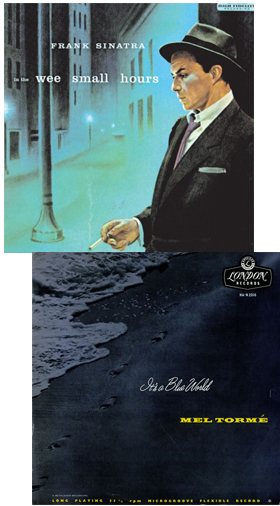 1955: In the Wee Small Hours by Frank Sinatra and It’s a Blue World by Mel Tormé. I was not raised on Sinatra’s music; quite the contrary—I was raised on decent hymns and mediocre to rotten “Christian” music; I hardly paid attention to Top 40 pop and rock until I was in junior high. And I didn’t really listen to Sinatra or Tormé until a dozen years ago. Prior to that, I simply didn’t “get it”. Then I did. Why? I’m not sure. But since then, I’ve collected some 1300 Sinatra songs. The Chairman of the Board produced many classic albums, but this one is my personal favorite: dark, lush, aching, beautiful, gut-wrenching, perfect. I sometimes fall to sleep listening to it, especially when it’s 2:00 in the morning and I’m wide awake. Sinatra had the rare gift of making you, the listener, believe The Voice was singing only to and for you. It’s impossible to describe; it simply has to be heard and experienced. And don’t forget: Sinatra is the God Father of Prog. Really. Sinatra, by the way, was born a hundred years ago this year.
Tormé did not have the edge or darkness of Sinatra, nor did he ever plumb the depths of emotional despair as did the legend ten years his senior. But Tormé had range, talent, and genius to burn, not just as one of the greatest vocalists of the 20th century, but also as an accomplished songsmith (he penned 250 songs or so), fabulous arranger, top-notch drummer (and decent pianist), novelist, biographer, author, actor, screen writer, consummate showman, and collector (guns, cars, movies, etc.). It’s a Blue World is a lush, impeccable set of songs, likely influenced by Sinatra’s Wee Small Hours. While Sinatra packs an emotional punch, Tormé thrills with pure beauty and dazzling musicality, all delivered with an effortless ease that reminds me of watching Roger Federer play tennis at Wimbledon. Bing Crosby, asked late in life to name his favorite musicians, named only one vocalist–Tormé–saying, “Any singer that goes to hear this guy sing has got to go and cut his throat.” For a taste, check out Tormé singing Duke Ellington’s “I’ve Got It Bad, And That Ain’t Good”. Continue reading “60 Years, Twelve Albums, One Man’s Favorites”
Yes, I do plan to add some actual NEW content very soon (reviews, Top-Ten lists, etc.) but for now, here is another song that has some nascent proggy elements that I really like.
It’s not the killer “rock” chorus (which is good on its own merits) but the almost Genesis like vibe around the 1:18 to 1:50 mark, and again from the 2:25 to 3:00 mark that earn this track inclusion.
Mellotron set to 11
echolyn
 26 years later, and still just getting started…
echolyn’s musical style, progressive in the truest sense of the word, defies any one musical categorization and yet all their albums have achieved critical acclaim from around the globe as they continue to release new music.
echolyn started in the late 1980’s when Brett Kull, Raymond Weston, and Paul Ramsey played in a cover band named Narcissus; however in 1988 that band disbanded as the members tired of playing cover tunes.
A year later Christopher Buzby joined Kull and Ramsey to form echolyn, making a conscious decision to focus entirely on original music. Weston soon returned to the band and they began recording the eponymous CD “echolyn” in 1990. Jesse Reyes covered bass duties until Thomas Hyatt joined the band permanently during the recording process of this first studio album.
“echolyn” was released independently on their own Bridge Records label and the first pressing sold out quickly. The CD was even a sought-after collector’s item for a while, fetching high $$’s on several internet auction sites. echolyn was indeed a welcome addition of new, unique and challenging music in a generally lean time for progressive rock music.
In 1992 the band released “suffocating the bloom“, now regarded by many as an early ’90s progressive rock classic. The album honed echolyn’s trademark two-and three-part vocal harmonies with tight, angular and contrapuntal instrumental musicianship, and featured the 25-minute opus “A Suite for the Everyman.” Lyrically “suffocating the bloom” deals with the loss of childhood innocence and idealism.
In the spring of 1993 the band released a 4-song unplugged mini-CD “…and every blossom,” however it was “suffocating the bloom” that attracted the attention of executives at major label Sony Music/Epic Records, and the band signed a multi-album deal in the summer of 1993, tied to the release of their next full-length album on Sony/Epic/550 Music.
During this time period echolyn performed live extensively, playing sold-out shows throughout the Philadelphia region, most notably at the Ambler, 23 East and Chestnut Cabarets and at the Theater of the Living Arts on South Street in Philadelphia, as well and a featured set at a progressive rock music festival (ProgFest ’94) in Los Angeles, CA, just prior to the release of their own Sony/Epic/550 Music album debut.
A major label deal would not corrupt echolyn’s musical ambitions. “as the world” was, and is, an uncompromising piece of echolyn’s musical output. Recorded in Nashville, TN in the spring of 1994, the album was released in March of 1995 to critical acclaim as it broke down musical and lyrical stereotypes, making honest and artistic statements about conformity, coupled with the plight of being human.
At the time, many spoke of echolyn as the best chance for wider mainstream acceptance of progressive music, however Sony maddeningly refused to support touring, echolyn’s best way to reach new ears and their musical lifeblood, and thus marked the beginning of the end to echolyn’s short-lived major label career. The band headlined the inaugural ProgDay Festival in North Carolina in September 1995, without label support, and shortly thereafter were dropped by Sony. Hyatt and Buzby next left the band, and after over 250 live shows and 4 studio album releases, echolyn had seemingly met its end.
A posthumous fifth album recording entitled “when the sweet turns sour,” was released on SynPhonic and Cyclops, GFT in 1996. This CD consisted of working demos of unreleased new songs, an acoustic version of “Meaning and the Moment,” a cover of “Where the Sour Turns to Sweet” originally arranged and recorded for a Genesis tribute album, and live tracks from the ProgDay ‘95 show in North Carolina.
The members of echolyn, however, remained very active in music…
Kull, Ramsey, and Weston formed Still, which released “Always Almost” in 1996, focusing on song-writing in a hard-rock format with a powerful, melodic approach. Re-named Always Almost, the same trio released “God Pounds His Nails” in 1997, which featured a Gentle Giant cover of “Aspirations.” Both of these recordings were released on Georgia-based Pleasant Green Records. Kull and Ramsey also started recording and touring as session musicians with the major-label folk-rock group Grey Eye Glances on both studio albums & live shows/tours.
Meanwhile Buzby formed a new band named finneus gauge with several other musicians, including his brother Jonn on drums, and released two albums of intricate jazz-fusion influenced progressive rock, “more once more” (1997) and “one inch of the fall” (1999) to worldwide critical acclaim. Keyboard magazine picked “more once more” as “One of the Top 5 Records of 1997” in an editor’s poll, while Guitar World recognized finneus gauge as “One of the 10 Best in the Current Progressive Rock Underground” in 1998.
In the spring of 2000, 4/5ths of echolyn reunited and released a brand new collection of 10 songs and their first studio album in over four years, titled “cowboy poems free.” The line-up featured original members Buzby, Kull, Ramsey, and Weston, along with new drummer and percussionist Jordan Perlson, a student of Buzby’s at the time. echolyn played a couple of live shows in support of “cowboy poems free,” most notably the stifling-hot and jam-packed NEARfest pre-show in 2000 in Allentown, PA.
echolyn retired again to the studio after the summer of 2000 to begin meticulous work on their next album titled “mei,” released in June of 2002. Always striving for the next challenge and musical adventure, “mei” is the most diverse echolyn recording to date. Featuring several guest musicians on timpani, marimba, vibraphone, clarinet, flute, violin and cello, and clocking in at just under 50 minutes in length, “mei” is echolyn’s modern day version of a symphonic tone poem.
Following the success of “mei,” echolyn decided to take the current live show on the road for a few shows in Philly, Baltimore, Canada and Boston. Following a positive worldwide reception to “mei,” the band also decided it was time to truly empty the vaults and give the newer fans everything they had been looking for + old fans and completists all of the non-released tracks and out-takes from years past.
Thus “a little nonsense: now and then” was born. Released in December of 2002, the box set included the entire re-masters of echolyn’s debut album, “and every blossom” and “when the sweet turns sour.” The release of this box set finally, and officially, closed the door on the first 13 years of echolyn. It also included the return of Tom Hyatt as guest bassist for a few live shows, followed by Tom’s official return to the band in the fall of 2003.
At this point in their career echolyn still did not have one thing on their resume: a “live” album. It was finally time for an official live bootleg album “The Jersey Tomato.” Released as a 2-CD limited-edition pressing, it sold out before the actual CDs and jewel cases were even ready for shipping. Featuring 13 live echolyn tunes, and a powerful, complete band version of “mei” (without the chamber orchestra), this release was recorded at a show echolyn performed at The Jersey ProgHouse in September of 2002.
Always looking for the next challenge, echolyn also began planning work in a new medium. During 2003 the band played several live shows in Baltimore, Quebec, Lowell, MA and Pennsylvania, the latter being filmed for a DVD release. In 2004 production took place on “Stars and Gardens,” which contained film footage of live echolyn from the previous year plus a video documentary spanning the band’s entire career. Released on September 7, 2004, the DVD finally lets fans outside the USA see the band on stage and in the studio. With positive reviews coming in from around the world, the DVD further promotes the success of a one-of-a-kind American band that continues to defy the odds and push the boundaries of original progressive rock music.
Brett Kull’s solo album releases, “Orange-ish Blue” (2002) and “The Last of the Curlews” (2008), plus Ray Weston’s ”This is My Halo” (2003) are further proof that the originality and musical output from the members of echolyn is never done, nor complete. All three solo album releases were heralded by music fans from around the world as bold, necessary, and musical steps forward for both Brett and Ray.
With the re-release of the album “as the world” in July 2005, along with a companion DVD of the band performing many selections from “as the world,” filmed in Michigan just 2 days before the original March of 1995 album release, the band completed and released a brand new album titled ”The End Is Beautiful” – an urban, angular, somewhat back-to-basics, rock album on August 23, 2005 – followed immediately by the band’s first-ever European tour in early September of 2005.
With 9 shows in 6 countries over 15 days, the European tour was wildly successful in that the band not only did all their own leg-work in lining up the shows, tour bus, venues and cartage/gear, but actually more-than-broke-even financially – proving once again their DIY approach to writing, releasing and promoting their own music and tours still has its benefits. With many new friends and fans across the pond – and actual faces to place with e-mail addresses – echolyn came home tired, but fulfilled, from another bucket-list adventure. The tour even inspired the band to write a new song, “15 Days,” which was exclusively featured on the Hurricane Katrina survivor benefit album, “After the Storm.”
Seven long years would next unfold with the band working on-and-off to release another studio album and playing brilliant shows in North America. With multiple false-starts and release dates, the band eventually realized that this next set of songs would, and could, only be released when it was time…and time it took.
Finally, in the winter of 2012, all the right songs, arrangements and recorded tracks fell-into-place to create a new double-CD (and limited-pressing double vinyl release) titled eponymously, just like their debut album: echolyn. This beautifully melodic, mature and introspective set of 8 songs best captures echolyn doing what they do best – writing songs about life and living life – an ever-important reminder to the band members why echolyn was formed back in September of 1989 in the first place: to create truly honest and original music together. With album sales over 30,000 copies to date, this 2012 album release, lovingly titled “the windowpane album” by fans, continues to leave its mark in the music world with introspective, moving song lyrics, lush and powerful music, coupled with intimate and sparse, musical arrangements.
Which brings us to the here, and the now: the same band just getting started again and creating more, once more: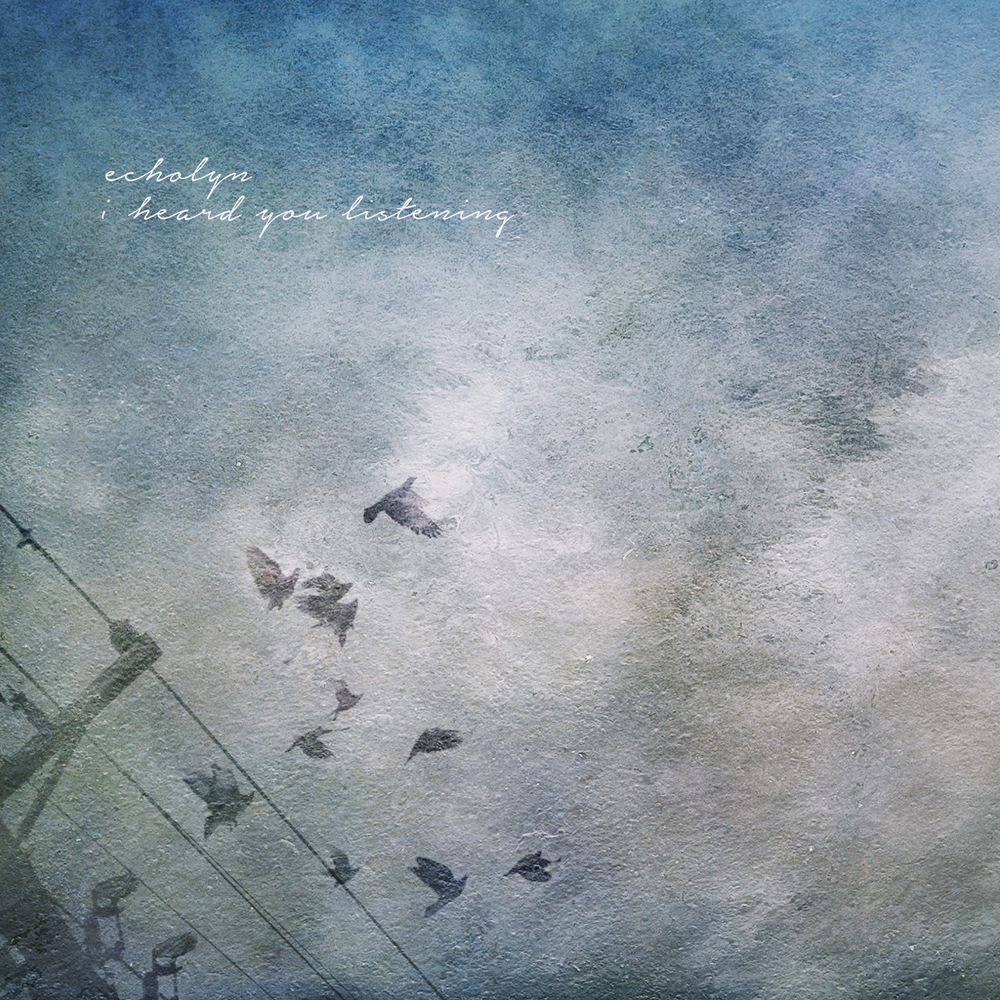
On July 31, 2015 echolyn will release a brand new and powerful musical statement titled
“i heard you listening” – 9 new stories of life – delivered with a musical and lyrical sensibility that is still echolyn. Music written to be both heard and felt, echolyn has hit a new stride for their musical future with an album that is, for them, another giant step forward. echolyn hopes to hear you listening…
Steven Wilson remarks that this is “my original demo of the song. This was actually the first of two demos I made of Lazarus, and it features a very different middle 8, subsequently rewritten for the second demo and final album recording.
“Lazarus was one of several songs that were based on a film script that I was working on at the time with my friend Mike Bennion, and the David mentioned in the song is a central character in that script.
“Lazarus (first demo) performed by SW at No Man’s Land, December 2003.”
The Fierce and the Dead are still fierce, and most definitely not dead. With Magnet, to be released in August, we have an EP with 21 minutes of music, though only 15 minutes of it is new. A disappointment, maybe? Not really. If you haven’t heard it yet, listen to the aptly-titled teaser track, “Magnet in Your Face.”
OK, that’s about a minute and forty seconds. Got good headphones or earbuds? Try it two more times. A punchy statement, played with a unified voice. It’s a glimpse at a soundscape that will keep giving of its subtlety the closer you look.
The contrast in length and compact punch was already well-developed by 2013’s Spooky Action, as compared to the almost eighteen minutes of “Part 1” that was our introduction to the band in 2010. But there’s an  announcement here of something new-ish, characterized by guitarist Matt Stevens as being “more joyous and intense, with bigger riffs and more of an electronic feel” (teamrock.com).
Perhaps it’s not that TFATD is simply doing something to us (as if it were a magnet TO the face), but that they provide a revelation of the magnet that is already there in one’s face, an attraction as well as a reception. When I open to the otherness of well-crafted music, the force of my openness draws into its light and its purview whatever it is that the artist has to give. Think about how you listen to what someone says, how it’s not only passivity, but also activity, how it’s a drawing to oneself of what is said, or an attaction outward to whatever “metal” it might contain.
The EP will bring three more new tracks, plus two bonus rehearsal recordings of songs from Spooky Action. “Palm Trees” and “Flint,” though longer (four or more minutes each), follow the tighter, joy-and- intensity aesthetic so compactly captured in “Magnet in Your Face.” Even so, they allow for some stretching and soundscape exploration that assures us that this is still TFATD. “Conceptual continuity,” to invoke Frank Zappa’s phrase, is naturally strongest on “Part 6,” picking up the thread that began with their first outing. Here is the mix of abstract and concrete that first grabbed my attention by the scruff of the neck and connected with that center of force between my ears that the guys have now identified as my magnet.
As I’ve remarked before, Matt, Steve, Kevin, and Stuart make music as a unit, as tight as nearly any guitar-based quartet I’ve heard since early to middle Wishbone Ash, but with that exquisite King Crimsonesque sophistication. The bonus tracks bear this out. The delightful “Let’s Start a Cult” is rather more raw and more fun than the Spooky Action version, while “Spooky Action” (a CD-only bonus track, according to our copy) nicely shows just how rich is the sound that these four guys get in performance.
The band has indicated that Magnet is an appetizer for another full-length feast now in preparation. Pull up a chair and have a taste. I’ve ordered another drink, and am settling in to wait for the main course.
More info, and links for pre-ordering, can be found at TFATD’s website.
A few posts ago, Chris M. challenged us to list our favorite albums of Third Wave Prog. I will do that, but, until then, I thought it would be fun to post this–something I wrote roughly 12 to 13 years ago–trying to explain to some friends why I thought New Wave (that is, late 70s/early 80s) was the proper successor to First Wave Prog. Regardless, I still think my opinions (overall) are valid–at least at a personal level, though I would certainly revise some of this a dozen years later as well. The obvious missing bands are Big Big Train, The Tangent, and Cosmograf.
And, a critical note: I intentionally left out ALL Rush albums, as they would’ve taken over almost everything below. So, it seemed prudent to exclude them completely.
____
The youngest of three boys, born in the summer of love (September 6, 1967—only 3 months and five days after the release of “Sgt. Pepper’s Lonely Hearts Club Band” by the Beatles), and coming of age in the late 1970s and early 1980s, I grew up on progressive rock: Yes, Kansas, Genesis, and the Moody Blues. We faithfully shunned the 3-minute pop format and we sought mightily the 20- and 30-minute epics of European (usually liturgically derived) symphonic music with rock instrumentation and bizarre time signatures.
I remember hearing lots of longish, prog songs as early as 1971 or 1972. Though I’ve never played an instrument with any degree of passion, I’m assured by my mom and two older brothers that I was obsessed with music even as a toddler. Somehow, I figured out how to crawl out of my crib and down the stairs to the family stereo. Even as a one-year old, I would wake the entire household up, blaring the Banana Splits or Snoopy and the Red Baron at 3 in the morning.
My first great awakening came, though, from seeing the sleeves of YesSongs. I spent hours trying to figure out how the animals made it from one floating island to the next. And, I’ll never forget the first time I played side one of YesSongs—I was overwhelmed by the depth and complexity of it.
As is now well recognized, the prog lyrics as well as the cover art tended to be fantastic, pretentious, overblown, and theological. There have even been some interesting scholarly articles about progressive rock thriving in the western and midwestern states of America, mostly among middle-class, conservative kids. And, of course, we, with great confidence, derided disco and top-40 music through junior high, high school, and college. Disco and top-40 music, as we understood it, were decadent and vacuous. As far as we were concerned, progressive rock artists (and some New Wavers) were the only real musicians outside of the classical and jazz world.
In many ways, progressive rock helped define my own childhood and teenage years. I will never forget seeing abolitionist John Brown on the cover of a 1974 Kansas album (it sparked all kinds of historical questions re: Kansas, abolitionism, and the American Civil War); hearing Pink Floyd’s “The Wall” at the University of Notre Dame in the fall of 1979; being introduced to Rush’s 1981 “Moving Pictures” in the Liberty Junior High School library in Hutchinson, Kansas; or listening to Yes’s “Fragile” over and over again and trying to figure out the “deep” meaning of the lyrics. In high school, I worked as on overnight D.J. at a local rock station (KWHK), which doesn’t exist anymore. And, while in college at Notre Dame, I had a Friday-night progressive rock show (WSND) my junior and senior years, often playing two hour blocks of Rush or other groups.
As powerful any the albums just mentioned, though, was my first listen to Talk Talk’s Colour of Spring in the spring of 1987 and, even more so, my first listen to Talk Talk’s Spirit of Eden in September 1988.
My comrade in arms in college was the singer of the most popular band on campus, St. Paul and the Martyrs. They even opened for Phish when Phish played on campus, spring 1990. The leader singer, Kevin McCormick, even became my oldest son’s godfather! Now, he’s a well-known classical guitarist and even a Progarchist.
But, I’ll never forget the two of us listening to Spirit of Eden for the first time. We were just stunned and in complete silence as we explored every note and every silence of the album.
Having turned 13 in the autumn of 1980, I also, of course, grew up with New Wave: Thomas Dolby, Kate Bush, The Police, The Cure, Oingo Boingo, XTC, Siouxie and the Banshees, and Echo and the Bunnymen. Over the Wall!
Our local Kansas radio station—KWHK—had briefly been formatted for New Wave, so I was able to get every new album sent by the record labels. The one that hit me hardest was XTC’s Skylarking.
My college radio show at Notre Dame focused on progressive rock, as mentioned above, but I threw in a lot of New Wave. New Wave just seemed the more radio-friendly version of progressive rock. And, by the early 1980s, progressive rock seemed to have run its course. Could Asia really claim to be the successor of Yes? Or, could Genesis without Peter Gabriel or Steve Hackett really be Genesis? We answered with a resounding “no.” That left us with New Wave.
After all, in 1990, we still had a few years before Dream Theater and Spock’s Beard re-introduced—in the states—a new wave of Progressive Rock.
A quarter of a century later, I realize that music took on religious significance for me and my friends. Those who embraced disco, pop, or top 40 music were heretics, and we supporters of progressive rock were the orthodox.
High School was a long time ago for me, but I still remember it well. During the summers, I had one of the best jobs in the world–I was a DJ at our local AM-station, KWHK. Not only did I DJ, but I also got to write and produce commercials, and I served as a liaison between the sheriff’s department and the National Weather Service. I grew up in central Kansas, so we had tornados and tornado warnings quite frequently. Great job. I’ve also been into collecting music (mostly progressive and alternative rock, some jazz, and a bit of classical) since second grade. I started young, and, for better or worse, I’ve never stopped. My kids (13 and under) can name bassists, singers, and drummers of the major progressive bands. And, yes, I’m proud of them.
Freshman year of high school, 1982-1983. It was freshman year that I really discovered New Wave. I had been listening, almost exclusively, to progressive rock and what’s now called classic rock during the 1970s and earliest part of the 1980s. The father of a friend of mine owned a record store, and we were introduced to all kinds of music through the store in 9th grade. In particular, I listened to Thomas Dolby’s Golden Age of Wireless (favorite song: One of Our Submarines is Missing). I had this on one side of a tape and ABC’s The Lexicon of Love (favorite song: 4 Ever 2 Gether). Also lots of U2’s War (favorite song: Sunday Bloody Sunday). Progressive Rock was never far from my heart, and I listened to Rush’s Signals (favorite song: Subdivisions) pretty much non-stop, Peter Gabriel’s IV (favorite song: Lay Your Hands on Me), and Roxy Music’s Avalon (favorite song: Take a Chance with Me).
Sophomore year of high school, 1983-1984. This was a huge year for music. Genesis released their self-titled album (favorite song: Home by the Sea, Parts I and II); the Police released Synchronicity (favorite song: Synchronicity II); and Yes released 90125 (favorite song: Cinema).
Junior year, 1984-1985. Rush’s Grace under Pressure (favorite song: Between the Wheels) dominated every other album that year. Frankly, this was THE album. If I had to name a favorite album of high school, this would be it. My sophomore year in college, I wrote a paper using only the lyrics from the album. I even got an A. I also listened a lot to The Smiths’ Hatful of Hollow (favorite song: Please, Please, Please), Oingo Boingo’s Dead Man’s Party (favorite song: same as title), and Thomas Dolby’s second album, The Flat Earth (Favorite song: same as title).
Senior year, 1985-1986. Another great year for music, but mostly for former proggers going pop. Albums that year included, at the top of the list: Sting, Dream of the Blue Turtles (favorite song: Fortress Around Your Heart), Peter Gabriel, So (favorite song: In Yours Eyes), Tears for Fears, Songs from the Big Chair (favorite song: Broken), and XTC, Skylarking (favorite song: The Man Who Sailed Around His Soul). The other album I played constantly was the soundtrack to To Live and Die in LA (a pop band, Wang Chung, playing a very proggy style). Lots of Kate Bush, Hounds of Love, too (favorite song: Hello Earth).
It wasn’t until my freshman year (1986-1987) that I really got into Talk Talk, the Cure, and Echo and the Bunnymen. I also really liked Blancmange (kind of a really smart Talking Heads) and New Model Army and a few others. That year, U2 released “The Joshua Tree.” I’ll never forget sitting in the car with a friend, being about 1/2 through the album and just breaking down (not something I did very often) because of the beautiful intensity of the album. Crazy. At the time, I was horrified by RATTLE AND HUM. Now, I think The Joshua Tree as a whole is really good, not brilliant. Side two, maybe, is brilliant. Side one has a brilliant moment–bullet the blue sky. And, RATTLE AND HUM seems better than it did to me then.
In high school, I remember listening to some A-ha, B-Movie, b-52s, Erasure, Depeche Mode, and Communards. I don’t think I would’ve chosen to listen to these groups, but they would’ve been pretty hard to escape then. I would’ve always preferred something prog–unless we were dancing. Had an all night party at my house once my senior year when my mom was out of town. Late, late into the evening, a group of us were trying to analyze a 1977 Genesis concert we’d taped off of PBS! I’ll never forget that night. Lots of analyzing Pink Floyd, too.
My Top Seven Progressive Rock Albums (in no order after the first three)
Kevin McCormick, Squall (1999). Some of the best music ever written—but tempered with very serious classical sensibilities and lacking the bombast present in even the best of progressive rock. McCormick incorporates his profound poetry as lyrics. Each word—and the way Kevin sings it—seemed utterly filled with Christian grace and conviction. This is part two of trilogy (he’s working on number three). And, it’s hard to listen to Squall without listening to its equally fine predecessor, With the Coming of Evening (1993).
Talk Talk, Colour of Spring (1986). I could certainly regard this as either my top album of all time (though interchangeably with Squall and Spirit of Eden; depends on my mood), or close to it. I couldn’t even count how many times I’ve listened to it. I bought it on a whim—because I liked James Marsh’s cover. My whim paid off, as it opened a whole new realm of music to me. But, what’s not to like: impressionist 1950’s Jazz and 1960’s Stevie Winwood mixed with intensely Christian lyrics.
Talk Talk, Spirit of Eden (1988). Every note and word is perfect. Mark Hollis and Tim Friese-Greene spent 14 months in a church recording this album. Hard to beat the 20+ minute opening to the album. And, the lyrics—better than most hymns I hear in church, to be sure. Side two even has a song with St. Ignatius of Loyola’s prayer asking for the grace to surrender one’s will to God.
Yes, Close to the Edge (1972). Ok, I’m noticing a pattern as I write out these descriptions—this album, as I understand it, is about the Reformation. Anderson and co. incorporate high-church Anglican music and choral arrangements as they sing about Christ the Word.
Genesis, Selling England by the Pound (1973). Heavily influenced by the poetry T.S. Eliot, Peter Gabriel soars on this album.
Pink Floyd, Animals (1977). Continuing the fantasy and science-fiction themes of their earlier albums, Roger Waters and David Gilmore seriously challenge the right of one human to exploit another in this George Orwell inspired album.
Flower Kings, Space Revolver (2000). Lyrics range from weird to wacky, as does the music. Pro-Christian themes abound, but placed within a rather Scandinavian pastoral setting.
My Top Seven non-Progressive Rock Albums (in no order)
Thomas Dolby, Golden Age of Wireless (1982). This was my introduction to New Wave. Wild arrangements and very Bradbury-esque lyrics. It became my anthem during high school debate and forensics.
Sarah McLachlan, Fumbling Towards Ecstasy (1993). I can’t explain why this album means so much to me, but it does. I love McLachlan’s voice and use of organ. And, this first album lacks the nasty anti-Christian and pro-feminist cant of her later work. When I worked at the Organization of American Historians in graduate school, we would play this CD as we played Quake on the network (after business hours, of course).
Echo and the Bunnymen, Ocean Rain (1984). Beautiful and bizarre—musically and lyrically. Probably the most Doors’ inspired album of the New Wave movement. While the lyrics don’t quite rival those of Morrissey (in the Smiths), the music surpasses anything Johnny Marr wrote. A staple for me in college. I’m just sorry that some of the lyrics are heretical.
Traffic, John Barleycorn Must Die (1970). What can I say about Stevie Winwood, Jim Capaldi, and Chris Wood? Jazz-rock with Anglo-Saxon folktales thrown in. Lots of Traffic is excellent, but this surpasses all of their other albums.
Van Morrison, Astral Weeks (1968). Introspection without pure naval gazing. And, no body writes better about the beginnings of love than Van Morrison. Must be something in the Irish soul. As I understand it, the album was done in one take with the jazz musicians being given the music when they entered the studio. Perfect for a spring day.
The Cure, Disintegration (1990). From the beginning to the end, a masterpiece. Perfect pacing, and fascinating arrangements. The Cure’s flaw is their tendency to write hyper, bouncy pop songs. While Disintegration has a few of these, they remain tempered by the more serious, gothic moments on the album. And, hey, the album begins with early medieval plainsong.
Radiohead, Kid A (2000). Intense lyrics about the problems of post modernity and scientism. Though Ok, Computer has better moments, Kid A has no real flaws. The lyrics, however, remain unimportant, ultimately, as Thom Yorke’s voice serves as another instrument on the album. The producer, Nigel Godrich, deserves credit for being an equal member of the band. The opening track, “Everything in its right place” sums up the production.
Serious honorable mentions: Talk Talk, Laughing Stock (1991); Dream Theater, Octavarium (2005); Marillion, Brave (1992); The Police, Synchronicity (1983); Yes, Drama (1980); XTC, Skylarking (1986); Kate Bush, Hounds of Love (1985); Kate Bush, Aeriel (disc 2; 2005); and Simple Minds, New Gold Dream (1982).
So proud to have two progarchists as a part of this. Lady Alison and yours truly–BB
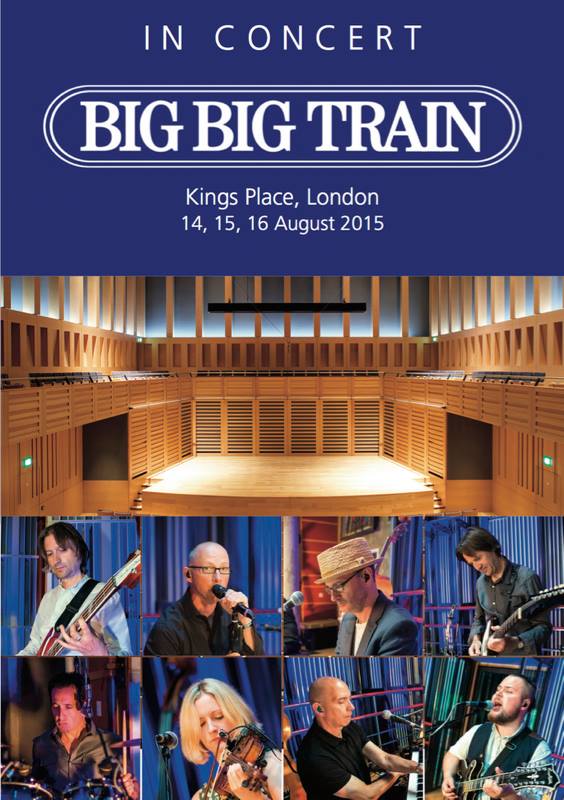
From Professor Geoff Parks: At last I can reveal a closely kept secret. A while back I volunteered to put together a programme for the band’s upcoming Kings Place concerts. To my delight that offer was accepted and early in June I sent my efforts on to Greg et al. for approval.
The programme is 24 A4 pages in full colour. It includes profiles of the members of BBT and their support staff, equipment lists and a number of articles that should be of interest to passengers, including a couple of specially commissioned pieces by Alison Henderson and Bradley Joseph Francis Birzer of this parish.
The programme will cost a very reasonable £5.
The section containing the band profiles has been cunningly designed to include convenient spaces for the collection of autographs.
You can see the front cover below.

 Progarchy