

This is an absolutely brilliant version of the Yes classic, Awaken, by Todmobile (whom I’ve never heard of until this) with the Icelandic Symphony Orchestra, and Jon Anderson on vocals. I have never needed any convincing that this piece is incredible, but seeing this performance has only strengthened that conviction. Enjoy.
Category: progressive rock music
Roine Stolt in the World of Adventures: The Birth of Third-Wave Prog
The Flower Kings, BACK IN THE WORLD OF ADVENTURES
1995 Foxtrot Music/Insideout Music
71 minutes; 10 tracks: Back in the World of Adventures; The Prince/Kaleidoscope; Go West Judas; Train to Nowhere; Oblivion Road; Theme for a Hero; Temple of the Snakes; My Comic Lover; The Wonder Wheel; Big Puzzle.
All lyrics and music by Roine Stolt (b. 1956).
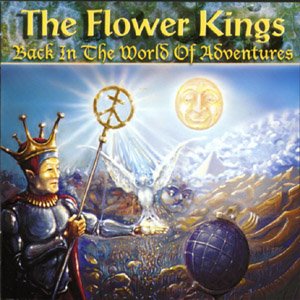
In 1994, famed (justly so) Swedish guitarist, Roine Stolt, released a solo album under the title of the FLOWER KING. Less than a year later, he formed—around himself and the band he’d used for the FLOWER KING—the Flower Kings. It’s never quite clear who the FLOWER KING exactly is, but he seems be the embodiment of Jesus. Or, at the very least, a very peace loving Johannine hippie Jesus, and his betrayer is Judas Iscariot. In the opening song of the 1994 album, with the same name as the album, Stolt sings:
We believe in the light we believe in love, every precious little thing
We believe you can still surrender, you can serve the Flower King
And, in the grand song, “Humanizzimo,” Stolt becomes even more blatant:
Did someone pray for the long lost souls
or the tired ones who lost their goal
When the seventh angel rise his sword
Can you hear the one voice of the Lord
With the blood of Jesus on the nail
we turn the balance on a scale
In pain and fearless suffering
lies a message from the King of Kings
I don’t know if Stolt has any particular religious leanings, but he’s obviously very, very pro Jesus. At times I’ve wondered if he’s Roman Catholic, as he possesses a truly sacramental view of the world, but he might also—logically, given the Swedish background—be Lutheran. Again, I’m not sure labeling the song writer with any particular denomination totally matters. Stolt clearly loves what is humane, true, good, and beautiful, and his religious views are more poetic and mythic than “in your face.”
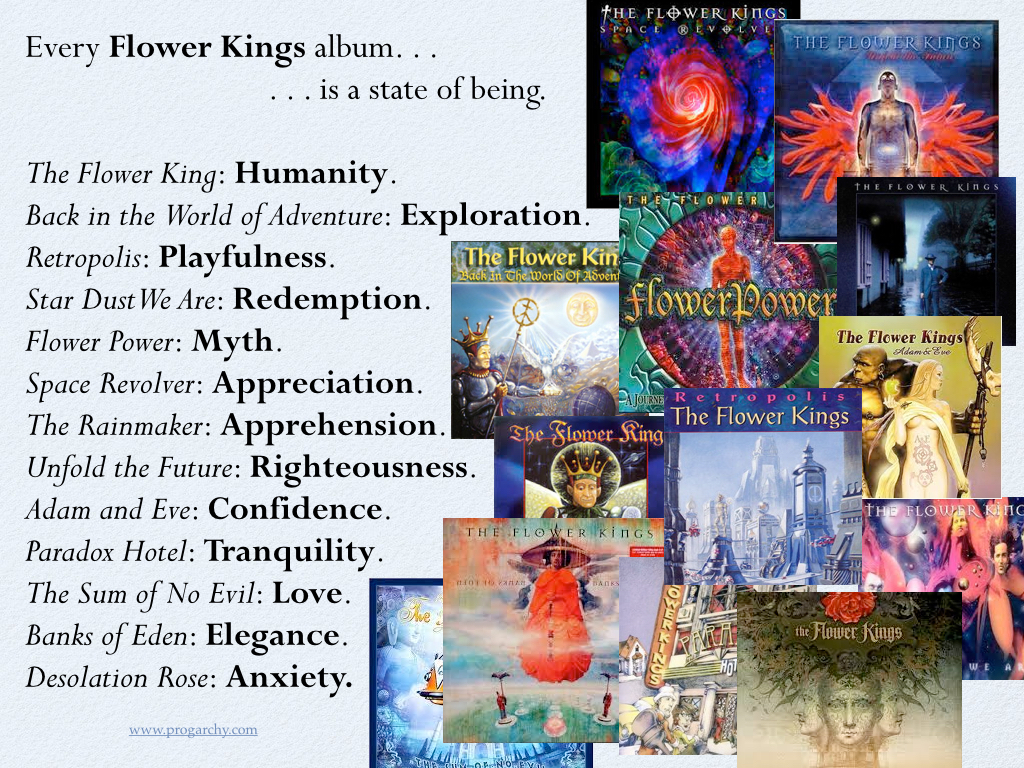
It would be hard to exaggerate the importance of the album to what we love as our current and overwhelming deluge of progressive rock. In 1990, prog looked pretty much dead as a genre. Sure, there were plenty of rock, pop, and so-called alternative bands—Pearl Jam, Dave Matthews, Phish, and Smashing Pumpkins were the most obvious–employing aspects of prog, but almost no one admitted to the label.
Then, 1994 hit.
Marillion’s BRAVE and Roine Stolt’s THE FLOWER KING emerged as though from the gods themselves. How could these albums not be prog? They were as prog as prog could be. Unapologetically, blatantly, and deliriously prog. As our beloved progarchist friend, Andy Tillison, would later explain, this was the beginning of third-wave prog, a wave that has lasted for at least 19, maybe 20, years.
In many ways, though, 1994 would prove a trial run, a glimpse, merely, of what was coming. It was 1995 that witnessed the full arrival and onslaught of third-wave prog. Consider the releases: THE LIGHT by Spock’s Beard; AFRAID OF SUNLIGHT by Marillion; and THE SKY MOVES SIDEWAYS by Porcupine Tree.
And, of course, there was the first official Flower Kings’ album, BACK IN THE WORLD OF ADVENTURES. The title couldn’t be more perfect, and we might as well refer to it as the opening statement of third-wave prog. Stolt, indeed, was joyously leading us back to the adventure that had seemed to have fallen so undramatically in 1980 or so.
The first Flower Kings’ album begins with the title song, an upbeat psychedelic excursion. “Welcome back. . . welcome back to the world.” One of the nicest things about Stolt’s writing is his uncanny and ingenious ability to mix taste and class with exploration. Though his writings fits so nicely in the genre of rock, its playfulness has much in common with jazz fusion. And, Stolt is eminently smart and inquisitive.
Soaring vocal harmonies (rather complex at times), jazz-like runs, and humane and gorgeous lyrics help define almost all of Stolt’s music. In recent years, he’s revealed a darker, more critical side in and with his lyrics, but this has been well earned. On Desolation Rose, the latest album by the Flower Kings, Stolt’s observations are wise and sad rather than bitter and distraught.
Interesting sound effects and atmospherics emerge unexpectedly around every corner of the first album. Whistles, trains, dings, scratches, bells, Latin rhythms, woodwinds, references to Hitchcock movies, and a general state of contentment pervade the entire work. Some songs don’t even reach the two-minute mark, while the opening and final tracks exceed 13 minutes each.
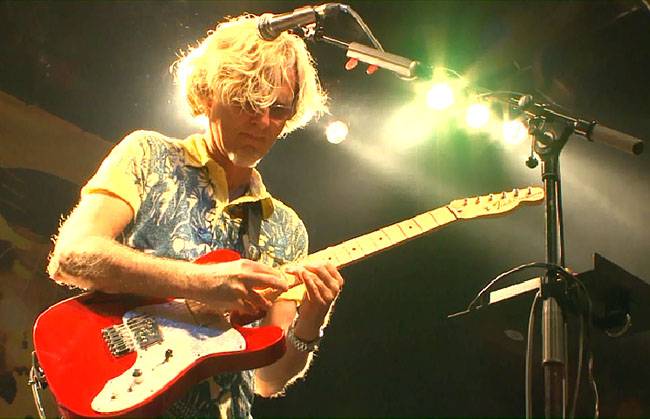
Interestingly enough, BACK TO THE WORLD OF ADVENTURES is roughly divided between instrumental numbers and vocal numbers—but the album is merely a shadow of what is and was to come. Mystery had beckoned and Stolt consented. Don’t get me wrong. BACK is an outstanding album in every way, but it really is only a beginning of a majestic journey that continues to this day. Reviewers and admirers almost always point out how “prolific” Stolt is. What an understatement. Not only would 11 more studio albums from the band follow—with Stolt leading all—but there were still solo albums, the Tangent albums, Transatlantic albums, Kaipa albums, Agents of Mercy albums, and . . . the list continues. Looking at Stolt’s complete discography is simply mind boggling. Never a moment of dullness in the Swede’s life. I envy his biographer.
Twenty years old. Happy birthday, Flower Kings. Sadly, I didn’t meet you until your fifth birthday. Still, it’s been a brilliant decade and a half ride with you.
Led Zeppelin: A Progressive Rock Band?

John Paul Jones would answer, “Yes.” I have contemplated this question for some time now: is Led Zeppelin worthy of being labeled a “progressive rock” band? Although best remembered for the being the premier hard rock band of the 70s, Led Zeppelin could easily fit into the category of progressive rock-at least to some extent. For a band that never released a single, never performed on “Top of the Pops” (or any other television program), and was able to get away with leaving their name off their album covers, the Zep certainly achieved a level of success unmatched by any other band during the “progressive” era. Please bear with me as I detail the history of Led Zeppelin’s gradual transition from blues-based rockers to true “progressive” artists.
The history of Led Zeppelin’s music demonstrates that they are indeed worthy of the “prog” label. Bursting on to the scene with Led Zeppelin I in 1969, the band’s early repertoire was dominated by blues-inspired songs, but early on they were showing signs of being something more than just a hard rock band. Dazed and Confused, memorable for Jimmy Page’s use of a violin bow on guitar strings to eerie effect, which demonstrated just how willing these virtuosos were willing to go to break the mold, one step at a time. Was the album truly “progressive” in the way we think of the word? Perhaps not, but it was a step in the right direction.
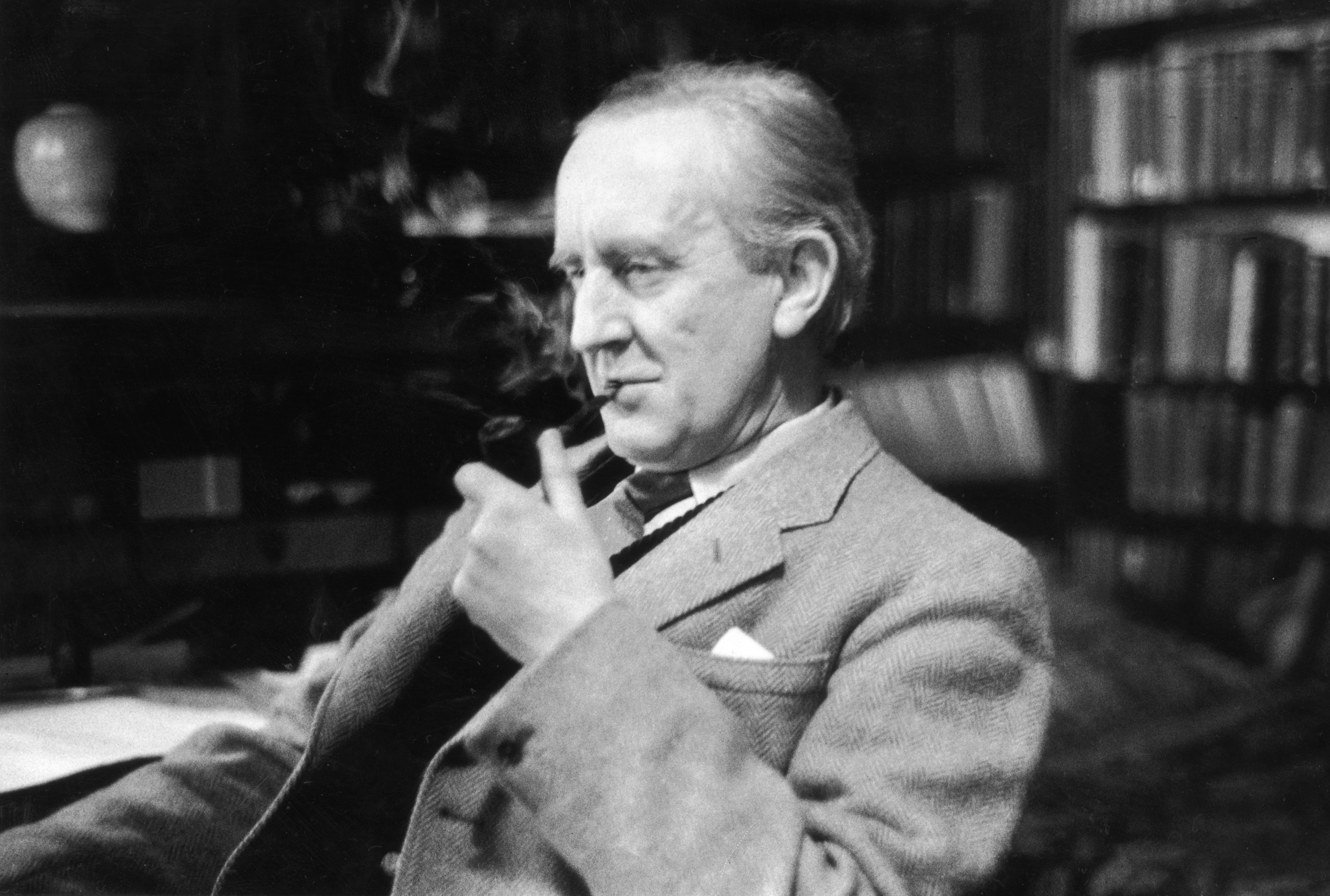
Led Zeppelin II was not a significant departure from the first album, many of the themes remaining the same (namely, women and sex), and most of the songs still bluesy in their origins. II, however, did introduce the rock n’ roll world to Tolkien and his masterpiece The Lord of the Rings in the excellent folk-rock piece Ramble On. And so began the marriage of Tolkien and the (progressive) rock world, thanks to Robert Plant’s fascination with Middle Earth. An odd match, perhaps, but it was a wonderful union indeed, one that would inspire generations of future progressive rock artists. (Also, observe the uncanny resemblance between Robert Plant and Theoden. Coincidence? I think not).
Led Zeppelin III demonstrated yet again the willingness of the band to experiment with various styles. An eclectic album to say the least, the boys shift from metal (Immigrant Song) to blues (Since I’ve Been Loving You) to traditional folk (Gallows Pole, That’s The Way, Bron-Y-Aur Stomp) rather seamlessly. Although the decision to include more folk and traditional music was not as well received, III has grown in popularity and respect over the years. It was not until the next album, however, that Zeppelin placed themselves firmly on the mantle of progressive rock.
By 1971 Led Zeppelin had developed such a following that they neglected to put their name on the album cover: and it did not hurt them in the slightest. As a matter of fact, Led Zeppelin IV proved their most successful album, and one of the most influential albums of all time. IV may also be considered their first “pure” progressive album. Although Black Dog and Rock and Roll retain the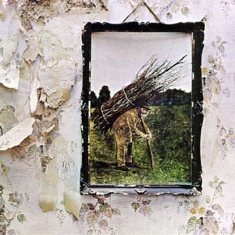 “standard” rock sound, the rest of the album is undoubtably unique in its composition. The Battle of Evermore, an explicit reference to Middle Earth, and Misty Mountain Hop pay homage to Plant’s favorite literary land. Going to California is a pleasant yet intricate folk song dedicated to Joni Mitchell, the Canadian singer who supposedly captured the hearts of both Page and Plant. Four Sticks may be the first “math rock” song ever composed, a song so complex that it was only performed by the band once in concert. When the Levee Breaks features explosive drums from John Bonham and fine harmonica work from Plant. Finally, there is the iconic Stairway to Heaven, an eight minute long epic with enigmatic lyrics that starts off slowly and builds up to a climax of one of the most impressive guitar solos in rock history. If that does not fit the “progressive” mold, then I don’t know what does.
Zeppelin’s repertoire only became more progressive after the immense success of IV. Houses of the Holy featured two more Tolkien-inspired songs: the folk-rock Over the Hills and Far Away, and the haunting No Quarter. Physical Graffiti not only featured their longest song (In My Time of Dying, eleven minutes), but also perhaps their greatest one: Kashmir, one of the finest progressive rock songs ever composed. Backed by an orchestra, Plant, Page, Bonham, and Jones unleashed in this full scale epic of travels in a far off land, a theme explored by progressive rock groups past and present. Their next album, Presence, although perhaps their weakest, nevertheless featured the powerful (and progressive) opener Achilles Last Stand, as well as the catchy rocker Nobody’s Fault But Mine. Zeppelin’s next and final album (although they did not know it at the time) remains their most progressive. In Through the Out Door is dominated by John Paul Jones’ synthesizers and keyboards, and he is more than a competent keyboardist. His work prior to this album (Trampled Under Foot, No Quarter, The Rain Song) was impressive, but he truly shines on Zeppelin’s last album. In the Evening and Fool in the Rain prove he is more than capable on the keys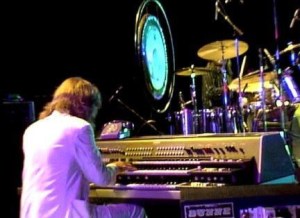 , but it is his frenetic yet dexterous playing on the lengthy and cryptic Carouselambra that established Jones’ place in the canon of great prog rock keyboardists. This claim may be a stretch to some, as most identify Jones as a bassist, but I would urge the reader to listen to these songs mentioned above before arguing otherwise.
After John Bonham’s untimely death in 1980, the band split up, each man going his own direction. Jimmy Page, one of the most versatile guitarists to ever grace the stage, actually teamed up with Chris Squire and Alan White of Yes to form XYZ (X-Yes and Zeppelin). Although the project was aborted after a short time, it nevertheless demonstrated Page’s willingness to form what could have been a truly “progressive” super-group.
I hope this piece did not drag on for too long, but I felt it necessary to delve deep into and explore the fascinating world of Led Zeppelin. Many consider this group to be among the best, if not the best, in rock n’ roll history, but to me they are more than a standard rock n’ roll band. In my book, they were also one of the finest progressive rock bands of all time.
Atropos Project – Equator (2013)
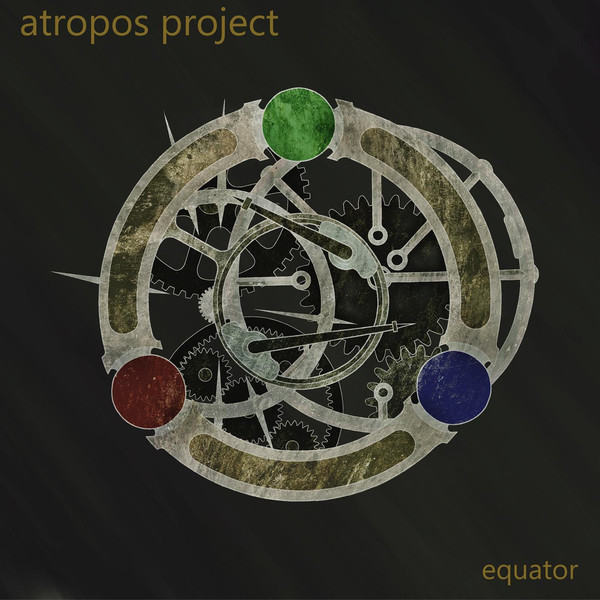 “Dead String Scrolls. Bring your own lyrics.” This is how New York musician John Quarles describes his creation, Atropos Project. While purely instrumental “prog,” John draws upon a variety of influences and experiences for his album, Equator. The beauty of this album is that it cannot be pigeonholed into one specific genre or sub-genre of rock. Musically, Atropos Project explores many different aspects of progressive rock.
John began his musical journey when he was in high school, playing drums for a variety of local metal bands. As he grew older, he began trying out different instruments, eventually settling on the guitar as his weapon of choice. Over the course of the last decade or so, through collaborating with other musicians, John began to pick up other instruments as well, including the keyboards. Equator is the product of those experiences. John cites bands such as Rush, Queen, Boston, and Kiss as his early influences, and he cites Opeth, Porcupine Tree, and Radiohead as his more recent influences.
The album itself is strictly instrumental, with all instrumentation performed by John. There have been several good instrumental prog albums the last few years, including Antoine Fafard’s Occultus Tramitis (2013) and The Fierce and the Dead’s Spooky Action (2013). Equator belongs right up there with those two excellent albums. I guess 2013 was the year for great instrumental music.
Across the album, I can hear many different influences, especially, to my ears, Rush. Specifically, more recent Rush. Alex Lifeson has adopted a much heavier style of playing on their last three albums, and much of the guitar work on Equator is reminiscent of that. However, the music shifts stylistically a lot over the album, so it is hard to generalize the album. There are hints of traditional jazz, classic prog, and even new age throughout the album. The beginning of the fifth song on the album, “A Curious Trip,” reminded me instantly of some of the piano work from Mannheim Steamroller’s Fresh Aire I, which is my favorite instrumental album. The seventh song, “Suspiria,” reminded me of the song “Faithless” from Rush’s Snakes and Arrows. The guitar riff is very similar, but you have to “bring your own lyrics.”
If it seems like I’m being rather random in my review of the actual music, it’s because I am. The brilliance of Atropos Project is the music jumps around stylistically, which leaves the listener wondering what is next, eliminating the threat of boredom that can often come with strictly instrumental music. One second you are listening to what approaches metal, and the next second you are in a completely different genre, one that explores acoustics and keyboards. I found the eeriness of the keyboards overplayed with a heavier, steady rock beat in the fourth song on the album, “Spiraling,” to be exceptionally enchanting. Atropos Project does a great job of creating a repeating rhythm, and then completely changing the time signature and style of music right in the middle of the song. It doesn’t get much more prog than that. The overall effect is one that keeps the listener interested and curious about what comes next in the album.
For music that was created entirely by one man, Atropos Project offers an astounding array of styles and influences. Furthermore, John Quarles is an extremely talented musician with every instrument that he plays. Fans of everything from jazz, to Mannheim Steamroller, to Rush should find Equator an excellent album to relax to. If you are a fan of Antoine Fafard’s latest album or The Fierce and the Dead, then definitely add Atropos Project to your listening list.
I had the opportunity to contact John the other day, and he told me that recording is underway for his next album, which is tentatively due out sometime this year. He says that, sonically, it will be a darker album than Equator. I read that as heavier, but I could be completely off on that. Either way, I’m sure it will be good, and I look forward to listening to it.
A Classic Album: SIXPENCE NONE THE RICHER (1997)
Sixpence None the Richer

Twenty years ago, the almost entirely unknown (then) and barely remembered (now) Texas-Tennessee band, Sixpence None the Richer, released its second album, a pop masterpiece, This Beautiful Mess. The cover, a picassoesque homage with eye-popping reds and yellows, captivates today as much as it did two decades ago. Imagine a southern American version of The Sundays crossed with Nebraskan, Matthew Sweet, and a little bit of the poppiest aspects of XTC, and you’ll start to get a sense of this album. The best tracks, by far, are the least poppy songs: “Within a Room Somewhere” and “Disconnect.” Each is existential and necessarily plodding. Each gorgeously develops organically with hardly a pop hook in audible range—at least relatively speaking.
Continue reading “A Classic Album: SIXPENCE NONE THE RICHER (1997)”
Anticipating the Next Hasse Fröberg & Musical Companion Album!
Apparently putting together a new album (or going on tour as is the case with Rush) means redesigning your website. The new look is pretty grand, and I for one am really looking forward to getting my ears around the lastest Companion’s work!
Hasse had this to share on Facebook:
“If I told you all the things that has happened during the recording of Hasse Fröberg & Musical Companions new album HFMC you wouldn’t believe me. For instance when I was going to activate the official website after a short hiatus, the adress hassefroberg.com was nowhere to be found. Good friend Johnny Taxén acted like a true detective and was able to trace my webadress to a “domain adress hotel” in Japan, that neither answers phonecalls or e-mails.
To make a long story short, we changed the adress, my daughter Malvina designed the new page (guess her next shopping adventure is on me), that also includes our brand new logo made by Jesse Loboda who’s responsible for the artwork of HFMC. This + new interviews, an updated biography as well as new photos and much more can be seen on our brand new official website and not to forget…the new releasedate of our upcoming album HFMC. Feel free to check it out: http://hfmcband.com/” – Hasse Fröberg
Is R40 a Farewell Tour for Rush?


Rush fans everywhere began mapping out dates and clearing calendars after the announcement today of the R40 tour starting in May.
However, in all the excitement, many who jumped to the dates and places may have overlooked a notable sentence in the press release:
Rush is ready to celebrate with the most loyal fans in the world by embarking on their 21st tour, one which will most likely be their last major tour of this magnitude.
It’s certainly not definitive, leaves a window open for future plans, but the comment is telling and quite indicative that the band is closing in on calling it a career. While many Rush fans hoped for at least a new album or two and maybe even an R50 tour, it’s likely not the case.
Singer Geddy Lee recently said the band had enough “mojo” to put forth another album and he seemed bit with…
View original post 604 more words
Rush R40 Live
So, this showed up at the newly revamped Rush website.

Songs from the Big Chair: 30 Years Ago

I shouldn’t be surprised, but I am. February 2015 will mark the 30th anniversary of SONGS FROM THE BIG CHAIR by Tears for Fears.
30 years.
My debate colleague and great friend (then and now), Ron, and I listened to that album over and over and over again. Our local Godfather’s Pizza even had the b-side, “Pharaohs,” and we played that song over and over and over again. This, of course, was pre-internet, and it was difficult to obtain rarities in the middle of central Kansas. Godfathers, strangely enough, provided the best place to hear that song. So, to Godfathers we went.
When I saw that Tears for Fears would be releasing not just the Deluxe Edition of the album but the Super Deluxe Edition, I was pretty pumped. The Super Deluxe Edition has now been released, it costs a fortune, and I’ve decided not to purchase it.
Granted, it’s pretty fun to listen to sixteen different versions of “Shout,” but, in the end, it seems to negate the integrity of the original album. And, it’s great that Steven Wilson remixed the Super Deluxe Edition . . . but, the original was amazing in 1985, and it remains so, thirty years later.
I still listen to the album at least once a month. A quick calculation tells me I’ve listened toSONGS FROM THE BIG CHAIR at least 360 times since 1985.
I’m sure, however, I’ve listened to it many, many more times than this.
And, P.S.: Thanks, Ron. Incredible memories.
Rush Revamps its Website
Rush has completely revamped its website. It looks spectacular. www.rush.com

***
And, please check out some of our friends:
http://www.2112.net/powerwindows/main/Home.htm
 Progarchy