
 Eight-plus minutes of pure prog joy (and Tillison-patented cultural criticism).

Eight-plus minutes of pure prog joy (and Tillison-patented cultural criticism).
Don’t miss the preview of The Gentle Storm’s first song released from the new album.
As PROG writes:
Exclusive: View lyric video from Arjen Lucassen and Anneke van Giersbergen collaboration
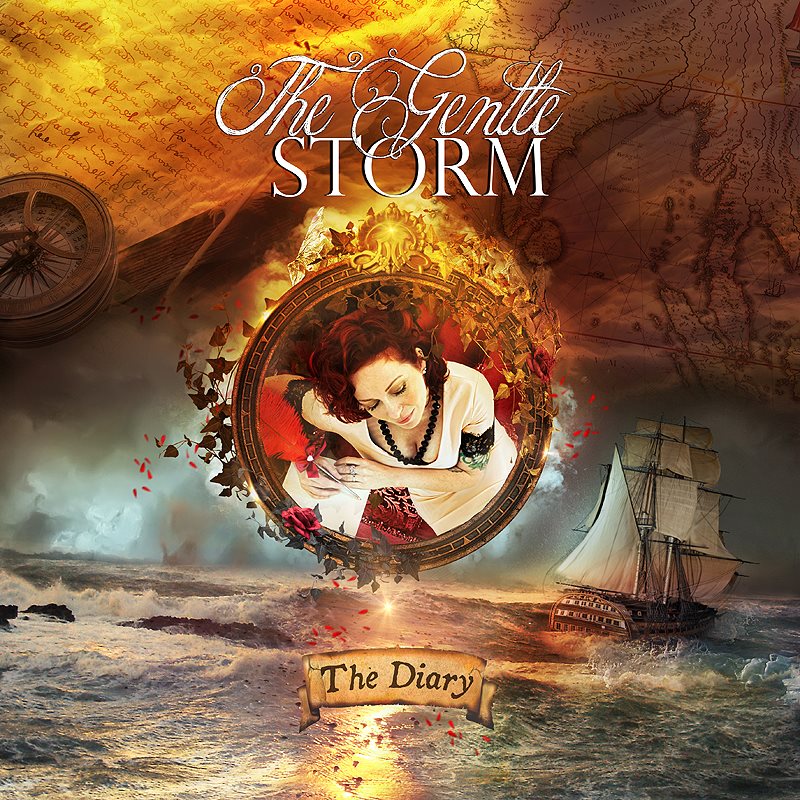
Ayreon mastermind Arjen Lucassen and former The Gathering singer Anneke van Giersbergen and have premiered Endless Sea, the first track from their Gentle Storm project, with Prog and TeamRock.
It’s taken from their album The Diary, set for release on March 23 via InsideOut.
The launch will be supported with a European tour including three UK dates,although Lucassen won’t hit the road with van Giersbergen, backing vocalist Marcela Bovoi, guitarist Merel Bechtold, guitarist Ferry Duijsens, keyboardist Joost van der Broek, bassist Johan van Stratum and drummer Ed Warby.
The Diary is set in the 17th century and tells the story of a Dutch sailor and his wife, separated by his two-year voyage, and the letters they write to each other.
The leading duo say of Endless Sea: “The album opener serves as an introduction to our story-based album. Susanne, the main character, sings about her husband Joseph, who has just sailed out on another long voyage to the Far East. We are very excited to offer everybody a first taste – this is such a special album to the both of us.”
Lucassen guests with van Giersbergen on a run of acoustic shows next month, and takes part in the “unintentional supergroup’s” first show in the Netherlands on March 26.
THE GENTLE STORM UK DATES
Apr 23: London Garage
Apr 24: Leicester Musician
Apr 25: Manchester Roadhouse
To see the video, go here and scroll to the bottom of the page. Enjoy! http://prog.teamrock.com/news/2015-01-20/gentle-storm-lucassen-giersbergen-endless-sea-diary
Kate Bush, AERIAL
Glass Hammer, INCONSOLABLE SECRET
Gazpacho, FIREBIRD
IZZ, MY RIVER FLOWS
Nosound, SOL29
Riverside, SECOND LIFE SYNDROME
Neal Morse, ?
Tangent, PYRAMIDS AND STARS
Radiohead, THE BENDS
Natalie Merchant, TIGERLILY
Chris Isaac, FOREVER BLUE
Spacehog, RESIDENT ALIEN
Marillion, AFRAID OF SUNLIGHT
The Flower Kings, BACK IN THE WORLD OF ADVENTURES
Spock’s Beard, THE LIGHT
Porcupine Tree, THE SKY MOVES SIDEWAYS
I am son and heir. . . of nothing in particular. . .
Rush, POWER WINDOWS
Tears for Fear, SONGS FROM THE BIG CHAIR
Kate Bush, HOUNDS OF LOVE
New Order, LOW LIFE
The Cure, HEAD ON THE DOOR
The Smiths, MEAT IS MURDER
Bryan Ferry, BOYS AND GIRLS
Blancmange, BELIEVE YOU ME
Why can’t they leave things as they are?
 Another bootleg recording turned into a CD, this one from a show Rush played in 1974 at Electric Lady studios in New York City. The recording has been floating around for years in an unofficial CD, called Rush Hour, but about two years ago it was repackaged into an unofficial import CD, called Rush: Live at Electric Lady Studios
The studio was built by Jimi Hendrix. He bought what was then the Generation Club in 1968 and two years later added a recording studio. He recorded “Snow Blues” there in 1970, but he didn’t get to use his space after that; he died in London a few weeks after making his recording. Hundreds of artists and bands have since played or recorded there, including The Rolling Stones, Led Zeppelin, Stevie Wonder, David Bowie, and Patti Smith. In more recent years Lana Del Rey, Arcade Fire…
View original post 264 more words
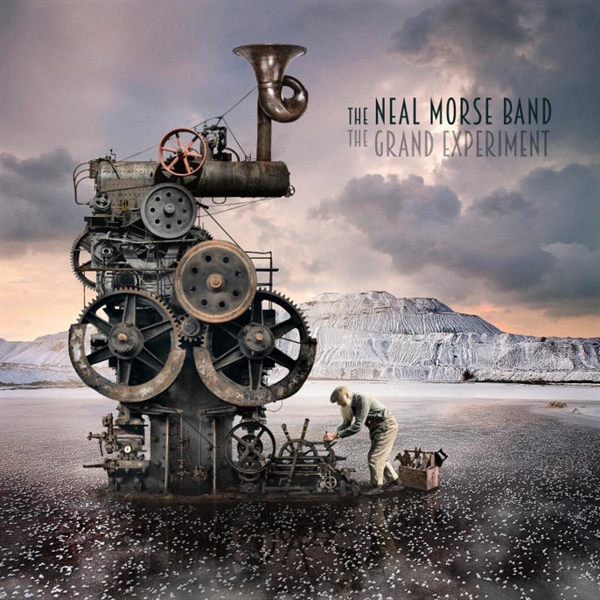
The Neal Morse Band, The Grand Experiment (Radiant Records, 2015), Special Edition. Tracks: The Call; The Grand Experiment; Waterfall; Agenda; Alive Again; New Jerusalem (Freedom is Coming); Doomsday Destiny; MacArthur Park; The Creation (Live); and Reunion (Live).
Birzer rating: 9.5/10.
“The Call” begins with a multipart gospel/Trevor Rabin-Yes era harmony before breaking into a wild keyboard/drum sequence that is pure third-wave prog. Quickly, all instruments play at full blast. It’s a rather ingenious immersion into the album.
Everything soars with a precision and beauty. “With every beating of my heart. . . I am engulfed in who you are.” Morse is doing for the listener what God’s grace has done for him. As the lyrics suggest, the only thing that prevents disaster of an eternal magnitude is an embracing of “The Call,” unique to each person.
A little past the halfway mark in the song, the Neal Morse Band breaks into a harrowing Transatlantic/Flower Kings moment of dread and introspection. Randy George’s bass, especially, steals the moment as things only slowly resolve into a hyperfrenetic mass of sound.
After Momentum, I had thought Morse had become rather comfortable in his Christianity, thus allowing it to become a part of his art, a foundation, rather than an explosion. That is, Momentum might very well have been written by a seriously religious person whose sensibilities had been shaped dramatically by his faith but who felt no need to proclaim it as though by one recently saved. This album, though, is an explosion of religious enthusiasm and praise. Clearly, “The Grand Experiment” is prog meets worship in a significant way.
Whether the listener will agree with Morse’s religious perspective or not matters little, as the music is so strong and the conviction so real that one can’t help but admire Morse for writing about and proclaiming what he loves most. I might not go to his Church, but he certainly makes his faith look extremely attractive, open, warm, and loving. This is not the kind of evangelicalism that condemns all who do not understand or agree 100% to some form of a brimstone hell. Instead, Morse chooses to critique the world but praise the potential of each individual as endowed by grace.
“The Grand Experiment,” the second track, opens with a more blues-based sound than I’d normally expect from Morse, but it has a strong Kansas, Styx, Allman Brothers feel as Morse almost growls his way through the beginning of the song. This is rather heavy. A short song at only 5 and ½ minutes, “The Grand Experiment” remains very heavy throughout—again, in a 1970’s American prog-gish fashion. Backwards keyboard sounds even swirl from speaker to speaker. It’s with this song that I realize how astounding the engineering, production, and mastering of this album is. An audiophile’s dream.
Tasteful acoustic guitar opens the third track, “Waterfall,” and the intertwining vocals carry a soft Crosby, Stills, Nash, and Young folk lilt throughout. “Waterfall” could easily have been a Flying Colors song. Most interestingly, the song morphs into a mid-period Genesis song, something off of Trick of the Tail or Wind and Wuthering mixed with a bit of early solo Sting. The trajectory of this six and ½ minute song is nothing short of extraordinary, and it proves just how brilliant Morse is as a musician.
“Agenda,” the fourth track, is another extremely hard-rock track, though less than 4 minutes in length. Despite the hard-rock elements of the instruments, Morse sings in a sweet poppish way, and the entire song reminds me of the best of Cheap Trick and The Pretenders.
The final sing of the main disc, “Alive Again,” is a nearly twenty-seven minute prog success. In every way, it’s a masterpiece. No hyperbole needed to explain this one. Indeed, the song is hyperbole made manifest! No one in the music world can write songs of this length in the way that Morse can. It is with this song that the Nashville progger reveals not only his brilliance and genius, but his very mastery of and over the genre. Rather than feeling like a series of songs thrust together with interesting bridges, “Alive Again” flows logically from part to part, telling a cohesive and compelling story. It has the structure of a classical symphony, but with all of the rock elements one would expect. The lyrics and vocal harmonies (again, think mid-1970s Kansas) guide, glue, and predominate, while the song never shies away from 1978 Rush-style atmospherics and percussion. Intensely religious, this song carries more respect for creation and the Creator than almost any formal church music produced over the last three decades. The song also features a psychedelic part with one of the members of the band (not Morse; Portnoy, maybe?) singing a testimonial. It works.
The bonus disc has three new songs—“New Jerusalem (Freedom is Coming)”; “Doomsday Destiny”; and “MacArthur Park”—as well as two songs recorded from last November’s Morsefest, “The Creation” and “Reunion.” Each of the new songs is absolutely gorgeous, and I’m not at all sure they didn’t make it as a part of the original, main album. While “New Jerusalem” has a bit of a Relayer aspect to it, nothing on the entire album has been shy about paying homage to earlier bands. Musically, this might very well be the best song on the two discs. There’s a bit more funk in “Doomsday Destiny,” for example, than anything on the main disc, but it would still fit well with the lyrical themes of The Grand Experiment. “MacArthur Park” seems to be an homage, at least musically, to Kansas, Yes, Jethro Tull, and ELP, despite the rather Peartian title.
My advice, make sure you get the entire package—the main disc as well as the special edition. The only reason I’m not giving this release a perfect 10 is simply because the album is confusing with its variations. But, the bonus disc is every bit as good as the main disc, and you’ll kick yourself in the future if you pass up these “bonus” songs. They are, to my ears, absolutely essential.
One last thing. I must praise the individual musicians. Morse might be the leader, the touchstone, and the fountainhead, but he has created a community of artists around him, artists who clearly love Morse, the art, each other, and the listener. No one of the five members of the Neal Morse Band gives only a part of himself. Each gives every single thing he has. George’s bass, Gillette’s guitar, Hubauer’s many, many instruments each boggle the mind.
But, I have to single out Portnoy. I’ve been listening to him since 1992. Since, I have regarded him as one of the three greatest drummers in the rock world, along with Peart and D’Virgilio. Over the past 23 years, though, I would’ve always put the caveat that Portnoy is the best hard rock drummer, lacking the subtly of Peart or D’Virgilio. For what it’s worth, I now officially revise that claim. Portnoy’s drumming and percussion absolutely, completely, and totally blow me away on this album. Holy Moses! The drumming and percussion is just so, so good that words fail me. Portnoy reveals sides to himself that I had no idea existed. On a personal note, he is just three or four months older than I am. I can’t tell you–the reader–how happy I am to see his growth, his desire to become what he is capable of. Thank you, Mr. Portnoy. I bow to your excellence.
Whatever the reason–Morse’s charisma or God’s grace or some mixture of both–“The Grand Experiment” is a true success, an explosion of enthusiasm, a true work of art. Nothing halfway here. This is the real deal. This is what we proggers live for.
To pre-order–AND YOU SHOULD–go here. Make sure to get the full version.
***
Update, January 18, 2015–Chris Thompson, who works closely with Morse at Radiant, posted this on Facebook: “”The Grand Experiment” was written by everyone in the band. Neal came to the writing sessions with nothing, planning to co-write the entire album, with a piece of each member framed perfectly throughout each song.” Thanks, Chris!
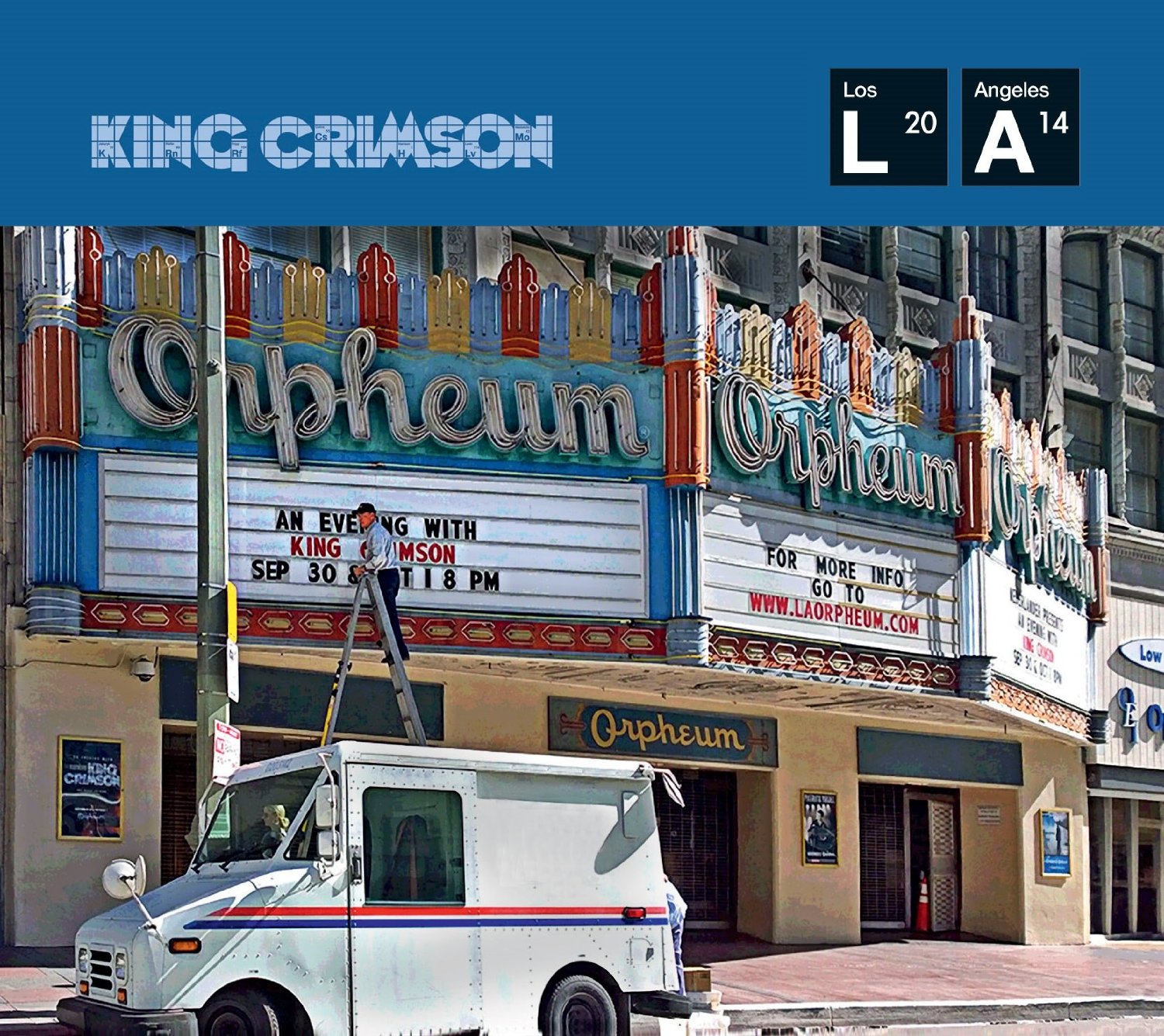
It’s not surprising that AllAboutJazz.com, one of the best jazz sites out there, will occasionally review albums that aren’t fully or even remotely jazz. But it may be a bit surprising how often the site features reviews of prog albums. But jazz and prog have a lot in common, not least the interplay of tradition and innovation, composition and improvisation, individuality and group interplay. Oh, and the curious fact that no one is really able to provide a succinct, satisfactory definition of either “jazz” or “prog”. And, of course, many prog groups and artists have feet in both worlds; names such Bill Bruford, Tony Levin, Jean-Luc Ponty, and King Crimson come to mind (there are many others). Speaking of King Crimson, the band’s newest release, “Live At The Orpheum,” rates a 5 star review from AllAboutJazz.com’s John Kelman, whose encyclopedic knowledge of the band is evident in his detailed review:
Based on the group’s two-night run at San Francisco’s legendary The Warfield, the groundswell of support was not just well-deserved; this was, it turns out, one of the best Crimson lineups ever…perhaps, even, the best, with the possible exception of the ’72-’74 lineup recently documented in the third of three consecutive box sets to be released in as many years, Starless (Panegyric, 2014). This was a Crimson that may have been taking a good look back at its long legacy but this was no retro band; King Crimson 2014 was truly, well, as 21st century as they come.
There’s even an argument to be made that despite the mid-’70s Crim’s reputation as fearless and often ear-splitting improvisers, King Crimson 2014 is an even better unit because, with the addition of Collins’ reed and woodwinds and three drummers who also bring electronics and, in the case of Rieflin, keyboards to the mix, this is a group that can play virtually anything from the group’s 45-year repertoire, and do it in ways that previous, smaller incarnations could not—all with perfect intuition and dynamics. Jakszyk is a singer and guitarist who, while as riveting and talented as Belew, is a more integrated band member than his immediate predecessor, whose presence somehow seemed to dominate every incarnation he was in over the course of nearly three decades. Not that Belew’s dominance was necessarily a bad thing, but it was, in some ways, self-limiting. And with Levin back, the group has a groove-heavy bassist capable of everything from Chapman stick and fretted and fretless basses to upright bass. Like Levin, it would seem that King Crimson 2014 has the chops to do just about anything.
A truth made all the more clear on Live at the Orpheum, the new line-up’s first official release, recorded during its two-night Los Angeles run prior to moving north to San Francisco. It’s a great reminder to those who saw the tour just how special this incarnation was, while allowing those unable to catch the shows to get some idea of what all the hubbub was about.
There will inevitably be those who will criticize co-producers Jakszyk and Fripp’s decision notto include an entire performance but, instead, make it a vinyl-length recording—the double-disc CD version also includes the stereo mix in 24/96 Hi-Res on a DVD-A—that only includes about a third of the group’s live set. But there are two approaches to compiling a live release. One, the relatively easy route, is to present a full show (or a composite taken from multiple nights) that may represent the overall best performances while still containing all the inevitable minor imperfections that are part and parcel of any live performance—barely noticed, if at all, at the time but, with a permanent document, there to be heard time and again. The other, a more time and work-intensive approach, involves listening to each show’s multitrack tapes in minute detail to identify the absolute best performances and then make any necessary minor (but not necessarily quick or easy) adjustments to remove those imperfections, creating a document capable of standing up to detailed scrutiny and of more lasting quality. A show, after all, is a fleeting thing, while a recording is intrinsicallypermanent.
Clearly Crimson opted for quality over quantity, but that meant, with just three months between the tour’s end and the release of Live at the Orpheum, the work required to sift through hundreds of hours of high resolution multi-tracks may simply have been too great to manage anything more than its 41 minutes.
Based on the end result, however, Live at the Orpheum more precisely documents how King Crimson 2014 sounded; rather than a “warts and all” live recording put together on the quick, it suits—and, perhaps most importantly, respects—the detail, complexity and unbridled energy of the group’s shows.
For quite a while now, I’ve been intrigued by Swedish proggers Beardfish and their distinctive, highly imaginative output. My level of interest grew considerably on encountering them live in 2013, in an all-too-brief slot supporting Spock’s Beard. Since then, I’ve been awaiting new music from them with a great sense of anticipation.
What, then, to make of latest release +4626-COMFORTZONE?

First, and most obviously, there’s that bizarre title – a reference to the dialling code for the birthplace of songwriter & founder member Rikard Sjöblom and his compatriots, and to the stifling small-town attitudes that can persist in such places. This, indeed, seems to be a theme linking several tracks on the album, not least Comfort Zone, where the protagonist bemoans his inability to leave that smothering environment, declaring
I don’t even like it here
And I do nothing but curse the very lot of you
I hate everything and everyone – except for the chosen few
A lifetime suffering bullying and intolerance in such places can lead to even more extreme antipathy, as demonstrated in Can You See Me Now?, the dark tale of a killer “setting out with a scythe to calm their hubris”. The message conveyed here is a powerful one:
And as your children shape themselves in your image
When they grow up to be just like you
And when they push the kid with the glasses
Face-first in a puddle of mud
Will you secretly smile and think “That’s my boy”?
Memorable though these moments are, it is the second half of this album that truly shines, offering depth and variety aplenty. The One Inside: Part 2 is delicately melodic, subtle and restrained, standing in stark contrast to out-and-out rocker Daughter / Whore. The latter, with its cheeky opening nod to Motörhead, evokes the gritty heaviness that characterised much of 2012’s riff-saturated The Void, but overall, the album is closer in feel to the signature expansive progginess that graced 2011 release Mammoth and, more particularly, its predecessor Destined Solitaire.
Two other tracks deserve special mention. If We Must Be Apart (A Love Story Continued) is the long-overdue sequel to an epic from 2005’s The Sane Day. As the longest track on the album, it is equally deserving of the ‘epic’ moniker. A Love Story dealt with a relationship break-up and this superior follow-up charts its distant aftermath. The story is terribly poignant, telling of a woman who can’t forget her past:
Now he’s more of a ghost who haunts her
And her husband can never know
Even with the new life that grows inside her
She still thinks about him from time to time
Her thoughts are interwoven with the words of her former lover who, unable to live in the present, writes her a desperate letter:
I cannot believe it’s been so long since we last spoke
You should see me now and how my life is just a joke
Everything I do reminds me of everything we used to do
Suddenly, events take a much darker and more disturbing turn, encompassing suicide threats, Internet stalking, black magic and a drug overdose, leading to a shocking conclusion:
She remembers that night when she found him laying
Curled up like a ball inside a circle of candle lights
He wasn’t dead, he wasn’t there, it wasn’t him no more
Perhaps we shouldn’t be surprised, because unexpected twists and turns are a hallmark of this most fascinating of bands. Anyway, this track can justly lay claim to being the album’s masterpiece.
Ode To The Rock’n’Roller is even more compelling – from a lyrical perspective, at least – than If We Must Be Apart. Rooted in bitter personal experience, with its barbed swipe at the tribute band circuit and the attitudes of some music ‘fans’, it proves that Sjöblom can rival Andy Tillison for acerbic wit.
The song’s protagonist experiences a moment on stage where he feels transported to “a place where they make music that’s not written to accompany the vacuuming of your flat”, where “one minute I was rolling’ on the river, the next I was caught up in the rites of spring”. Predictably, this doesn’t go down well with the paying customers:
They look pretty pissed out there
I opened my heart and my soul for you
But you didn’t understand – your mind was locked
You just thought I was trying to be cool
Sjöblom leaves us in no doubt as to his disdain for these closed minds:
They didn’t come here to listen, they came here to drink
So play those three chords over and over
So they don’t have to think
Be that noise in the background
Just keep it on the backbeat
The rhythm of drinking
Til the singer goes “Yeah Yeah Ye-ah”
Thankfully, Beardfish are not content with being just a noise in the background. This album more than holds its own amongst their stellar prog portfolio, being cleaner sounding and more refined than predecessor The Void, and deliciously dark, to boot. Thoroughly recommended.
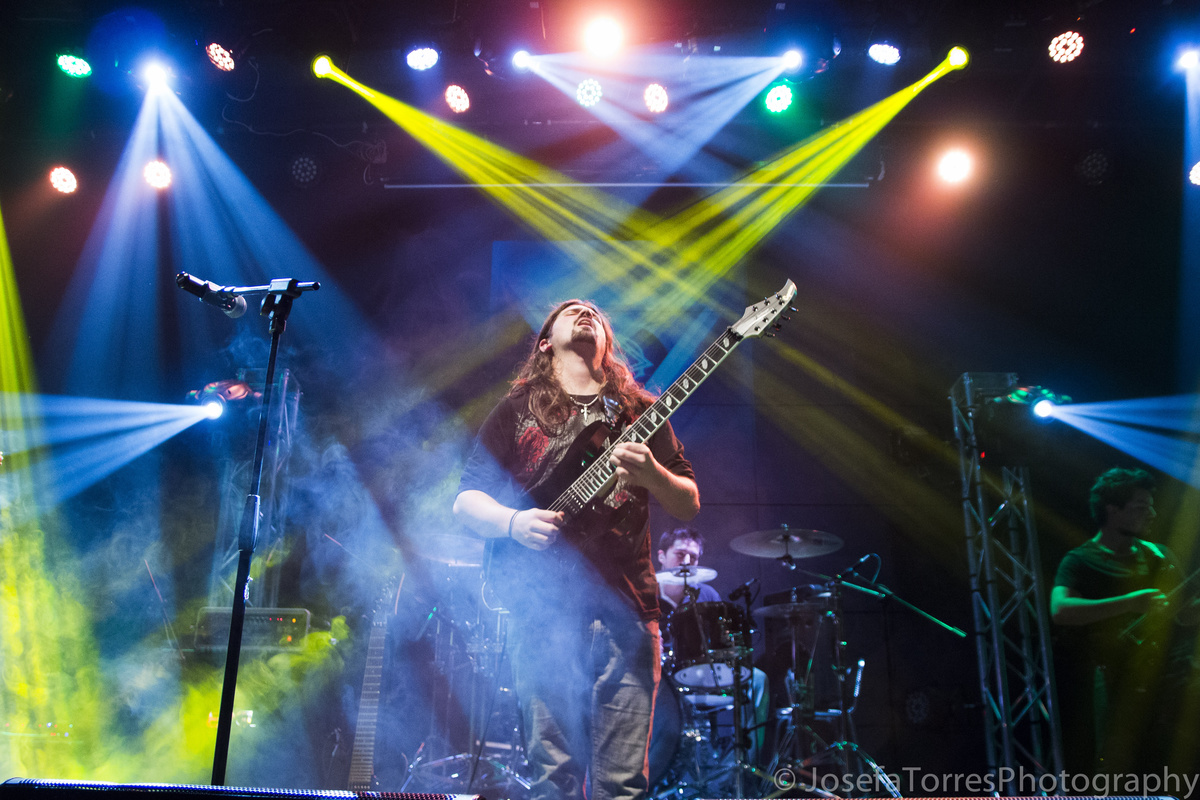
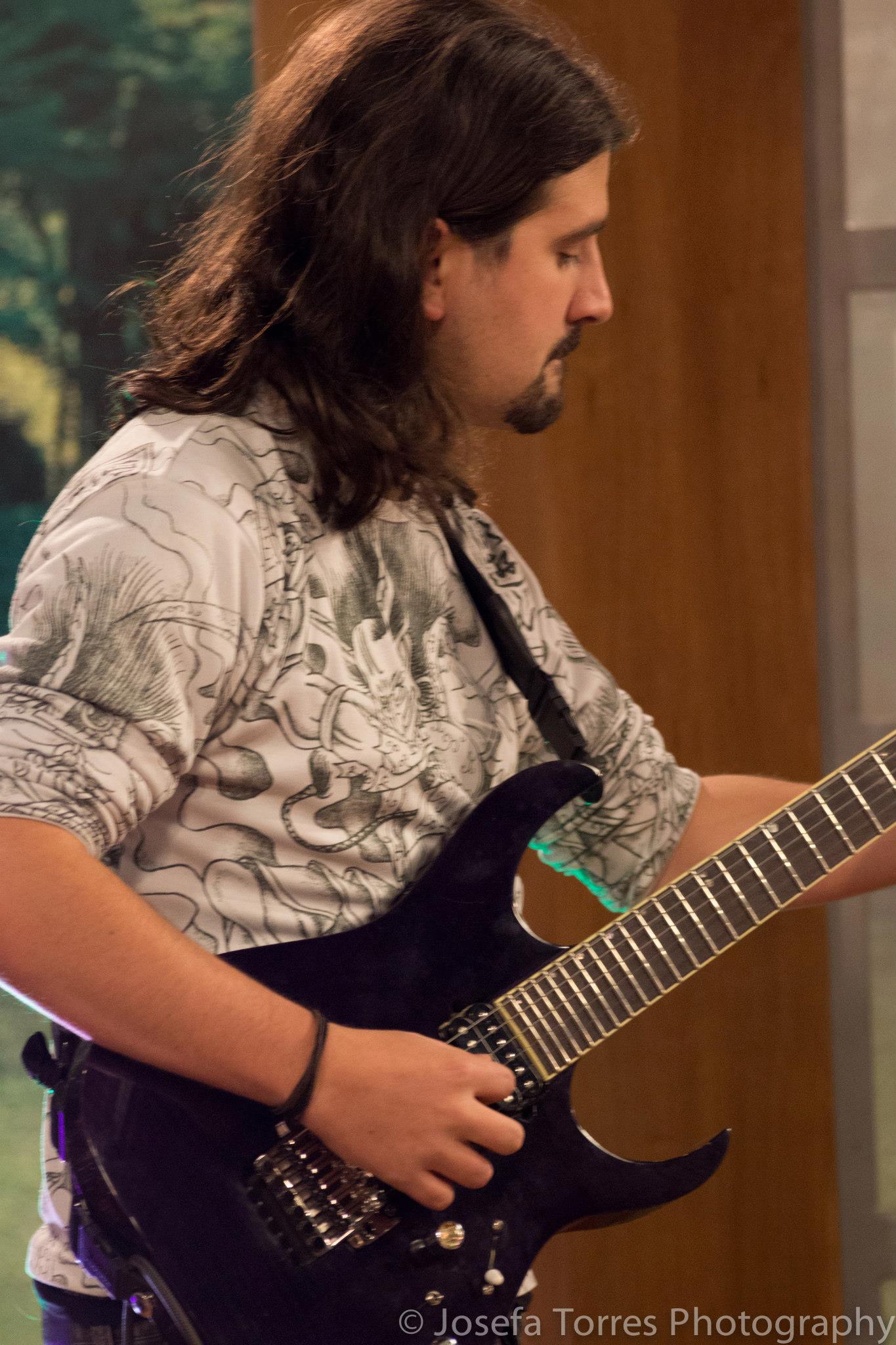
Benjamin Lechuga is a guitarist from Santiago, Chile. He was chosen by Steve Vai as the winner of the Steve Vai scholarship, and he moved to London to study at the Institute of Contemporary Music Performance. He is a member of the band DELTA with whom he released five studio album and opened for likes such Dream Theater, Symphony X, Stratovarius, Angra, and more. Apart from this, he is successfully pursuing solo career under the name Lechuga, and he’s recently put out an EP called “The Search Part 1: Introspection.”
We talked with Benjamin about his solo work, influences, and more.
Tell us something about your beginnings in music.
When I was a kid I had some piano lessons, I don’t remember how old I was but it definitely helped later on when I decided to pick up the guitar. I started playing guitar at the age of 10. My older brother showed me lot’s of music… Eric Clapton, Metallica, Rage Against The Machine, Iron Maiden, Frank Zappa, and some really cool prog and experimental chilean bands like Fulano, Mediabanda, Congreso, etc. He then took me to a Steve Vai concert and everything changed for me. Then I heard Dream Theater when I was about 12 or 13 and I became a big fan.
What types of change do you feel your music can initiate?
As a guitarist, I feel that my music is not completely focused on the guitar, but in the composition. To me it feels more like an instrumental band rather than a guitar solo career. And also not being afraid of mixing different styles. Maybe other metal guitarists can start focusing more on writing music, making arrangements… worrying about dynamics… and experimenting with different styles and cultures… rather than playing as fast as they can. It would be a nice change.
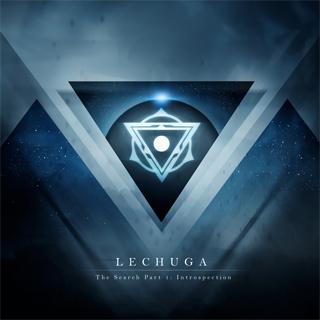 In December 2014 you released “The Search Part 1: Introspection.” Describe the creative process behind the release.
The creative process behind this album was very free. I wanted to have a clear mind to be able to write without prejudgements. I wanted to leave structure aside… I didn’t want to know how the song would end before I finished writing. I wanted to surprise myself.
I spent lot’s of hours in my studio, mainly very late at night when everyone’s quite and the inspiration comes.
How long did it take you to complete the songwriting for “Introspection”?
I guess it was about 4 months but not in a row… I started the idea of the synths at the intro and then didn’t work on it for a couple of months…. I started building my studio and then continue writing… To be honest I had to force myself a lot to write this album. It has been a year of changes in my life… I recently moved from my parent’s home, built my studio and now I have more responsibilities so it was very difficult to make the time to write music… but in working time, I think it was in 3 or 4 days to write the song and maybe other 3 or 4 days making arrangements.
What were the biggest challenges you faced when working on these songs?
I think The Search was definitely the most challenging song. The fact that it has so many different moods and dynamics made it made it difficult to fit together. I have to thank my friends Rafael Chaparro and Cristobal Dahm that played the saxophones, Tomás Ravassa that played the piano, José Tomás Novoa that did some electronic percussions and Consuelo Schuster that recorded the vocals for the song. I had a very clear idea of what I wanted in my mind but it was their talent that is recorded in the album.
Which bands or artists influence your music?
There’s a lot and in lot’s of different styles. In the progressive area I started listening to Dream Theater and Symphony X. I listened a lot to Mattias IA Eklundh, Bumblefoot and Steve Vai of course. But I also like Pat Metheny, Django Reindhart, Astor Piazzola, Fulano, Mediabanda, Frank Zappa, Paco de Lucía, Emir Kusturica. I love some chilean funk bands like Chancho en Piedra and Los Tetas. I also listen to film composers as Hans Zimmer, Danny Elfman, John Williams. Luckily I’ve been able to listen and love lot’s of new and young musicians. David Maxim Micic and Jakub Zytecki are my favourites lately. I simply don’t think I could ever fit into one style.
What kind of gear do you use in studio?
For guitar recording I use Caparison Guitars, I have some Engl Amps (4×12 pro cab), and the always faithful shure sm57. I love micing the amp… Haven’t yet tried digital amps that sound well. I record into a MOTU 896 mk3 Interface and I also have Universal Audio 4-710d preamps and my Empirical Labs Distressor compressor which I love. My DAW is Cubase 6.
Does spirituality have any sort of impact on you and your songwriting?
Not really. I’m more the kind of guy that writes music because of aesthetic reasons. The beauty in music is immense and I have a desire for searching that perfection in my writing. Luckily that perfection doesn’t exist and it is different everyday. The Search is endless.
How would you describe what you create under the name Lechuga to someone who didn’t hear your music before?
Wow, difficult question. I think Instrumental progressive music for musicians would be a nice try hahaha. It is only a search for the right notes at the right time hahaha. I really don’t know the answer for that question because my music is and always will be changing. The first album is very different from the Search Part 1… and The Search Part 2 will be completely different also.
What non-musical entities and ideas have an impact on your work?
I think that learning from everyone is the idea that has impacted my work the most. I’ve learnt that you can learn important lessons from everyone in the world, teachers, fathers, sons, homeless people, rich people, poor people, ignorant people, intelligent people, your friends, family, people that want to harm you, etc. It’s just the matter of listening and having the right criteria. I love learning and I can’t see myself as someone that has nothing more to learn, and I mean in every aspect of life. The day I feel like I have nothing else to learn I authorize you to shoot me.
What is your viewpoint on the struggle bands are facing today as they try to monetize their output?
I think it has always been an unfair treat for bands. The amount of work and love musicians do is completely unbalanced to the amount of money we receive. But, who cares? Truly musicians don’t do this for money. I’m more worried about letting people know about my music that for getting paid for it. Both of my albums are for free on YouTube.
I hope one day I can tour the world with a proper paycheck, but I won’t kill myself if it never happens.
Is there anyone in the current prog scene that you are into?
Yes, of course! There was a time not so long ago where I was tired of listening to the same bands and couldn’t find any news once that I was really into… It is one of the most depressing things that can happen to me. But since a couple of years I started listening to some new and young musicians. BILO, Destiny Potato, Jakub Zytecki, Plini, Sithu Aye, Widek, Polyphia, Chon… all real good and young! I’m in love with music again.
How do you see Lechuga’s music evolving in the future? Are you already working on the “Search Part 2”?
I haven’t written any music yet. I have the concept in my mind already, It’s only a matter of sitting down and translating the ideas. It is going to be different, that’s all I can say for know! Don’t want to spoil the surprise! Can’t wait to start writing in February/March!
Buy Lechuga’s “The Search Part 1: Introspection” from Bandcamp.

 Progarchy