Yes — Talk (1994) ★★★★★

Yes - Talk

Let me write from experience about what it is to be a Yes fan. Sometimes, “Yes Derangement Syndrome” (YDS) can take hold.

This happens when a new Yes album comes out and it’s like your beloved spouse coming home with a wildly different pair of glasses, or a radically different hairdo, or a crazily different wardrobe theme. Your first reaction is you know you don’t like it. But this reaction is way more emotional than rational, and it’s almost entirely subjective in that it is mostly founded on very deep mental patterns of subjectively-cultivated habituation. You have created a vast mental universe of inner love, and suddenly reality is asking you to consider radically new data.

It’s been really interesting to read about the reactions of Brad and Erik, both today and back in the day, to Yes’ Talk. For me this is one of my Top Ten Yes Albums, but it took me a long time to assign it that five-star ranking.

Incidentally, I challenge all Progarchists to list their Top Ten Yes Albums, an exercise like the Top Ten Rush ranking we did recently. Yes has 20 studio albums (I am counting Keystudio as one), or 21 if you want to include Anderson, Bruford, Wakeman, Howe (ABWH) — as I do. So, it’s an interesting mental exercise to divide the oeuvre into two playlists: a Top Ten and a Bottom Ten.

However that may be, let me tell you about my three cases of YDS.

The first was Talk. I remember when I first bought this CD. I listened to it once, found myself hating everything except “The Calling,” and then used the excuse that its bundled software didn’t work on my Windows PC (anybody remember that?) as the way for me to return it to the record store and to get my money back! Yep, I got my money back. Only years later, upon hearing “The Calling” again (an overwhelming nostalgic experience which instantly melted my heart), did I break down and buy the whole album once again. After many listens, I now really love everything about it and rank it in the upper echelon. But note my initial crazy reaction. I mean, how many albums have you ever tried to return to the record store in your life?! And, how many did you succeed in getting your money back for?!?! I marched this one back without even making a cassette recording of it. Crazy! YDS, indeed.

The second case of YDS was when ABWH came out. After three listens, I launched into a vicious diatribe against it that melted the ears of my Yes-loving best friend. I still remember his face. He was visibly wincing at my hatred for the album. Then, weeks later, I had completely reversed my opinion about the album, and I endlessly praised it to him. To the skies. He looked at me like I was a crazy person; I remember that look too. Sound familiar? Yes, fans, we may call it YDS. Thank God there was no bundled software on this CD, otherwise the record store may have seen me arguing on a technicality again.

“We don’t accept returns of opened products.”

“But I haven’t been able to open it. The software won’t launch properly on my PC. So, virtually, it hasn’t been opened.”

The third case of YDS is with the new Heaven & Earth. We know what that looks like, and it ain’t pretty. I had an extreme critical reaction to this disc, but over time I have to admit that it is steadily ascending in my mental universe. So far it’s gone from one star to four stars in my hidden mind drive. Who knows where it will stop? More on that later. But the point is this: I have learned from my previous two cases of YDS. And I have wisely resolved not to repeat it a third time.

So, back to Talk. There is much to love about this album, infused as it is with so much Rabin-era goodness. Like all the best Yes, it is magically positive and spiritually uplifting. The opening track is pure awesomeness, and I love how Erik describes it as a perfect meld of 90125 and the 70s.

But I don’t want to go over every track in detail right now, because I think it is more important to answer the five YDS-tinged complaints from Brad. Let me conclude with my rejoinders to his all-too-familiar YDS insanity:

1. The title is brilliant. 90125 is inarguably one of the stupidest titles ever, but Talk is most definitely wonderful. Like the band’s name, it is one syllable. Perfect. Further, it subtly references a subsection of the epic track “Endless Dream.” So, it pulls the listener into acquiring a deeper familiarity with, and appreciation of, the hidden dimensions of the album. It invites the prospective listener into the magical depths of prog. And what will the listener find in this magical place? Only one of Jon’s most beautiful Yes melodies ever. So, I refute this first point by directing you to the epic “Endless Dream,” beginning at 3:48 with all its titular glory.

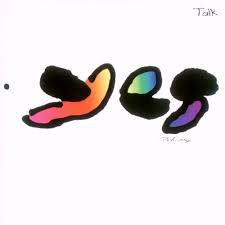
2. I love the colors on the cover. It’s a beautiful spectrum, symbolic of the dazzling musical palette of the inimitable Yes. The point that it looks like emergent writing seems to be lost on the haters who liken it to a child’s scrawl. Obviously, that is the entirely deliberate point of the art design. It depicts the beginning stages of the acquisition of linguistic communication. The emergence of the Word is pregnant with all the possibilities of communicative color. The album title is thus iconically represented in this picture and it all ties in perfectly with the first words of the album:

Feel the calling of a miracle

In the presence of the word

The awakening of communication in a child’s word and in the non-verbal space of music is invoked by the album image. So, I slay the objection by replying with the opening lines of “The Calling.”

3. YDS can fixate on entire albums, or it can suddenly scapegoat a single song. There’s no arguing with such craziness. I can only say that I really love the two tracks Brad excoriates. They are excellent and I can’t comprehend the haters, except to say that I have been there once too. I even got my money back! But now, I have seen the light.

For what it’s worth, if I had to scapegoat a least favorite track on Talk, it would be the loopy “Where Will You Be.” However, I would rather choose to view it in context instead, as a refreshing pause before the epic finale track.

4. The album integration is cohesive as it is, pace YDS. The favorite fantasy that a Yes fan can indulge in is: “How I could make this awesome album even more awesome.” (Another guitar lick in this empty space here. A little more cowbell there. And so on.) It’s crazy! Give it up! In this case, the YDS fantasy is simply fueled by Yes’ own auto-suggestion in the third line of the opening track, “The Calling”:

Now we hold the right to rearrange

Yeah, sure you do. And you have the right to return your album too. Whatever! Let it be, my friend.

5. Create your own playlist if you want to monkey with track order. Or do a remix or mashup with 90125 if you are serious about the fevered suggestions you make. But the album is awesome as it stands, no matter how many imaginary universes we can conceive of where it qualitatively “goes to 11” and is “just that much” better.

Talk begins with all guns blazing (“The Calling”) and ends with an epic assault of sonic awesomeness (“Endless Dream”). A strong beginning and a strong ending! Totally brilliant — and a contrast with 90125, I would opine, which I always thought kind of peters out with its last two or three tracks. (“Two Hearts”? If you want to be a hater, throw your “sap” and “boredom” here! But then you may as well as give up on Jon Anderson entirely.)

Hey, these are my favorite kinds of arguments. Arguments reserved for we few, we happy few, we band of brothers. He that wigs out today on Yes with me shall be my brother, be his criticism n’er so vile!

Prog Sphere PROGSTRAVAGANZA

Progstravaganza CD


In August 2010, Prog Sphere started a compilation series called Progstravaganza. Almost four years later, with 19 released editions (the 20th part will be released by the end of July), with over 430 bands and more than 50,000 downloads, Prog Sphere is compiling the first physical edition of the series.

Prog Sphere invites unsigned bands from all around the world to take part on the physical Progstravaganza edition. In addition to the feature on the sampler, the selected bands will receive special treatment on Prog Sphere’s main website through interviews, reviews, special articles, podcasts, radio features, lyric/photo videos, streamings, advertisements and more, with exposure of 2M views per month. The special addition to this ultimate prog bundle is accompanied with a six-month promotional campaign through Prog Sphere Promotions for each of the artists, plus features in the special Progstravaganza magazine which will be available along with the sampler. Artists are required to get in touch with Prog Sphere by sending an email to info@prog-sphere.com including a download link of the up to 7 minutes long song aimed for the sampler, short biography and links. Submissions for the inclusion on the first Progstravaganza CD release are open until September 10th, 2014.


LINKS

http://prog-sphere.bandcamp.com

http://www.progstravaganza.com

Prog Sphere Promotions – Running Promotional Campaigns For Your Band & Label

www.prog-sphere.com

www.prog-sphere.com/promotions/

www.progify.com

www.proglyrics.com – Progressive Rock Lyrics Archives

GSM: 905364708884

Skype: progsphere

How “Talk” Could’ve Been a Perfect Yes Album

Rabin and Squire.
Rabin and Squire.

Twenty years ago, on a Sunday morning, I was departing Mass, heading back to my brother’s house in Boise, Idaho. Much to my surprise, I recognized Jon Anderson’s and Trevor Rabin’s voices on the radio. The local AOR station was playing “The Calling.” I had no idea that Yes had a new album, and I wasn’t even convinced it was Yes. Maybe Anderson and Rabin had started a projected. This was before the time of immediate internet gratification and information, so I had to hope against hope it was a new Yes album. I didn’t the song was brilliant, by any means, but I was excited by the possibility of a new album.

Let me offer two caveats here.

First, I’m not a Yes hater or an “aspect of Yes” hater. If it has “Yes” on the album sleeve or cd booklet, it’s a Yes song. The first album I ever remembering hearing was “Yessongs,” the 3-album live album. I was only probably six or so when I first heard Yessongs. I was the youngest of three brothers, and thank the good Lord, they loved prog. I benefitted immensely from what they’d purchased. When “Owner of a Lonely Heart” came out, I was just as happy as could be. Yeah, it wasn’t Steve Howe on guitar, but it was pretty good.

Frankly, I’ve never understood the huge division among Yes fans. Yeah, Wakeman is great, but Downes is pretty amazing as well. The same with Howe and Rabin. I love Chris Squire’s playing, but when Tony Levin played with ABWH, wow.

Had I been asked, I would’ve have suggested that the band that made “90125,” “Big Generator,” and “Talk” keep their original name, Cinema. It’s not that I don’t think the band was Yes, but Yes had such a deep history and distinctive sound that the band members themselves would have felt even freer to go in what direction they wanted. Plus, the name Cinema really does fit the music of 90125. If that album isn’t cinematic, no album is.

Second, this post you’re now reading (thank you, by the way) was promoted by waking up to an excellent piece by Conor Fynes over at Prog Sphere: http://www.prog-sphere.com/specials/yes-talk/

Talk is a point of confusion for me in so many ways. Long before I ever got around to checking out Yes‘ fourteenth album, I’d heard reports that it was the so-called saving grace of the Trevor Rabin era. Some rose-tinted listeners went as far to say it ranked up there with the band’s classic material. This high regard was sharp contrast to the hideously sell-outish album art, which may very well be one of the least appealing covers I’ve ever seen. If anything, the cognitive dissonance going into Talk made the anticipation that much more compelling. I was excited to find out what I’d think of it- after all, it couldn’t be any worse than Union… Right?


Talk

When I first heard “Talk” back in 1994, I was immensely disappointed. The songs dragged, the production was way too perfect, and the cover just looked ridiculous, something my three-year old nephew at the time could’ve drawn. On the good side, I was blown away by the lyrics and the vocals. The lyrics are some of the best Yes has ever written. They’re still airy and hippyish, but they’re also quite poetic and meaningful. The vocals are to die for. Of all of Anderson’s partners, Rabin best understands how to use his voice and how to write music to suit his voice. And, the trio of vocals of Anderson, Squire, and Rabin is simply one of the best in the history or rock.

[My only complaint with Rabin–and it basically holds for every member of Yes–is his wardrobe.  Every time I watch “9012Live,” I keep thinking, “dude, those pants are so tight, it’s disgusting.”  Heck, give me Wakeman’s cape ANYDAY over those bizarre tight pants.]

Over the last 20 years, aside from the final song suite, “Endless Dream,” I’ve hardly listened to the album. Indeed, I don’t think there’s been a Yes album I’ve listened to less. I even liked “Union” better than “Talk.”

A month or so ago when seemingly everyone and his brother had somehow managed to download a copy of “Heaven and Earth” and the same everyones and their dogs hated it, I decided to go back to “Talk.” Much to my surprise, I kind of liked it. I didn’t love it, but I did like it—far more than I did when I first bought it.


What Would Make “Talk “Great

So, this morning, after reading Fynes’s wonderful and thought-provoking review, I put the headphones on and gave the entire album a full listen and, then, a second. If I could re-make the album and re-release it as a 20th anniversary edition, here’s what I’d do (please remember: I’m a college professor of history and literature, not a musician!).

First, and very importantly, the title needs a change. “Talk” has almost nothing to do with the album in any way, shape, or form. The entire album, from beginning to end, is about words and The Word.   The album title should reflect this. “Talk” not only doesn’t fit with the message of the album, it’s downright pedestrian. Yes needs to reach much higher.

While it's probably not the worst album cover in  history, it has to be close.  Anyone of my children under the age of six could've done this better.

Second, the album needs some different art. It doesn’t have to be by Roger Dean, but it should be something beyond a scrawl of Yes.  Get someone brilliant such as Ed Unitsky, Jim Trainer, or James Marsh.

Third, the revised version of the album needs to delete “I am Waiting” and “Walls.” There’s no salvation for these songs. Sap and boredom mixed into one. Maybe, they could count as unfinished b-sides, but I see no hope at all for either.

Fourth, the album needs to be integrated in a much better form. It should be seamless, and every song should perfectly blend into every other.

Fifth: I would recommend the following track order:

  • An extended version of “Endless Dream: Endless Dream.” It should be extended to allow the vocals to repeat themselves for another few minutes, to linger as it were.
  • This should phase into a much rockier version of “The Calling.”
  • Then, “State of Play,” a reprise of “Endless Dream: Endless Dream.”  After a segue into “Where Will You Be.”
  • The album should finish with “Endless Dream: Silent Spring” and “Endless Dream: Talk.”
  • But, the entire album should close with “Endless Dream: Endless Dream,” again extending the song but not duplicating the “Endless Dream: Endless Dream” of the opening of the album. The revised and final version of the song should include hints of the melodies of all of the other songs on this album as well as brief references to “City of Love” and “Shoot High.”

Such a conclusion would beautifully close the Rabin era.


The End

Please know, I write this as a fan of all manifestations of Yes.


The New North Atlantic Oscillation Single

nao-fogNAO has just released its first single from its forthcoming album, THE THIRD DAY, premiered at CLASH magazine.

North Atlantic Oscillation aren’t really like other bands.

For a start, they’re named after a bizarre weather phenomenon. Casting a quick gaze over their output to date – 2010’s ‘Grappling Hooks’ and 2012’s ‘Fog Electric’ respectively – reveals a group who are comfortable in their own skin, able to mash together shoegaze, electronics, psychedelic and more.

Blessed with a near ludicrous number of pop hooks, North Atlantic Oscillation are able to piece these elements together into something immediate, something enticing. As we say, they’re pretty special.

Any citizen of the republic of progarchy knows how freakin’ much we love NAO and all things Sam Healy!  Very, very eager for this.

Here’s my review of SAND.

And, here’s my review of FOG ELECTRIC.

And, just in case you need more convincing, just look at the new cover.  Yes, it must be a part of my collection.

The Third Day
The Third Day

Spock’s Beard Live At Sea

There’s a new Spock’s Beard album on the way
live at sea spocks beard

1. Something Very Strange
2. Hiding Out
3. Walking On The Wind
4. Waiting For Me
5. June
6. The Light

Spock’s Beard – Live At Sea
Norwegian Pearl / Stardust Theater
Concert Date: Friday, February 21, 2014

The Progressive Nation at Sea cruise, upon the beautiful Norwegian Pearl, was an event that will be considered by many of the musicians and fans that were there as one of their top lifetime live music experiences.

This is Spock’s Beard’s second and final show of the cruise, where they were joined on stage for the final two epic songs by founding member Neal Morse.

credits

releases 30 August 2014

– Audio recorded by Ron Cote (Pristine Productions) and Rich Mouser (The Mouse House Studio)
– Audio mixed by Rich Mouser at The Mouse House Studio, Altadena, CA

Photography:
– Cover photo: Lia Soscia

The Band:
– Ted Leonard – Lead vocals, guitar, keyboards
– Neal Morse – Lead vocals, acoustic guitar and keyboards on “June” and “The Light”
– Alan Morse – Guitar, vocals
– Ryo Okumoto – Keyboards, vocals
– Jimmy Keegan – Drums, vocals
– Dave Meros – Bass, bass pedals, vocals

Preview: Clockwork Angels #4 (Comic)

If you’re into Rush or comics, you should check this out.  If you’re into Rush and comics, you must check this out.

A nice five-page preview of the fourth (of six) issue.  Story by Neil Peart and Kevin J. Anderson, artwork by Nick Robles (and Hugh Syme).

ClockworkAngels04-COVER-A-6cd95

http://www.comicbookresources.com/?page=preview&id=22851


Big Big Train in the Studio: A Visual

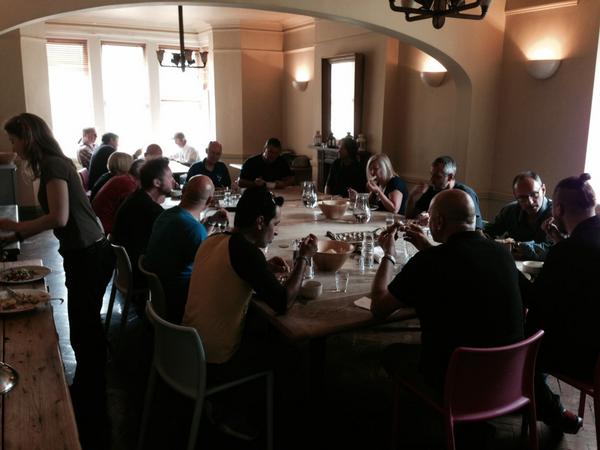
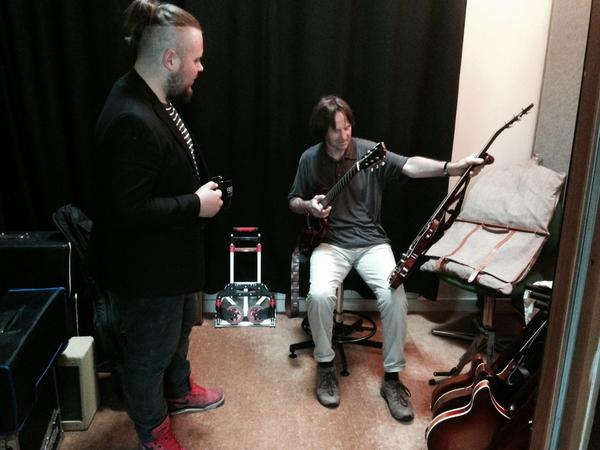
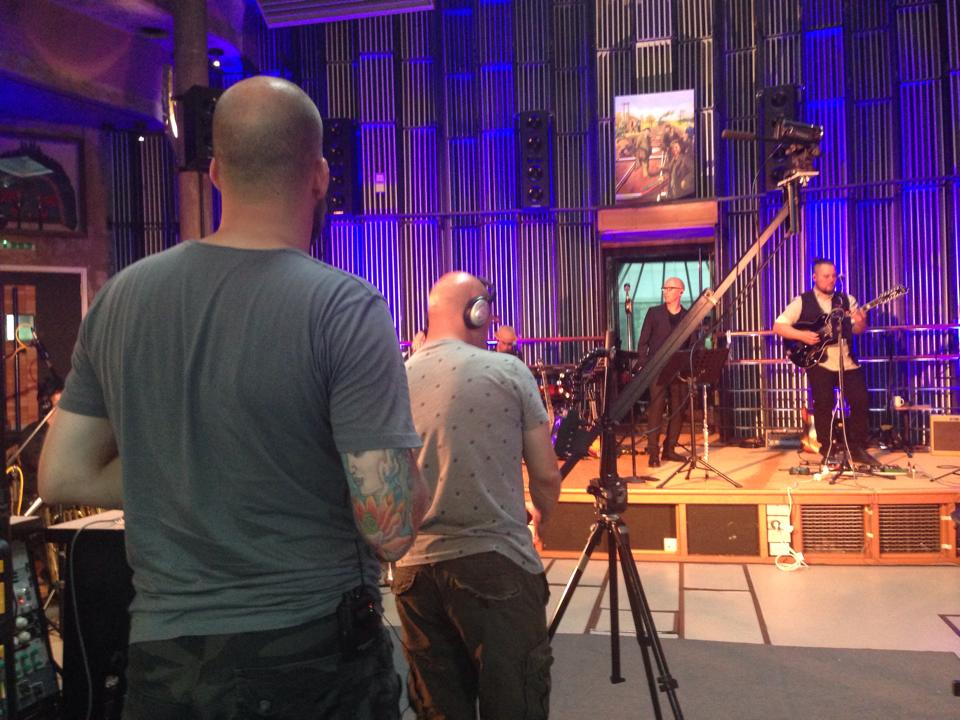
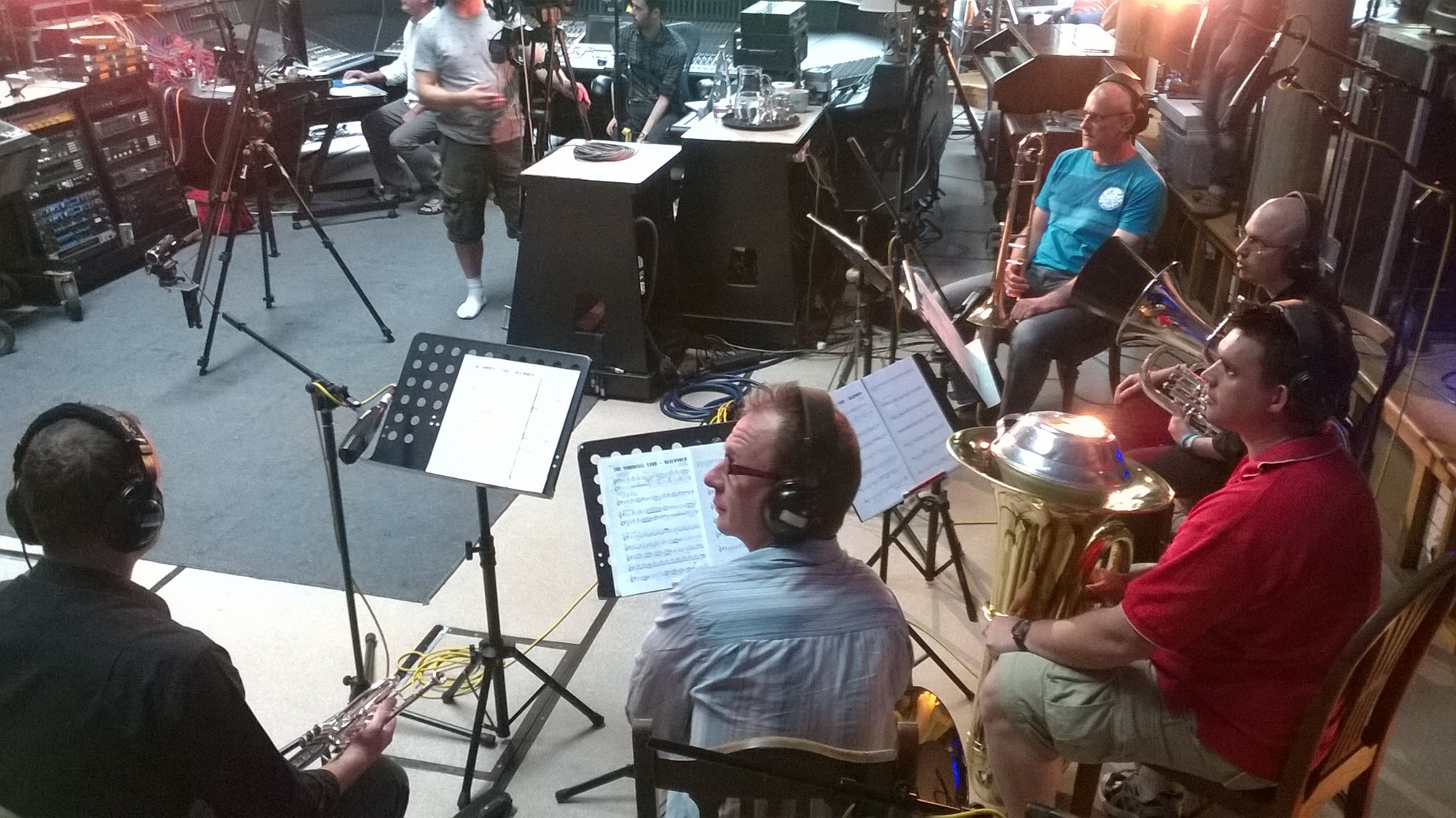
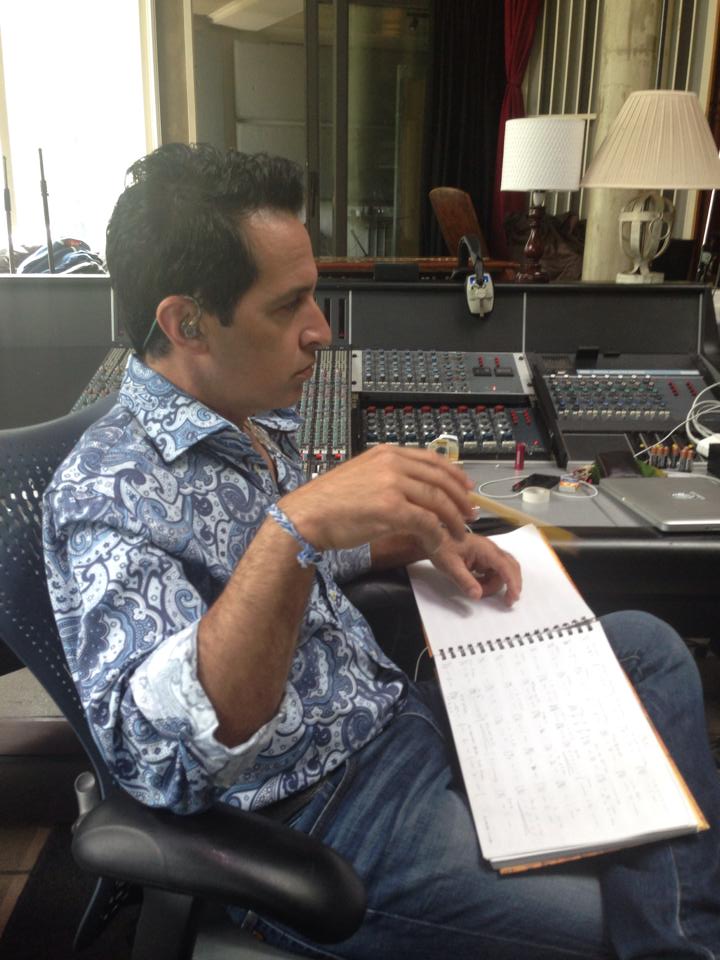
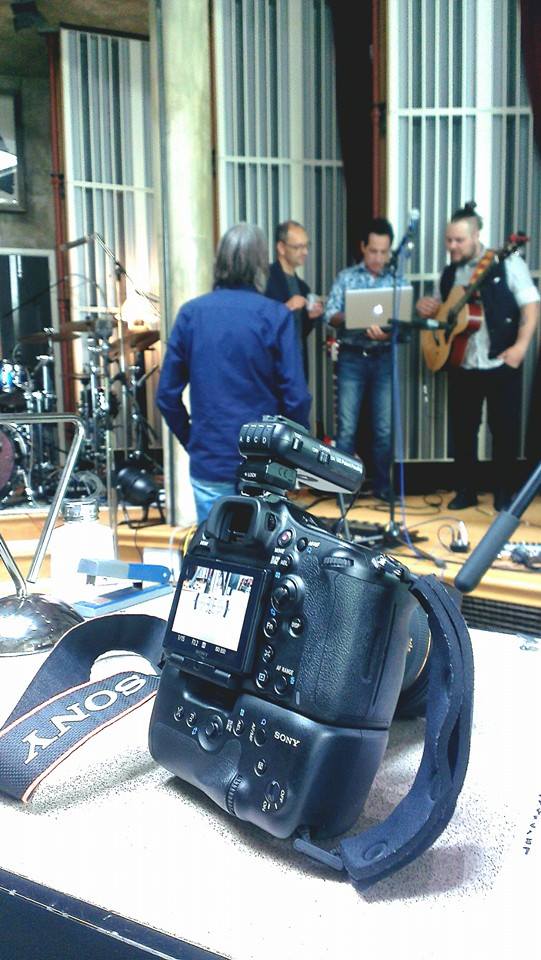
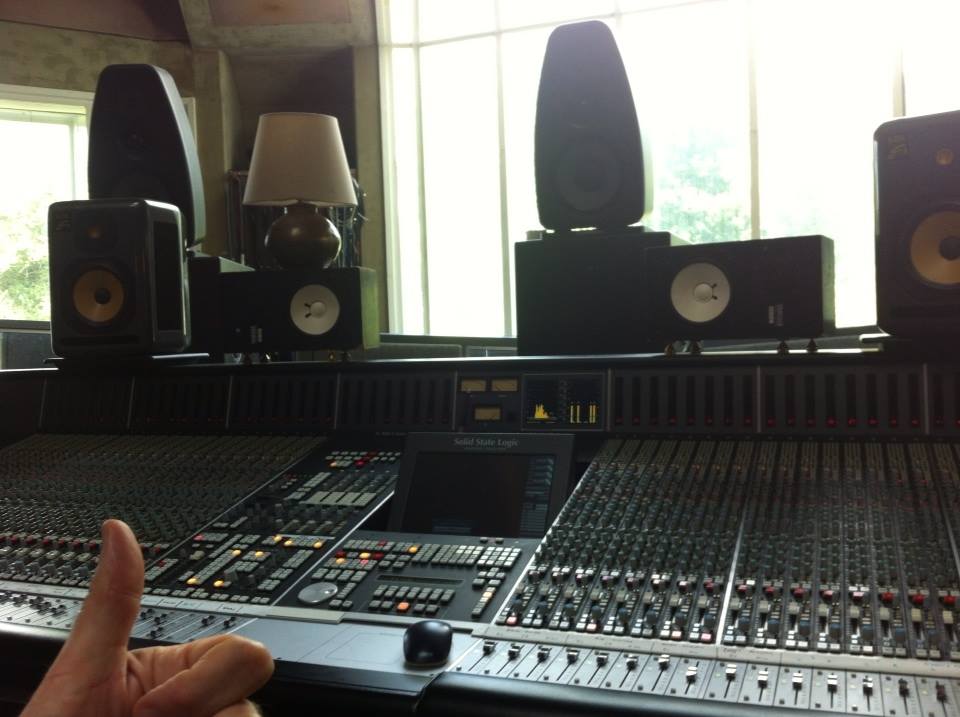
The following are photos taken by Kain Dear, Dave Desmond, Rob Aubrey, and Greg Spawton as Big Big Train enjoys the immensity and perfection of Peter Gabriel’s Real World Studios.

BBT Lunch at the Canteen

gregory bbt pet gab

1459851_10153045233433082_2728170838162969042_n

10550134_10152716636808949_3194646398424064273_o

10526073_10153045232768082_1633667253025243363_n

10467147_10152244211644397_5796858723359577296_o

10537041_10153037574633082_5450056536506296655_n

10492149_10152214162816016_2175144061728242913_n

10457936_10203160026334752_7596253773457691052_n

10425118_10152914308463082_2691858805832699642_n


Jesus Christ! It’s prog’s new superstars Pt 1

Resonance Festival

Postcard no 2 from Balham

Hi All,

Well, despite a multiple Tube journey involving three different lines through the Metropolis, we finally made it to balmy Balham in time for the second and third day of the four day Resonance Rock Festival.

The Bedford Arms in which it was being held is an expansive, impressive building, a Victorian pile full of dark carved wood and low slung antique leather sofas which made you feel as though you about to be swallowed up when you alighted upon them.

Its most distinctive feature is the central performance area, known as the Globe after Shakespeare’s famous theatre, because of its elevated minstrel’s gallery around the four sides of the stage, giving it an intimate atmosphere. Two other stages were constructed in the ballroom and on the top floor, where bands and fans were eyeball to eyeball.

The whole purpose of the festival was to raise money for Macmillan Cancer Support, one of the UK’s leading charities in providing invaluable support to people with cancer and their families to help them through their most difficult of days.

As well as a star-studded cast, all the Resonance crew were giving freely of their time, their toughest tasks including lugging cabinets full of equipment up sizeable staircases and ensuring quick turnarounds between bands.

Those two days yielded plenty of surprises and delights, several of which I shall impart here over two blogs. The opening session on the Friday evening saw the mighty John Mitchell, producer, composer, guitarist and singer with It Bites, Frost*, Arena and Kino – to name but a few – in mellow mood with just an acoustic guitar and on keyboards, Liam Holmes, who delivered an eclectic selection of songs including Nat King Cole’s Smile and Floyd’s Comfortably Numb to which the attentive audience duly sang along.

This all felt a bit safe and familiar until a lion haired, wild-looking young rock dude came bustling onto the stage to join them who John Mitchell introduced as Nathan James. You may not have heard of him now but believe me, you will do so very soon.

From nowhere, Nathan launched into the most extraordinarily impromptu reading of Jesus Christ Superstar’s Gethsemene, not a song to be trifled with lightly at the best of times, especially in front of a strongly prog crowd.

Even with a simple acoustic setting, Mitchell, producer of his debut album under the band name of Inglorious and Holmes, Nathan’s musical director, were grinning widely as this 26-year-old unleashed only a fraction of the potential power of his monster voice.

Further research reveals that Nathan was a contestant on two television talent shows, BBC’s The Voice show to find brilliant new singers and also Andrew Lloyd-Webber’s Jesus Christ Superstar in which he was a finalist.

Since then, he has sung with Scorpions’ legend Uli Jon Roth and is now vocalist with prog theatre specialists Trans Siberian Orchestra. Catch him and them if you can.

It is no secret that Lifesigns was my favourite album of 2013, a heady combination of classical prog with lots of modern twists in its content and style, five individual songs being linked with a theme about life, the Universe and all things in between. For the record, Nick Beggs provided bass and vocal harmonies, while Robin Boult, Steve Hackett and Jakko Jakzszyk offered up some beautiful guitars and Thijs van Leer the intergalactic flute.

With Beggs touring the world with Steven Wilson, Steve Hackett and Kim Wilde, composer John Young went on a recruitment drive to find a bassist and guitarist to join him and drummer Martin “Frosty” Beadle. They found the Cardiacs’ Jon Poole as bass player and Steve Wilson guitarist Niko Tsonev to fill the vacant berths.

I was lucky enough to travel to the Leamington Assembly in March to witness the debut of Lifesigns live which was a revelation. Ten gigs later, Lifesigns in concert continues to grow in stature as a multi-faceted show, full of power and beauty. Poole has a full-on bass style which never tries to imitate Beggs while Tsonev has continued to develop and personalise the guitar parts to fully exploit the considerable range of his prowess.

The final act on Day Two was Also Eden, a band playing on the eyeball to eyeball stage, who have continued to forge a strong reputation through the release of their emblematic Think Of The Children album which they followed up last year with the widely acclaimed [Redacted].

Much of their material is written by their vocalist Rich Harding, who nearly died in a road accident soon after joining the band in 2010, suffering multiple fractures, a ruptured aorta and broken ribs. Hovering between life and death while in an induced coma has coloured his lyrics as he articulates a place where hopefully, none of us will ever venture.

Now with Mr So & So’s keyboard player Andy Rigler in to replace Howard Sinclair, their live show is both melodic and intense, guitarist Simon Rogers adding solid riffs throughout and a gorgeous waterfall effect on Chronologic. They really are a band who are as engrossing live as they are on record.

And so the curtain fell on day two at Resonance. Day three promised even more with one of the most heavenly singers around on show.

* Nathan James performs with the Trans Siberian Orchestra. http://www.youtube.com/watch?v=Utjo6iJ8A_I

Moving Pictures: Rush on Film

movingpicturesBTSLet’s face it, it’s hard to bottle lightning. Rock docs, whether they’re concerts or biopics or even music videos, succeed when the veil is lifted and performers face their own vulnerability. Because this is a state of being for Rush, the films about them, even non-descript concert videos, are generally quite good. This list is really a starter for myself, and I share it in hopes that in the comments below our readers will add other favorites.

1. La Villa Strangiato at PinkPop, 1979. Smoking. This is Rush live in the 1970s at their very best. Thank the prog gods someone had the presence of mind to film it. La Villa Strangiato is one of their most popular pieces, but the band attributes the complexity of it and the album from which it came, Hemispheres, to their shift toward shorter pieces as the 70s turned into the 80s. This appears to be the only clip from the show, although the entire concert is available as audio on YouTube as well.

https://www.youtube.com/watch?v=78D00dYOBrM

2. Beyond the Lighted Stage. Beyond the Lighted Stage is a successful long-form band documentary, a rarity in rock, which as a performance art often fares better in conceptualized concert films. The film benefits from the full participation of its main actors, a well-selected and articulate supporting cast of fellow musicians, family and fans, and most importantly a directness and honesty that neither discounts nor over-rates Rush’s place in popular music. Of course it’s no surprise given the band’s history and its members’ personalities that such a project should work, but when Geddy Lee announces at the end of the film that he warned the production crew, “Don’t be surprised when you discover how boring we really are,” the takeaway is two-fold. First, many rock docs manage to show little beyond how mundane the rest of a rocker’s life is, as we find that most great musicians are successful by virtue of their absorption in their art and have little to say outside of it; second, that the depth of their integrity as an artistic entity and the basic good-guyness of each of the members of Rush as individuals — nothing more, nothing less, as they would tell you — sets them apart, and compared to many of their peers in the rock world makes them truly unique.

https://www.youtube.com/watch?v=zb-MwVUUy3g

3. Classic Albums: 2112 and Moving Pictures, 2010. The Classic Albums series, first broadcast on VH1 umpteen years ago with hour-long profiles of albums by the Band, the Grateful Dead, and Fleetwood Mac, remains a marvelous program dedicated to the dissection of key albums in rock history. I never saw one that didn’t have something to add to what I knew about an album already. The series turns its eye to not one but two of Rush’s records, and runs almost two hours. Made around the same time as Beyond the Lighted Stage, it amplifies the details of Rush’s most famous albums. While much of the story of these records is known, it’s refreshing to see Rush sitting at the mixing board with producer Terry Brown, talking about how the tracks were actually laid down.

4. The Colbert Report, 2008. I think many fans value this appearance by Rush on the Colbert Report as a recognition that those of us who love Rush will not be denied. Colbert gets it, in the same way he has the measure of the rest of American culture. Although marginalized by the music press, Rush was never a cult band — their album sales and sold-out concerts put the lie to that idea. What is maddening is the casual dismissal of the band by hipster rock journalists and others who just don’t get it. Not getting it is cool — in fact, few Rush fans get into all of Rush’s records (there are, after all, many sides to this band) — but given their substantial influence there was something more than a little insidious in their barring from the Rock and Roll Hall of Fame for 14 years. As Colbert comments in his inimitable way, “That’s bullshit.”

https://myspace.com/james_yyz/video/rush-on-the-colbert-report/50001106

5. Rock and Roll Hall of Fame Acceptance Speech, 2013. Equal parts grace, joy, and humor, you’d be hard-pressed to find a better set of speeches accepting the rock and roll honor of honors. Lifeson’s now infamous, hilarious “Blah blah” performance underscores what both Peart and Lee are getting at, that for an award that wasn’t supposed to mean so much to them, it actually meant a lot.

https://www.youtube.com/watch?v=TKuO1FpCWRI

6. Xanadu, Exit Stage Left, 1981. Rush have been documenting their live shows every few years, starting in 1976 with All the World’s a Stage. I’m including this version of Xanadu because, beyond being among my favorite Rush songs, it captures the vibe of a Rush show and was recorded for the film in a less than polished manner, so really has a live grit to it. This is full on double-neck splendor.

https://www.youtube.com/watch?v=8JAA90BRp6o

7. Come On Children. Google around and you’ll find various clips of this Allan King documentary, released in 1972 and featuring a 17-year-old Alex Lifeson. Documenting a fabricated months-long social experiment, in which teenagers are sent out to live on a “farm” without any adults, Come On Children is certainly a product of its era, and while now more associated with Lifeson and his renown, the film very effectively provides a window into the larger environment from which Rush emerged.

8. Halo Effect, Dallas, 2012. There are worse things in rock than the modern concert video — the swoopingly overwrought crane shots, vast stages, the polished cosmeticism — but I can’t think of many. The bland emotional impact is rarely rewarding. I’m including this performance from Dallas from 2012 because even though it suffers from some of those problems, it shows what a great live band Rush still is as well as the maturity of songwriting on “Halo Effect,” from Clockwork Angels. It’s a beautiful song, full of love and regret, a personal song, and not typically Rush even though Peart is writing in a typical mode for him, through an invented first person. Hearing Geddy Lee singing in a register fitting the new songs is nice, since a lot of the older material finds him straining these days (no discredit to him, mind, those songs are age challenging). Alex Lifeson’s intro, not on the studio version, is masterful, an overture that touches on the themes in the song without being just the song, and is redolent of Jimmy Page’s live electro-drone folk outings with Led Zeppelin.

https://www.youtube.com/watch?v=qlKsMYsb47s

****

rush-at-40-001-version-2

Madness Returns: More From Lunatic Soul

A new release from Lunatic Soul, the solo side-project of Riverside’s Mariusz Duda, is due on 13 October, according to Kscope.

Mariusz regards the 64-minute new album, entitled Walking On A Flashlight Beam, as “dark and intense”, “very melodious” and “one of the best things I’ve ever written” – all of which has my prog salivary glands working overtime.

Here’s a very brief taste of what’s to come…