No, I do not watch American Idol, so you can all stop judging me. Yahoo just keeps bombarding me with articles about it, and when I saw a few weeks ago (or was it months? I don’t know anymore) that one of the contestants sang Rush’s “Working Man,” I was pleasantly surprised. Most of the songs on American Idol generally, for lack of a better word, suck, as do many of the singers. So, to see someone sing some proggy music was quite refreshing.
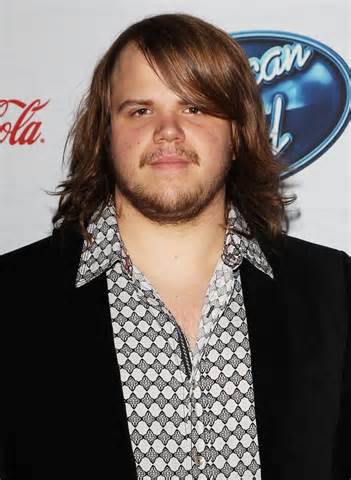
The latest “American Idol” (quotations because how can he be America’s idol when hardly anyone watches the show anymore) is Caleb Johnson, and this guy has a great voice. He really does capture the classic rock sound, and I think he could do really well with his own hard rock band. From what I have read about his performances, and from the few I have watched, he seems to fit in better with a band than he does singing solo.
Caleb Johnson’s newfound fame means two things for the music world, in my opinion. One, it means that rock in general is making a legitimate “comeback” to the mainstream. However, it could also mean that the majority of American Idol’s viewers are older people who grew up with bands like Rush and Led Zeppelin. I certainly hope it means the former, because modern pop music has become atrocious. Long gone are the days when Journey or Al Stewart were considered pop music. Maybe, just maybe, we may see a return to a “rockier” pop. It is definitely possible; just look at the widespread success of Muse.
I was most impressed by Caleb Johnson’s performances of “Working Man” and Led Zeppelin’s “Dazed and Confused.” Watch and see what you think.
Though I more often than I like fall back on the use and employment of labels, I also realize that labels reek of unimaginative and ridiculous and poorly developed thought. We label rarely to clarify. Instead, we label to move a thing out of the way and start looking at the next thing. And, even it is our intent originally to understand the thing through a label, the very process of the labeling of a thing places it rather firmly as this or that, thus automatically dismissing our possibilities in fully understanding the thing and allowing it to take on a life and identity of its own.
For those of us who prog, I often think of the frustrations I feel whenever I go to Progarchives. An excellent site in most ways, its obsession with labeling drives me a bit bonkers. Over the last decade, I have discovered that—at least according to Progarchives—I possess a loving relationship with what they call “cross-over prog.” What on God’s great green earth does this mean? Doesn’t prog automatically mean that something crosses over something else??? That fusion has occurred in unexpected ways? Isn’t the very essence of prog as an art form that it really cannot be defined or categorized?
When I saw that the new issue of CLASSIC ROCK had downloaded onto my iPad this morning, I rolled my eyes.
Don’t get me wrong, I’m thrilled to get the new issue. CLASSIC ROCK is one of the few periodicals I read faithfully. To say I’ve been frustrated regarding the move from the old app to the new would be not just a gross understatement, it would be false. Despite attempting at least 20 times (following, specifically, the directions provided by CLASSIC ROCK) to switch from the old to the new, I’ve failed. I finally gave up trying, accepting the limitations of the old app.
So, maybe a little lingering frustration. . . .
But, I would’ve rolled my eyes anyway. Next to a sensationalist photo and headline regarding Guns n Roses reads “Nu-Prog, The 10 Bands Revolutionizing Rock.”
Nu? Really? Neo Prog or New Prog would sound ridiculous. But, Nu? Sheesh. Are we quasi-literate five year olds?
The 10 bands are Syd Arthur, Knifeworld, Haken, Messenger, Archive, Incura, Sontaag, Alcest, Gazpacho, and Plank! I only know three of the ten, but I’ll be checking out the others.
But, who am I to criticize? A friend of mine once joked with me that I defined prog as “any music Brad Birzer likes.” Sadly, there’s probably a lot of truth in this in my arrogant little brain.
Words are sacred. Art is sacred. We should love our music and all of its expansiveness as much as we love our words and all of their importance. There’s no such thing as “nu” in the English language. If we’re going to claim we’re entering a new stage of music, let’s give it a proper name, not an advertising slogan or soundbyte.
One of the ways in which Immanuel Kant formulated his Categorical Imperative is this: Always treat other people as ends, never only as means. For Kant, this was THE moral imperative. Failing to follow it is failing to be a reasonable person in practical matters, which is the same as failing to be morally good. Another way to state the principle: Never treat other people as “merely instrumental.”
Ollocs
Yeah, I know it may be a little over the top, but I will go there.
If there’s a message that emerges from my little trilogy on “instrumental prog” (was Birzer being incurably trinitarian giving me THREE discs to reflect upon?), it is that one should never treat music as “merely instrumental.” The Aesthetic Imperative. Sure, if you want to add “especially prog,” I won’t complain. As long as you’re buying this round.
And I did save my favorite of the three for this final post; may favorite, at least, in terms of unremittingly delightful listening. That’s in no way to disparage the other two, as my prior missives should make clear. But here’s the bottom line: Ollocs rock, and they do it very very well! Their music engages the progressive sensibility, which always wants meaty repast requiring energetic mastication, with flavor that is at just the right balance between simplicity and complexity. With a two guitarist (electric and acoustic), bassist and drummer lineup, very sparingly supplemented by some lovely piano, they create rhythmic textures that one can fall into like a plush king-size bed in a luxury hotel. Life Thread (2013) flows like a river towards “Greater Seas.” Ouch! How cliché! But sprinklings of cliché can be made into something that flows far downstream from what we usually think of as the cliché.
Is it prog? Most definitely, and more. Is it metalish? Naturally, but much more. Is it reminiscent of Rush sometimes, Crimson other times… [add whoever you’d like to this litany]? Sure, but way WAY more. It shows my own biases that I often think of early to middle Wishbone Ash. But any such comparative thoughts are fleeting. They are soon brushed aside by the joy of musical creation that animates these tracks.
If the term ‘instrumental’ would lead you to expect something pedestrian, something “garden-variety,” something that is not too unpredictable, then in one sense Ollocs does meet that expectation. It’s not daringly experimental or brashly innovative, in any way that smacks the ears with an aural baseball bat. But here’s the third ass-kick. Don’t we all know what ecstasy there can be in a skilled and sophisticated foray into supposedly familiar territory? Sometimes the best music is that which can be heard at every moment as homage, but is nonetheless dancing on the shoulders of giants? Dancing, not “resting,” not simply “standing.” If I try to keep track of how many giants there are beneath the surface upon which Ollocs dance, I lose count quickly, and my head segues from critical, calculative appreciation into vigorous, “this-totally-rocks” oscillation.
If there is a “garden” within which Ollocs is “garden-variety,” it is a gloriously lush garden, and I hope you will spend some time there. You will be refreshed. And if what I’ve said here has any purchase on its elusive objects, perhaps it will deepen and widen the way in which you hear music that is “instrumental.”
It is the last day of my holiday and I find myself sitting at the airport waiting to board my flight back home to the U.K. It has been a good holiday. I went to quite a few open mic acoustic jam nights and its amazing how a few Pink Floyd songs can go down so well with the holiday makers.I did Wish You Were Here, Comfortably Numb and even Bike.
Anyway, I digress. The reason for this post is of another confessional matter. I said I wouldn’t do it. I resisted for a good two weeks but today, being the last day, I finally succumbed.
I pressed shuffle on the i pod.
I had listened to full albums for all of the time here. Some really good ones of which reviews will be forthcoming. But it felt so good to press the shuffle button, lay there and wait in anticipation as to what was going to come on. I love to play i pod roulette. Do you?
Here are the first 10 songs that came on.
Down and Under by Devin Townsend from Terria
Palatinum Britannicum by Mandalaband from AD Sangreal
Snowhite by Mystery from Beneath The Veil Of Winters Face
Prime Time by Todd Rundgren from ReProduction
The Storm Before The Calm by Anathema from Weather Systems
The Punk and the Godfather by The Who from Quadrophenia
Big Time by Pater Gabriel from So 2012 DNA
Having Caught A Glimpse by Glass Hammer from The Inconsolable Secret
Can We Still Be Friends by Unitopia from Covered Mirror
Dusk by Genesis from Tresspass
Not a bad playlist for my own private radio station. My flight is being called and its time for another shuffle and i pod roulette for me for the next four hours.
It would be interesting to hear about other peoples i pod roulette experiences.
The cover of the new Yes album Heaven and Earth has been revealed, and it looks like one of Roger Dean’s finest. Here is the article from Yes World describing the new album:
I am still on holiday and it is still hot. I needed some soothing music to listen to, to while away an afternoon and chose this album by Iamthmorning. It was released last year and I came upon it whist trawling through Bandcamp. Every now and then a little gem comes along when you least expect it and this album is it. How to describe it? Prog folk mixed with a chamber orchestra mixed with ambient piano and a female vocalist with an amazing …and I do mean amazing voice. They come from St Petersburg and are studying music at the academy there. Marjana Syomkina is the vocalist and Gleb Kolyadin] plays piano and keyboards. The sound they produce is so simple yet so effective and mesmerizing. They are Russian and yet the vocals sound to me to have an Irish lilt at times. She sings in perfect English with a clear crisp tone that blends in so well with the instrumentation.
Intermission starts with the sound of the seashore and leads into “inside” which builds from piano and vocal to climax with vocals not unlike Tori Amos. ” Burn ” rocks out a little more but then ” Circles” calms it all down sounding like All About Eve. The piano playing throughout is wonderful and the strings add sparkles and can change the mood at a stroke. ” Intermission ii ” is another instrumental piece with a cello taking the lead. Beautiful. ” Weather Changing ” has an eastern vibe with the strings again setting the mood. After a vocal “Intermission iii” we have “Scotland”. Sweet vocals layer on top of a Capercaille type soundscape. This builds and builds to become one of the highlights of the album. “Touching ii ” starts with plucked strings and ends with a string ensemble. Wonderful stuff. The rest of the album contains more of the same. Great piano playing, wonderful strings and a voice I defy you not to fall in love with.
This album is available at bandcamp where you can download for whatever price you choose. Try it…then try and tell me I am wrong.
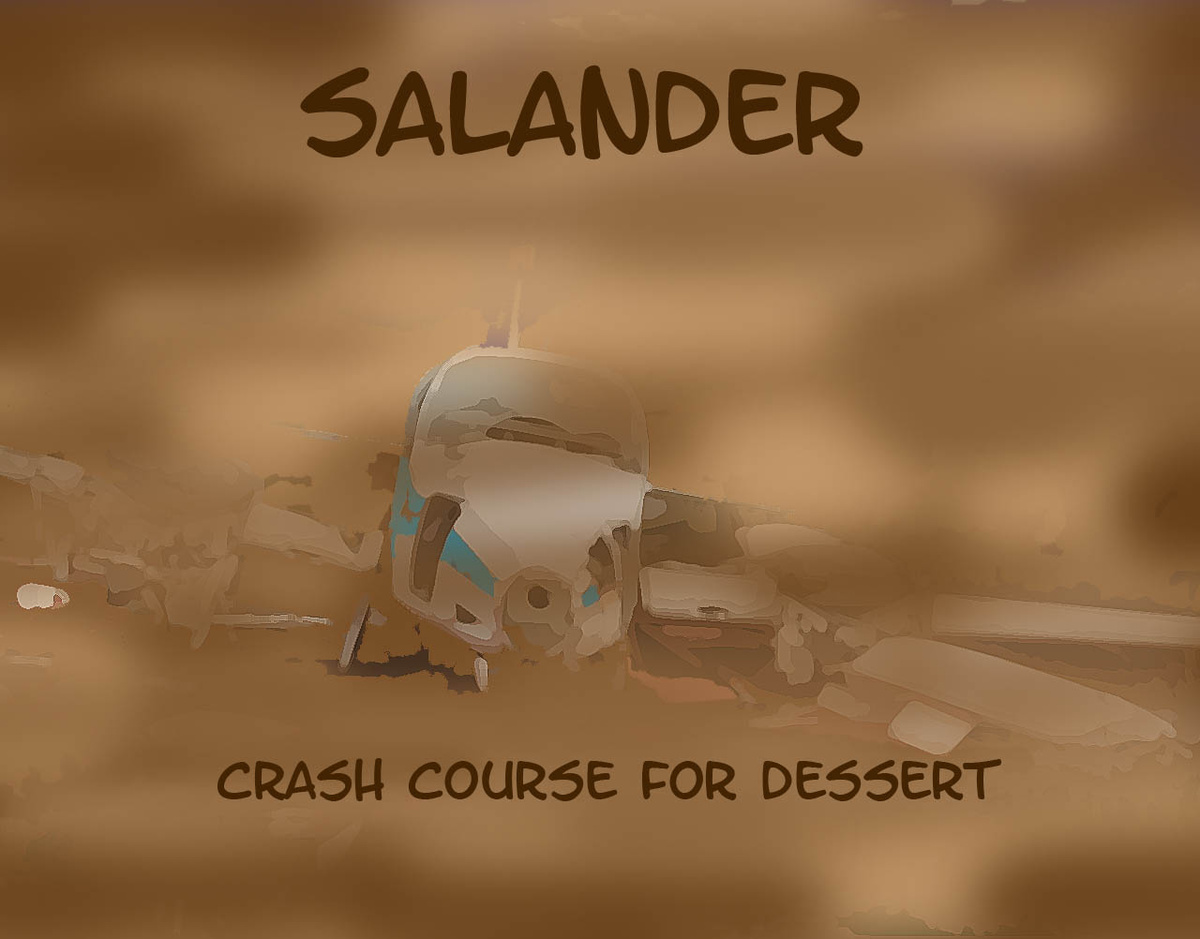
Just a little over a month ago, while interviewing for a one-year visiting professorship at a rather glorious Rocky Mountain university, I received an email from the U.K. from someone named Dave Smith of a new prog band called “Salander.” I could never explain why rationally, but I knew I liked Dave immediately. I’m sure having a momentary email break from intensive interviews and breathing in the fresh air of my beloved American West didn’t hurt my mood. That Dave is equally a fan of Big Big Train certainly didn’t displease me, either.
Well, one thing led to another. We corresponded a bit, Dave sent me a link to his new album, and I asked him to become a progarchist. You might have read his several pieces he’s already posted here. He’s a great writer and reviewer, and I’m very glad to have him as a citizen of the republic of progarchy. “Very” isn’t nearly a strong enough descriptive, but you get the point.
Well, let me state definitely, Dave’s album, “Crash Course for Dessert,” will almost certainly make into my top 10 for 2014 and probably my top 5. Holy schnikees this is amazing stuff.
I don’t know where the name came from, but Salader is the last name of the fictional character in The Girl With the Dragon Tattoo by Stieg Larrson. I assume this is the connection, but don’t take this as gospel.
As it turns out—much to my shock—Salander is only two guys, each named Dave. Dave Curnow and Dave Smith. Here’s the official writeup:
Influences. Everything is influenced by something else and that creates something different. Dave C loves the blues and Guitar influenced rock. Led Zeppelin to Devin Townsend. Dave S loves Prog from early Genesis to Big Big Train and Glass Hammer. They both love the music of Pink Floyd and the lyrics of Jon Anderson. Salander was born at the start of 2013.The two Daves have been work colleagues and friends for years and had been playing in a rock /blues band that played covers. The two Daves started to write some originals. Dave S wrote the music and Dave C the lyrics. After leaving the band they started to record some of these songs in Dave S’s home studio. The tracks were recorded layer by layer starting with either a drum pattern or a chord sequence. Lyrics would then be written by Dave C or drawn from his vast collections of poems and songs written over the years. In September 2013 the concept came together for Crash Course For Dessert and recording took 3 months. Dave S took a further 6 weeks to mix and master the album. Due to financial constraint and the fact there are only the two of them, there are no plans to play live, although it can not be written out entirely. They are now working on the follow up to Crash Course For Dessert.
Dave Curnow. Lyrics. Lead Guitars. Rhythm Guitars. Lead Vocal on Ground Proximity Warning and Take Me away
Dave Smith. Music. Keyboards. Bass. Drum Programming. Rhythm Guitars. Spanish Guitars. Lead Vocal on all songs except Ground Proximity Warning.
Well, ok. Feel free to take a moment to digest all of that. . . .
There’s nothing quite like wearing one’s influences on one’s sleeves. This seems especially true for two English guys named Dave. As I glory in the sheer aural pleasures of this album, I hear elements of Big Big Train, Cosmograf, Talk Talk, World Party, Cocteau Twins, Dead Can Dance, as well as Trevor Horn’s early 1980’s production style and Thomas Dolby’s funk period (this was the most shocking element of the album!). And, yet, in the end, as with almost any great art, the album very much belongs to Salander. Three things tie together all of its various styles and fusions—a wall of sound, an earnest maturity of lyrics and music, and a lot of psychedelia.
The first time I listened to the album, I thought, “Wow, that’s really interesting.” The second time, I thought, “Wow, that’s really, really interesting.” On the third listen, it hit me what they were doing. And, no matter how hard I tried, I couldn’t come up with true words to match my feelings for this album. On the fourth and all subsequent listens, I’ve just simply and immeasurably enjoyed the flow of it all, taking it for the beautiful thing it is.
While I very much like all nine tracks, the standouts for me are Track 4, “Desert Sands,” a Cosmografic space tune; Track 7, “Take Me Away,” a Dead Can Dance mid-1990s tune with plaintive haunting poetry masquerading as lyrics; and Track 9, “Princess,” the perfect conclusion to a mesmerizing album, revealing some intriguing theological and existential symbolism.
I have only two criticisms of the album, neither of which really amount to much. First, I wish the mix would have increased the volume of the vocals a smidgeon. While no one will regard either Dave as possessing a “beautiful” voice, their vocals are excellent, and each vocalist knows what his abilities and limits are, vocally, and utilizes them wonderfully. As the mix stands, the vocals essentially serve as another instrument—but they deserve a bit more.
Second, I wish that the two Daves would have linked and meshed all of the tracks, one into another, with no silence between them. While I think “Crash Course” could be one song with nine parts, I also think it might have worked best as three songs with three parts each. The one really funky track, “Make Me Dance,” which feels like a Trevor Horn 12-inch remix from 1982, would feel a bit more integrated.
These, however, are nothing but very minor thoughts. The more I listen to the album, the less these two criticisms make sense.
So, in conclusion—check these guys out. Check them out now! “Crash Course for Dessert” is an outstanding album that deserves to be widely heard and distributed. A real joy.







 Progarchy