
Arjen: Into the Electric Castle. After an evening of Legos with my five year old, John.

Arjen: Into the Electric Castle. After an evening of Legos with my five year old, John.
Hurtling along the Ohio Turnpike earlier this week (a day before the nasty nasty weather hit again), I was listening to some old friends. One of them, in particular, exploded into my car with an unexpected revelatory force.
 Crime of the Century is an album that I procured when it was newly released, when “Bloody Well Right” was reverberating across the airwaves in the U.S. I liked it, and listened to it a lot. It always struck me as enigmatically light-hearted, though I did get it, even then, that it was very dark. (Liking light-hearted darkness was probably a prerequisite for being a prog fan.) All along, I think I’ve classified it as “a great album,” but probably would not have placed it in my top five, or (a bit less sure on this part) even my top ten. Until now.
Supertramp went on to become huge, especially with Breakfast in America. Their output from that point on always struck me as mixed, and this was partly a function of many of the songs being over-played. I’ve always been aware that Crime is considered by many (including members of the band) as the peak of their career in terms of creativity and quality.
But I just was not prepared for the near-shock of listening through the entire album on Tuesday. During the opening lines of “School,” it suddenly occurred to me: This album was released half a decade before Pink Floyd released The Wall! That thought set the tone for my experience of the album that day. I was an enthusiastic admirer of The Wall when it came out, but I have since generally thought even more highly of Wish You Were Here and Animals as albums. But it had never hit me so hard before how much more of a borderline-psychotic edge there is to the dark alienation of Crime. Perhaps I was in just the right mood. The experience reminded me a bit of the first time I ever heard Keith Jarrett’s Köln Concert. That was in a college radio station in about 1978, over nice JBL studio monitors, and I was basically blown to emotional bits that splattered across the opposite wall of the studio. Hearing Supertramp’s magnum opus again was measurable on that same scale, though perhaps with not quite as high a reading, intensity-wise.
I hope that my attention was still sufficiently on my driving, but I couldn’t tell you for sure.
Ken Scott’s amazing production is a key player here, of course. I was very aware of producers, and knew this even back in the 7o’s. But I think some kind of blockage was jarred loose as I drove and let this latest listening wash over me. It had to do with my ambivalence about the band’s subsequent output, but I suspect there may have been even more to it than this. It was as if the blockage had an indeterminate number of tendrils, reaching out into my soul and anchoring the blockage at various angles, making it not only difficult to dislodge, but so much a part of my listening apparatus that it had never even presented itself as a blockage. Apparently, enough of those tendrils had been broken or loosened, and the blast had enough force that day, that the blockage just snapped away. It was as if I was really listening to the album for the first time on the one hand, though I already knew every sound, every aural nook and cranny of what I was hearing on the other hand. Everything old was new again.
Despite some of the edges actually being sharper (to my ear, anyway) than those we find in The Wall, they are deployed with an amazing subtlety and restraint, especially lyrically. “School” does in one song what The Wall takes most of its first side (of four) to accomplish. And it does it with a more deeply disturbing Hitchcock-like minimalism. When heard in its proper context, between “School” and “Hide in Your Shell,” one can hear the peppiness of “Bloody Well Right” with a more clear awareness of the droplets of darkness that fall from its edges. And then “Hide in Your Shell,” which otherwise might strike n0n-proggers as typically bombastic, is at just the right intensity. “Hide” has always been my favorite track. But perhaps you know that feeling of discovering even more depth and richness in a favorite.
“Asylum” comes across best in context, as does “Bloody Well Right.” Again, the Floyd comparison intrudes. Its positioning between “Hide in Your Shell” and “Dreamer” allowed me to notice, as I had not before, how similar is its austere power to the title track of Wish You Were Here.
Another aspect of the revelation came when I realized with some dismay that my interest on prior listens had always tapered off, at least a bit, after “Dreamer.” This is not too unusual in my experience of entire albums. I could name a bunch of them for which my interest begins to lag on the final side (whether a single or a double album). This is even true of my listenings to The Lamb Lies Down on Broadway. I’ve already noted elsewhere that the final track is my least favorite on the latter, and my recent efforts at listening with disciplined differences each time have not yet brought significant change there.
But this time, with Crime, it was different. “Dreamer,” more than on any previous listen, truly announced the opening of the second act. The familiarity was still there for the final three tracks, but it was a familiarity brought before judgment. It was a familiarity challenged, asked to show its papers, please. And its papers were not fully in order. It was as if both Roger Hodgson and Rick Davies knew that I had always shirked in my listening on these tunes; I could hear it in their voices. I still had demons in my closet, and these guys had the number of those demons.
If I’m going to make further progress in coming out of my shell, in overcoming the tendency to hide, if I’m to discern how well I’m doing at not being complicit in the crime, then more listening (and more work, more soul-work) is required. That’s what I heard them saying to me this week.
They’re bloody well right, you know. And I will listen more (as opposed to simply listening again).
.
… on the ProgRockMag.com site.
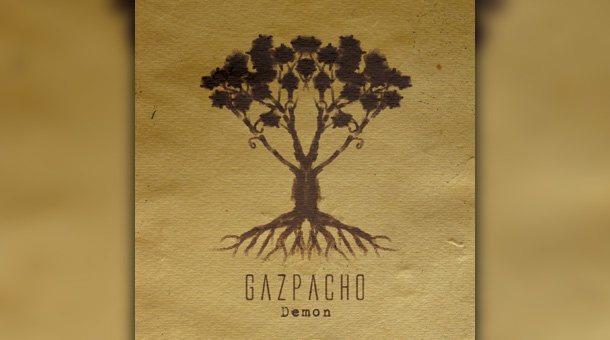
It states that it is available to UK readers only, but here I am, in Oregon, listening to it. It’s too early to make any judgments, but it is both distinctly Gazpacho and also a bit different. Very acoustic; lots of piano; some operatic female vocals; etc.
 Over the weekend I had the pleasure of having my mind blown by a record, something that seems to happen less and less as I get older. newspaperflyhunting is a Polish group with two full length albums, and their latest, Iceberg Soul, is a stone cold classic already (forget future prognostications, it already just is). I reviewed it here, but felt compelled to know more beyond just what my ears were telling me, to get to know the artists. So I contacted Michal Pawłowski, one of newspaperflyhunting’s guitarists and vocalists — he’d lent us the album for review — and he graciously agreed to present the following questions to the group. They have responded generously. Note that an email and twenty bucks will yield you one stone-cold-already-a-classic rock and roll record, and the one preceding as well, which, measured by the tracks I’ve heard, may also be well on its way to Proghalla.
How did the band get together? How did it find its name?
The band started in the summer of 2006 as two teachers (Michał Pawłowski and Krzysztof Gryc, both guitarists) and a student (Krzysztof Sarna – drums) from the same language school decided to improvise together a bit. Gradually, it all began to take shape, Gosia Sutuła came in on bass, later Krzysztof Gryc left to be replaced with Jacek Bezubik. Beata appeared and here we are – a brief history of newspaperflyhunting! It is also worth mentioning that earlier, in late 2004-early 2006, Michał and Jacek had had an acoustic project named we! wtorek, whose repertoire regularly finds its place with npfh. And the name? First official version: we wanted something simple and straightforward! Second official version: why, this was the first word that came to our minds! The truth: we don’t really remember. There were many ideas for a name, most of them probably better than newspaperflyhunting, but somehow this one was chosen.
Are you full time musicians (this question could also be interpreted as, who are all of you, anyway?)
None of us are full time musicians. Michał and Jacek are English Philology graduates, Gosia is a medicine student, Krzysiek and Beata are architects. Krzysiek is a painter, too. So as you can see, our backgrounds are quite diverse. We all love music, books, cinema, and art.
Who are some of your influences?
We could write a book on that *laughs*. Let’s keep it short. Pink Floyd, we have to mention them first. Pearl Jam and the grunge movement. Post rock. Post-black metal and drone (yes, we’re glad you noticed it in your review). Classical music. Modern classical (Philip Glass). Jazz. Literature (Vonnegut, Dukaj, Bret Easton Ellis, and many many others plus SF/fantasy in general). Cinema (Fellini, Kubrick). Art (Vermeer, Dali, Beksiński). Life. Failures. Successes. Stupidity. Serendipity. Insanity. Quantum Physics. Dreams. Anything that is able to play with your mind. Music comes from various sources and it’s great not to know how it really works, how the sources blend together in the form of a song, or an album.
Your arrangements are startling dynamic, in the way light cuts through dark. Like chiaroscuro. Is this the kind of music that just comes out of the group, or are you following a particular aesthetic to make it happen?
We do not follow any aesthetic, that’s for sure. The sound comes naturally, we never consciously think “this should sound like this and that”. Maybe the only ‘rule’ we follow is trying not to repeat ourselves. Some members work really hard to prevent that;) It’s a mix of the aesthetics we are naturally inclined to as both listeners and musicians. This light and darkness thing is a very important matter for us. As are dynamics and contrast, like chiaroscuro indeed. (We could go on for hours – or pages – on how compression kills dynamics and music in general.) We are rather minor-key people, but not one hundred percent, and this contrast is crucial to our sound. This also comes from the simple need to vary things, not to sound monotonous. In other words, we play what we feel and the aesthetics appears as if by accident, because well, there’s no other choice, is there? It’s probably impossible to play ‘outside’ an aesthetics of one kind or another. But still, it’s completely secondary.
Why sing in English?
It’s a tough question. It might be mainly because it’s difficult to write good lyrics in Polish. We have fewer adjectives/adverbs, the rhymes are often cliché-sounding, there are many unpleasant-sounding consonants. Most importantly, it’s difficult to strike the perfect balance between sounding too lofty and too trite. Also, Michał and Jacek are English Philology graduates, so they are used to literary English maybe even more than to literary Polish. So we ended up with English lyrics. However, as Krzysiek writes good lyrics in Polish, it’s possible that future projects will include lyrics in Polish. Well, we only hope the English lyrics do not offend native speakers;)
Is everybody in the group writing, or is there a primary songwriter?
Although Michał and Jacek are the primary songwriters, the arrangements are worked out by the whole group. Michał says that when he comes up with song ideas they usually have the verse/chorus structure, then, in rehearsals the band turns them upside down and inside out. This is basically how it works, whoever comes up with the main idea, the end product is always the band’s creation, the input of an individual member depending on the song.
Where and how do you record? Are you doing your own producing/engineering?
The two full-length albums were recorded by Wojtek Bura, our friend, in his studio. The difference between “no12listen” and “Iceberg Soul” is that we pretty much produced the latter ourselves, with Wojtek acting more as an engineer. Generally, we want to have as much influence on our sound as possible and when making an album we learn new things about the production process, so you can expect the tendency to have more control over the recording process to continue.
What is Bialystok like as a music town?
Very metal *laughs*. There is a burgeoning metal scene and although there are many other bands, there is no other ‘scene’ to speak of. This is why we find it quite hard to organize gigs. There are some bands that we are friendly with, such as Obywatel NIP, Tempelhof, Rock Minotaur, Divine Weep, Pokrak or Ikebana but their music is not very similar to ours, or totally different. Well, we probably also have to mention disco polo, the truly awful genre of dance music that Białystok is infamous for;) However, if you are interested to hear impressive music from Poland, we recommend Riverside and Hipgnosis, two truly excellent bands. The former is quite well know worldwide, by the way, so you might have heard it.
How do you think Iceberg Soul differs from no12listen?
The main difference is that “Iceberg Soul” is a more conscious effort. “no12listen” was a snapshot of a transitional period in the band. This was the first record Jacek played on, and he still had to find his footing in the group. The songs themselves were written at different times, when the sound of the band was in the process of evolving. And, perhaps most importantly, we didn’t know what we wanted it to sound like. There are many overdubs on “no12listen”, you know – a band let into the studio trying out stuff. With “Iceberg Soul”, on the other hand, we had an idea of what we wanted it to be. We wanted it to sound as close to the band live as possible, to maintain a certain rawness, so there are very few overdubs, the guitars are much grittier, and the mood is darker and more melancholy. There is also a different approach to vocal arrangements. The ‘less is more’ philosophy is visible also in the decisions concerning when not to play. For example, on “Stop Flying” only three of us play, because this sounded just right. This approach is harder to grasp than one may think. There is also a difference in the lyrics, which are now more personal. Anyway, in the end, we are much more satisfied with “Iceberg Soul” than “no12listen” because it’s just us.
Fender Rhodes…Awesome…tell us about this and the genius process of bringing it to Iceberg Soul.
The idea appeared during the sessions for “no12listen”. Our producer and Gosia came up with the idea of adding keyboard parts to the album. Gosia played the keyboards, so to reproduce it live – as Gosia can’t play the bass, the keys, and sing at the same time… yet!;) – we decided to have a permanent keyboard player. We knew from the beginning that we wanted a Rhodes-type sound. Beata is Krzysiek’s colleague from work – she came in and stayed with us. The fact that a friend of ours had left his Fender Rhodes piano in our rehearsal space for some reason really helped. We just adopted it;)
Who do you consider your contemporaries in music, art, cinema?
A difficult question considering the band’s demographics *laughs*. Krzysiek was born in the 1950’s, Gosia in the 1990’s. Need I say more?:) But somehow this doesn’t affect us in any way. We all feel very much in tune with the late 1960’s-early 1970’s period, as well as the early 90’s. That is to say the periods in music that encouraged experimentation and self-expression. So our musical contemporaries are surely Pink Floyd and King Crimson. Beksiński as far as art goes. Cinema? Maybe Tarantino. We have to mention Vonnegut too, he is indeed our mental contemporary, if that makes sense;)
Do you think of yourselves as speaking to a certain audience?
Yes, to an audience that finds something for themselves in our music. We do not aim at any ‘genre’ audience. We categorize ourselves as ‘prog rock’ more for lack of a better term than any affinity with the genre. We would like to get to as many people as possible, but we don’t want to ‘force’ anyone to listen. If the listener feels connected with the music – we are happy people.
How do you feel about being heard online rather than on CD or vinyl or in front of an audience?
We are traditionalists in this matter – a physical release is crucial (be it a CD or vinyl, or tape). Of course there is nothing wrong with listening online, and it’s pointless to sail against the wind in this matter, but if an album is Internet-only, well, that’s not the same. So, we think that if somebody likes a band’s music, it’s a good idea to purchase the physical album to experience it in full (in addition to supporting the band). This is what artwork is for.
What are your thoughts on marketing your music? How do we get full copies of your records, and do we need to make our own newspaperflyhunting tshirts?
First of all, there are the Facebook and Bandcamp pages. There is also Myspace, but the site is almost dead, isn’t it? For the time being, we wish to get some feedback/reviews of the album and make people interested in it. We will also have a track featured on a sampler issued by an American indie label Custom Made Records. There is some minimal airplay, too. Well, promotion is easier abroad than in Poland. Here it seems that reviewers/journalists expect you to fit into a certain genre or category. For example, if you play prog rock you should sound like early Genesis. Or Pendragon. If you don’t, then they don’t know what to make of your music. Also, it’s more difficult to get people to just sit down and listen to stuff here, it seems that people abroad (especially Americans) are more open to new experiences. In any case, our aim is to be heard by people who might like us.
You can get physical copies of our album directly from us. We sell it for 10.00 USD (including postage). Just write an e-mail to npfh@op.pl. “no12listen” is still available for the same price too, and soon there will be another special limited release for our greatest fans only;) T-shirts? Yes, we will have them too, we just have to get down to it. As you can see, we are a very DIY band.
What’s next for you?
More music, that’s for sure. There’s no shortage of ideas with us. There is an idea for a concept album based on a novel by the excellent Polish SF writer Jacek Dukaj, and other stuff too. Generally, we will continue the direction set out by “Iceberg Soul”.
I just came across this article from the Los Angeles Times talking about Neil Young’s new high-quality music company, PonoMusic. The goal of the company is to create portable music that has a quality as good as the master recordings (meaning it is not compressed). The PonoPlayer will cost a hefty $399 and will be able to hold between 1,000 and 2,000 high-quality albums, which implies that this player will have a rather large hard drive, because high-quality songs are much larger files when compared to their compressed counterparts.
The debate over compressed file formats as a standard in the music industry has raged ever since Apple created iTunes over ten years ago. Prior to iTunes and the iPod, the only way you could listen to music on the go was through a Walkman cassette or CD player. Those had their obvious disadvantages, namely the inability to carry around a lot of music. Once Steve Jobs announced the introduction of the iPod, the music industry was changed forever. Suddenly, people could carry around thousands of songs in a tiny little device that could fit in their pockets. However, the technology of the time did not allow for very large storage in small packages, which led to the need for the compression of songs. The article by Randy Lewis on the LA Times claims that MP3 files contain a mere 5% of the digital information originally supplied by the master recordings. While that may have been true in the 1990s, it is not nearly that bad today. Originally, the bit rate for MP3s was around 190 kbps. iTunes now sells their music at 256 kbps, and CD quality is 320 kbps. (iTunes does not use MP3, they use Apple lossless compression, or m4a, which is much better than MP3.) There are also several other sites online where you can acquire digital downloads of 320 kbps. I assume iTunes is heading in that direction now that the technology is available for larger capacity i-devices. The problem with higher kbps recordings is they take up an enormous amount of valuable space, and technology can only allow so much space in so small a space. According to Matt Komorowski, who has compiled a data table of prices per gigabyte over at his website, 1 gigabyte effectively cost $193,000 back in 1980. The price of 1 gigabyte in 2000 was around $19, and by 2009 was down $0.07. As technology has advanced, the price of storage has dropped dramatically.
Anyways, my point with all this yammering about the history of digital music and storage is to point out that there has been a large debate over the past few years between digital media and physical media. There are many people who claim that vinyl is as close as you can get to live because a vinyl record is an actual analog copy of the sound waves created during the recording. But we must remember that the vinyl records of the 1970, 80s, 90s, and up to today are of a much better quality than the first record made by Thomas Edison in 1878. It only makes sense that the future of digital records will be superior to that first introduced in the late 1990s, and it will be better than what is being offered today. Neil Young is merely trying to bring good audio quality back to the music industry. There is now a whole generation of people (my generation) that has grown up with headphones jammed in their ears, and they know very little about what a high quality recording sounds like (much less high quality music, but that’s a different problem). I think we will begin to see a move towards higher quality digital downloads, but only as the capacity of the portable music players increases. As the price per gigabyte continues to drop, it will be much easier to fit thousands of high quality songs and albums onto a smartphone that fits into your pocket. Neil Young is just trying to speed that process up a bit (don’t laugh too hard over that one).
Here is the link for the LA Times article by Randy Lewis:
It is with unbridled delight that I report: The wondrous alchemy of The Fierce and the Dead is apparently fully compatible with ongoing servings of scrumptious solo work from guitarist Matt Stevens.
What occurs to me most immediately and forcefully is the word ‘LOOSED,’ though pronounced “loo-sid.” Mere Matt Stevens is loosed upon the world, and one cares little as he begins to play whether there is a center that holds, or if it’s some kind of periphery without center along which we are careering. To get loosed (loo-sid) is to be released. The loosed and lucid journey is one on which I am willing to go, for I’ve come to know that I’m in good hands when he is at the helm. (This is, at least in part, because he seems to know when NOT to steer.)

Lucidity is a kind of clearness. It’s a kind of consciousness for which the object of consciousness is accessible, near rather than far (even when it’s neither here nor there). Matt’s version of being lucid is not some algorithmic calculation that would still the rush of experience into a finalized stasis. We begin with an ecstatic embrace of tension that is built into the very saying of it (“Oxymoron”), and many of the tracks keep the motifs of motion and journey in the foreground (“Flow,” “Unsettled”, “The Other Side,” “The Ascent,” “The Bridge).
But soon we find some kind of mystery in “Coulrophobia” (fear of clowns). How strange, as I had not yet seen or heard this new disc when I wrote my last Look at The Lamb, where fearing clowns did come up, and where there was (among other things) some sort of plea that we NOT always insist on lucidity, at least in certain ways and in certain settings. I get no sense here exactly what it is about clowns that one might fear, but I do get the sense that this (i.e., not having that sense) is exactly the locus of its power.
“The Bridge,” by being the longest of the tracks, presents itself as a kind of exclamation, asking to be heard “over and above” the other tracks, in some sense. I hear it asking to be the key, as in a key to a map. Hearing the whole disc through “The Bridge” is encountering an unabashed, loving commitment to composition, with few points for comparison in broadly “prog” music aside from Frank Zappa and Robert Fripp. Like both, Matt will reliably entertain and amaze, but never at the cost of acting as midwife to the particular musical shape that is emerging in the clay on his wheel. My second listen to the disc was sideways, first “The Bridge,” and then back out into the aural archipelago that surrounds it, as if they were destinations reached by crossing that Bridge.
(“KEA” and “The Boy” especially remind us what a cornucopia the acoustic guitar remains, despite its being so ubiquitous for decades in popular music.)
If we stay with that “sideways” direction of listening, then consider the title track as the final one. Remember that we might use the word “lucid” not only to describe a way of being conscious from within, but also to mark the way in which the Other’s consciousness is there, is present, is detectable. If a healthcare professional pronounces someone “lucid,” it is based on output, on performance. Heard against the background of the entire disc, and as the answer to those exploratory questions, Matt’s answer is forthright and clear. Though I’m no professional in these matters, I’m willing to make the pronouncement nonetheless: Few guitarists, and indeed few musicians, are as completely and wonderfully musically lucid as Matt Stevens.
Get Lucid!
.

As I was driving home for spring break this past Friday, I was listening to my favorite radio station in Chicago, 890 AM WLS, and I hear the melodious voice of Roe Conn say that Dennis DeYoung was going to be interviewed on the radio in the coming minutes. That was enough to make the traffic I was cursing through almost bearable. The purpose of the interview was to promote a show that DeYoung is playing this coming Saturday, March 15, at the Rialto Square Theater in Joliet, Illinois. This made me about swerve off the road, since my parents just moved to a town outside Joliet last Wednesday. Game on. Three tickets purchased, and I cannot wait.
Several years ago I saw Dennis DeYoung give a free concert for a Fourth of July celebration. My Dad dragged me to it, and I had never heard of DeYoung or Styx before. I was still rather new to prog at the time, but what I heard astounded me. Within the few days after seeing that concert, I acquired a copy of The Grand Illusion, and I fell in love with it. But what was truly amazing was how Dennis DeYoung’s voice has not changed at all since that album was made. He sounds as good today as the day the album was cut. He even sang a few bars of “Lady” over the radio the other day, and he was spot on. So now that I have had a chance to appreciate the music of Styx before hearing it live, I get the opportunity to hear Dennis DeYoung perform the greatest hits of Styx again. It will be awesome.
So if you happen to be near the Chicago area this Saturday night around 8 PM, I highly recommend going to this concert. Tickets are going fast for this event, so order quickly before they are all gone.
Click here for more info about the show and ticket information: http://dennisdeyoung.com/tour/details.asp?id=395
I’ll certainly post a review of the show soon after the euphoria wears off and I settle back into school. I honestly cannot think of a better way to end spring break than to see Dennis DeYoung singing “Come Sail Away.” Good times.
 There is a source in some high valley at the top of the earth that spills out sound like a breached dam every time the earth tips a little off its crooked course. I’ve never been but I hear it. It’s in the music that sounds instantly familiar while being new, carrying an exoticism that is self-defined, so that as I wonder at what I hear, what I hear comes to define the place of its source, unknowable until the moment of that thing, that liquid spirit, that exceeds the recognizable patterns of the simple modulation of air pressure inside my head.
Which is to say I now know something of Poland.
That something is newspaperflyhunting, whose new record Iceberg Soul flooded the Plain of Progarchy this weekend. It’s hard to make a record this strange and good, one tethered to its bit of earth while allowed to float free, to feel realized and yet maintain the rough edges of exploration. If Iceberg Soul compares favorably to certain predecessors — I hear an odd pastiche of Amon Duul II’s Carnival in Babylon and the Cranberries’ Everybody Else is Doing It, and even a touch of Lal Waterson’s Once in a Blue Moon — it may outdo these worthy companions in its marrying of songcraft and texture, where the resemblance to the great bands of California’s psychedelic revival of the 1980s and 1990s — Opal, Rain Parade, Mazzy Star, Thin White Rope, Green on Red come to mind — seems more apropos. Noisy electro-acoustic freakouts punctuate beautiful melodies and uneasy lyrical flights, the accented English toughening the song in just the same way Nico could, not fearing to sound lovely and unpretty. Repetition and drone play important, alchemical roles, and the opening “My Iceberg Soul” is bookended by the closing of “Your Iceberg Soul,” where the repeated title phrase turns through my head and into “your eyes burn so.” A slight black metal or goth current shades the music towards darkness, but the arrangements, which include Fender Rhodes piano, artfully blended vocals drifting in and out of harmony, and one of the most perfectly balanced mixes I can think of (maybe Gazpacho’s Night comes close), leaven the ultimate results back to something far more complex than any monochrome mood.
Not knowing anything about the Polish music scene or even its broader culture is, I recognize, a shortcoming in approaching Iceberg Soul, but I gotta tell you is also something of a thrill. I feel like there may be territory to yet explore, and in exploring perhaps I stumble upon a certain high valley….
Get it at bandcamp: http://newspaperflyhunting.bandcamp.com/

Ode to Echo comes out in two days. I have yet to hear it, but I love everything Glass Hammer has done thus far. My words and thoughts regarding one of my favorite bands at Catholic World Report.
A scratchy LP, probably on a phonograph player from the 1930s or so, begins playing and a man clears his throat. Horns and woodwinds slowly swell and unveil, coming into tune in the background, finding a place in the rotating spheres.
Good evening, ladies and gentlemen. Welcome to this evening’s performance, Babb and Schendel’s musical extravaganza, Lex Rex, a tale of the ancient world. The conductor is ready. The actors and actresses are all assembled. So, without further ado, Lex Rex.
A gorgeous organ, something straight out of an early Genesis album, is followed by soaring Yes-like guitars. The two syncopate. Drums, voices, and bass join in. So, it begins, and the spheres rotate quickly now.
To keep reading, please go here: http://www.catholicworldreport.com/Item/2988/the_music_of_glass_hammer_an_appreciation.aspx
 From our friends, Matt and Rachel Cohen, of that astounding band, The Reasoning. God bless, the Welsh.
Two years is a very long time, and yet it passes by so quickly. What have we really done over the past couple of years that we truly remember? How many people have we passed in the street and paid them no real attention? After all, why should we? What kinds of opportunities to visit particular places have we turned down over the past twenty-four months, or decided against… and what impact might those decisions have had on the present? Fate, destiny – an infinite number of questions, so many uncertainties, and endless faces in the crowd as we rush busily around in our day-today lives.
We all have our private moments of reflection, and we have certainly experienced many of those ourselves over the past couple of years. Quite honestly, not a day goes by when we don’t reflect on the “what ifs”. Could we have done more? Should we have tried the phone just one more time? Where on earth do we start to look? It goes without saying that we’re unable to answer a single one of these questions. We’ve therefore decided do something that is within our power to help maintain the search for our dear friend Owain and, in doing so, to raise some money for a wonderful charity that helps the families and friends of missing people.
This is how it’s going to work. On the second anniversary of Owain’s disappearance – March10th 2014 – we will be releasing as a download single a reworked song that Owain, Matt and Rach wrote together, entitled Pale Criminal. The track originally appeared on our EP And Another Thing……. This was in fact the last time that Owain wrote, recorded and played with the band. The song has subsequently taken on a huge personal meaning for all of us who share the great memories of having worked so closely together with Owain.
The track has been rearranged and recorded with just piano and vocals, and is beautiful, haunting, and very poignant. We hope very much that when you hear it, you will be reminded of the wonderful soul and spirit that Owain possesses. We also hope that the single will not only help to remind Owain that he is still greatly missed, but to raise awareness for missing persons more broadly, too. The single will only be available through our BandCamp site thereasoning.bandcamp.com with all proceeds going to www.missingpeople.org.uk.
Owain, if you read this, hear the song or just feel the need to reach out, please get in touch and come home to your family and friends. We love you and we miss you xx
#findowainroberts
lyrics
Blood, sweat, tears and chemistry
In stormy weather it’s down to you and me
Eternal returning – and starting over
Always reminding me.If I could have it all, if I could do it all, do it again
If becoming you means nothing new
Just more of the same.Make me a memory don’t leave me alone
Cuts deep with every heartbeat
Our will to love survives.Could be some kind of alchemy
‘Cause there’s no shelter: time’s up for you and me
Eternal returning – for a true pale criminal
It’s only destiny.credits
released 10 March 2014
Song Written by Matthew Cohen, Owain Roberts & Rachel CohenPale Criminal 2014Vocals – Rachel Cohen
Piano – Robert GerrardMixed & Mastered by Matthew Cohen & Robert Gerrard
To order the song and support the search for Owain Robert, please go here: http://thereasoning.bandcamp.com
 Progarchy