

Please pardon my being a day late on this, but I wish all my fellow Progarchists a Happy All Hallows’ Eve. Enjoy a creepy tune courtesy of Kate Bush.

Please pardon my being a day late on this, but I wish all my fellow Progarchists a Happy All Hallows’ Eve. Enjoy a creepy tune courtesy of Kate Bush.
DETACHMENT by Barock Project Track List: 1. Driving Rain 1:03
2. Promises 5:05
3. Happy to see you 7:37
4. One day 7:23
5. Secret therapy 5:37
6. Broken (feat. Peter Jones) 9:10
7. Old Ghosts 4:07
8. Alone (feat. Peter Jones) 3:14
9. Rescue Me 4:55
10. Twenty years 6:06
11. Waiting 5:43
12. A New tomorrow 7:39
13. Spies 7:23 credits released March 20, 2017
Barock Project:
Luca Zabbini – piano, keyboards, acoustic guitars, lead vocals
Eric Ombelli – drums
Marco Mazzuoccolo – electric guitars
Francesco Caliendo – electric bass
Peter Jones – Lead vocal on “Broken” and “Alone”
PRODUCED AND MANUFACTURED BY ARTALIA – 22R
DISTRIBUTED BY: ARTALIA – STARS OF ITALY
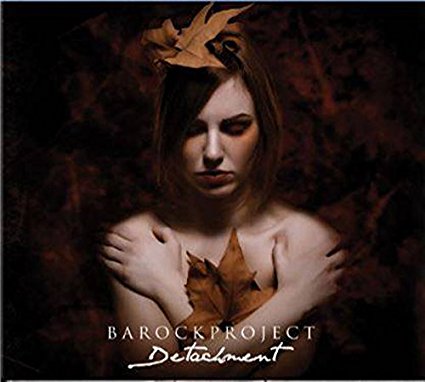
This masterpiece of music was released back in March and I now regret greatly not listening to it and reviewing it then. My rave review might have caused more of you to get it into your regular prog listening rotation a bit earlier. It should be on all end of the year BEST OF 2017 lists.
Their 2015 album ‘Skyline’ was my 15th favorite album of the year, but DETACHMENT is in the running for the top tier of three of four that are the finest 2017 releases. They have “upped their game” by giving us a near-masterpiece of symphonic progressive beauty.
While loving all flavors of prog (and near/pseudo prog) from Zappa & The Residents to Vangelis and Jean-Michel Jarre, I have to admit that I’m a sucker for melody. My favorites have always been bands such as Camel, The Moody Blues, Barclay James Harvest, and Renaissance. Barock Project has given us an album chocked full of stunningly well played and layered symphonic songs that make the lover of beatific tunes glad to be alive.
In my own rating system of “letter grades” (familiar to the American high school student) every song on the disc rates an “A” (exemplary) or “A+” (with tracks 11 & 12: ‘Waiting’ and ‘A New Tomorrow’ rated even higher!) The album, running about 75 minutes, flows so perfectly from track to track that it makes an extremely enjoyable listening experience that never even hints at overstaying its welcome. Usually a shorter record (45 to 50 minutes in length) is seen as “tighter” and more cohesive. But with DETACHMENT the listener is kept asking from track to track “is this song going to be even better than the last one, which was better than the one before that?” Indeed, most of the songs, as ‘singles’ would justify the full purchase price of the album.
‘Driving Rain’ has a light and delicate piano melody by Luca Zabbini which opens the album and leads to a rhythmic keys-driven ‘Promises’ that evokes the best of the synth-tape looped sound of classic electronica. There’s almost a 1970’s Styx (another band not unfamiliar to melody loving music mavens) “vibe” for a few second until the song morphs into a more prog metal sound.
‘Happy To See You’ uses electronic swells and grand piano along with a good blend of strings to build to an epic and catchy number that even has a great “Hammond” riff. The 7-minute ‘One Day’ is another stirring and anthemic epic that with its own symphonic run reminds the listener of the boldness of early Renaissance (Scheherazade or Ashes are Burning) sans Annie. ‘Secret Therapy’ (track 5) melds sounds of (almost) Oriental, Medieval, and Folk melodies into a whirling hybrid of harmony that is almost pop-prog (which is good) ala ELO.
Two tracks (‘Broken’ and ‘Alone’) feature the guest artistry (wizardry) of Peter Jones on keyboards and vocals. ‘Broken’ at 9 minutes is so well-crafted that it might well be “song of the year.” It’s Genesis brilliant and worth the price of the album. Track 11, ‘Waiting’ has a Lunatic Soul flavor in its initial opening moments but soon is galloping along with maybe the most glorious and uplifting piano melody on the disc.
You need to go to Bandcamp or YouTube and listen to DETACHMENT. You will thank me and you will purchase for yourself either a hard-copy physical CD or a download.
When a band mixes and melds the complex melody genius of The Beatles and Jethro Tull, with the commercial pop appeal of Asia and ELO, all the while refusing to sacrifice top-notch jazz, fusion, and prog metal riffs and runs, a listener realizes with pure delight that he/she is in the aural presence of masters. Barock Project are Italy’s new maestros and one of the brightest lights in our current prog night sky of sound. This lush and gorgeous waterfall of music will indeed “detach” you from the dry and dusty day-to-day and paint your brain and soul with color, texture, and joy. DETACHMENT is near perfect album that is simply one of the finest musical experiences of 2017. A must buy!
Bandcamp link: https://barockproject.bandcamp.com/
Set Mellotron to 11

by Rick Krueger
A week after the final notes stopped ringing, I’m still gently buzzing about Progtoberfest III; it was easily the most immersive three days I’ve ever spent as a listener. Not all of the nineteen (!) bands I heard hit my sweet spot, but every single one belonged on the stages of Reggie’s Rock Club & Music Joint, and at least three sets (by Dave Kerzner, Discipline and Moulder, Gray & Wertico) were right up there with the finest live rock and jazz I’ve heard in nearly 40 years of concert-going.
So in closing, a few shout-outs to people who richly deserve them:
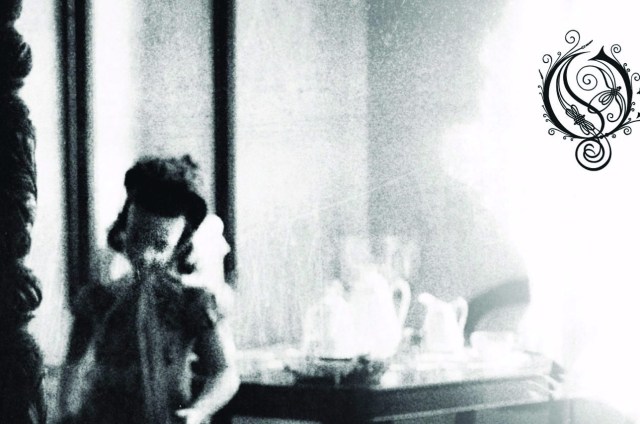 Turns out the best Swedish death metal band of the 90s and early oughts was listening to those Bert Jansch and Popol Vuh records all along. And such grooves are not as unrelated to Opeth’s charge as first glance might suggest. Having spent the better part of a decade determinedly NOT (no, never) dancing around the DADGAD maypole in the relatively quiet interludes of scorching song suites lasting upwards of 20 minutes, Opeth bookended their 2002 LP Deliverance with 2003’s Damnation, and the acoustic drone floodgates opened. Prog polymath Steven Wilson, who’d helmed the band’s production since 2001’s Blackwater Park, found in Opeth’s singer/guitarist Mikael Akerfeldt a like-minded soul who, after a blistering half-dozen LPs replete with growls, blast beats, and super doom — though never rote, and always smart — needed some wind in the sails. Unplug, let the mikes breathe a bit, leave the distortion pedals at home, I can imagine part of the conversation going, and so it sounds anyway on the recorded evidence. Damnation is a masterpiece, a quiet, spacious death metal record, a grim yet lithe prog album, and with that said and with that description, no, it sounds nothing like the Cure, but it may appeal if Disintegration is your cup of tea. It’s Wilson’s and Akerfeldt’s best and most dramatically pioneering record (although Opeth’s Wilson-less Ghost Reveries, from 2005, is maybe most representative of their work until the band’s real act two began with 2008’s Watershed).
Soon after Damnation‘s release the band took their show to Shepherd’s Bush in London, and there recorded 2004’s live Lamentations DVD, long since a YouTube staple. Just as “Closure” anchors Damnation, its live cousin fills the same role on Lamentations. The show is worthwhile to watch in its entirety, as Opeth takes some giant steps, with jazz-touched atmospherics and restrained but potent jams. The band acknowledges its debts while shrugging off the diehard metal kids who came out for blood (they’d be given their due anyhow in the harder part of the show, and even in the Damnation section it ain’t exactly MTV unplugged). If there’s a point where Akerfeldt became who he is, it’s on full display here, an artist who, as he appeals to his audience, is confident in his direction. Just glorious.
soundstreamsunday presents one song or live set by an artist each week, and in theory wants to be an infinite linear mix tape where the songs relate and progress as a whole. For the complete playlist, go here: soundstreamsunday archive and playlist, or check related articles by clicking on”soundstreamsunday” in the tags section.

Only two more days to support Chuck Dixon and his new universe. Please do!
Alt★Hero is a world not too terribly different than our own. It is a world where the Wehrmacht generals overthrew Adolf Hitler and the Nazi Party in 1939, and where the first atomic bomb was dropped on the order of Reichskanzler Jodl on Soviet territory in 1944, leading to the fall of the Soviet Union in 1956. It is a world where Japan attacked Australia instead of Pearl Harbor and China occupies the Korean Peninsula. It is a world of four superpowers, where the European Union rivals the United States of America for wealth and influence, and where China and Russia possess the two most formidable militaries on the planet.

by Rick Krueger
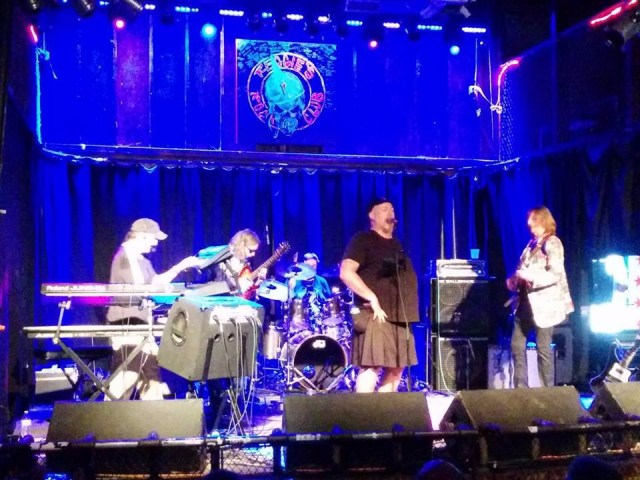
As I entered Reggie’s Rock Club on the final day of Progtoberfest, the Virginia band Kinetic Element were winding up their set. From the merch stand (where Discipline’s Matthew Parmenter was kind enough to make change for me as I bought CDs), their take on classic prog, spearheaded by keyboardist Mike Visaggio, sounded accomplished and intriguing; I wished I could have arrived earlier and heard more. Plus, you gotta love a band with a lead singer in a kilt! (Props to Progtoberfest’s Facebook group admin Kris McCoy for the picture below.)
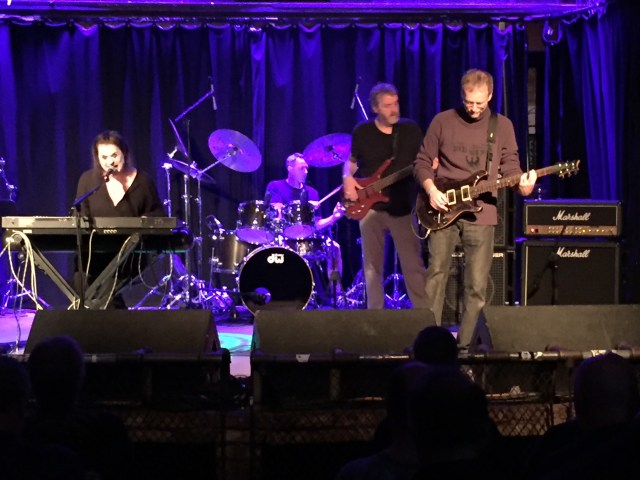
The second high point of the festival for me followed, as fellow Detroiters Discipline held the Rock Club spellbound with their baleful, epic-length psychodramas. Matthew Parmenter reeled in the crowd with his declamatory vocals and emotional range; from there, the quartet’s mesmerizing instrumental interplay kept them riveted. The well-earned standing ovation at the end felt oddly cathartic, as if the audience was waking from a clinging nightmare, blinking at the newly-rediscovered daylight — even while rain clouds and colder temperatures rolled in outside.

Ukrainian Progressive Rock/Post-Metal project Korzo, featuring MOR / Bloody Terror members, have announced second full-length album Supremacy which will be released on November 20th via Massive Sound Recordings.
After 2-year break project entered the studio with new line-up to record Supremacy, which musically continues the previous album Polarity (2014), but unlike the debut, the sophomore album includes vocals.
First single “We,” taken from the new album is available for streaming / download from Bandcampand Soundcloud.
Commented singer and guitarist Dimitriy Pavlovskiy: “The project was frozen since 2015 due to the conflicts with our previous label Black Candles Records; we were very frustrated with poor work by the label and decided to put the project on hold, but the idea to renew Korzo was by our keyboardist Johaness, when we toured with Majesty Of Revival around Ukraine to support our last album ‘Dualism‘. And I’m really happy that we made it happen, ‘coz we had a lot of fun during the recording process and I’m very proud of this new record! It’s more mature album than previous, more atmospheric. And also ‘Supremacy’ includes vocals by me and Anna Shmilyak.”
Supremacy is out on November 20th via Massive Sound Recordings.
by Rick Krueger
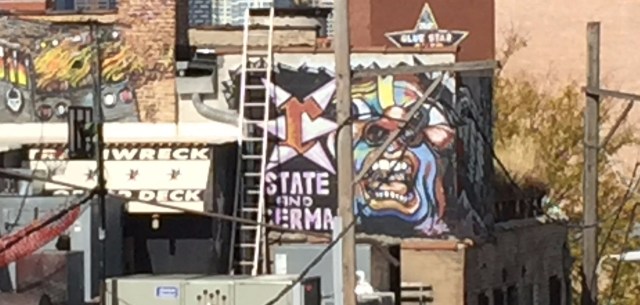
The sun shone warmly again on the south side of Chicago as Progtoberfest III kicked off its second day. Taking in the view as I exited the ‘L’, it was amusing and welcoming to see a familiar screaming face painted on the exterior of Reggie’s:
Hoping to get Alphonso Johnson’s and Chester Thompson’s autographs in the VIP Lounge the night before, I’d struck up a delightful conversation with members of the North Carolina Genesis tribute band ABACAB. In 2016, festival organizer Kevin Pollack had given them “homework” for this year: to play all of Genesis’ live album Seconds Out on the 40th anniversary of its release. You could tell the band was nervous (they focus on 1980s Genesis to get bookings, so they had to learn half the album in the past year) but also absolutely thrilled to bring it to the Rock Club stage. And on Saturday afternoon, they nailed it, to the joy of an enthusiastic, supportive crowd and rave reviews from other acts. They’re already planning to return to Reggie’s in April as a headliner, and for Progtoberfest IV next October. Check out why below:
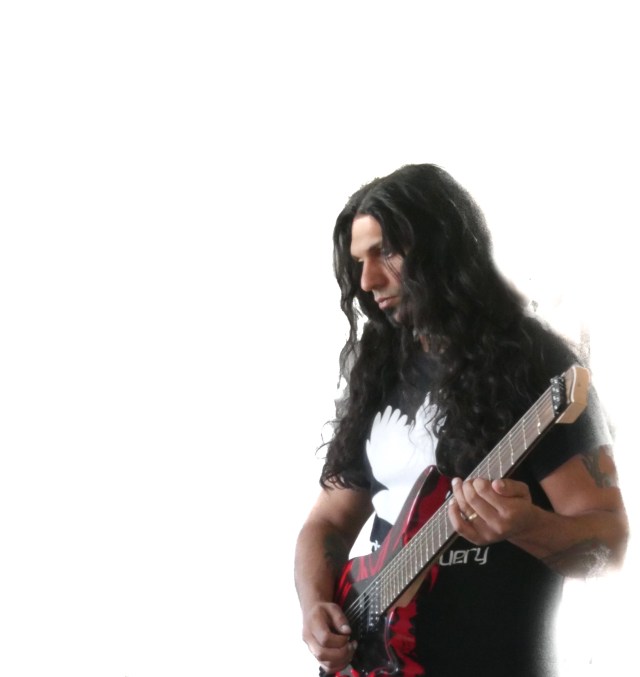
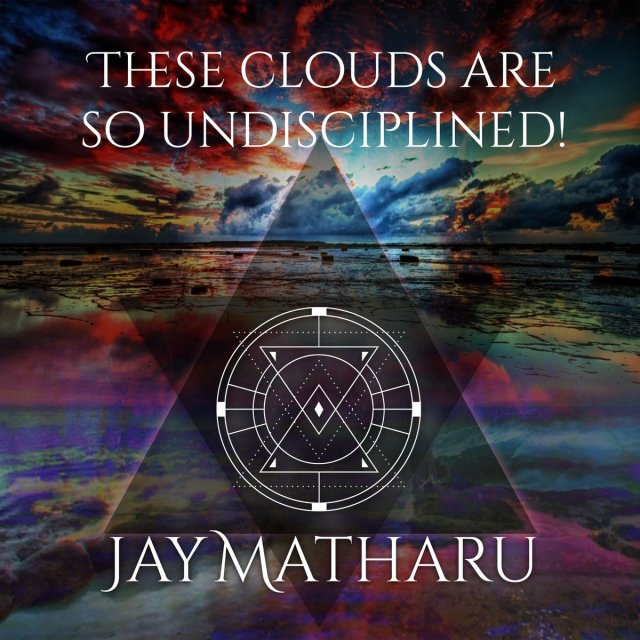
The Uppsala, Sweden-based song-writer, performer, guitarist and composer, Jay Matharu, is set out to explore a wide variety of genres and unleash his full creativity on his debut album “These Clouds are So Undisciplined!,” clearly stating that he is not into music to make it big, but more importantly, for his passion for creating music.
One of the most striking features of his music is definitely Jay’s ability to cross different genres and platforms, incorporating elements of music from different styles: from metal to jazz fusion and even some subtle hints of hard rock and djent in the form of really memorable arrangements.
On this material, Matharu is showing an incredible amount of versatility, as a composer, performer and musician, casting a beautifully diverse collection of songs. Fans of good instrumental guitar-oriented rock with jazz fusion and metal excursions are certainly in for a treat.
Get the album from Bandcamp here.
by Rick Krueger
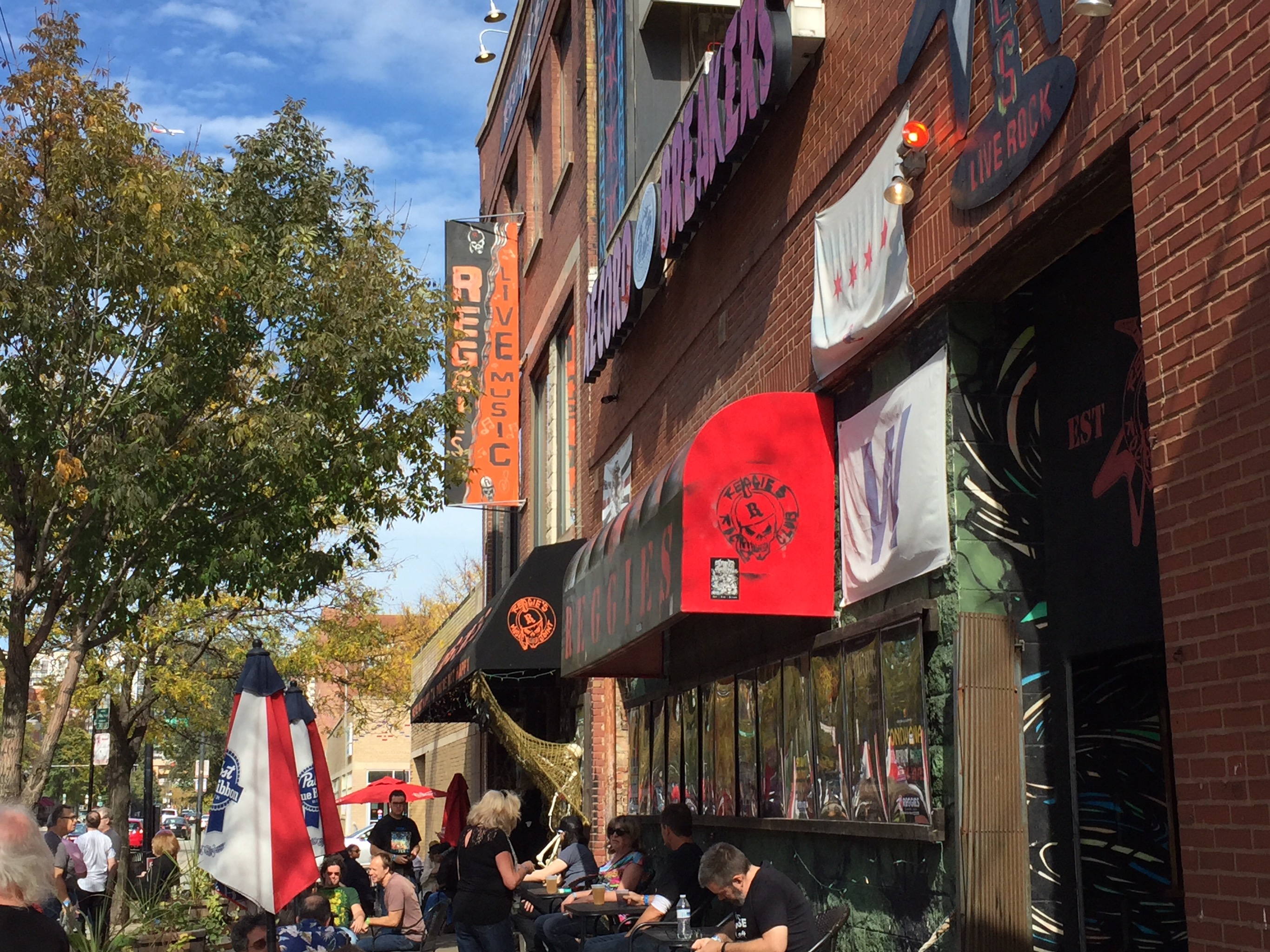
On Friday, October 20, hundreds of dedicated proggers converged on Chicago from around the country — and even from across the globe. The location: Reggie’s Rock Club & Music Joint on the Near South Side, only two blocks away from the former Chess Records, the birthplace of great discs by Muddy Waters, Chuck Berry, The Rolling Stones and countless others.
Reggie’s has two main rooms, both dedicated to Progtoberfest this weekend. The Rock Club is designed for concerts, with a raised stage, a main floor, an upper level mezzanine —and a wire fence decor motif throughout. The Music Joint has a tinier stage tucked into the back of a narrow bar and grill. This weekend, merch tables were crammed into every inch remaining on the main floor, and patrons less interested in the music (or needing a break from the density of the sound) took advantage of Friday and Saturday’s warm weather to eat and drink at sidewalk tables. An upstairs space that held a record store until recently was turned into the VIP/Meet and Greet lounge for the duration.
Due to the usual complications of traveling to and around Chicago as the weekend starts, I got to my spot in the Rock Club just as Schooltree was taking the stage. With only an hour on the schedule, they powered through highlights of their Heterotopia album, condensing the narrative to zoom in on its main character Suzi. The set left no doubt that Lainey Schooltree is a major talent; her songwriting chops, keyboard skills and vocal versatility all came through loud and clear, grabbing and holding the audience’s attention. The rest of the band bopped along brilliantly too, with the ebullient energy of Peter Danilchuk on organ and synth leading the way.
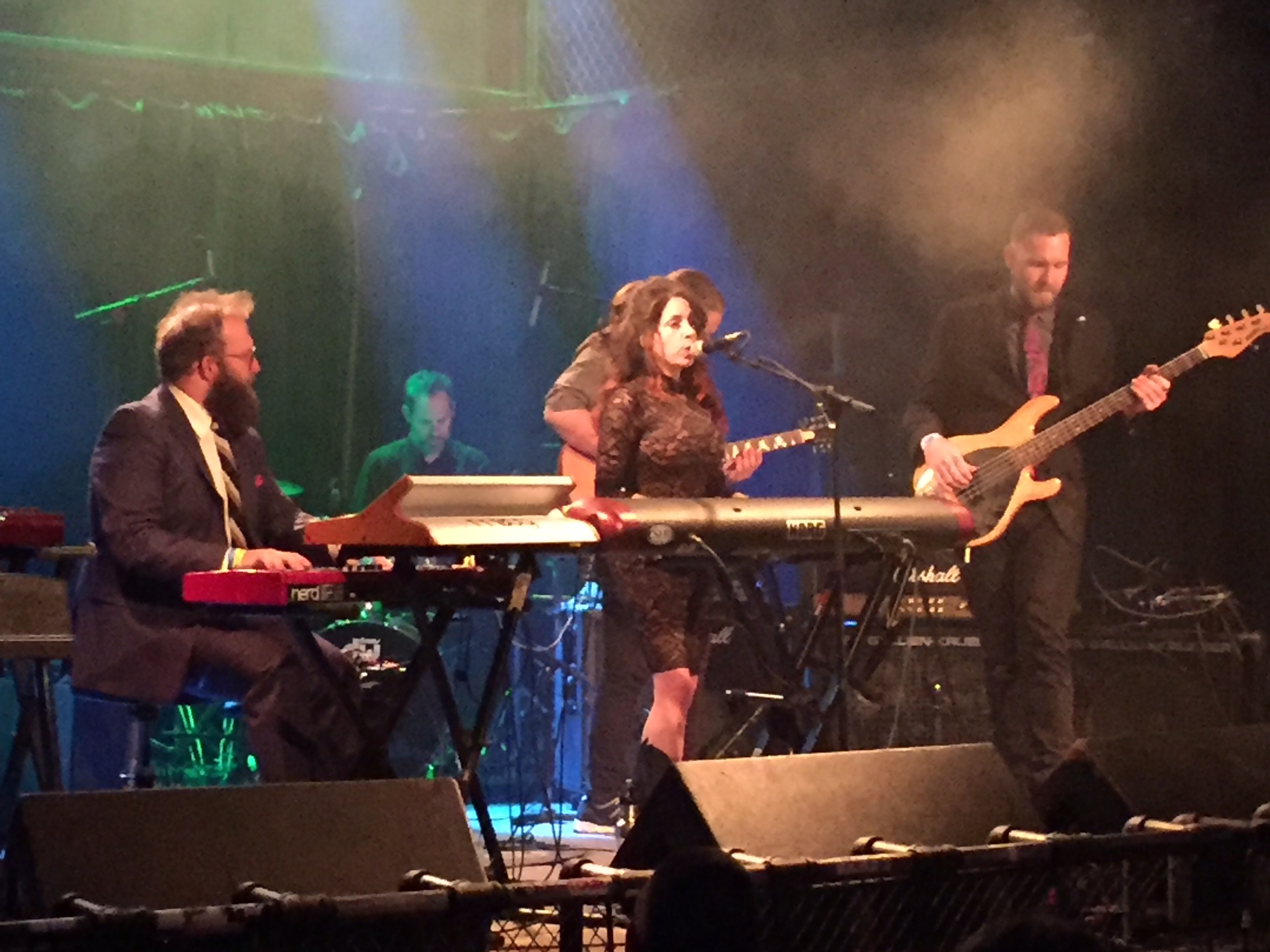
The crowd for Schooltree was solid, but hometown heroes District 97 were the first group to pack the place, filling both seats and standing room on the main floor. The band took no prisoners, blasting right into riff-heavy highlights from their three albums that showed off every player’s monster chops. Soaring above the din, Leslie Hunt pulled in the crowd with her astonishing vocal power and range. New songs were mixed in that sent the audience head-banging and prog-pogoing with abandon.
 Progarchy