One of the only (well, probably the ONLY!) good things about PROG being shut down is seeing the amount of support being shown for our beloved friends. On Facebook, everyone from Greg Spawton to Matt Cohen to Mike Portnoy and beyond has offered great words for Jerry and everyone at Prog.
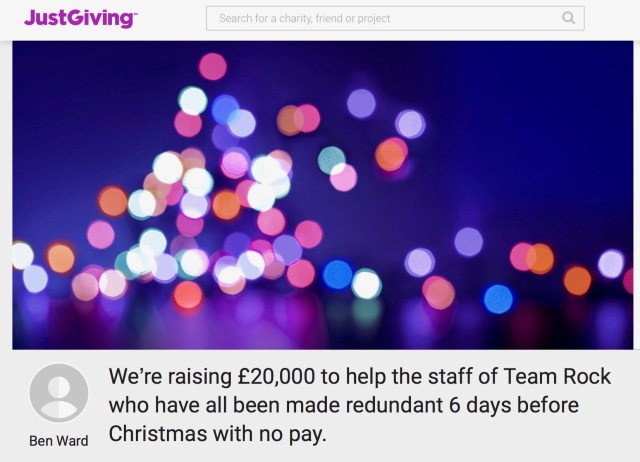
Mike Morton of The Gift has taken this to the next level. He’s set up a link to help donate to all of those who just lost their jobs. Remember, they had no idea this was coming at work. Not only were they let go this afternoon, they were denied pay for the previous three weeks as well.
This just appeared on Jerry’s wall at FB (late afternoon, December 19, 2016). I post it not for reasons of gossip, but simply as news and information.
Of course, I’m totally on Jerry’s side. . . . Sounds like Dickensian nightmare.
Well you’ve heard the rumours. You’ve read the news. It would be remiss of me too say much on a public forum, but they walked in, told us TeamRock had gone into liquidation, no one was getting paid in December, and to vacate the premises there and then. I could rage now about some people, but that will come later. For now, almost 100 good people exit into the cold December night, unaware of whether they can afford a Christmas dinner, or a roof over their head in January. Good people who have slaved over great magazines for great musical causes for many years. Brilliantly talented people: [removed names Jerry lists]. The best of the best. We’ll be back folks. Watch this space…
Only moments ago, I learned that Teamrock (parent company of PROG and CLASSIC ROCK magazines) has gone under. Lots of really talented folks are out of work as of today. For what it’s worth, I am so terribly sorry to know this. Jerry has been a solid and kind friend to us, and he and his team have brought me (and I’m sorry all of us) hours and hours of entertainment and news. I was always struck by how professional the layout, the writing, and the art at PROG was. Perfectionists, all. They deserve better than this.
Seeing that I haven’t been absorbing a lot of new prog (Oh! The Horror!), I’ve spent most of 2016 happily revisiting my favorite prog (and proggy pop) from the past. As I’ve written before, I’m at that age where 40 years’ worth of my favorite music is such that anything new really has to fight for a place among my listening. However, with a community as great as this one, I’ve all the faith in the world that really good prog will find me, not the other way around.
2016 treated us not only to the further touring adventures of Yes, but also to the touring wonder that is Anderson Rabin Wakeman, which by most accounts was a wonderful tour, and I do hope that 2017 will see some original music from the lineup.
Inspired by Sir Thaddeus of Wert’s Top 10 Yes albums list, I just couldn’t resist compiling my own list of favorites from the boys. I thought it’d be easy to name 10, but I quickly found that I just can’t; I would only be trying to round out the list by including some albums of theirs I like for maybe one or two songs at best, so why not list my true favorites?
Ahem…
8. Talk
Like many who salivated at the news of a YesWest reunion in the early 90’s, I bought “Talk” as quickly as possible on release day. The album’s bookend tracks – “The Calling” and “Endless Dream” – make this a top 10 record for me. Throw in the well-written “Walls,” and it’s a solid effort, despite a few tracks I can live without.
(For those of you doing the math, this makes it a total of 22 for my favorite albums of 2016. That’s the same total number of favorites that I picked last year.)
Sure, there’s a hint of prog on Space Elevator, especially on the last track, which, at the very end, recapitulates themes from most of the preceding songs on the entire album. And the recapitulation forms a conceptual part of the grand finale to the sci-fi framing sequence for the whole album. But nonetheless the album is mostly a pop-rock masterpiece that goes down smooth, so I place it on my Rock list.
Wolfmother, Weezer, and Sting all delivered perfect albums this year. They each deserve supreme recognition for doing so. Among this year’s most highly satisfying discs, I gave them all multiple spins over the weeks of 2016.
For better or worse, I never followed Big Country closely after the band’s first three albums. Overall, I liked STEELTOWN (1984) better than I liked THE CROSSING (1983), but I definitely liked both.
By the time THE SEER (1986) came out, I felt as though the band was repeating itself. And, yet, the title track of the album is as good as anything else the band did. Outstanding, really. Though, I’m sure that Kate Bush’s vocals didn’t hurt my view of the song!
This is the special pre-preordering page for the as yet unfinished album “The Slow Rust Of Forgotten Machinery” – the Ninth studio album by The Tangent. All composed and demoed – ready to record
Before we start – please let us make this very clear.. This album will be on sale at a perfectly normal and reasonable price in 2017 and we will have “normal” pre-ordering for the album nearer the time at those prices.
The embrace of Arthurian legend and Tolkien-esque fantasy by British musicians in the 1960s and 70s — fueled undoubtedly by mixing the sounds of the folk revival with psychedelics and horrified revulsion at an overly industrialized and de-personalized world — worked to create some truly exotic hybrids in a scene that had also been profoundly influenced by American blues music and the sheer power of electric instrumentation. But whether it was Donovan or Led Zeppelin or Uriah Heep taking on the Roundtable and Middle Earth, there tended to hang over this music a hippie haze that could just as easily turn towards the naively dumb as the innovative. (Spinal Tap’s “Stonehenge” sequence is funny because it’s so spot-on, and as a Zep and Rainbow fan I laugh, and squirm, whenever I see it.) Leave it to Pentangle to get it right. As Bert Jansch introduces “Hunting Song” as a “13th-century rock and roll song” on this stellar performance from the band’s 1970 BBC special, his is a voice of wry authority. A key figure in the development of acoustic guitar playing in the 1960s, and a songwriter who found inspiration in the dark power of traditional music, Jansch was a musician who masterfully summed the denominators of blues and jazz and folk music early in his career, and until his death in 2011 was a guitarist’s guitar player. While Pentangle could not be said to be Jansch’s band, as it also included a cast of equals including guitarist John Renbourn, bassist Danny Thompson, drummer Terry Cox and vocalist Jacqui McShee, they built on the ground Jansch cleared in the mid 1960s along with Martin Carthy and John Fahey. Their music is jazz medieval, folk improv, well-suited to covering one genre’s songs with another’s genre’s music. “Hunting Song,” originally recorded in the studio for 1969’s Basket of Light, adapts, from the Arthurian take on Tristan and Isolde, the story of Morgan Le Fay’s magic drinking horn, which revealed faithlessness in those who were incapable of drinking from it. The narrator’s role in the story isn’t entirely clear, and the broken narrative itself is, in a moment of genius, written as if the band found it on a shard of manuscript. There is a hunt, a horn, a betrayal. The sources are uncertain, our interpretations our own. Here we see a rare moment of electric guitar work from Renbourn, and Thompson, as always central to the Pentangle sound, hunched over his upright bass, working with Cox to both support and lead the tune. Although Jacqui McShee didn’t possess the vocal firepower of Maddy Prior or Sandy Denny, she matched them in finesse, and beautifully floats over Jansch’s rougher, Dylanesque delivery. As a crossroads of jazz, progressive, and traditional music, this is one of British folk-rock’s great moments.
The album’s concept is taken from the fantasy works of Michael Moorcock and that means songs about the importance of a good armorer, basic sword maintenance and of course, bringing down the hammer on all manner of daily annoyances. Take the opener, “I Am the Hammer” for instance. As you’d expect it foretells of many things hammer-related and all involve some fool getting his dome remodeled.
…
Cuts like the awesome title track are so damn catchy and addicting, it almost feels unseemly for metal this epical and manly.
…
With just seven songs and a 34 minute runtime you’ll definitely be left wanting a whole lot more.




 The embrace of Arthurian legend and Tolkien-esque fantasy by British musicians in the 1960s and 70s — fueled undoubtedly by mixing the sounds of the folk revival with psychedelics and horrified revulsion at an overly industrialized and de-personalized world — worked to create some truly exotic hybrids in a scene that had also been profoundly influenced by American blues music and the sheer power of electric instrumentation. But whether it was Donovan or Led Zeppelin or Uriah Heep taking on the Roundtable and Middle Earth, there tended to hang over this music a hippie haze that could just as easily turn towards the naively dumb as the innovative. (Spinal Tap’s “Stonehenge” sequence is funny because it’s so spot-on, and as a Zep and Rainbow fan I laugh, and squirm, whenever I see it.) Leave it to Pentangle to get it right. As Bert Jansch introduces “Hunting Song” as a “13th-century rock and roll song” on this stellar performance from the band’s 1970 BBC special, his is a voice of wry authority. A key figure in the development of acoustic guitar playing in the 1960s, and a songwriter who found inspiration in the dark power of traditional music, Jansch was a musician who masterfully summed the denominators of blues and jazz and folk music early in his career, and until his death in 2011 was a guitarist’s guitar player. While Pentangle could not be said to be Jansch’s band, as it also included a cast of equals including guitarist John Renbourn, bassist Danny Thompson, drummer Terry Cox and vocalist Jacqui McShee, they built on the ground Jansch cleared in the mid 1960s along with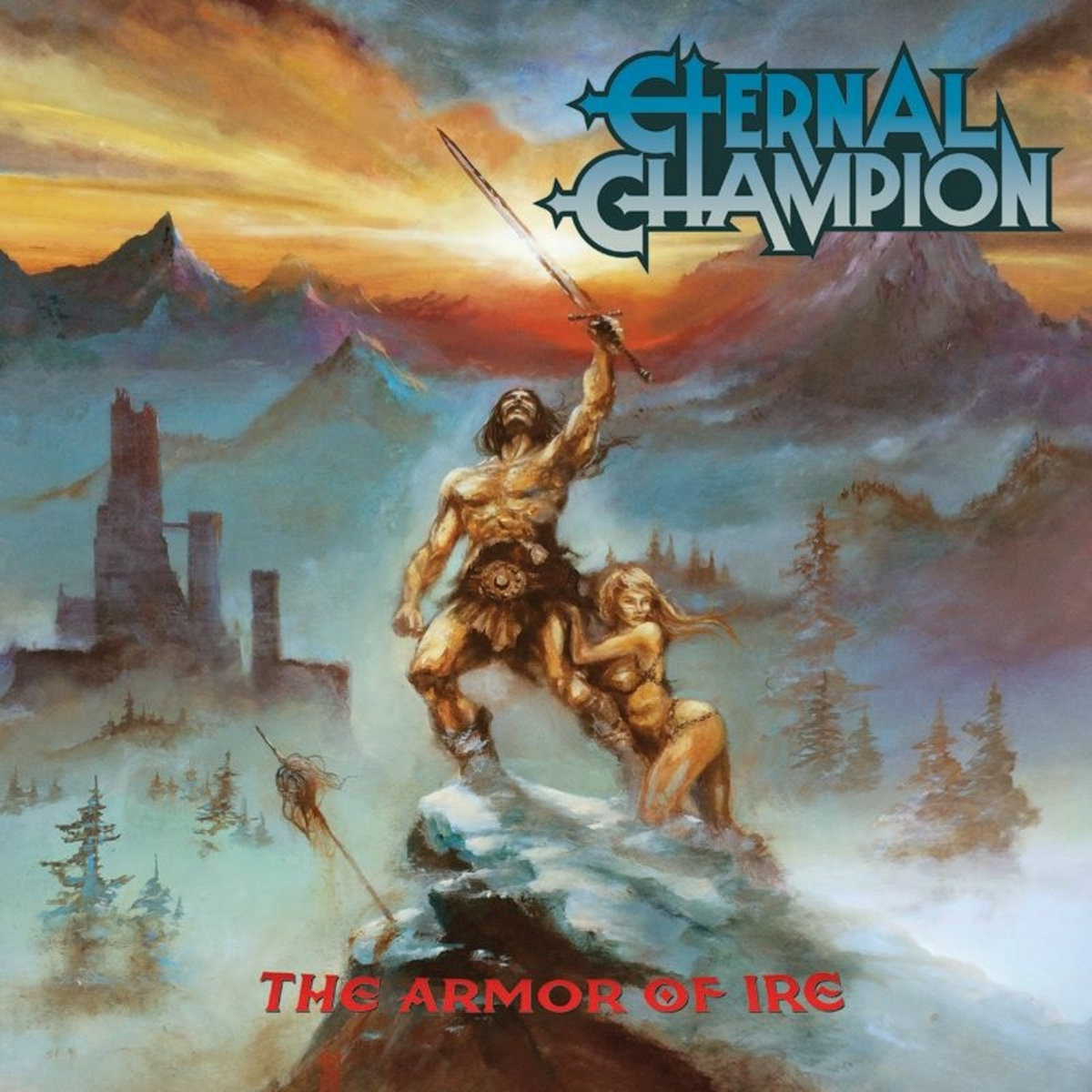
 Progarchy