Taking Stock: Talk Talk 25 Years Later

A personal journey, Part I.

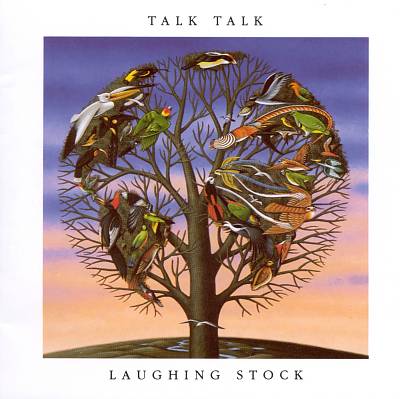
Twenty-five years ago this fall, progarchist editor Craig Breaden and I were in Waterloo Records, Austin, Texas.  There it was on the shelves—the final Talk Talk album, LAUGHING STOCK, in all of its James Marsh-esque glory.  Of course, I purchased it as quickly as possible.  After all, it had just come out, and Craig and I were living in pre-internet days in northern Utah.  We had a music store nearby, but however good it was—and, frankly, it was pretty good—it wouldn’t have dreamt of carrying anything by a band so strange as Talk Talk.

laughing stock
Talk Talk’s last album, 1991.  A masterpiece at every level and in every way.  Arguably the single greatest album of the rock era.

So fortunate we were at a history conference in Texas at the same moment as LAUGHING STOCK’s release.

Craig and I were not only officemates and apartment mates, but we were best friends and music mates.  How many hours flew by with Craig and I devouring music—old and new—and then discussing and analyzing every bit of it.  I still cherish these nights and even weekend-days as some of the best of my life.  Though I’d grown up in a house that respected nearly every form of music, I had never been introduced to some of the great psychedelic and experimental rock acts of the late 1960s and early 1970s.  Unless it was by Yes, Genesis, or Jethro Tull, I really didn’t know it.  Craig played Procol Harum, Soft Machine, Spooky Tooth, and Traffic for me.  I fell in love with each.  As the time Craig and I (and another close friend, Joel) were spending so much time together, the music scene itself was going through a bit of a psychedelic revival—with World Party, Charlatans, and others—and this only added to our excitement.

As soon as we returned from Austin, I recorded the full album of LAUGHING STOCK on each side of a double-sided TDK cassette and enthusiastically played this tape over and over and over and over. . . . Even though Craig and I had shared many enthusiasms with each other, this obsession with Talk Talk seemed more than a bit too enthusiastic to Craig.

Understandably so.

By sheer force of will, I fear, Craig had to accept this or our friendship would suffer!  Of course, here we are, a quarter of a century later, still very close friends and co-editors of progarchy. . . . You know the story ended well.

For nearly thirty years, I instantly answered the question of “what is your favorite band” with Talk Talk and Rush.  If pushed a bit more, I would add Tears for Fears and, depending on my mood, Genesis or Yes or XTC.  This rote answer became almost proudly knee-jerk on my part.

When challenged about this opinion, I rather haughtily pointed to THE COLOUR OF SPRING, SPIRIT OF EDEN, and LAUGHING STOCK.  After all, who could top fourteen months a shot, recording in dark, deserted churches, challenging every single bit of corporate conformity in the music business.

talk_talk_live_1347120452
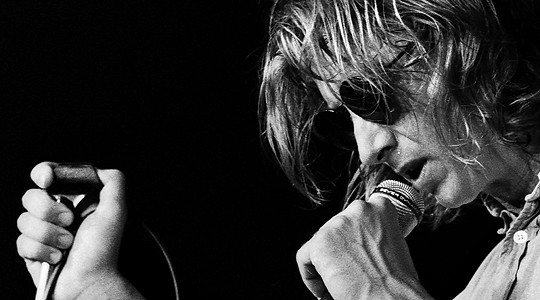
Mark Hollis, 1986.  At the very edge of Valhalla.

Mark Hollis, Tim-Friese-Green, and Phill Brown were not just three more musicians in the industry, they lingered as demi-gods at the very edge of Valhalla itself, ready to release Ragnoräk at any moment.  And, power to them!  As far as I was concerned, the music industry needed and deserved a revolution.

Recently, I’ve realized that Talk Talk no longer holds top spot in my mind when it comes to bands (Big Big Train has finally replaced Talk Talk in my mind and in my soul), but it will always be in the top three for me.  For too many years, Talk Talk was my go-to band, my comfort and my first love in the world of music.  To this day—and, I presume, to the end of my days—the final three albums the band made will always be the three by which I judge every other release in the music world.  Few albums or bands, then or now, can measure up to such heights.  But, such is my mind and soul.

Part II to come soon. . . .  In the meantime, enjoy 19 minutes of Hollis talking about LAUGHING STOCK.

Riverside Teaser

Riverside just posted this on its Facebook page, about 4 hours ago.  Much to look forward to.

soundstreamsunday: Sonnenblumenstahl by Ulrich Schnauss and Jonas Munk

schnaussmunk2I’m continuing with my Jonas Munk kick from two weeks ago, when I posted the fabulous Sun River stream, “Esperanza Villanueva”. “Sonnenblumenstahl” is a beautiful piece of Moebius/Roedelius/Plank-style krautrock from Munk’s and Ulrich Schnauss’s highly recommended 2011 full-length collaboration. Munk the guitarist and Schnauss the keyboardist have both left their influential mark on ambient techno, and together they make music that is generous, melodic, and open, combining the best of both their musics. This song could be from Cluster’s Sowiesoso (or Zuckerzeit, OR Grosses Wasser), but has a character uniquely its own.

Soundstream Sunday archive

The Place of an Artist

Untitled presentationSeveral weeks ago Progarchy contributor Bryan Morey posted an article, Keep Your Politics Out of My Prog, regarding musicians and the commercial risks they take when speaking their minds politically.  Bryan is a passionate writer and has deeply held beliefs; nonetheless, I took exception with what he said and how he said it, and made my comments in the honest and positive forum that is Progarchy. All good. But…it stayed with me, and thanks to Bryan for spurring me to further thought, and now to writing more.

I also feel compelled to write now, this evening, because a musical icon yesterday made a political statement regarding recently passed legislation in North Carolina, the state in which I live, where I was married, and where one of my children was born.  What has become known as HB2 is a law destructive of not only the Civil Rights Acts but of the grassroots, everyday work that millions of people in the South have undertaken in the last 70 years, to ensure that all are equal before the law.  In canceling his show in Greensboro, North Carolina tomorrow, Bruce Springsteen made the following statement:

As you, my fans, know I’m scheduled to play in Greensboro, North Carolina this Sunday. As we also know, North Carolina has just passed HB2, which the media are referring to as the “bathroom” law. HB2 — known officially as the Public Facilities Privacy and Security Act — dictates which bathrooms transgender people are permitted to use. Just as important, the law also attacks the rights of LGBT citizens to sue when their human rights are violated in the workplace. No other group of North Carolinians faces such a burden. To my mind, it’s an attempt by people who cannot stand the progress our country has made in recognizing the human rights of all of our citizens to overturn that progress. Right now, there are many groups, businesses, and individuals in North Carolina working to oppose and overcome these negative developments. Taking all of this into account, I feel that this is a time for me and the band to show solidarity for those freedom fighters. As a result, and with deepest apologies to our dedicated fans in Greensboro, we have canceled our show scheduled for Sunday, April 10th. Some things are more important than a rock show and this fight against prejudice and bigotry — which is happening as I write — is one of them. It is the strongest means I have for raising my voice in opposition to those who continue to push us backwards instead of forwards.

I think as humans and citizens we should use the voices we have to speak out for what we believe to be the truth, what we believe to be right, and I admire Springsteen (someone whose politics, admittedly, I generally agree with) for using the voice he has and sending a message that needed sending to an increasingly retrograde Southern political establishment, on whom the shadows of segregation are again creeping.  It would be the poor artist who would shrink from using their total voice, to contain themselves only to their primary medium, regardless of the size of their fan base.  In digging deep, artists and musicians push boundaries, often at great personal and commercial cost, and the ones who are successful are without fail also the ones who are compelled to speak their minds in all aspects of their lives.  It might be messy, it might not look great on paper, it might not live up to the images they can magically conjure in their art or the idealization we, their fans, have built up around them or integrity we ascribe to them.  But we don’t get to have the one without the other, and any artist worth their salt, that I can think of, would not change their point of view or what they choose to say based on the sales of albums or tickets.  In taking the action he did, Bruce Springsteen showed again why his band and his fans call him the Boss and why, over his 40-odd years as a professional musician, his artistry has remained so vibrant.

Not Bauhaus but World Party: Fractal Mirror’s SLOW BURN 1

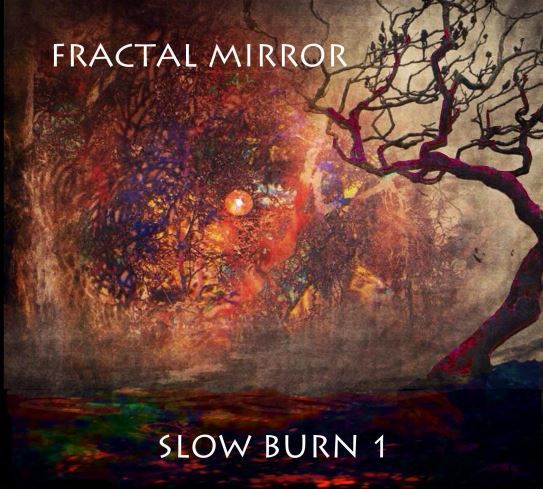
Fractal Mirror, SLOW BURN 1 (Third Contact, 2016).

Tracks: Prelude; Miracle; Numbers; V838; Floods; Mist; Enemies; Embers; Fading; Artifacts; Universal.

Mixed by Brett Kull, and mastered by Larry Fast.

slow burn 1
Fractal Mirror’s Third Album.  A new direction, but the same glorious dedication to art.

If you’re looking for some intelligent, thoughtful, and melodic rock, you’ve arrived at the perfect place.  The aptly titled, SLOW BURN 1, offers 11 contemplative tracks, each flowing elegantly from one to another.  While the first two Fractal Mirror albums possessed strong gothic-Prog elements, this album, as a whole, is rather Beatles-eque, especially in its vocal melodies.

Continue reading “Not Bauhaus but World Party: Fractal Mirror’s SLOW BURN 1”

A Sense of Foreboding

So Album 18 from Marillion finally has a release date (9 September) and a title – and the latter is a surprise. Here’s Steve Hogarth’s explanation:

What’s in a name?……

All worthwhile human impulses come from love. And all negative and destructive human impulses come from fear.

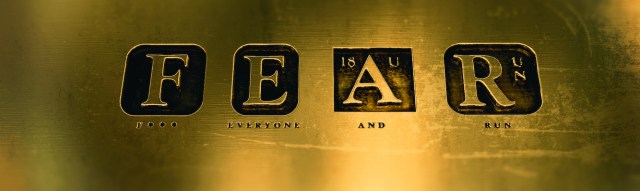
This album is called F*** Everyone and Run or F.E.A.R.

This title is adopted not in anger or with any intention to shock. It is adopted and sung (in the song “New Kings”) tenderly, in sadness and resignation inspired by an England, and a world, which increasingly functions on an “Every man for himself” philosophy. I won’t bore you with examples, they’re all over the newspapers every day.

There’s a sense of foreboding that permeates much of this record. I have a feeling that we’re approaching some kind of sea-change in the world – an irreversible political, financial, humanitarian and environmental storm. I hope that I’m wrong. I hope that my FEAR of what “seems” to be approaching is just that, and not FEAR of what “is” actually about to happen.

fear

Haken – “Affinity” — The PROG Mind

Command Prompt: Listen to Affinity.

via Haken – “Affinity” — The PROG Mind

October Tide – Winged Waltz – Album Review — The Blog of Much Metal

Artist: October Tide Album Title: Winged Waltz Label: Agonia Records Date Of Release: 22 April 2016 I simply cannot believe that I don’t have any of the October Tide discography within my collection currently. It beggars belief on three counts: Firstly, I’m a bit of a sucker for that whole melodic dark/doom/death sound. Secondly October […]

via October Tide – Winged Waltz – Album Review — The Blog of Much Metal

Progarchy Talks with Messenger’s Jaime Gomez Arellano

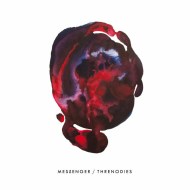
Recently, I had the good fortune of talking with Jaime Gomez Arellano, drummer and Threnodies coverproducer for the UK prog band Messenger. The band’s second album (first for Inside Out), Threnodies, is due out on April 22nd. Among the topics Gomez (as he likes to be called) and I discussed were the history of Messenger, their influences, and the many (metaphorical) hats he wears as the band’s drummer and producer as well as his role in producing for other bands.
————————————————-

Progarchy: You guys are still relatively new on the scene.   Can you provide us with an introduction to your band and a short history?

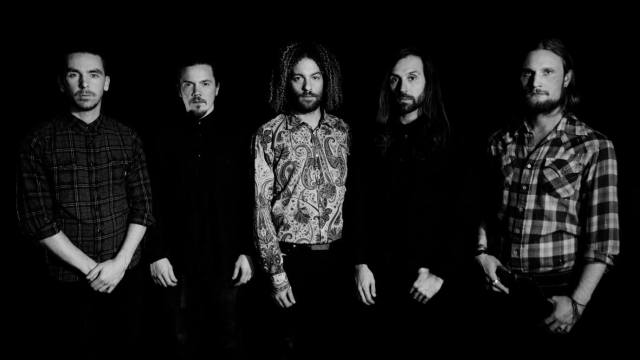
JGA: Messenger started when our lead singer Kahled, he had some ideas for songs that he wanted to record. Since I’m a record producer and we knew each other through friends he came to my studio record some songs. The songs kind of developed as well as we worked together. Then we got Barnaby, the 2nd guitarist/singer involved and we came up with an album. By the time we mixed it I realized that we should do something with this, so I started sending it out to labels. Svart in Finland really liked it so they release our first album. And soon after that we realized we needed some other players, so we asked our friends James and Dan to join us on bass, guitar, and keyboards.  So that’s how it began, really.

Progarchy: How would you describe your music to those unfamiliar with your band?

JGA: I would say Messenger is a kind of a combination of rock and psychedelic rock.  Kind of heavily influenced by bands such as Pink Floyd, Led Zeppelin, Deep Purple, and Black Sabbath, as well as more modern bands like Radiohead and Jeff Buckley.  It’s always a really hard question to describe yourself.

Progarchy: This is your second album, you did another one previously. Can you briefly describe the first album and then how the music has progressed and changed on the second album?

JGA: Sure.  The first album was just us kind of getting together and working on some songs Kahled had and then writing some songs together in the studio.  So the first album I would say is a little bit more funky than the new one, kind of a bit more gentle.  I guess the difference with the second album is that we wrote the entire album together as a five piece band instead of as a three piece band.  There were no songs before that [i.e. prior to the second album] we just literally locked ourselves up in my studio in London for three months and wrote, recorded, mixed, and mastered the album in that time.  So that’s literally the result of all five of us working together.  I think it’s a lot more varied, it’s a bit like an evolution of the first album, it’s a bit more rocking, and it’s quite different from the first album in places but still sounds like Messenger.

Progarchy: So how did that affect you then, bringing in two new guys to the writing process?

JGA: It was great actually, because they are both very talented guys who happen to be great friends. So Dan is an amazing bass player with lots of experience and good at putting songs together.  Dan, the keyboard/guitar player is good at coming up with riffs.  I’m the drummer in the band but I’m also the producer and I do most of the arrangements, and Dan is really easy to work with, because I can’t play guitar but I can sort of “soft play” something and he’ll just make it sound like a riff.  So for me having Dan in the band it’s great for me to convey ideas.  So that’s the main difference, it was literally the five of us in my studio every day, just writing and recording.  We actually wrote the album in about 3 weeks.  There was one demo that was kind of knocking around, but outside of that, we wrote everything at the studio.

Progarchy: Is there an unifying concept underlying the music of the new album?

I’d say there is a concept as well, more in terms of the lyrics.  The lyrics which Khaled mainly wrote, I personally think he’s very good with words.  We were all a little influenced by what happened in Paris at the Bataclan venue, and kind of the climate of the world at the moment, and therefore the album title Threnodies.  I think lyrically there was a main subject Khaled took on board, religion and spirituality and all these things.  Obviously were very saddened to hear about that.  Luckily we didn’t have any close friends that lost people at that show, but we have friends of friends that lost people, and it was pretty shocking to see something like that could happen in a city like Paris.

Progarchy: Reading about Messenger, it appears that the musical influences and backgrounds of the various musicians covers an extremely wide swath, from heavy metal, punk, progressive rock, and ambient music. Is that an advantage/disadvantage or both to the creative process in Messenger, and how so?

JGA: I really genuinely think it’s a positive thing, and I think that’s one of those things that makes a band have more of a sound.  The one thing we all do like in the band, we all love our prog basically, our 70’s prog.  I don’t like and super technical stuff, I really do not like that, and not many of us in the band like that kind of stuff.  I’ve been hugely into death and black metal in my entire life.  I also play in a kind of classic rock/heavy metal band called Mirror that is signed to metal blade.  And, I listen to a lot of death and black metal, but also listen to a lot of contemporary classical music, and I really love the 70’s stuff, the 70’s psychedelia.  Khaled,  the lead singer, he’s really into 70’s psychedelia.  Bands that we all really love are bands like Magma, we love Pink Floyd, Led Zeppelin, the classics, Uriah Heep, Deep Purple.  I really like Krautrock bands like Can, I’m a massive fan of Can.  Dan he’s really into hip-hop and 70’s R&B, kind of fusion stuff.  Barnaby is really into Americana and singer-songwriter kind of stuff.  So it’s a real mix of a lot of things really and I think that makes it special because we are not afraid of mixing things up.  If it feels right, we just go with it.  It’s a bit of a mess in a cool way.  I like to tell people, you know, like the saying “you are what you eat” so, we are obviously influenced by all these different things.  These days it’s hard to be 100% original because so much of the good music has already been done.  I guess what makes Messenger sound a little bit different is the mix of things.  We also use a lot of different guitar tunings, and that contributes to our sound as well.  I think we have about six or seven different guitar tunings on the songs that we have.
messenger 1

Progarchy: You are not only the drummer for the band, but the producer as well. What do you bring to the creative process from that role (and can you describe the role of a producer in more general terms)?

 JGA: I think the role of the record producer has changed a little bit with time.  The classic kind of record producer is the guy who is there with the band, going through the songs, suggesting arrangements, suggesting different parts for the songs, melodies, and also recording and deciding how things should sound.  That’s kind of what I do, as well as obviously the first part.  I sit with the guys, I listen to any riffs or ideas they have, [e.g.] “I like that chord, but could you make it a little more minor?” or “I like this, but could be maybe change the time signature, instead of playing it in 4/4 could be play it in 6/8 and maybe play it a bit faster?”  I just kind of gel the songs together.  I also write a couple of the bits, actual riffs.  My other really big part of the job is the overall sound of the album, [e.g.] “which drum kit am I going to use for this song”? and “which guitar tone is going to work better for this part, should we use a Fender Strat or shall we use a Gibson Les Paul, should we use a Hiwatt amp or a Marshall amp?”, all these things, just kind of finding the right sound basically.  My day job is to do that with all the bands [that record in his studio].

Progarchy: You also have the role as the band’s general manager – can you describe for our readers what that entails?

JGA: I have to spend a lot of time on my email every day.  Obviously I negotiate the deals with the record labels.  Everyday kind of general maintenance of the band, talking to the label and see what’s going on with the PR department, organizing the artwork for the album and sending it to the label, the videos which actually Khaled the singer in our band does.  It’s just coordinating everything, getting tours for the band, shows, it’s a little bit everything?

Progarchy: So what’s next for the band after this album?

 JGA: Well, our new album will be out on April 22.  We are actually going on tour with the Von Hetzen Brothers.  Then I’m looking to book other dates in Europe for the summer.  WE’ve got a few festivals already lined up.  We signed a three album deal with Inside Out, so onward and upwards, just keep going!  This is our first album with Inside Out, so we’ll just keep going anyway.

Progarchy: So maybe I’ll get to interview you when the next album comes out?

JGA: That’d be cool!

Progarchy: Well, thank you for your time and best of luck with your new album and tour.

 JGA: Thank you very much.

25-Plus Years of “Ritual de lo Habitual”

I never got grunge.

Yes, it was, I suppose, some sort of “what’s next” to follow the hair metal sound of the late 80’s that had more than run its course, and I did appreciate some of the music that Pearl Jam made – Vedder has a voice for the ages – but to me, grunge wasn’t alternative, and to me, Nirvana was nowhere near being the alternative band of its time, no matter how many albums they sold or however much people wanted to hold up Kurt Cobain as some sort of “voice of a generation.”

The real alternative band of the time was Jane’s Addiction.

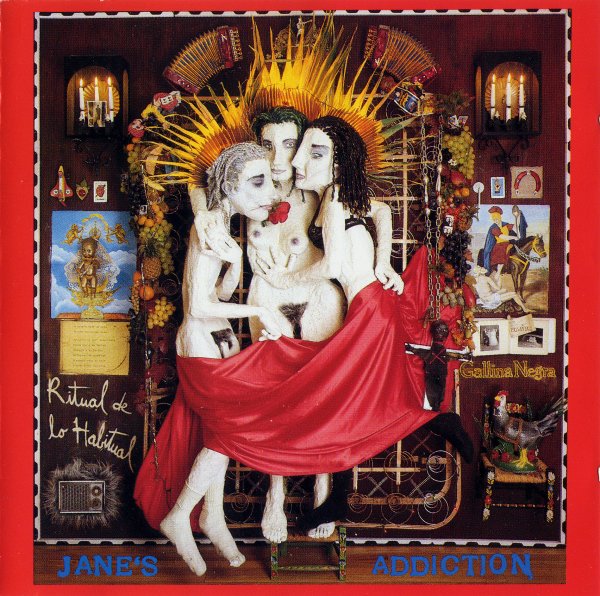
rsjane

As you’ll read in this track-by-track Rolling Stone article from last year (link below), they were influenced by classic rock bands, prog groups (Rush, Genesis and Floyd are cited) and some alternative groups,  but Jane’s Addiction’s blend of rock was something different – even dangerous – during their time.

Prog? Nah.

However, they could write epic tracks when so moved – check out “Three Days” or “Ted, Just Admit It” from “Nothing’s Shocking” – and to me, they were always ascribing to create art with their music.  A parallel with The Doors was cited, and that’s probably not far off the mark.

Their first album (a live effort), “Nothing’s Shocking” and “Ritual de lo Habitual” are a trifecta of heavy, alternative, artistic rock. The latter two remain in my 100 all-time favorite albums list and still sound great today.

Click here to check out the article.