So, after nearly a year of existence (and, yes, I’m rather proud of progarchy’s success!), I’ve finally gotten around to getting a proper contact email for our website. So, if you have questions, or if you want to send us links to your music. . . please. We’d love it.
Our new official email address: progarchy@gmail.com. Not creative, but efficient and memorable.
The Miami-based proggers Little Atlas (home page) have—according to keyboardist, vocalist, and founder Steve Katsikas—been around for nearly twenty years and have just released their fifth studio album, Automatic Day(10t Records). I have all of the band’s albums save their debut, Neverworldly, which are all very solid to exceptional, and yet have never spoken with anyone else about the group. A few months ago, I was going to write a post about that odd silence, and now that the group’s new album is out, I’m finally writing it.
My .02 is that Little Atlas is well worth checking out, and that each of the band’s album has progressively (yes, pun intended) built upon and improved on the previous. Comparisons to early Genesis, Marillion, and Spock’s Beard are apt points of reference. The music is highly intelligent and tasteful, with a wide array of tones, moods, tempos, and lyrical perspectives. While the players are all top-notch, the focus is definitely on songs and grand themes rather than virtuoso showcasing. Katsikas has a background in psychology, which is evident in many of the songs, notably in the 2007 album, Hollow, which presents ten different perspectives in a sort of psychological-prog suite (the title song, “Hollow”, is one of my favorite cuts by the group). As for the new album, Roger Trenwith of the “Astounded by Sound” blog does a fine job of explaining its many merits:
Covering subjects linking the mythical, the stellar, the metaphysical and the politick, both personal and impersonal, Steve Katsikas has crafted a set of intelligent lyrics that to highlight one particular trio of songs make a stately progress from Greek mythology (Twin of Ares) to man’s helplessness at the mercy of the passage of time (At the End Of The Day), via a depiction of Nature as the true deity (Emily True), without seeming in the slightest part contrived, or indeed jarringly disconnected, as could have been the case with a blunter intellect holding the pen. OK – so the lyrics to Emily True are actually by poet Emily Dickenson, but these three songs manage to flow seamlessly nonetheless!
Musically, Emily True manages to mix Rush and Blue Oyster Cult with an epic vision to come up with a new art rock template for the 21st century, and a fine beast it is too.
Illusion Of Control continues an undercurrent of darkness that runs through the album, and would not have sounded out of place had it been penned by Amplifier around the time of The Octopus. Although not quite as heavy (but heavy enough!) as the Manchester sci-fi prog metallers, it is yet more evidence of a new post-prog zeitgeist currently weaving its smoky tendrils through the subconsciousness of a fair number of bands around the globe….
Never forgetting the value of a structured song, there are no aimless instrumental passages, and no displays of musical ego on Automatic Day. Everything is kept tight and to the point. Probably the best song on the record is We All Remember Truth, which within its economic four minutes manages to display all the virtues of the first two sentences in this paragraph.
Read the entire review. And watch a video for “Oort”, the opening cut from Automatic Day:
Los Angeles, CA – Founding member of pioneering space-rock band Hawkwind returns to his intergalactic roots with his soon-to-be-released mind-blowing new CD titled ‘Space Gypsy’! Featuring all new material, ‘Space Gypsy’ boasts guest appearances by fellow Hawkwind alumnus violinist Simon House, and Gong guitar legend Steve Hillage, along with Nicky Garratt of the UK Subs, Jurgen Engler of German industrial band Die Krupps, and Jeff Piccinini of ’70s punk icons Chelsea. Making the CD release even more exciting, Nik Turner has released a dark, hypnotic new video called “Time Crypt featuring Simon House”. This is the second video Nik has released in support of ‘Space Gypsy’, the first being “Fallen Angel STS-51-L”; from the album’s first single about the Space Shuttle Challenger disaster. Nik Turner’s Space Ritual Tour runs in the US from October 9th through November 17th in support of the new CD.
Nik Turner was a founding member of Hawkwind during what has been considered their most commercially successful and critically acclaimed period for the band from 1970 to 1976. He wrote/co-wrote some of the group’s most popular songs such as “Brainstorm” and “Master Of The Universe”. Hawkwind’s 4th and possibly most popular album ‘The Space Ritual Alive in Liverpool and London’ was recorded in 1972 (released in May 1973). Reaching #9 in the UK album charts and #179 in the Billboard Top 200, the double-record was recorded during the tour to promote the band’s ‘Doremi Fasol Latido’ (third) release. The Space Ritual show attempted to create a full audio-visual experience. The performances featured dancers, lightshow by Liquid Len and poetry recitations by Robert Calvert. Nik Turner recently brought his version of the historic show to the US shores, recreating the magic once again!
Says Nik Turner, “This single ‘Fallen Angel STS-51-L’ is the epitome of epiphanic, orgasmic, cathartic embodiment of my space dreams, become one man’s reality, exploding into space. Expect lots more on this awesome album”.
Nik Turner’s ‘Space Gypsy’ will be released in three different formats: A regular CD release packaged in an attractive digipak with original artwork; a limited edition gatefold vinyl with bonus etched 7-inch single; and for the ultimate collector – the complete experience! A special limited edition deluxe box version of ‘Space Gypsy’, which includes a bonus CD of rough mixes and instrumental versions that feature additional flute and saxophone improvisations from Nik not included on the album. Also included are 4 postcards, a gorgeous full color patch and collectible pin.
Press inquiries: Glass Onyon PR, PH: 828-350-8158, glassonyonpr@gmail.com
CLEOPATRA RECORDS, Inc.
11041 Santa Monica Blvd #703
Los Angeles CA 90025 http://www.CleopatraRecords.com
Just as The Tangent’s Le Sacre du Travail was entering into the ordinary time of our lives, Andy Tillison (though the son of a Congregationalist minister) jolts us toward a high Feast Day, and the liturgy of life and art continues with The Tangent’s second release of 2013.
A moveable but glorious feast, L’Étagère Du Travail offers us more glimpses–through a glass, not darkly, as it turns out (with apologies to Paul)–of the essence of truth and beauty.
Please forgive all of the religious references, but musicians such as Tillison, Spawton, Longdon, Armstrong, Cohen, Erra, Stevens, and others bring this out in me. These fine artists always reach for the best, and that best is often beyond any rational interpretation or explanation. It’s no wonder the medievals spoke of artists with reverence and awe, in terms of ecstasy. They touch something the rest of us (the vast, vast majority of us) can only sense exists.
2013 will go down, someday, as one of the best years in the history of progressive rock music, and Tillison has now contributed not one but two major releases and, consequently, two critical steps to and toward the sheer quality of this year.
The Tangent has been in existence for over a decade now, and Mr. Diskdrive himself, Andy Tillison, that red-headed, mischievous sprite, has given the music world much to celebrate. Tillison has consistently brought together the best of the best musicians, and he has orchestrated all–lyrics, instruments, and arrangements–with some thing that is nothing short of brilliance.
The “red-headed” one. Stolen from Tillison’s FB page. Without permission but not with malice.
This new release, available exclusively at thetangent.org consists of ten tracks including, as the website notes, five new “unreleased demo” tracks and 3 “revisitations.” The 10 tracks come to roughly 1.2 hours of music. So, this is no EP. As Tillison notes on the site, it’s a companion album, a “sister” (a very lovable little sister, I presume) to Le Sacre du Travail.
As with its sibling–naturally having received almost nothing but rave reviews–L’Étagère Du Travail is a must own. It needs to be in the collection of anyone who appreciates fine art, but especially for those of us who like our music progressive.
I received a review copy just after departing for family vacation, and it has, in many ways, become the soundtrack of my trip into the American West, despite the fact Tillison is, perhaps, the most English of English folk!
From my many listens, I’m absolutely taken with and blown away by the energy and the highly controlled anger of the album. It’s jazzier and more experimental (there’s even a hint of disco on one track, “Dancing in Paris”–all done, of course, with taste), moment by moment, than Le Sacre du Travail. This, of course, is to be expected, as the former album told a coherent story, while this companion album explores the same sacred space, but in exemplary fragments not in overarching mythos.
Yet, Tillison’s art is unmistakably Tillison’s art. Every single thing you love about The Tangent is here in abundance. As far as I know, I (rather proudly) own everything The Tangent has recorded with the exception of A Place on the Bookshelf (a stupid oversight on my part; it slipped under my radar when it came out; and I’ve regretted not buying it ever since), and I’ve been listening to them for a decade.
Getting a review copy just on the eve of my longed-for summer vacation into the Rockies was akin–again, forgive the religious references–to having wine filled to the brim at a wedding. As it was at Cana, so it must be in York. Tillison’s goodness overflows.
Yet, as I just wrote–there’s a lot of anger in this album, but it’s the anger of a righteous man, the kind of anger that demands justice. What Tillison does with his lyrics is criticize what desperately needs to be criticized in this world. He does it with passion, but also with immense graciousness, charity, and exactness. This is not the cheesiness of Bono’s preaching in 1987, but the jeremiad of, well, a modern Jeremiah, albeit an atheist anarchist Jeremiah. Tillison wants the idealism of his era to meet reality, and he finds the post-modern world more than a bit disconcerting. The Tangent’s website proclaims correctly and with perfect self-understanding, “Progressive Rock Music for a World on Auto-pilot.”
Yes. Absolutely, yes. Every word Tillison sings proclaims, “Wake up, world!!!”
I’ve never had the privilege of meeting Tillison in person, but I suspect he’s rather Chestertonian–clever as the dickens and willing to let the world know what needs to be known, but always with that impish and knowing smile and always with a wry sense of humor. He is, I believe, a man who reaches and reaches but who understands too much of human nature to be taken in by the nakedness of the king.
Topics on this companion album include generational betrayal, crony capitalism, and corporate biotechnology.
As soon as I heard the first lyrics of “Monsanto,” I knew I’d love this album as much as any thing Tillison has written. Perfection itself. My favorite track, however, is the bitterly hilarious “Supper’s Off,” an obvious reference to the Genesis classic, complete with generational disgust and bewilderingly Apocalyptic imaginings, bettered only by John the Revelator himself at Patmos!
As I’ve noted before at progarchy and elsewhere, the various prog musicians in the world today are nothing if not perfectionists. Eccentrics, to be sure, but perfectionists, too. And, to these perfectionist eccentrics, I offer the highest praise I can. If every person took her or his life and work as seriously as do the greatest of prog musicians, the world would not swirl so close to the abyss, the killing fields might be kept a bit more at bay, and we might all recognize the unique genius in every one of our neighbors. Or, as Tillison writes of himself: “romantic enough to believe you can change the world with a song. I wanna write that song.”
Mr. Diskdrive, thank you. Thank you for truth, and thank you for beauty. Long may you rage.
*****
Order from http://www.thetangent.org/. Now. Yes, now. Hit the link. Quit reading this–go now! Ha. Sorry–too many John Hughes’ movies in my life. Go order!
Seriously, enjoy this offering from The Tangent. L’Étagère Du Travail by The Tangent (2013). Tracks: Monsanto; Lost in Ledston; The Iron Crows (La Mer); Build a new House with The Le; Supper’s Off; Dancing in Paris; Steve Wright in the Afternoon; A Voyage through Rush Hour; The Ethernet (Jakko Vocal Mix); and The Canterbury Sequence live.
For interviews with Tillison (including with the grandest of interviewers, Eric Perry and Geoff Banks), check these out:
interview – Eric Perry, “beta tester” for the new album asks Andy some very involved questions about it – and gets some very involved answers.
interview – The Dutch Progressive Rock Page’s David Baird asks about the album, the band, the lineup changes etc
radio interview – Geoff Banks and Andy natter on ad-infinitum about prog, pop, Magenta, the UK, the world etc.
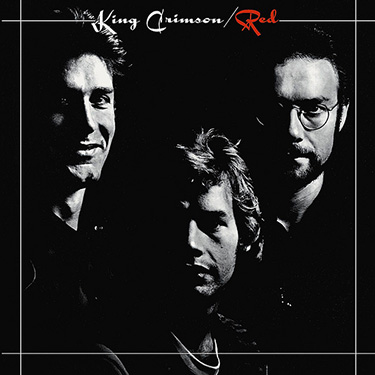
It has been observed more than once that Red was a “swan song” for the early 70’s King Crimson. While Robert Fripp (like Frank Zappa) has always brought out the best in almost anyone he’s worked with, listening to Red now reconfirms my sense of a very singular musical chemistry — or perhaps the better word is alchemy? — that can be heard between Fripp, Wetton, and Bruford in this incarnation of KC. There’s something essential that gels on this album, in fact, from all of the band’s previous albums, and (I’m tempted to say) remains an unavoidable benchmark for all subsequent work.
The title track alone is a paradigm for any proggish texture that would lean recklessly into a Zeppelinesque aesthetic. It raises the hairs on the back of my neck in just about the same way as ‘The Rover” from Physical Graffiti (released only a few months later).
I have met a good number of folks who otherwise appreciate King Crimson, but whose main complaint about the early-70’s KC is dissatisfaction with John Wetton’s vocals. It’s hard to say whence our various aural fixations arise, but I wish to be on record as claiming that Wetton’s singing on this album is essential to its textural perfection, and is (to my ear) the best vocal work that Wetton has ever done.
Go. Get Red out and listen again. You know you want to.
Back in 2002, a relatively unknown band called Lorien released an album called ‘Under the Waves’. Although a fairly low-key affair with a relatively bland Coldplay/Doves/Athlete type of vibe, there were some seriously beautiful tracks with a definite prog tilt. The album also included some of the best vocals I’ve heard from their Italian singer Fabio Ciarcelluti.
A natural countertenor, Ciarcelluti added a fantastic and unusual tone to produce some really moving and memorable songs, which still rank highly in my collection.
This same tone is brought to mind immediately on the opening track of Sanguine Hums second album, ‘Weight of the World’. The Oxford quartet are led by Joff Winks who’s elegant and understated vocals blend perfectly with the bands clever, languorous and intelligent music.
This is my first exposure to Sanguine Hum, their first album ‘The Diving Bell’ having slipped under my radar, but even on first listen it is clear these guys have been playing together for a long time. It turns out Winks, keyboardist Matt Baber and bass player Brad Waissman have been together for ten years in various guises and it shows.
They create a lovely, fluid and subtle sound that is very complex but made all the more accessible by some lovely hooks and melodies that grab your attention, fleetingly, and draw you in to investigate further. This is not music to play in the background – it is complex, tricky but ultimately very rewarding with layer upon layer to unpeel and delve into.
So, to the music.
Five seconds into opening track ‘From the Ground Up’ and the silky, gossamer layers that are to frequent this album become apparent. A gorgeous vocal over what can only be described as a spider’s web of keyboard and guitar create an immediately gentle and captivating atmosphere.
There is a lot going on here, with clever bass lines weaving in and out whilst shifting rhythms subtlety propel the track forward. It is a great opening track and sets the scene wonderfully.
‘System for Solution’ follows with a super sinuous guitar lead snaking around the languorous vocals of Winks. Languorous. A word that could neatly surmise the whole thing really. Nothing really jars, no guitars scream out of the mix, no distortions are out of place. This is a good track which shifts around, never settling, but which has about as urgent a pace as there is on the album. It also has one of the few guitar solos and it’s an absolute belter with not a note wasted or over-played. Again, subtle and languorous.
Next up we have a wonderful instrumental track – ‘In Code’ – which really showcases the musical talent on display. Something about this track reminds me of Steven Wilson’s later stuff, with it’s jazz tendencies, key changes and complex arrangement.
‘Cognescenti’ and ‘ Day of Release’ continue the general theme with the added interest of electronic elements being nudged into the mix. These are introduced skilfully here and there to add lovely sonic textures that in many cases, have you hitting the rewind button to check again.
The penultimate track, ‘Phosphor’ is beautiful and gentle and reminds me of classic Blue Nile. A neat, precise and condensed piece of beauty.
The finale, so to speak, is the title track which at 14.52 minutes long could be considered the albums swansong, a Magnum Opus, an over the top exultation of all that has gone before it. It couldn’t be further from the truth. This is yet another musically excellent, structurally fascinating and interesting track that weaves and snakes it’s way around a chorus that works it’s way into your head after a few plays.
This album surprised me. After a couple of plays in the car on the way to work, I wasn’t too thrilled about it. Nothing jumped out, nothing shouted out, no hooks leapt into my head and stayed there, but I heard enough to make me want to investigate further. Sure enough, listening to it carefully, in a quieter environment allowed a peeling back of the layers to reveal a wonderful piece of music put together by talented young English guys.
I haven’t really got under the skin of the lyrics as they are well in the mix and not clear enough to discern with any real meaning, but the tone and delivery suggests a weary, but not maudlin, take on how the world is going but not in any hectoring way, more in the way of idly contemplating and reflecting.
This is Progressive music at it’s progressive best in my opinion. There are traces of influences scattered throughout. I can hear Radiohead, Porcupine Tree, Mew and the aforementioned Lorien but it really is wrapped up in it’s own skin and provides a refreshing take on ‘Prog’ as we know it.
Henry Fool’s new album, Men Singing, is an alternate history, a prog rock proclamation that it was the Soft Machine, not Elvis, who invented rock and roll, out of the ashes of bop, not blues. Led by keyboardist Stephen Bennett and stellar no-man vocalist Tim Bowness (who joins his bandmates in not singing on the album — he plays guitar here), Henry Fool conjures first wave English prog and ambient while alternately dodging and burning the spirit of King Crimson’s “Starless” and Soft Machine’s Third. If anything could convince me this is the way rock’s mainstream should have shaken out, Men Singing is it.
In writing* and on record, the project’s relationship to first generation progressive rock is explicit and real — Phil Manzanera is a collaborator here — but also cautious, with an important ambition to avoid simple mimicry. Any way you look at it, this is not an easy thing to pull off, and in fact is the central obstacle to bands consciously working in the contemporary prog rock genre. How to avoid stylistic forgery? The early prog groups had an entirely different set of references that, naturally, did not include prog, and there’s an uneasy recognition that once it’s “prog” it’s no longer prog. With that said, if it’s possible to meet expectations while pushing boundaries, Men Singing more than succeeds.
The four-song album begins with the longform “Everyone in Sweden,” which maps the record. The aggressive, energetic rhythm section structures the melodic builds and mixes, suggesting the work of Robert Wyatt with Soft Machine, Jaki LIebzeit with Can, and Klaus Schulze with Tangerine Dream. Which is to say that Bitches Brew-era Miles hovers like some benevolent deity. But this is not a music stuck in the past. It has a smartly produced, live sound that brings the drums and bass up front — with a rising and falling cadre of guitars and horns and glockenspiels and mellotrons working alongside — while avoiding the airtight digital separation or cleanness of many contemporary prog albums. It works anew the fertile ground turned over by post-rock instrumental bands like Pell Mell and Tortoise, and arguably offers a more focused experience than either of those estimable groups.
At 40 minutes, Men Singing is well-paced and doesn’t linger too long, which might have been a problem in different hands or in different eras. Terrain is explored, not exploited, and the two 13-minute cuts are satisfying in their development. The two shorter pieces make their point even more powerfully, with “My Favorite Zombie Dream” going some distance towards explaining the band’s name, a homage to Hal Hartley’s late 90s movie but really a nod to Hartley’s music, which colors his films in a moody, darkly humorous palette.
It’s hard to recommend this album too highly, which, given Bowness’s involvement, should be no surprise. And while an instrumental album called Men Singing might feel clever, the voices on this record show it’s only half a joke.
Dream Theater’s last effort, “A Dramatic Turn Of Events,” was, as usual, welcomed by many and likely shunned by just as many, for different reasons. Whether fans wanted to hear more of the heaviness from previous efforts such as “Black Clouds And Silver Linings” or “Systematic Chaos,” or if they were predisposed to not like any Dream Theater effort without co-founder Mike Portnoy behind the kit, “A Dramatic Turn Of Events” might not have been their cup of tea.
I certainly didn’t share that sentiment. The balance Dream Theater struck between the heavy and the melodic on nearly every track of “A Dramatic Turn Of Events” – even with the obvious (and oft-written) comparisons to the song structures from their landmark “Images And Words” album – was music to this DT enthusiast’s ears who actually was tiring of the increasingly heavy music from the DT camp. Though he didn’t have a hand in the songwriting process, Mike Mangini provided a musical jolt not unlike what we saw when Jordan Rudess made his DT album debut on “Six Degrees Of Inner Turbulence” with the type of pyrotechnics reserved for clinics and rarely on major album releases.
The band recently announced their self-titled follow-up to “ADTOE,” which will be released in September, but they soon followed up that announcement with news that the first single, “The Enemy Inside,” the second track from the forthcoming album, would make its debut via USA Today’s online music section.
The opening 25 seconds of “The Enemy Inside” is a full-on assault starting with a blistering riff by John Petrucci, soon joined by bassist John Myung and Mangini thundering away. A second riff gets things going but left me wondering where Rudess was (likely answer: doubling Petrucci with a guitar patch on keys?), but he arrives in the main intro to the song with a string part floating over the rhythm section thundering away. On first listen, it’s a “classic,” heavy DT riff setting up vocalist James LaBrie’s first verse.
The chorus is soaring – a perfect counterpoint to the thunderous verse sections – and it immediately grabbed me in the same way that “On The Backs Of Angels” did from “ADTOE.” It’s then followed by a keyboard riff very reminiscent of a run from “ADTOE.”
Following another verse and chorus, a B-part verse breaks things up with its half-time start, which then builds to the solo sections. Rudess and Petrucci start things off with one of their usual dizzying solo runs that builds and leads to a Rudess keyboard solo with a percussive patch, followed by Petrucci matching Rudess in intensity and melody with his own solo, then back to the chorus for a short time, leading out to a reprise of the intro riff to finish us off.
“The Enemy Inside” features all the elements of a classic DT song in a concise format (just over six minutes; short by DT standards). To these ears, it’s not a groundbreaking track but also not a regression to the heavier metal edge that began to disinterest this fan prior to “ADTOE.” The track does exactly what it’s supposed to do: Get me fired up for the album release this fall. Done!


 So, after nearly a year of existence (and, yes, I’m rather proud of progarchy’s success!), I’ve finally gotten around to getting a proper contact email for our website. So, if you have questions, or if you want to send us links to your music. . . please. We’d love it.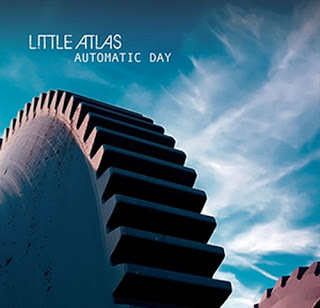





 Progarchy