Sounds of Summer: Bruce Soord-Wisdom of Crowds, Shineback, and Sounds of Contact

by Frank Urbaniak

In an outstanding year of prog, with the heat of summer comes even more interesting soundtracks for 2013. These three releases are similar in their focus on audio excellence, none of the three are 100% prog, yet all three provide a good listening experience, but they do vary in terms of their ability to generate the desire for ‘go to’ repeat listens.threealbums_july172013

I originally didn’t want to review Wisdom of Crowds because while it is sonically rich, the music left me flat. After Carl Olson of Progarchy suggested differently I gave it a few more spins and have a more favorable opinion of the music, but still am a bit surprised by the glowing online reviews. As with more recent Pineapple Thief music, I find the song construction a bit predictable, with 2 verses, chorus, bridge/instrumental section and final verse/chorus. The music just doesn’t engage me enough to want to play it again/often. For instance the title track, “Wisdom of Crowds,” repeats the chorus for far too long, so that by the time I hear the song again I am ready to skip the track. The next track, “Radio Star”, has a weak melody so I am ready to move quickly to the best song on the CD, “Frozen North”, with lovely guitars and a haunting melody, which starts softly and then builds to an infectious finale. This track and the following track, “The Light,” reveal the great qualities of Jonas Renkse’s voice but overall, I find the songs just a bit long and I wish Soord had stretched a bit more compositionally as well as sonically. An enjoyable CD but I don’t see it in the top releases of the year.

(For an interesting transition, play Wisdom of Crowd’s “Flows Through You,” followed by Shinebacks’s “Here Come the Envoys.”)

Shineback’s Rise Up Forgotten, Return Destroyed is the top audio experience of the three releases and is worth repeat listens on headphones. Rise Up Forgotten is quite an eclectic mix of prog, dance, hip hop and pop (think ABC) which all comes together nicely, but is significantly enhanced by the quality of the recording. The dynamics are breathtaking. While there are similarities to Tinyfish’s Big Red Spark, this is much less ‘prog’ and this ‘story’ offers an opportunity for Simon to expand his musical palette. The proggier moments remind me of Frost* (go figure). There are only 6 songs three minutes or longer, connected by musical ‘blogs’. If you have the time to listen to the entire CD it works well, but the blogs are so short they sometimes seem to interrupt the flow of the songs, which is already challenging due to the diversity of the songs. I wish there were a few longer compositions as these short blogs aren’t easy to get into if you have a 20 minute drive or a short listening window. I also wish that they had used the female voice for more than the opening and closing songs, as Simon’s voice sometimes sounds thin on the choruses. Unfortunately I think that in a few months I will only return to this CD to revisit just the longer tracks. But hey, these are minor points, this is good stuff and worth an investment of your listening time and money. Hats off to Bad Ear Music and to Simon for taking such a gamble at such a precarious time in the industry.

Sounds of Contact’s Dimensionaut is the hardest release to review objectively as with this band you have to deal with Simon Collin’s legacy situation. Father Phil generates awe and respect as a drummer and singer in some camps, and quite caustic and disdainful online comments from others as a solo artist and singer/composer for his more commercial solo work and contributions to one of the genre’s most beloved bands in their later years. So lets get this out of the way: sometimes Simon sounds like his father around the time of Face Value but there are also hints of Sean Filkins, Jon Anderson and others in his singing. The only time I find this objectionable is on a track like “Dimensionaut” where his vocals are mixed with an echo that generates the ‘clip’ at the beginning of each phrase that was so oppressive in later Genesis recordings like “Throwing It All Away” and “Domino.” It isn’t needed, his voice is fine without it. And did I mention that the drumming genetics have been passed down nicely?

The other challenge in reviewing this is that while it is mostly progressive, there are some ‘modern rock’ songs bordering on AOR such as “Not Coming Down,” “Only Breathing Out” or “Closer to You,” clearly geared for more commercial appeal. On each of those songs the lyrics are nice but a bit ‘poppy’. In fact the lyrics on the entire CD alternate between ‘cosmic’ and pop but they work with the music. So you can either let the more commercial tracks put you off or you can just let the CD play end to end to appreciate a fine release, and just give these guys the respect I think they deserve out of the gate (as most seem to be doing). The recording is excellent and the band is solid (although the drums may be mixed slightly up front for some tastes).

Sound of Contact’s overall dedication to ‘bring the prog back’ is admirable, touring after only one album all across the US and Europe, joined by some other excellent bands in different cities on the tour. Talk about taking a risk! I give Sounds of Contact an A for effort and commitment to progressive music. If bands like this aren’t given a fair listen and support on their tours, then the genre’s future is at risk. (As I write this I see they are announced as the first signed band for Rosfest 2014!)

In fact all three of these releases deserve support and attention as these artists spread their wings musically and sonically, providing more reasons to celebrate 2013 as a great year for music.

[Frank Urbaniak is the co-owner of a successful retail technology consulting practice, living in the hinterlands of NJ.  He has played drums since the age of 8 and followed progressive music since the age of 18 when he first heard The Yes Album in college.  He is the father of two daughters who think his music is weird,  and his wife agrees with them.]

Some “favorite music lists”…from 2004

I’m in the process of creating a new personal website and in the course of sifting through old files from my previous site, dating back to the middle of 2004, I came across some “favorite music lists.” It’s interesting to recall what was in rotation for me back then and to see how my tastes have changed in several cases. For instance, I rarely listen to Pink Floyd anymore, and I haven’t listened to Transatlantic for quite some time, even though it an excellent band. While this will not be nearly as interesting to you as it is to me, I thought I’d share some of the lists.

Favorite Hard Rock and Progressive Rock CDs

faith hope love, King’s X
The Bends
, Radiohead
Fallen
, Evanescence
Images and Words
, Dream Theater
JJ72
, JJ72
V
, Spock’s Beard
Three Sides to Every Story
, Extreme
The Edges of Twilight
, The Tea Party
Bridge Across Forever
, Transatlantic
My Favorite Headache
, Geddy Lee
Momentary Lapse of Reason
, Pink Floyd
Empire
, Queensrÿche

Continue reading “Some “favorite music lists”…from 2004″

BillyNews: Jon Anderson

I continued to be mightily impressed with the skills of Billy James.  Just got this from him about 15 minutes ago.  Thanks, Billy–ed.

____

Legendary Singer/Songwriter Jon Anderson To Perform In The UK, Finland And Sweden, 
And To Be Honored In Las Vegas – August 2013
Asheville, NC – Legendary vocalist Jon Anderson, YES’s singer/songwriter for 35 years along with his successful work with Vangelis, Kitaro, and Milton Nascimento, will be performing special engagements in the UK, Finland and Sweden in August 2013. The shows promise to deliver an exciting mixture of material from Jon Anderson’s prolific solo career, collaborations with Vangelis and classic YES songs, along with new compositions, highlighted by humorous and enlightening stories told by Jon.
Says Jon, “Performing the classic YES songs I wrote for the band, and Vangelis work is always fun and rewarding… I’ll be doing some New song ideas, plus a classic Beatles song, plus a couple of surprises. I just have the best time singing on stage…Hope you find time to come and see the show!”
Jon Anderson Tour Dates:
August 04, 2013 – Royal Exchange Theatre – Manchester, UK – http://www.royalexchange.co.uk/event.aspx?id=735
August 10, 2013 – Under The Bridge – London, UK – http://underthebridge.co.uk/events/jon-anderson/
August 12, 2013 – Savoy-teatteri – Helsinki, Finland – http://www.savoyteatteri.fi/EnrolmentClient/info.aspx?Key=022C5CA068DFF87F6D8293650937637B
August 15, 2013 – Taubescenen – Gothenburg, Sweden – http://liseberg.se/hem/Scen–show/Taubescenen/Jazz-pa-Liseberg/
In other news, Jon will be presented with the ‘Voice Of Progressive Music’ special award at the 4th Annual Vegas Rocks! Magazine Music Awards at the Joint inside the Las Vegas Hard Rock Hotel & Casino on Sunday, August 25th. For more information: www.vegasrocks.com. Jon has made some recent guest appearances on several new CD releases: Acoustic guitarist Jeff Pevar’s debut album ‘From The Core’; French keyboardist/composer Jean Philippe Rykiel’s new CD ‘Inner Spaces’; and guitarist Dennis Haklar’s debut CD release ‘Lizard Tale’. Says Jon, “With the internet my musical world has evolved to an amazing degree, one day I’m singing with a Brazilian dude, the next day with peeps in Liverpool, the next creating a Symphonic work with a mate in India…then singing with Steve Layton ‘down under’ – it’s an endless musical world!” Jon is currently recording new material, including the follow-up to his critically acclaimed 21-minute opus “OPEN” from 2011 titled “EVER”.
 
For more informationwww.jonanderson.com


Jon Anderson ‘Survival & Other Stories’ available through Gonzo MultiMedia:
 
Press Inquiries: Glass Onyon PR, PH: 828-350-8158glassonyonpr@gmail.com
Interview requests please contact Billy James at Glass Onyon PR

Happy Birthday, America

Every summer growing up, we walked down to the Kansas State Fairgrounds on the Fourth of July.  As the fireworks started, these songs always played.  Soundtracks of my childhood–Brad

Johnny Unicorn–Aerobic Prog

johnny unicornYou know that Prog–as a genre–is healthy and thriving when a band can devote itself to what it calls “progressive rock exercise.”  Yes, I’m not joking.  Yesterday, a review copy of a new cd, Sadness and Companionship, arrived from Seattle in the Progarchy mailbox.

The CD consists of four songs–two 14-plus minute songs and a radio-length remix of each.

How to describe this?  I’ve only given it one listen, but it’s. .  . fun.  Really fun.  Imagine a lot of mid-80s acts such as Madness, Yaz, Erasure, B-Movie, or Pet Shop Boys, and then prog them up.

A card accompanying the CD states:

Johnny Unicorn has been making progressive rock, art pop, and silly music since childhood.  He currently operates out of Seattle, WA, where he performs with his three-piece band, which is made up of songwriter Jesse Plack, and keyboardist Naomi Adele Smith (Autumn Electric).  Johnny Unicorn also performs and recordes with Phideaux (L.A.) and Horace Pickett (Seattle).

The packaging, by the way, is rather charming.  The cd packaging incorporates lots of houndstooth mixed with bright yellows, funny glasses, vicious looking animals, and what appears to be a Darwinian evolutionary chart from fish to man to alien to death to devils.  I wouldn’t decorate my house in it, but I do like it.  It’s playfully quirky.

To listen to the music online, click here.

A shiny new addition to a glorious year of prog

Simon Godfrey hears an early playback of Rise Up Forgotten, Return Destroyed.

Today endeth the first half of an extraordinary year in prog, one that will go down as another milestone in the resurgence and regeneration of this much maligned and often misunderstood genre of music.

Tomorrow is July 1, the first day of the second half of the year and notable because it happens to be Canada Day. It was also the day in 1879 when American evangelist Charles Taze Russell published the first edition of The Watchtower, the world’s most widely circulated magazine and the British Government revealed in 1963 that former MI6 agent Kim Philby had been spying for the Russians.

So obviously, with Philby, 50 years on, now yesterday’s man, something epic has had to happen to make July 1 memorable again.

This was probably the train of thought which emerged during the first board, or should that be bored, meeting of the newly formed Bad Elephant Music founded by David Elliott, the esteemed producer of the progressive rock podcast, The European Perspective, broadcast on The Dividing Line Broadcast Network.

For reasons best known to himself and his accountant, he decided to dip his toes into the murky waters of record label ownership and to help him achieve this, he enlisted the expertise of legal eagle, and prolific blogger James Allen along with Tim “Mouse” Lawrie, a ridiculously talented young music producer and erstwhile Merch Desk sales assistant – such is his latent versatility.

Of course, if you are going to start a record label, the one crucial thing you need is “product” and if it is going to be your debut release, it needs to be a bit of a beast.

Well, it just so happened there was a certain progressive rock troubadour, Simon Godfrey, who was in need of a suitable platform from which to launch a new solo project under a brand new shiny title. It was a match made in heaven, surely.

As a result, tomorrow will see a new epoch in progressive rock begin as Shineback’s Rise Up Forgotten, Return Destroyed goes on general release on the Bad Elephant Music label.

Simon, as most of you know, was the frontman of those great English eccentrics, Tinyfish, who ennobled themselves with the title of the world’s smallest prog band. However, they built up a formidable following borne out by the antics in the Fishtank, their fans’ forum, some extraordinary music, culminating in the cult album The Big Red Spark and the general mayhem which ensued during their live gigs.

Cue July 8 last year and the band reluctantly performed their last live gig at the inaugural Celebr8 festival in south west London. This was due to Godfrey’s worsening hearing problems through tinnitus. It was a memorable performance which involved a Princess of Prog tee-shirt, talcum powder and gaffer tape. You had to be there.

Anyway, this may have been the end in one regard, but in another way, it was a new beginning for Godfrey, who decided he wanted to make an album of his own on which he could indulge his passion for electronica.

So, he packed away his guitar and set about writing an album with a suitably far-fetched theme, the story of Dora, a young girl who films her dreams, based on Godfrey’s own childhood experiences in and out of the Land of Nod. For it to be far-fetched required the lyric writing services of his long time friend and Tinyfish’s iconic narrator – as he likes me calling him – Robert Ramsay, or as Godfrey describes their collaboration, the Sir Elton John and Bernie Taupin of Prog without the hair transplants of course.

They gave us a taste at Celebr8.2 in May with a suitably chaotic performance which also involved a duck, but that’s a different story for another time.

The album owes a huge debt to some of the influential bands from Godfrey’s formative years such as XTC and Japan, as well as incorporating the discipline, excuse the pun, of projects by the likes of King Crimson.

You cannot make an album like this without having a tight-knit group of some of prog’s most “happening” musicians, such as guitarists extraordinaire, Matt Stevens, Dec Burke and from Dec’s band Hywel Bennett plus Andy Ditchfield from DeeExpus, plus much in demand drummer Henry Rogers.

The result is ground-breaking, a techno album made in a progressive idiom which never sounds like any of the traditionally inspirational giants of the past. Instead, you can hear Japan, Eurythmics, Kraftwerk, a smattering of 70s glam rock rhythms, a hint of Sgt Pepper’s Lonely Hearts Club Band and even a touch of Bjōrk without the histrionics.

Bjōrk? Yes, indeed, because Godfrey discovered some samples made by Bulgarian dance singer Danny Claire in his files and without her knowing, he made her his Dora. Her breathy, spacey samples are included as blogs on the album to which he has added instrumental section to make them relevant to the story. Apparently, she is delighted with the results as well she may be.

So groundbreaking is this as a prog album that is humanly possible to either dance or throw shapes along to tracks such as the stand-out Crush Culture. Other songs such as Passengers channels The Twilight Zone while the title track, the longest on the album, brings together all the players for one huge techno workout with added progginess.

Co-produced by Godfrey and Lawrie, Rise Up Forgotten, Return Destroyed is a bit of a game changer in terms of what it brings to the progressive rock table this year.

The first half of this year has brought us a cavalcade of classic prog compositions, courtesy of The Tangent, Big Big Train, Lifesigns, Spock’s Beard and Comedy of Errors to name but a few personal favourites.

Shineback offers none of the above.

What it does instead is to start an entirely new chapter and therefore, it too is at least worthy of a mention on the Wikipedia page devoted to significant anniversaries of events which took place on July 1.

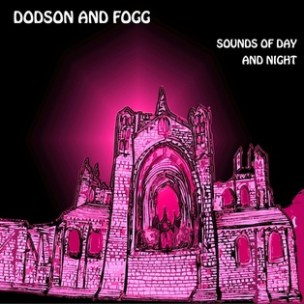
Sounds of Day and Night by Dodson and Fogg

ImageI remember reading an interview with Peter Buck sometime in the late 1980s, right as R.E.M. was beginning to peak, in which he insisted it was much harder to write/play slow ballad-y songs than fast pop songs.  A greater risk of dead space, more chances for messing up a tempo, less reliance on a two- or three-note riff.  I thought it was funny at the time, because I was trying to learn guitar (an instrument that confounds me to this day) and thought, shit, I can’t do anything BUT slow.  As I’ve thought about it over the years, though, and as I have put my mind to writing my own songs, I think what Buck was saying is that in the wider genre of guitar-based rock and roll, slower songs tend to be far more reliant on a vocal melody and therefore also the words, that is, real songcraft.  And real songcraft, in performance, can’t be successful if you sound like you’re rushing it or that you’re trying too hard.  Go listen to John Prine.  Spin up Joe Henry.  There is a lean restraint, a kind of patient heart.

I thought again about what Buck said as I listened to the mid-tempo pleasures afforded by Sounds of Day and Night, Dodson and Fogg’s third record.  The band is a project of Chris Wade, an independent artist whose second record, Derring Do, I reviewed on Progarchy earlier this year (https://progarchy.com/2013/02/10/steamfolk-the-derring-do-of-dodson-and-fogg/).  Wade’s Dodson and Fogg intentionally visited early 70s British folk rock on the first two records, even drafting in bona fide players from the period to help out.  The surprising thing was that a young man, working in his home studio, could so effectively evoke that period while making original music so distinctively his own.  While Dodson and Fogg continues to explore these roots on Sounds of Day and Night, the new album is a more relaxed and natural, less finessed effort that may have as much in common with Iron and Wine, Devendra Banhart, and modern American/Scots/Irish singer-songwriters, as with a romanticized past inhabited by shades of Drake, Thompson, and Denny.  Over the course of a year in which Wade has released three Dodson and Fogg records, his music has become increasingly limber.  A mandolin picker/oldtime musician/RT-loving friend of mine describes this phenomenon as the difference between learning the song and knowing the song.  I think Chris Wade increasingly knows his songs, and it’s showing.

The new album is bookended by instrumentals, parts 1 and 2 of the title track, which are only distantly related, one being an entrance and the other the door out.  I have a soft spot for this approach, something not many singer-songwriters are comfortable with, and for the melodies Wade works.  The outro also features a sitar, which, given the slow trajectory of the record towards the acoustic psychedelia of “Clocking Off,” makes a certain Harrison-esque sense.  These instrumentals set the tone for the production of the record, which, like Derring Do before it, evokes a balance of the pastoral and the urban, with acoustic guitars to the fore but electrics winding their way down the lanes, atop smart, spare, brushy drumming.  With woodwinds and brass appearing here and there, Sounds of Day and Night offers a classic folk rock listening experience within a newer framework suggesting the airier approach of the solo work of Sam Prekop or Archer Prewitt (both of Chicago’s The Sea and Cake), or the Kingsbury Manx (https://progarchy.com/tag/kingsbury-manx/).  Like most great music that inhabits a cultural continuum, there are subtle hints and quotes along the way, a bass out of Green Day (“Sounds of Day and Night”), a keyboard out of the Doors (“Night Train”), and a  British vibe that resists pinpointing but steers more towards the Kinks than Donovan.  I think the feel of the album is best encapsulated on “Hear It In The Morning Still,” a medium tempo drift, with nice vocal hook, that builds to a relaxed electric crescendo and gently rides out with a pretty groovy trumpet.

Sounds of Day and Night is an easy record to like.  It shows an independent artist building his own catalogue using his own steam, on his own schedule, doing what he wants to do without hindrance (or help, it should be noted) from a record or management company.  Chris Wade is on a progress, a trajectory that I don’t think has peaked, even with three increasingly strong albums behind him.  (I think he’s still finding confidence in his very capable voice — his tendency to double track his vocal is rarely necessary.  Plus I’d like to hear this music live with a band, because his songs have evolved into vehicles that could sustain jamming live).  But this band is in a good place:  with two solid albums behind it and the current record outdoing its predecessors, Dodson and Fogg is a musican/band/project demanding attention.

I asked Chris about the new album, recording on his own, and Dodson and Fogg’s growing reputation.

Sounds of Day and Night followed closely on the heels of Derring Do — tell us about its evolution.

Well I had started this new album right after I had finished Derring Do in January I believe. With me working at home like this, I am free to go into the office and put ideas down everyday if I feel like it, so there’s no set dates for writing and recording. This album just came together over January/ February to June, more songs came, others went that weren’t really up to scratch. Also I had left them for a couple of months and gone back, listened again and decided what else needed putting in. It was a really satisfying process for this album. I really enjoyed piecing it together.

Although trumpeter Colin Jones is present, the rest of this record is just you (or is it? are you drumming?).  Did this have an effect on your songwriting?

Actually it was the same because all these songs are written on an acoustic with my vocal, then I add bits and pieces in, and I usually sent them off to Celia Humphris (singer from folk rock band Trees) and the others and they normally choose which ones they fancy doing, Celia mostly. She picked them out on Derring Do and then sent them back to me when she had some ideas, which were always brilliant. This time I did send them off to her but she was quite busy and preoccupied with other things, which is cool, just a shame. Some of the other contributors that were lined up to appear didn’t really work out, so I decided to do more instrumentation myself. The light drumming is me also, but I’m not a massive drum fan so I kept it quiet and subtle, little taps and ride cymbals. I like that kind of percussion sound, and bongos, tambourines, things like that to accompany a song without blasting away all over it. Learned a bit more on the flute and used more keyboards to broaden the sound a bit. And also I had been ready to release it for a while, and didn’t fancy waiting around for longer. I like to get these albums out, and because people who are getting into the records know another one will be coming along soon, they are all ready for a new record. It’s cool getting to a stage where I know there are a loyal selection of people who are going to be interested in listening to my music, getting what I am doing and knowing what to expect to a certain degree. It’s bloody brilliant actually.

I feel like Sounds of Day and Night, while it still shows an influence of classic, early 70s British folk rock, has a more contemporary feel than Derring Do.  A lot more free flowing, perhaps a deeper psychedelic strain happening.  What do you think?

I think you could be right, especially about the free psychedelic elements. This must be because I handled all the instruments and was just having fun playing some weirder stuff on certain instruments, doing whatever came into my head. There were melodies coming up all the time and I was adapting them to different instruments and building full songs out of little bits of melody. It was an addictive experience, spending a day drinking coffee and shutting myself in the office all day. But there was no conscious decision at all, this was all just straight out, but it’s my personal favourite of the three records I have made so far. I also think the production is better on the new one, the mixing and the quality of it. I am very proud of the cover art that my girlfriend Linzi Napier has done. Her first exhibition is in July at Otley Togs Gallery, and the piece from this album cover is set to be the one on the main advertising banner outside the venue. Really exciting and very proud of her!

Derring Do got some attention in the British music press. How do you feel about the album’s reception?

I was overwhelmed by the reactions to it. There are publications like the CRS, a chap called James R Turner reviews my things for them and he is really complimentary to my music and a site called Pennyblack Music has a writer named Malcolm Carter and he has said some very kind things about Dodson and Fogg and he really loved Derring Do. Also Brian Watson on DPRP gave it a glowing review. For me it’s so rewarding to see how other people view my songs and how they have taken them seriously, to see what they got out of them. I like people who really get music, understand what you were doing. But I still am really surprised by all the positive reviews. I knew I had made a good album though, otherwise I wouldn’t have dared release it three months after the debut, but still I was overwhelmed by some of the comments.

What are you listening too lately?

Lately I’ve been listening to Caravan a lot, a band called Skin Alley (one of their members, Ksrysztof, played accordion on my first album), Jethro Tull, especially the Thick as a Brick album, Beatles, Black Sabbath’s Sabbath Bloody Sabbath album (one of my favourites since I was about 9) and also some Tom Petty.

Are you performing live?

Not yet no. I haven’t managed to get any like minded musicians from Leeds together for shows and I definitely don’t really want to do a solo acoustic gig, There’s too much stuff on the albums that adds character that I think a  solo acoustic thing would be dull. I’d probably fall asleep on stage. But I do want to get a band together for shows one day because people keep asking me if I am playing live soon.

Last time we talked to you, we asked you about the business of getting to listeners, as an independent musician who records and markets his own music.  Have your thoughts on this changed much at all? Any label interest since the release of Derring Do?

I’ve had no label interest because I don’t think it is too common these days. An obscure cult band like this isn’t going to attract a big label and the genres people tag on it like prog folk and acid folk, don’t make it sound very commercial, not that i am interested at all in being commercial but you know what I mean. Besides I love doing it myself, all the business and promo side as well, and setting up distribution deals for abroad and sending the discs all over the place to those familiar names, it’s like living a dream, I love it. I think if someone else was in charge of my artwork, my royalties, my PRS, the promotional side, I would be a bit nervous. I like to have it all in front of me. I’ve recently discovered a band called The Tangent, when I met the band leader Andy Tillison and his partner Sally Collyer at an art gallery and got on with them. I think he is great to his fans and he and Sally have a great relationship with them, and look how big that band is. Their new record has been a massive event to many people all over the world, so you can only admire them both. I think a lot of artists could learn from that approach. People are parting with money to get your music, which is an honour, so I always email back and forth with people who are buying my albums, and have a laugh with them, because being friendly and open is so much better, and more fun,  than being up your own bottom and unapproachable. Saying that, I’m not well known at all so maybe I see it from a different side than to someone who is famous.

It’s been less than six months since I reviewed Derring Do.  Can I expect another one in October? What’s next for you?

Definitely not October, haha. I’d be knackered. Got to get some fresh air and not breathe in jostick fumes all day… for a while at least.  I think that will be it for the year, I want to take a little break from recording, get some fresh ideas and take a step back. I’ve got loads more ideas, some of them are acoustic like the first album, and some are more of a full band sound. But I want to take my time as well, get Celia back in for the next one and hopefully some other guests. Next up will be another Dodson and Fogg album, and the first album is also getting a vinyl release by a US company which I am excited about. It’s been a dream all my life to have an album on vinyl and I can’t believe I’ll be getting it. I am basically just loving this music project. I have done other stuff, audiobooks and non fiction books, but i have never had a reaction like this. it’s always moving forward and is so positive.

Is there a link to a sample/YouTube vid for readers?

This is my youtube channel: http://www.youtube.com/user/sofaguard

There’s some free tracks up there from each of the 3 albums and a couple of videos too, one starring my father in law as odd ball cretin roaming through the woods.

[Also check out Dodson and Fogg’s webpage: http://wisdomtwinsbooks.weebly.com/dodson-and-fogg.html]

Further Celebration: Kevin McCormick’s 1993 Masterpiece

And, progarchy continues its examination of a missed masterpiece, Kevin McCormick’s With the Coming of Evening.  This review comes from our own progarchist master of all things mathematical and stained, Tad Wert.

kevin solo guitar

Tad Wert: Kevin McCormick’s 1993 album, With the Coming of Evening, is a wonderful work that I missed when it was released. Fortunately, in this digital age nothing is lost, and hopefully this album will reach the wider audience it deserves.

The first track, Uncovered, sets the mood for the entire work, with acoustic guitar and McCormick’s tremulous vocals. At first listen, I was struck by the obvious late-period Talk Talk influence (Spirit of Eden), but there’s a lot more going on here than mere imitation. For example, there’s a lively middle section in Uncovered where a shuffling drum beat, jazzy organ and bass join in as McCormick sings the impressionistic verses,  “As the grain is wound and wound, it rings a new scar each year/Branches brace a part of me/And suns and rains, and suns and rains survive, the past completed./Few can graft the limb to soul and wind it all down to the core to cure the last, to cure the last./Waiting to be bound, waiting to be bound, ….” (I’m not sure about the exact words, since I don’t have a lyric sheet, but that’s what I’m hearing). So right off the bat, there is a very nice use of a tree’s growth rings to symbolize life’s tribulations.

Next up is an instrumental tune, Annual Ring (there’s that metaphor again!), that seamlessly links Uncovered to the third track, Summoned. While less than two minutes long, this is one of my favorite songs of the album. An insistent Eno-esque atmosphere swells up while an undercurrent of vibes and Eastern-styled percussion weave in and out. Before you know it, you’re well into Summoned, which is another Spirit of Eden-style song. However, this time around McCormick adds some nicely angular electric guitar that adds tension to the primarily acoustic mix.

Sho Song is another instrumental featuring a nice Japanese feel with flutes and arco bass. Imagine a peaceful Zen garden in the late afternoon, and this would be your soundtrack.

Ransomed is a more straight-ahead rock composition featuring electric guitar mixed up front with simple bass and drums accompaniment. It steadily builds in intensity, as McCormick delivers the evocative words, “Can’t see, but I feel, and I feel./That’s what he said up on a tree, when he ransomed me.” It’s a terrific song, and its abrupt ending lends it impressive power.

Rokudan is another linking instrumental with treated piano and an ominous underpinning of deep bass that slowly resolves into a beautiful motif that is repeated and slowly improvised upon. Think Harold Budd/Brian Eno here.

Without Breathing features an opening riff that is Talk Talk’s “Life’s What You Make It” turned inside out. There’s a feeling of barely controlled chaos in this song, as the riff asserts itself over an energetic guitar solo.

Under the Meniscus is another nice instrumental that leads into the straight-ahead blues of Looks Like Rain.

Glimpses begins with some classically-styled acoustic guitar, which is soon joined by double bass and cello. Some tasteful electric guitar joins in as McCormick sings, “You’ve held back so long /Now is the time /In silence the pledge was taken /Relentless static is fulfilled /From the forest that I entered /To the desert where I ended /My feet have calloused /My heels are tuned in, turned on /And I hear you in great frequency.” To my ears, this is the centerpiece of the entire work, as musically it alternates between foreboding and dread to joyful anticipation.

KMPhoto1The Setting Sun is a nice little jam that recalls Traffic’s Low Spark of High Heeled Boys.

The album closes with the beautiful and measured Elegy for the Empty Orchestra. Featuring a gorgeous melody played on acoustic instruments, this is the perfect closer.

With the Coming of Evening proudly wears its influences on its sleeve: a liberal amount of Talk Talk, a dash of Astral Weeks-era Van Morrison, sprinkle in some tasteful Brian Eno atmospherics and Japanese modes, and you have sense of who and what McCormick admires. Add to the mix his excellent classically-tinged acoustic guitar work, his evocative lyrics, and impeccable pacing, and you end up with a very mature and moving work. This is music to employ when you desire space for contemplation. This is music that unfolds to repeated and close listening. Like the best literature, this is music that rewards the listener with new and deeper insights whenever it is revisited.

With the Coming of Evening by Kevin McCormick: A Celebration

Twenty years ago, exactly, the best album you’ve never heard appeared, Kevin McCormick’s With the Coming of Evening.  Over the next several days, we’ll be celebrating the release of what should be regarded as a post-rock/post-prog classic.  “Impressionist prog” might be a good label, if we didn’t despise labels so much.

Our first reviewer, Progarchist Extraordinaire, John Deasey.–ed.

with the coming

John Deasey: I’d heard the name, Kevin McCormick before, mentioned on various websites, as being akin to Talk Talk circa “Spirit of Eden” so it wasn’t a huge surprise to find subtle percussion, carefully phrased vocals, hushed, calm mixtures of woodwind, jazz, folk and prog.

What was a surprise is to find this album wasn’t a great success when it was released in 1993 and somehow flew under the radar.

Ahead of its time ? Well, if “Spirit of Eden” is anything to go by I’d say yes, this is the case.  Maybe the music world wasn’t quite ready for such an esoteric mix of styles, textures and atmosphere.

The Talk Talk influence is well to the fore, but rather than sounding like a Mark Hollis clone, McCormick sounds more like Nine Horse-era David Sylvain. Sonorous, tender, melodic and understated.

This really is an album to play in its entirety, save for a couple of tracks which could quietly be nudged onto someone else’s playlist perhaps. For example ‘Looks Like Rain’ really doesn’t belong here, with its bluesy, roots feel and good safely be culled on any personal re-mastering !

There are two Japanese inspired instrumentals.  The first – ‘Sho Song’ – is utterly fantastic for a minute or so, but then becomes tiring and a bit jarring.  The second – ‘Rokudan’ – is a wonderful piece worthy of any Craig Armstrong album with a definite cinematic atmosphere. This track also brings to mind the beautiful Sigur Ros EP ‘Ba Ba Ti Ki Di Do’ with droplets of sound, texture and light forming a sonically wonderful vibe.

McCormick is a classically trained guitarist and it shows.  Tracks such as ‘Uncovered’ and ‘Summoned’ have a lovely understated style where his skill as a guitarist shine through.

What I like about this album is the generally un-structured feel to many of the songs.  They meander. They explore. They are given space to develop and nothing feels rushed.

kevin 1There is a very organic feel, as though the tracks are streams running over a rocky river bed, or paths gently traversing a grassy moorland.

I’ve mentioned in other reviews about my fondness for Scandinavian bands and their ease at creating space and breadth in their music.  This same feel is here and the end result is a spiritual, thoughtful, impressive album that grows with each listen.

It’s is also worth mentioning it sounds as though it could have been released yesterday, such is its relevance.