

Category: Uncategorized
Pre-Order the new Edison’s Children now
A note from Eric and Pete:
If you pre-ordered the new EP-Single “In The Last Waking Moments…” featuring an all new song “Through The Ages” as well as two live tracks, “Spiraling” and “A Million Miles Away (I Wish I Had A Time Machine)” then we have a question for you…
(and if you’ve answered this question on the thread we have in http://www.facebook.com/edisonschildren, you don’t need to respond)
It is looking more and more like the EP will arrive before Pete leaves for the U.K. (Since we greased a few pockets to make this happen for you…)
So the question is… If these new EPs come in on Thursday and are able to be shipped this weekend,..
Do you want your EP AUTOGRAPHED BY PETE TREWAVAS AND ERIC BLACKWOOD … OR UN-SIGNED AND SHRINKWRAPPED?
Your EP will come Shrinkwrapped as the standardif we don’t hear from you.
Artist Wendy Farrell-Pastore’s signature is also available on request in this email.
If you didn’t order yet, it’s not too late! In fact… anything else you order from the store can come autographed by Pete and Eric (and Wendy upon request) for the next 2 days, if you order and let us know now!
Order via Visa, Amex, Mastercard, JCB, Discover, etc..
http://edisonschildren.com/shop/English.html/
If you would rather use Paypal, go here…
http://edisonschildren.com/shop/Paypal.html/
Thanks guys. The new album is nearly done. We’re putting the finishing touches on now. Be on alert for the Pre-Order of the new CD coming soon!…
—
You are now officially… “switched on”
New Kingbathmat Video–just out.
Enjoy this brand new video from Kingbathmat. Excellent graphics, and the song has a wonderful hard, prog sound.
Tomorrow’s Harvest by Boards of Canada
 Say what you will about the actual music contained in it, “Tomorrow’s Harvest” is the perfect title for a Boards of Canada record, any Boards of Canada record, really. And that “tomorrow” is not a pretty one, reflected in a music that is somberly electronic, accompanied by visuals — scant as they are — suggesting you’ve found a fourth generation copy of a lost, lyric-less music from an uncle long dead: a polaroid of a TV screen showing a video of a film.
Nearly but not quite anonymous, Boards of Canada have made a career of hipster stand-offishness, which would make them precious, not to mention enormous risk takers in a genre not exactly known for its lack of anonymity, if the music that brothers Michael Sandison and Marcus Eoin create wasn’t so distinctive, so darkly humorous, so consistent. Their currency among their champions has lasted decades now, across four proper albums and a clutch of EPs, weakening the knees and strengthening the fingers of cube farm keyboard jockeys the world over.
 The new record picks up where The Campfire Headphase (2006) left off. That album, a more melodic, less creepy, and mellower version of their landmark Music Has a Right to Children (1998) and its follow-up Geogaddi (2002), saw their star dip a bit among the worshippers, though I thought it quite respectable, their version of Manual’s Ascend or Aphex Twin’s Selected Ambient Works. Tomorrow Harvest’s tone is set, like other BOC albums, with the cover photo, a faded urban skyline overlaid on a scrubby western sea of test-site hardpan, post-apocalytpic in its desert-ed-ness. The ghosting of the transparencies has a lot to say not only about the message in the title, but also about BOC’s music, where disappearing is as key to the song as the introduction of the next melody, beat, or bass line. The shifts evoke 70s-era Cluster or 90s-era Tortoise, where tunes can seem to be made out of nothing yet go on for 6 or 7 minutes, and be utterly transfixing, mesmerizing.
This album was long awaited by the band’s fans, a seven-year gap unusual even for BOC. The stir of mysterious hype that accompanied the album’s release was even more unusual, an odd mix of coded messages issued by the band and its label, that I found curious coming from a group that prizes its own silence. I also think the plan was fairly quickly abandoned after the only people who got it were the people who perpetrated it. Perhaps Warp Records demanded BOC do something, anything, to tart up a new release, but I guarantee the band’s fan’s don’t care about such tactics: given that the messages were relayed via blinkered hipster hubs like All Songs Considered, Amoeba Records, and Other Music, they were only preaching to the choir anyway. Such hype also, inevitably, raises expectations.
To say that Boards of Canada is doing something new on Tomorrow’s Harvest would be misleading. Their style is what they are, and it hasn’t changed substantially across records (for this let us be thankful). Their (often beautiful) melodies have their own dark taxonomy, their approach — warbling, occasionally souring, vintage synths, beats that fade in and out, treated human and machine voices murmuring incantations that in their repetition can take on cracked, dark angles — should be a patent. BOC’s debut signalled a music different from anything else out there, and to this day the band can really only be compared to themselves. On Tomorrow’s Harvest, Boards of Canada continues to create inspired, original music that has matured as it’s maintained an imprint of disciplined creative achievement.

News re: Leah
 Our favorite metal maiden, Leah McHenry, appeared twice this past weekend–in an interview and a profile. Enjoy.
Interview:
Profile:
http://metaldivas.wordpress.com/2013/06/22/artist-profile-leah-mchenry/
Cottonwoodhill by Brainticket
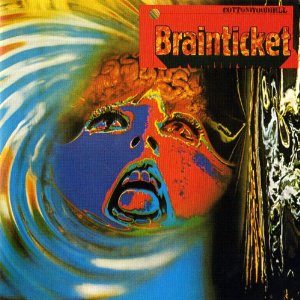 Brainticket’s Cottonwoodhill (1971) has been re-released again, this time by Cleopatra, that venerable house of psych and goth back-catalogues. Roughly lumped in with German rock of the period, Cottonwoodhill was one of the many ambitious brainchildren of Joel Vandroogenbroeck, the Swiss musical polymath behind Brainticket who later went on to create music libraries for TV and film. (Knowing this, Cottonwoodhill makes a lot of sense, its jazz-funk amalgam suggesting less the communal freakouts of its European contemporaries as the soundtrack to Bullitt or Dirty Harry, where Hollywood finally caught on that something weird was happening in San Francisco but couldn’t bring itself to actually use a ballroom jam to back up the car chases or bar scenes.)
When I first heard Cottonwoodhill in the mid-90s, it struck me then as it does again now: a very pleasant, well-produced, rhythmically cohesive psychedelic jam, heavy on the organ, with some trippy spoken word passages by Dawn Muir, who intones in a posh English accent, suggestive to me of the White Witch out of C.S. Lewis, the impressions of a woman seriously stoned out and orgasming. So where Brainticket’s contemporaries, like Amon Duul and Tangerine Dream, pushed their music to live outside of their own era, Brainticket’s music solidly inhabits early 70s European psychedelia, more akin to Out of Focus or Krokodil. With some interesting polyrhythms running underneath and a kitchen-sink approach to layering found sounds and treated tracks, there is an argument here for seeing Vandroogenbroeck as divining a thread or two of Eno/Byrne’s My Life in the Bush of Ghosts. But that’s perhaps a bit optimistic and trying too hard to bring a different respectability to what is, in the end, a really fine example of art gallery soundtracking of the late 60s and early 70s (something documented most effectively on Virgin Records three-CD Unknown Deutschland/Krautrock Archive), which is where Brainticket probably really belongs. Still, I think it’s appropriate to think of Vandroogenbroeck as being in the same group of individualists, including Chris Karrer, Christian Burchard, Hans Joachim Roedelius, Florian Fricke, and Klaus Schulze, who drove “krautrock” forward with no consideration of worldly reward.
Get thee to an excellent 2012 interview with Joel Vandroogenbroeck:
http://www.redbullmusicacademy.com/magazine/joel-vandroogenbroeck-interview
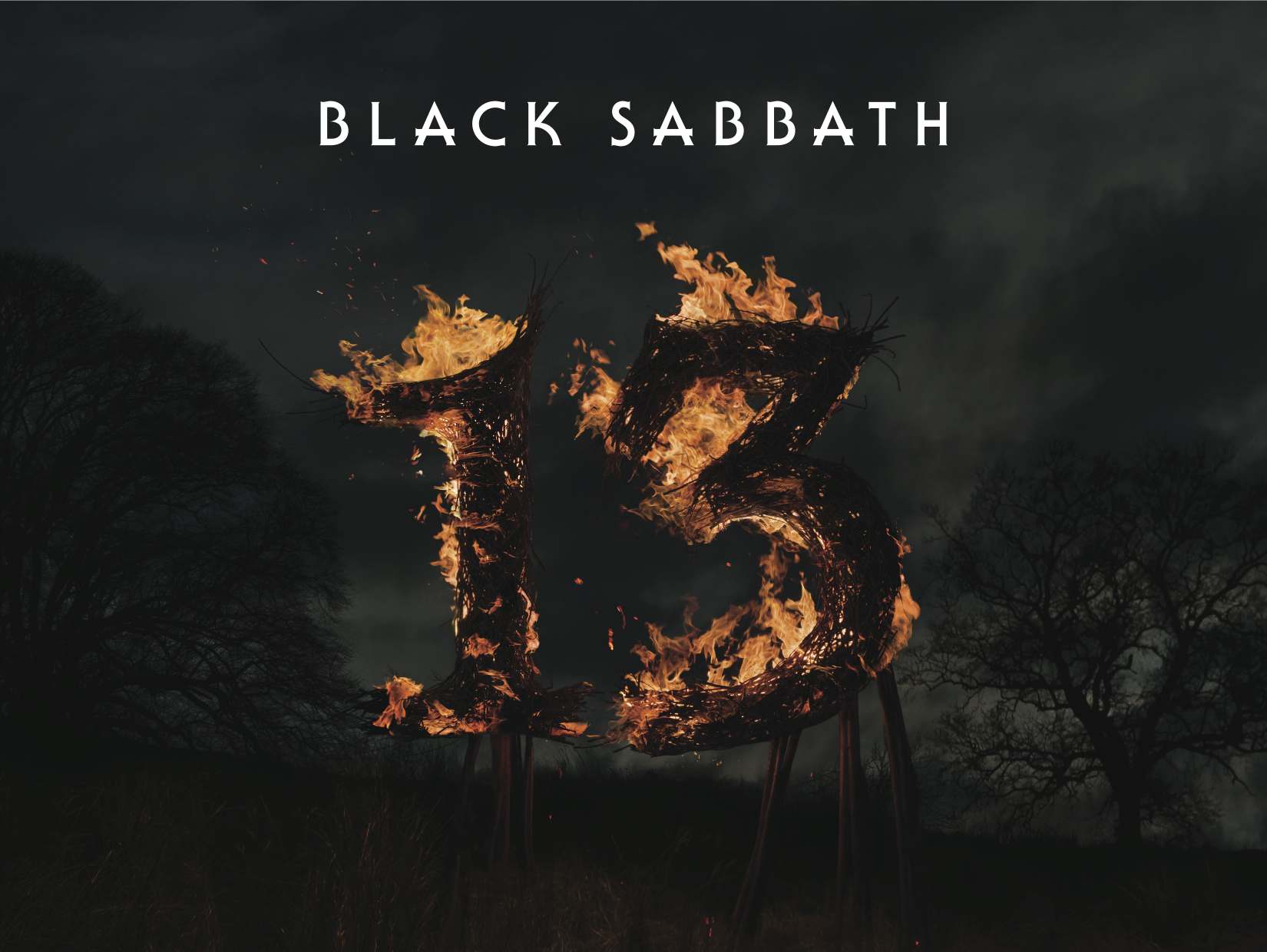
13 by Black Sabbath
 Every year for the past three years my wife takes our boys to see family in New Jersey and New York. I’m tasked with various projects: painting, fixing up stuff — things I can get kind of lost in. The sound track for the work is almost invariably Black Sabbath, cranked loud. Of the bands I loved when I was a teenage metalhead, Sabbath is one of the very few that I can still listen to regularly and never tire of. My boys often request “Iron Man” on the way to school, oblivious to the fact it has nothing to do with Tony Stark, or “The Wizard,” believing it to be straight out of Harry Potter land. I oblige, for it is Art, and it is good.
There is a grayscale of Black Sabbaths. The original band responsible for inventing heavy metal in the early 70s: Ozzy Osbourne, Tony Iommi, Geezer Butler, and Bill Ward (it’s important to note this same incarnation was responsible for then dragging that reputation through the murk); the band lifted from its Ozzy-less decline by the horns-flashing Ronnie James Dio, who led them through two classic albums of pop metal renaissance in the early 80s (as well as a stunning modern metal record recorded under the name Heaven and Hell — the title of the first Dio-led Sab record — released shortly before Dio passed away at the age of, yes, 67). Then there are the one-offs, like the Sabbath of Born Again, which, while it may have afforded the oddly too-dedicated fan moments of pleasure, never really could come close to the considerably prolific glory days of the Sabbath of the 70s. And of course, the countless reunion tours and shows that, while cool in their own way, haven’t much new to say.
So it’s with some interest that we see, in the last week, the release of the first Black Sabbath album with Ozzy Osbourne — of all original material — since 1978. This was a much-hyped record, complete with some major drama. It’s remarkable that all the original band members are still with us, and had the original band actually made this record, I would have pre-ordered the complete deluxe whatzit with vinyl and booklets and stickers and all that jazz. But, for whatever (probably lawyerly) reason, drummer Bill Ward declined to participate, after initially agreeing. His replacement is Brad Wilk, of Audioslave and Rage Against the Machine. Not a bad choice, but not making things right with Ward reflects poorly on the band and its legacy. While Ozzy and Iommi got most of the attention, Ward and bassist Geezer Butler were the heart of the original band, creating the rhythmic punch that propelled Iommi’s epic riffs and Ozzy’s wail. Imagine John Bonham living and Led Zeppelin doing its reunion show a few years back without him, and you get an idea of the scale of Sabbath’s mistake. (Seriously, revisit “The Wizard” from Sabbath’s first record, for an idea how important Ward’s drumming was to this band.) Drama number two, an even more serious problem: Tony Iommi battled lymphoma during the making of the record, and without Iommi there is no Sabbath.
That the king of the metal riff was laid low, though, doesn’t seem to have made much of a difference, nor would I expect it to: of the small handful of British rock guitarists who have wielded real and lasting influence over the years, only Iommi is still creating the quality of work he first hammered out in the youth of his career. And, in Iommi’s hands, this semi-reunion works. Aided by Butler’s big bass, which has always been able fill the holes for the band live and thicken the sludge in the studio, 13 manages a number of feats. It is sonically the successor to Iommi/Butler’s last record, the aforementioned excellent album they made in 2009 with Dio, The Devil You Know. 13 is also a welcome reminder that Black Sabbath started out as heavy blues band that knew how to swing, something not many of their metal peers take terribly seriously anymore, much to the detriment of the genre. While Wilk has come under criticism for not having Bill Ward’s loose and woolly approach, his roots are in bands that borrowed heavily, heavily from Sabbath and Zeppelin, and to these ears he holds up his end admirably. Lastly, I’m probably not alone in thinking Ozzy would be the ruin of this project. His bandmates rarely coasted, as he has been known to do over the years (reaching a cartoonish nadir with his reality show several years ago). I’d even argue that Ozzy was really sapped artistically after the tragic death of Randy Rhoads, the esteemed guitarist of his first two solo records. He lost his voice, or rather, since his intonation is notoriously iffy, the character of his delivery. At its best a frightened and frightening illustration of Geezer Butler’s lyrics — which tend towards ruminations on existential anxieties, and which, for rock song lyrics, were truly revolutionary when Sabbath debuted in 1970 — Ozzy’s voice has the ability to deliver the perspective of an innocent man observing a nightmare. His voice is back on 13: if Butler and Iommi threw down the gauntlet, Ozzy picked it up with energy to spare.
The songs are long, they take as long as they need to unfold, and riffs and themes from other albums revisited (a stock-in-trade of the band’s since its beginning). I get the sense producer Rick Rubin knew that the band’s fans don’t care, never cared, about hits or brevity (“Paranoid” notwithstanding) but about dynamics, tension and release, being trapped with Ozzy inside the riffs. Being in the middle of a classic Sabbath record is to be far from the fringes of pop fashion or postmodern punk irony: that this version of Sabbath has again achieved its hallmark effect when its players are in their 60s further demonstrates that to be metal is to be a true believer in music’s transportive powers.
Riffing with Perseus: Kingbathmat Challenges the Gorgon
 Just as we started progarchy last fall, I received a note from Chris of Stereohead Records in the U.K. asking me if we’d be interested in reviewing a cd by a band named, amazingly enough, Kingbathmat. Well, of course, we would. Who could resist checking out a band with such a name? These guys MUST be interesting, I thought. And, I was right. “Truth Button” proved to be an excellent release.
Last week, while doing some work in Minnesota, I received another email from Chris. A new Kingbathmat is coming out on July 22–would I be interested in reviewing, and would I like it as a download or as a CD? Well, of course, my rational side wants the CD. I’m rather proud of my collection, and “Truth Button” has pride of place in it. But, my greedier side wanted the immediate gratification. So, I downloaded it.
Oh, boy–it’s good. Really, really good. “Truth Button” was excellent, but this is “Truth Button” with even more excellence and more confidence and more adventure. Yes, it goes to 11.
Please don’t consider this a full review–that’s still coming. But, I do want progarchy readers to know that if they preorder this CD, they will not be disappointed. These guys can play. I mean really, really play. And, so very tight without being overly produced.
I generally hate labels, and I’m not sure what I’d label this–but the label that keeps popping into my fuzzy little head is this: “funkadelic prog.” Of recent releases, it might most easily compare to the work of Astra. But, Kingbathmat is far more subtle–without losing any of its energy–than Astra. Whereas Astra drives, Kingbathmat lingers, toys, and plays with its music.
Listening to Astra is akin to driving from Kansas City to Denver as quickly as possible, windows down, hoping to get to the majesty of the mountains . Listening to Kingbathmat is like exploring the wild, untamed, and unpopulated backroads and Great Plains of Kansas and eastern Colorado en route, knowing there are little known charms and forgotten mysteries worth discovering in that undulating land.
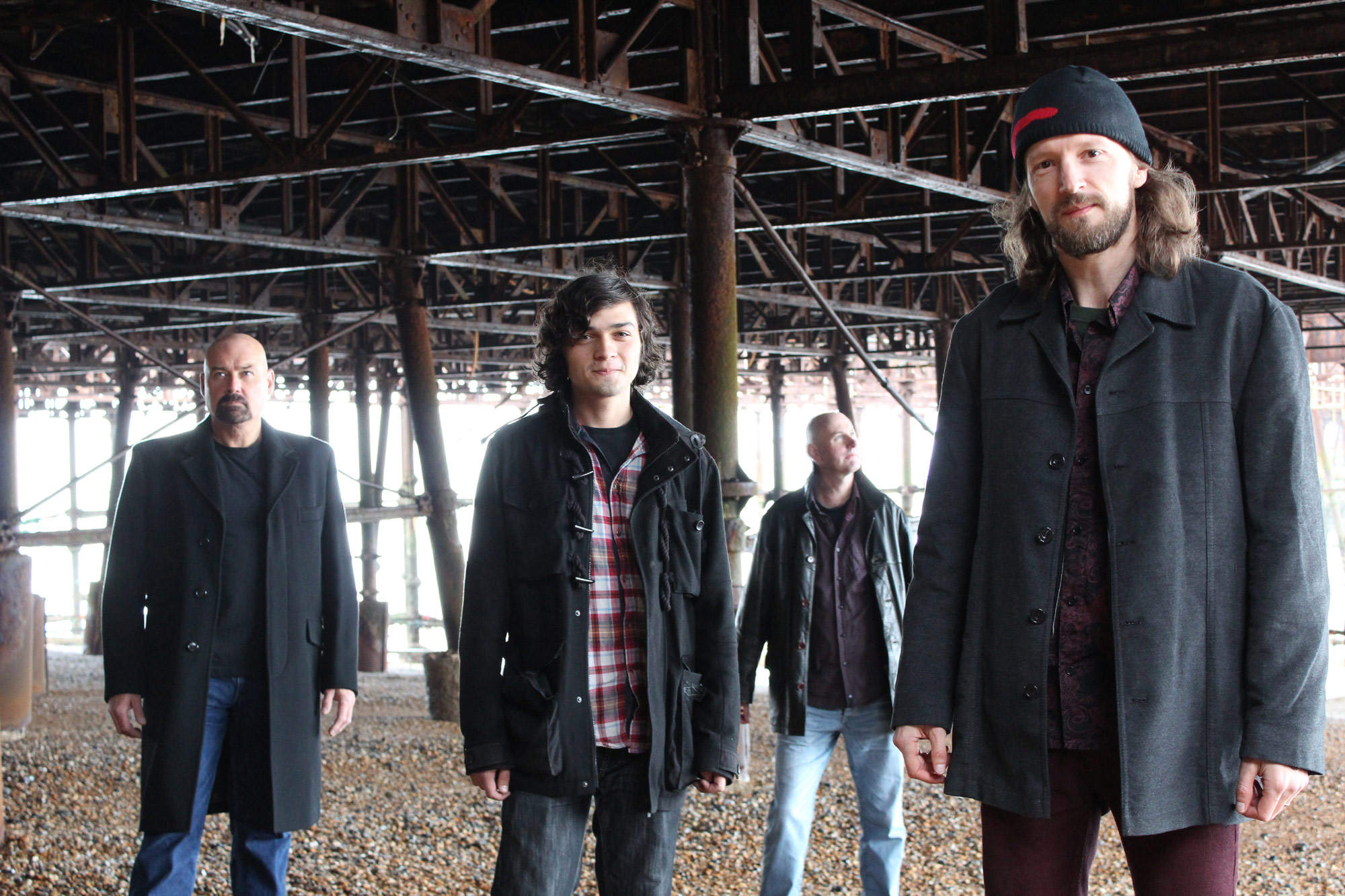 In the tradition of music over the last fifty years, I most hear the influence of Rush (heavily), later Traffic, and Soundgarden.
The masterpiece of the album is the sixth and final track, “Kubrick Moon.” Holy schnikees. I have no idea how to describe this, except it’s confirmed me as a serious and unrelenting Kingbathmat devotee. John, David, Rob, and Bernie–slay the gorgon with all the might that is in you!
To preorder (and I give it my highest recommendation), go here.

 Progarchy