A Desert Island Disc List of (Going For the) One

ImageOne of the hardest things a serious music fan is ever tasked with is coming up with a list of five or ten desert island discs, i.e. the albums without which he or she cannot live.  In fact, trying to put such a list together can be torture.  I’m pretty sure that somewhere in the Geneva Convention is a prohibition on forcing prisoners of war to assemble a desert island disc list under duress.  Such a thing could cause serious and irreversible psychological damage, and would thus be inhumane.


The trouble with desert island disc lists is that our moods – and thus our musical preferences at any given moment – are so incredibly varied.  One moment you might want to listen to the intricacies of a well-played classical guitar piece, the next moment you crave the audio testosterone known as AC/DC.  One moment you may want the sunny joy of Led Zeppelin tracks such as ‘The Song Remains the Same’ or ‘Over the Hills and Far Away’, the next moment you want the dark, brooding heaviness of early Black Sabbath.   One moment you want the folky feel of some acoustic Jethro Tull, while in another moment you want the cathartic release of an angry Tool song.  These examples are just the tip of an infinitely large iceberg.

While I would have to inflict great pain upon myself to assemble a definitive desert island disc list, there is one album I can say would be on any final version that I came up with  – Yes’s 1977 masterpiece, ‘Going for the One’.  

“Why ‘Going for the One’?” you ask.  The consensus on Yes albums like ‘Close to the Edge’ and ‘The Yes Album’ is that they are great albums, if not outright masterpieces.  On the other end of the spectrum, albums like ‘Union’ and ‘Open Your Eyes’ are generally considered somewhere between awful and God-awful.  And then there are those Yes albums that are lightning rods of controversy – ‘Tales from Topographic Oceans’, ‘90125’, and to some degree, ‘Drama’.  ‘Going for the One’, while generally viewed in a positive manner, doesn’t fall into any of these categories among the majority of Yes fans.  But if you ask me, it is a masterpiece as much ‘Close to the Edge’.  It crystallizes the essence of Yes – not to mention some artistic goals of first-wave progressive rock. 

To really ‘get’ this album, it helps to understand the context in which it was recorded, both within the band’s history as well as musical trends at large.  Recording for the album began in earnest in the fall of 1976 – the same year that the punk movement exploded onto the scene, in no small part as a reaction to progressive rock.  The genre of progressive rock itself was beginning to show some signs of wear and tear – Peter Gabriel had left Genesis, King Crimson had disbanded, and the general excesses of the genre were beginning to turn the music-buying public looking in other directions.  Meanwhile, punk was raging and stadium rock’ was beginning to step into the place formerly occupied by the proggers.

Within the band, Yes had gone through a tumultuous few years, including the release of the controversial ‘Topographic Oceans’, Rick Wakeman’s resulting departure, ‘Relayer’, a number of solo albums, a significant amount of touring, the easing out of Patrick Moraz and the eventual return of Wakeman.  There was a need for the band to catch its collective breath, to reflect.

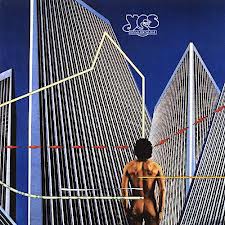
‘Going for the One’ has a very introspective feel to it.  This is borne out in no small part by the album artwork, including the cover (shown above) as well as the inner gatefold.

Image

A first thing to note is that none of the Roger Dean artwork is present –neither on the inner gatefold or the outside cover – save for the famous Yes logo.  The front cover shows the backside of a naked man, intersected by varying geometric shapes of different lines, against the backdrop of two modern skyscrapers, symbolic of standing naked against modern world.  On the inside gatefold is an idyllic scene of a lake at sunset.  From the liner notes of the re-mastered CD, I am taking an educated guess that this is Lake Geneva, Switzerland, not far from where the album was recorded.   Some sort of island (quite possibly man-made) having a rather large but bare tree sits in the middle of the lake.  Individual pictures of each band member are also shown, with all but Steve Howe’s having a lake (the same one?) as a backdrop.  The contrast between the front cover and the inner gatefold would suggest taking refuge of some sort, turning inward and reflecting. 

In addition to its introspective feel, ‘Going for the One’ also very much has a classical music-like sound as well.  In his excellent book ‘Rocking the Classics’, author Edward Macan describes progressive rock of the 1970’s as attempting to “combine classical music’s sense of space and monumental scope with rock’s raw power and energy.”  ‘Going for the One’ accomplishes this spectacularly, better than any other progressive rock album of the 70’s, other Yes masterpieces included.  The introduction of the harp and the church organ, the latter from St. Martin’s Cathedral in Vevey, Switzerland, are instrumental in the sound of this album.  The sound here exemplifies the term “symphonic progressive rock.”  Interestingly enough, this was the first Yes album since ‘Time and a Word’ that did not feature Eddy Offord in the role as a producer.  There is little doubt Offord’s absence affected the overall sound. 

The title track kicks off the album, and it is an outlier with respect to the remainder of the tracks – a straight ahead rocker.  In yet another “first in a long time”, the title track of ‘Going for the One’ is the first Yes song under eight minutes in length since Fragile.  Between ‘Fragile’ and ‘Going for the One’, the shortest Yes song was ‘Siberian Khatru’, clocking in at 8:55.  Musically, the song is propelled forward by Howe’s pedal steel guitar.  This is interesting in itself, as the instrument is most closely associated with country music, yet Howe makes it rock and rock hard here.  Wakeman’s keyboard work, both on the church organ and piano stand out here as well.  In general, every instrument here, as well as the vocals, proceeds at an up tempo pace that maintains itself from start to finish.

There are a two other things to note on the title track that are true for the entire album.  One is that the production here is very crisp and clean.  The second (which undoubtedly plays on the first) is that the soundscape is not as dense as on the album’s predecessor, ‘Relayer’.  Instead of choosing to fill up every available recording track, the band has scaled things down a bit from their previous effort.  This is done to good effect, as it gives the music a little more chance to breathe.

The classical-like sound referenced above makes its first appearance on the next track, ‘Turn of the Century’, and is prominent from here on out.  The music begins with some light, exquisitely played acoustic guitar work by Howe.  Jon Anderson has stated the song was inspired by Giacomo Puccini’s ‘La Bohème’, and lyrically it tells a story of a sculptor creating his lover in “form out of stone” after her death.  Both music and lyrics convey a sense of deep loss, making this the album’s most emotional piece.  The loss is most poignantly conveyed in the first half of the song, when the music is very melancholy.  Around the halfway mark, Wakeman’s piano makes an appearance, along with Howe’s pedal steel guitar.  This evolves into a very tumultuous transition.  But what emerges on the other side, in the latter half of the song is bright and joyful.  Howe takes over on a standard electric guitar with some very sunny lines, while Squire’s bass line does a great job of playing off of Anderson’s vocals.  Moreover, this portion of the music is very joyful, indicating that our protagonist has emerged from his grieving and can once again experience happiness.  Perhaps the sculpture of his lover has given him solace and peace, coming to life metaphorically if not in reality.  The ending of the song has a bittersweet feel to it, as if again to acknowledge the loss while also acknowledging the ability to find joy in life once again after such a tragedy.  All things considered, this is a very beautiful and delicate composition both musically and lyrically. 

‘Parallels’ is up next, and is an underrated gem of the Yes catalog.  This song features spectacular performances by Howe, Wakeman, and Squire, who take turns in showing off their chops on their respective instruments.  Still, they never descend into self-indulgence or stray from the song’s logical progression.  The song introduces itself proper with Wakeman’s billowing church organ from St. Martin’s Cathedral ( this is best played LOUD to get the full impact).  Squire and Howe then chime in, the former with a typically excellent bass line, the latter with some crisp, clean lead guitar.  From there, the song takes on a straightforward structure of two verses and two choruses, before transitioning into the middle section led by more of Howe’s crisp lead guitar.  After another verse, the song segues into an instrumental section in which Wakeman and Squire are at the forefront.  The interplay between Wakeman’s soloing on the church organ and Squire’s bass line is nothing short of brilliant.  The transition out of this instrumental section is announced by the return of Howe’s guitar.  After one final chorus, the song begins barreling toward its conclusion.  Howe again steps to the forefront, his guitar firing burst after burst of clean, high notes.  This is some of my favorite Howe guitar work in the entire Yes catalog – bright, sharp, and technically brilliant.  Squire and Wakeman remain in the mix here with some fantastic playing of their own. 

Another defining aspect of ‘Parallels’ is its conclusion – one of the best endings to a song I have ever heard.  That ending is more easily described in non-musical terms.  Imagine 18-wheeler, barreling down the highway at full speed.  Now imagine that 18-wheeler not just coming to a full stop, but stopping on a dime.  And imagine that 18-wheeler doing so with the grace and finesse of a ballet dancer.  That’s the ending of ‘Parallels’ right there.  It’s an extremely difficult combination to pull off, which makes its flawless execution here that much better.

If J.S. Bach had a rock band, it would sound like ‘Parallels’.

Moving on, we next come to ‘Wonderous Stories’.  It’s the shortest song on the album, but also the brightest.  It also marks the return of Howe on a guitar-like instrument called the vachalia, which last appeared on ‘I’ve Seen All Good People’.  Like ‘Parallels’ before it, the song includes a verse-chorus structure, with the choruses featuring some of Yes’s trademarked harmony vocals.  The middle section is marked by a rather vigorous Wakeman keyboard solo including synths that emulate a string section.  The song resumes its verse-chorus structure once again, while a thick bass line underneath propels the music forward.  Howe and Wakeman continue to supply the melodies on top.  The vocals, which include both harmonies and counterpoints here, are stunning.  As the vocals fade out, Howe enters the scene again, this time with some jazzy electric guitar to close out the song. 

Finally, we come to ‘Awaken’.  There are numerous superlatives which could be used to describe this piece.  All of them are inadequate.  Somebody will have to invent new ones.

Much like the album ‘Moving Pictures’ did for Rush, ‘Awaken’ brings together everything that is great about Yes and distills it into one coherent work of art.  It has the epic scope of pieces such as ‘Close to the Edge’ and ‘Gates of Delirium’.  It has the virtuoso instrumentation of numerous Yes classics such as ‘Heart of the Sunrise’, ‘Yours is No Disgrace’, and ‘Siberian Khatru’.  And it has the classical feel of the preceding tracks on the same album.  Moreover, it pares back some of the excesses of previous albums without paring back any of the artistic ambition.

To the uninitiated, Wakeman’s piano lines that open ‘Awaken’ could be mistaken for something from a piano concerto.  After a few vigorous runs, the music begins a dreamy sequence, as Anderson’s vocals begin.  As the introductory verses closes, a note of dissonance sounds before Howe takes over using a guitar riff that has a decidedly Eastern flavor (incidentally, the working title for ‘Awaken’ was ‘Eastern Numbers’).  Anderson begins a chant, and the music takes a more serious tone.  The most remarkable thing about this section is the drumming and the bass work.   Alan White’s drumming with Yes has never been better than on this album, and on this particular track.  Squire’s bass plays off of both White’s drumming and Howe’s guitar.  The odd time signature here keeps things more than interesting, as it is difficult to predict when the next bass note or next drum beat will fall, and yet it’s also clear that there is a logical pattern behind the playing.  It’s the kind of bass and drum work that sucks the listener in and keeps them hooked.

After two verses and two choruses of the chant, the music breaks into a blistering Howe guitar solo.  Much like the guitar work on ‘Parallels’, the soloing here is full of bursts of sharp, high-pitched notes.  However, the mood here is entirely different, expressing a sense of inner turmoil and urgency.  This is another section of brilliant virtuoso guitar playing that illustrates why this album is among Howe’s strongest, either in or out of Yes. 

As Howe gracefully exits the solo and returns to the main riff, another verse and chorus of the chant follow before the music begins a slow transition away from the Eastern motif.  Wakeman’s keyboards step to the forefront, first mirroring Howe’s riff before segueing into the “Workings of Man” portion of the song.  The church organ leads the way into this section, which has a much more European sound and texture, not to mention the lyrics.  The tension builds here to a peak before Wakeman puts the brakes on the whole thing with a series of ever quieter notes, effectively bringing the first half of ‘Awaken’ to a close. 
ImageThe transition to the second half of the song begins with a split-second of silence, before a single note of White’s tuned percussion blends into the first pluck of a harp by Anderson.   From an initial quiet beginning, the band begins to slowly and painstakingly build tension in what is a textbook example of the technique.  White’s percussion and Anderson’s harp start this section, soon to be joined by Wakeman, who is initially playing singular notes on the church organ. 


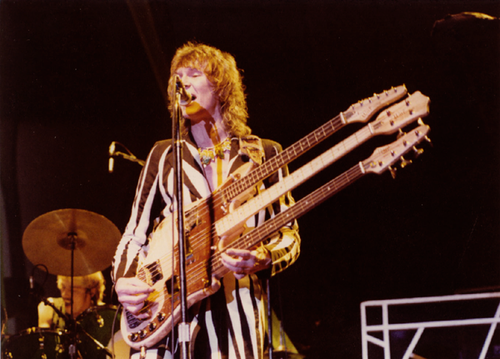
A layer is added to the tension when Wakeman begins playing slightly longer (but still relatively quiet) runs.  Squire also quietly enters, playing singular high bass notes, most likely on the six-string neck of the monster triple neck bass he uses for live performances of this song. These bass notes intensify and push the music forward, while Wakeman’s runs on the church organ slowly begin to lengthen, increase in volume, and sound more orchestral.   Choral singers also join the fray, further building the intensity, which builds like a wave to a first peak before receding somewhat.  At this point, Howe re-enters the picture on electric guitar, and leads the music to a second peak and a transition into what may be called the ‘Master of Time’ section of the piece.  The build-up from the initial plucks on the harp to this point is powerful stuff, very mesmerizing and very emotional. 

I have a personal anecdote I would like to share to illustrate the emotional punch of this section.  In 2002, I attended my sixth Yes concert at an excellent Austin venue called The Backyard.  I went with several former co-workers, including a friend of mine named Cheryl.  While Cheryl is not a prog rock fan per se, she is much more of an astute listener to music than the vast majority of people.  Musically, she is “switched in”.  Toward the end of the concert, Yes performed ‘Awaken’.  During the portion described above, I was mesmerized as normal, but for some reason I looked over at Cheryl standing next to me to gauge her reaction.  Tears were streaming down her face, which was transfixed to the stage as she was as absorbed in the music as I had been just before turning my head.  Amazing.  I remember thinking “she gets it”, and was very impressed at that.  Among my friends and acquaintances, I have musically usually been an outlier, as few of them have been interested in prog, and certainly not anywhere to the same degree as me.  Some of them have even heard ‘Awaken’ in my presence and have given me strange looks that say “what the heck is this?”  Yet here was Cheryl, on her first listen to ‘Awaken’, completely getting the gist of this incredible composition.  As someone who had known this little secret for a long time, I found it very gratifying to see her reaction with no prompting or no explanation from anyone else – only the music was talking.  It’s a moment I will not soon forget.

As the music progresses through the ‘Master of Time’ section, Anderson sings several verses and the tension continues to build, finally resolving itself with a shattering climax, with Wakeman’s church organ and the choral singers at the forefront.  The dreamy section from the beginning is then reprised, and the final line of lyrics is one of my favorites from the entire Yes catalog: “Like the time I ran away, and turned around and you were standing close to me.”  Howe then brings ‘Awaken’ to its final conclusion with some playful electric guitar lines.

Wow.  What a piece of music.  In my opinion, the finest fifteen minutes plus of music Yes ever committed to any recording medium.  This is not to take away anything from some of their other masterpieces (and there are several), but to extol the virtues of this incredible piece of music.  And by the way, I am in some good company when I surmise that this is Yes’s best work.  None other than Jon Anderson himself has stated “at last we had created a Masterwork” with regard to Awaken.  On the 1991 documentary ‘Yesyears’, Anderson refers to “the best piece of Yes piece of music, Awaken” and further states that it is “everything I would desire from a group of musicians in this life.”  I’d say that’s a pretty strong endorsement.

In progressive rock circles, many references are made to the various sub-genres. Yes music (at least their 70’s output) is most often classified as symphonic progressive rock.  No album exemplifies this term more perfectly than ‘Going for the One’, and no song exemplifies it more than ‘Awaken’.  Other Yes works, such as the previously mentioned ‘Close to the Edge’ and ‘Gates of Delirium,’ possess the same scope but not the same instrumental timbre.  ELP had some symphonic works that were their own interpretations of existing classical compositions while their own magnum opus, ‘Karn Evil 9’, sounded high tech for its time.  ‘Thick as a Brick’ by Jethro Tull is certainly symphonic in its scope, and while great in its own right, has more of a folky feel than symphonic.  In contrast to all of these, on ‘Going for the One’, Yes has created original compositions that, in many parts, could be easily mistaken for classical symphonic music by those not otherwise familiar with this type of music.   A perfect fusion, you might say.

I’m still struggling to come up with the other four or nine or however many albums I need to complete my desert island disc list.  And being immersed in the midst of a second golden age of progressive rock as we are now, completing that list will only get tougher due to the cornucopia of excellent new releases.  But I can say without any hesitation, without any equivocation, whatever final form that list takes, it will most definitely include ‘Going for the One.’
Kingsbury Manx – Bronze Age

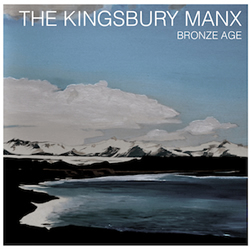
KingsburyToday the Kingsbury Manx, a band from Chapel Hill, NC that have been around now for over a dozen years, release Bronze Age, their sixth album.  Listening to Bronze Age for me is a little like going back in time, and like coming home, for a couple of reasons.  I bought their first album (first on CD, then on vinyl) when it was released, and saw them live, in 2000.  It was just so impressive, from tunes to words to cover art, a baroque folk rock effort with a vibe that can only come from a certain protectiveness of sound — this was a local band with a ton of creativity and a unique, wholly-formed voice who knew how to use it.  For me they were a sort of an end, and among the greatest, of a continuum of North Carolina bands I had familiarized myself over the previous seven years, and a distillation of some of the best of 90s chamber pop.  Every part was developed, and there were no weak links.  Sean McCrossin, then owner of Chapel Hill’s best record shop, CD Alley, made me buy their first record because he knew my tastes (and, okay, because Ryan, Kingsbury Manx’s drummer worked at the shop, which he bought from Sean some years back and now sustains with the same completeness that Sean created).

I lost track of what was happening in the local scene after the Kingsbury Manx released their second album, which didn’t quite capture me in the same way as their debut.  I got caught up, like one does at that age, in a blur of personal and professional development, had kids, moved away.  Good things, but there’s a losing of touch.  And some things that I may not have realized were as essential as they turned out to be — vinyl LPs for instance, with beautiful cover art — return to focus with reminders like unpacking the LPs upon moving back, and listening to new records like Bronze Age.

For maintaining the imprint of its own style throughout, this album, like the Manx’s debut, covers a remarkably broad territory of sound and feeling, ranging from a kind of Grateful Dead loose-ness on “Handsprings” to the majestic, motorik psych pulse of “Custer’s Last”, which calls to mind the Dusseldorf bands of the 1970s.  There is a slight nod to early Pink Floyd here and there, but not an over-reliance and more as an acknowledgement from the American South.  Guitarist Bill Taylor’s relaxed voice and words, and Paul Finn’s keyboard work (with heavy doses of Farfisa, but not used as you might expect) are dominant, with guitar and bass coloring and filling the songs more than guiding them.  I mentioned Ryan Richardson, the drummer.  His work is astounding, restrained — not merely timekeeping and not fussy or busy either, but riding the tune and at times turning its direction.

The lyrics are oblique vignettes, working like a stack of a disarranged photographs rather than as narrative — and this is not to cheapen them or do them an injustice, because while songs resist forced poetry, the writing here molds itself to the song, and achieves a necessary structure complementing words and sound.

I’ve listened to this record through three times now, and, believe me, it’s a gift.

Band website: http://kingsburymanx.com/

Order via the usual outlets or here: http://www.odessarecords.com/artists/manx/

Y-Prog Cancelled

Sad news tonight from organiser Kris Hudson-Lee of the cancellation of the weekend part of Y-Prog here in the UK, intended to be Yorkshire’s first progressive rock festival.

Saturday 15 March was to feature Dec Burke, Also Eden, IOEarth and The Enid; Sunday 16 March had Crimson Sky, Knifeworld, Manning and It Bites on the bill. Thankfully, the Friday night show featuring the mighty Riverside goes ahead.

I have no further information on the reasons for cancellation, but I presume poor ticket sales are at the heart of it. Y-Prog may have been hit by the subsequent announcement of HRH Prog, a bigger festival at a more glamorous venue a few miles away, just three weeks later.

It’s a salutary reminder that, despite prog’s resurgence, the audience remains finite. Too many events in too short a span of time and some are going to struggle.

This Was Blodwyn Pig

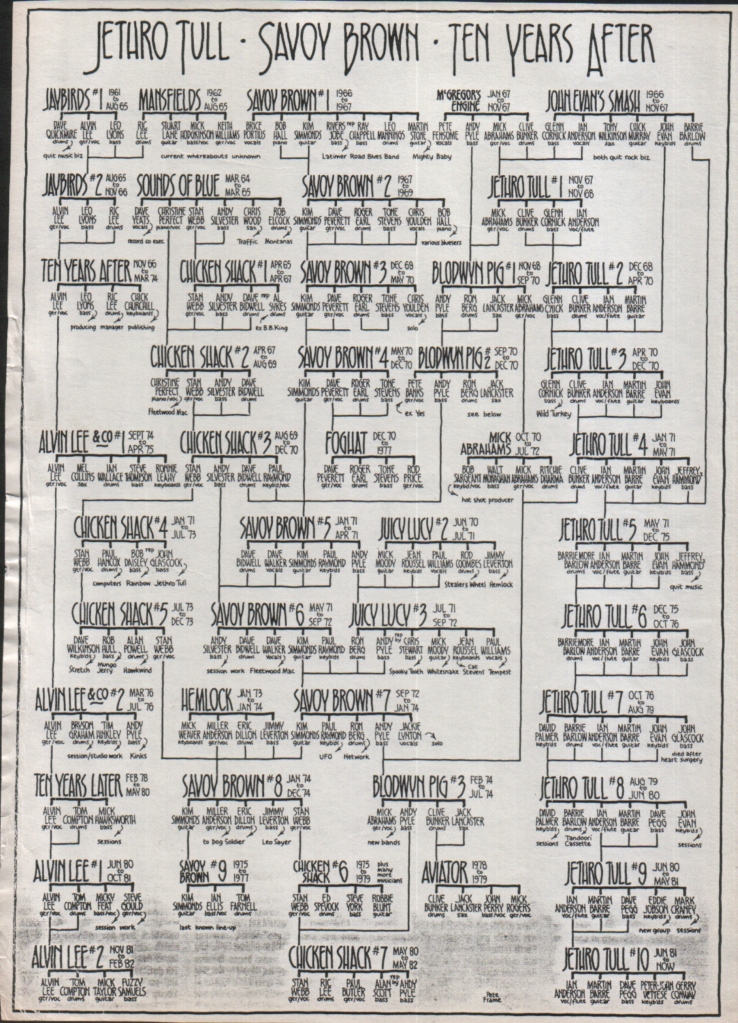
There are gateway albums, records that lead to others, elaborations that must be followed until time or economics interrupts.  I could name dozens of them that functioned like this for me over the years.  Aided and abetted in the Web-less years by the Rolling Stone Record Guides (mainstream rock/punk/singer-songwriter), the Trouser Press Record Guides (alternative and indie), and Pete Frame’s monumental Rock Family Trees,

Image
Rock Family Tree for Tull, Blodwyn Pig,  et al.

I would often spare no effort in tracking down an LP or CD I was interested in, IF the gateway record that connected me to it spoke to me in tongues, the way such records should.  So Syd Barrett’s Madcap Laughs would eventually lead me to the Television Personalities’ Chocolat Art and the Soft Boys’ Underwater Moonlight, Julian Cope’s Peggy Suicide and his contribution to a Roky Erickson tribute would lead me to the Thirteen Floor Elevators and on to Thin White Rope, and Rainbow led me back to Deep Purple and forward to Dio.  If I were to name one album, though, that really blew the doors off, it would be a greatest hits compilation, and not a great one at that:  M.U., The Best of Jethro Tull.  While Jethro Tull is often lauded for its prog side, which is substantial, M.U.was my introduction to Tull’s sympathy for folk music, opening for me the British folk revival by making me care to know about the use of traditional folk song forms in modern music.  By leading me to Steeleye Span and Fairport Convention, with whom Tull had some connection, particularly later in the 1970s, Jethro Tull created trails for me to follow that are seemingly endless and that I’m still following thirty years later.  That’s not the end of it.  Jethro Tull also took me on the short, worthwhile journey to Blodwyn Pig.

But first there was “Aqualung.”

Two significant things happened to me in 1982.  My family moved back to Texas, after a 10-year absence.  I was 15 and completely lost, having spent the decade and my impressionable childhood growing increasingly fond of my Rocky Mountain home of Salt Lake City.  As important, I also discovered Jethro Tull, via the now (less so then) classic rock perennial “Aqualung.”  To my young ears it sounded like nothing else on the radio — it still doesn’t, come to think of it — and I spent probably a couple of months trying to figure out who the band was that could conjure such riffs, dynamics, and lyrical weirdness.  At that time the song was a little over a decade old, which is not much more than one rock generation (consider that we’re over two decades removed from Nirvana’s Nevermind, and that lends some perspective).  And it was well-known enough, of course, that FM djs didn’t feel compelled to announce it.  So who was this band, and how could I find out? Pre-internet this was a challenge, you know? Particularly in a new town, with no friends, no car, and a sister whose idea of rock was the Flying Lizards’ remake of “Money.”  I may have finally resorted to going into one of Ft. Worth’s vast record stores — Peaches or Sound Warehouse — and singing the first line to one of the clerks.  I can’t remember how, but I got ahold of M.U. The Best of Jethro Tull, and spun it endlessly (although it still sits on my record shelf and is quite playable — viva La Vinyl!).  In fairly short order I bought Tull’s first four LPs, and to this day I think them the single strongest, consistently interesting run of albums produced by any of the “classic rock” bands (I’m arguing this in my head — maybe Zeppelin matched it — also, while I like their fifth album, Thick as a Brick, it saw Tull make a major departure into its second phase).  The fourth record, Aqualung, is the capstone of the band’s first phase, an unintentional concept album that hangs together because of the wholeness of its sound and approach.  For my taste, this is the perfectly produced rock record, big but not slick.  Its feel is its concept, there is a rustic electricity to it, a Hendrixian Elizabethanism, with the down-and-out character of Aqualung rattling his last locomotive breath.

BLODWYN_earlyTull
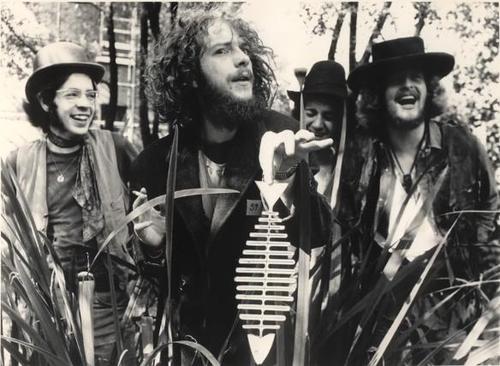
Glenn Cornick, Ian Anderson, Clive Bunker, and Mick Abrahams in Jethro Tull’s This Was lineup.

The same could be said, to a lesser degree, of each of the previous three albums, which were bluesier, jazzier, and indebted as much to the initial influence of guitarist and singer Mick Abrahams as to flautist/guitarist and singer Ian Anderson.  While Anderson became Tull’s guiding spirit and remains so to this day, Abrahams only hung around for This Was, an engagingly odd, loose take on the British blues boom defined in large part by Abrahams’ “Move on Alone” and his take on “Cat’s Squirrel.”  That his replacement, the wonderful Martin Barre, took the next two records to shrug off Abrahams’ influence on the band and find his sound, while still producing great music, is a testament to both Abrahams and the strength of Tull as a band during its 1968-1971 period.

Why Abrahams left has always been chalked up to a disagreement with Anderson over the direction of the band, but this direction didn’t change significantly on Tull’s Stand Up or Benefit, at least to my ears (as others point out, folk themes and progressive structures were increasingly adopted, but slowly).  Abrahams, I think, saw his chance to be sole band leader following the success of This Was, and took it.  He formed Blodwyn Pig, and produced 1969’s Ahead Rings Out and 1970’s Getting To This, both minor classics that are the equal of Tull’s first two albums.  In the catalog of sadly overlooked records, they are also prime examples of what happens to albums by musicians who leave their hugely successful bands after one record, thinking they were the prime movers.  Whatever was in Ian Anderson’s tea, he gave Tull the hits that eluded a solo Abrahams, despite Blodwyn Pig’s moderate success in England and America.  But Blodwyn Pig and Abrahams cannot be denied what they achieved apart from Tull.

BLODWYN_AheadRingsOutCover
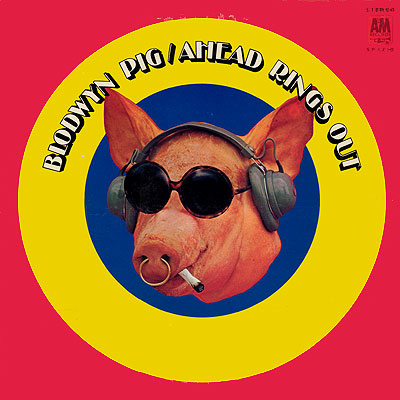
Cover of Ahead Rings Out, in all its, um, glory.

Ahead Rings Out begins with the jump’n’jive of “It’s Only Love,” a horn-inflected piece of dance blues straight out of B.B. King.  Right away it is apparent that, while he stamped Jethro Tull’s first record with his playing and singing, in Blodwyn Pig Abrahams is going for a fuller sound, and up against the other comparable British blues rock guitarists/vocalists/bandleaders of the period — Eric Clapton, Peter Green, et al. — Abrahams holds his own.  Reed man Jack Lancaster, meanwhile, creates his own horn section (he’s pictured on the inside cover playing soprano and tenor simultaneously), which he elaborates on more elegantly in the slow blues “Dear Jill,” again featuring thoughtful, tasteful soloing by Abrahams and a heavy bottom from bassist Andy Pyle.  “Walk on the Water” could be off of Tull’s Stand Up, and continues the rock and brass.  Jack Lancaster’s work gives Ahead Rings Out its signature, and to my ears creates, in some fashion, the template for Gong’s admirable Radio Gnome trilogy, minus the ambient stoner bits (“What’s left after the ambient stoner bits?” you could justifiably ask).  That Abrahams could create Blodwyn Pig and open up space for Lancaster, where Ian Anderson’s flute would have played this role in Tull, is a testament to Abrahams’ care for the sanctity of the song — whatever ego drove him from Tull is not driving this record.  It isn’t just the Mick Abrahams’ show.

“See My Way” is the album’s center, its Bolero break a nod to other blues rock albums of the period, for what self-respecting band didn’t riff on that chestnut at the time? The balance of the record is a sampler of British country blues and jazz of the period, strongly reminiscent of Peter Green’s Fleetwood Mac, with pastoral acoustic slide pieces like “Change Song” paired with riff rockers like “Summer Day.”  Again, though, Lancaster’s layered sax work sets the album apart, driving, charging, soloing.  It’s a voice that was often lost in rock bands evolving out of the British jazz/blues scene, and it’s agile use here is in welcome contrast to strictly guitar-centric albums of the period.

BLODWYN_groupPic
Blodwyn Pig: Jack Lancaster (sax), Mick Abrahams, Ron Berg (drums), and Andy Pyle (bass)

It becomes clear on Getting to This, which is a respectable second effort, that while the sound has gotten heavier, Abrahams has perhaps run out of ideas.  The album opens strong, with “Drive Me,” and throughout offers the same guitar-and-horn driven rock that made Ahead Rings Out so satisfying.  But…the soaring, Tull-ish “Variations on Nainos” is spoiled in its final moments by a joke-ishly gargled vocal — I appreciate a sense of humor, but why bring it to such a gem of a song —   “See My Way” is inexplicably included again, and Abrahams revisits his signature take on “Cat’s Squirrel” with “The Squirreling Must Go On,” which is expertly wrought and totally unnecessary.  Nonetheless, I think Getting to This can be considered of a piece with Ahead Rings Out, and even if Abrahams betrays an over-fondness for the template he hammered out with Tull on This Was, there is no denying the strength of the blueprint.

Abrahams has soldiered on through the years, recording off and on, reviving Blodwyn Pig here and there, and even re-recording the entirety of Tull’s This Was.  Living in the Past indeed.  Yet it’s hard to argue with such spirit, and, having the opportunity to see Abrahams play in a London pub in 1991, I can say that it appeared the man was having a good time.  He also enjoys what seems to be an amiable relationship with his old bandmates in Jethro Tull, a group he defined before moving on alone.

On the band’s website, he is profiled with a warm, respectful humor: “Mick was born in Luton, England, on the 7th April, 1943, which was a very long time ago. There was a war still going on at the time, which may explain why Mick can be a cantankerous old git and a right, proper and loyal gent at one and the same time…. Mick is now very, very old — even older than Martin Barre — and likely to out-live all of them.”

The Moral Law of Big Big Train

by Craig Farham

Music is a moral law. It gives soul to the universe, wings to the mind, flight to the imagination, a charm to sadness, and life to everything. (Plato)

The members of Big Big Train with Dutch photographer, Willem Klopper.

Is it possible that Plato was writing about Big Big Train’s latest masterclass of musical wonder, English Electric, Part 2 (EE2)? Probably not, but two millennia before locomotives, social networking, digital recording, the global network, or austerity measures in his beloved city state, Plato certainly knew a thing or two about the power of oscillating waveforms to connect people.

Did the members of Big Big Train read Plato before embarking on their epic journey to morph their observations of contemporary and historical people and events into oscillating waveforms of power and beauty? Again, probably not. But EE2 certainly fits Plato’s moral law to a tee.

Beautifully crafted from the opening piano chords to the final fade out of a single piano note, EE2 continues the journey begun on EE1, my album of the year in 2012, into the heart and soul of industrial England, its people, and the surrounding countryside. The album weaves tales of steam trains, ship-building, coal miners, a second chance at love, the custodian of a historical monument, the British landscape, and butterfly collections as a metaphor for life and death, with musical arrangements that range from sparse to massive, light-hearted to intense, but are always melodious and warm. The album has the same lush production and attention to detail as EE1, with exquisite use of brass band and strings beautifully complementing the electric instruments. The songs range in length from just under 4 minutes to nearly 16 minutes, and every song is exactly as long as it needs to be – no filler, bloat, or needless noodling.

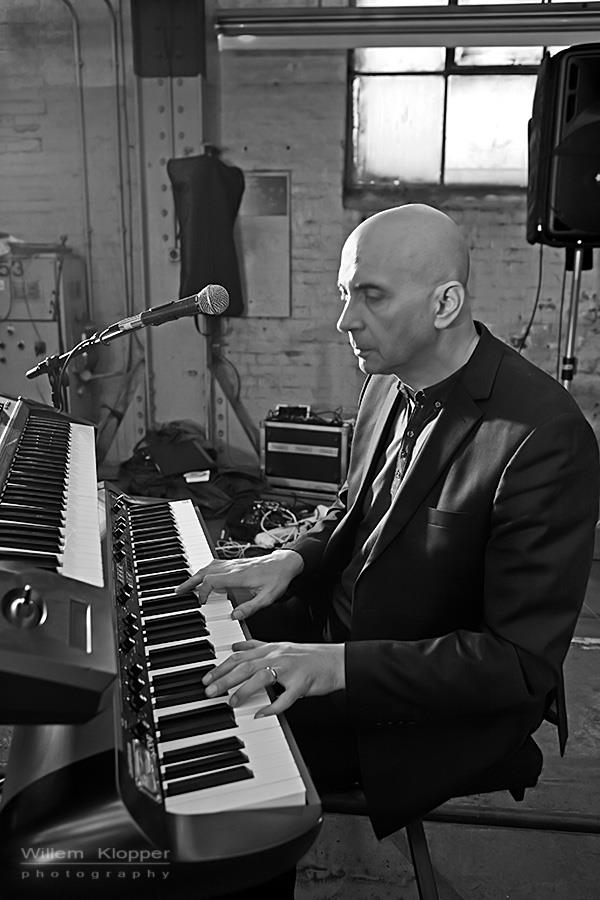
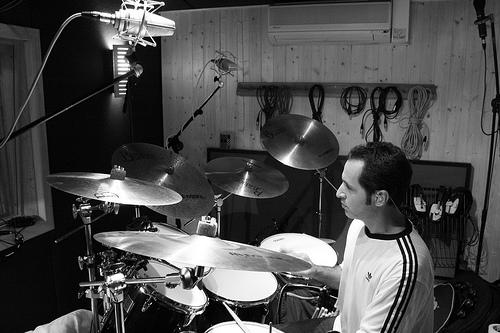
The addition of Danny Manners as a full-time band member on piano, keyboards and double bass has lifted an already impressive ensemble another notch, and I’m delighted that the compositions on EE2 have given David Gregory more scope to develop his exceptional guitar solos. The rest of the band are also in fine fettle – Greg Spawton’s basslines are on a par with those of Gentle Giant’s Ray Shulman (and his compositional skills are equally impressive), Nick D’Virgilio’s drumming is peerless (he recorded the drum parts for both EE1 and EE2 in three days…!), Andy Poole has stepped forward from the producer’s chair to contribute backing vocal, guitar and keyboard parts, and Dave Longdon, who I think has the best voice in modern prog, contributes massively with his flute work and a wide array of sundry instruments, including banjo, keyboards, guitar, cutlery and glassware(!), in addition to his great songwriting. There is also a large cast of supporting musicians, including Dave Desmond, whose marvelous brass band arrangements are an integral part of the unique BBT sound, Rachel Hall on violin, and The Tangent’s Andy Tillison on keyboards.

The newest member of Big Big Train, the extraordinary Danny Manners.  Photo used by kind permission from Willem Klopper.
The newest member of Big Big Train, the extraordinary Danny Manners. Photo used by kind permission of Willem Klopper.

Although EE2 is the second half of a double album released in two separate parts, it stands on its own as a superb example of the vibrance of the new wave of progressive music, which is finally lifting itself out of the shadow of the so-called “golden age of prog” in the 1970s. To listen to EE2 on its own, however, is to miss out on half the fun. EE1 and EE2 should be seen as a single body of work, a superb collection of songs and an important milestone in the history of modern music.

English Electric by Big Big Train is a moral law that demands to be upheld. To paraphrase a comment I made on the BBT Facebook site, these are albums to cherish – I’ll be listening to this music as long as my cochlear apparatus is capable of responding to their oscillating waveforms and connecting my soul to the universe…

***

[Dear Progarchists, thank you so much for letting us enjoy this four-day love fest of all things Big Big Train.  It’s been quite an honor.  Craig’s post–his inaugural post as an official citizen of the Republic of Progarchy, by the way–concludes our roundtable reviews of the latest BBT masterpiece, English Electric V. 2.  To order it directly from the band, go to www.bigbigtrain.com/shop.–Yours, Brad (ed.)]

What’s in a Name?: Quite a lot when it comes to Big Big Train

Aubrey and D'Virgilio, courtesy of the uber-great Willem Klopper.
Aubrey and D’Virgilio, courtesy of the uber-great Willem Klopper.

by John Deasey

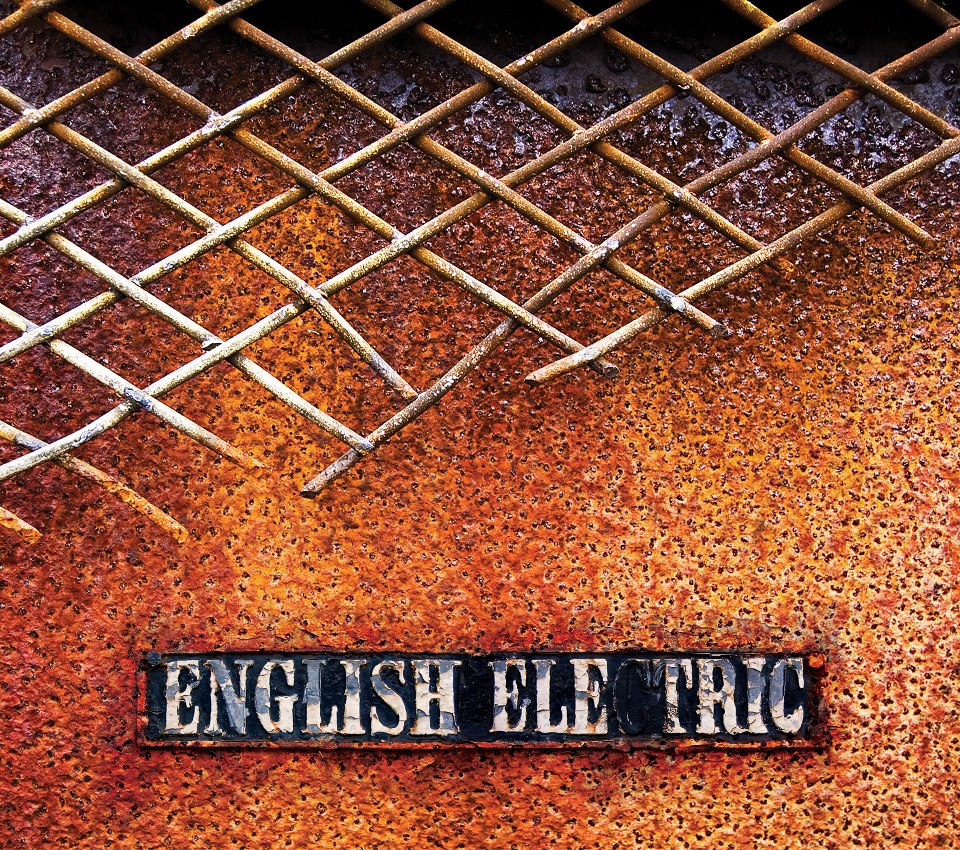
Just looking at the artwork of EE2 and taking in the song titles is a pleasure all of it’s own.

I savour the industrial art and the titles such as ‘Swan Hunter, ‘Keeper of Abbeys’, Curator of Butterflies’, ‘East Coast Racer’ ……

To those with a passing knowledge of English industrial heritage, it goes without saying we are back in the land of The Underfall Yard, back to The Last Rebreather and back to the land and communities that so shaped our country.

Big Big Train with this, the second part of English Electric,  take us further into the arms of working fathers, loving sons and warm families to extract beauty from industry and agriculture like no other art I know.

With a gentle piano introduction along with a typical BBT signature motif that will be repeated, we are soon driven by Nick d’Virgilio’s intricate drum patterns along the same tracks the famous Mallard steam train once flew. A stunning tour de force restlessly moves along evoking the men who rode the plates of this famous flying machine. The overall sound returns to the rich warm tones of The Underfall Yard, beautiful bass patterns underpinning a whole host of instruments including viola, tuba and cello.

David Longdon has never sounded better and the guitar fills from Dave Gregory are typically tasteful and restrained.

Big Big Train are masters at creating great soundscapes that swell and build and finally spill over into something quite beautiful.  Think of the Victorian Brickwork ending where I defy anyone not to shed a tear as the guitar overplays the brass section to create a crescendo of beauty.

Well, at 9.24 into ‘East Cost Racer’ they only do it again, and do it better, and do it in such stunning style it really is hard not to find a tear escaping …..

If the album finished at the end of this 15 minute track I would be more than delighted – I would be ecstatic. But you know what ?  The beauty just keeps on coming …..

Just as we’ve finished the great Mallard story we taken into the magical and harsh world of ship building at the Swan Hunter shipyard

A melodic and rather gentle opening, reminiscent of the whole feel of EE1, tells of the father to son continuity of such industries but with the sad caveat

Tell me what do you do

When what you did is gone

No one throwing you a lifeline

How do you carry on?

‘Swan Hunter’ is a stately track that has simple elegance in it’s phrasing and tones and once again has a gorgeous build-up and release towards the end combining brass, guitars and vocals.

From the shipyards we move to the coal face with ‘Worked Out’ and again we have this magnificent connection with time, place, community and industry. Father and son, working together, regular shifts, routine, warm and generous folk who forged communities but realise “.. we had our day, our day is over”

Despite the subject matter there is a real drive to this track with some sublime moments where viola, cello and guitar inter-act to build a warm wall of sound. Flute interjections from David Longdon lead into a real jam type session where Dave Gregory adds subtlety and skill proving that a masterful guitar solo does not need a million notes.

After such an astonishing triumvirate of tracks, some space is needed and breathe needs to be drawn.

We are given this chance with ‘Leopard’ which, if I am honest, does not work for me just yet.  As a breathing space though, it is perfect ….

The pace picks up again with ‘Keeper of Abbeys’ – a joyous and infectious track in the style of Judas Unrepetant with a drive, vigour and melody to die for which at 2 minutes in, goes places where other musicians must dream about. A typically sweeping refrain with soothing organ and cello sweeps into a section where you could be forgiven for thinking you had stumbled into a Greek taverna or a Russian vodka bar. Stoccatto guitars, flutes, viola and an incessant drum beat will have you tapping along infectiously then you are swept up unknowingly into the most beautiful choral-backed guitar solo you have heard which builds and builds into something far greater than I have words for.

The next track, ‘The Permanent Way’ is a real surprise.

Big Big Train have a knack of returning to refrains throughout their albums – think of the opening to The Difference Machine, or Evening Star for example

A pastoral opening about the farmer working in the fields soon gives way to a soaring re-working of Hedgerow which takes you by surprise on first listen as you are suddenly thrown back to EE1 and thinking ‘Blimey – where did that come from !”  It’s stunning.

And then – wow – we suddenly have the fantastic soaring refrain from The First Rebreather.

This is like a celebration of everything that is so warm, honest and true about Big Big Train. They are making music they love and it shines through like the brightest light.

‘The Permanent Way’ is an encapsulation of everything that is so perfect about Big Big Train – recurring motifs, connecting with land and industry, streams, hills, high moors, dry stone walls, far skies, the mark of man.

I cannot recall music that so connects with time, place or community that this does. As I live in an old industrial town surrounded by beautiful countryside filled with relics of a bygone age it maybe resonates clearer for me as it seems the music was set to to the sights and sounds that surround me.

From the BBT EEv2 booklet.  Photo by Matt Sefton.
From the BBT EEv2 booklet. Photo by Matt Sefton.

Now if you thought ‘Hedgerow’ on EE1 was a good album closer, wait till you hear ‘Curator of Butterflies’

I cannot think I will hear any music more moving, relevant and genuine than this superb album for a long time.

That is all I can say. Simply stunning and beautiful.

A Peerless Evocation of English History: BBT English Electric Vol. 2

by Ian Greatorex

A joy to listen to and, as always, a peerless evocation of English history, both rural and industrial.

The musicianship is impressive and the arrangements for woodwind, brass and strings are excellent.

David Longdon’s vocals are superb, so smooth and pitch perfect, but there are also many beautiful harmonies on this release.

BBT have an uncanny grasp of when and where to add the astonishing array of instruments being used; we have harp, violin, viola and cello; we have trumpet, trombone, euphonium, tuba and cornet; we have recorder and flute; we have piano, organ, mellotron and synthesizer; we have accordion, dumbek, cajon, marimba, vibraphone and tambourine; we have 6 and 12 string guitars, sitar and mandolin, banjo, bass and double bass. And even cutlery and glassware are played . It’s no wonder they never play live!!!

ee2So what do the tracks bring us:

East Coast Racer – an epic 16 min track about the railway industry. I love the way the music captures the ‘feel’ of the workers at their craft and the sense of the Mallard’s speed. It’s almost as though you are on the train itself, racing through the English countryside.

Swanhunter – a story about the community impact of the shipbuilding industry on the Tyne. A very mellow track with stunning harmonies and beautifully arranged brass band.

Worked Out – we move to the coalmining industry; step up the marimba and flute; unusually rocky guitar and keyboard solos.

Leopards – a song about love, people and change. This is my favourite track on the album. At under 4 minutes, short by BBT standards. Arise the violin followed by acoustic guitar. This upbeat song is beautifully soft and gentle and includes some more marvellous harmonies. A magnificent piece of music. In the ‘70s this would have been a great single.

Keeper of Abbeys – based upon a real-life guardian. An accordion intro draws one in nicely (I love the accordion!); there’s a classic fast, folksy fiddling about in the middle section; and is that a sitar?….lovely stuff.

The Permanent Way – covering the everlasting and essential importance of people working on the land. A charming mix of song and narration; very atmospheric with some great mood changes.

Curator of Butterflies – with an exquisite piano opening and full of delightful melodies. This track has palpable emotional power and intensity (it’s a bit of a ‘hairs standing up on the back of the neck’ moment for me). Making this the concluding track was a masterstroke…a perfect ending.

Another wonderful journey into the world that is Big Big Train. One senses on every track a meticulous attention to detail in what are dense arrangements. It takes a number of listens for the beauty of this album to be revealed. Rob Aubrey’s production mix is superb with the ‘cornucopia’ of instruments all getting their fair share of the sound pie. A good hi-fi system or a set of quality headphones is essential. And don’t download as mp3 files as this music demands lossless format only!

There are exceptional musical skills on display on EE Part 2 and the story-telling is worthy and beautifully told. From a purely objective point of view this is an astounding piece of work, just like Part 1 and I found it an emotionally compelling experience. I am in no doubt it will be a contender for the Prog album of the year. If you liked Part 1 and wanted more of the same then it’s a huge understatement to say that this will appeal. Usually I like music that is both heavy and ‘edgy’ and explores the ‘dark side’ of human nature (I’m more an Oceansize man) but I was captivated by this album.

Music is an intensely personal experience and EE Part 2 pressed almost all of my buttons.  However, I was hankering for something slightly different; a musical and lyrical progression of sorts. English Electric generally uses past events to discuss universal themes such as love; work; communities; unsung heroes; the importance of maintaining monuments of our past. I would really like the band to lyrically explore more contemporary social and political themes such as the internet age; globalisation; the aging population; business ethics etc. and hence produce an album that would naturally have a harder, ‘edgier’ feel. Of course they have the talent to do this and I believe this would attract a wider fan base by making their music more relevant to a younger audience.

None of my comments above can detract from the superb quality of this release. Lock the door, turn the off the lights and even close your eyes. Let nothing disturb you from enjoying the astonishing beauty of this album.

It just gets better. . . BBT EEv2

ndvby Erik Heter

It Just Gets Better …

As great as EE Pt. 1 was, BBT might have exceeded its excellence with EE Pt. 2.  The second half of this double album opens with the fantastic ‘East Coast Racer’, which is the only epic-length piece of the entire set.  It’s a doozy too, with a lot of great dynamics and enough change to keep it interesting over its entirety.  It’s my favorite piece of the EE set.

The next track, ‘Swan Hunter’, has a very melancholy feel, but also has some of the best lyrics on the album.  This is one of the more emotional pieces on the album.

‘Worked Out’ follows, and has a more upbeat feel, and a great chorus.  It also has a great instrumental break that includes some great flute playing and a Tull-like feel, and closes out with some good old fashioned proggy synth.

‘Leopards’ has a chamber music-like beginning before settling into acoustic guitar on top of some violin.  It has a very lazy, easy feel too it, and gives me an image of lounging outdoors under a tree on a sunny and mild spring day.

The instrumental portion toward the end of ‘Keeper of Abbeys’ has an excellent mix of sitar and violin, and illustrates something at which BBT excels like no other – taking instruments not typically associated with music coming from England (e.g., the sitar here, the banjo on ‘Uncle Jack’) and integrating them into something that has an unmistakably English sound.

‘The Permanent Way’ reprises a few themes and lyrics from ‘Hedgerow’ and ‘The Great Rebreather’ and serve as a good reminder that EE Pt. 2 is part of a larger whole.  In between there is some great proggy organ playing,

‘Curator of Butterflies’ closes out the album.  Slow and mellow with a lot of string, it includes some nice guitar work to close out the song.

bbt ee2Overall, this is another outstanding effort, and will be at or near the top of many “Best of 2013” lists before it’s all over.  I might quibble with ‘Curator’ being the closing track instead of its predecessor, but that’s a minor quibble to be sure.  For me, this is at least as good as EE Pt. 1, and with the inclusion of ‘East Coast Racer’ at the beginning, I’d have to say its maybe a bit better.  In either case, it’s a must-own, along with its counterpart.

Chronometry, Cosmograf, and Perfection: The Man Left in Space

By Brad Birzer

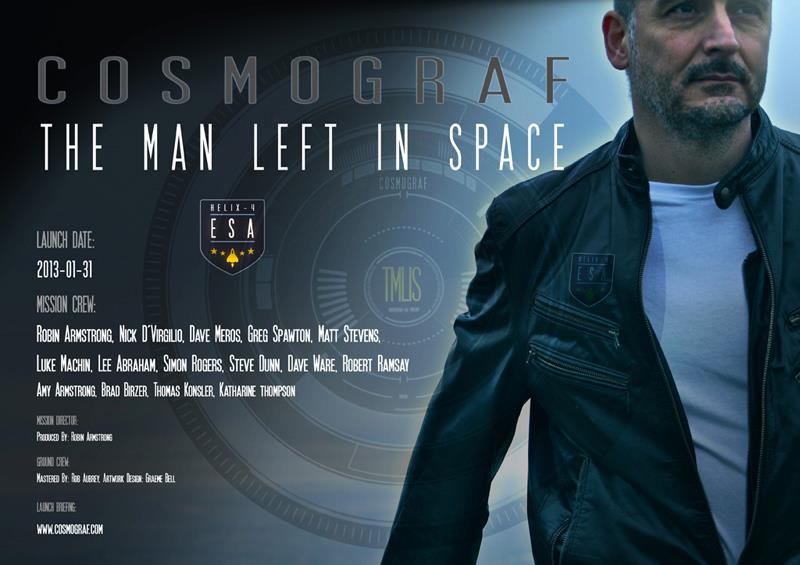
cosmografAs you’ve probably noticed, we’ve been having a Big Big Train-love fest for the past several days at Progarchy.  Even our criticisms (well, not mine; but I won’t point fingers) have been written out of love and respect.

Another recent release that deserves a massive amount of attention is the fourth cd by Robin Armstrong, writing under the name, Cosmograf.  Yes, it deserves a MASSIVE (Ok, I’m yelling at you, fair reader; it’s not personal, I promise!) amount of attention.  Massive.

Following Cosmograf’s history, it comes across far more as a project than a band.  I’m not sure Robin would put it this way, but this is how it strikes me.  Each album has been a concept with a variety of guest musicians.  For this current album, The Man Left in Space, Robin has chosen the best of the best: Greg Spawton (who wouldn’t love this guy), Nick d’Virgilio (giving Peart a run for his money since 1990!), Matt Stevens (a young guy already inducted in the Anglo-Saxon pantheon of guitar gods), and other brilliant folks such as Dave Meros (ye, of the Beard!), Luke Machin, and Steve Dunn.  Robin knows how to get the absolute best, and he knows how to bring the best out of his guests.  Then, add the additional production of the ultimate audiophile of our time, Rob Aubrey.  Can it really get much better than this?  Not really.

By profession, Robin is a master of all things time-related.  He’s a watch dealer and a watch repairman.  I find this so very appropriate.  What better thing for a musician and composer to be than to be a master Chronometer (I have no idea if this is the proper term, but I like the sound of it).  Chronometrician?  Ok, I’m floundering here, but I assume you get the point.  Precision, mystery, time, eternity, space, place, humanity. . .  Robin Armstrong. Continue reading “Chronometry, Cosmograf, and Perfection: The Man Left in Space”

A Movie Soundtrack: BBT’s English Electric V2

Nick d'Virgilio, courtesy of Willem Klopper.
Nick d’Virgilio, courtesy of Willem Klopper.

by Craig Breaden

Bedeviled or blessed, progressive rock’s classic bands took it upon themselves to discover what can happen when rock frees itself from the restraint of the three-minute single.  And because Procol Harum, Yes, Genesis, King Crimson, and ELP didn’t merely see what would come out of jamming, but meticulously planned and executed album sides worth of material, there was an idea that these bands were making some sort of…progress.  Codified as “prog rock,” the body of work that emerged from the late 60s and early 70s continues to inspire failure and success in groups intent on recapturing the form, if not always the spirit, of progressive rock.

Forty-some years on, and thirty years after most of the original prog bands found that trimming their sound back to that three-minute (or so) mark could bring substantial commercial success, progressive rock is in the middle of a full-blown and full-length revival, international in scope and as layered and interesting as the first generation.  Many of the musicians associated with prog today are less revivalists than rock veterans, pursuing for years their passion with little fanfare but with fierce fandom.  One of their leaders appears to be Big Big Train.

A disclaimer:  I am one of the few Progarchist writers who was not familiar with Big Big Train during the genesis of Progarchy, which owes its existence at least partly to the enthusiasm Big Big Train inspired in its editors.  I tend to watch prog from the edges, my tastes running to the rougher cuts, the drones, freakouts and new music noise-fests.  Classically-inspired keyboard soloing — noodling — isn’t really my thing.  I like the dirty-ness of art’s residue, big messy riffs that fray at the edges with some punk abandon, like you might hear in King Crimson’s “Starless” or Amon Duul II’s “Archangels Thunderbird.” In other words, I probably lean more towards the rock than the prog in prog rock.  Which is why early listens to BBT impressed me with the musicianship I heard and the obvious dedication of the group, but left me wanting…something. Continue reading “A Movie Soundtrack: BBT’s English Electric V2”