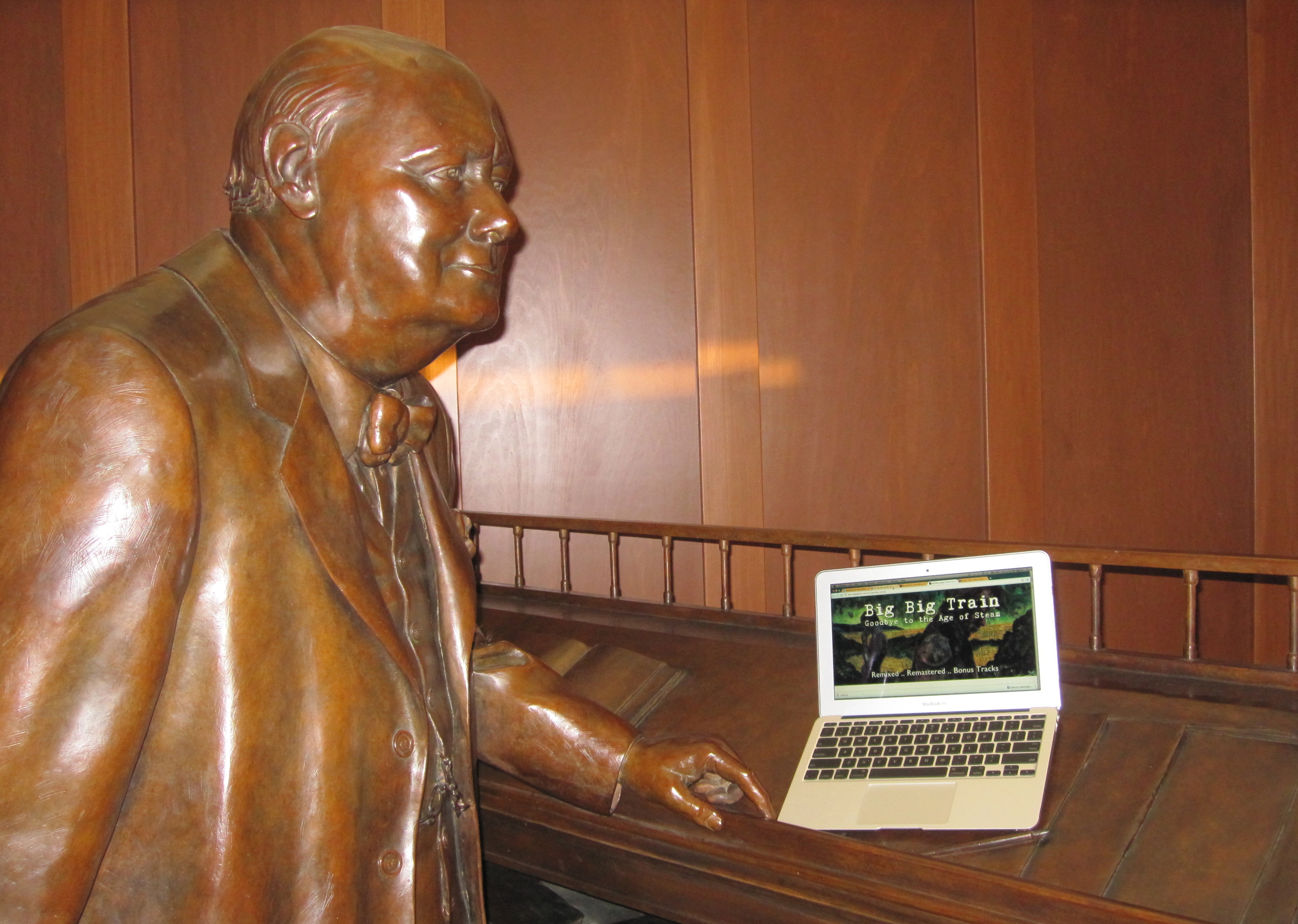
Beyond Prog: The Authentic Voice and Art of Big Big Train

by Brad Birzer

To me, ‘progressive’ is a term which describes a genre of music. That genre emerged from the rock and pop music of the 60’s and became fully defined in the early 70’s. But what I think may be the sub-text behind your question is whether bands writing and performing music in the progressive genre need, by definition, to be striving for some sort of statement of originality in everything they do. I think not, but I am aware that many others take a more absolutist view of things and this has caused an endless debate. In The Music’s All That Matters, Paul Stump makes some very interesting observations. Early on in the book, he correctly identifies that the main problem with progressive rock is its name (he calls it ‘the most self-consciously adjectival genre in all rock’.) Another point that Paul Stump makes is about what unites the musicians of the genre. He says they have ‘a hankering after the transcendent’. I really like that phrase as it can take on a broader meaning than ‘progressive’. In Big Big Train, we combine our influences in a way, which is often original. But trying to do something different isn’t the be-all-and-end-all. What we are really trying to do is to make extraordinary music.–Greg Spawton, Summer 2012
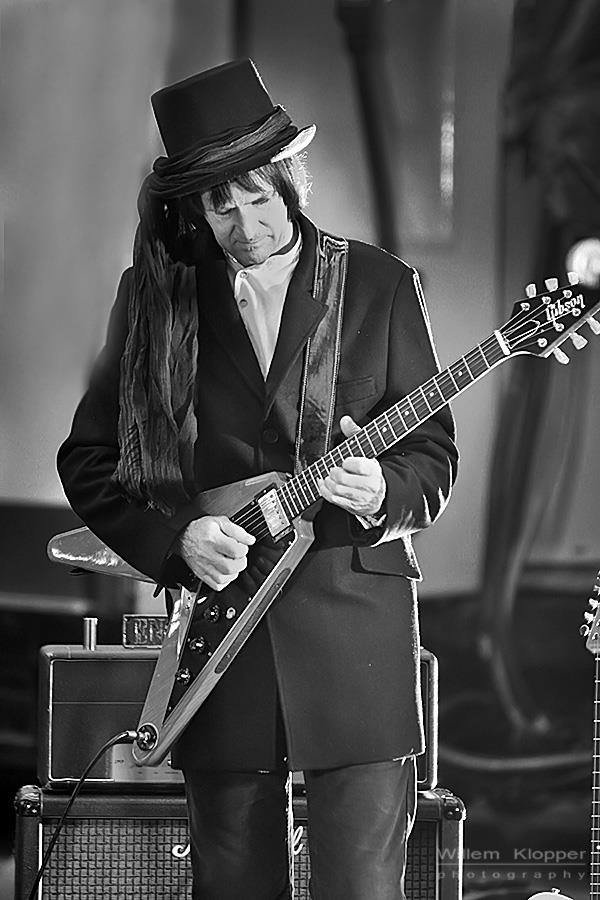
wk gregory
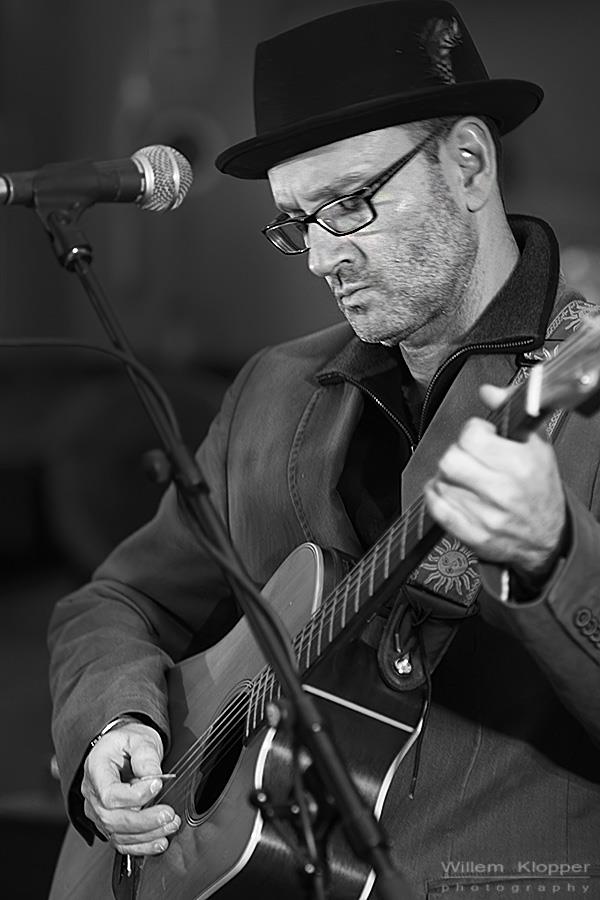
Photo of Dave Gregory, courtesy of the excellent Willem Klopper.

I must admit, I’m a little lost for words when it comes to reviewing the new release from Big Big Train, English Electric Vol. 2 (officially out today).  And, as my wife, my kids, my friends, and my students can attest, I’m almost never at a loss for words.  I’m sure there are times when they’d like me to be!

My problem is this.  The music is so very good, so very much beyond the bounds of normal description and descriptives, and I want in the worst way for the quality of my writing and my thoughts to do it justice.  Frankly, I’m not sure I’m capable.  Not being shy enough or humble enough, I will just jump in. . .

When I first heard The Underfall Yard, I thought music could get no better than this.  Especially listening to Longdon’s voice.  Schnikees.  Could that guy get any better?  And, those lyrics.  Who wouldn’t want to visit the Victorian Brickyard, meet Mr. Delia, dive into that watery purgatory below Winchester Cathedral, or watch electrical storms moving away from England?

Then, I heard Far Skies Deep Time.  Ok, they’d reached the top this time, for sure.  They have to have done so.  Where could they go after this?  Again, such wonder.  If I caught a plane to England, might I still be able to see Fat Billy just before he died on that beach, a bloated alcoholic with the waves calling him home?   Or, how about that English girl who tore my heart out or that other one with the berry-stained lips?  No, too late.  But, maybe, just maybe, I can be reminded that if we only have love, we have enough.

Then, I heard English Electric Vol. 1.  Ok, what to do was my first thought?  Everything I’d known and believed about music was blown apart.  Nothing had so moved me since I’d first listened to an advanced copy of Talk Talk’s Spirit of Eden back in September 1988.  Oh, Mark Hollis, where art thou?

I try to walk at least four miles a day.  I’ve been doing this much of my life, and I find the time walking absolutely necessary to keep my mind focused when I’m writing, to de-stress when I need to de-stress, to listen to fiction on my ipod, and, especially, to have alone time with my favorite music.

Continue reading “Beyond Prog: The Authentic Voice and Art of Big Big Train”
Modern Rock at Its Finest: English Electric Vol. 2

wk poole
Photo of Andy Poole, co-founder of BBT, by the brilliant Willem Klopper. Used with his kind permission.

by Frank Urbaniak

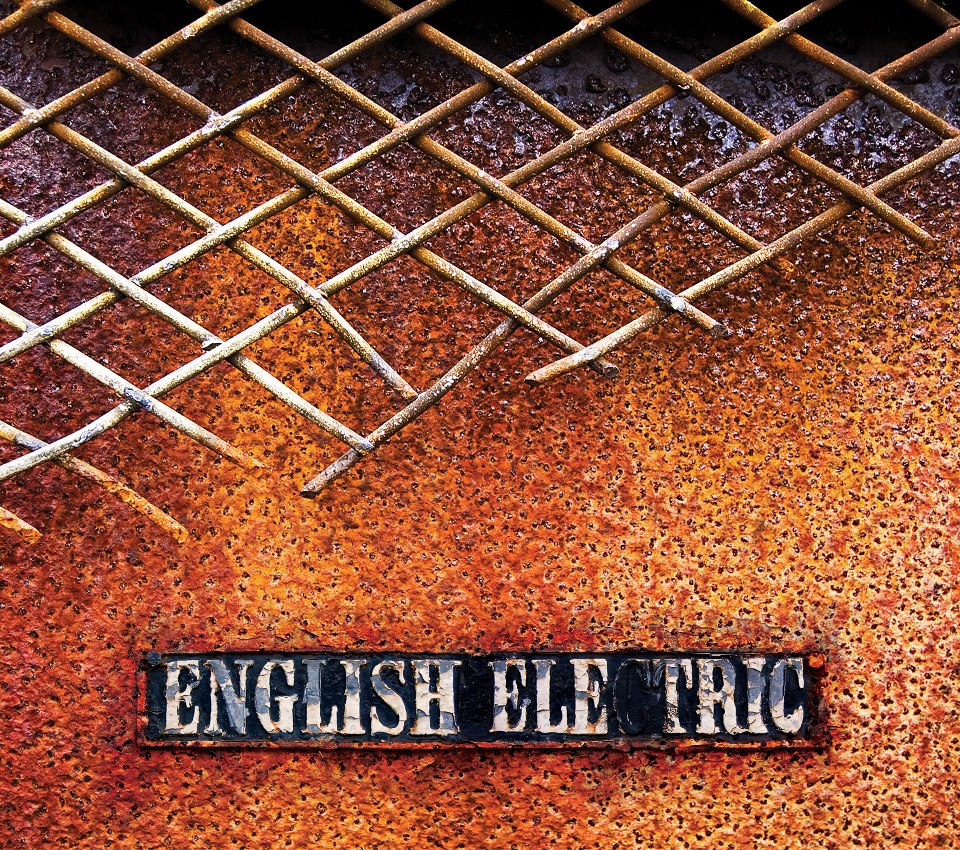
Reviewing Part Two of Big Big Train’s English Electric presents an interesting challenge-should this be considered as a Magnum Opus song cycle that just happened to be released in two sections, or should we consider EE2 as a separate and distinct release?

The good news is that EE Part Two stands on its own as a great collection of incredible compositions, interesting lyrics, and outstanding performances with more ‘space’ to develop the songs than on EE1.  The band is not afraid to wear its influences proudly on their sleeves-suggestions of Elbow, Genesis, PreFab Sprout, Radiohead and others appear and are gone in a flash, hinted at but never copied.  The instrumentation is again diverse but is not a repeat of EE1, and there is more room for Dave Gregory to stretch and embellish the song’s melodies, especially the sitar/guitar in Keeper of Abbeys playing counterpoint to the violin, Worked Out’s Tull feel, and the biting melancholy of The Permanent Way.  The production is impeccable and a delight through headphones, although there are moments I might wish for just a tad ‘less’ in the future.

EE Part Two continues to create a compelling argument for challenging the classification of BBT as ‘prog’.  The songs are so well composed and universal in themes that they could/should appeal to a wider listening audience.  On the other hand, the ‘proggers’ who summarily dismissed EE1, perhaps favoring metal/experimental or one of the other prog sub classifications (typically meaning heavier), will be hard pressed to embrace this one as well.  As an example, while Curator of the Butterflies is one of the finest ballads I have ever heard, the opening vocal ‘she likes to walk’ sound strangely like a Simon and Garfunkel tune, which won’t win over the gang who prefer their prog a bit heavier.

Continue reading “Modern Rock at Its Finest: English Electric Vol. 2”

The Permanent Way: The Music of Big Big Train

IMG_3725by Tad Wert

The long-awaited release of the second part of Big Big Train’s English Electric does not disappoint. It continues the band’s reverence and celebration of the unsung heroes of Great Britain’s past, beginning with the first track, the epic “East Coast Racer”. After a beautiful, elegiac opening featuring new member Danny Manners’ piano, the listener is suddenly hurtling down a railroad track on the exhilarating 1938 record-setting run of the famous Mallard steam locomotive. True to its subject, this 15+ minute song speeds by in no time, thanks to the propulsive drumming of Nick D’Virgilio. His stick-work evokes to an uncanny degree the clackety-clack rhythm of a train running full-bore across the countryside.

Another excellent song is “Worked Out”, a tribute to the millions of coal miners who labored underground to provide the fuel for the industrial revolution. It’s quite a rocker with a catchy sing-along chorus. David Longden’s “Leopards” is a nice change of pace, as the album turns inward to examine the conflicted emotions of two former lovers tentatively reconnecting. “Keeper of Abbeys” has one of the catchiest melodies ever written by the band, and it includes a hoedown featuring some delightful fiddle.

Continue reading “The Permanent Way: The Music of Big Big Train”

Master of All Things Spock’s Beard: Glenn Fitzgerald

ImageA huge massive gargantuan Progarchist thanks to Glenn Fitzgerald, “Master of all things Spock’s Beard,” for his incredible service to and work for the prog community yesterday.  I have no doubt that Glenn is now exhausted, and is, I hope, enjoying a weekend full of rest and leisure.  He deserves it.  Thanks, Glenn–from the Progarchists.

http://spocksbeard.com/

EEv2 Impressions

by Nick “Dr. Nick” Efford

If I’m honest, I was harbouring a secret wish for something rather different in tone from EE1: darker and more edgy, perhaps. Clearly, we don’t have that here – but it would be churlish to feel disappointment at getting more of the same, given the sublime nature of EE1. And there’s no doubt that Big Big Train have once again served up some wonderful music for us.

bbt ee2East Coast Racer is a suitably epic album opener that doesn’t quite gel for me yet. There are several parts to it that I really like but I’m struggling to find the thread linking them all together. It is growing on me with repeated listens but is giving up its secrets slowly!

No such issues with Swan Hunter, which is much simpler and more direct. The affection and nostalgia infusing this track makes it a natural companion piece to EE1’s Uncle Jack.  The obvious lyrical connection is that both Uncle Jack and Swan Hunter concern members of Dave Longdon’s family, but if you put to one side the lightness of the former and the more stately cadence of the latter then there are also some interesting melodic parallels to be found.  I’m not sure if this is deliberate or not, but it added something to the music for me.  All in all, a very pleasant piece, although not as memorable as the tracks that follow.

Worked Out is, I think, where this album truly sparks into life. The opening motif is pure pop and sounds like something Mike & The Mechanics might play, with Dave Longdon’s voice uncannily matching the timbre of Paul Carrack’s in places.  Then it switches into ‘prog wig-out’ mode, first with a flute-filled passage that would make Jethro Tull proud, then with a driving closing section featuring some brief but very welcome synth soloing. Absolutely splendid stuff.

Continue reading “EEv2 Impressions”

Pete Blum’s Open Letter to BBT

by Pete Blum

Dear BBT,

BBT EE2It feels as though it wants to be a “love letter” of a sort.  But it isn’t really there yet.  It’s not intensely passionate; it’s not yet full of those deep and personal codes that arise from having spent time as lovers or as the closest of friends.  It’s more like a very early and tentative venture, saying that I’ve been seeing and hearing you, I’ve been watching you and feeling the growth of some kind of friendship, but I wonder if it is (or could be) more.  I’m afraid, too.  Afraid of how you might respond, or even more afraid that you will not respond.  Afraid that if any blood flows into my words, you might miss it and find flattery alone, perhaps sprinkled with a spur here, a barb there, if that’s how you take some of it.  Do I dare ask for your patience when you don’t really know me?

Anyway, this is mainly about our third time “alone together,” as I truly tested that “together”:  It seems to have “tested positive” as the medical folk say.  I can’t refrain from this reaching out, from this speaking (though with a computer keyboard that may not be quite as clumsy as a voice).  It may be selfish on my part.  But isn’t it true that everything may be such, for all of us?

The Underfall Yard was where we first met, right after our mutual friend BB (no T) pointed you out to me with undisguised awe.  I heard, I believe, that at which his awe was aimed, or that which called to it.  Then the first installment of English Electric seemed to confirm it, in concert with some reaching back to earlier efforts.  You seemed so familiar, but also to move so easily and sensually beyond the familiar.  I was brought to an emotional dead halt by “A Boy in Darkness.”  I must confess, it had my attention locked in its cold embrace for days, haunting every other element of my everydayness.  I wrote a brief note about that before.

Continue reading “Pete Blum’s Open Letter to BBT”

So it Begins. . . Big Big Train, English Electric Vol. 2

[And so it begins. . . the reviews of the latest release from Big Big Train, English Electric Vol. 2.  You can pre-order now, as the official release date is March 4, 2013.  BBT is already shipping.  Our Progarchists will be reviewing the new release intensively and extensively between today and March 4, 2013.  Indeed, let us declare the four days of BBT an official holiday of leisure, truth, and beauty in our little Republic of Progarchy–Brad, ed.]

***

ee2“English Electric Pt 2 – Pictures at an Exhibition”

by Alison Henderson

I like to think that listening to English Electric Pt 2 is like visiting a rather exclusive sonic picture exhibition.  You walk into the gallery and you are instantly surrounded by seven exquisite works of art, each with its own character, telling a different story, but somehow all inextricably linked. As the album begins to play, you are drawn to each of them individually, especially the detail and care that has been taken into bringing them to life and you are filled with admiration for their creators, and with awe for the effect they have on you.

East Coast Racer is a tour de force of the collection, big and certainly epic enough to cover a whole wall because of the detail and precision that has gone into its making.  At its centre, you see this legendary steam locomotive the Mallard taking shape through Danny Manners’ intricate piano lines that start and end the piece, introducing us to its sleek lines and curves, before it bursts out of the canvas at breakneck speed, David Longdon’s voice soulfully expressing the pride and passion felt by the men who crafted and engineered this beautiful mechanical masterpiece. Ever changing, ever evolving, this work shifts up and down the gears several times, the attention to detail paid through the painstaking instrumentation, adding texture to the Turneresque picture evolving in the music.

Continue reading “So it Begins. . . Big Big Train, English Electric Vol. 2”

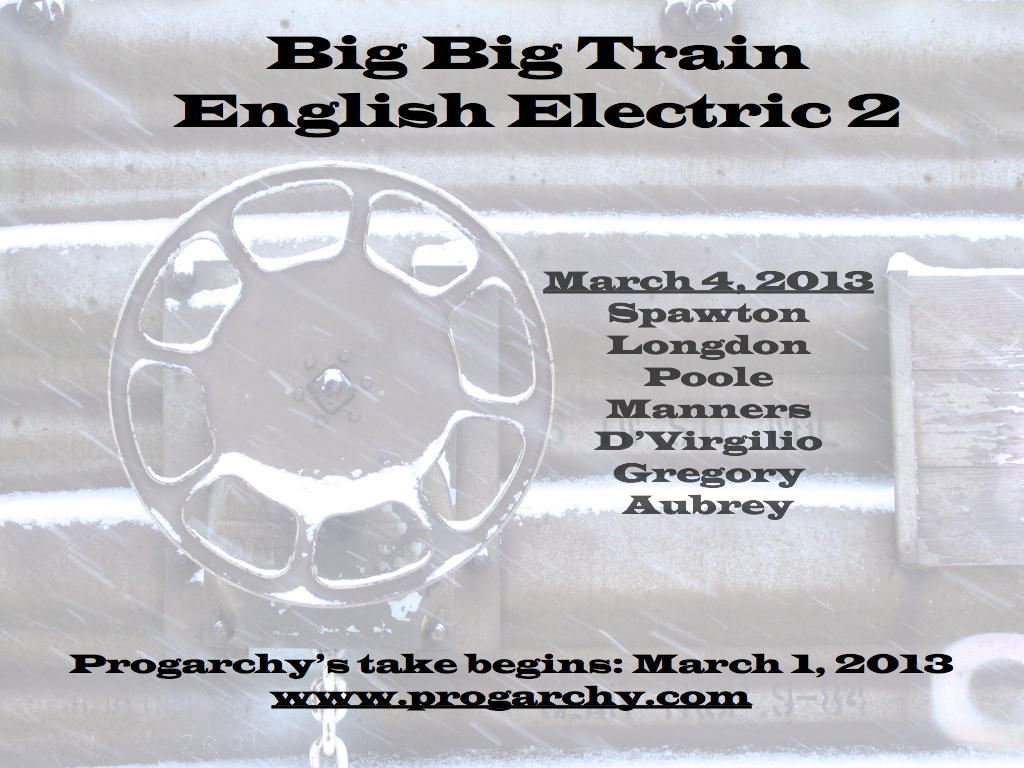
Let the Reviews Begin! Tomorrow Begins Four Days re: Big Big Train’s latest, English Electric II

bbt ee2 roundtable 2.002

Brian Watson Exhibition: “The Lives of Brian”

373107_348071475308894_22985215_nDPRP.net prog reviewer extraordinaire, Brian Watson, will be exhibiting his art this Saturday, March 2, 2013, beginning at 10am.

The exhibition will be at The Old Grammar School Gallery in Otley (England).  If you live in the area, please support our friend and inspiration, Brian!

Steven Wilson – The Raven That Refused To Sing (And Other Stories)

Steven Wilson’s journey as a solo artist from debut Insurgentes to his new release The Raven That Refused To Sing (And Other Stories) has been a fascinating one.  That first album has dark introspection and desolate beauty in equal measure.  Follow-up Grace For Drowning is a different beast, with more shades of light and dark to it and with a more expansive and organic feel. Raven puts that work into context as a transitional piece, for here Wilson’s vision seems, at last, to be fully realised.

The influences that shaped Grace – the improvisational aspects of jazz, and Wilson’s involvement in remixing King Crimson’s early work – are once again evident, but this release can boast greater coherence than Grace, due in part to its unifying ‘ghost stories’ theme. It also benefits from a rather different approach to production. Wilson is settled and comfortable enough with this group of musicians to gamble on live recording in preference to meticulous overdubbing, emulating the methods used on those 1970s prog masterpieces that he has been remixing so successfully. The gamble has paid off and the music frequently builds to a thrilling intensity as the players feed off of each other.  Having the legendary Alan Parsons at the controls is the icing on the cake, guaranteeing a recording of superb quality.

Luminol kicks off proceedings in a suitably explosive manner, with frenetic bass and percussion plus vocal harmonies that call to mind Tempus Fugit from the 1980 Yes album Drama. The pace and energy are high in the early and closing stages of this twelve-minute piece, with all players getting the chance to show what they can do, but it is perhaps Adam Holzman’s piano during the quieter middle section that impresses most.

The album really pivots around the twin epics of The Holy Drinker and The Watchmaker. Both are as good as anything Wilson has ever done. Drinker is moody, powerful and intense, the perfect showcase for the staggering virtuosity of the musicians that he has assembled as his band. Theo Travis particularly shines here. Watchmaker is more delicate in tone and really quite beautiful for the opening four minutes before opening out into some spectacular interplay between Guthrie Govan’s guitar and Travis’ saxophone. Piano, vocals and bass all take their turn at the front of the sound stage before a closing section laden with heavy power chords.

There are nods to Wilson’s other projects. Drive Home feels almost like a Porcupine Tree song before it expands into a closing section with a stunning Guthrie Govan guitar solo that quite simply takes the breath away.  The title track is sparse, mysterious and moving; it probably wouldn’t look out of place on Wilson’s recent Storm Corrosion collaboration with Opeth’s Mikael Åkerfeldt.

Verdict? Steven Wilson’s best work to date.