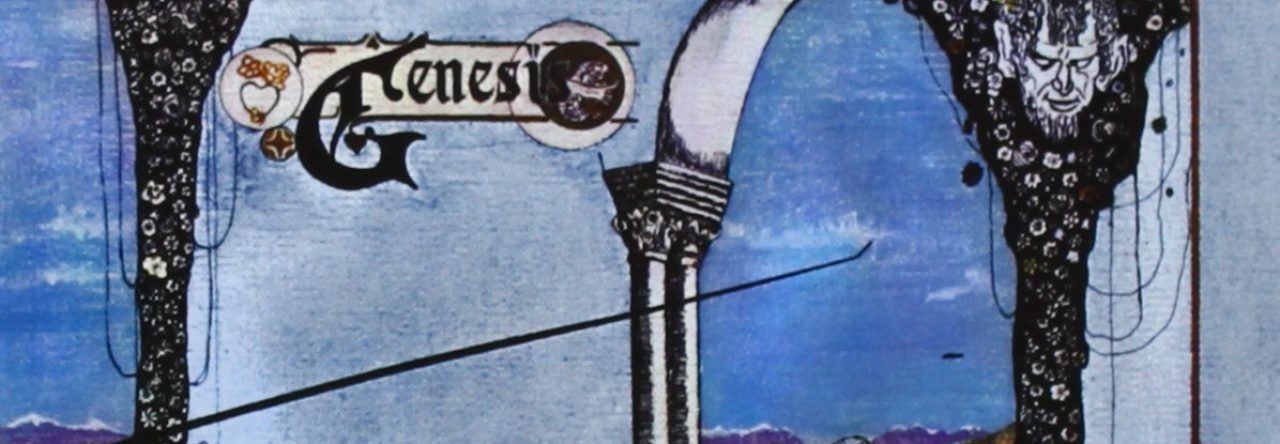
Genesis Revisited II

Reinterpreting the much-loved classics of one of the seminal 70s prog bands is a sensitive business, even if you are one of those responsible for creating said classics in the first place. Tinker too much and you risk losing the essence of what made those classic songs so good; change too little and people will question the point of the exercise.

The former criticism was levelled at Steve Hackett in some quarters when he released the first of his Genesis retrospectives, back in 1998. Fourteen years on, he charts a safer and more successful course with this follow-up album, opting for a more subtle treatment of seventeen Genesis songs across the 2 hours 23 minutes of a double CD. He also find space to revisit four songs from his lengthy solo career.

Continue reading “Genesis Revisited II”

The Extravagant Shadows – David Gatten

ImageI had the fortune last evening, unbelievably as part of my job, to see what is only the third screening of David Gatten’s new digital movie, The Extravagant Shadows.  Gatten, who typically works in film, introduced his work and apologized in advance for its length.  At three hours, the movie is a departure for the filmmaker, who typically works in short films.  But “I play for keeps,” he said, “I put all my marbles in the circle.” I admire that.

Image
While I am unfamiliar with Gatten’s other films, so can’t bring to it the kind of context I would like, I was struck by its musicality and thought it appropriate I write about it on the pages of Progarchy.  It is a layered work, composed but also improvisatory, rhythmic and surprising.  And, while it is difficult to describe in terms of story or narrative, its physicality is fairly simple:  A song by Merrilee Rush — whose songs play at intervals through the movie, including her 1968 hit “Angel of the Morning” — plays over a blank screen, and as it fades out the frame is filled by a shelf of perhaps 10 or 11 books, their colorful spines revealing early 20th century editions of works by James, Dickens, Dumas, and others.  Into this static shot slides a glass panel, and we briefly see Gatten and the DSLR he used to shoot the movie.  The artist, and his tools, are present in this film, which subsequently became even more apparent, as a hand and a brush loaded with paint enters the frame, and proceeds to paint the panel.  Over the course of 175 minutes this panel is painted and repainted, bright and muted colors blending, contrasting, drying and cracking, revealing layers underneath.  Between new coats being applied text appears and disappears on the screen, stories and descriptions emerging, disappearing, running into one another, suggesting to me the magic realism of Borges or Pynchon.

Continue reading “The Extravagant Shadows – David Gatten”

Music Sacra: James MacMillan and his music for our times

In September 2010, when Pope Benedict made his historic and transformative visit to the United Kingdom, his first stop was Glasgow, Scotland. There, as he inaugurated the first-ever official state visit by the pope to the UK, he celebrated the opening Mass to the sounds of newly commissioned liturgical music. The music was thoughtful, joyful, singable, yet richly musical. It was the premiere of a work by a man well known in the contemporary classical music community but less known to those outside it: Scottish composer James MacMillan… continue

Spock’s Beard: The 11th Album

Preorders are now open at Indiegogo for the 11th studio album by Spock’s Beard, entitled Brief Nocturnes and Dreamless Sleep.

The album is available as a digital download or physical CD, with various optional perks such as band signatures, T-shirts, bandanas, photos, etc.

A March 2013 release is predicted.

Gilberto Gil Loves Us

Ah! We can see this for what it is: a masterful searching for rhythms and melodies, rooted in heritage, clothed in artistic progress, presented as gritty authenticity.  Heritage. Progress. Authenticity.  Three weeks ago, when I saw Gilberto Gil perform at Memorial Hall on the campus of UNC Chapel Hill, there WAS a master at work.  Over 50 years a professional musician, Gil shows no sign of slowing down.  Credited, with fellow Brazilian Caetano Veloso, for creating from a bewitching hybrid of bossa nova and rock’n’roll what became known as tropicalia, Gil is a living legend.  And he should be, for at age 70 he boogied and strutted with his audience and band for two hours, electric guitar casually over his shoulder, a set of musicianly masters in their own right, clearly in love with him, backing him up.

The only point of comparison I have for this is seeing Carlos Santana circa 1987 at the Dallas Fair Park Bandshell, where 5,000 Texicans and 4 white people shook their asses for a couple of hours while Carlos played hardly a hit and barely anything I recognized.  Revelatory.  Fast forward 25 years and the experience is nearly duplicated.  I do not discount the Latin commonality of these two experiences.  As with the Mexican roots of Santana’s music, in Brazil’s music fusions are perhaps most likely to occur.  African, Portugese, Spanish, and Asian musics have mixed with each other for decades if not centuries, and with rock thrown in I defy anyone not to call it progressive.  So much so, in fact, that Velosa and Gil were forced into political exile in the late 60s/early 70s, biding their time in London while things cooled down in the home country.  Music that matters, like your life depended on it.

Continue reading “Gilberto Gil Loves Us”

Trevor Rabin: “As long as it’s good and well-played, all music is worth listening to.”

Once again, the AllAboutJazz.com site has another great piece about a prog musician: “Trevor Rabin: All Colors Considered”, by Ian Patterson. The focus is on Rabin’s outstanding new solo album, Jacaranda  (one of my favorites of 2012), which is Rabin’s first solo excursion since his exceptional 1989 album, Don’t Look Away, which I played incessantly back in the day and revisit on occasion. Patterson begins by putting Rabin’s impressive career in perspective:

Whether taking a stance against apartheid in the early ’70s in his native South Africa or turning down the opportunity to play in super group Asia for artistic reasons, Rabin has always done things his own way and stuck to his principles at every step. Rabin is perhaps best known around the world for the mega-hit “Owner of a Lonely Heart” and his 12-year stint with progressive rock giant Yes, but there are a surprising number of strings to the musician’s bow.

While it would have been easy to carry on touring and recording with the legendary British group, Rabin felt that after a dozen years a new challenge was needed, and he said no to Yes. So it was in the mid-1990s that Rabin embarked upon another career as a composer of film soundtracks. In a little over 15 years, Rabin has recorded 40 film soundtracks of varying genres, winning numerous awards in the process.

Just when it seemed as though Rabin’s music would only be heard in cinema houses around the world, he’s back with another surprise in the form of his sixth solo album, Jacaranda (Varese Fontana, 2012). It’s his first solo album of original material since Can’t Look Away (Elektra, 1989), and it’s an inspired collection of guitar- based instrumental compositions.

Continue reading “Trevor Rabin: “As long as it’s good and well-played, all music is worth listening to.””

Why I am not a rock-god …….

This is not a review, so please don’t expect a review.

Rather it is mind-meander, a jumble of thoughts, a mind-fart if you like 🙂


As I settled in to the sumptuous Swedish leather of my up-market estate car, cocooned in blue-backlit luxury, ready to drive home to my lovely modern detached, warm, comfy house,  listening to Big Big Train, I began to ponder ……   where did it all go wrong ??!!

You see, although I’ve been a good Dad and a loyal husband and I have certain talents (if you consider running up muddy hills a talent), there is one thing nagging away at me that I suggest nags away at a lot of people (men, mainly) who are into music and are of a certain age. 

You see, I really really wanted to be good at playing the guitar.

It all started out so well.

 At 16 I got my first guitar. An Angus Young look-a-like Gibson SG copy.

In front of the mirror I was a God.  Long hair, denim, attitude.

I was into Rush, AC/DC, Motorhead.  All I had to do was look like them and I would be them – easy ! 

Then the problems started. 

First problem : the strings were so far from the fret board you could drive a bus between them. Rubbish. 

Second problem : I’m small, very small and my hands weren’t big enough to form chords or even press hard enough to get the strings down to touch the fret board. 

Third problem : I couldn’t, and still can’t, read music so had to do everything by ear.

 Fourth problem : I couldn’t hear very well because my hair was so long it covered my ears. At least it covered my eyes as well so I couldn’t see, or hear, my mum screaming at me to ‘Turn that bloody rubbish down !’

Fifth and last problem : LOFT.  Lack Of F… Talent.


Anyway, persistence and a touch of youthful arrogance saw an epic battle against all odds and eventually a semblance of music was made and a burgeoning career as a talented rock-god lay round the corner.

A group was duly formed with school mates with the usual mix of who’s Dad had the most money, who had the best girlfriends and who had got the most pocket money for the pints after practice.

It somehow worked and we ended up doing gigs, yes, gigs, concerts.

We were called 4-Wheel Drive and we specialised in hard rocking and cutting edge post-rock.   Actually, we thought this but the reality was we played Eagles and country and western !!

Our gigs were local pubs, Working Mens Clubs and the occasional heady heights of the local school fete.

Usually we were on before the pub disco started (so as to not get attacked by bottles and drunken women) or squeezed between sets of Bingo “Now then ladies, we’ll have a break from t’bingo whilst we listen to these lovely lads from Manchester playing some music for you all”.

One memorable New Years Eve we played at Collyhurst Working Mens Club, a bleak and post-industrial suburb of Manchester.  After setting our gear up we waited for the crowds.  We waited.  And waited.

Our encore of ‘The Crystal Chandelier’ was performed in front of an 80 year old woman with no teeth who had got lost and a 75 year old drunken ex miner who thought he had come to see strippers …..  my guitar broke, an amplifier broke down …..  it was not a good night.

Our highlight was playing at Piccaddilly Railway Workers Club, in a magnificent club under the arches in Manchester. The steward welcomed us and took us down a swanky corridor to a changing room !  A bloody changing room, with one of those mirrors surrounded by lightbulbs.  Well,  we thought we had made it but then when another guy came in and said ‘Fred’s drumming for you tonight” we were made up.  Changing rooms ? A house drummer ?  Wow.

On we went and were confronted with hundreds of folk all looking happy and settled in a huge club.

By this time I had given up with the guitar and was sent to the bastion where ex-guitarists go – bass guitar.  In other words,  there are fewer strings, you don’t have to play chords, you don’t have to do solos – any idiot can play bass – that was me.

As I moved to my position I looked at Fred the drummer and saw what can only be described as a very, very old man.  Well into his 80’s, thin as his drum sticks, no teeth, whippet at his feet and a pint of stout to one side.

‘Do you know Hotel California ?” I asked

‘No lad’, he replied ‘ but I’ll join in !’

Fearing the worst we played the moody, atmospheric intro as the dry ice swirled around our feet and the gorgeous girls on the front row gazed longingly at the rock gods in front of them (reality check : wizened old hags who’s bingo had been interrupted sulkily looked on whilst their husbands dutifully sat there nursing their pints…)

Just as we get to the part where the drums come in – BANG !


Little old Fred absolutely nails it. 


Neil Peart eat your heart out. Gavin Harrison (had I known him them) couldn’t shake a stick to old Fred – he was fantastic, knew every trick and never missed a beat.

It turned out to be a great concert – the best we ever did !

We never went far from there, we all went separate ways into families, careers, wandering round the world.  I recently found out our guitarist, who was talented now works as a Doctor in Australia and saved several lives in the Bali bombing.  That makes my hill running look a bit feeble but then one of the other guys ended up as a dustman in Droitwich so that makes me feel better.

When I see the likes of Matt Stevens up close and Bruce Soord from no more than two feet away,  I can only stand and gaze in awe at their talent and skill and think …

‘ … where did it all go wrong ?’


A Couple of Links

Over at In The Studio.net, there is an interview with Yes on the occasion of the 40th anniversary of Close to the Edge.  It’s about 20 minutes long and well worth a listen.  Hat tip to Paul Watson who previously posted about this on the BBT Facebook page.

On YouTube, I stumbled across an interview with Neal Peart regarding Clockwork Angels, and thought it would be a good companion to the post below regarding the same album.  Its about 43 minutes in length, but like almost any interview with Peart, you can be sure it’s interesting.

Thinking is the Best Way to Travel

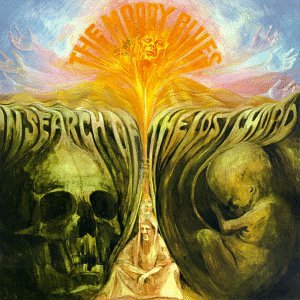
Okay, I remembered another one of my “generic” 8-tracks from the early 70’s (see my prior post).  In Search of the Lost Chord by the Moody Blues (1968).  (Yes, I’ve owned at least two legitimate copies since.)  My experience with it was in many ways comparable to that with King Crimson’s Islands (discovered at nearly the same time, if not the same day).

My entrée into a high orbit around the notion of “prog” had not been through radio airplay, and I was only beginning to discover the wonders of WMMS in Cleveland (in its Golden Age).  As with King Crimson, I was not yet familiar with the Moody Blues’ first two albums, so Chord was my point of entrance, and has remained a sort of fulcrum in my perception of the band.  I heard the music first without the impact of cover art.  And to be quite honest, the art didn’t do that much for me when I eventually saw it.

I love the whole album, partly because of its place in my early listening life.  But this “mini-review” is really about one song, the one that has most profoundly stuck with me from then to now:  “The Best Way to Travel” (credited to Mike Pinder).

In the early 7o’s, I was rather blissfully naive regarding drugs, so I didn’t hear that I could “fly high as a kite” as others might have heard it.  Oh, I knew vaguely who Timothy Leary was, but my general intake of the album’s search-and-discovery motif was uncluttered with chemical enhancement experience.  Others were often more aware than I was of my apparent destiny as an academic and an intellectual (in 7th grade, several other kids at school called me “Professor”).  Nonetheless, what I heard was that thinking…  THINKING…   is the best way to travel.

Texture in music is almost always uppermost to my ears, as if it were a surface to caress or to palpate.  This is one of those songs with a texture that carries its lyric with an ease or a naturalness that approaches perfection.  (Other examples of this:  “Jerusalem” by ELP, “Earn Enough for Us” by XTC, and several Genesis songs, including “The Colony of Slippermen” and “Squonk.”)  The texture conveys precisely the sort of “travel” to which the lyric alludes.  Bold, dense, percussive acoustic guitars that propel whatever is the vessel (seesaw?) on which we ride.  Yet they hesitate dramatically to allow us to regain a fix on the ethereal “beep,” reminiscent of radar, which may or may not be some sort of guide.  We may need to follow a bit in order to find out.

Four decades later, I still believe every strum and every word.  Thinking is the best way to travel.

Cosmograf news

Progarchists, our friend and ally, Robin Armstrong, just announced a slight delay in the release of the new Cosmograf album, The Man Left in Space.  The album will now be released at the end of January 2013, giving Robin a bit of cushion in the final production.  Robin’s full post (complete with wonderful Rush references in the title) can be found here:

http://www.cosmograf.com/launch-delayed-too-many-snakes-not-enough-ladders/

Also, Robin would like as many as possible to “like” Cosmograf on Facebook:

http://www.facebook.com/groups/552531094761535/

Of course, it should go with out stating that every Progarchist should own the first three Cosmograf albums as well as pre-order The Man Left in Space.  Sadly, the first one is very difficult to find, but let’s hope Robin reissues it.

Comograf’s music can best be described–if a comparison is necessary–as a cross between Ayreon and Big Big Train–theatric, eclectic, and totally prog.  Despite the comparison, Robin’s music is certainly original, and he is, no doubt, his own man and artist.  The new album will feature other Progarchy favorites, Greg Spawton and Nick D’Virgilio of Big Big Train and Matt Stevens of The Fierce and the Dead.  Additionally, our generation’s Phill Brown, Rob Aubrey, is helping with engineering.  And (yes, I’m incredibly proud of this), I have a few spoken lines on the album.  How cool is that?  Very.

One last treat: here’s the title track of the last release.  Enjoy.