Tales of the Edge

by Alison Henderson

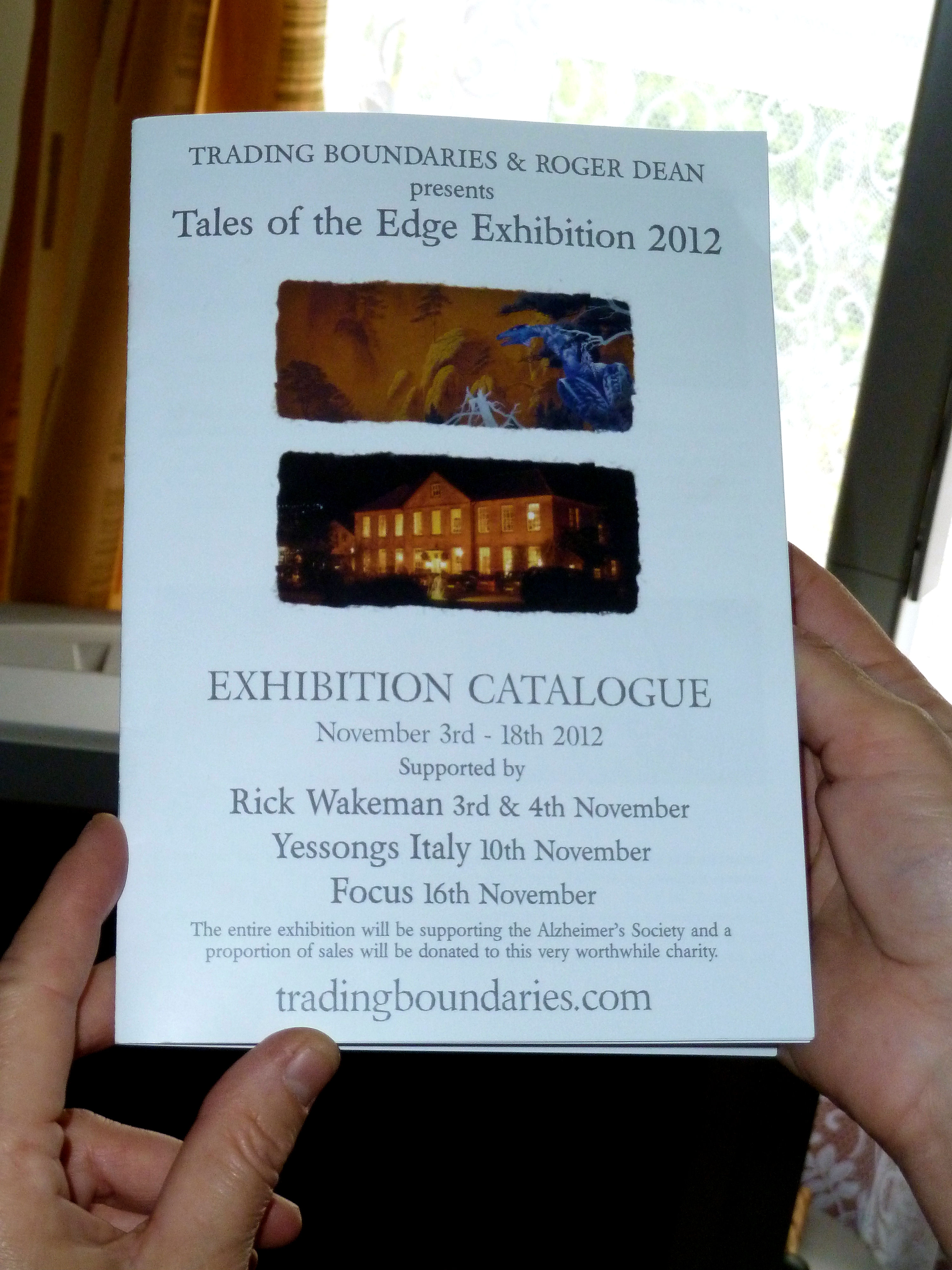
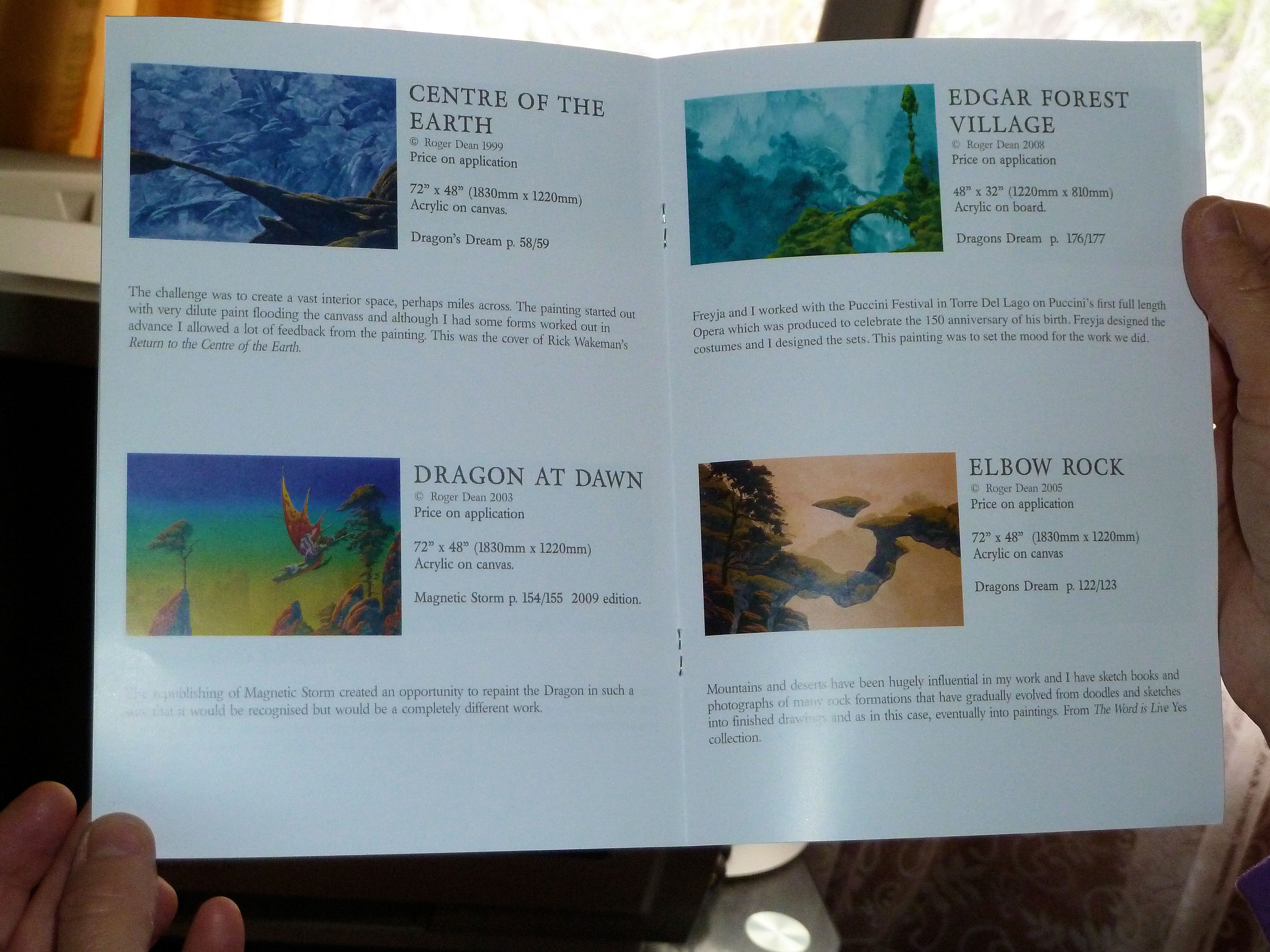
Tucked away along the endless leafy lanes of south east England lies a little prog oasis not many people know about. The elegant Grade II Listed façade of the period home of Trading Boundaries in deepest East Sussex gives away no clues that it is currently the location of an exhibition of probably the most famous prog artist in the world who has been joined in the celebrations this weekend by a special “old friend” of his.

The name Roger Dean is synonymous with the iconic album covers of chiefly Yes, but also other great prog rock bands such as Asia, Uriah Heep, Greenslade and now the legendary Dutch band, Focus.

Yet Dean considers himself to be nothing more than a landscape artist. That is some diminution of his role in creating the entire backdrop for a generation of prog rock lovers and perhaps being a huge influence on a very successful contemporary film but that is another story.

Living close by in the Ashdown Forest area of East Sussex, this is the third time Roger has exhibited his vast collection of work at Trading Boundaries.  And here in this shopping emporium among imported Indian wooden cabinets and wardrobes, soft furnishings and desirable trinkets are currently hung some of the most iconic examples of his work.

So around every corner currently, there is another Roger Dean masterpiece to lose yourself in ranging from the huge swirling blue inner landscape he developed for Rick Wakeman’s Return to the Centre of the Earth to the intensely intricate design for Asia’s Alpha which the artist explains brought out his inherent skills as a draughtsman.

There are also the suites of logos for Yes, including the more recent dragonfly designs, and for Asia, both of which demonstrate how important it is for a band to have its own identifiable branding especially when so beautifully conceived and crafted by Dean.

Of all the works, it is the cover of Tales From Topographic  Oceans which still draws the eye the most. That whole universe captured in one panorama throws up so many visual questions. Is it all meant to be beneath the sea – hence fish – or how can it be when there is a waterfall running through it – and what about the distant pyramid and the blueness of the heavens above? Like the contents of the album, the image is a mystery, a conundrum and above all else, a journey.

Oh yes, and did I mention earlier on that an old friend joined him? That would have been one and only Mr Wakeman who has supported him both evenings this weekend in Trading Boundaries’ intimate and atmospheric Elephant Cafė, (Carl Palmer, John Wetton and Steve Hackett have also played there recently), to reflect and reminisce on the past as well as contributing  three musical interludes.

Well, the stories and laughs flowed thick and fast, most of them worthy of a separate post once I have deciphered the shorthand hieroglyphics  I took down at speed in virtual darkness, so allow me some time to translate and share them with you some other time.

However, I can tell you this. Despite christening it Toby’s Graphic Go-Kart, Rick rates TFTO is his favourite Yes album cover whereas the artist has gone for Relayer which he said looks as though it has been painted “with dirty water”.

Also, the first time Roger showed the band an example of his work to use, Rick was admiring it and said how nice it was until the artist told him he was holding it upside down.

What came over loud and clear however was the tremendous mutual admiration and respect between the pair throughout this impromptu chat, conducted on a couple of easy chairs with the emporium’s dog occasionally wandering onto the stage and stealing the show.

And yes, Rick played – though only just when he was presented with the resident “school” piano, which in his own inimitable way, made it sound like a Steinway.
To a backdrop of even more of Roger Dean’s incomparable works, Rick played “And You And I” using some of the original chord sequences. Well, need I tell you how absolutely sublime it sounded and still as hypnotic as the version which we all now have in our collections. Then he just made us all melt with The Meeting, that gorgeous prog hymn from Anderson Bruford Wakeman and Howe (ABWH). Rick explained he and Jon had been at George Martin’s studio in Monserrat before the volcanic eruption where they recorded the album. Both liked the idea of trying to create instant music so the melody line was what they came up with and the very first take was what appeared on the album. He made it all sound so simple, of course.

Finally, to end on a more light-hearted note, he decided to play The Nursery Rhyme Concerto using the style of the great composers such as Mozart for Baa Baa Black Sheep and Ravel’s Hickory Dickory Dock.  British readers will be particularly interested to learn that Twinkle Twinkle Little Star was performed in the style of Dawson, Les Dawson. Note to American readers, Google Les Dawson piano – you’ll get the general idea!

Well, that was certainly an evening you never imagined would happen. And it does not end there either.  As part of the exhibition events, both top tribute band Yessongs Italy and also Focus will be playing live there in the next three weeks. What a wonderful way to celebrate a man who drew on his own unique imagination to inspire ours and also that of the music which shaped our lives.

For more information, go to: http://online.tradingboundaries.com/rdex2012


Storm Corrosion – Review

Review – Storm Corrosion (Roadrunner Records, 2012)

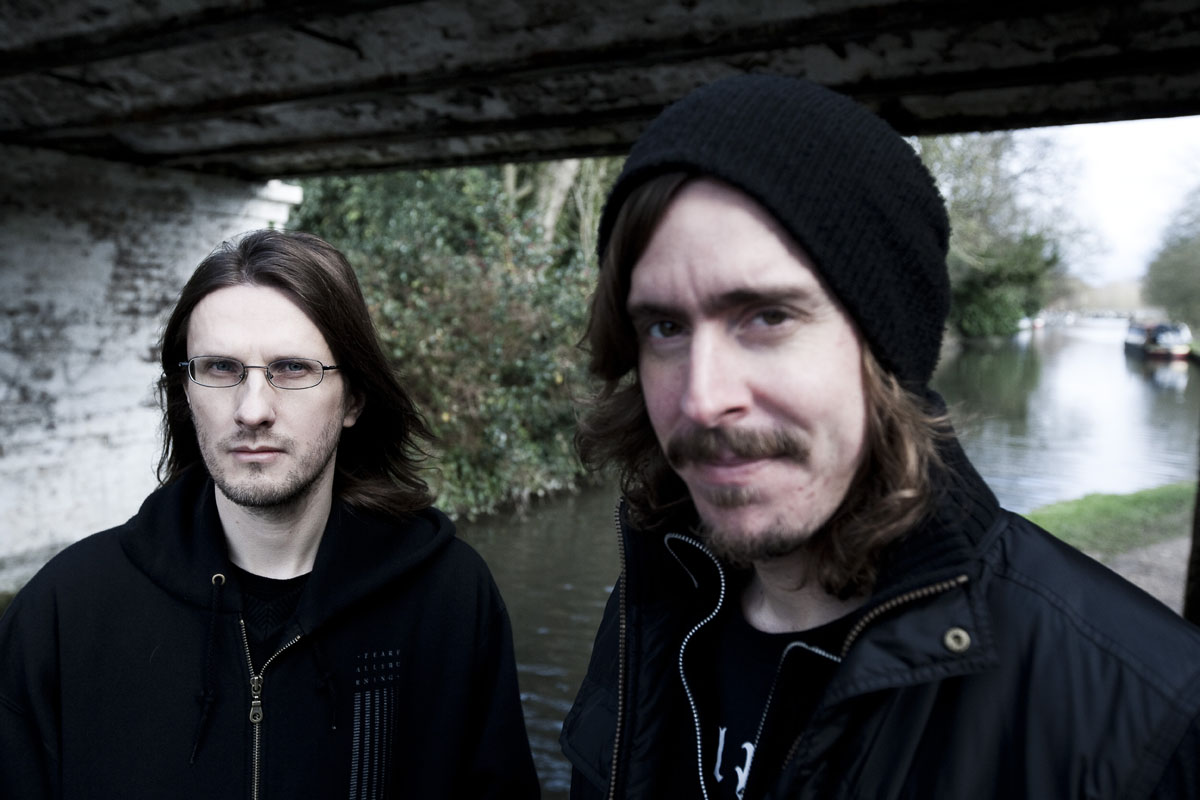
Mikael Akerfeldt is right, with a few qualifications.  On the website for the new Storm Corrosion album, a collaboration between Opeth frontman Akerfeldt and psych/prog stalwart Steven Wilson, Akerfeldt says, “It’s a demanding record. If you’re doing other shit as you listen to it, it’s going to pass by like elevator muzak. You really have to sit down and pay attention! If you allow it to sink in, it could be a life companion.”  Any fan of Opeth or Wilson (No-Man, Porcupine Tree) will be looking for reasons to like this album, but also hoping that it achieves a distinctiveness apart from previous projects.  And this is problematic, because Akerfeldt and Wilson have been collaborating since 2001, when Wilson produced Opeth’s fifth album, the landmark Blackwater Park, a layered, dense, progressive version of death metal (or death metal version of progressive rock).  Take a moment (okay, 9+ minutes — nothing about any of this music is succinct, nor, really, should it be) and check out Bleak from Blackwater Park:

http://www.youtube.com/watch?v=p8atiEPs0bQ

Wilson and Opeth, which around this time Akerfeldt began to make his own (at least from a fan’s perspective), really hit their stride with the dual albums Damnation and Deliverance.  Where Deliverance followed up on the electric, distorted heaviness of Blackwater Park, and utilized to great effect Akerfeldt’s signature take on the growled vocal delivery common in death and black metal, Damnation was the mindblower, indebted I think fairly heavily to the work Wilson was doing with No-Man.  It was a heavy album where the acoustic and electric guitars (Akerfeldt and fellow Opeth guitarist Peter Lindgren used Paul Reed Smith electrics, an important aesthetic and tonal detail that set them apart in their genre) are stripped of their distorted treatments, Akerfeldt’s beautiful straight-ahead vocal delivery is featured across the album, and the songs are minor-key, droney, melancholic, but melodic and dynamically arranged.  It’s heaviness comes from its complete approach, rather than its sonics alone, and for this it’s an incredible achievement.  To get the full effect of this record (and its companion Deliverance), you really need to check out the marvelous Lamentations DVD, which captures Opeth at Shepherd’s Bush Empire in 2003 (and, bonus, shows them working in the studio with Wilson). Here’s an amped version of Closure, originally on the Damnation album, from Lamentations:

http://www.youtube.com/watch?v=hodPV0XglVg

It is Damnation, and perhaps No-Man’s Returning Jesus (with its Talk Talk influences, something Storm Corrosion’s creators have also explicitly mentioned), that Storm Corrosion most closely resembles in character, it’s low-key, meditational approach standing outside the typical Opeth or Porcupine Tree record, but demonstrating the restlessness that underlies both Akerfeldt’s and Wilson’s work.  The record begins with “Drag Ropes,” which sets the tone:  fingerpicked guitars, minor-key arpeggios, strings and woodwinds, and cinematic snippets of lyric in service to the tune.

(The video for “Drag Ropes” is a darkly gothic theme — not unexpected, given the death metal connections I suppose — leavened and made creepier by animator Jess Cope, whose take on the song’s stripped-down lyrics is a story in itself, and is nothing like what my mind conjures as I hear the song.  See her take on it here: http://jesscopeanimation.tumblr.com/dragropes.  I like this because these songs are of a type best finished by the listener.)

I am reminded of Deep Purple’s lofty Concerto for Group and Orchestra, which I always rather liked (and I think Akerfeldt must have too, as the cover art of that record was duped for Opeth’s In Live Concert at the Royal Albert Hall).  The orchestra/group approach has come full flower here, but with far greater and personal effect, and the album’s title track is also redolent of that particular period of British rock’s embrace of the orchestra, this time a fair and beautiful reminder of Ray Thomas’s flute work for prime era Moody Blues.  The flute is replaced in the second half of the song by a vocal line that speaks to the vox-ness of this record.  Both Wilson and Akerfeldt are capable of affecting, fragile vocalizations, sometimes bordering on too delicate, an irony given Akerfeldt’s former Opethian growlings.  “Hag,” the third track, demonstrates the necessity of the softer vocal timbres in this record, while also reminding me most of Damnation, with its dramatic drum breaks and dynamic shifts.  These drums gave me a breathless pause.  They are low-fi, almost seemingly intentionally so.  Nothing these cats do is low-fi, and I searched my brain for a WHY until it lit upon a purchase:  it transported me to the drumming on Popol Vuh’s Letzte Tage Letzte Nachte.  Mikael Akerfeldt has claimed Popol Vuh as a major influence before, and explicitly in an interview regarding Storm Corrosion.  Not to stretch the point, but a good bit of this record has a Popol Vuh/krautrock thing happening, particularly the closing song, “Ljudet Innan,” a grand, drifting piece that opens with a jazz-ish vocal from Akerfeldt before some major drift that would be right at home on PV’s Affenstunde or Aguirre.  Getting there, we’re also treated to an instrumental piece, “Lock Howl,” that energizes us before the finale and reminds me why pacing is so important to an album, an LP relic often forgotten in the MP3 era.

I like this record and wish more like it were made today.  If Wilson and Akerfeldt were jazz musicians (which, from a musicianly point-of-view, they are), they would have just made this record 15 years ago, no big thing, then guested as leaders on each of their respective groups’ albums and collaborated every other year until they were 80.  That they’re associated with rock means they have to carry the weight of “supergroup” to any sort of collaboration like Storm Corrosion, which is something of a pity.  I don’t feel like this record is loaded with trying to live up to expectations, or an ego trip or anything else associated with supergroupness.  Beyond the whys and influences and connections this album has, if it were released anonymously, and I had no context to hang my thoughts on, I think I’d have the same reaction to it.  Yes, there is aural history here, a moogish mellotronish flutes’n’strings thing, but these are not derivative of 70s prog: they are necessary to the songs.  Storm Corrosion is a worthy achievement from two artists who have a significant history creating groundbreaking music, together and apart.  While the record has many touchstones, it is not the sum or product of a record collection, but an original and expressive statement of two consummate musician-composers who are rewarded by their ongoing collaboration.

Craig Breaden, November 2012

Thank you Insideout Music and Radiant Records

A huge thanks to Paul Gargano of Insideout Music for sending us a number of fantastic CDs for review.  And, an equally huge thanks to Chris Thompson and Radiant Records for the same.  Eager to review so much excellent stuff.  And, reviews there will be aplenty!

To any musicians, record labels, and book publishers, anything you’d like reviewed (and we want to review it!), please send hard copies to:

Brad Birzer/Progarchy

6 West Montgomery ST

Hillsdale MI 49242/USA

And please send links to music (any format) or pdfs to bradbirzer@gmail.com.

Again, a profound thanks to Paul and Chris.

–Brad (editor)

Powerful, moving, emotional – but not Prog

Henryk Gorecki

Symphony No 3 – Symphony of Sorrowful Songs

 Image


I’ve had this album for many years now, I can’t recall what drew me to it but I’m thankful for whatever or whoever did.

Quite simply this an astonishingly moving piece of work and one which, if not listened to in the right mindset, could quite easily be emotionally devastating. 

I’m not going to critique this album from a musical or technical point of view as I do not have those skills, nor do I profess to know enough about this genre to compare this to other classical works. 

The title is enough to warn you this is not music to listen if you are looking for upbeat, stirring music.  For that look elsewhere. For a deeply profound and challenging hour where you can lose yourself entirely I highly recommend you set time aside and connect with this work of beauty.

There are three movements with each one based on motherhood, separation and loss.

The first and third movements are from the perspective of a mother mourning a lost son whilst the second movement (my personal highlight) is from the perspective of a young 18 year old girl mourning separation from her parents whilst in a Gestapo cell. 

The piece starts very quietly and as described in the liner notes :


“the instrumental voices enter in a stairway of fifths that rises through four octaves and eventually encompasses all eight pitches in the Aeolian mode (on E) characteristic of the 24-bar cantus firmus


If that description is too technical (it is for me…) all I can is you are drawn into the music by gentle waves of gorgeously textured strings that lap at your consciousness. Then at the 13 minute mark the soaring soprano voice of Dawn Upshaw is like sun breaking through the clouds, illuminating darkened hills then just as quickly, the clouds form again and we are left with the sweeping vocals dripping with sorrow, pain and longing.

The build-up of tension is almost unbearable and yet quite, quite beautiful.

The words to this first lament include the heart-breaking words as follows :-


My son, my chosen and beloved

Share your wounds  with your mother

And because, dear Son, I have always carried you in my heart

And always served you faithfully

Speak to your Mother, to make her happy

Although you are already leaving me, my cherished hope


After this powerful vocal recital which at 16 minutes in reaches a hugely powerful and moving section, we are left with graceful strings like deep ocean waves swelling and surging but never breaking, giving us time to reflect and gather our thoughts.  Eventually the sonorous cello’s draw this stunning movement to a close.

The second movement is based on an inscription found in a Gestapo cell in Zakopane written by an imprisoned 18 year old girl which read :


         No, Mother, do not weep

            Most chaste Queen of Heaven

            Support me always

            “Zdrowas Mario”   (‘Ave Maria” in Polish)


This is my favourite piece.

Tere is a surprisingly bright start, to reflect the youth of the subject matter perhaps, but then events take a dramatic turn very quickly as the soprano of Dawn Upshaw comes in early on adding a foreboding tone alluding to the darkness of the cell.  The notes refer to an ‘imprisoned tone’ in her voice but which provides “a single shaft of vernal sunlight’ as the piece progresses.

I understand this movement was performed live in almost complete darkness with subtle lighting effects. I cannot imagine how moving this piece must be in a darkened concert hall.

Again, the only way I can describe this is like waves or looking at a range of mountains that endlessly roll on and on.  It is soothing yet haunting, peaceful yet disturbing.  There is an aching sense of loss and grief that can be overwhelming at times.

The third and last movement continues the themes of sorrow and loss and is based on a Silesian folk song of a mother looking for her son after the Silesian uprisings.

The overall theme musically is similar and continues the ebb and flow of lush sweeping strings and soaring soprano but there is a little more complexity in this piece which provides a further 17 minutes of stunning, powerful music.


So, I highly recommend this work and as a more modern counter-part, I would also recommend the works of MONO – a Japanese group who utilise many of the same moods, tones and swathes of tidal sound, albeit with more modern instruments.


Thanks for listening !

“[P]erhaps the first genuine Progressive Rock track”

Yesterday I downloaded Stephen Lambe’s book, Citizens of Hope and Glory: The Story of Progressive Rock (2011), and am now about three chapters into it. Lamb is, according to his book’s site, a “co-promoter of the Summers End Progressive Rock festival since 2006” who is “also heavily involved with contemporary progressive rock band Magenta.” I’ve enjoyed the book so far; Lambe’s approach is a good mixture of the personal and the journalistic; the book strikes me as a fine introduction to prog music history for folks who are new to the topic but also an engaging guide for those who know prog fairly well (I’m somewhere in-between!). I appreciate that Lambe, in his introduction, explains what his book will and will not attempt to do (for example, his focus is on symphonic prog, with less material on other forms of prog). He is clearly both a huge fan of prog as well as a thoughtful musical critic. Anyhow, I will likely post a more formal review once I’ve finished the book.

In a section titled, “Yes—The Most Inventive Covers Band in the World”, Lambe provides some background to the legendary band’s formation: “Jon Anderson and Chris Squire met for the first time at La Chasse, a drinking club not far from the famous Marquee club, which was much frequented by musicians. … Their vision was that this was to be a rock band with an emphasis less on hit singles than on ambitious, sophisticate arrangements, great harmonies and high-quality players.” And then, in discussing the first Yes album—”Yes”, fittingly—Lambe writes of how the “band began playing radical rearrangements of other people’s songs, gradually combined with their own material … This include covers of ‘I See You’ by the Byrds and the Lennon/McCartney song ‘Every Little Thing’. Musically, it includes plenty of hints at the band to follow. … Closing track ‘Survival’ is marvellous, perhaps the first genuine Progressive Rock track.”

Which meant I had to download the album, which I’m embarrassed to say, I’d never heard before (shame!). It’s great stuff, more raw than the later Yes material, but with a really obvious jazz vibe, thanks for Bruford’s fabulous drumming. That said, what do you think? Is “Survival” perhaps the first genuine prog rock track?

DPRP (including everyone’s favorite Brian Watson) on the new Beardfish

Excellent roundtable review of the new Beardfish, Void, at DPRP.

http://www.dprp.net/reviews/201246.php

Threnodic Introspections in Neverland: The Reasoning

Call me a total nerd (and it would be true, for better or worse), but I experience a thrill every time I meet a new word.  Hello new word, I’m Brad.  Well, ok, I’m generally not quite this formal, especially with vocabulary.

With The Reasoning’s newest masterpiece, Adventures in Neverland, I had to look up the word, “Threnody.”  A funeral dirge.  For the previous EP, And Another Thing, I had to look up “Apophenia.”  A false perception of patterns.

Nice.

From the first moments I can remember listening to Progressive Rock, I have always appreciated not only the intelligence and creativity espoused by the artists themselves, but I’ve also loved the ways in which prog artists demand a certain intelligence and creativity on the part of the listener.

If I’m going to spend any where from thirty minutes to 120 minutes listening to something, I want full immersion.

Every The Reasoning album is a full immersion into the wonderful and meaningful ream of art–by design and certainly without apology.  “Here we are,” Matt, Rachel, and the gang seem to be proclaiming.  “We’ve given you everything we have, and we very much hope you enjoy it as well.  Regardless, we’re having a blast.”

And enjoy it I do, Matt and Rachel.  Every album, every song, every time.

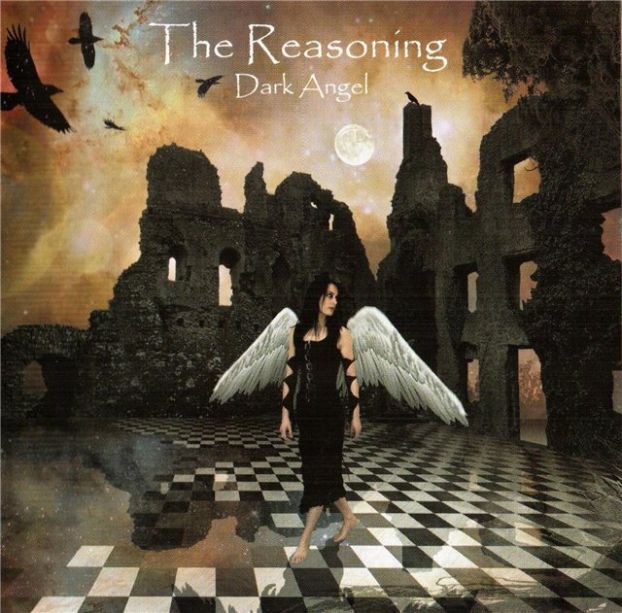
I first encountered their music in 2008 with the release of their second album, Dark Angel.  No mediocre band would give themselves such a lofty name, I correctly assumed.  I was equally intrigued by the title and cover of that album.

The cover itself is worth describing (and I’ll paste a picture of it here, I hope–please wordpress, please!).  A gorgeous, leather-clad, barefooted, winged woman walks across black and white tile (my first thought is a chessboard) in the ruins of a castle or cathedral, with a full moon and ravens above her.  A few planets hover in the background, as does a small glimpse of a renaissance village, and the floor decays as the angel moves forward, away from the village.

Since that moment four years ago, I’ve purchased everything The Reasoning has recorded in the studio, including their haunting cover of Duran Duran’s best song, “The Chauffeur.”

The first album, Awakening, appeared in 2006.  Dark Angel came out in 2008, and the Duran Duran cover in 2009.  In 2010, The Reasoning released Adverse Camber.  This year, The Reasoning released the EP, And Another Thing, in the spring, and Adventures in Neverland just about a month ago.  These guys are unstoppable.  And, we’re all the better for it.

The newest album, Adventures in Neverland, lives up to every one of my very high expectations.  From the opening moment–guitar, keyboards, and a countdown–until the last note, Adventures in Neverland drives and rocks.  It is a truly great album.  Superb in every way.

As it does move, it moves almost relentlessly, driving the listener toward the Apocalypse.  Most of the music has been written by the bassist, Matt Cohen, and the lyrics have been penned by his wife, Rachel Cohen.

He’s clearly a perfectionist, one of the best bassists in rock, and a man driven.  Rachel’s clearly a brilliant and poetic wordsmith, possessed of a voice equal to her imagination.  I could listen to her sing me into the gates of heaven itself.

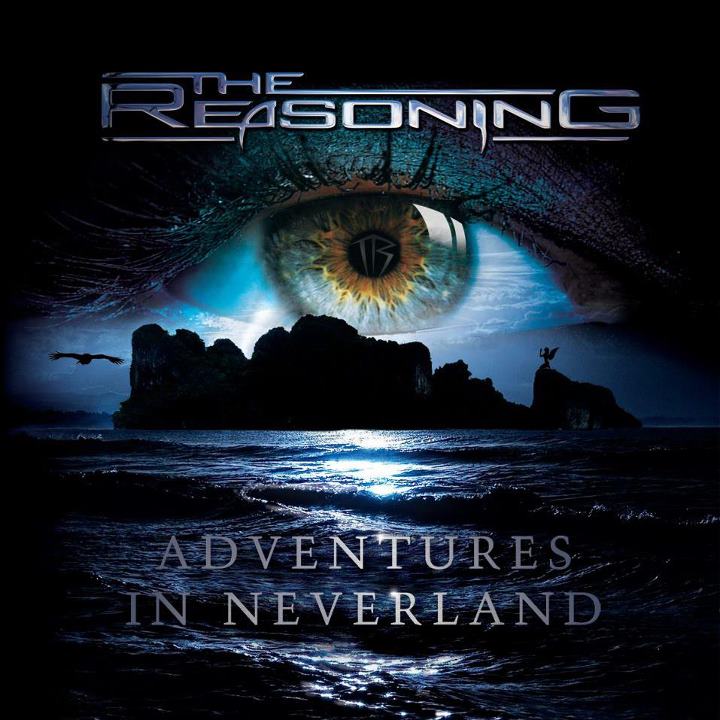
As with other The Reasoning releases, the cover of the new CD is inviting, if a bit ominous.  It appears, visually, to be a sequel to Dark Angel.  Rather than seeing the angel cross the ruins from inside of the ruins, the viewer sees the ruins (most likely) from a great distance, with birds still hovering but an omniscient eye overseeing it all, including what appears to be the Dark Angel atop the ruins themselves.  Fading at each end, the title: “Adventures in Neverland” hangs at the bottom.

Every song on Adventures in Neverland is a gem:

1. HYPERDRIVE

2. THE OMEGA POINT

3. THE GLASS HALF

4. STOP THE CLOCK

5. OTHERWORLD

6. END OF DAYS

7. NO FRIEND OF MINE

8. THRENODY

9. FOREST OF HANDS AND TEETH

10. ADVENTURES IN NEVERLAND

If you’re happy with this new wave of progressive rock (Brian Watson of DPRP fame called it the “third wave”), you’ll be especially happy with The Reasoning.  For me, they’re an intimate part of the revival.  They’re leading, and they’re leading very well.

Every reader of Progarchy should support The Reasoning.  Here’s the official website (click here).

As a sidenote, I have also followed Matt Cohen (@thereasoning) on Twitter and Facebook for quite some time.  The guy is absolutely hilarious, down to earth, and extremely talented.  He also calls things as he sees them.  In other words, he’s not just a great artist, he’s a real person.

The Rules

I always say that it’s about breaking the rules. But the secret of breaking rules in a way that works is understanding what the rules are in the first place.

— Rick Wakeman

Join Neal Morse’s Inner Circle for Free right now.

Excellent news from Radiant Record’s Chris Thompson.  Join the Inner Circle for free and get the new Inner Circle release, Neal’s take on Flying Colors.

Click here!

Happy Halloween (Santa vs. Frankinstein from Radiant Records)

Thank you Neal Morse and Radiant Records for some great music and some visual levity.

Frankincense