Surprise, surprise, the lead of singer of Soundgarden (and Audioslave), in this April 2012 interview in Details magazine:
DETAILS: What were you like growing up? Chris Cornell: Wild. And reclusive. Sometime between 12 and 14 I smoked PCP and had a real bad reaction. By the time I was high-school age, I didn’t want to do drugs anymore, so I went a couple years without having any friends. I got in touch with the creative process between the age of 14 and 16, mainly because I was alone so much.
DETAILS: And yet you became a frontman. Did playing music change you? Chris Cornell: I was a nerdy shut-in who listened to prog-rock—and then I got on stage. Most frontmen are not born hams like David Lee Roth. We’re more like Joey Ramone: awkward geeks who somehow find our place in the world on the stage. Nobody ever said a positive thing to me, ever, in my life, until they heard me play music.
DETAILS: I bet it helped you meet girls, too. Chris Cornell: Oh yeah. Initially I was a drummer, and I remember standing somewhere in public with a pair of drumsticks, and these cute girls came up and started talking to me. We hadn’t even played yet! It was actually uncomfortable. I thought, “Is that all I have to do? Just hold drumsticks?” It immediately made me not like the girls.
Ha! Gotta love the sense of slightly twisted humor. Cornell also has this to say about the state of rock music:
DETAILS: There’s been a lot of talk recently, most of it negative, about the current state of rock music. What’s your take? Is rock dead? Chris Cornell: It’s definitely lost its place at the center of the musical universe. Rock never meant the same thing to everyone, but when I was growing up in the late seventies, everyone could identify the five, ten bands that formed the center. Even if you preferred the fringe—the Clash over, say, Van Halen—you still knew what the center was. Now kids turn on the radio and hear Eminem or Kanye, so that’s what they gravitate toward. They’re making music on iPhones. Everything’s fractured. The reason there’s no modern-day Shakespeare is because he didn’t have anything to do except sit in a room with a candle and think.
So, what Cornell song is most proggy? That’s nearly impossible to say, as the “prog” elements (strange chords, odd time signatures, epic and semi-mythical lyrics) used by Cornell and Co. are seamlessly mixed into a delicious musical stew that also draws on early metal, Krautrock, punk, pop (the Beatles, to be exact), blues, gospel, and even Middle Eastern music. But here is my choice: “Limo Wreck” from Soundgarden; it is one of my 5 favorite Soundgarden songs, but was never a single or a hit:
>
Very exciting news. Robin Armstrong (fountainhead of COSMOGRAF) has just updated his website site with a countdown clock for the new album. 62 days and counting. Order early and often–I promise it will be far more exciting than the outcome of the American presidential elections.
I’m happy to announce our first ever Progarchy competition. The prizes: cds of Rush, “Clockwork Angels”; Big Big Train, “English Electric Part One”; and The Reasoning, “Adventures in Neverland.”
The contest (brain child of my friend, Seth James): 1) come up with the best name for a prog band. 2) come up with the most absurd name for a prog band. Do not use names of actual bands (past or present). These must be original. No need to distinguish, however, which is best and which is absurd.
The judges will be the Progarchists, and we will announce the winner on the Ides of December.
So, to enter, just comment below–name of the band and a way to get ahold of you. Competition ends on December 8, 2012.
Then you don’t want to miss what I think is the best jazz album of Radiohead songs to be had: “Tribute to Radiohead” (2010) by Amnesiac Quartet. Don’t let the pedestrian title fool you: this is not muzak or some sort of cash-in project. Led by pianist Sebastien Paindestre, the French quartet also includes soprano saxophonist Fabrice Theuillon, bassist Joachim Florent, and drummer Antoine Paganotti. There are just five songs—”Everything in its Right Place”, “Morning Bell”, “A Wolf at the Door”, “Sail to the Moon”, “I Might Be Wrong”—but each is, I think, a perfect interpretation of the original tune, equally languid and intense.
Three things stand out. First, the use of soprano saxophone is inspired, as it has a yearning tone, occasionally agitated rhythm, and acrobatic runs that are very Thom Yorke-like (I don’t know that a tenor sax would have been nearly as effective). Secondly, the attention to detail is wonderful: the drums and bass present a whirling complexity and propulsive energy that constantly move and coil and dash around behind Theuillon’s wonderful lines, and the electric piano brings a welcome warmth to the proceedings. Finally, this is very much a band effort, focused on the songs, not simply using them as vehicles for solos. It succeeds fabulously. As John Barron notes in his AllAboutJazz.com review, “With a tight ensemble sound and exceptional soloing, Amnesiac Quartet maintains the inherent beauty heard in the music of Radiohead while tapping into seemingly unlimited potential for future improvisers interested in unique source material.” Here is the band in 2007, playing “I Might Be Wrong”:
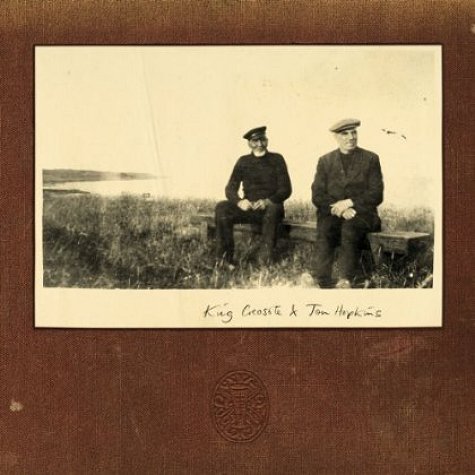
Just a quick recommendation for a wonderful album full of beauty and stillness and warmth ….
From the opening recording of a local café where locals are just simply being friendly and going about their business we are drawn into a cosy, world of cardigans, low-fi, old boats, relationships, struggles and raw life from Scotland.
There are little stories and reflections on going old :
“I’ve gone silver in my travels
Growing silver in my sideburns ….”
.. and snippets of real life
“You and I we once looked great
You and I sounded so fine …”
…tinged with pure love and grief
“I won’t let you fall as low as I’ve been…”
There are beautiful soft harmonies, hushed and plucked strings, earthy violins and jaunty banjoes softly backed with subtle percussion.
“…[I]n diatonic harmony, when upper partials are added to a chord, it becomes tenser, and more demanding of a resolution — the more the rhythm of a line rubs against the implied basic time, the more “statistical tension” is generated.
The creation and destruction of harmonic and “statistical” tensions is essential to the maintenance of compositional drama. Any composition (or improvisation) which remains consonant and “regular” throughout is, for me, equivalent to watching a movie with only ‘good guys’ in it, or eating cottage cheese.”
My introduction to jazz was through Weather Report in the late ‘70s, and I couldn’t have made a more fortunate choice. Led by Josef Zawinul on keyboards and Wayne Shorter on saxophone, my love for that group’s music opened the door for me to the mother lode of jazz: Miles Davis.
Miles’ 1969 album, In a Silent Way, is a cornerstone of progressive music. Consider this – it contains just three songs: “Shhh/Peaceful” (18:16), “In a Silent Way” (4:11), and “It’s About That Time” (11:27). These songs don’t follow any typical structure; they are mostly jams, albeit within a strictly controlled atmosphere. Hearing the album gives the listener a sense of time being suspended, while gifted musicians at the top of their game improvise with each other. Also, as with many prog classics, the studio was an integral part of the finished result.
In 1969, Miles’ group was in transition. Pianist Herbie Hancock was itching to go solo, drummer Tony Williams was starting up his fusion band Lifetime, and bassist Ron Carter was tired of touring. Miles recruited British bassist Dave Holland for the sessions, guitarist John McLaughlin, and electric pianist Chick Corea. At the last minute, he invited keyboardist Josef Zawinul to join them. So the sessions began with a unique lineup never before seen in jazz: three keyboards (Hancock, Corea, and Zawinul), bass (Holland), electric guitar (McLaughlin), soprano sax (Shorter), drums (Williams), and trumpet (Davis). Teo Macero, Miles’ long-time producer, was again at the controls.
Apparently there was very little actual composition written out beforehand. However, that doesn’t mean the songs are aimless noodling. Tony Williams is a master of restraint, playing a steady pulse on his cymbals almost the entire album. Here is how Ian Carr, in his biography of Miles Davis, describes the music:
There is great delicacy and finesse in the solos, great subtlety in the keyboards (everybody is listening to everyone else), and the music is pervaded by Miles Davis’ unique atmosphere of buoyant though melancholy reflection. Perhaps paradoxically, the total impression is powerful and seductive because the steady time with its occasional pauses (as if the music were actually breathing) creates the non-western climate of timelessness – and in a sense, it is music which should be inhabited rather than merely listened to.
Some of Miles’ greatest solos are in these sessions, as well as Wayne Shorter’s. By this time, they had played together so long they seemed to be one mind with their improvised interplay. When the sessions were over, they had about two hours of material. Teo Macero had learned to just let the tapes roll as soon as Miles began, and not stop until everyone quit.
Macero used editing to cut and paste together the final album, and he deserves most of the credit for making it such a satisfying listen. In “Shhh/Peaceful”, he includes a trumpet solo at 1:35 that states the theme, then he lets everyone trade solos for the next twelve minutes. At 13:31, he brings back the same solo to close out the piece.
“In A Silent Way”, which opens side two, begins with John McLaughlin alone on guitar. Miles famously suggested to McLaughlin that he “Play it like you don’t know how to play guitar”, and the result is a beautiful and simple tune that is charming yet challenging to listen to. It then segues immediately into “It’s About That Time”. Again, Tony Williams sets up a steady pulse over which the others can vamp and solo. Holland plays a repeated riff on bass that slowly builds tension while McLaughlin, Shorter, Corea, and Davis take turns soloing. The keyboards and guitar join Holland playing the bass riff until finally, at 9:00, Tony cuts loose and flails away on the drums while Miles solos. Then the exact same take of “In A Silent Way” that began the side brings the listener back to earth. No one had used tape editing in such a radical fashion before, but Macero makes it work.
It would be hard to overstate the influence In A Silent Way has had on music. Pink Floyd, Frank Zappa, King Crimson, Brian Eno, Joni Mitchell – all display hints of this music. Talk Talk’s Spirit Of Eden is heavily indebted to it, as well as a lot of Steven Wilson’s latest work (Grace For Drowning and Storm Corrosion). Practically anything that has “space” in it can trace its roots to this album.
Once again, Miles proved himself to be a visionary artist, building the bridge between traditional jazz and the newborn genre that would soon be known as progressive rock.


 Very exciting news. Robin Armstrong (fountainhead of COSMOGRAF) has just updated his website site with a countdown clock for the new album. 62 days and counting. Order early and often–I promise it will be far more exciting than the outcome of the American presidential elections.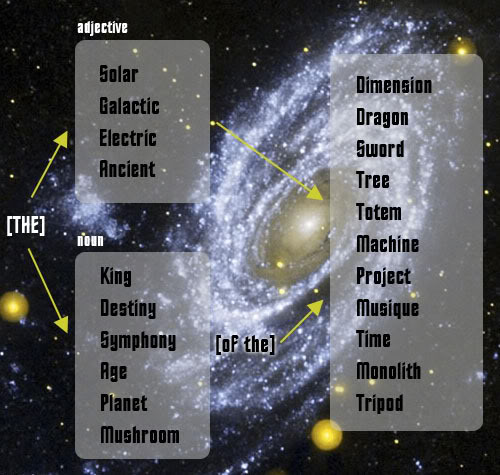


 Progarchy