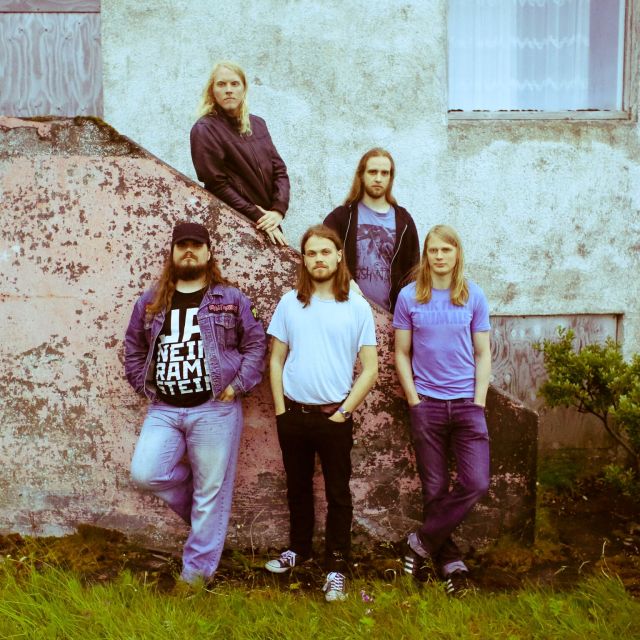
Iceland has been very active when it comes to the Progressive Rock genre in the recent years. It could be said that Ring of Gyges is one of the bands that represent this wave of the Icelandic Prog very well. Formed in 2013, the quintet released an EP titled “Ramblings of Madmen” in 2015 and a single “Witchcraft” in 2016, before launching their debut full-length release “Beyond the Night Sky” in November last year.
Vocalist and guitarist Helgi Jónsson told us about the band’s beginnings, new album, the Icelandic Prog scene, and more.
Let’s start from your early music beginnings. How did your musical career begin? When did you start playing? Which groups have been your favorites as a young man? Please tell us something more about your early life.
I come from a musical family, my dad plays bass and my parents raised me with their old vinyl records; Queen, Pink Floyd, The Beatles, that kind of stuff. I started learning classical guitar when I was a kid, probably around 9 or 10 years old, though I wasn’t really interested in that kind of music. I grew up in the countryside and the music school I went to wasn’t very good so the only proper tutoring I was getting at the time was from my dad, who taught me my first chords on the guitar (the power chords were particularly interesting to me!). When I was 13 I scraped together some money out of birthday cards and bought my very first electric guitar and amplifier, both shitty no-name brands, but I was ecstatic. I quickly formed a band with two of my schoolmates. We were mostly playing covers but I wrote one original song as well. Later on, my parents gave me an American Fender Stratocaster as a confirmation present, which remains to this day my favorite guitar and a good portion of our album was recorded with it. In high school I started to really get into prog, Rush, Dream Theater and Focus were some early favorites, but Blackwater Park by Opeth is probably the album that really sealed the deal for me on this whole prog metal thing.
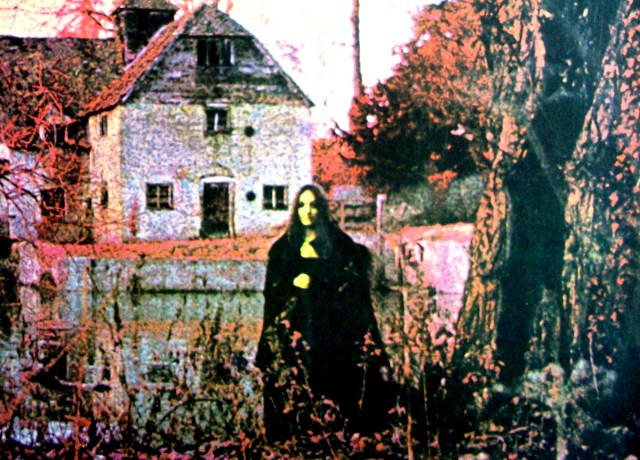
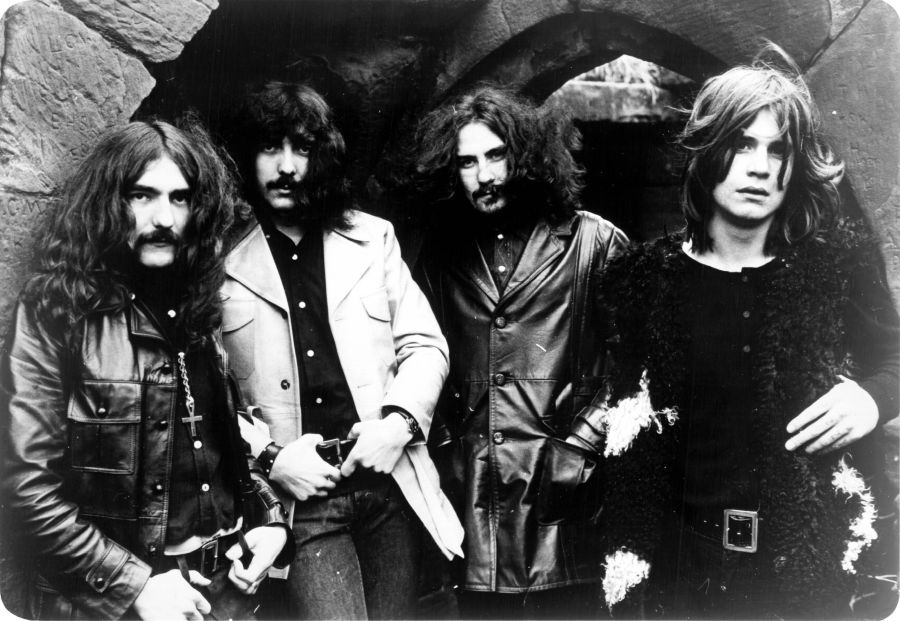
If they’re the only band on the infinite linear mixtape to be featured twice, and back-to-back at that, it’s because of the singularity of their two lead singers, who so influenced their respective versions of Black Sabbath that each iteration of the band made a distinct impact on rock and metal. Sabbath guitarist Tony Iommi has stated that the difference lay in writing for Ozzy Osbourne, who sang the melody of the riff, versus writing for Ronnie James Dio, a far more technically accomplished singer, who sang around the song’s chords. But even with Dio’s vocal expertise stretching Sabbath’s range, the core of Black Sabbath’s legacy really does belong to Ozzy, whose shakily intoned shriek conveyed — at least across their first six records, and before it became Ozzy’s schtick — the terror of a man trapped inside a nightmare.
When Sabbath took to the studio in October 1969 to make their first record, they were like dozens of other post-Cream British blues rock bands struggling to find their own voice. But, they had some advantages that maybe weren’t immediately apparent. Iommi’s short and ultimately unsuccessful stint in Jethro Tull in 1968 was an education, as that band was finding its own, heavier feet following the departure of Mick Abrams (Martin Barre, the definitive Tull guitarist, would be hired shortly after Iommi filled in, with a thunderingly loud but finessed guitar style not unlike Iommi’s). And Ian Anderson provided an object lesson for Iommi when Iommi went back to his band Earth: success would largely depend on the labor you put in. Tull worked for its fortune. As Earth transformed itself into Black Sabbath, Iommi demanded the band become a workhorse, and the group began developing a set of songs around bassist Geezer Butler’s night frights, a fascination with horror movies (e.g., Black Sabbath), and two significant technical issues that became key to a conceptual breakthrough: the tips of Iommi’s fingers on his right (fretting) hand had been shorn off in an accident in 1965, and it was while developing his newly renamed band’s sound and songs that he down-tuned his guitar to make it easier to play with the plastic tips he adhered to the tops of his fingers; also, Butler’s facility on bass was limited in their early days, so he ditched melodic runs and just mimicked Iommi, also down-tuning his bass. The result was literally diabolic. From the opening notes of “Black Sabbath,” the sound sends shivers, and it is here that heavy metal was born, out of imaginative use of limitation — such is Art — and the doom-laden tritone, the diabolus in musica, that Sabbath employed as its calling card. Iommi, riffing on Butler’s attempt to mimic Gustav Holst’s “Mars: The Bringer of War” from The Planets suite, produced a metal manifesto so potent that it resonates almost 50 years on, remaining a rock touchstone of its era as significant as Velvet Underground & Nico, Astral Weeks, Forever Changes, or Funhouse, ever begging the question: What is this that stands before me?
Studio version here but also the Paris ’70 version, with Ozzy jumping like Iggy.
There is, in fact, none more black.
soundstreamsunday presents one song or live set by an artist each week, and in theory wants to be an infinite linear mix tape where the songs relate and progress as a whole. For the complete playlist, go here:soundstreamsunday archive and playlist, or check related articles by clicking on”soundstreamsunday” in the tags section.
“Ambition leads me not only farther than any other man has been before me, but as far as I think it possible for man to go.” JAMES COOK
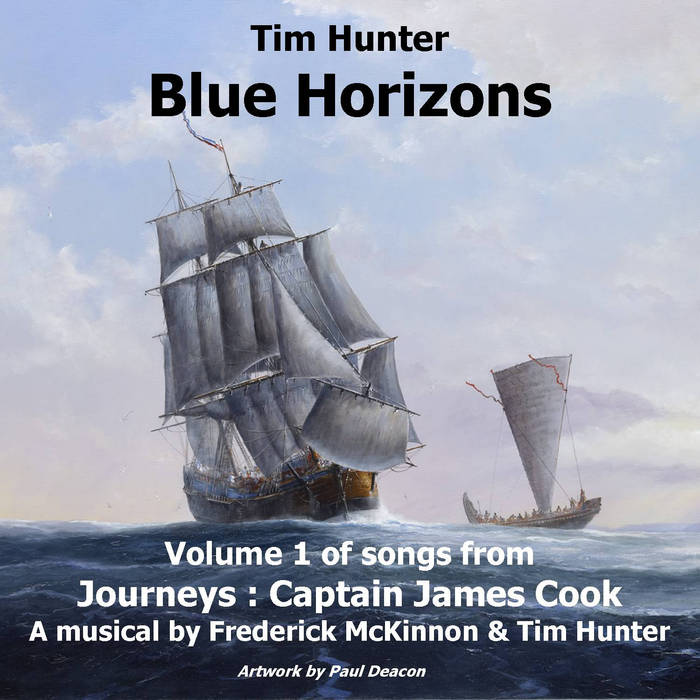
This adventurer and explorer certainly lived up to his words back in the 18th century when he set out on three voyages to the uncharted Pacific regions of the planet to initially record the 1769 transit of Venus across the Sun for scientific research onboard the HMS Bark Endeavour. The sheer excitement of his voyages across thousands of miles around this region captured our imagination in school classes at a young age, as we recalled the man and his crew, not forgetting his wonderful sailing ship that literally, put us on the map down here in New Zealand. It is a name very familiar to all of us, and yet is but a sheer glimpse to the life of a man who even outlived all of his six children to Elizabeth Cook.
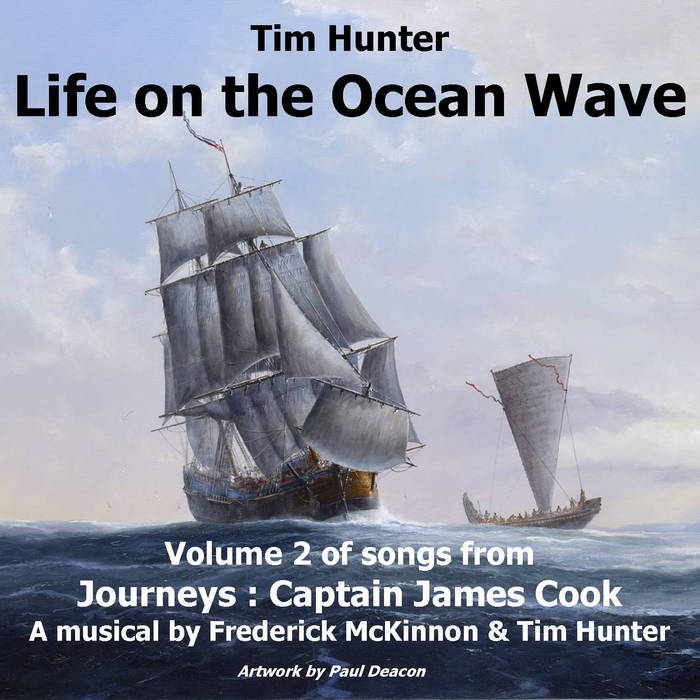
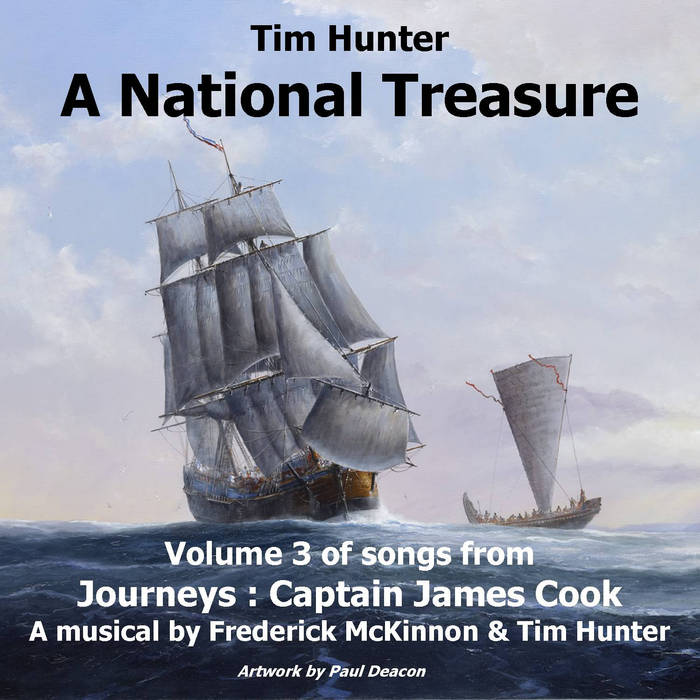
But that is his greatness and his doom that we mostly measure and recall. The sum total of who he was and what he did beyond the decks of the Endeavour show us more of the man and those around him, and to that mind, both Frederick McKinnon and Tim Hunter have created and produced a three volume recording around a play they’ve written on this amazing explorer titled: “JOURNEYS: CAPTAIN JAMES COOK.” 2018 is an auspicious time to release these as they mark the 250th year of Cook setting out to the Pacific realms and of course the 239th anniversary of his fatal demise in Hawaii, 14th February, 1779 over a stolen cutter.
But we’re ahead of ourselves. This is a mammoth task both Frederick and Tim have set for themselves, and make good use of the 3 volumed digital release to start off with Cook at 17 standing on a cliff overlooking Whitby Harbour in North Yorkshire contemplating a life at sea. The first volume covers the highlights of the arc of his life, including service in Canada with the British Navy and his relationship with his wife, Elizabeth, and following sojourns to the South Pacific. The other two volumes go deeper into some of his seaward adventures and also a change in perspective of those in Cook’s orbit who share their own feelings about him.
As said, it is a full length musical play with music composed by Tim Hunter, and lyrics and dialogue penned by New York playwright Frederick McKinnon. At the time of writing Tim reported, “I’ve been interested for a while of working on a musical project about James Cook, I was particularly fascinated in Cook’s connections with East London, where I lived for a while.” He went on to add, “I joined forces with Fred, who was a fellow Cook enthusiast, and we’ve been working on the project for about a year now.”
Prog artist and fan, Tim not only plays the part of Captain James Cook he also provides guitar and keyboards throughout. Cook is a subject dear to his heart. “We’re very proud, in North Yorkshire, of James Cook, who spent the early years of his life here. Cook rose from humble origins to become one of the world’s greatest explorers. On his three great Pacific voyages, he re-drew the map of the world and paved the way for the peoples of Hawaii, New Zealand, Australia, French Polynesia and British Columbia to no longer live in global isolation.” The albums were released under his label Northern Soundscapes. Tim is also a member of Anglo-French group, ‘Silver Hunter’ who play Marillion-style Prog. He also aired the popular ‘ProgYes’ Radio show on Phoenix FM for two and a half years.
One of the interesting and memorable tracks from these albums is “Let Peace Prevail (In New Zealand)” which Tim sings as a relieved Captain Cook who has found a viable connection with the indigenous Maori and hopefully building a continued relationship between the two countries of Britain and New Zealand. Cook would be please to see this bonding has lasted all these centuries.
London-based actress and singer, Sarah Lipman was cast as Elizabeth Cook and provides through her vocals a pivotal insight into her relationship with James. Two of the tracks from the first album focus on her coping without her husband and raising their family.
“So Long Gone“:While James Cook is still away at sea, Elizabeth returns home after burying their baby daughter and reveals her emotions concerning her husband, who has been gone for two years and eight months.
“I Am the Man I Have to Be“: Despite Elizabeth’s misgivings, James is about to leave on what would be his last great adventure. He and his wife sing a duet sharing their intimate, but sometime conflicting, feelings.
Phil Smith as Lt. James Burney, and Phil Dean as William Hartwig complete the cast. Tim also included in these production a whole raft of sound effects to capture the times and environment of a sea-going voyage and ambience of a play setting for your enjoyment.
‘Journeys: Captain James Cook is not only a historical labour of love for both Tim and Frederick towards the legacy of one of our most treasured explorers, it’s also their homage to the ever so humble concept album merging both play and Prog for your enjoyment. Cook once said, “The man who wants to lead the orchestra must turn his back on the crowd…” so here’s your chance to ride the waves of the Pacific Ocean with Cook and his crew who did turn his back to the crowd and sailed into eternity.
As Marillion tours the United States (stopping at my home town this coming Sunday night! SQUEEEEE!!!), I’ve found the mechanics of marketing this band in a country where they’re at best a cult act fascinating. How do you sell albums beyond your core fanbase, especially at retail, when your last album came out 16 months ago? And, what else might that core fanbase want, or have missed? As Marillion manager Lucy Jordache commented in the group’s North American Fan Page on Facebook, “Many retailers wanted something ‘new’ to sell and therefore advertise the tour and also press didn’t really want to cover any tour dates unless they had a ‘new product.'” So Marillion and their retail distributors earMusic (the rock division of Germany’s Edel Group) have responded with a twofold strategy.
To celebrate this 14th of February–the Feast of St. Valentine–here are fifteen tracks to enjoy. All about love, but not necessarily romantic love. Blessings, Brad
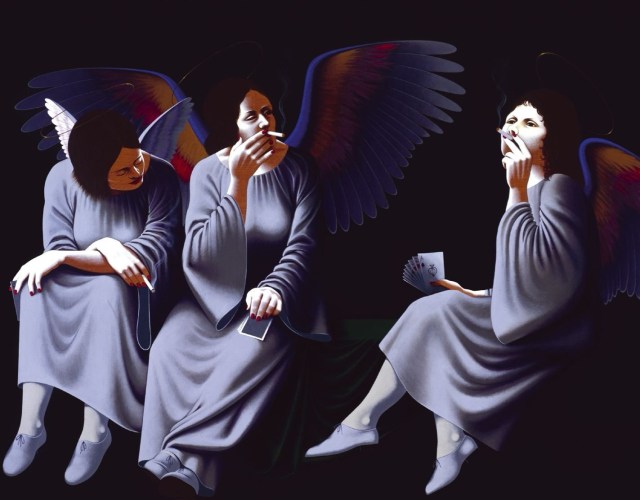
Metal is a tricky business. So is memory. I first heard “Children of the Sea” soon after it was released, I think, as a young teenager in 1980, tutored by an older sister in thrall to Rush’s Permanent Waves, Judas Priest’s Unleashed in the East, and, most of all, Black Sabbath’s Heaven and Hell. It was later that I learned of Sabbath’s late 70s identity crisis, their parting of ways with Ozzy Osbourne, and Ronnie James Dio’s efforts to help salvage a band worthy of his prowess. It couldn’t have been an easy road, and by all accounts wasn’t, BUT… the fruit of Osbourne’s dissolution, Dio’s post-Rainbow quest, and the Sabbath juggernaut’s need to produce a next record, was a pair of LPs blueprinting one way forward for metal: operatic vocal facility, pop-tinged melodies, subject matter less doom-and-gloom than dungeons-and-dragons. With, of course, guitars fully and thunderously intact. It was what Heart showed it could be with 1978’s “Mistral Wind,” and would be taken to its natural conclusion by Iron Maiden in the next decade; but, as the so-called New Wave of British Heavy Metal began to draw its borders as the 70s turned into the 80s, it was Black Sabbath, the original metal wellspring, still sitting in the center of the compass rose.
Of course, many die-hard Sabbath fans don’t acknowledge Dio’s Sabbath as the real Black Sabbath — a respectable point of view, in fairness, that such distinction can only come with the inclusion of Ozzy and in consideration of the first six, genre-defining, Sabbath LPs — and the band itself acknowledged this when reuniting for a tour and LP with Dio in 2007, calling themselves, naturally, “Heaven and Hell,” out of respect for both Dio and Ozzy. But for a certain generation of us the Dio-led band was the gateway to Black Sabbath, with Heaven and Hell and Mob Rules (1981) jewels in the crown equal in quality heaviosity to the First Six. And it turns out that Dio’s here-be-dragons sensibility was just what Sabbath and metal needed: dramatic vocal flights, lyrical escapism, and a feel for the sheer cliff riffs. I imagine too that his maturity (he was in his late 30s at the time, older than the rest of the band by at least six years) brought a steady, compositional, horns-flashing hand to a Sabbath dearly in need of it. Dio would set a solo course soon after Mob Rules but would never stray far from the tone he set in his work with Sabbath.
From the flawless first side of Heaven and Hell comes “Children of the Sea,” the kind of fantasy piece Dio trademarked, where the story lines are drawn vaguely enough to appeal broadly, and are there, ultimately, in support of the Riff King, for if there is one true hero in the story of metal, it is and will forever be Tony Iommi. Two versions here: the original studio take and, because it counts, the Heaven and Hell band version from 2007, with Dio, at the age of 65, still bringing every bit of showmanship to the legacy he was so justifiably proud of.
soundstreamsunday presents one song or live set by an artist each week, and in theory wants to be an infinite linear mix tape where the songs relate and progress as a whole. For the complete playlist, go here:soundstreamsunday archive and playlist, or check related articles by clicking on”soundstreamsunday” in the tags section.
The last few days have been rough. Grad school. Internship applications. Living in a city. Yuck. For as much as I love being fully informed, there isn’t a day that goes by that I don’t want to jump in my 33 year old car and drive until I’m miles away from the nearest person. (Here‘s somebody who just about did that – one of the most enjoyable books I’ve ever read.)
Whilst wallowing in this state of mind, a gathering of angels appeared above my head… and they were playing Haken, who seemed to be echoing my very thoughts. This is what they said:
Eyes open wide as I awake
I sense no change within the air
Hope leaves my soul, I paralyse
This world of pain and suffering
Creeps into me and once again
I mourn the loss of innocence
If I could run away
Back to my innocent days
Someone’s calling me
Echoes of a childhood memory
Someone’s calling me
Echoes of a childhood memory
Passages of time
Buried in the chaos of my mind
Chronicles of life
Concealing a truth I left behind
Passages of time
Buried in the chaos of my mind
Chronicles of life
Concealing a truth I can’t deny
Moon begins to rise
Reflecting on a life once sanctified
Night begins to fall
Voices of my youth, immutable
Memories collide
My scattered soul is almost unified
Thoughts are in full flight
Enveloping a wisdom earned with time
Passages of time
Stripping back the layers of my mind
Chronicles of life
Unraveling a truth which I must find
Haken really doesn’t get enough credit for the brilliance of their lyrics. They aren’t obvious, but they are glorious. I always find something new in them. The above lyrics are from their song, “Crystallised.” This song is one of the best prog metal songs in the genre. Haken always seem to lift my spirits. They end the song with nothing but hope and joy:
I have returned
To the springtime in the garden
Seeds are sown, flowers grow
And the child is born again
Filled with delight
And the laughter is contagious
As we dance, as we sing
Celebrating ’til the end
Joy and respite
On the faces of the children
With a smile, realise
That their love will never end
I have received
Affirmation of the spirit
Falling snow takes me home
And the man is whole again
Mind open wide as I awake
I sense a change within myself
Hope feeds my soul I realise
I feel the earth under my feet
Son by my side, I am complete
Pride fills my heart in Paradise
Hearts open wide as I awake
I sense a change within myself
Love feeds my soul I realise
This world of pain and suffering
Ignites in me and once again
Sparks the rebirth of innocence
If I could run away
I’d choose to live for today
Someone’s calling me
Echoes of a childhood memory
The moon will rise
The night will fall
I hold your hand
But you let go
The sun will shine
The snow will thaw
All things must pass
Into the unknown
Escaping the past by embracing the future
Escaping the past by embracing the future
Escaping the past by embracing the future
Escaping the past by embracing the future
70s sort of form that bedrock of heavy metal, those initial rungs of a genre now riddled with thousands of sub-categories. With early Judas Priest we actually get to experience that seismic shift – how that relatively upbeat hard rock and electric blues start to exhibit darker tones. In other words, Stained Class provides numerous glimpses into the impending transformation of metal.
“The streets run with blood from the mass mutilation, as carnage took toll for the bell” – is definitely not characteristic blues rock Led Zeppelin or an Aerosmith. Nor is that intense and multi-faceted– “You poisoned my tribe with civilized progress, baptizing our blood with disease” – lyrics which could be easily perceived as a commentary, critique or British sarcasm.
Scorching leads, layered and progressive dual guitar melody and that inimitable steely Rob Halford scream. All the vital components which would later shape 80s metal can be traced back to Judas Priest. Essentially, they accentuate the downtuned darker aspects of blues rock, and did that without significant deviation from that blueprint. Stained Class is part of that framework which directly leads to speed, progressive and power metal – essentially triggering a wave – still mutating, afflicting all corners of the civilized world.


 If they’re the only band on the infinite linear mixtape to be featured twice, and back-to-back at that, it’s because of the singularity of their two lead singers, who so influenced their respective versions of
 d him, and to that mind, both Frederick McKinnon and Tim Hunter have created and produced a three volume recording around a play they’ve written on this amazing explorer titled: “JOURNEYS: CAPTAIN JAMES COOK.” 2018 is an auspicious time to release these as they mark the 250th year of Cook setting out to the Pacific realms and of course the 239th anniversary of his fatal demise in Hawaii, 14th February, 1779 over a stolen cutter.
 and dialogue penned by New York playwright Frederick McKinnon. At the time of writing Tim reported, “I’ve been interested for a while of working on a musical project about James Cook, I was particularly fascinated in Cook’s connections with East London, where I lived for a while.” He went on to add, “I joined forces with Fred, who was a fellow Cook enthusiast, and we’ve been working on the project for about a year now.”
 Prog artist and fan, Tim not only plays the part of Captain James Cook he also provides guitar and keyboards throughout. Cook is a subject dear to his heart. “We’re very proud, in North Yorkshire, of James Cook, who spent the early years of his life here. Cook rose from humble origins to become one of the world’s greatest explorers. On his three great Pacific voyages, he re-drew the map of the world and paved the way for the peoples of Hawaii, New Zealand, Australia, French Polynesia and British Columbia to no longer live in global isolation.” The albums were released under his label Northern Soundscapes. Tim is also a member of Anglo-French group, ‘Silver Hunter’ who play Marillion-style Prog. He also aired the popular ‘ProgYes’ Radio show on Phoenix FM for two and a half years.
 through her vocals a pivotal insight into her relationship with James. Two of the tracks from the first album focus on her coping without her husband and raising their family.

 Metal is a tricky business. So is memory. I first heard “Children of the Sea” soon after it was released, I think, as a young teenager in 1980, tutored by an older sister in thrall to Rush’s Permanent Waves, Judas Priest’s Unleashed in the East, and, most of all, Black Sabbath’s Heaven and Hell. It was later that I learned of Sabbath’s late 70s identity crisis, their parting of ways with Ozzy Osbourne, and Ronnie James Dio’s efforts to help salvage a band worthy of his prowess. It couldn’t have been an easy road, and by all accounts wasn’t, BUT… the fruit of Osbourne’s dissolution, Dio’s post-Rainbow quest, and the Sabbath juggernaut’s need to produce a next record, was a pair of LPs blueprinting one way forward for metal: operatic vocal facility, pop-tinged melodies, subject matter less doom-and-gloom than dungeons-and-dragons. With, of course, guitars fully and thunderously intact. It was what Heart showed it could be with 1978’s

 Progarchy

