Review: The Mercy Stone – Ghettoblaster

Ghettoblaster

There is music that I can’t relate to. Sometimes it’s because the song is plainly stupid, trite, or obnoxious that I just wish it would be sent into the sun. It’s like your friend who posts way too much personal stuff on Facebook, you just want to scream “Stop”. Then, there is an even more perverse music, a music that speaks like a man half-way through a Xanax withdrawal, a music that both baffles the mind and produces a near awkward laughter in the listener. This is the music of lunatics, music that I would say (in the most professional of instances of course) has gone “completely bananas”.

And here we are with just an album, The Mercy Stone’s debut experimentation Ghettoblaster. An album I am sure my closest friends are sick of hearing and hearing about in the last coupe of weeks, yet it took me some time to write about it because — life.

If you are someone who actually was alive to see the prog spectacle of the ‘70s you may remember the slightly nerdy King Crimson or even the lord dorkdom of the cape wearing Yes. While there are many genuinely cringe worthy moments from those bands nothing — and until I can be proven wrong I genuinely mean NOTHING compares to the awkward vibe you get from Ghettoblaster.

The Mercy Stone is a new project; it’s been around for a few years and was assembled by composer and guitarist Scott Grady — who has a master’s degree in music composition — and who assembled a 12-piece group to “to put his composition chops to work within a project that would have the substance and sophistication fitting for a contemporary-classical concert stage as well as the accessibility that would be palatable to rock audiences.” Going simply-said for an extraordinary amalgam of Classical Music, Jazz and Rock, the group presents a large body of work with their full-length debut Ghettoblaster. Large as in bringing together Stravinsky, Led Zeppelin, Nirvana, Radiohead, Bach, Nine Inch Nails, Pink Floyd, to name but a few.

The music on Ghettoblaster is very well composed and performed. Grady tends to pull together a strong cast of performers for his musical circus act. These fine tunes tend to be something to marvel at. It is this dichotomy that provides more of the head scratching moments. The album progresses in a peculiar, but fairly typical fashion during the majority of its run time. You might find the music endearing and charming as it blends rock, jazz, and classical qualities.

The ‘70s were a glorious period in music because people were getting paid way too much money to do all sorts of crazy projects, and even though some of the end results were complete disasters there was a sincerity to them. There was no sense of irony or pretentiousness in the attitudes of the musicians, they just wanted to make weird and complicated music. With Ghettoblaster, this ensemble does exactly that. The Mercy Stone are driven by the love of music, and it pays back — maybe not filling their pockets, but rather something on a higher, more spiritual level. Highly recommended.

Follow The Mercy Stone on Facebook.

Dorothy Freedom Tour 2018 @itsdorothysucka

Oh yeah man, Dorothy is coming to town! Don’t wanna miss this. Gonna be a great show! Check out her 2016 album ROCKISDEAD. Last year, I found out it makes for a great playlist pairing with Hobosexual’s Monolith. Rock on, chillun’. See you in the VIP!

dpmsnqauqaadqht

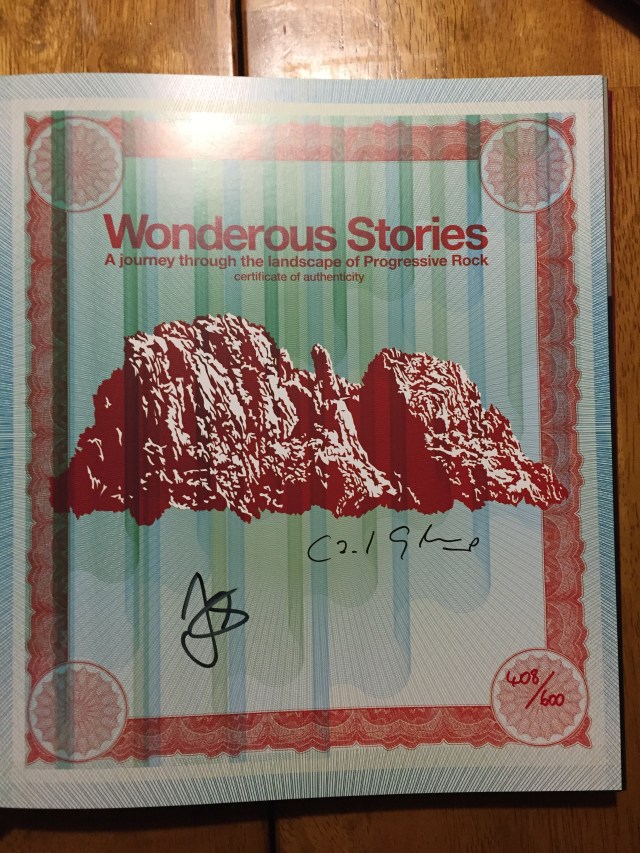
Rick’s Quick Takes: Wonderous Stories by Jerry Ewing

“I do hope that [this book] succeeds in going some way to shedding light on the intrigue of progressive music.  Of where it came from, and where it’s going.  And more importantly, how it got to where it is today.” — Jerry Ewing, from the introduction.

To cut to the chase: Jerry Ewing succeeds at all of the above with Wonderous Stories.  If a friend or relation asked me “why are you so fired up about ‘prog rock,’ anyway?” this just replaced Will Romano’s fine Mountains Come Out of the Sky as the book I’d loan them.  After extracting solemn promises in blood to return it ASAP.

Ewing knows what he’s talking about; he’s been spreading the news about progressive rock since the early days of Marillion, ultimately founding Prog Magazine as a “focal point and filter” for the genre in 2009, and steering it through the choppy straits of modern periodical publishing till now.  Wonderous Stories distills Ewing’s love of the music, his experience of the scene, and his considered take on prog fandom into a sumptuous coffee table book you didn’t know you needed.

Yes, “coffee table book.”  A big part of Wonderous Stories’ appeal is its gorgeous graphic design by Carl Glover, pulling together band shots, album covers and live concert pics on each page to accent the text.  The book works better for browsing than reading from cover to cover; each chapter is self-contained, often repeating information or opinions found earlier, with minimum cross referencing.  You pick it up, read a bit, put it down because you’re satiated — until you want to enjoy some more.  So you pick it up again …

And there’s plenty to enjoy.  After laying his foundation with intros to the 1960s & 1970s, Ewing tackles his mainstream “big six” of prog (Pink Floyd, Genesis, Yes, Jethro Tull, King Crimson and ELP), then branches out to far-flung tributaries (the Canterbury and folk scenes,  Krautrock and art rock, American and European bands, neo-prog and prog metal, and much more).  Along the way, he spotlights a dozen “albums that define prog,”  from the Moody Blues’ Days of Future Passed to Opeth’s Blackwater Park, including full band biographies as he goes.  Some selections are surprises, but they’re all deserving — three of them are on my Amazon wishlists now.

But unlike other recent books on the genre such as David Weigel’s well-intentioned but sloppy The Show That Never Ends, Ewing doesn’t leave the story of progressive rock sucking in the ’70s.  He makes a strong case for the 1980s as better years for the music than opinionated fans think; then he insightfully posits grunge, not punk, as the fad that killed prog for the mainstream music industry, forcing survivors like Marillion and neophytes like Porcupine Tree to fend for themselves.  In Ewing’s telling, this do-it-yourself ethic and the Internet’s ability to connect bands and fans worldwide sowed the seeds of renewed creativity and interest in progressive music, culminating in “The Steven Wilson Effect” (winner for best chapter title!) and the state of the genre today: “a thriving form buoyed by a big worldwide market.”

To sum up, this is a thoroughly delightful book, worthwhile both for newcomers to prog and to long-time fans.  While a few copies of Wonderous Stories’ limited edition are still currently available through Pledge Music, a hardback trade edition costing substantially less but looking just as yummy is coming out in the UK (on February 15) and in the US (on April 1).  Don’t hesitate to order it! — Rick Krueger
IMG_4497


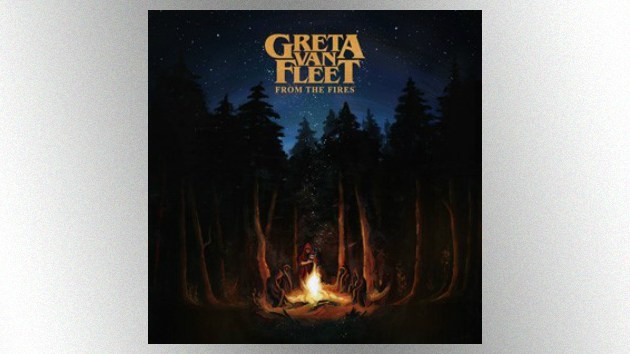
Rick’s Quick Takes: From the Fires by Greta Van Fleet

“Rock & roll isn’t really going on right now and it’s something the people need.” — Josh Kiszka, Greta Van Fleet, quoted in Rolling Stone.

If Frankenmuth, Michigan is known at all, it’s usually as a tourist spot that channels a kitschy “Little Bavaria” vibe  — complete with chicken dinners,  a Christmas superstore that my wife described as “obscene” after a visit, and its local polka band heroes.  (To be fair, it began as a mission colony, founded by Bavarians who crossed the Atlantic to minister to Michigan’s Chippewas.  These “Franconians” became key players in the founding of my spiritual home, the Lutheran Church-Missouri Synod — but I digress.)

This year, a different kind of band from Frankenmuth is on a new mission; the incredibly young quartet Greta Van Fleet (named for a octogenarian hammer dulcimer player) aims to stoke the “rock & roll revolution” Bono predicted in his recent Rolling Stone interview.  Their weapon of choice: a heavy, howling sound that reconnects to the energy of Chicago blues, early pre-mellow Bob Seger and the British hard rock boom — especially to Led Zeppelin.

Be warned: there’s a whole lotta Zeppelin influence on this compilation of two EPs — so much so that my longtime buddies from high school were comparing the music to 1970s German Zep-alikes Kingdom Come when we got together recently.  And it’s fair to wonder how the band — twin brothers Josh Kiszka on vocals & Jake Kiszka on guitar, baby brother Sam Kiszka on bass and pal Danny Wagner on drums, ranging in age from 18 to 21 — could possibly have been so well marinated in the classic sounds they emulate.  (Parents with great record collections and a musical family that jams together on long weekends seem to hold the answer.)

But let’s face it: Robert Plant & Jimmy Page were these kids’ age once, and they did all right for themselves.  More than anything, it’s the explosive energy of youth that these boys are bringing to the table, and they surf that energy on From the Fires until it soars.  The opening “Safari Song,” the semi-acoustic “Flower Power” and the surprise radio hit “Highway Tune” work as brazen, thoroughly convincing new-Zep; the strong covers of Sam Cooke’s “A Change Is Gonna Come” and Fairport Convention’s “Meet on the Ledge” showcase their eclectic, well-formed taste, and at a short, sharp 32 minutes, the whole set oozes potential.

Not that there won’t be some growing pains along the way; while Greta Van Fleet has sold out every headline show they’ve played this year, there were credible grumbles about their live sound and management in the wake of their recent Grand Rapids gig.  Still — a rock band from the Midwest with nationwide, possibly international potential!  It’s been a while since that’s happened.  On the evidence of From the Fires, I think they have what it takes to go for it, and I wish them the best.  But feel free to judge for yourself below. — Rick Krueger


RIP, Ray Thomas (1941-2018)

raythomas2

Ray Thomas, the former flautist for prog-rock pioneers The Moody Blues, has died at 76. If you are not familiar with Thomas’ talent, listen to his hauntingly beautiful flute solo in Nights in White Satin.

soundstreamsunday #93: “The North Star Grassman and the Ravens” by Sandy Denny

Sandy-DennyIn September 1971, Sandy Denny — on the heels of an incendiary contribution to “Battle of Evermore” from Led Zeppelin‘s upcoming fourth album — released her first solo record, The North Star Grassman and the Ravens.  It carried with it the strength and grace of her previous efforts, and featured many of the musicians with whom she had built her reputation, namely Richard Thompson from Fairport Convention and the entirety of Fotheringay.  It was a confident beginning to a too-brief solo career, and in its quiet power illustrates why Denny’s influence on the British folk and rock scenes was so profound.  Like other inhabitants of her world — thinking Thompson, Nick Drake, Lal Waterson — she was writing ahead of the curve, making deeper and contemporary connections to the wellspring of traditional folk while avoiding the easier middle earth sword epics so much of the rock world was obsessed with at the time (“Battle of Evermore” being a successful example of this).

A sailor’s life, a lament, an existential sea chanty, “The North Star Grassman and the Ravens” has everything describing Denny’s talent:  lyrical finesse, melodic beauty, the alchemical relationship of words to tune.  And of course, that voice, the kind of voice that could sing the traditional “Tam Lin” with menace and authority on Fairport’s Liege and Lief (1969), and turn on a dime to deliver something as hauntingly beautiful as “The Sea,” a song of her own devise, from Fotheringay (1970).

There are three striking versions of “North Star.”  The lovely studio original is shaded with classic early 70s British folk rock production (courtesy of John Wood), unfussy and earthy with a dynamic pop of bass and drums, Thompson’s restrained acoustic guitar not show-stopping but providing rhythmic chug while Ian Whiteman’s flute organ is suggestive of the hornpipe.  A solo live appearance on the BBC has Denny at the piano, owning the song without a band, a confident performer on her way to becoming a national treasure.  Denny recorded her last “North Star” in November 1977, just months before her death.  Here, with a full electric band, the song has morphed from somber reflection to country rock grandeur.  The recording was marred by technical difficulties in the guitar tracks and only released twenty years on, after Jerry Donahue (Fotheringay, Fairport) overdubbed new parts.  Even with this in mind, Donahue’s playing and his history with Denny wins the day, making Gold Dust: Live at the Royalty one of the better samplers of her work.

soundstreamsunday presents one song or live set by an artist each week, and in theory wants to be an infinite linear mix tape where the songs relate and progress as a whole. For the complete playlist, go here: soundstreamsunday archive and playlist, or check related articles by clicking on”soundstreamsunday” in the tags section.

Time Has Shown The Wiser: Fairport Convention at Fifty

It came about this way: I received a 180-gram reissue of Genesis’ Trespass for Christmas. In a documentary on the making of the album Tony Banks said the band’s first truly progressive work had been inspired by listening to groups like The Nice, Family, and Fairport Convention.

fairport_convention.jpg

Fairport Convention? I think I once saw a passing reference to “progressive folk” applied to their work, and was familiar with their definitive album, Liege & Leaf — a statement on their growing affinity with the English folk tradition. While Trespass has some folk-inspired moments it’s anachronistic to say Liege influenced Genesis’ 12-string arrangements and composite chords. I went back to Fairport’s debut, Fairport Convention, recorded in November 1967 (man, something about British bands and fall recording sessions) and released in the spring of ’68.

Oh my.

Continue reading “Time Has Shown The Wiser: Fairport Convention at Fifty”

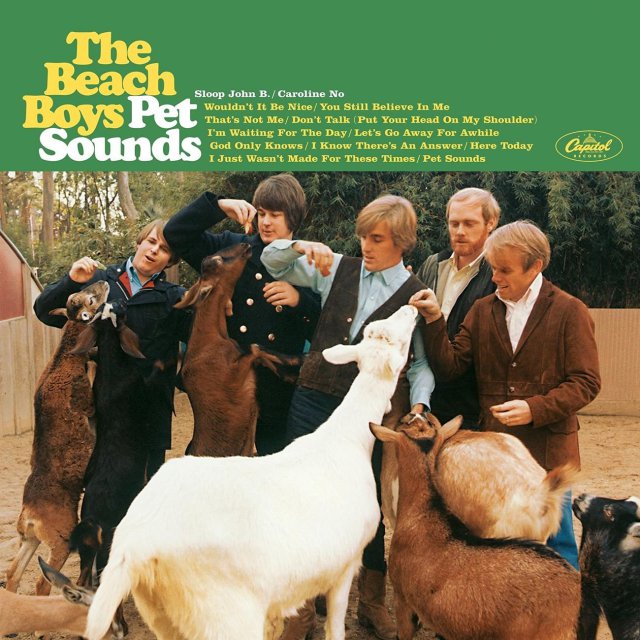
The Albums That Changed My Life: #8, Pet Sounds by The Beach Boys

by Rick Krueger

The good Dr. Birzer did a fine track-by-track survey of this milestone album for its 50th anniversary in 2016.   While I’m tempted to say “just read his article,” it wouldn’t answer the implied question this series poses.  How did hearing Pet Sounds change my life?

Though I always liked the Beach Boys, I didn’t glom onto Pet Sounds until I was in my 30s. My older brother had a few of their early records; I remember borrowing the In Concert album and subjecting my family to repeated plays on one vacation.  Some of their songs from the 1970s filtered through to FM rock radio in my high school years, too; “Sail On Sailor” was particularly popular.  I even arranged a medley of the band’s 1960s classics for my final choir concert at Lutheran High School East.  But I typically thought of the Beach Boys as a group with cool harmonies, a Chuck Berry fixation, and decent songs about surfing, cars and girls.

Then, on a whim, I picked up the 30th anniversary edition of Pet Sounds in 1996.  Which included liner notes featuring Paul McCartney quotes like “this is the album of all time” and “no one is educated musically until they’ve heard that album.”  I figured I’d better give it a serious listen.

Continue reading “The Albums That Changed My Life: #8, Pet Sounds by The Beach Boys”

Twenty Years Old Never Sounded So Amazing: OK Computer OKNOTOK

Like wine, Radiohead gets better with age. If Radiohead’s eerie, yet beautiful ninth album, A Moon Shaped Pool, failed to convince you of this fact, Radiohead’s 20th anniversary edition of OK Computer, OKNOTOK, surely will. OKNOTOK not only contains remastered versions of the original twelve tracks and all eight of the B-side tracks, but also features three previously unreleased tracks: “I Promise,” “Man of War” and Lift.” Unfortunately, because bands and artists have noticed that fewer and fewer people listen to tracks sequentially anymore, many no longer prioritize modifying and arranging their album’s tracks in a manner conducive to sequential listening. Radiohead, however, did not take this approach with OKNOTOK. From listening to the first track alone of OKNOTOK, one will notice that Radiohead went to great lengths to make their remastered album even more conducive to sequential listening than the original. The last three seconds of “Airbag,” instead of just ending, actually make up the original intro to the next track, “Paranoid Android.” By closing the gap between the two tracks, the change, although subtle, marks a huge improvement over the original. Overall, this flow remains noticeable throughout the entire album because of the noiseless seconds Radiohead shaved off the ends of its tracks. While these changes may seem minor to many, the seamless transitions truly give the album new life. The new tracks, meanwhile, fit seamlessly into the album’s themes of apprehension, uncertainty, injustice and ultimately, escape. Although Radiohead had completed the “new” tracks seen on OKNOTOK back in 1997, they did not release them, perhaps fearing they would not measure up to the rest of the album. For example, according to Apple Music’s synopsis of OKNOTOK, Thom Yorke claims Radiohead did not release the new track, “I Promise” twenty years ago “because we didn’t think it was good enough.” Even though Radiohead’s bonus tracks often sound better than most bands’ feature tracks, Radiohead, because of the importance they place on producing high quality music, will always remain Radiohead’s biggest critic. Nevertheless, “I Promise” definitely deserves its place in OKNOTOK. Featuring Thom Yorke’s melancholy voice, a guitar-driven melody, and occasional synth, “I Promise” gives listeners a comforting blend of sounds culminating together to make a peaceful ending. In the next track, “Man of War,” however, Radiohead throws listeners for a loop through an eerie combination of keyboard, synth, and screeching electric guitar. While perhaps unnerving to some listeners, the song’s grunge feel offers glimpses back into the sounds characteristic of Radiohead’s second album, The Bends.  The final “new” track, “Lift,” offers a transcendent look into the life of one “stuck in a lift.” Featuring some beautiful harmonies between synthesizer and Yorke’s voice, “Lift” succeeds in adding further lyrical depth to the original OK Computer. The rest of the album features all eight of the remastered B-side tracks, which, for the sake of brevity, I will not review. Yet, the last track, “How I Made My Millions,” deserves recognition. From the song’s inception, listener’s will notice a lack of audio quality and strange sounds in the background. Unlike the other tracks, Yorke recorded this song at home on his four-track recorder and the background noises consist of his girlfriend cleaning the house. Almost all of the tracks on OKNOTOK sound (despite the musical “chaos,” at times) polished and professional. However, one can not say the same about “How I Made My Millions.” Nevertheless, the raw coupling of piano with Yorke’s voice strikes listeners with a mesmerizing beauty and makes the song a brilliant conclusion to one of the greatest albums ever. So, even if you may wish to leave 2017 and all of its failures and successes in the past, do yourself a favor: sit down and listen in entirety to the remastered, full of “No Surprises” album, OK Computer OKNOTOK.

And, Then There Were 7: Poole Leaves BBT

SBS BBT
The last full album from Big Big Train to include founding member, Andy Poole.

Big Big Train is now a seven-piece outfit, as Andy Poole has resigned.

From the band:

ANNOUNCEMENT FROM ANDY POOLE AND BIG BIG TRAIN

Andy Poole will shortly be leaving Big Big Train.

Big Big Train would like to thank Andy for the significant part he has played in the band’s journey and we wish him well in his future endeavours.

Big Big Train will continue with the seven-piece line-up of D’Virgilio / Gregory / Hall / Longdon / Manners / Sjöblom / Spawton alongside the five-piece BBT brass band led by Dave Desmond.

For future live performance, the band has recruited an additional musician to assist with keyboard and guitar work. We will announce details in due course.

We also hope to announce a UK warm-up show for our July 13th Night of the Prog festival appearance at Loreley. We expect the warm-up show to take place on July 11th.

Best wishes

Danny, Dave, David, Greg, Nick, Rachel and Rikard

Continue reading “And, Then There Were 7: Poole Leaves BBT”