Interview: SPURGE

Spurge

Drawing parallels to the work of mighty Frank Zappa and David Bowie, as well as Isis, Cult of Luna, the Mars Volta and the Dear Hunter, the Atlanta-based band Spurge seems like a promising act. But delving deeper to their most recent release, an EP simply titled “Four More Songs” reveals plethora of different sounds and vibes.

The creator of the band, bassist Jen Hodges gives us an insight into the world of Spurge, their writing process, and more.

What made you go for the name Spurge?

When I first got players together in Nashville, this was just a solo project and I was releasing material as Jen Hodges.  My musicians were wanting like a “Jen Hodges and something or other” name.  I told them I was down and whatever they picked was good for me.  My drummer at the time had a very endearing lisp and excited called out “Sthpurge!”  We were all kind of unsure what he said at first. He said it again and told us it was a kind of weed.  We all dug the double entendre.  For a while we called ourselves Jen Hodges and Spurge.  We dropped the Jen Hodges this year because the band feels like a total group effort at this point.

How do you usually describe your music?

I like to call it progressive post rock.  Most of the time people have no idea what that means so I end up explaining that we play post rock type textures but add in guitar/bass/drum solos.  I’ve heard people call it neo-classical rock, experimental,  ambient, and fusion before.  I believe someone called us a jam band once as well.

What is your writing process like?

Whenever I’m noodling around on the bass or guitar by myself I’ll come up with a few riffs I dig.  I’ll usually collect 15 or so riffs over the course of six months and start stringing them together using theory to craft transitions.  I record a scratch take with me playing all the instruments and send it out to my band.  My band are all top tier at what they do, so I tell them whatever guitar/drum parts they write is cool with me.  They always come back with some pretty sick stuff.  We rehearse it, record it, then I’ll go back in and record my bass solos as the finishing touch.  It’s an odd approach but I like how loose and open it is.  The creative process is my favorite part of playing.

Who or what is your inspiration, if you have any?

There are a lot of players I admire.  Their music inspires me to contribute to humanity’s little collection of sound.  I’ve never been able to duplicate other people’s styles.  Mostly due to my bass being upside down and backwards.  However, I like being a part of the musician community and hearing other people’s music motivates me to keep writing.  Some of the musicians who influenced me at an early age are Flea, Buckethead, Jimmy Urine, Layne Staley, David Gilmore, John Paul Jones, Victor Wooten, and Thundercat.
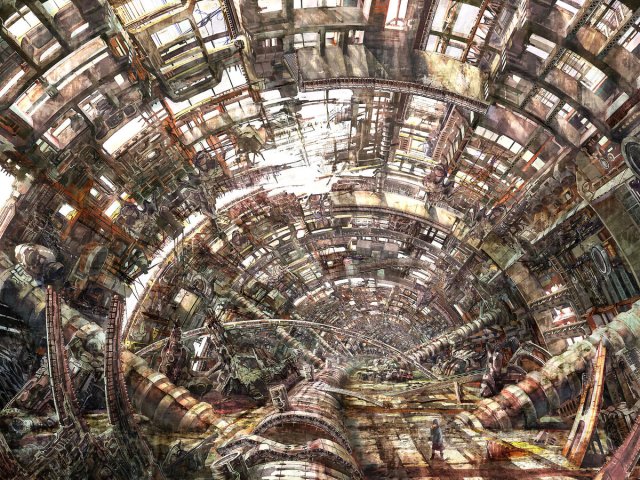
Four More Songs

What is your favourite piece on the new EP “Four More Songs” and why?

Oof.  That’s tough.  I like the bass solo best in Amphibian.   I like the verse in Om the best.  I like the piano solo in Rain the best.  I like the guitar riffs in David Bowie the best.  I like Miles’ vocals in Amphibian the best.  I don’t think I can pick an overall piece I like best though.

What makes “Four More Songs” different?

Different than my other albums?  Or different in general?  Different than my other albums because I had an idea about what I wanted before I started writing.  I knew for sure I wanted to write a 7 minute song, a David Bowie tribute, a schizophrenic piece with a metal bridge, and I wanted to finish Rain.  I had been in the process of writing Rain for five years at that point.  It was a reject song from a previous band.   The record is different in general because it’s got my style in it.  All my music is different than most stuff out there.  I am proud about that.  I feel like I finally found my sound.

What should music lovers expect from “Four More Songs”?

Beauty, ugliness, groove.  A lot of texture.  Some experimentation in recording techniques.  We recorded Wayford’s vocals on Om by putting a box fan between him and the mic.  I broke a major rule and stacked 4 bass lines on top of one another in David Bowie.  My poor producer wasn’t too happy about it.  He’s the man though and heard my idea and made it work.   I think this is a record you can listen to all the way through and be sucked in enough not to skip any parts.  There is no filler.  And you never know what’s coming next.

What kind of emotions would you like your audience to feel when they listen to your music?

All of the emotions.  (I just made myself laugh.)  I’d like them to feel content, relaxed even.  I’d like them to forget about their phones and their responsibilities and allow themselves to be taken through the story.  Maybe hype during the more exciting parts.  Entertained.  I’d like them to feel entertained.  Whatever emotion produces that outcome is fine with me.  As long as they are indeed feeling something.  Then I’ve done my job.

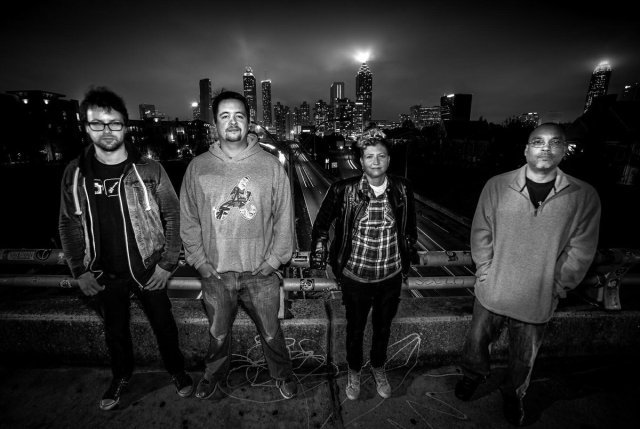
Spurge band

Which do you like most, life in the studio or on tour?

I’ve never been on tour where we don’t sleep in the van or on the floor or in someone’s basement so I’d have to say studio life.   I’d love to experience tour where we get a hotel room each night.  That might change my mind a little bit.  Tours have been fun, yet exhausting.  Studios are sacred spaces.  The creative process is my favorite part of playing so the studio is hard to beat.  I know a lot of people can get stressed out in the studio, but I’ve always been comfortable not having control so I just let people be themselves on the tracks.  If I don’t like it, I’ll edit it later.  I think the music reflects the positive vibes in the studio.

Pick your three favourite albums that you would take on a desert island with you.

Wow that’s tough too.  Only 3?  John Prine Live, Dark Side of the Moon, and RHCP Mother’s Milk.  I just looked those choices over for about two minutes and I’m sticking with my answer.

“Four More Songs” is available from Bandcamp. Stay in contact with Spurge via Facebook and Twitter, and visit their website for more information and news.

https://bandcamp.com/EmbeddedPlayer/album=4034617188/size=large/bgcol=ffffff/linkcol=0687f5/tracklist=false/artwork=small/transparent=true/

soundstreamsunday #87: “Melt!” by Siouxsie and the Banshees

siouxsieA commanding presence in British punk since the later 1970s, and creating out of that — along with Joy Division, The Cure, Bauhaus — an overpowering, dark music that came to be known as goth, Siouxsie and her Banshees moved their music towards romantic intoxication.  Siouxsie brought light to the dark, deftly drawing rich melodies from the shadows draping the songs.  Bassist Steven Severin foregrounded the twilight with a nervy, often high-up-the-neck playing, while Budgie’s tribal pounding gave the band’s work a pulse-quickening danceability at the edge of chaos.  A rotating cast of like-minded souls added instruments as needed, and fans of the band’s various guitarists across its 17-year recording career can be fairly territorial regarding the shifting lineups.
You can hear in Echo and the Bunnymen’s Ocean Rain (1984) a fascination with the Banshee’s A Kiss in the Dreamhouse (1982), with “Melt” maybe having some direct influence on “Nocturnal Me.”  (Although — it would probably be just as fair to say that both bands were obsessed with “Venus in Furs”-era Velvet Underground, a goth cornerstone.)  “Melt” is a dirge of self-immolation — loss of identity — in being consumed by a lover, its explicit sexuality dealt as poetry from the view of a succubus.  Appropriately, the vampyric backing is suggestive of an older, more eastern, Europe, but with a restraint that sends a chill rather than a horror show laugh (something to which goth rock is all too susceptible).

This live version of “Melt” is from an episode of the Old Grey Whistle Test in December 1982, and captures Siouxsie and the Banshees with the Cure’s Robert Smith, who stepped in to replace John McGeoch on guitar and would stay to help write and record 1984’s Hyaena.  The performance is notable for Smith’s presence, of course, but also for the kind of sound and vibe the band could get live while staying fairly lean.  A lament, a shake and a shiver — “Melt!” is a key to the goth rock kingdom.

soundstreamsunday presents one song or live set by an artist each week, and in theory wants to be an infinite linear mix tape where the songs relate and progress as a whole. For the complete playlist, go here: soundstreamsunday archive and playlist, or check related articles by clicking on”soundstreamsunday” in the tags section.

Meditative Prog: The Genius of Nosound’s LIGHTDARK

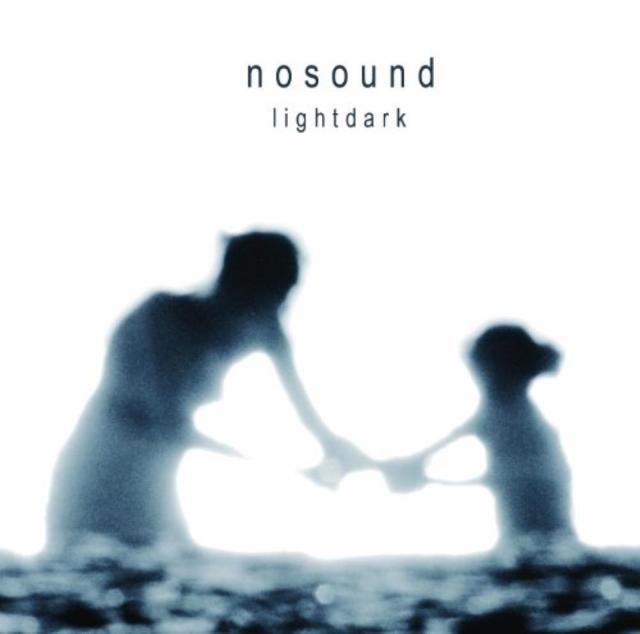
Lightdark Nosound
Listening to this album is more of an affair than an adventure.

Ten year ago this fall, the brilliant Giancarlo Erra was in the studios writing, recording, and mixing what would become his magnum opus, LIGHTDARK, one of the first releases from the then-brand new KScope Records.  Nothing Erra writes and records is unimportant, of course, but nothing he has done has quite matched the flawless LIGHTDARK, in its composition, its harmonies, its reach, and its flow.  Never could this be wallpaper music.  It is music that demands full immersion.  As with T.S Eliot’s Four Quartets, Erra’s LIGHTDARK demands that we the listener stand within the art itself, seeing the world form the perspective of the art.  As such, Erra is a genius, bringing us fully into his music.

As with some of the best composers of the past century, Erra eschews all forms of bombast as he whispers longingly toward the true, the good, and the beautiful.  He is not afraid of silence, knowing that the notes that surround silence, do so affectionately and even passionately.

Imagine Mark Hollis writing music for Pink Floyd while serving as the backup band to Arvo Part, and you might get close to the genius and talent of Giancarlo Erra.

Under the Red Cloud

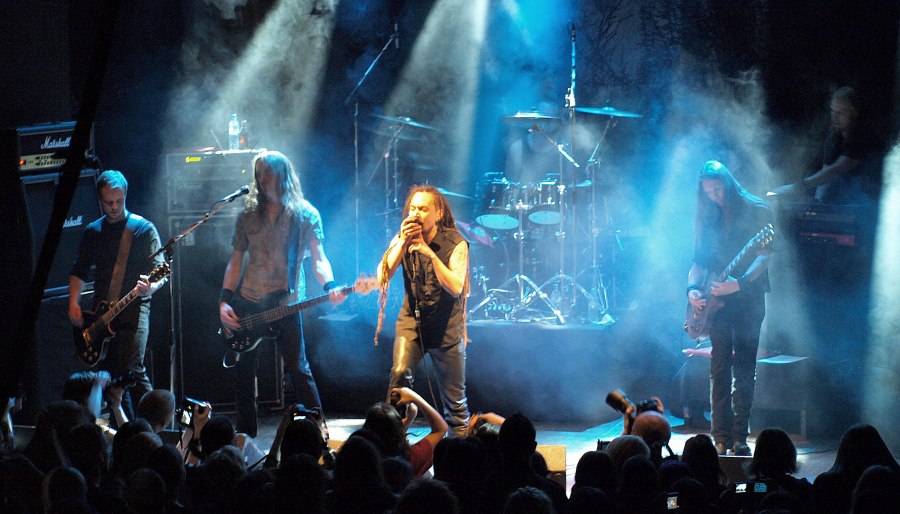
Unlike their neighbors to the west, Finnish scene evolved late and also in relative isolation. Quite like how they took their own time for economic industrialization, Finnish metallers were also sort of late to the planet’s extreme metal feast. Finns do come across as one wary lot. But, circa 1990, evolution took a huge leap. They seamlessly adapted their classic metal roots into a Black Sabbath influenced death/doom, and accomplished it within an absolutely meager time. Not surprising why Amorphis developed such distinct signatures — they never did follow that conventional trajectory.

Now, after twenty five years of folk and melodic metal, you would think they won’t have much to say. Go with that expectation and get ready to be mowed, by some quirky progressions and subtle rich melodies.

Moments where you get to experience glimpses of their glorious past are frequent. Creative folksy hooks and abrupt bursts into melodic death segments – guaranteed to overwhelm even their ardent listeners. Undoubtedly, Under the Red Cloud forges more than quite a few steps, onto a distinct path carved over the past two decades.


By Cecil (Own work) [GFDL, CC-BY-SA-3.0 or CC BY-SA 2.5-2.0-1.0], via Wikimedia Commons

Tin Spirits News

cover_501751422015_r
The first.

It seems way too long since we heard from one of the best bands too few folks know about, Tin Spirits.  Adventurous poppy prog with seriously meaningful lyrics.  The first two albums are must owns, and I’m sure the third will be as well.

scorch
The second.

Here’s the post that appeared on social media about an hour ago:

Dear Tins fans, we are delighted to let you know that after a lengthy leave of absence, work on the new album has begun. Will keep you updated but it’s so great to be back in a room making music

Let me offer a hearty: “Amen!!!”


Kevin J. Anderson’s Complete Bibliography

Kevin J. Anderson is not only our greatest living science fiction writer, but he’s also a great progressive rocker.  Now, he’s released a complete bibliography of his works.  Enjoy.

Review: Korzo – Supremacy

Korzo

With the amount of records being released in the present era, ranging from the bedroom to high-class studio productions, it is quite a challenge to satisfy my hunger for music lately. Most of this has to do with the fact that the music being released today lacks sincerity. Maybe I am stuck badly to the old-school understanding of rock music, but even though I try so hard, it happens quite a lot that I cannot understand and enjoy the modern music.

Korzo from Ukraine could be described as a true progressive rock metal band with touches of metal here and there, offering well-thought melodies, interesting vocal arrangements, and passages that connect the dots that are quite enjoyable. DP, who is the key person for this project, is a singer and guitarist who absolutely shines on the band’s sophomore studio release Supremacy. Although his voice tells the story, DP does a great work with his guitar — backing up the vocal melody most of times.

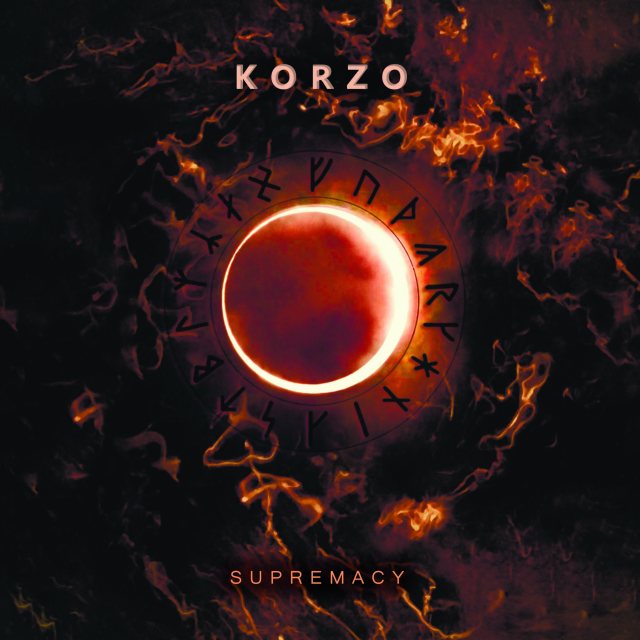
Supremacy album art

The album opens with “Empty,” which after a short ambient intro shows that Supremacy has a lot to offer. With often changes, Korzo distances themselves from delivering just a pure, lifeless showcase of technical proficiency, something that these guys definitely have, but rather presents the work that is alive, dynamic and above all, interesting.

References to various stylistically different artists can be heard in Korzo’s music. Their explorations within Anathema’s or Porcupine Tree’s melancholia speak of that, but the band is not afraid to delve deeper and expand their horizons. As Supremacy flows by, a listener is taken to a sound-trip that gets more metal-esque. Each of the songs on the album has its own personality, and labelling this record under a single genre would do this band a lot of injustice.

To summarise, Supremacy is a record largely based on the progressive rock genre channelling many different elements. This is a true epic, specifically in the amount of quality material, which requires quite a few listens to get into it. How far Korzo are ready to go? Time will tell. But for now they are on the right path.

Like Korzo on Facebook.

Blackwater Park

Recently a fellow metal-head shared Opeths’s Blackwater Park; it’s been ages since I heard this album. Music has this uncanny ability to bring back memories. In this case, decade old vivid images from heavy metal pubs, long distance motorcycling and even longer days dedicated to embedded engineering.

Had once motorcycled six hours straight to see Opeth live, to this college town in a little known part of the world. Crowd simply exploded to the opening riffs of “Bleak”, ferocity matched only by Åkerfeldt’s own growls.

Blackwater Park is that one album which conveniently illustrates Opeth’s early years. Everything from gothic atmosphere to death metal riffs, all packed into one funereal epic! Wide range of actual genres fit into that melancholic sound, but still weaved into one cohesive symphony. Album seamlessly illustrates meandering proggy passages resembling Camel, to Tom Warrior like curt grunts. With blankets of blues, prog and folksy lament built straight into that vital progressive death framework, Opeth eclipses all genre boundaries.

After all these years, listening to them again made me realize, these Swedes sort of orchestrate all those vibrant influences more elegantly than most genre specialists themselves do.

By deep ghosh [CC BY 2.0], via Wikimedia Commons

soundstreamsunday #86: “Ocean Rain” by Echo and the Bunnymen

echoIt’s like they couldn’t help it, all the British bands that invented themselves in the wake of the Sex Pistols.  As hard as they tried not to, they created some of the loveliest pop music one can imagine, with smarts and restraint and pretension, lots of pretension.  In their willful endeavor to be a serious, art-y band in an evolving psych-goth-pop scene, Liverpool’s Echo and the Bunnymen were not the equal of Siouxsie and the Banshees or the Cure or even Simple Minds, but they had it in them to produce one of their era’s best records in 1984’s Ocean Rain.  As unique as it is in its genre for its use of an orchestra the album nonetheless captures the period, as romantic impulses toward grand gestures infused particularly British music with a youthful, surrealistic poetry — it didn’t always work, of course, and didn’t always need to work to be successful: if you were to ask me to name an album that summed up 1984, I’d point to, among others, Ocean Rain, even as I was a teenage metalhead.  But it’s not a perfect album.  Singer Ian McCulloch’s reach as a lyricist at times exceeds his grasp, and two of the record’s tracks (“Yo Yo Man” and “Thorn of Crowns”) threaten to bring down Ocean Rain‘s otherwise glistening pop dramas and diminish the band’s full flowering.

The title track closes the album, and “Ocean Rain” is a study in building pop ballad tension across five minutes of orchestra and guitars, with McCulloch and the band finding peaks and shifting down, delivering lyrics perfect for 80s college angst.  Echo and the Bunnymen would never be this good again, but they really are so good on Ocean Rain that nothing else compares to this jeweled and flawed masterpiece.

soundstreamsunday presents one song or live set by an artist each week, and in theory wants to be an infinite linear mix tape where the songs relate and progress as a whole. For the complete playlist, go here: soundstreamsunday archive and playlist, or check related articles by clicking on”soundstreamsunday” in the tags section.

A Conversation with Mike Portnoy [ProgMind]

https://drive.google.com/file/d/1kF37JuIAbnzCZ1ZLkXklySTJ0sqXpGH1/preview

Stephen sits down with Mike Portnoy to pick his brain.

via A Conversation with Mike Portnoy — The PROG Mind