Only two more days to support Chuck Dixon and his new universe. Please do!
Alt★Hero is a world not too terribly different than our own. It is a world where the Wehrmacht generals overthrew Adolf Hitler and the Nazi Party in 1939, and where the first atomic bomb was dropped on the order of Reichskanzler Jodl on Soviet territory in 1944, leading to the fall of the Soviet Union in 1956. It is a world where Japan attacked Australia instead of Pearl Harbor and China occupies the Korean Peninsula. It is a world of four superpowers, where the European Union rivals the United States of America for wealth and influence, and where China and Russia possess the two most formidable militaries on the planet.
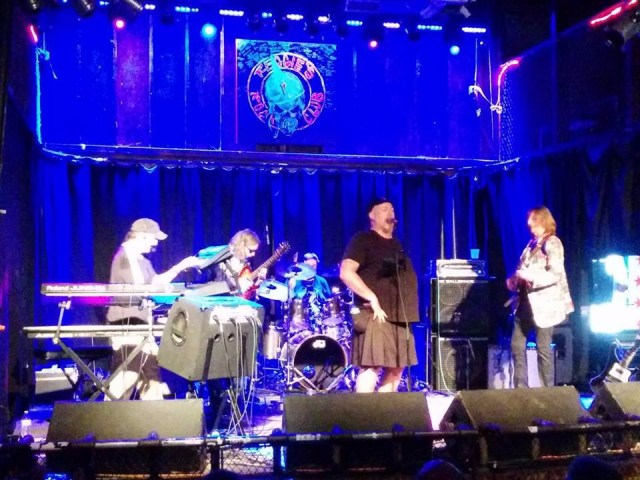
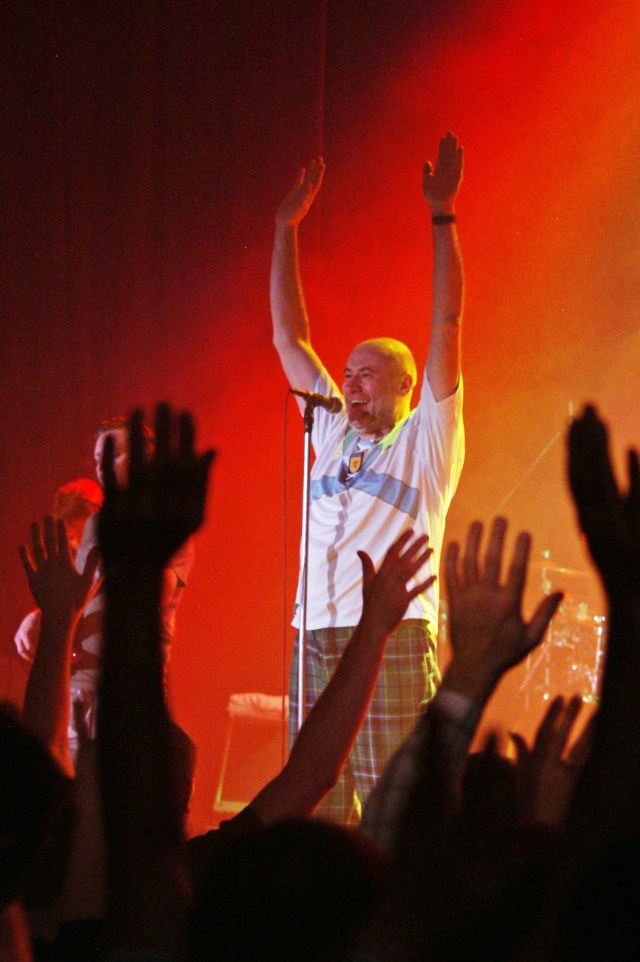
As I entered Reggie’s Rock Club on the final day of Progtoberfest, the Virginia band Kinetic Element were winding up their set. From the merch stand (where Discipline’s Matthew Parmenter was kind enough to make change for me as I bought CDs), their take on classic prog, spearheaded by keyboardist Mike Visaggio, sounded accomplished and intriguing; I wished I could have arrived earlier and heard more. Plus, you gotta love a band with a lead singer in a kilt! (Props to Progtoberfest’s Facebook group admin Kris McCoy for the picture below.)
The second high point of the festival for me followed, as fellow Detroiters Discipline held the Rock Club spellbound with their baleful, epic-length psychodramas. Matthew Parmenter reeled in the crowd with his declamatory vocals and emotional range; from there, the quartet’s mesmerizing instrumental interplay kept them riveted. The well-earned standing ovation at the end felt oddly cathartic, as if the audience was waking from a clinging nightmare, blinking at the newly-rediscovered daylight — even while rain clouds and colder temperatures rolled in outside.
Ukrainian Progressive Rock/Post-Metal project Korzo, featuring MOR / Bloody Terror members, have announced second full-length album Supremacy which will be released on November 20th via Massive Sound Recordings.
After 2-year break project entered the studio with new line-up to record Supremacy, which musically continues the previous album Polarity (2014), but unlike the debut, the sophomore album includes vocals.
First single “We,” taken from the new album is available for streaming / download from Bandcampand Soundcloud.
Commented singer and guitarist Dimitriy Pavlovskiy: “The project was frozen since 2015 due to the conflicts with our previous label Black Candles Records; we were very frustrated with poor work by the label and decided to put the project on hold, but the idea to renew Korzo was by our keyboardist Johaness, when we toured with Majesty Of Revival around Ukraine to support our last album ‘Dualism‘. And I’m really happy that we made it happen, ‘coz we had a lot of fun during the recording process and I’m very proud of this new record! It’s more mature album than previous, more atmospheric. And also ‘Supremacy’ includes vocals by me and Anna Shmilyak.”
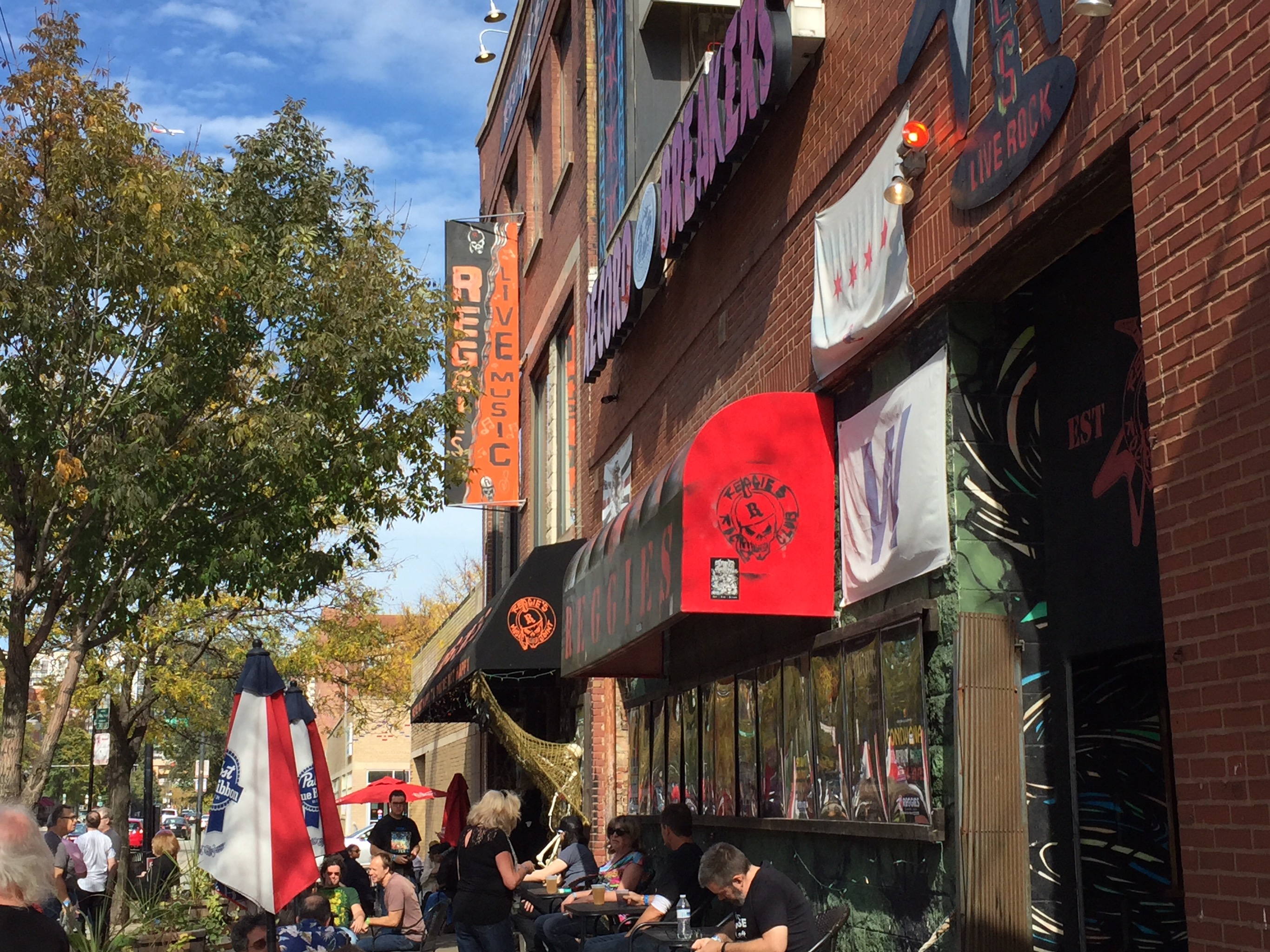
The sun shone warmly again on the south side of Chicago as Progtoberfest III kicked off its second day. Taking in the view as I exited the ‘L’, it was amusing and welcoming to see a familiar screaming face painted on the exterior of Reggie’s:
Hoping to get Alphonso Johnson’s and Chester Thompson’s autographs in the VIP Lounge the night before, I’d struck up a delightful conversation with members of the North Carolina Genesis tribute band ABACAB. In 2016, festival organizer Kevin Pollack had given them “homework” for this year: to play all of Genesis’ live album Seconds Out on the 40th anniversary of its release. You could tell the band was nervous (they focus on 1980s Genesis to get bookings, so they had to learn half the album in the past year) but also absolutely thrilled to bring it to the Rock Club stage. And on Saturday afternoon, they nailed it, to the joy of an enthusiastic, supportive crowd and rave reviews from other acts. They’re already planning to return to Reggie’s in April as a headliner, and for Progtoberfest IV next October. Check out why below:
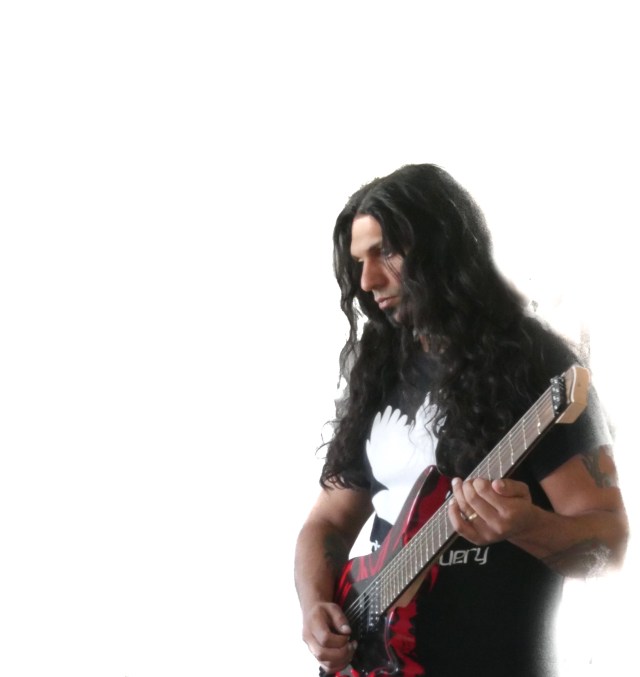
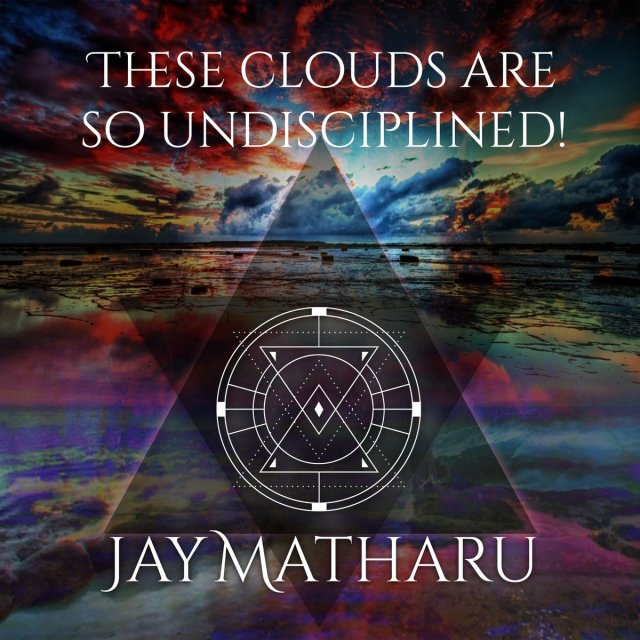
The Uppsala, Sweden-based song-writer, performer, guitarist and composer, Jay Matharu, is set out to explore a wide variety of genres and unleash his full creativity on his debut album “These Clouds are So Undisciplined!,” clearly stating that he is not into music to make it big, but more importantly, for his passion for creating music.
One of the most striking features of his music is definitely Jay’s ability to cross different genres and platforms, incorporating elements of music from different styles: from metal to jazz fusion and even some subtle hints of hard rock and djent in the form of really memorable arrangements.
On this material, Matharu is showing an incredible amount of versatility, as a composer, performer and musician, casting a beautifully diverse collection of songs. Fans of good instrumental guitar-oriented rock with jazz fusion and metal excursions are certainly in for a treat.
On Friday, October 20, hundreds of dedicated proggers converged on Chicago from around the country — and even from across the globe. The location: Reggie’s Rock Club & Music Joint on the Near South Side, only two blocks away from the former Chess Records, the birthplace of great discs by Muddy Waters, Chuck Berry, The Rolling Stones and countless others.
Reggie’s has two main rooms, both dedicated to Progtoberfest this weekend. The Rock Club is designed for concerts, with a raised stage, a main floor, an upper level mezzanine —and a wire fence decor motif throughout. The Music Joint has a tinier stage tucked into the back of a narrow bar and grill. This weekend, merch tables were crammed into every inch remaining on the main floor, and patrons less interested in the music (or needing a break from the density of the sound) took advantage of Friday and Saturday’s warm weather to eat and drink at sidewalk tables. An upstairs space that held a record store until recently was turned into the VIP/Meet and Greet lounge for the duration.
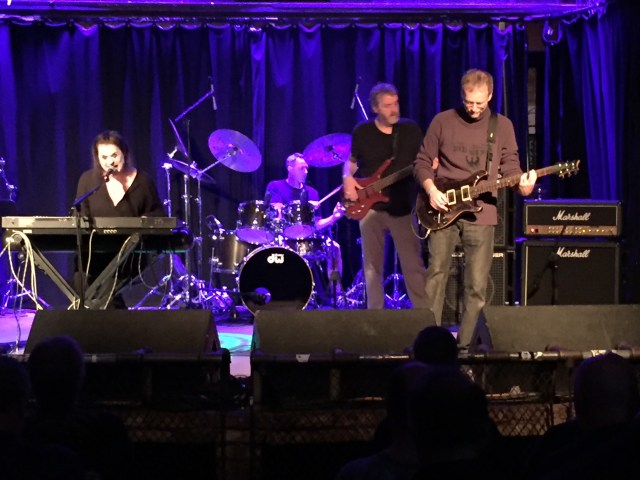
Due to the usual complications of traveling to and around Chicago as the weekend starts, I got to my spot in the Rock Club just as Schooltree was taking the stage. With only an hour on the schedule, they powered through highlights of their Heterotopia album, condensing the narrative to zoom in on its main character Suzi. The set left no doubt that Lainey Schooltree is a major talent; her songwriting chops, keyboard skills and vocal versatility all came through loud and clear, grabbing and holding the audience’s attention. The rest of the band bopped along brilliantly too, with the ebullient energy of Peter Danilchuk on organ and synth leading the way.
The crowd for Schooltree was solid, but hometown heroes District 97 were the first group to pack the place, filling both seats and standing room on the main floor. The band took no prisoners, blasting right into riff-heavy highlights from their three albums that showed off every player’s monster chops. Soaring above the din, Leslie Hunt pulled in the crowd with her astonishing vocal power and range. New songs were mixed in that sent the audience head-banging and prog-pogoing with abandon.
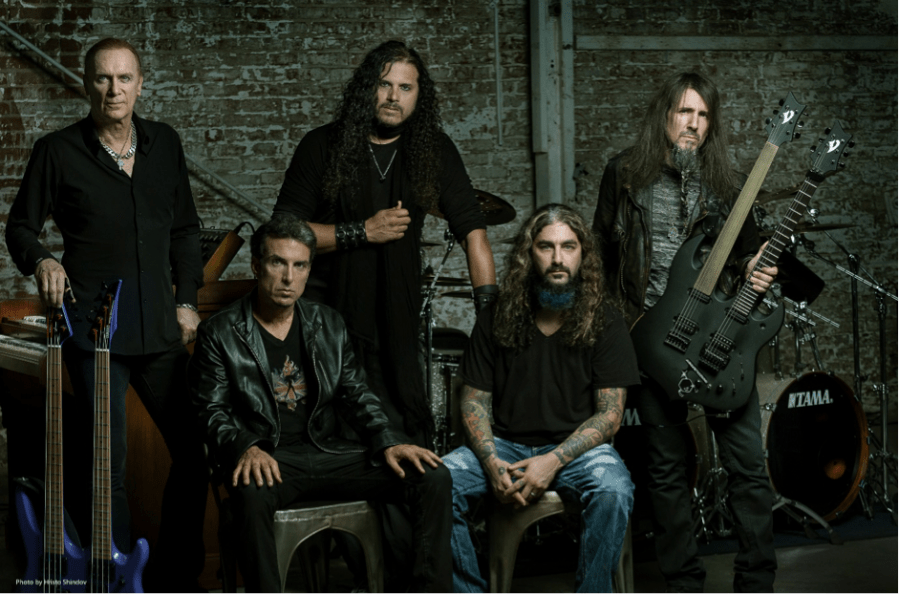
Mike Portnoy’s new supergroup, Sons of Apollo, is the prog metal bombast we have been waiting from the legendary drummer ever since he left Dream Theater. While DT have struggled to define their sound moving forward, Portnoy has dabbled in seemingly disparate genres in an endless number of bands (all of them admittedly amazing). Sons of Apollo finds him coming home to the wonderful world of prog metal with a lineup of extremely talented musicians.
Featuring Portnoy on drums, Bumblefoot (formerly of Guns N’ Roses), on guitar, Derek Sherinian (ex-Dream Theater keyboardist circa “Falling Into Infinity”), Billy Sheehan (Winery Dogs) on bass, and Jeff Scott Soto on vocals. I initially was hesitant when I heard Sheehan would be playing bass, because I’m not the biggest fan of his heavily distorted bass tone, even though I think he is a brilliant player. However, in a heavy metal setting, his tone works quite well. Soto’s vocal range matches the music quite well. He can go from Brian Johnson-esque screams in the beginning of “Coming Home” to Steve Perry highs later in the same song.
In a way, Sons of Apollo reminds me of AC/DC if they were super proggy, super complex, and had a keyboard master. Sherinian really is a brilliant keyboardist, and I like that he uses more traditional organs rather than the nintendo theme-song keyboards that other DT keyboardists have overused. In the music videos, it is clear that Sherinian is thrilled to be working with Portnoy again, and based upon the drummer’s Twitter feed, the feeling is mutual.
I kept my expectations pretty low for Sons of Apollo’s “Psychotic Symphony” because there seemed to be a lot of hype surrounding it. After listening to it several times, the album has grown on me, and I can honestly say the hype is justified. This is a fantastic metal album well worthy of any progger’s collection.
It’s been 30 years since the release of Marillion’s Clutching at Straws, the band’s fourth album and their final recording with the legendary frontman Fish. For many, this also makes it the last true Marillion album. Although the band may have continued, to both critical and commercial success with Steve Hogarth at the helm, they never truly recaptured the poetic grandeur and lyrical luxuriance of those days under Derek W. Dick aka Fish.
Source: Wikimedia
“I am a writer who can sing, rather than a singer who can write,” explains Fish, who will retire from the industry next year after a final album and tour. “I was also an arsehole and my ego was out of control at that time.”
“That time” was the sudden pop star status that the success of their third album, a number one album no less, had brought the band, which included Top of the Pops appearances for the hit singles, “Kayleigh” and “Lavender”. It was the excess of these experiences, along with the problems it brought to his own private life, that Fish channeled into Clutching at Straws.
We get a taste of life on the road with “Hotel Hobbies” and “Sugar Mice”, Fish’s ego unleashed in “Incommunicado”, and even a track that Fish describes as his resignation letter to the band in “That Time of the Night”. There is melancholy, there is melodrama and there is more than a touch of self-pity; perhaps even self-loathing in the half a dozen or so songs of the original release.
Clutching at Straws was an altogether different beast from the mercurial third album, with its haunting lyrics and sweeping melodies flowing seamlessly from one to the next. Clutching at Straws was a collection of distinct songs with a much darker, heavier theme, which exposed the problems within the band and foreshadowed their breakup the following year.
Source: Wikimedia
Nicknamed Fish because he apparently drank like one, it’s hard not to read autobiographically into the sad central character of “Torch”; propping up the bar, failing in his marriage and family life and insisting on “Just for the Record” that he’s going to put it down and turn his life around.
There are echoes of the poetry of the third album in tracks like “Sugar Mice” and the way the brilliantly observed “Warm Wet Circles” mourns the loss of the age of innocence, but even these tracks are bittersweet.
For all the bolshy bravado of “Slainte Mhath” and his dreaming big of “adverts for American Express cards, talk shows on prime time TV, a villa in France, my own cocktail bar”, the bitterness of hollow fame is laid bare for all to see. When the final track pronounces the band to be “terminal cases that keep talking medicine, pretending the end isn’t quite that near”, it’s clear that despite there being a four-second track listed as “Happy Ending”, there is nothing like that on the horizon for Marillion and Fish.
Unlike the previous album, we won’t be waking up to find that it was all just a bad dream. This time, the nightmare is all too real: the band of brothers split asunder by the arrival of fame and fortune.
It may have been Fish’s personal favorite of his four Marillion outings, and it may have been voted number 37 on the Rolling Stone’s 50 Greatest Prog Rock Albums of All Time, but in the end, they were always just clutching at straws.
A few months later, in a row over the way the band was being handled, Fish gave them an ultimatum to choose between their manager and him. They chose the manager. And the rest, sadly, is history.
Nile rumbles — “The scourge of Amalek is upon you” – hardly a hyperbole. These South Carolinians construct some of the most sinister patterns known to man. 180 beats per minute, brutal growls and Middle Eastern influences — all weaved into a vicious arrangement. Channeling Florida death contemporaries, Nile crafts a truly ravishing Egyptian dissonance at an intensity unparalled. Here, these assault patterns are unique, recognizable and quite atmospheric, a rarity within this lineage.
Egyptian chants and not so poetic gruesome mythology – “Horus hammereth them. Nepthys hacketh them to bits. The eye of Ra eateth into their faces. Their carcasses will be consumed in the desert”. Guttural growls, sharp temporal variations, and ruthless bass lines – all peacefully coexisting with electrifying melodies. With these rich signatures, Karl Sanders effortlessly heaves the listener into an intricate, enchanting and extreme terrain.
When Beck walked a talking blues over a sample of Johnny Jenkins’s cover of Dr. John’s “I Walk on Gilded Splinters” for “Loser,” his giant 1994 hit, there was an aesthetic purpose lurking underneath its vibe of off-the-cuff spontaneity that, 25 years later, continues to infuse his work with vitality. While “Loser” itself is marked by the wild west feel of early 90s indie rock, with all its many faces, Beck’s subsequent work shapes that freedom into something beyond any particular rock and roll era — his catalog reflects possible trajectories across time rather than a simple series of destinations.
Morning Phase, released in 2014, is Beck’s ninth, an “acoustic” record that ran away with a clutch of awards and praise from critics. All deserved. He makes a pallet on the floor in support of his considerable vocal power and melodic finesse (things he’s not always interested in showing off), rich strings and rolling rhythms stacked beneath a lyrical prowess speaking of a talent well-nurtured: if he’s not always successful in his endeavors, Beck is an active creator not inclined to coast.
In its length, in its lyrics, “Wave” appears a slight, slip of a thing. But in its undertow it is a song of deep release, a beautiful orchestration of removal, isolation, perspective; and so reminds me of King Crimson’s Starless and John Wetton’s treating the lyric as if he’s singing an emotionally interior “Jerusalem” — the land falls away, and you are at sea.
soundstreamsunday presents one song or live set by an artist each week, and in theory wants to be an infinite linear mix tape where the songs relate and progress as a whole. For the complete playlist, go here:soundstreamsunday archive and playlist, or check related articles by clicking on”soundstreamsunday” in the tags section.






 When Beck walked a talking blues over a sample of Johnny Jenkins’s cover of Dr. John’s “I Walk on Gilded Splinters” for “Loser,” his giant 1994 hit, there was an aesthetic purpose lurking underneath its vibe of off-the-cuff spontaneity that, 25 years later, continues to infuse his work with vitality. While “Loser” itself is marked by the wild west feel of early 90s indie rock, with all its many faces, Beck’s subsequent work shapes that freedom into something beyond any particular rock and roll era — his catalog reflects possible trajectories across time rather than a simple series of destinations.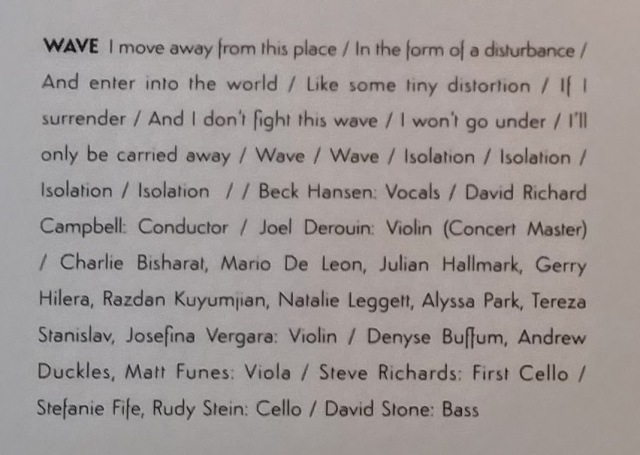
 Progarchy
