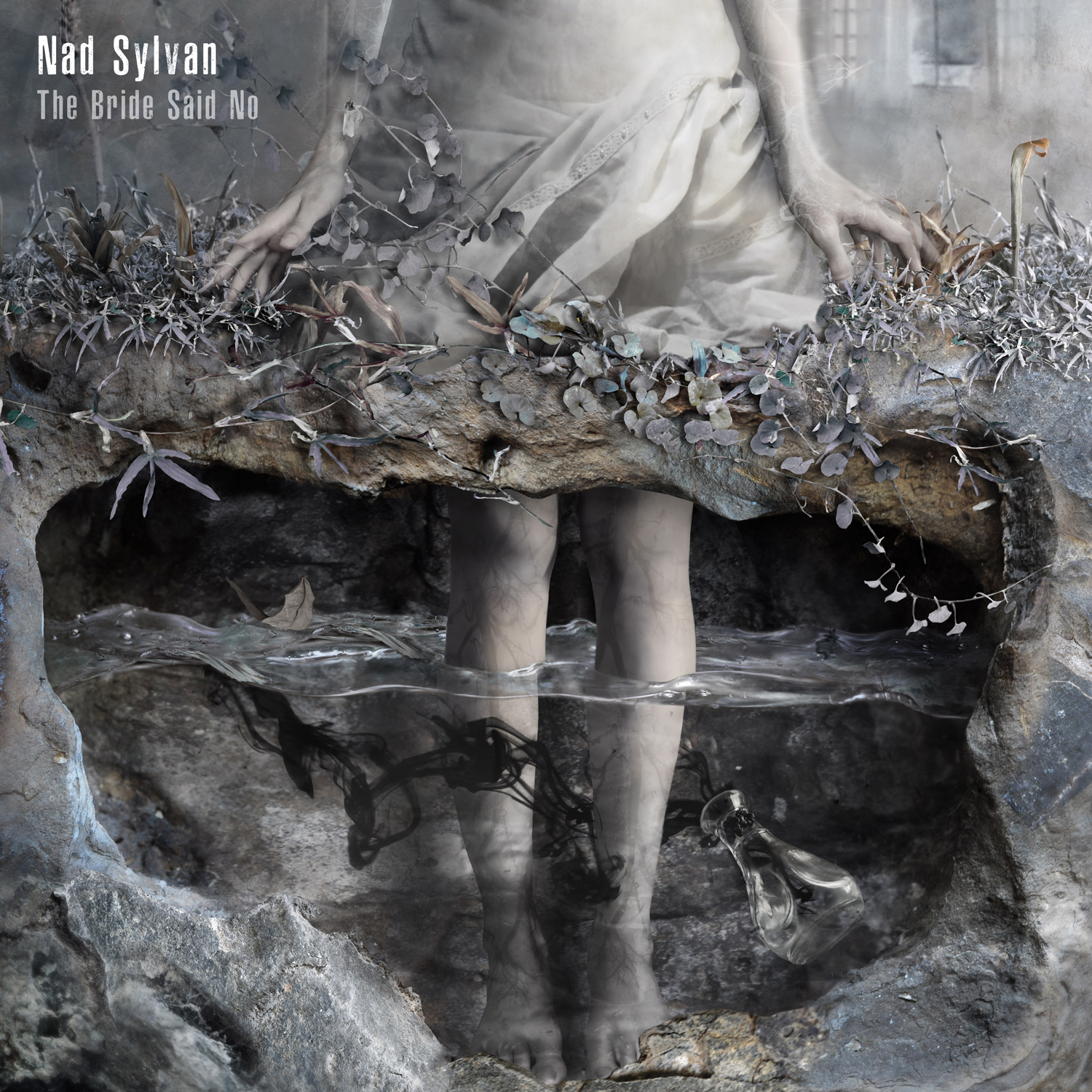
Nad Sylvan, The Bride Said No (Inside Out Music, 2017)
Tracks: Bridesmaids (1:14), The Quartermaster (5:39), When the Music Dies (7:00), The White Crown (6:17), What Have You Done (8:30), Crime of Passion (6:01), A French Kiss in an Italian Cafe (6:00), The Bride Said No (19:25)
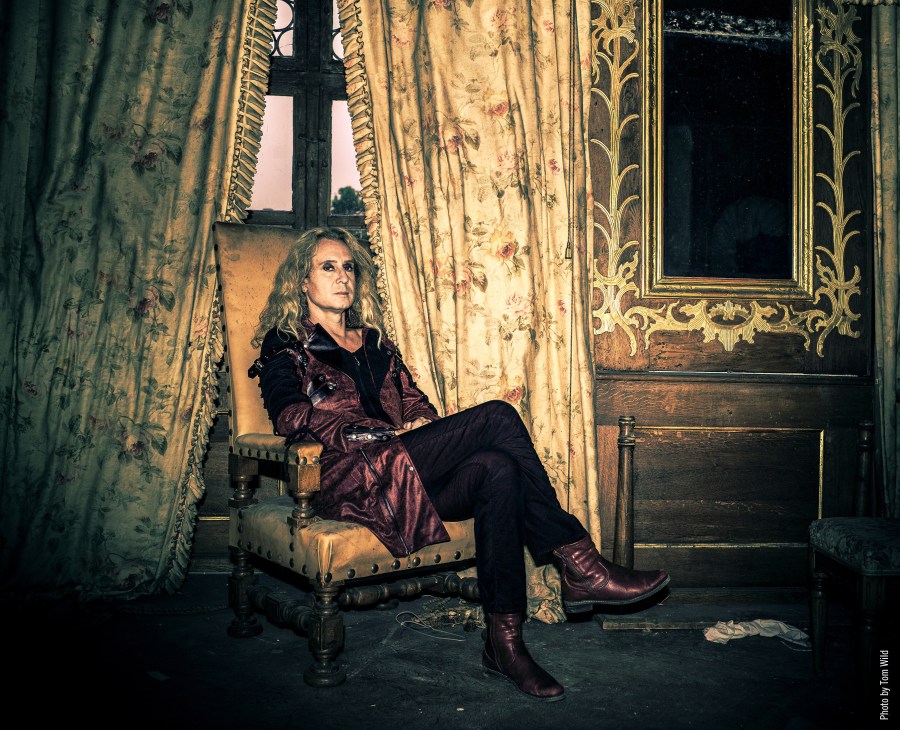
Nad Sylvan’s latest album, The Bride Said No, finds Steve Hackett’s touring vocalist truly coming into his own. While I don’t want to detract from his past solo efforts, I feel that Sylvan’s 2015 album, Courting the Widow, played the Genesis card far too safely, making the album sound a bit stale. This new release, however, finds a pleasant balance between new and old.
I decided to listen to the whole album after seeing the music video for “The Quartermaster” (see below), and the album gradually grew on me with subsequent listens. “The Quartermaster” is one of the best rock songs released this year, and if the wider music industry was concerned with actual music instead of money, ratings, and appeasing idiots, then maybe it would be a huge hit. The quiet, eerie opening soon gives way to a synth driven track that also features a healthy dose of harpsichord. I’m a sucker for the harpsichord.
From today’s online diary by King Crimson impresario David Singleton:
We have long been planning a release of the show in Vienna from November 1st last year – a highlight of the 2016 European tour, where Jeremy [Stacey] first took over the keyboard/drummer role and the band introduced Cirkus, Dawn Song and Indiscipline. Robert [Fripp] and I mixed this show with Chris Porter during the first half of the year, and it sits there, raring to go…
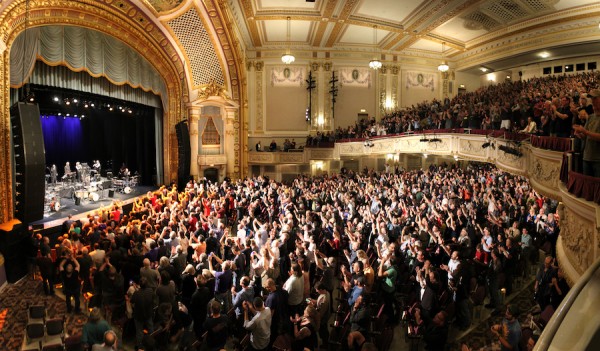
After the recent excitements in North America, it seemed, however, much more exciting and appropriate to release an official bootleg of the new 8-piece in full flight. There was a huge transformation in the band, which began in Chicago in June and came of age with the first show in Mexico in July. After the show at the Chicago Theater on 28th June, Tony Levin described it online as simply “one of our best” and Robert sent me a simple email saying “if we are looking for a KC live; Chicago was exceptional”. It was a wonderful setlist featuring Neurotica, Radical Action III, Cirkus, The Lizard Suite, Fallen Angel, Islands and Indiscipline alongside more established favourites.
So this autumn’s release for the US and Europe will be a two CD set of “Live in Chicago”, accompanied by T-Lev’s wonderful photographs (and one or two of my own, as even he struggles with being on stage and in the audience at the same time).
Three reactions:
YESSSSSSSS!!!!!!!!! This makes two live Crimson shows I’ve attended that have been officially released. The first one was in 2008, available as a DGM download here.
For some reason, the 2017 Chicago Theater show got a really good review here.
Is it vain to compile a discography of live albums where you were in the audience? Oh, it is. Well, never mind, then …
Randy Newman makes diamonds. You can feel the pressure and time and heat that go into his songs, creating the effect of lush spaciousness in tunes typically clocking in under three minutes. His eagerness towards satire is a product of his style, immersive first-person character sketches delivering broad social commentary and comedy in lines simply phrased, acidic, and wrought with compassion. His skill at delivering his own songs is often eclipsed by his influence as a songwriter and his work as a hired gun — “I Think It’s Going to Rain Today” from his 1968 self-titled debut has been covered something like 75 times, and his scores and songs for films are in themselves a major achievement — and yet his unmistakable voice, coupled with arrangements measured to plumb the intellectual and emotional depths, carry such weight that as a performer of his own music he’s peerless.
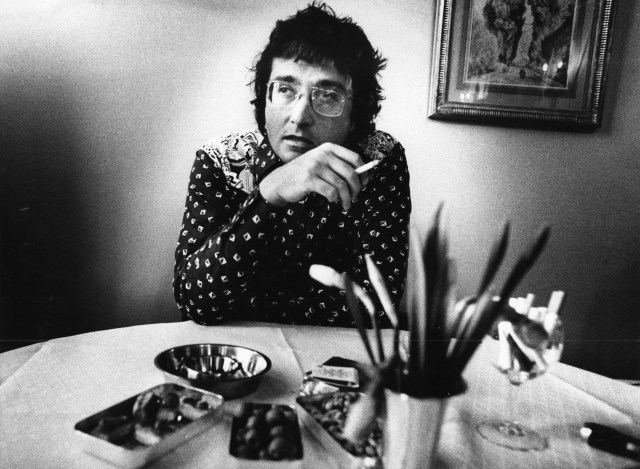
“Cowboy” is from the ’68 debut, and in its brief stay conjures Dvorak and Copland, the film music of Newman’s uncles Alfred and Lionel and Emil, and a particularly nuanced form of American songwriting that was then just taking shape and was particular to Los Angeles. It leans heavily on cinematic structure and the idea of music as a vehicle for a script’s emotional power. Consider the slightness of the lyrics:
Cold gray buildings where a hill should be
Steel and concrete closing in on me
City faces haunt the places
I used to roam
Cowboy, cowboy – can’t run, can’t hide
Too late to fight now – too tired to try
Wind that once blew free
Now scatters dust to the sky
Cowboy, cowboy – can’t run, can’t hide
Too late to fight now – too tired to try
In contrast to much of Newman’s work, “Cowboy” doesn’t contain the erudite wordplay and swing he shared with Mose Allison and it doesn’t betray his deep roots in New Orleans. It’s instead a kind of beautiful dirge of disillusion, a Brave New World Symphony where the fantasy of open spaces bumps up hard against the darker angels of human nature.
soundstreamsunday presents one song or live set by an artist each week, and in theory wants to be an infinite linear mix tape where the songs relate and progress as a whole. For the complete playlist, go here:soundstreamsunday archive and playlist, or check related articles by clicking on”soundstreamsunday” in the tags section.
Our tribalism always finds an outlet through politics, sports etc – but they manifest in other spheres too. Art is no exception; metal definitely is not. T-shirts, tattoos and band patches – all signal tribal association. Instinctively adopting a genre identity and defending those musical sensibilities is a commonplace. Labels, artists and the other marketing aspects are also an accentuating factor here.
Years ago I used to frequent this bar, they mostly played 70s to 90s metal. So you could find a wide variety of old-school metal-heads being regulars there. Before these metallers split into factions, sub-factions and more nuanced quibbling sub-categories – there were two broad species – those who listen to power-metal and those who despised it. Needless to say, each considered the other as poseurs. The polarizing quality of power metal cannot be more evident. I guess melodramatic compositions and fantasy themes are not everyone’s cup of tea!
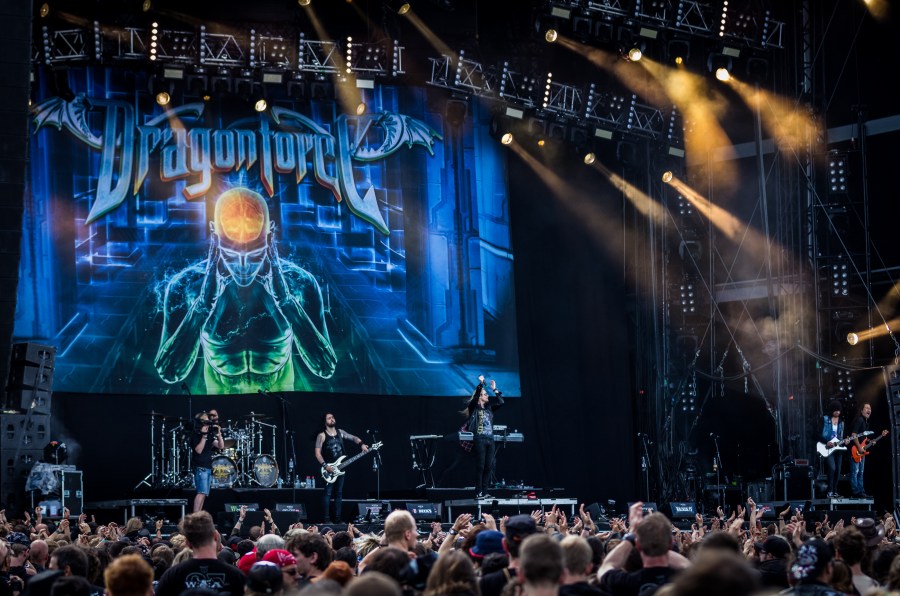
It’s difficult to identify sounds which might appease both these battling tribes, but DragonForce is a definite contender. This late 90s British band is a form of anachronism – classic power metal blueprint, but also extremely technical. In short, its power metal with intricate progressions and sonic intensity of 80s thrash.
Sheer speed of the guitar solos makes passages resemble Super Mario music. Herman Li and Sam Totman’s dual guitar harmony is melodic and maddeningly precise. Aggressive bass lines, blazing leads and blast beats are all quintessential extreme metal elements. While those fantasy themed lyrics, high pitched clean vocals and catchy choruses tailored for large arenas – all indicate Ronnie James Dio/Rob Halford lineage of power metal. DragonForce may not be genre-bending revolutionaries, but they might just manage to placate two seemingly irreconcilable tribes.
The Laurentian Mountains studio, where Rush recorded the video for “Tom Sawyer,” was destroyed by an early morning fire today. Provincial police received a call about the blaze around 5:30 a.m., but when firefighters got to the studio, it was too late. Investigators with the Sûreté du Québec are working to determine the cause of the fire.
It’s been too long since I last posted something other than an obituary (although the music world did just lose another great in Glen Campbell). A concert, then, offered a welcome opportunity for change. Last night (August 8) I attended a collaboration of two rock icons at the Colosseum in Caesar’s Palace in Las Vegas. Although I must confess I did not stay the entire show (due in large part to a rather frenetic work week), what I did see impressed me, at least as a fair-weather fan of these two legends.
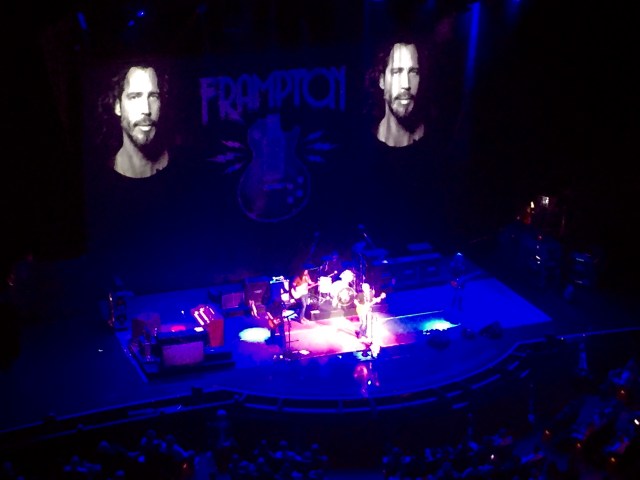
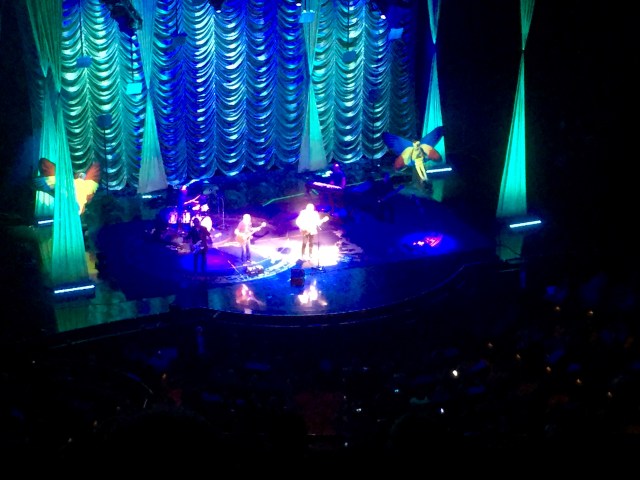
Peter Frampton opened up with an hour and ten-minute long setlist of his greatest hits, many of which were from his most successful album, 1976’s Frampton Comes Alive. While the highlight of his act was a lengthy (about 17 minutes) and rollicking rendition of “Do You Feel Like We Do” – which included his iconic “talkbox” solo and some fun interplay between Frampton and the keyboardist – Frampton also performed a unique version of Soundgarden’s “Black Hole Sun” (again using a talkbox) as a tribute to Chris Cornell. Frampton explained how he and Cornell had performed this song together a few years ago and, in an acknowledgement of Cornell’s exceptional vocal skills, Frampton allowed his guitar to do the singing. It was a touching and classy gesture on his part.
After Frampton’s gig it was time to say hello to the Steve Miller Band. Steve Miller is 74 years old, but he can still jam – and he had a lot of fun doing it. After playing a few hits, including “Abracadabra,” he welcomed Frampton back on stage for a surprising performance of four old blues songs: KC Douglas’ “Mercury Blues,” Otis Rush’s “All Your Love,” Muddy Waters’ “Can’t Be Satisfied,” and Elmore James’ “Stranger Blues.” This homage to these classic blues musicians elicited a positive response from the audience and it was probably my favorite part of the whole show. Miller and Frampton showed off their guitar chops with a number of improvised solos and duels. And we enjoyed watching and listening!
Frampton exited to much applause for a second time as Miller and his band prepared to return to their greatest hits, but it was at this point that I left (I never would have done this on a Friday or Saturday night, I promise). I did check out the setlist and confirmed my suspicions: Miller concluded the night with the hits “Fly Like an Eagle,” “Rock’n Me,” and “Jet Airliner,” among others. Despite my early exit, this proved to be a wonderful experience. Having known just a few of the songs of both performers going in, I did not exactly know what to expect – but I did not leave disappointed. From the humorous (Frampton accidentally burping on the talkbox while performing “Do You Feel the Way We Do”) to the touching (Miller dedicating “Living in the USA” to the members of the United States armed forces), this concert did not disappoint.
First, let’s give proper credit to James Parker, who is a contributing editor to The Atlantic and a white man who hates prog rock: he manages to avoid, in his review of David Weigel’s book The Show That Never Ends: The Rise and Fall of Prog Rock, the adjective “pretentious.” Kudos. Props. Cheers. Scattered applause.
The rest of his article—that is, the entire article—is appalling, bad, and cranky (the abc’s of lousy articles), starting with the title—“The Whitest Music Ever”—and taken up a few notches with the subtitle: “Prog rock was audacious, innovative—and awful.” Perhaps Parker was trying to top Kyle Smith’s embarrassing excursion into prog criticism. If so, he succeeds in some ways, if only because he doesn’t even try to construct an argument, provide much (if any) context or contrast, or observe any basic journalistic rules governing facts, truth, and other boring minutia. It’s so pathetic, it makes a typical blog rant on about any topic sound like “The Gettysburg Address” in comparison.
Here, bullet-pointed in order to keep me from wasting too much time shoveling on this, are five glaring problems with the article:
• The word “was” in the subtitle. Just like Smith, Parker seems completely unaware of the history of prog after the late ’70s and is clueless about the steady re-birth of prog over the past 25 years or so. Everyone knows that prog experienced a serious dive in maintstream popularity; what many folks don’t admit is that prog didn’t die. You could say it went into hibernation, but there’s a real sense in which it actually fragmented or melted into the world of pop music—think Asia, Genesis, Yes (with Rabin), Alan Parson’s Project, and so forth—and then slowly began to reform throughout the Eighties, finally coalescing again in even more diverse and surprising ways in the Nineties. As Alexis Petridis observed in a 2010 article in The Guardianon the resurgence of prog:
The perceived wisdom is that it was utterly swept away by punk, but that doesn’t account for the string of British prog bands signed by major labels in the early 80s – not just Marillion, but IQ, Pendragon and Pallas – nor for the continued chart success of Yes, Rush and Genesis, although whether those bands’ 80s oeuvres could truly be considered prog is a matter of some debate…
I say “diverse” because prog in recent decades has become incredibly popular in places such as Italy, Spain, South America, and parts of Asia. Yes, it is still Euro-centric (ooh, how horrible), but it’s not about “white” as much as it’s about a certain stream of Western culture and artistic expression (ooh, that really is horrible). In sum: anyone who thinks prog died in the Seventies shouldn’t be writing about prog. Period. Continue reading “Who knew The Atlantic could be so shallow?”→
I’m thrilled to learn that the forthcoming Tears for Fears album has a name: THE TIPPING POINT. At the moment, the title is a tentative one, more indicative of the band’s desires and aspirations than of any confirmed realizations.
It’s been, amazingly enough, thirteen years since the band’s last studio album, EVERYBODY LOVES A HAPPY ENDING.
Westword has a really good article and interview here:
I, for one, have no doubt that this will be a worthy successor to EVERYBODY and a brilliant album. I’m pretty convinced that Orzabal is our great living pop musician.
Groovy rumble of eight-string guitar, robotic barking, and this blunt calculated tempo variation – all Meshuggah signatures. Built on a musical skeleton forged from groove and death metal, obZen is akin to a cybernetic monster — mechanistic and precise. By constantly adopting math metal, jazz and progressive attributes, the band has always been pushing music into unimaginable territories. obZen is no exception.
Album is an excellent crossover from 90s to modern Meshuggah, basically more groove metal than djent. Needless to say, Jens Kidman’s vocals blend in as if it’s another discordant machine in this mechanistic orchestra. Odd rhythmic structures, Tomas Haake’s jazz like drumming, and down-tuned proggy leads – all simply inspire still reverence, not moshing.
Both for the artist and the listener, maximum creative bliss is at the margins. Meshuggah has been constantly placing themselves at those very structural margins of numerous demanding genres. Habitually creating novel classifications for what’s considered exceptional. obZen is yet another extraordinary dissonant chapter.
“ELP were often criticized for running an overblown or overproduced show … The Persian carpets are useful because they cover the crisscross of wires over the stage, reduce slippage, absorb some of the noise so you can hear each other play and — this is the prima donna part — they make you feel more comfortable and at home on stage.” (Emphasis mine.)
This quote, from page 160 of Lucky Man, was when I finally understood Greg Lake. In books like Keith Emerson’s memoir Pictures of an Exhibitionist and David Weigel’s The Show That Never Ends, heusually comes off as pretentious, petulant, demanding and unsatisfied, the irrational antagonist to Emerson’s grand designs. After Lake’s passing in late 2016, Sid Smith’s lovely obituary in Prog Magazine humanized him for me, and Lucky Man — while not a tell-all book like Emerson’s — completes the process. Underneath the aura of entitled celebrity Lake projected, the man got the cosmic joke. He realized he was living the dream, he felt he’d worked hard to get there — but also that hard work wasn’t the whole story. So he figured he might as well live the dream in high style.
Lake draws the veil over a lot — we don’t get the play-by-plays of tour debauchery that Emerson overshared, and the conflicts during the recording of Tarkus and the 1977 Works orchestra tour are stated but soft-pedaled. What we do get is an outline of the classic rock and roll career — humble beginnings in Bournemouth, a wannabe pop star stint in London, success with King Crimson, and a ten year roller coaster ride to the top of the world and back down with ELP — all before he turned 35. What do you do for an encore?
Here’s what I take away from Lucky Man: Lake realized lightning like that doesn’t strike twice. He took opportunities when they came up (a brief 1980s solo career, a one-night stand with Asia to help out Carl Palmer, the extended 1990s reunion of ELP and their final 2010 show, his Songs of a Lifetime tour), but he never put much faith in another climb to the pinnacle. Working with and hearing great musicians obviously excited him — his stories of meeting the Shadows’ Hank Martin, seeing Elvis live in Vegas, touring with Ringo Starr and recording with the Who bring out his inner fan. But in Crimson and ELP, Lake knew his standards and his boundaries, and he stuck to his guns, no matter the friction that resulted. It was the music that mattered the most to him, and both Emerson and Palmer acknowledged that in retrospect. With any worldly ambitions fulfilled so early in life, he could simply take pride in his accomplishments and find satisfaction in his family.
Which makes the end of Lucky Man, where Lake reflects on Keith Emerson’s suicide and his own terminal cancer diagnosis, even more poignant. An Epicurean who enjoyed the high life in so many ways, the man’s final words provide a gracious, fitting coda to this surprisingly Stoic memoir:
“Without your love and encouragement the life I have lived would never have been possible. I have been a lucky man.”
Note: Lucky Man has only been published in Great Britain. It’s available worldwide through Book Depository, which is based in the UK, owned by Amazon but operating independently. They offer free worldwide shipping. Here’s the link.
(This post is in loving memory of the late Joel Kimball, master of the Rickenbacker bass and the bagpipes at Alma College from 1980-1984.)