Evolution, Not Revolution: Inside “To The Bone”

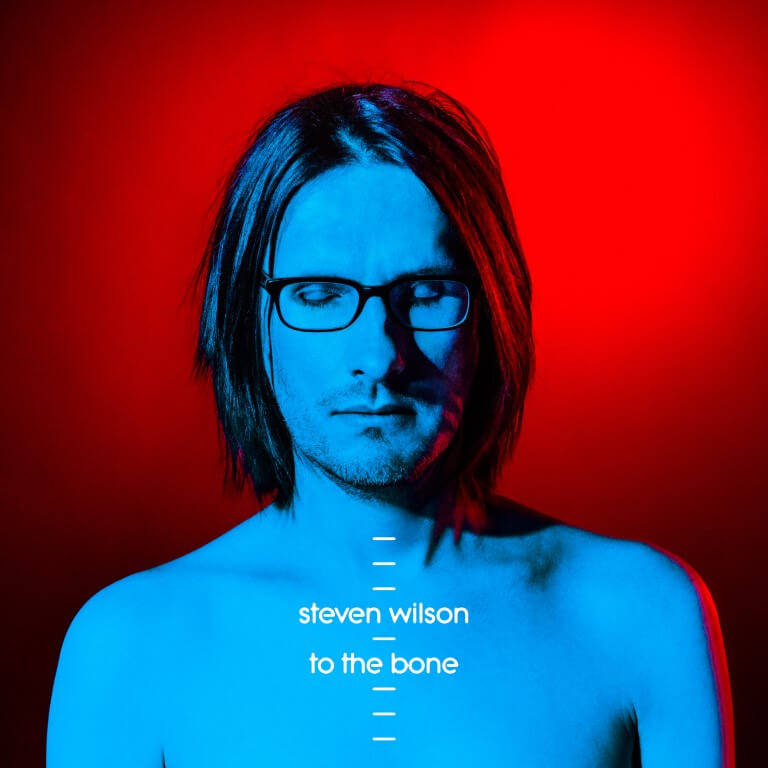
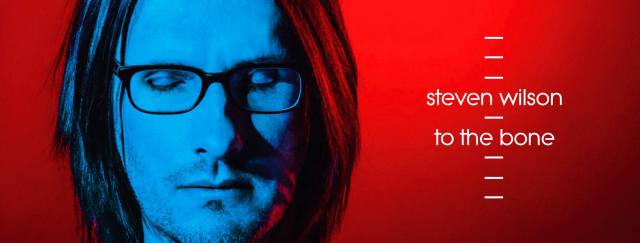
Much has been written already about Steven Wilson’s supposed change of direction, with the great man himself talking up this new release as his “pop album”. Others have likened Wilson’s recent trajectory to that which took Peter Gabriel from the innovative, Fairlight-driven experiments of ‘4’ (or Security, if you prefer) to the more finely-honed commercialism of So.

Yet as I press Play for the umpteenth time, I’m not struck by any real sense of sonic revolution. To these ears, at least, To The Bone sounds like an entirely natural progression: a logical step further down a path he had oriented himself towards with 2015’s Hand. Cannot. Erase. The clues to how this new album sounds are there in HCE’s title track and in ‘Perfect Life’, and they are there in ‘Vermillioncore’ from the 2016 follow-up mini-album . There are pointers from further back in his career, too, should you care to look for them: ‘No Part Of Me’ on Grace For Drowning, ‘Abandoner’ on Insurgentes (echoed here in more up-beat fashion by ‘Song Of I’), even some of his work with Porcupine Tree and No-Man.

If anything, Wilson seems to be not so much moving in a new direction as he is circling back to revisit and revive influences that have been present only intermittently in recent years, bringing them to the forefront and giving them more room to breathe. But even that may be overstating the case.

All of which makes the whines of complaint from certain unenlightened denizens of Internet forums simply mystifying. How well do these people understand Wilson’s artistic credentials? Have they never listened to No-Man, or Blackfield, or his covers of Abba and Prince? Whilst not liking what he’s done here is fine, to suggest he’s ‘sold out’ or is somehow ‘betraying prog roots’ is frankly absurd.

I suppose this album could be described as more pop than prog in the sense that Wilson has taken the opportunity to rein in what some see as the bombast of earlier solo work. This is no Raven, which unashamedly flaunted the virtuosity of its stellar contributors. The closest it comes to excess is in the extended guitar wig-out of the nine-minute epic ‘Detonation’; barring that, this is an altogether more restrained and refined affair.

Which is not to say that To The Bone lacks drama or intensity. There is plenty of that on display – the thrilling sudden crescendo in ‘Pariah’ as Ninet Tayeb’s voice gloriously spans octaves stands out, as do the angry wails and unexpected profanity that open ‘People Who Eat Darkness’. But generally this album dials back the melancholy and strips away some of the concept album earnestness that permeates (permanates?) earlier work.

Be in no doubt that this is recognisably a Steven Wilson album, beautifully crafted and balanced, but with few real surprises. The biggest eyebrow-raiser by far – and the only genuine indulgence in pure straightforward pop to be found in the solid hour of music on offer here – is the pulsing three-and-a-half minute ‘Permanating’, an infectiously joyful earworm quite different from anything appearing on his earlier albums. Whisper it, but Steven could actually be having fun here… Yes, shocking, isn’t it?

If To The Bone isn’t quite as dense and audibly complex as earlier work, there are still many layers to explore. The production is impeccable, of course – we’ve come to expect nothing less – but it is the songcraft that shines through, more than Wilson’s customary nerdish attention to the minutiae of the recording process. This may not be the absolute pinnacle of his achievements, but it is surely his most accessible work to date: a hugely enjoyable album whose subtle charms deserve to be relished rather than dismissed.
Bank Holiday Beats

paperweight

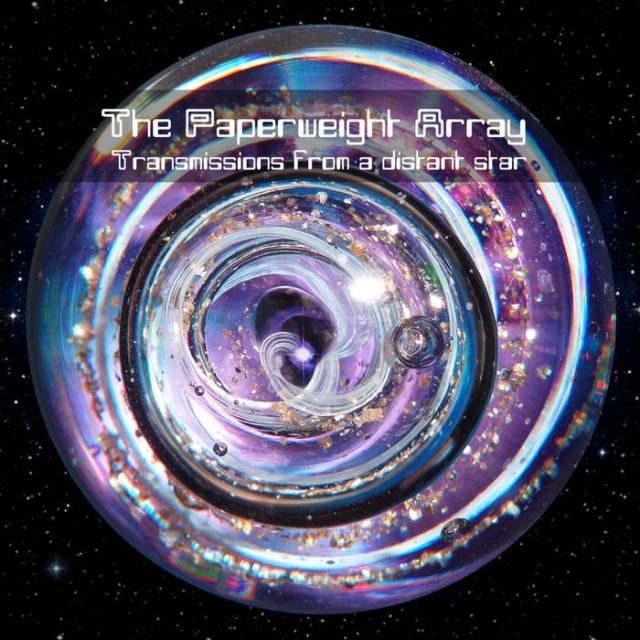
Every genre has a holy trinity, for prog it’s Yes, King Crimson and Pink Floyd, metal is Led Zep, Deep Purple, Black Sabbath, NWOBH is Iron Maiden, Saxon, Def Leppard, neo prog has IQ, Marillion and Pallas and now Rushdenbeat has it’s trinity, you have the Fierce and the Dead, Orange Clocks and now presenting their debut EP, The Paperweight Array, the third leg to the mighty sound that is Rushdenbeat, which is, to my mind the defining sound of 2017.

After my review for Progarchy about Orange Clocks, I inadvertently coined the phrase ‘Rushdenbeat’ and suddenly it took a life of it’s own on, with a Facebook group and a # as well!

Following this Aaron Hemmington got in touch and sent me a copy of the bands debut EP Transmissions from a Distant Star, a three-track introduction to their psychedelic world.

For those who aren’t aware Rushden (as per our good friend Professor Wikipedia) is part of the county of Northamptonshire, and was home to such luminaries as H E Bates, darts player James Richardson, and of course (although Wikipedia needs updating) Matt Stevens.

What is it about small English towns that can be the epicentre of something new and exciting?

I grew up in Rotherham, where the best thing going for it was the road to Sheffield where all the decent record stores were, and yet from 1991 onwards Rotherham had been home to the Classic Rock Society, and a Northern pulse for progressive rock, handy if you happened to be 17, into prog and on a bus route into town!

It seems as Matt Stevens himself has questioned on Facebook, that pre-internet, when you were in a small town, certain things either passed you by, or you found yourself in a particular group of friends where certain locations and musical tastes influenced you.

I remember saving all my money from my summer job for a trip down to London because the record stores there would have far more rare and esoteric albums, and I wasn’t able to just log in using my smart phone, search them and then buy them.

I think the mid 90’s were the golden days of record collecting, where finding music was much more of a hunt, more of a chase, and you appreciated listening to it more because you had put so much more effort into it.

That is the same with bands from smaller towns, Rushden I would imagine, like Rotherham would be bypassed by all the big names, and so if you wanted to hear the music you liked, then the only way to do it would be to form a band and play it yourself.

That is the ethos that runs through Rushdenbeat and so many other small town bands making a big noise.

Transmissions from a Distant Star, starts with the title track, some fantastic spiky guitar work and then a wonderfully spacey chorus that brings to mind a whole mix of sounds, there’s elements of XTC, some Canterbury scene and a whole summer of ’67 vibe carrying through the sound.

A perfect way to introduce yourself and it makes a massive impact as you listen to it.

Going Back, showcases how the band works with each other, the Paperweight Array being an old school power trio, with Aaron on guitar, vocals and keys, Just on bass and keys and Dunc on drums and percussion.

Listening to the mighty sound they make you wouldn’t think there were only three of them!

Again there is a lot of power in the riffs and the interplay between all three of them is one of the EP’s strengths, you can tell these guys know how to play, and more importantly know how to play with each other to bring the best out of them.

Corporal Cameo is a neo gothic old school psychedelic story, with some fantastic lyrics, and some wonderfully trippy keyboard sounds, and another one of those brilliant guitar riffs.

Listening to their sound and performance on this one, and you’d think Corporal Cameo was a lost 60’s psych classic that Stuart Maconie had dug up for his Freak Zone on BBC Radio 6.

This is a fantastic introduction to where the band are coming from, and it has to be said encapsulates in the most positive way the small town atmosphere that has led to the creation of some of the most exciting music in the UK, and indeed probably throughout the world. Whilst it’s wonderful in this digital all connected age to be able to see beyond your horizons at the touch of a button, I wonder how much of an impact that will make on all the small town musicians sat in their bedrooms, using music as an escape?

Transmissions from a Distant Star is available here

https://thepaperweightarray.bandcamp.com/releases


Guest Post: Michał Pawłowski on Labels and Steven Wilson

Steven-Wilson-To-The-Bone-Banner
Love it or hate it, it’s Steven Wilson!

The following came in as a comment on a post regarding the media and fan reaction to the new Steven Wilson album, TO THE BONE.  It’s so good, though, that I don’t want it to get lost in the shuffle of comments.  So, without permission!!!, I’m posting it as its own post. Michał Pawłowski is founder and lead of the astounding art rock band, newspaperflyhunting.  He’s also a really brilliant and good person.

***

A very very good point Brad! Strangely enough (or not) the comments that jump on me on social media are more along the lines of ‘Wilson betrayed prog, if you like the album, there must be something wrong with you! Bring back PT!’

“What the?????” First of all ‘prog Wilson’ for me is: 1) “The Sky Moves Sideways” and “Signify”, 2) More importantly: prog is all his output taken together. ‘Prog Wilson’ is not “Grace for Drowning” and “Raven” as I don’t really count retro as progressive and those people on social media I quoted above somehow see this direction (a fraction of SW’s overall output) as THE Wilson. I do not – it was a phase in his career (probably caused by his remixing King Crimson et al. at that time) that seems to have passed (or abated) as all phases in his career do. This is the very thing that makes him TRULY progessive, now culminated in a self-proclaimed ‘pop’ album released after the retro of “Raven” and the wonderfully eclectic “H.C.E.”.

The position you descibe, ‘you must like his new album or you betray prog!” is equally daft. I don’t listen to genres. I use genre names so that I can communicate ideas (like this post), they have no qualitative value for me. I don’t like “Raven” not because it’s retro (prog) but because when I listen to it I’m bored. It doesn’t resonate. The label doesn’t change anything either way. I heven’t heard “To the Bone” in full yet (I’m waiting for the CD), but I like the tracks I heard a lot and Pariah is one of the best things SW has ever done.

Pop or not, prog or not I like what I hear and this is what ultimately matters. One should not like a poor record any more or less because it is a poor record in a genre they happen to like. And no album should be forced down my throat because it’s prog or Wilson or classic or whatever. People should grow good sets of ears and an anti-social media shield 😉

soundstreamsunday: “Lean on Me” by Bill Withers

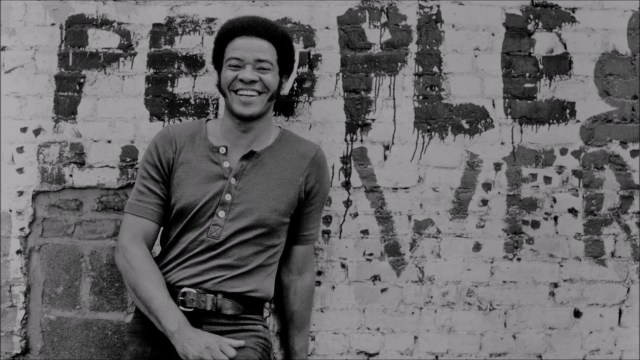
billwithers.jpgWhere Randy Newman and John Prine brought hyper-literate character study to the singer-songwriter genre, often inhabiting in the first person the figures they constructed in song, Bill Withers went for the emotional jugular, unabashed, and if there was any character being studied it was him.  Withers’ warm, supple voice, steeped in rhythm and blues and country, was his listeners’ point of entry, a vehicle in and of itself for delivering the musical goods.  Born in 1938, by the time he released his first record Withers was 33, had spent a decade in the service, and was working a factory job so soul-killing that a guitar and an empty notebook seemed as good a possibility as any for a better life.  His age helped him make records glowing with self-assured performances, and he became an unlikely pop star.  The hits came with that first record and kept coming through the 1970s.  By the time he did the unthinkable and retired in 1985, Withers’ legacy included some of the best American songs ever recorded: “Ain’t No Sunshine,” “Grandma’s Hands,” “Lovely Day,” “Just the Two of Us,” and “Lean on Me.”

“Lean on Me” is kind of like “The Weight” by the Band — it’s almost hard to believe that an earthly person actually wrote a song so integral to the late 20th-century American experience.  There is a grandeur to it, musically, lyrically, and sentimentally, that, even in its ubiquity, still shines.  It hit number one in 1972, but didn’t do all the heavy lifting to raise 1972’s Still Bill to number four, packed as that album is with great songs and arrangements popping with gospel funk dynamics.  In its album context, closing side one of the LP, “Lean on Me” is a beautiful respite from the personal strife suggested in “Lonely Town (Lonely Street),” “Who is He (and What is He to You)?” and “Use Me.”  The song evens a delicate emotional balance, and as an affirmation of simple friendship, it’s the finest kind of pop music.

soundstreamsunday presents one song or live set by an artist each week, and in theory wants to be an infinite linear mix tape where the songs relate and progress as a whole. For the complete playlist, go here: soundstreamsunday archive and playlist, or check related articles by clicking on”soundstreamsunday” in the tags section.

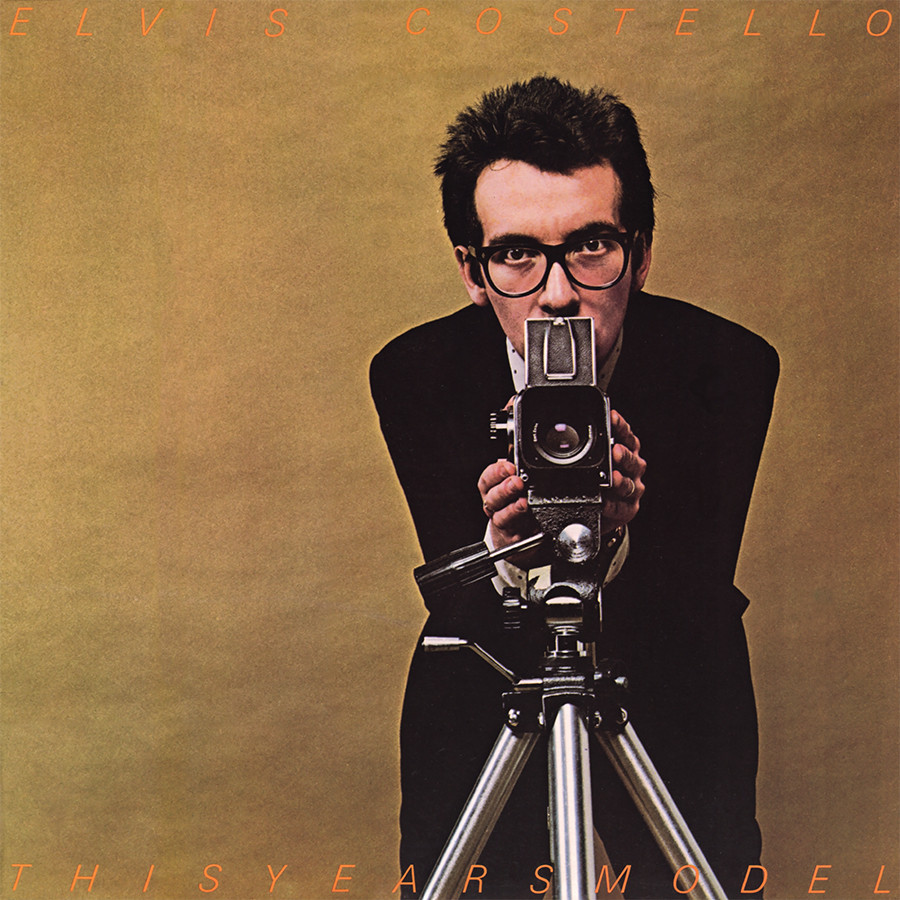
The Albums That Changed My Life: #3, This Year’s Model by Elvis Costello

by Rick Krueger

“The songs are lyrics, not speeches, and they’re tunes, not paintings. Writing about music is like dancing about architecture—it’s a really stupid thing to want to do.” — Elvis Costello, 1983, apparently quoting Martin Mull.

Ouch.

On the other hand, would I have ever even heard of Elvis Costello if it hadn’t been for the rock press?  Let alone listened to This Year’s Model?

Continue reading “The Albums That Changed My Life: #3, This Year’s Model by Elvis Costello”

Leave The Anger Out of It: Let’s Just Enjoy

Steven-Wilson-To-The-Bone-Banner

There’s no doubt, it’s fun to be self-righteous from time to time.  Well, “fun” for the writer, if not for the reader.

I’ve been patiently waiting for my deluxe box set of TO THE BONE to arrive in Michigan.  It finally arrived today, and it’s a thing of beauty and wonder, at least in terms of packaging.  It’s now my fourth such Steven Wilson deluxe box set, and I assume the deluxe edition will always be my default purchase option when it comes to any thing new Wilson releases.

Our own beloved Richard has already reviewed the new album rather nicely and objectively.

I’ve only given the album a listen or two.  It’s pretty neat, but it’s not grabbed me in the way that the previous solo albums have.  Such is life.  I’m going to let my like or dislike of it grow organically.

Still, I must write this.  Not liking the album is an OK position to hold.  I saw several folks today on social media claiming that if you don’t like the new Steven Wilson, you’re betraying the prog tradition.  What the ????????  Let me repeat that: What the ????????

One more time: What the ??????

There are days I simply need to detox regarding social media and, especially, Facebook.  For some reason, the new Steven Wilson has become a lightning rod in the way Donald Trump is a lightning rod.  One either hates or loves him.  No via media.

If I choose not to decide, I still have made a choice.  So once spoketh Neil Peart.  And, I agree wholeheartedly.

The Albums That Changed My Life: #2, Rubber Soul by The Beatles

by Rick Krueger

I’ve already written here about how, in late November 1977, this album grabbed me and has never let go.  Rubber Soul is (to paraphrase my previous comments) a sharp, cogent take on the folk rock fad of the time, mixing in flavors of soul, Indian ragas and Baroque elegance, with words matching the music’s new maturity.  It’s the sound of the Beatles downshifting and heading for new destinations, ready to move beyond shaking their moptops to a big beat and basking in the resulting screams.

There are no duds on either the British or the American versions of this album.  The UK Rubber Soul kicks off with “Drive My Car” — an exuberant Stax pastiche, a knowing mutual flirtation sketched in three-part harmony, topped with that goofy “beep-beep-yeah” tag on the chorus.  The US version, in contrast, starts with “I’ve Just Seen A Face” (from the British Help!) — Paul McCartney breathlessly singin’ and strummin’ a tale of new infatuation, a stream of consciousness laced with unexpected internal rhymes. Neither was at all typical of the Fabs; both sound wonderfully fresh, setting the tone for a different kind of Beatles record.

How many changes can you ring on the classic love song?  Rubber Soul shows how far the genre could stretch: surrealism with sitar (John peppering “Norwegian Wood” with non sequiturs a la Bob Dylan); break-ups with a backbeat (Paul’s “You Won’t See Me,” eventually covered with even more swagger by Anne Murray); suffering with added social comment (John’s “Girl,” featuring a chorus that’s just the title word and a deep, frustrated breath).  Ringo Starr does a country heartbreak turn on “What Goes On”; George Harrison glumly protects his personal space on the Byrds homage “If I Needed Someone.”  And this isn’t even including Paul’s earnest “Michelle,” which, if you were an easy listening artist and had already done “Yesterday,” quickly became the next Beatles tune to cover.

But what’s made Rubber Soul my ultimate touchstone for all things Fab is John’s “In My Life.”  It’s hard to top the reflectiveness and wisdom of these lyrics (in fact, I would argue that Lennon’s most famous songs are far less mature).  Every year they resonate more for me:

There are places I remember
All my life though some have changed
Some forever not for better
Some have gone and some remain
All these places have their moments
With lovers and friends I still can recall
Some are dead and some are living
In my life I’ve loved them all

But of all these friends and lovers
There is no one compares with you
And these memories lose their meaning
When I think of love as something new
Though I know I’ll never lose affection
For people and things that went before
I know I’ll often stop and think about them
In my life I love you more

Set to a lovely mid-tempo lope, with George Martin’s getting his Bach on for a gracious piano interlude, “In My Life” is evidence enough that, after Rubber Soul, both the Beatles and rock music would never be the same.   Listen to the album here:

Other Favorites by the Beatles: Well, the whole catalog, really.  But other favorites among the favorites are (as I’ve mentioned before), A Hard Day’s Night, Revolver, Abbey Road, and whatever Beatles album I’ve listened to last.

Related Favorites:

The Byrds: Essential Byrds (compilation); There Is A Season (box set); Sweetheart of the Rodeo.  Inspired by A Hard Day’s Night, the Byrds added Dylan, folk and country to the mix and made magic.  “Turn Turn Turn” is another song I never tire of hearing.

Cheap Trick: Heaven Tonight; At Budokan.  The Fab Four (pure pop version) of the late 1970s.  With added harder rock and wacky stage moves.

The Chipmunks: The Chipmunks Sing the Beatles. The first album my parents ever bought me.  Apparently I was tired of The Sound of Music.

Marshall Crenshaw: Marshall Crenshaw; Field Day,  The pride of Berkley, Michigan, replete with Beatlemania stage credentials.

The Smithereens: Blown to Smithereens (compilation); Meet the Smithereens (cover version of the complete U.S. album Meet the Beatles).  The Fab Four (pure pop version) of the late 1980s.


Thumpermonkey ‘Electricity’ EP – Q4 2017

Quirky progsters Thumpermonkey have announced their new EP ‘Electricity’, coming to a pair of ears near you some time in the last quarter of 2017 (that’s October, November, December).

It’s now available for pre-order on Bandcamp.

They’re also gigging! Official launch of the EP is October 6th where they will be joined by the delightful The Fierce And The Dead.

More information here.

New Release From Johnny Unicorn

Johnny Unicorn just released The Johnny Unicorn Archive (2004-2016).

You can indulge your Unicorn fetish (or your innocent-and-in-no-way-fetishist curiosity) at the link below.

https://johnnyunicorn.bandcamp.com/album/the-johnny-unicorn-archive-2004-2016

To the Bone by Steven Wilson

by Rick Krueger

“Rain all the truth down, down on me/Rain down so much you make a sea/A sea we can sail then sink like a stone/Down to the truth, down to the bone.”

To the Bone isn’t any sort of “prog turned pop” betrayal.  I don’t think it’s Steven Wilson’s masterwork either; Porcupine Tree’s In Absentia and Deadwing and the stunning Hand. Cannot. Erase. remain my favorites, along with the compelling concert video Get All You Deserve.  I do think that To the Bone is pretty special, though.  An accessible yet ambitious set of songs that compels repeated plays, it ably showcases Wilson’s immersive grounding in rock and pop of all stripes, his ongoing quest to extend that tradition, and his continued lyrical growth.

Continue reading “To the Bone by Steven Wilson”