The Karelian Isthmus

The Karelian Isthmus’ does further that recklessly snowballing early 90s black/death wave, but mostly into relatively less threatening waters. Compared to Norwegian and Swedish contemporaries, these Finns dial down the dissonance and integrate quite a few contrasting elements.

Florida death was undoubtedly a catalyst – surging across the great Atlantic it caused permanent mutations within the European scene. Within the early Amorphis albums, especially ‘Privilege of Evil’ and ‘The Karelian Isthmus’, we can clearly hear this wave brushing up against a firm melancholic chill – that Black Sabbath like doom metal overtones.

This confrontation of an all razing morbid dissonance with a doom like texture was unique – ideal for integrating even more vibrant influences.

Amorphis goes on to deck this framework with folksy tremolo picking, thick downtuned grinds, progressive riffs and brutal blast beats. Deep growls of Celtic influenced lyrics – “Distant gate, gothic grave, through ages our clan still remain” – does add to that vital grimness. It’s Carcass and Grave like abrasiveness, but mellowed with Finnish cultural influences. Essentially, all the elements which eventually lead Amorphis to their epic Tales From the Thousand Lakes, and beyond, are exhibited here – but in subtle and intense measures.

By Jarno Koskinen [CC BY-SA 3.0], via Wikimedia Commons

soundstreamsunday: “Angel from Montgomery” by John Prine

prine-on-couch-fca50a192d324d600e6f76c149c8061fdfeec145-s800-c85Successful Americana music hews a particularly demanding line.  It’s a “post” genre, looking to blues and oldtime musics as a starting point rather than an end, as a shared story for the getting-on-with of the next chapter.  To say the least, there’s a large margin for failure.  The masters of the form, like Randy Newman and Joe Henry and Leyla McCalla, offer an unaffected, plain spoken drive to the heart of an America that is in its essence a crossroads.  In such hands it goes far beyond a romance of sepia-tinged dustbowl-era hardscrabble, the sharecropper’s plow and his wife’s gingham print dress.  It is the common song and in it is America.

John Prine didn’t set out to do it, since as a genre it wasn’t really acknowledged until relatively recently, but he put flesh and bone to Americana songwriting.  Equal parts humor, sadness, and frank talk as broad as its landscape, the pictures in his songs are drawn, I think, from the same kind of middle-of-the-country upbringing that so imprinted itself on Mark Twain.  One of those songs, “Paradise,” from Prine’s 1971 debut, made its way to me as a tune John Denver covered on his 1972 album Rocky Mountain High.  Which was the first album I ever owned, so that when I was six I knew that John Prine, credited on the sleeve, had written one of my favorite songs.  Paradise was “where the air smelled like snakes, and we’d shoot with our pistols, but empty pop bottles was all we would kill.”  How the air smells like snakes I don’t know but I know what he’s getting at somehow — it’s the kind of thing a guy from Missouri or Kentucky who grew up when Prine did would say.

“Angel from Montgomery” is Prine’s loveliest melody, but not necessarily as it’s sung by him.  It’s been covered countless times, but it seems to be at its tuneful best if the singer is a woman, perhaps because its narrator is female.  So Bonnie Raitt’s version is the go-to, and Susan Tedeschi is its current champion (following Raitt’s interpretation).  But in these remarkable and wonderful tributes to Prine and his songwriting, what is absent is the charming gruffness Prine brings to the role play, and as recorded on that first record, an approach that is more gospel soul than sweet country ode.  On an album absolutely loaded with outstanding songs, Prine goes with the piano and organ and the churchy atmospherics because this is a song about a tested faith, where things could’ve turned out differently, and would have, “if dreams were lightning, and thunder was desire.”

soundstreamsunday presents one song or live set by an artist each week, and in theory wants to be an infinite linear mix tape where the songs relate and progress as a whole. For the complete playlist, go here: soundstreamsunday archive and playlist, or check related articles by clicking on”soundstreamsunday” in the tags section.

The Thrill of Fresh CDs

Look what showed up yesterday! Cheers to Lasercd for the prompt delivery.

I originally wasn’t going to purchase Big Big Train’s Stone & Steel Blu-ray because of the supposed issues with it not playing on some American Blu-ray players. Thankfully, it works perfectly on my home player, and I’m glad I was still able to get a copy before they ran out. The packaging is beautiful, much like everything Big Big Train does. I should have bought it a year ago.

My intro to BBT was English Electric: Full Power, so I still haven’t heard the English Electric albums in their original format. I figured I’d add these to my BBT collection before they too are unavailable. I may be young, but I despise the whole streaming thing. When I can afford it, I love to buy actual CDs. Even though I typically use iTunes to listen to music, I love having the physical CD with great packaging and a booklet. If the artists are going to go to such lengths to make a beautiful product, I want to experience it the way it was meant to be experienced.

Thank you to all the wonderful progressive rock bands out there making excellent music and caring enough about your craft to keep going. You make life for the rest of us a little bit easier.

Bruford, Seems Like A Lifetime Ago, 1977-1980

Bill Bruford re-releases the music of his marvelous 1970s “rock group with a jazz sensibility” on October 27.

Titled Seems Like A Lifetime Ago, 1977-1980, the 8-disc box set features Bruford in collaboration with Dave Stewart (Egg, Hatfield & the North, National Health) on keyboards,  Jeff Berlin (a fine American jazz-rock bassist) and Allan Holdsworth (Soft Machine, UK) & ‘The Unknown’ John Clark on guitar.  Mostly instrumental, the music featured occasional vocals by Annette Peacock and Berlin.   The limited edition box will include:

  • DVD 1: Feels Good To Me: 5.1 surround sound and original 1978 mix remastered
  • CD 1: Feels Good to Me: 2017 remix from original masters
  • DVD 2: One of a Kind: 5.1 surround sound and original 1979 mix remastered.
  • CD 2: One of a Kind: 2017 remix from original masters – previously unreleased: outtake of Five G
  • CD 3: Gradually Going Tornado: Remaster
  • CD 4: The Bruford Tapes: Remaster: Bonus track: Manacles
  • CD 5: Live at the Venue: Previously unreleased. Recorded in London 1980.
  • CD 6: The 4th Album Rehearsal Sessions: Previously unreleased: 18 rehearsal sketches of new material.
  • 16-Page 12-inch booklet
  • Sid Smith essay with new interviews with producer, engineer, band members, eyewitnesses and others.
  • Previously unseen archive visual material.
  • Complete band date sheet with contemporary critical reaction.
  • 2 x black and white 10” x 8” band photos.
  • 1 x A3-size colour poster accompanying Live at the Venue
  • 1 x signed numbered certificate of authentication

The only thing not included in the box is the Rock Goes to College video of the band with Peacock on vocals, still available here.   Following the collapse of Bruford the group, Bruford the drummer rejoined Robert Fripp for the 1980s version of King Crimson.

This is exhilarating music from a band that burned, driven all the while by Bill Bruford’s elegant polyrhythms.  30 years on, Bruford was still playing in 19/8 and making it look easy:

Seems Like a Lifetime Ago, 1977-1980 is available to pre-order at Pledge Music and Burning Shed.   More about the box set, including interviews with Bruford, other band members and remixer Jakko Jakszyk, at TeamRock.

What does eternity sound like? 16th-century PROG!

Prog goes back at least to the sixteenth century. Here’s proof:

From “Can Synthesized Music Touch Eternity?“:

The scholastics, typically dated from St. Thomas Aquinas in the late Middle Ages, believed in the unity of all truth. Not that all truth was knowable, but it is potentially integratable. Whatever was true in one discipline had also to be true in every other discipline; one truth, stretching infinitely vertical but also horizontally to infinite applications. Similarly, whatever was true in the course of time in this world is a reflection of a truth that God ordained to be so outside of time.

The model went as follows. There is the forward march of time, which is the world you and I know, experience, report on, and it is defined by struggle, triumph over nature, and a sad ending that comes with mortality, dust to dust.  On the other side of life, there is new life in a complete world that lives outside of time, birth, and death. It is the transcendent realm, a kind of place where we can live at one with God and in full knowledge of all that is true. This was Heaven.

This model implies a certain well-known geography, which is metaphorical but aids in understanding. Time is what you experience in life. Heaven is ascendant and transcendent. It is a realm somewhere up there that is out of time. And of course there is also Purgatory (which exists within time but is only known after death) as well as Hell, the eternal foil to paradise.

The highest goal of life on earth – and this goes for art, liturgy, learning, technology, science, commerce – was to reach outside of time and touch (or see or feel) that heavenly realm. Doing so, it was believed, would inspire us toward better lives because it would fire the imagination toward the goal of all our mental and spiritual actions, to love God and others ever more perfectly. Also, it’s psychologically and spiritually awesome to gain a glimpse of God or even to touch the Presence.

Eternity to Taste and Hear

This sensibility is embodied in Eucharistic theology, in which the faithful are granted the privilege of literally consuming the body of Christ. It is a way for time to touch eternity in the most tangible possible way, literally draw on the transcendent as a source of life and salvation. The art created in light of this sensibility was structured to achieve this very Eucharistic effect, to create visuals and sound that permit us some slight hint of access to the eternal.

What does eternity sound like? This was the task of the 16th-century masters to discover. And this task – which is not so much didactic as experiential – inspired vast creativity all over England and the Continent. There was Victoria in Spain, Tallis in England, Josquin in France, Palestrina in Italy, Di Lasso in the Netherlands, Isaac in Germany, and literally thousands of other musicians who contributed to the task. And their legacies are remarkable. Their music can still today transport your mind to another realm, exactly as the Scholastic model suggests.

The Albums That Changed My Life: #1, Brain Salad Surgery by Emerson Lake and Palmer

by Rick Krueger

I’ve been seriously collecting recorded music (on vinyl, cassette, compact disc, DVD and Blu-Ray) for just over 40 years.  As you do, I’ve organized my collection in various ways.  For about the last 15 years, I’ve separated my favorites, regardless of genre, out into their own storage unit.  It looks like this as of today:
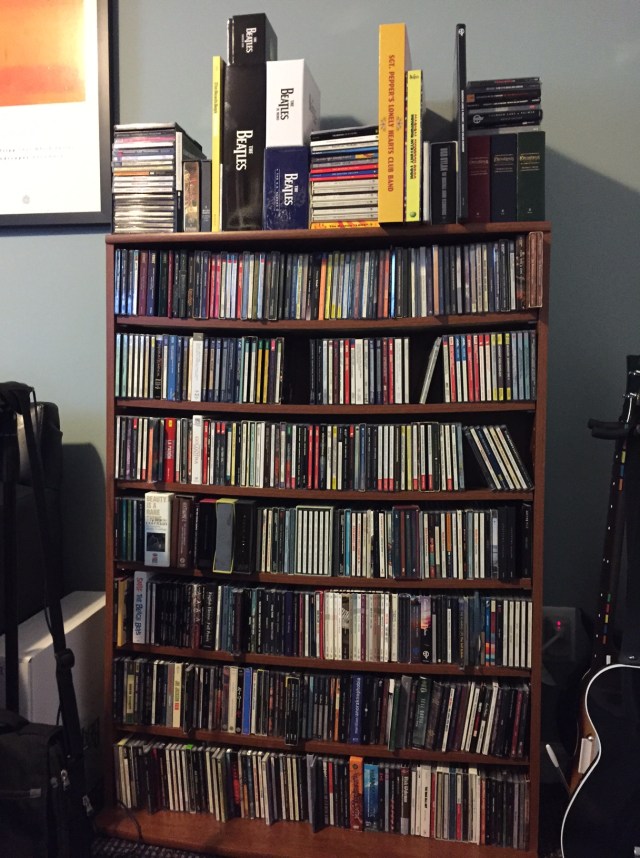
IMG_3523I used to refer to what’s on the top shelf — my very favorite recordings — as “the music I would save if the house caught on fire.”  Never mind that: 1) people matter more than stuff, and; 2) there’s no way that, if the house caught fire, I could actually pull it off.

Ultimately, it occurred to me that a better name for that top shelf’s contents is “the music that changed my life.”  In retrospect, every one of the albums perched there set me off in fresh musical directions and shaped what I listen to most, what I choose to collect, and even my vocation as a professional church organist and volunteer singer.  Sounds like a blog series in the making …

I plan to focus on one album in each post, starting with what I heard earliest and working forward.  I hope to distill what I love about the album, and reflect on how it’s influenced my listening (and my playing) over the years.  I’ll also list my other favorite albums from the same artist, along with selected faves in the same vein from other musicians.

Given how much I’ve written about Emerson Lake & Palmer here, it’s probably no surprise that, while Works Volume 1 was the first ELP album I bought, Brain Salad Surgery was my real gateway drug into progressive rock.   For starters, I’d already heard “Karn Evil 9, First Impression, Part Two,” “Jerusalem” and “Still … You Turn Me On” over the Detroit airwaves.  What was this stuff?  Utterly bizarre titles, a giddily deployed spectrum of musical colors colliding with each other, seemingly at random (harpsichord, accordion and wah-wah guitar in the same ballad?) and more keyboards in five minutes than in some bands’ entire recorded output — after assimilating the bombast of the Works 1 material, I had to check it out!

I was flabbergasted.  Brain Salad Surgery defined eclecticism for me, sweeping up an astonishingly broad range of styles. On the first four tracks, ELP attacked a hymn (“Jerusalem”), a contemporary classical concerto movement interrupted by an extended tympani cadenza (Alberto Ginastera’s “Toccata”), a lyrical ballad with oddball instrumental touches (“Still …”) and a 12-bar boogie with music hall lyrics and an utterly wild piano solo (“Benny the Bouncer”).  And that was just the warm-up for the epic “Karn Evil 9.”  Over the course of three impressions, split into four tracks by the side change, the band garnished their core sound with rare solo electric guitar from Lake, manic piano trio jazz, Emerson’s steel drum synthesizer (quoting sax giant Sonny Rollins’ “St. Thomas,” as I later discovered), gonzo military marches powered by Palmer, and a loose anti-war narrative that castigated modern politics and religion, only to succumb to absolute rule by sentient supercomputer.   Mind.  Blown.

I later came to understand why Brain Salad Surgery was where some longtime ELP fans got off the bandwagon.  Compared to more direct albums like their debut and Pictures at an Exhibition, this one goes over the top without looking back.  The dizzying musical whiplash, the often-obscure lyrics, knockabout and messianic by turns (Lake’s first collaborations with original King Crimson wordsmith Peter Sinfield), the aggressive high-velocity playing — it could all seem like Keith, Greg and Carl had taken the hype too seriously, and were about to vanish up their own backsides in their pursuit of world domination.  Given the arc of their career after the massive Welcome Back My Friends world tour, you could even argue that’s what happened.

But for me, the reckless abandon of Brain Salad Surgery is the secret of its appeal.   ELP’s music here is a mite undisciplined and overstuffed, sure — but it’s also virtuosic, tightly structured, fearless, and exhilarating.  Those qualities, held together in suspension by the trio’s undeniable musical chemistry, have made this album compelling listening for me for the last 40 years.  Not only do I play it again and again, I’ve grabbed almost every CD re-release over the years (including Jakko Jakszyk’s oddly askew 2014 remix). Plus, instead of settling into the status of beloved novelty, Brain Salad Surgery whetted my appetite for more music like it — not just prog, but jazz, jazz-rock, modern classical music — even folk ballads!  And every once in a while, when I need a particularly powerful organ prelude or postlude for Sunday morning, it’s still a blast to pull out all the stops and dive into “Jerusalem.”

Listen to the latest re-release of Brain Salad Surgery here:

More Faves by ELP: Tarkus, Trilogy, and Works Volume 1.  Plus Encores, Legends and Paradox, a Magna Carta tribute album from the 1990s; this features Robert Berry, John Wetton, Glenn Hughes and James Labrie on vocals, with members of Dream Theater, Yes, King Crimson, Magellan and Emerson’s buddy Marc Bonilla laying down backing tracks.

Still There’ll Be More: I have 100+ prog and prog-related discs on my favorites shelf, from proto-proggers like The Nice and Procol Harum to 21st-century giants such as Neal Morse, Steven Wilson and Big Big Train.  Here are the ten albums that are probably the closest to my heart, and that opened the doors widest for future exploration:

Bruford, One of A Kind

Robert Fripp, Exposure (combined with RF’s 1979 in-store Frippertronics concert at Peaches Records in Fraser, Michigan)

Genesis, Foxtrot and Wind & Wuthering

King Crimson, In the Court of the Crimson King and Red

Porcupine Tree, Deadwing

Transatlantic, SMPT:e

UK, UK

Yes, Close to the Edge


Unrequited Love: Nad Sylvan’s The Bride Said No

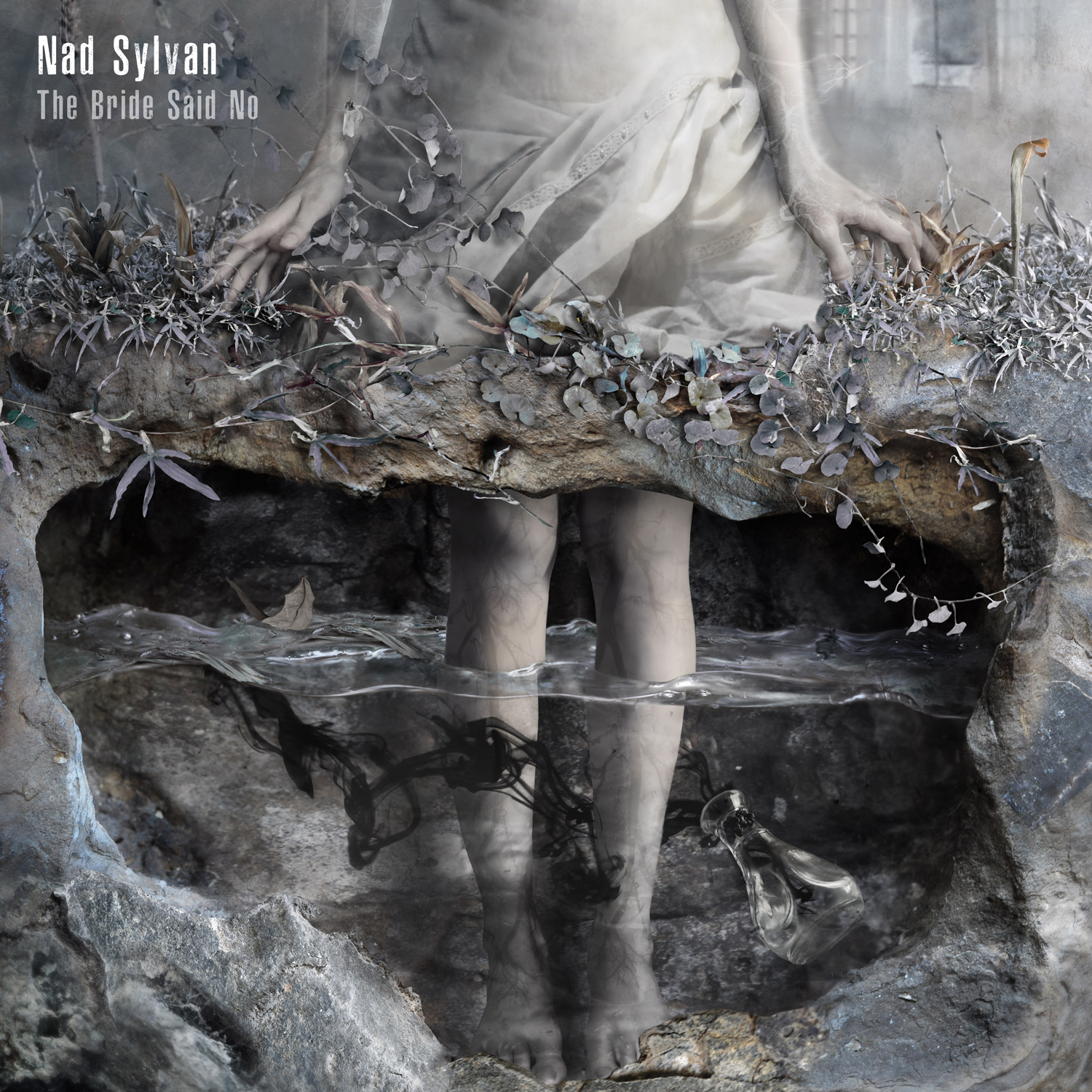
Nad Sylvan, The Bride Said No (Inside Out Music, 2017)

Tracks: Bridesmaids (1:14), The Quartermaster (5:39), When the Music Dies (7:00), The White Crown (6:17), What Have You Done (8:30), Crime of Passion (6:01), A French Kiss in an Italian Cafe (6:00), The Bride Said No (19:25)

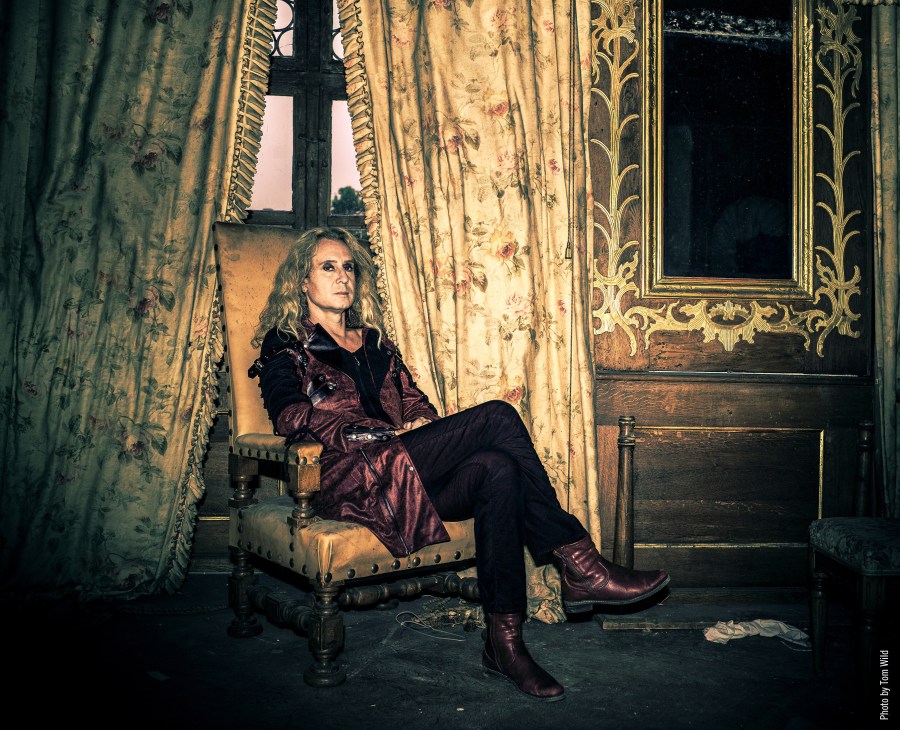
Nad Sylvan’s latest album, The Bride Said No, finds Steve Hackett’s touring vocalist truly coming into his own. While I don’t want to detract from his past solo efforts, I feel that Sylvan’s 2015 album, Courting the Widow, played the Genesis card far too safely, making the album sound a bit stale. This new release, however, finds a pleasant balance between new and old.

I decided to listen to the whole album after seeing the music video for “The Quartermaster” (see below), and the album gradually grew on me with subsequent listens. “The Quartermaster” is one of the best rock songs released this year, and if the wider music industry was concerned with actual music instead of money, ratings, and appeasing idiots, then maybe it would be a huge hit. The quiet, eerie opening soon gives way to a synth driven track that also features a healthy dose of harpsichord. I’m a sucker for the harpsichord.

Continue reading “Unrequited Love: Nad Sylvan’s The Bride Said No”

Rick’s Quick Takes: King Crimson Live in Vienna Chicago!

by Rick Krueger

From today’s online diary by King Crimson impresario David Singleton:

We have long been planning a release of the show in Vienna from November 1st last year – a highlight of the 2016 European tour, where Jeremy [Stacey] first took over the keyboard/drummer role and the band introduced Cirkus, Dawn Song and Indiscipline. Robert [Fripp] and I mixed this show with Chris Porter during the first half of the year, and it sits there, raring to go…

After the recent excitements in North America, it seemed, however, much more exciting and appropriate to release an official bootleg of the new 8-piece in full flight. There was a huge transformation in the band, which began in Chicago in June and came of age with the first show in Mexico in July. After the show at the Chicago Theater on 28th June, Tony Levin described it online as simply “one of our best” and Robert sent me a simple email saying “if we are looking for a KC live; Chicago was exceptional”. It was a wonderful setlist featuring Neurotica, Radical Action III, Cirkus, The Lizard Suite, Fallen Angel, Islands and Indiscipline alongside more established favourites.

So this autumn’s release for the US and Europe will be a two CD set of “Live in Chicago”, accompanied by T-Lev’s wonderful photographs (and one or two of my own, as even he struggles with being on stage and in the audience at the same time).

Three reactions:

  1. YESSSSSSSS!!!!!!!!!  This makes two live Crimson shows I’ve attended that have been officially released.  The first one was in 2008, available as a DGM download here.
  2. For some reason, the 2017 Chicago Theater show got a really good review here.
  3. Is it vain to compile a discography of live albums where you were in the audience?  Oh, it is.  Well, never mind, then …

soundstreamsunday: “Cowboy” by Randy Newman

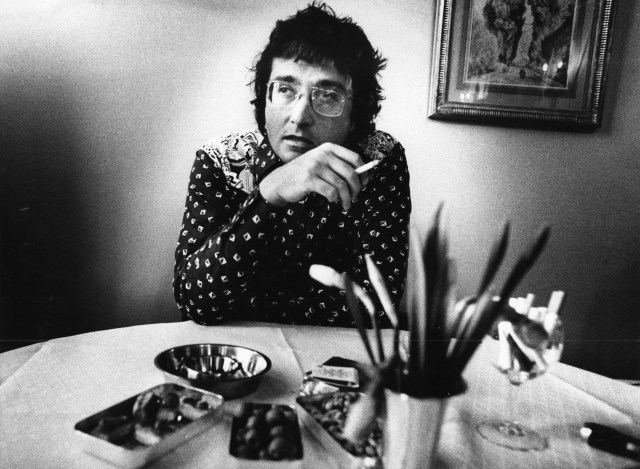
randynewman1.jpegRandy Newman makes diamonds.  You can feel the pressure and time and heat that go into his songs, creating the effect of lush spaciousness in tunes typically clocking in under three minutes.  His eagerness towards satire is a product of his style, immersive first-person character sketches delivering broad social commentary and comedy in lines simply phrased, acidic, and wrought with compassion.  His skill at delivering his own songs is often eclipsed by his influence as a songwriter and his work as a hired gun — “I Think It’s Going to Rain Today” from his 1968 self-titled debut has been covered something like 75 times, and his scores and songs for films are in themselves a major achievement — and yet his unmistakable voice, coupled with arrangements measured to plumb the intellectual and emotional depths, carry such weight that as a performer of his own music he’s peerless.
“Cowboy” is from the ’68 debut, and in its brief stay conjures Dvorak and Copland, the film music of Newman’s uncles Alfred and Lionel and Emil, and a particularly nuanced form of American songwriting that was then just taking shape and was particular to Los Angeles.  It leans heavily on cinematic structure and the idea of music as a vehicle for a script’s emotional power.  Consider the slightness of the lyrics:

Cold gray buildings where a hill should be
Steel and concrete closing in on me
City faces haunt the places
I used to roam
Cowboy, cowboy – can’t run, can’t hide
Too late to fight now – too tired to try
Wind that once blew free
Now scatters dust to the sky
Cowboy, cowboy – can’t run, can’t hide
Too late to fight now – too tired to try

In contrast to much of Newman’s work, “Cowboy” doesn’t contain the erudite wordplay and swing he shared with Mose Allison and it doesn’t betray his deep roots in New Orleans.  It’s instead a kind of beautiful dirge of disillusion, a Brave New World Symphony where the fantasy of open spaces bumps up hard against the darker angels of human nature.

soundstreamsunday presents one song or live set by an artist each week, and in theory wants to be an infinite linear mix tape where the songs relate and progress as a whole. For the complete playlist, go here: soundstreamsunday archive and playlist, or check related articles by clicking on”soundstreamsunday” in the tags section.

DragonForce

Our tribalism always finds an outlet through politics, sports etc – but they manifest in other spheres too. Art is no exception; metal definitely is not. T-shirts, tattoos and band patches – all signal tribal association. Instinctively adopting a genre identity and defending those musical sensibilities is a commonplace. Labels, artists and the other marketing aspects are also an accentuating factor here.

Years ago I used to frequent this bar, they mostly played 70s to 90s metal. So you could find a wide variety of old-school metal-heads being regulars there. Before these metallers split into factions, sub-factions and more nuanced quibbling sub-categories – there were two broad species – those who listen to power-metal and those who despised it. Needless to say, each considered the other as poseurs. The polarizing quality of power metal cannot be more evident. I guess melodramatic compositions and fantasy themes are not everyone’s cup of tea!

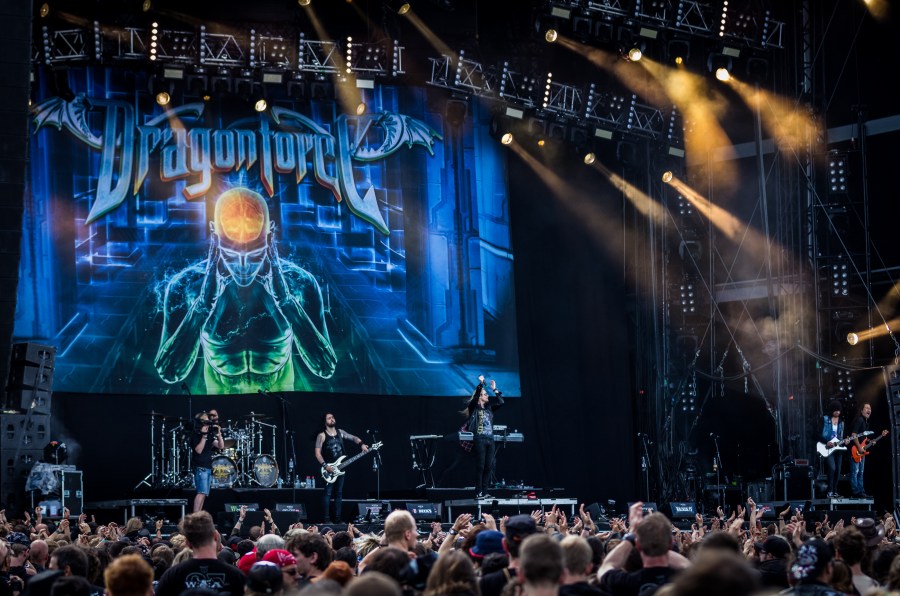
It’s difficult to identify sounds which might appease both these battling tribes, but DragonForce is a definite contender. This late 90s British band is a form of anachronism – classic power metal blueprint, but also extremely technical. In short, its power metal with intricate progressions and sonic intensity of 80s thrash.

Sheer speed of the guitar solos makes passages resemble Super Mario music. Herman Li and Sam Totman’s dual guitar harmony is melodic and maddeningly precise. Aggressive bass lines, blazing leads and blast beats are all quintessential extreme metal elements. While those fantasy themed lyrics, high pitched clean vocals and catchy choruses tailored for large arenas – all indicate Ronnie James Dio/Rob Halford lineage of power metal. DragonForce may not be genre-bending revolutionaries, but they might just manage to placate two seemingly irreconcilable tribes.


By Andreas Lawen, Fotandi (Own work) [CC BY-SA 3.0], via Wikimedia Commons