Syd Barrett named Pink Floyd after two blues musicians, Pink Anderson and Floyd Council. But it took The Anderson Council to finish the job, by composing their own name from what remained. Although PF has faded away in acrimony, The Anderson Council keeps the retro vibe alive and well. They have persistently maintained the genre of psychedelic power pop, so that it won’t simply be hidden away in a time capsule. But on their new record, The Devil, The Tower, The Star, The Moon, the band grows and advances in an interesting way, while still delivering their customary fab harmonies and energetic pop-rock.
Standout tracks include the Peter Horvath collaborations with songstress Dawn Eden Goldstein, “Alone with You” and “Times on the Thames.” Both are classic written-for-radio pop gems that would merit inclusion on Voyager’s record of Earth’s audio archetypes. Previous songs written by this nascent Lennon/McCartney-like team include “Camden Town” on Worlds Collide (2019) and “Girl on the Northern Line” [song by Goldstein, arrangement by Horvath] on Assorted Colours (2016).
Assorted Colours provides a nice overview of the band’s early catalogue. While four of the songs were new, there were also three songs each from their earliest discs: Coloursound (2001), The Fall Parade (2006), and Looking at the Stars (2012). Thus, some of their best songs were conveniently compiled in one place: “Never Stop Being ’67” (2001), “Pinkerton’s Assorted Colors”, (2006) and “We’re Like the Sun” (2012). Even so, everything The Anderson Council does is golden, because they consistently draw inspiration from the sounds of the 60s that they refuse to let die.
Yet this is what makes the new album so interesting. While largely adhering to their trusty playbook, the band branches out in a way that bears witness to their continued growth as a tight musical unit. The first track, “Tarot Toronto,” made me think of Fountains of Wayne, and therefore seemed to signal an increased willingness to draw positive musical influences from any era.
I had a grade school friend with whom I always exchanged vinyl LPs. He insisted, “You know, there’s a song about everything. You just have to keep listening until you find it.” So, I smiled when I heard The Anderson Council’s “Buying a House” on The Devil, The Tower, The Star, The Moon. It may be only 1:51 long, but it is yet more fulfillment of that teenage prophecy.
Standout tracks on the new album include “Messes Up My Mind” and “Jump Right In.” While the former is a clear example of The Anderson Council at their concise best, the latter is a song that extends to be about twice the length of the band’s usual tune. It revels in a sonic richness that makes it a perfect completion to the album.
Also not to be missed is “Sunday Afternoon,” which even includes a magical sing-along chorus at the end and then a killer guitar solo for the outro. All together, the disc works very well as your summer soundtrack for 2023. Whether it’s blasting from your convertible at the beach, or making people dance at the BBQ picnic, The Devil, The Tower, The Star, The Moon offers 39 minutes of happy times. And that’s just groovy, baby.
Peter Horvath — Vocals, Guitars Simon Burke — Bass Guitar, Vocals Michael Potenza — Guitars, Vocals Scott Jones — Drums and Percussion
Tooting our own horn here . . . Progarchy has made Feedspot’s list of “30 Best Progressive Rock Blogs and Websites”, winding up in the #14 spot “ranked by traffic, social media followers & freshness”.
(And yeah, this is from an obscure for-profit aggregator site that’s aimed at getting you to purchase access to their complete lists for marketing purposes. And for all we know, it’s entirely compiled & written by bots. Still.)
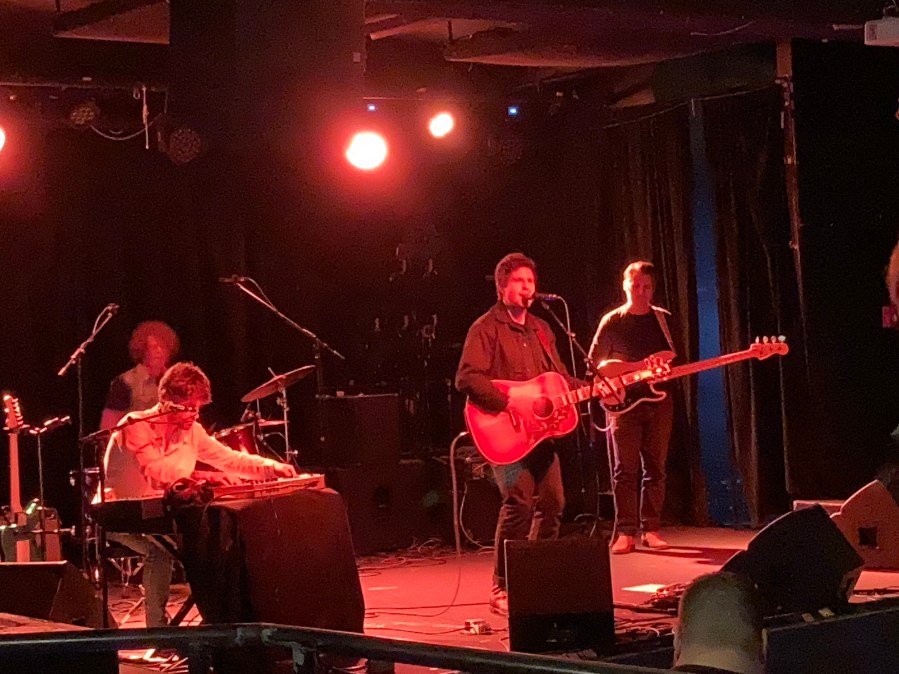
Brian Dunne with Brennan Wedl, The Pyramid Scheme, Grand Rapids Michigan, May 5, 2023.
Back when I started to read the music press in the mid-1970s, one of rock critics’ ongoing themes was “The Search for the New Bob Dylan.” Who could fill the bill? A widely-hyped superstar-in-training like Bruce Springsteen or Dire Straits’ Mark Knopfler? A fresh-faced folkie like John Prine or Steve Forbert? Or maybe Bob Dylan himself, after he: a) went acoustic again; b) went electric again; c) got divorced; or, d) got found by Jesus? The quest for an artist with that kind of potential, a unique alchemy of words, music and voice, got downright obsessive – and ended in disappointment more often than not.
Now that rock itself has taken a back seat to pop and hip-hop in mass culture — and Bob D. himself is 20-plus years into his ultimate, impressively rich comeback — “The Search for the New Dylan” has long been moribund. But if somehow it became a thing again, I’d submit New Jersey-born, Brooklyn-based Brian Dunne for consideration. On the basis of his first visit to Grand Rapids, touring behind his fourth album Loser on the Ropes, this youthful singer-songwriter is the real deal.
With three recruits from Brooklyn group The Tube in his corner, Dunne came out swinging: the catchy rocker “Stand Clear of the Closing Doors”, the stutter-stepping “Rockaway”, the new album’s pensive title track and the mid-tempo singalong “The Optimist” all connected solidly with the small but enthusiastic crowd. Dunne’s vivid, thoughtful lyrics — questing, skeptical, bemused, poignant all at the same time — gained force and traction riding his insistent verbal rhythms, immediate melodies, tightly constructed tunes, and direct, appealing voice. The backing band delivered consistent muscle: on guitar, keys and backing vocals, Tyler Rigdon added high harmonies, extra propulsion and Brothers in Arms/Born in the USA atmospherics; bassist Sam Gehrke locked in with a tight, solid groove; and Chris Krueger laid down an irresistible backbeat that vibrated the walls — or at least the cushions in the booth my wife and I occupied. (Full disclosure: Chris is my nephew!)
His pace firmly established and the crowd fully on his side, Dunne varied his attack, weaving in back-catalog highlights like the Mellencampish “Nothing Matters Anymore” with the band and the hushed “Chasing Down a Ghost” as a duet with opening act Brennan Wedl. Solo songs “New Tattoo” and “Taxi” set up a final full-band run, with the winning singles “Bad Luck” and “It’s A Miracle” bringing the audience to their feet and the rootsy “Fiona” (from Dunne’s collaborative side project Fantastic Cat) giving Rigdon, Gehrke and Krueger the chance to channel a bit of The Band.
Brian Dunne performs “Bad Luck” live in Grand Rapids.
Plowing into their encore without bothering to leave the stage, Dunne and his seconds delivered their final haymakers with the affecting “Sometime After This” and the rollicking “If You Wanna Stay Awhile”. All in all, an enjoyable night that sent me happily to the merch table for CDs and an autograph! If you’re looking for fresh, thoughtful songwriting that has both forthright appeal and subtle intensity, Brian Dunne’s music might just knock you out. (And check out The Tube and Brennan Wedl too!)
(As always, purchase links are included in the artist/title listing, with available online audio/video following.)
This month’s favorites:
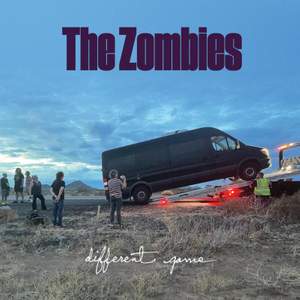
The Zombies, Different Game. Led by singer Colin Blunstone and keyboardist Rod Argent, The Zombies notched three hit singles (“She’s Not There”, “Tell Her No” & “Time of the Season”) and a noted album of psychedelia (the misspelled, wildly adored Odessey and Oracle) back in the 1960s. This fourth effort since their late-90s reunion is my unexpected album of the month: a mesmerizing mix of the Baroque, the blues, witty lyrics worthy of the Great American Songbook and pile-driving soul. Argent’s compact yet ambitious songwriting is at a peak here: check out the elegiac, Bach-meets-John Lee Hooker title track; the doo-wop harmonies of “Rediscover”; the Motown/Steely Dan workouts of “Runaway” and “Merry-Go-Round”; the forlorn, string-laden balladry of “If You Would Be My Love” and “I Want to Fly”. And Blunstone can still stir up a furious storm with his R&B-inflected shouting or calm troubled waters with his cool serenity, frequently in the same tune! Mostly cut live in the studio, this is rock classicism at its finest; don’t miss it.
Nickel Creek, Celebrants. On their first outing in nine years, the progressive bluegrass trio riffs off an unlikely source to stunning effect. Inspired by the Beach Boys’ unfinished modular masterpiece SMiLE, mandolinist Chris Thile, violinist Sara Watkins and guitarist Sean Watkins conceived this album as a suite, with songs and instrumentals interconnected by recurring melodies and lyrics. The result flows brilliantly from beginning to end, impelled by these technically formidable, yet invitingly inventive players; the music moves like a flash from supple chamber textures (“The Meadow”) to propulsive rock (“Where the Long Line Leads”), through pensive slices of life (“To the Airport”) to hard-pickin’ instrumentals (such as the widely separated bookends “Going Out . . . Despite the Weather”). And that’s to say nothing of the trio’s thrilling, acrobatic vocal work, both solo and in harmony. Nickel Creek opens my local outdoor amphitheater this summer — and I, for one, can’t wait to hear what they do with this material!
London Brew. As with so much floating in the atmosphere of early 2020, this concept (a London concert celebrating the 50th anniversary of Miles Davis’ groundbreaking fusion album Bitches Brew) mutated along with COVID-19. Instead, we got something that’s arguably better — a dozen of the hottest young British jazzers jamming for three days in the studio, inspired by Miles’ ideas but whipping up a double-length set of free playing that’s more a seething maelstrom than a reverent tribute. Saxophonists Shabaka Hutchings (Sons of Kemet, The Comet Is Coming) and Nubya Garcia are probably most familiar to American listeners. along with drummer Tom Skinner (Sons of Kemet, Radiohead side project The Smile). Their fluidly molten lines and explosive grooves are core elements of this stormy music — but so are Nick Ramm and Nikolaj Torp Larsen’s floating keyboards, Martin Terefe and Dave Okumu’s boundary-bursting guitars, Raven Bush’s arcing violin, Theon Cross’ pumping tuba, and the volatile rhythm section of Tom Herbert and Dan See. The end result spins unpredictably between open, spacious textures and unstoppable torrents of furious sound, delivering 90 minutes of inspired, spectacularly unclassifiable music that never doubles back on itself.
This month’s jazz:
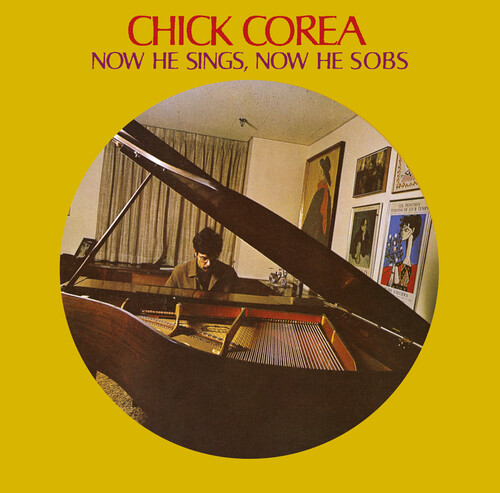
Chick Corea, Now He Sings, Now He Sobs (reissue). thanks to the no-frills Dutch reissue label Music On CD for bringing back this 1968 gem; arguably the first great album in Corea’s mind-boggling discography, it’s a near-perfect blend of lyricism and experimentation, simultaneously honoring and stretching the jazz tradition of the time. Teaming up with bassist Miroslav Vitous (later of Weather Report) and legendary drummer Roy Haynes, Corea weaves seamlessly through classic early compositions (“Matrix”, “Windows”), standards (Thelonious Monk’s “Pannonica”, “My One and Only Love”) and in-the-moment improvisations (the bulk of the original album and the additional session tracks included here). Laced with snatches of iconic Corea moments to come, this is also a solid, satisfying record in its own right.
Rickie Lee Jones, Buried Treasures. You can argue that Jones was always a jazz singer, even on her folk-inflected debut smash and her cinematic follow-up Pirates. (And hey, if Bob Dylan can sing songs made famous by Frank Sinatra . . .) Reunited with her original producer Russ Titelman and fronting a wonderfully sympathetic instrumental quartet plus horns, Jones lovingly leans into ten classic pre-rock songs, her inimitable voice gently caressing the melodies, her sparky gift for bringing the words and sentiments she sings to life blissfully intact. Hushed and intimate, but with rough edges in all the right places, Buried Treasures lives up to its title – and then some.
Rob Mazurek Exploding Star Orchestra, Lightning Dreamers. The latest from Chicago’s headily progressive jazz label International Anthem. Take trumpeter/composer Mazurek’s programmatic depictions of South American landscapes married to the free-form poetry of Damon Locks; add Gerald Cleaver and Mauricio Takara’s sturdy, hip-hop inflected percussion, Jeff Parker’s liquid post-rock guitar, and the atmospheric keys of Craig Taborn and Angelica Sanchez; then run the whole thing through a mixmaster of electronic treatments. Listen to this music with open ears, and you may come out the other side looking at the world around you with new eyes, too. A celebratory, cathartic experience.
This month’s veteran (cosmic?) rockers:
Jethro Tull, RökFlöte. After his revisionist take on the Bible on last year’s The Zealot Gene, Ian Anderson turns his gimlet eye on the old Norse gods, with 12 new songs that portray that mythology’s pantheon and flesh out present day cultural parallels — all in strict poetic meters, no less! The music is welcoming and nimble, often reminding me of classical or Celtic tunes I can’t quite place; Anderson’s flute work is wickedly sharp and his back-up band (including new guitarist Joe Parrish-James) give each tune plenty of oomph. And while Anderson can’t attack this material with the vocal gusto and range he had in Tull’s heyday, he’s learned how to cannily work with his limitations to pull the listener into each vignette. Reminiscent of the Songs from the Wood/Heavy Horses era of Tull, this will charm long-time fans while holding open possibilities for broader appeal.
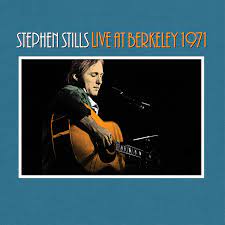
Stephen Stills, Live at Berkeley 1971. The latest fuel for my ongoing Crosby Stills Nash & Young fixation. No wonder they called Stills “Captain Many Hands”; two-thirds of this archival set feature the man holding an audience of 3,500 spellbound with just his voice, guitar, piano and banjo (oh, and David Crosby chipping in harmonies on two songs). Which makes the impact of the full band finale even stronger, as a six-piece group plus the Memphis Horns power Stills’ singing to soulful heights (while sounding remarkably proggy in the 7/4 section of the epic “Cherokee”). With impressive tunes spanning a broad spectrum of roots music and superb musicianship throughout, this set offers a valuable chance to hear a now-underrated American master at his best.
The Who with Orchestra, Live at Wembley. In 2019, I attended the first concert of Roger Daltrey and Pete Townshend’s foray into playing with a full-blown orchestra; recorded six months afterwards, this double set is now released in advance of The Who taking their symphonic show across Britain this summer. The bugs of that opening night had definitely been ironed out by the time they got to London; the orchestral backing on their “greatest hits plus a couple new tunes” set hits hard consistently, reaching majestic heights on the extended suite from Quadrophenia. And if Daltrey and Townshend’s voices are showing their age at long last, their gutsy commitment to the material triumphs over any moments that reveal the wear and tear. Still, the highlight of the show for me remains the duo’s acoustic duet on the evergreen “Won’t Get Fooled Again”, with Townshend supplying an introduction that pokes holes in any lingering political pretensions: “You provide the [expletive deleted] activism; we’ll provide the soundtrack.”
Box Set of the Month:
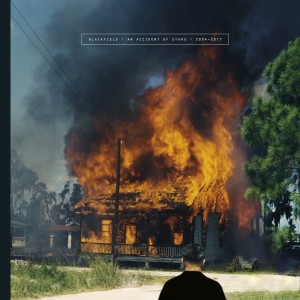
Blackfield, An Accident of Stars – 2004-2017. Customer service alerts first: the “limited one-time pressing” of this CD-based set, collecting Steven Wilson and Aviv Geffen’s first five albums under the Blackfield banner plus live audio and video is already sold out, though Amazon and indie stores like Michigan’s Dearborn Music are listing stray copies as available. Oh, and there’s a technical glitch with the included BluRay, which won’t play in American and Asian players. (Though purchasers can get a free replacement BluRay via press@snappermusic.co.uk) All that aside, Blackfield made a whole bunch of gorgeously doomy art pop in those 13 years, with Wilson and Geffen’s vocals adding salty, sour, spicy notes to their melancholy, string-laden soundscapes. While the debut Blackfield album is still my favorite, albums II and V really aren’t that far behind in quality – and there’s good stuff to be found on the lesser albums as well (all available individually through Burning Shed or Bandcamp). So if this piques your curiosity, go for selected highlights – or the complete set! (But be forewarned — KScope has announced a similarly limited box of early Pineapple Thief albums for June release, and a set of Wilson’s No-Man albums with Tim Bowness is rumored to be in the works. So start saving your shekels now . . .)
Big Big Train has made the pre-order of Ingenious Devices available at Bandcamp.
Head on over there to support them, ideally on the next Bandcamp Friday (May 5), so they can obtain maximum cash flow.
The band explains the upcoming touring situation in their Bandcamp pre-order note:
PLEASE NOTE: Ingenious Devices will be released on 30th June 2023 (NOT on 9th June). We have setup this pre-order earlier than usual to generate some income to help us with touring costs later this year. We will be on tour in August and September but many of our touring costs will fall in the next four months and we will not receive income from the tour until the autumn.
Ingenious Devices consists of new versions of East Coast Racer, Brooklands and Voyager, which prominently feature an elite 17-piece string section recorded at Abbey Road Studios in London.
With the exception of the late David Longdon’s lead vocals, which have been compiled from the original album sessions, East Coast Racer is a completely new studio version recorded by the line-up of the band as it was in 2019. Brooklands features newly recorded drums, bass and bass pedals, while Voyager includes additional guitar and violin. All three songs have been re-mixed for this release and all the audio is presented at 24/96.
Ingenious Devices also includes a previously unreleased orchestral piece called The Book of Ingenious Devices, which links East Coast Racer and Brooklands.
BBT’s Gregory Spawton explains: “I was always happy with the original recorded version of East Coast Racer, but re-arranging the song to feature a full string section gave ECR a further lift. The new recording also features Dave Gregory’s guitar solo on the closing section, a solo which has only previously featured on live performances of the song. I am pleased we now have the definitive studio version on Ingenious Devices. The timing of this release also deliberately ties in with the 85th anniversary of the Mallard’s speed record which inspired the lyric.
“By contrast, I was never entirely satisfied with Brooklands and felt it got a bit overlooked on the Folklore album. The Abbey Road strings have significantly enhanced the song and I’m delighted with the outcome. The additional track, The Book Of Ingenious Devices was composed to act as a segue between East Coast Racer and Brooklands and I like the way the tracks now flow into each other. The changes to Voyager are more subtle but still elevate the song beyond the version on our Grand Tour album.”
Ingenious Devices also features a live performance of Atlantic Cable, recorded at Friars, Aylesbury in September 2022.
New BBT vocalist Alberto Bravin comments: “Atlantic Cable was recorded at our second show of the tour last year. It’s not an easy song to play at all and we were both amazed and relieved that we pulled it off so well. I experienced a real baptism of fire playing that show in front of over 1,000 passionate BBT fans, but their response to the song and the rest of our live set that night was truly motivating.”
Nick D’Virgilio says: “Ingenious Devices is a great way of uniting four of Big Big Train’s epic songs about technology. The album also celebrates the wonderful vocals of our late, great friend David Longdon on East Coast Racer, Brooklands and Voyager and looks forward to the future with Alberto putting in such a great performance on Atlantic Cable.”
The title alone may have made you unsure if this is the kind of music for you or weary of any music put out by these apparent galvanic fruits. However, I’m here to tell you that The Electric Prunes have some incredibly notable psychedelic rock opera songs that will quite literally bring you closer to the Heavens. The Electric Prunes are better known for their consistent and classic ’60s rock ‘n’ roll sound; “I Had Too Much To Dream Last Night” is a great example of this through the band’s garage punk vibe. “Onie” is another certified ’60s classic from the group, and a personal favorite of mine because of its iconic, delicate, and melancholic sound.
However, through the name of The Electric Prunes, composer David Axelrod created some of the most unique, spiritual, and coolest psychedelic rock. The songs I’ll be covering are from an EP and album that were sort of unnecessary, but intentional additions to the discography of The Electric Prunes. Personally, I think they are fascinating creations by Axelrod and worthy of praise by fans of psych. The following songs consist of delectable and extraordinary blends of R&B, rock, psychedelica, Gregorian music, soul, and jazz. So, get ready for a spiritual awakening of sorts.
Mass in F Minor was the EP that started this short, but very interesting phase for the band. It consists of six tracks which are entirely sung in Latin, and is almost thirty minutes of a psychedelic mass. What you’ll notice throughout the songs is the authenticity of Gregorian chant and its use of what is known as “stepwise motion”. Stepwise motion is when each note in a melody moves up or down a single note. It creates this singular and uniform sound, making this EP a respectable piece to this medieval craft. In addition, drummer Michael Weakly stabilizes a jazzy feel by holding all of the other musicians’ instrumental parts together. Interestingly enough, this release was sort of the start of the decline of The Electric Prunes due to their inability to keep up with their producer David Hassinger’s demands for the EP. The band played on every track, however, session musicians were brought in and, in a sense, took over the project. As unfortunate as this was for the band members, some great music was created. David Axelrod is really the genius behind this concept and why it works so well; he wrote and arranged everything. Axelrod’s style shines brightly throughout, creating such a solid set of confident and holistic tracks. Stripping it down to the basics: the blend of the vocals, electric guitar, drums, bass, and organ form this cadence that really itches the part of my brain that adores the aesthetics of the past.
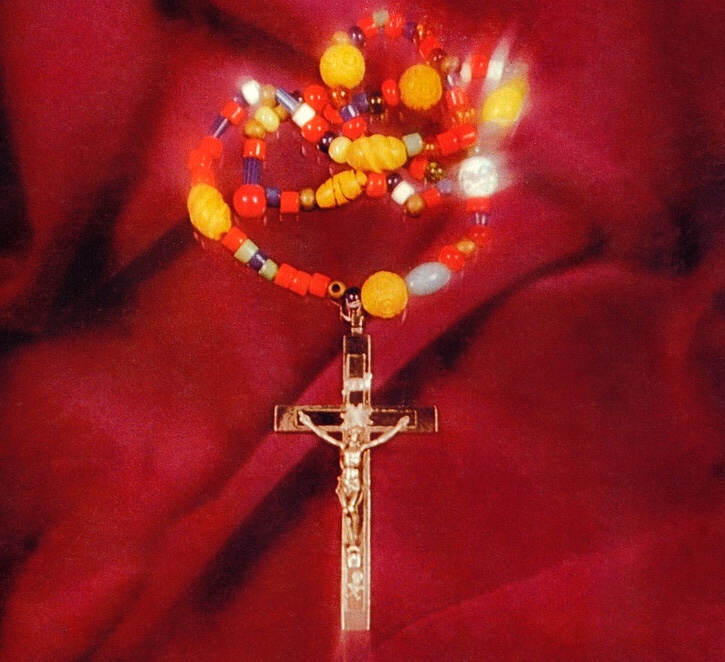
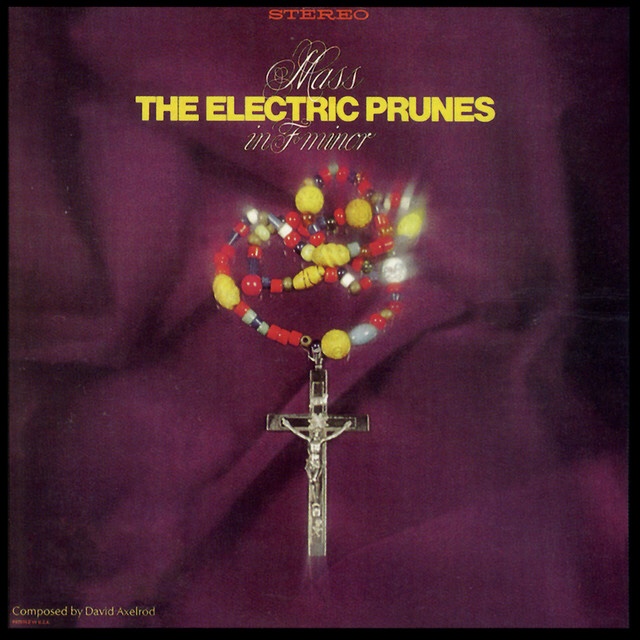
Cover art for Mass in F minor EP
The opening track: “Kyrie Eleison”, better known from cult classic film Easy Rider, is sung boldly and outspokenly by lead singer James Lowe. I think Lowe did a great job on all the tracks—he really added so much mystique and graveness. There’s a point in the song when Lowe’s vocals are isolated. You really get immersed in it all because he truly sounds like a man of religious order, strongly citing a sacred chant for a congregation to hear. This song, along with the others, have a signature ’60s rock sound mixed with music that goes back hundreds of years. Without his superb vocals, I would not be transported to a daydream of ancient ceremony and royal garbs. The simple guitar riff and drum combo as soon as the song starts is cool and collected. The guitar reverb is essential in creating that dreamy, psychedelic effect. Every time I hear it, I can’t help but sway. Another cool thing in the song is this brief guitar rendition of the song “My Favorite Things.” Guitarist Ken Williams plays this demented version of it for just a few seconds towards the end of the song.
The song “Credo” is my favorite example of the use of stepwise motion. The song starts off pretty regular and then it jumps to this faster pace cadence with Lowe’s vocals leading a fleet of instruments. It is only a small portion of the song, but it is so catchy. Lowe is surfing off that singular melody with a massive wave of instruments behind him. The rest of the song is pure instrumental rock ‘n’ roll with subtle trickles of allure.
My personal favorite song is the last one off the EP titled “Agnus Dei”. This song starts and ends with so much confidence. I can see David Axelrod’s vision so clearly with how he arranged and directed this piece. This song does not quiver or feel unsure of itself, but instead almost stands on its own as this beautifully written piece. The fusion of stringed instruments and electric guitar blend with grand conviction. In the beginning, Lowe sings the title of the song and after a momentary pause the stringed instruments emerge gracefully. Then, the rock ‘n’ roll begins: Weakly starts things off with a simple groove, and then, the iconic, echoing reverb of the electric guitar takes over. The unification of the orchestra and rock is one of my favorite parts of the song. I can’t help but get lost in the music. Midway through is this instrumental tunnel the musicians take you into. It’s Williams’ guitar and the strings surfing through this cosmic echo chamber that I never want to leave. Ultimately, this song is solid throughout and unwavering.
Listen to “Agnus Dei”—my favorite song from this EP
Not too long after Mass in F minor, their next album, Release of an Oath was released. It is the same concept as its predecessor with its religious undertones intertwined with rock and jazz fusions. This album is centered more around R&B type tunes and is sung entirely in English. At this point, the original Electric Prunes had disbanded. The musicians playing on this album are an entirely new set of people. It was kind of sad to learn that this was not the original band nor was it done in the true spirit of The Electric Prunes, however, some truly unique music was born in the process; there is no doubt about that. Just like the previous release, Axelrod created a solid set of songs that matched one another very nicely. The instrumentals are an easy listen for all fans of psych, so it’s a no brainer to check this album out. My favorite parts of this album are the drums and keyboard.
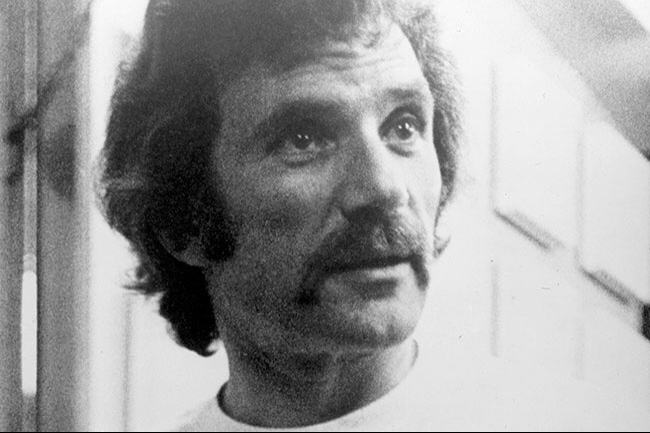
David Axelrod, the man behind Mass in F minor and Release of an Oath
“Holy Are You” is the most recognized song from the album, and rightfully so, because this song is absolutely timeless. The beginning, middle, and end take you on this beautifully mastered journey. Within the first minute of the song we go from a simple keyboard and vocal combo to a groovy R&B beat. The percussion in this track is incredible. It is no wonder this song has been sampled many times by Rap and Hip-Hop artists. (Sidenote, “Respect Mine” by Fat Joe is a perfect example of a great song that sampled “Holy Are You”). Drummers, Earl Palmer, Gary Coleman, and Richard Whetstone elevate the song entirely and are the reason the song is such a contemporary tour de force, in my opinion. With every groove and fill carrying the song to mastery, I can’t help but dance and sing along every time I hear it. A part I really love from the song is when you can hear the percussion, flute, bass, and keyboard create this enchanting jam. The keyboard adds this delightful twinkling sound to the mix that just whisks the listener away into an instrumental dream. And, of course, the insanely awesome guitar solo is another notable feat. Every note and every instrument in this song feels absolutely necessary and purposeful. I can not stress this enough: the unity of the orchestra, R&B, and electric guitar are perfect. This song is simply fantastic and is truly an example of Axelrod’s best.
Listen to this legendary R&B song “Holy Are You” by The Electric Prunes
The other song I want to briefly cover from this album is “Closing Hymn”. As you can tell from the title of the song, it is the final one on the album. I really enjoy the repetition in this track and the tune overall. Again, you have this killer drum beat that holds everything together and makes you want to dance along. Despite being such a simple note change from up to down and vice versa, keyboard Don Randi performs a wistful lulling effect through this. The dreamlike sound of the notes brushes you softly like the touch of flower petals and the subtle reverberation in the ending of the notes are a hollow, ethereal echo. It is such a pretty song and a great close to the album.
I learned a lot while writing this review, but I’m most excited about hearing more of David Axelrod’s works. I listened to a few of his solo works and I have to say I think I found another style of music that deeply resonates with me. He does such a great job blending genres together like I’ve never heard before. Even though this psychedelic gospel wasn’t what the original Electric Prunes had in mind, some truly special melodies were made in the process. David Axelrod did good in the name of The Electric Prunes. Thank you to all the musicians involved in these pieces and thank you for reading.
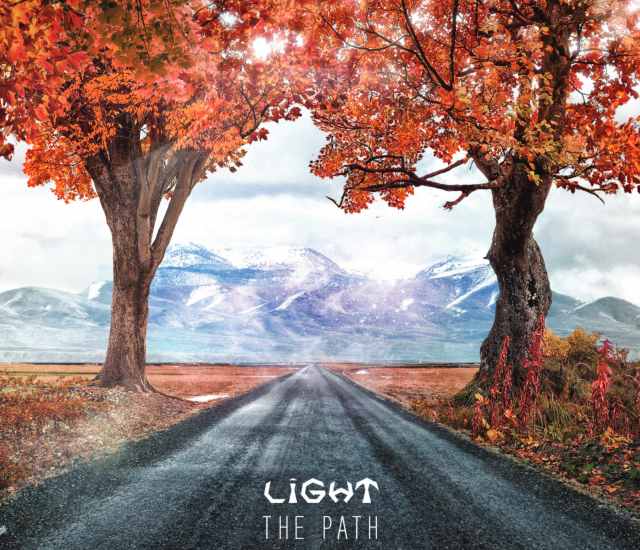
Light, The Path, January 8, 2023 Tracks: Seekness (14:15), Cornua (1:31), The Sweet Release Of Death (5:04), Blue Sun (8:38), Tibia (1:19), Betray (3:13), Newts (6:44), Electris (1:40), The Sublimation Of An Oak (4:13), Tympana (1:23), Dive (13:57), Chalemia (1:47), Mesmerize (3:12), Burning Birds (7:12), Lux Æterna (3:24)
Light is the brainchild of Toulouse, France, based artist Camille De Carvalho, who wrote The Path together with Auriann Rossard, Loup Vaillant, and Paul-Henry Touzac. Carvalho plays an astounding number of instruments on the record, from keyboards to clarinet to duduk and everything in between. She’s joined by a talented cast of other musicians providing additional orchestral work as well as guitar, bass, drums, and vocals. The record is a unique blend of prog, jazz, and classical, leaning most heavily on the symphonic with a distinctly modern flair.
“Blue Sun” perhaps best exemplifies what Light does best. The symphonic overtones dominate, but the overall sound gradually builds adding in the rock elements as it crescendos in a King Crimson-esque wall of controlled chaos. The vocals come in after the midway point, adding further depth to the sound. As the record moves along, the vocals increase, typically in a more classical form than the lead vocals to which rock listeners might be accustomed.
The album’s mix is very lush, with the varied instruments all sounding clear in the mix. There’s a lot of depth to the overall sound as well, making it a very immersive experience.
The Path is an album that will stretch the typical prog fan’s ears, but there is much to enjoy in this album.
Progarchy got the chance to interview Light mastermind Camille about her recent release and what it took to make this project a reality.
You released an album in January 2023 entitled “The Path” How do you feel about the release?
I’m very excited ! I’ve been working on this for 14 years, almost half of my life !
I’ve spent so much time and money in it, it’s really strange to see it done. I thought (and many of my friends too) that I’d never finish it, that I’d always find something to change, to add, to tweak… Having now the CD in my hands feels unreal.
How much of a challenge was it to work on the album?
It was the most challenging thing I’ve ever done. Basically, I wanted to write for orchestra, but I had no orchestra and the ones I contacted were not interested.
I had to learn to play around 100 instruments, spend all my evenings playing, writing, practicing or reading books about how to write for all of these instruments.
And then when I met the first persons interested by the project, I had to manage the recordings, the rehearsals, the writing of the lyrics, the communication…
It was really a lot, but I stayed determined.
Speaking of challenges, did you set any in the early phase of what has become the final result?
Yes, at the very beginning, the challenge was to record an album featuring only keyboards (then I heared White Noise 2, hated it, and decided it was a bad idea)
Also, every piece I wrote was challenging : there’s always a point where I tell myself «and what if, instead, I did this ?» and it’s always some horrible over complicated polyrythm, or scale… the piano part of Dive, for example, is really a nightmare to play. I wrote it in 2010, and managed to play it in 2020, after years of working on my fingers independance and stamina
Tell us about the different instrumental aspects that you explore on these new songs.
I tried to mix a lot of genres, mainly prog rock but also jazz, classical and a little bit of metal. But the main way I see my music is that I want to write impossible things.
Apart from the interludes and maybe one or two simple tracks, all are impossible to play live as is : it can be because of the polyrythms (particularly the infamour 107:100:93 in Blue Sun, or the 48:47 in The Sublimation of an Oak), the time signatures (I used some things like 61/32 and 47/16), or the instruments’ balance : as every instrument is recorded separately, I can make the ocarina sound louder than the trombone for example, and it’d be impossible in real life. I wanted to push the complexity as far as I could, but keep “listenable” by anyone. I don’t want my music to be seen as really harcore to listen to, even though I love some pretty hardcore bands. I want people to groove, in a way, when they listen to it. To think it’s strange, but in a good way.
I love math, and used a lot of formulas or concepts to create a starting point for the tracks. I don’t let math do all the work, because I didn’t like the results obtained by the people who tried it; I only use it as a basis and it’s often a challenge to adapt to what it has created, because it doesn’t follow musical logic. I drew explanation for the things I used and put it in the booklet, you can try to decypher it and find how it has helped me.
Also, all the interludes are inspired from plain chant, a singing technique used by monks in medieval times. I love it ! And it’s so rarely used
What is your opinion about the current progressive rock scene?
I must confess I don’t listen to enough new bands, there are so much things to discover in the past I tend to forget the present ! But still, Auriann, the drummer of the band, is constantly searching for new music and dragging me to shows so I know some, like Ni, PoiL, Piniol, Pryapisme, Sungazer, Haken, Myrath… I think prog rock never died and will never die, and now with modern techniques and instruments, we can push the music further than ever. You have to search for them, but there are really good bands currently.
Let us know about your influences—the artists that in a way shaped and continue to shape the your music.
Haha it’s hard to answer without being boring so I’ll limit myself, but I have to categorize :
In classical music, I’m really fan of the beginning of the 20th Century : Ravel is my first love, Holst the reason why I’m not single anymore, and Lili Boulanger my current obsession.
For rock, my 2 main and most obvious inspirations are Magma and Frank Zappa, and I’m a huge fan of Gentle Giant, King Crimson and all the 70’s era.
For jazz, I’d say that Coltrane, John Zorn, Andy Emler and Louis Amrstong shaped my tastes, even if their influence isn’t as prevalent as Zappa’s or Holst’s in this album
What are your top 5 records of all time?
Hard question, I think it is for everyone. I think the best way to answer it is with rare unknown albums, as they’re better to help understanding the tastes of someone. So yes, I could say Relayer by Yes, or Kid A by Radiohead and sure, they’re great, but it’s also obvious that I love them.
Here is my pick :
1 – “Everywhere At The End of Time”, by The Caretaker : my biggest musical shock, an album about dementia ; you can’t stay the same after you’ve listened to this madness
2 – “Trout Mask Replica”, by Captain Beefheart : well known, but I had to. A lesson in what is freedom, and music. Try again if you hate it : you’ll get it (eventually)
3 – “8”, by Supersilent : it’s an improvisation band, without any planning or concertation. First time I listened to this, I was at work : the walls and roof disappeared and I suddenly was in a cold storm, completely lost. My tasks did not progress after that
4 – “Rire, c’est pas sérieux”, by Raoul Petite : I love Zappa but as english is not my main language, I don’t always understand the lyrics. Well if you love Zappa but speak french primarily, there’s Raoul Petite for you
5 – “Circus”, by Circus : this album taught me something very important : to shut up. Sometimes, there are unexpected silences in their music, and it creates a very peculiar atmosphere that can be mimicked by nothing else. I can’t say I used it in my album, at all, but I will probably in the future
Besides the release of “The Path” are there any other plans for the future?
I’ve already started to write the concept of the next album, which will be greatly inspired by the life of Lili Boulanger (and her music).
Also, a music video will be released with the album, and I have a few covers I still have to finish recording, as they were rewards of the Kickstarter campaign. I’m currently working on Shine On You Crazy Diamond, it’s nearly finished ; it’ll contain no guitar, no bass and no drums… you will see!






 Progarchy