
I really want to go to this. And it’s free. Apart from flights, hotels, meals etc.
Not only are The Tangent and Karmakanic playing but also Glass Hammer and Frost* among others.
Anyone fancy a Progarchy trip to Italy?

I really want to go to this. And it’s free. Apart from flights, hotels, meals etc.
Not only are The Tangent and Karmakanic playing but also Glass Hammer and Frost* among others.
Anyone fancy a Progarchy trip to Italy?
This Morning I had the bright idea of posting some albums that I thought fellow Progarchy readers might never had heard of or had forgotten about. I was going to do it over a period of time. Say once a week. The first one I was going to do was by a group called Man. A Band from Wales in the UK that has been lead on and off for many years by a guy named Deke Leonard. The album is called Be Good To Yourself At Least Once A Day and was released in 1972. It is one of my all time favourite albums. All well and good so far.
With this idea in mind I went out to run a few errands. When we got back home my wife calls out to me that another musician has died. Have I heard of Deke Leonard.
Man were the first band I ever saw live.
R.I.P Deke. Thanks for the music and memories
Play the album. It’s worth a listen.
Next up will be Fruupp.
In memory of a prog legend. May he rest in peace.

Iris interviewed Craig Blundell via Skype on 21 December 2016. They talk about Steven Wilson‘s critical fans, Frost* playing on Progdreams and more!
NOTE: Apologies for the bad video quality, and for things popping up all over the screen. My usual video recording software didn’t work so I had to use another recording program very quickly. Luckily the sound is good!
For part 1, click here: Video Interview Craig Blundell (Steven Wilson, Frost*) Part 2 — Permanent Music Damage
Many who follow prog and rock in general woke to the news that John Wetton, singer and bassist for such bands as King Crimson, UK and Asia, passed away after a long, courageous battle with colon cancer.
I know that many others here will write something far more in-depth and eloquent that I will at this time, but this is a heartbreaker for me.
I cut my teeth on prog in 1981 with Rush’s “Moving Pictures,” and a year later I heard Asia for the first time. I was immediately taken with how these then-mysterious prog musicians – I hadn’t heard Yes, ELP or Crimson at that point – had managed to pack a ton of playing into a tight song format, and to this day, Asia’s debut album remains one of my four all-time favorite albums.
Of course, while Steve Howe, Geoff Downes and Carl Palmer supplied most of the busy playing in Asia, John Wetton anchored the group with his steady bass playing and, of course, that VOICE.
After following Asia for most of the 80’s, a friend and bandmate clued me in to what Wetton had been up to just before Asia, and that was my introduction to UK. Just a stellar group of musicians who created a pair of fine albums and one exceptional live album, and I listen to their work often.
I’ll admit to not absorbing much of what Wetton did prior to UK, which we all know was Family, Uriah Heep, Crimson, Roxy Music, Eno, and others, but for me, Wetton’s presence in UK and Asia alone formed much of the soundtrack to my youth.
Since the 90’s, I’ve kept only a periphery eye on Wetton’s career as he returned to solo work, worked with Downes in Icon, reunited with Asia and UK, and worked with District 97, but I’ve always appreciated him and his career trajectory.
Like so many, I was saddened by the news that Wetton was being treated for cancer and closely followed him online during his battle. I so hoped he would be healthy enough to perform at the 2017 Cruise to the Edge…not because I was attending, but it seemed that it was serving as inspiration for him during his recovery, and I was crushed for him when he recently announced that he couldn’t attend.
I spent much of my day going back through various Asia, UK, Crimson and solo tracks, and will no doubt spend more time in the future simultaneously mourning John, sending thoughts to his family, friends and bandmates, and celebrating the man’s “extraordinary life.”

Finally I have unpacked the trunk of album reviews that backed up last year, and this reviews catches up on two albums Bad Elephant released back in October last year, and which are worth having a listen to, before they unleash the new Tom Slatter album on the unsuspecting world.
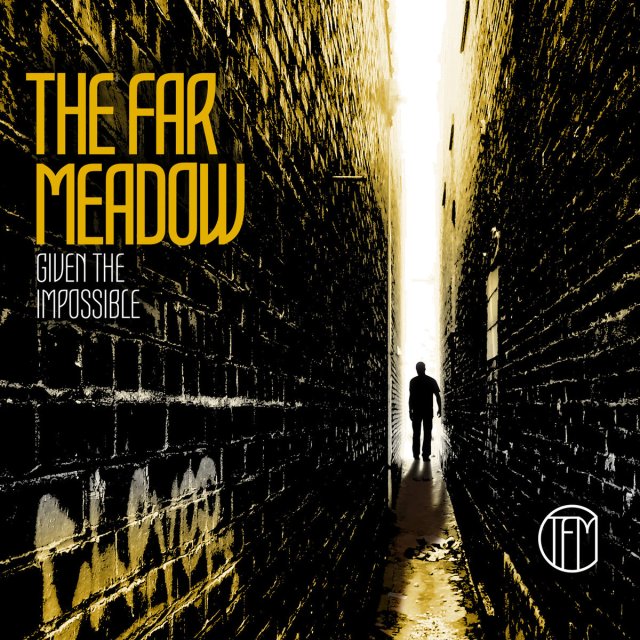
The Far Meadow: Given the Impossible
Formed back in 2014 this is the first album on Bad Elephant from London based 5 piece, The Far Meadow and was released back in October last year.
As is common with so many of the wonderful artists signed to Bad Elephant, the band defy categorisation, veering from traditional progressive sounds to folk and back with a dazzling array of performances and sounds that make this an excellent album to listen to.
The very talented daughter of our own progarchist, Kevin McCormick. Video Killed the Radio Star. Let’s hope Geoff Downes and Trevor Horn approve! A future Buggle, to be sure.
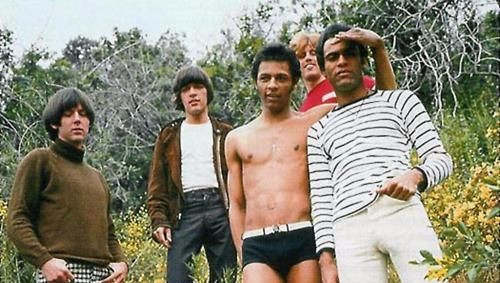 In 1966-1967 Los Angeles was Arthur Lee’s dark kingdom. Brian Wilson owned the sun, Jim Morrison traveled the other side, and while the Byrds and Buffalo Springfield gave L.A. its folkie hippie face, Lee’s band Love fashioned a punk muzak masquerade that fifty years on will still not relent. Their capstone album, 1967’s Forever Changes, is one of the handful of perfect rock records, but it is a difficult masterpiece, borne of a drug-addled band falling apart on the heels of some minor pop success (thanks to their cover of Bacharach/David’s “My Little Red Book” and the blazing protopunk of “7 and 7 Is”), as their chief admirers and competitors the Doors were surpassing them in popularity, commercially beating them at their own game. Forever Changes is not instantly recognizable for what it is, and its easy melodic beauty — indebted to the Tijuana Brass, smooth jazz, and surf instrumentals — supports a poetry far more complex and subtle than anyone else in rock was writing at the time, save perhaps Van Morrison.
Forever Changes really began with Love’s second album, Da Capo (1966), its first side moving away from the Byrds influence so evident on their first LP (as good as that record is), towards a baroque fusion of Spanish-inflected pop jazz mixed with fierce punk aggression. By the time they came to record Forever Changes in the summer of 1967, Lee had refined this sound to create, with the band’s other songwriter, Bryan MacLean, a seamless set of 11 songs beginning with the plaintive loneliness of “Alone Again Or” and concluding with a rumination on the album’s title in “You Set the Scene.” Engineer and co-producer Bruce Botnick (known primarily for his work with the Doors, labelmates to Love on Jac Holzman’s groundbreaking Elektra Records), who had produced the band’s two previous records, has been credited with motivating the band to record, and in creating the album’s sonic consistency. The airy breeziness of the tunes and Lee’s at times affected vocal approach are often in stark contrast, and yet ultimately work with, the grim lyrical themes — mortality, war, racial division (Lee and guitarist Johnny Echols were black men in a very white rock scene), broken love — and the words are so deftly written and rendered that there is no belaboring the evident point: the Summer of Love is bullshit. These kind of dynamics create a layered masterwork that sustains prolonged discovery. Forever Changes is a slow grower, it reveals itself over time, but once its hooks are in it will not let go. I think it’s interesting that while the album tanked in America it hit #24 in Great Britain in 1968, and can be seen as being influential on both British progressive and punk rock. It’s no mistake that it was in London that Lee so successfully revived the album as a live performance in 2003, the recordings from which demonstrate the undiminished power of the songs (and, surprisingly given his rough life, Lee’s chops).
“Maybe the people would be the times or between Clark and Hilldale” opens side two of Forever Changes and contains in its three and a half minutes a snappy, bass-and-brass driven portrait of the transience of life — the comings and the goings and the intersections — surrounding the Whiskey a Go Go and the Sunset Strip, the heart of Love’s Los Angeles. Others feel more confident in their interpretations of the song, but it makes me feel good because wrapped inside this sunny tune, where at one glorious moment in the break Lee doubles the trumpet as if he’s Tony Bennett, there is room for thought and contemplation, and even if I can’t say for certain what was going through Arthur Lee’s mind when he wrote the words, perhaps that’s what makes this and other of Love’s songs feel so universal.
*Above image: Love, the Forever Changes lineup, in 1967. (l-r) Michael Stuart-Ware, Ken Forssi, Arthur Lee, Bryan MacLean, and Johnny Echols.
soundstreamsunday presents one song or live set by an artist each week, and in theory wants to be an infinite linear mix tape where the songs relate and progress as a whole. For the complete playlist, go here: soundstreamsunday archive and playlist, or check related articles by clicking on”soundstreamsunday” in the tags section above.
 Both the November and December issues of Prog magazine had interesting articles dealing with the lack of young people at progressive rock concerts. Polly Glass argued that this happens for a few reasons:
Polly also noted that younger prog fans tend to like heavier bands such as Haken or Opeth. In the December issue, the great Jerry Ewing shared a recent experience he had at a live show. He said that on the same night, at the same venue, two different prog shows were going on at the same time in different rooms. Essentially, he blamed the promoters for booking two prog shows at the same time, with the younger crowd choosing to go to the heavier of the shows. He said the difference in age between the two groups was staggering.
Polly and Jerry make excellent points, and they have shed some light on a topic I believe deserves more attention. As a millennial myself (although I am radically different than probably 99% of people in my generation) I’d like to talk about some of my reasons for not going to as many live shows as I would like.
Continue reading “The Prog Gap – Millennials and the Dilemma of Live Music”

This came this morning from Mascot Records:
| Hello Ayreonauts and other prog-lovers!
As many of you requested, here is the track list for the new Ayreon album The Source! Oh, and prepare for a BIG update this Thursday 🙂 Chronicle 1: The ‘Frame
1. The Day That The World Breaks Down 2. Sea Of Machines 3. Everybody Dies Chronicle 2: The Aligning Of The Ten Chronicle 3: The Transmigration Chronicle 4: The Rebirth |
 Progarchy