

I couldn’t agree more with my fellow Progarchy editor, Brad Birzer, who has recently been singing the praises of Pink Floyd’s Meddle album and Live at Pompeii film. Back in the day, that was one of my most frequently played VHS tapes, as I watched “Echoes” over and over again. When the Floyd gets their groove on in that track, there is simply nothing better. It has set the standard for my aesthetic judgment of great prog in so many ways. No wonder Brad and I are brothers in prog!
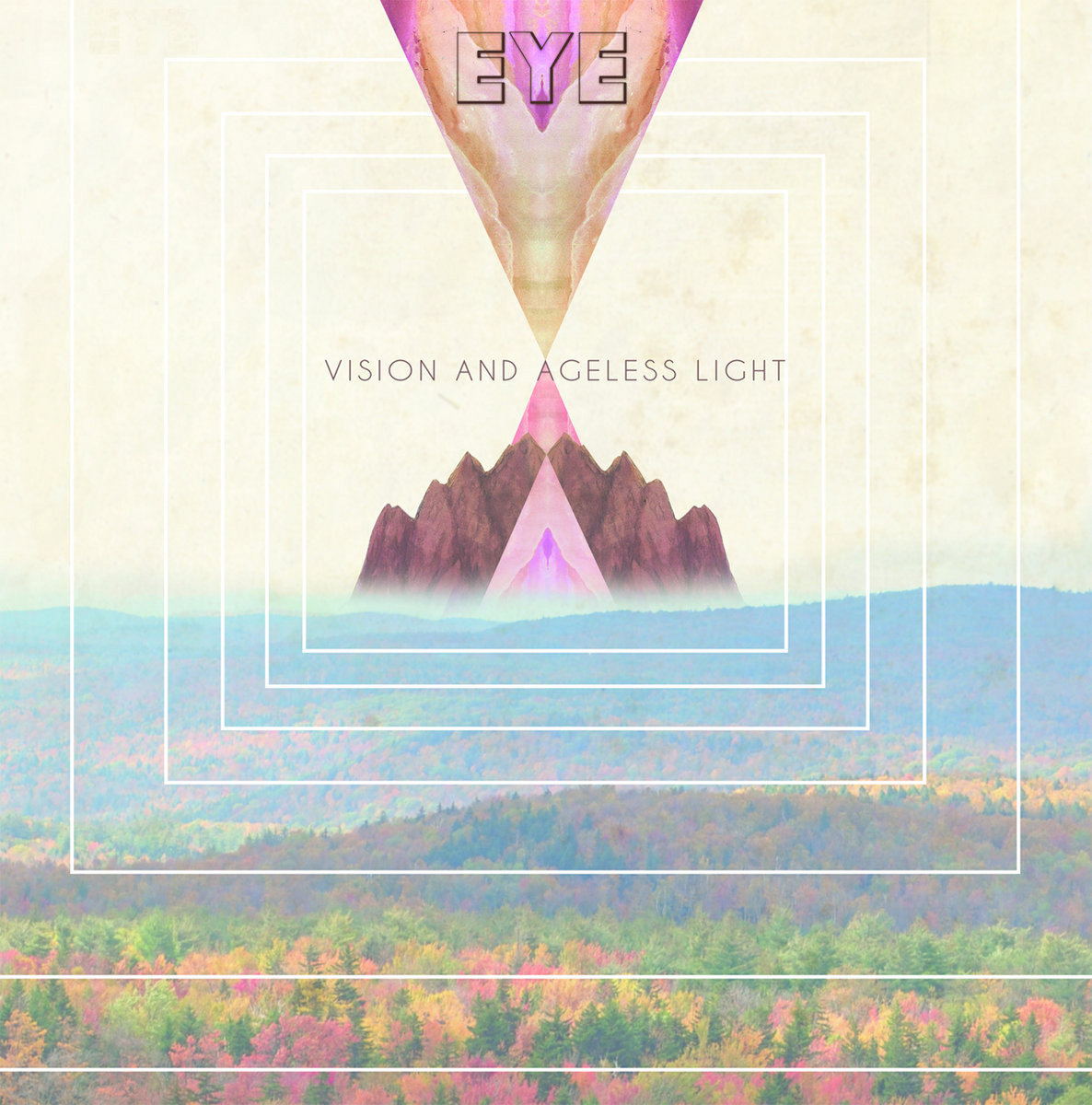
Recently I have belatedly discovered one of the very best albums of 2016: Vision and Ageless Light by Eye. I must say that, if you like Pink Floyd’s “Echoes” and other such perfectly psychedelic prog, you will love this album. Eye has truly assumed the mantle of classic Pink Floyd for the present day. No one is making better music than this when it comes to groovy tunes laced with spacey synth sounds. Only Dave Kerzner’s mastery of vintage keyboard sounds is in the same league.
Listening to Eye, I am reminded of the excitement generated upon first hearing those classic sounds on Dark Side of the Moon. We forget how innovative and thrilling those sounds are, but Live at Pompeii can serve to remind us whenever we overhear the Floyd crafting that epochal album in some of the documentary stretches of the film. They are sounds both familiar (from the subsequent album) and unfamiliar (from the nascent album, in progress but not yet finished) that tantalize us with the brilliant experimental studio genius of the Floyd. Well, just like the Floyd, Eye has the uncanny knack for such innovation.
“Book of the Dead” starts things off with a slowly building instrumental that highlights Eye’s penchant for classic keyboard sounds. It crossfades into the next track, as does every track on the album, a feature which ends up shaping this album into an integrally perfect progtastic whole.
“Kill the Slavemaster” shifts things into higher gear as the band shows off their full psychedelic capabilities when it comes to rocking out. The aural delights in this song will seal the deal, if you have any doubts. If you like it old school, this is the album for you. The instruments all have a classic sound, but the music is truly fresh and exciting. It’s like entering a time machine and experiencing what it was like to hear a classic for the first time.
“Searching” is my favorite track on the album. It’s perfectly placed in third position here. By the time it arrives, the listener has been slowly primed for this maximally groovy experience. Seriously, I have not heard a song in years that more justly deserves the epithet of “groovy” than this one. The singing and the lyrics are so cool, especially with that perfectly timed echo at the end of the phrases. The back half of the track slips into such awesome grooving and then it even surprises with some exciting Jimi Hendrix Experience-like drum fills and guitar breaks to keep things going even longer.
“Dweller of the Twilight Void” is an appropriately mysterious pause between my favorite track and the extended psychedelic rock opera about to follow. Again, Eye shows off incredible instrumental mastery here, creating the sort of Floyd-like mood that no one else is able to generate these days.
“As Sure as the Sun” is the 27-minute track that the entire album culminates in. It will take a few listens for you to wrap your mind around it but, once you do, it becomes seriously addictive and wholly enjoyable, much like that all-time favorite track of mine by the Floyd, i.e., “Echoes.”
The sprawling grand finale track contains many highlights, but perhaps my favorite point arrives at 21:44, when the band suddenly morphs into sounding exactly like classic early Rush, right up until 23:14.
In short, if you have any good taste at all, you will delight in the magnificent aural feast served up by Eye on their latest album. It’s truly the uppermost upper-echelon prog that you should not be missing out on.


 Over the past several months, I’ve been rather taken with Pink Floyd. Don’t get me wrong, I’ve always loved the band. . . as far back as I can remember, their music was a part of my life. Certainly, in my little town in central Kansas, I could hear someone or some station playing Floyd at any time. As I’ve had the chance to mention before, our local planetarium played lots of Laser Floyd. I heard them so much and so often that I started to take them for granted.
 The art gallery of rock and roll is a rich and welcoming place, with room upon room spinning off into many-directioned distances. There is no entrance fee or warnings to stand back, please, from the piece. And, like at all great museums, any pretense to surface comportment is, if meaningful at all, only a nod of respect to the spark of human creativity. A sign that we don’t stand in willful ignorance. Before the work, within the work, we are all children. It is in rock’s nature to empower its listeners to create, and within this space there is no genre, no boogie no punk no progressive no pop no indie no folk, just an honoring of the empty canvas and the unrestrained fire banked down in humanity. It’s what I love about rock, and it’s what made Van Morrison’s Astral Weeks happen.
 singer/guitarist/writer’s solo effort as “acoustic, reflective, mellow, mournful, defiant, sad, and yet shot through with a sense of cautious hope.” The new Big Wreck album Grace Street has its reflective and mellow moments—”Useless” is a mesmerizing, melodic gem and “Motionless” is a soaring mid-tempo number—but the key, overlapping descriptives surely are “defiant” and “hope”. If I were to channel my 17-year-old self (30 years ago!), I would simply say, “This albums kicks ***!” Since reuniting in late 2011, the Canadian rockers have produced three must have albums: Albatross (2012), which includes
  Progarchy