
 In 1977, the same year Jethro Tull recorded “Velvet Green” and brought British folk music that much closer to prog rock with Songs of the Wood, John Kirkpatrick and Martin Carthy — both on tour at the time with Steeleye Span — began talking together about the future of folk rock, whether it had anything left to say and, if so, if they could say it together. To have been a fly on that wall. Of the handful of artists who defined the British folk revival, Carthy, whose unique approach to interpreting traditional material on guitar is matched only by Bert Jansch (R.I.P.) and Richard Thompson, has long been the most articulate regarding the nature of folk song, its strength and elasticity. Accordionist Kirkpatrick graced some of the most influential albums of the genre but has also recorded and toured with Pere Ubu — enough said there about artistry without fear. Six years would pass, though, before they fully addressed their question, with the formation of Brass Monkey, which in addition to Carthy and Kirkpatrick included percussionist Martin Brinsford, trumpeter Howard Evans, and trombonist Roger Williams. The idea was to push folk rock past electricity, into an unexpected setting where the bass and drums — here trombone and hand percussion — wouldn’t overwhelm the other instruments in live performance. The self-titled debut, Brass Monkey, appeared in 1983, and along with traditional songs transformed by progressive arrangements, the band also approached some of the outstanding original songs written by their contemporaries. The success of the album is in its seamlessness: it’s impossible to distinguish, without fairly deep listening, where the traditional ends and the contemporary begins.
And so it is with their treatment of Keith Christmas’s “Fable of the Wings.” As recorded in 1970 by Christmas on his album of the same name, the tune is a hyped-up folk blues, quick-timed, a song about a bizarre drug trip intruding on safe suburban lives, where sonically the music closes in around the listener. Very effective in its way, and in the hands of Brass Monkey the song sheds its claustrophobia, slows to a stately pace, and with Evans’s trumpet work takes on a kind of British regal grandeur. Carthy, an adept at modifying traditional lyrics to fit the presentation, takes small but important liberties with Christmas’s text, creating something at turns horrifying, lovely, and sad. It is a peak among the many high points in Carthy’s long career as a singer, player, and collaborator, and speaks volumes about the freedom such accomplished musicians found in the British folk revival.
*Image above, “Stooking” by Clare Leighton, used for the cover of The Complete Brass Monkey, a compilation of the band’s first two albums and essential to lovers of British folk music.
 The brand new issue of PROG magazine, no. 72, features an insightful interview with the incredibly talented Greg Spawton, co-founder and bassist of Big Big Train. Spawton reveals his favorite songs, novels, and a variety of other things. Well worth reading.

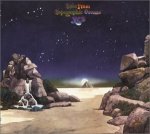 10. Yes: Tales From Topographic Oceans (Blu-ray ed.)
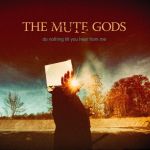 9. The Mute Gods: Do Nothing Till You Hear From Me
 Andy Tillison Diskdrive, MACHTE ES DURCH. Sadly, this release has gotten very little press, and, yet, as with all things Tillison, it’s simply genius and extraordinary. When thinking of Andy and The Tangent, think intensity and integrity. When thinking of Andy Tillison Diskdrive, think of taste and integrity. On his solo albums (at least this one and the previous one), Andy has been exploring–rather expertly–jazz-rock-fusion. He is a natural and a master.
 Ghost Community, CYCLE OF LIFE. I’ve been rather joyously following the trajectory and art of Matt Cohen for almost a decade now. The guy is simply put–the kind of guy you really, really, really want to support. Whatever tragedies the man has experienced, he comes out on top and with an infectious joy. Not only is his bass playing on this album gorgeous, but the album itself is just joy made manifest. Imagine a truly progressive and non-cheesy Styx of 1975, and you have Ghost Community. Probably more rock than prog, it’s what prog needs right now to keep some balance. (Notice, please, that I used some form of “joy” three times in this mini-review!)
 Progarchy