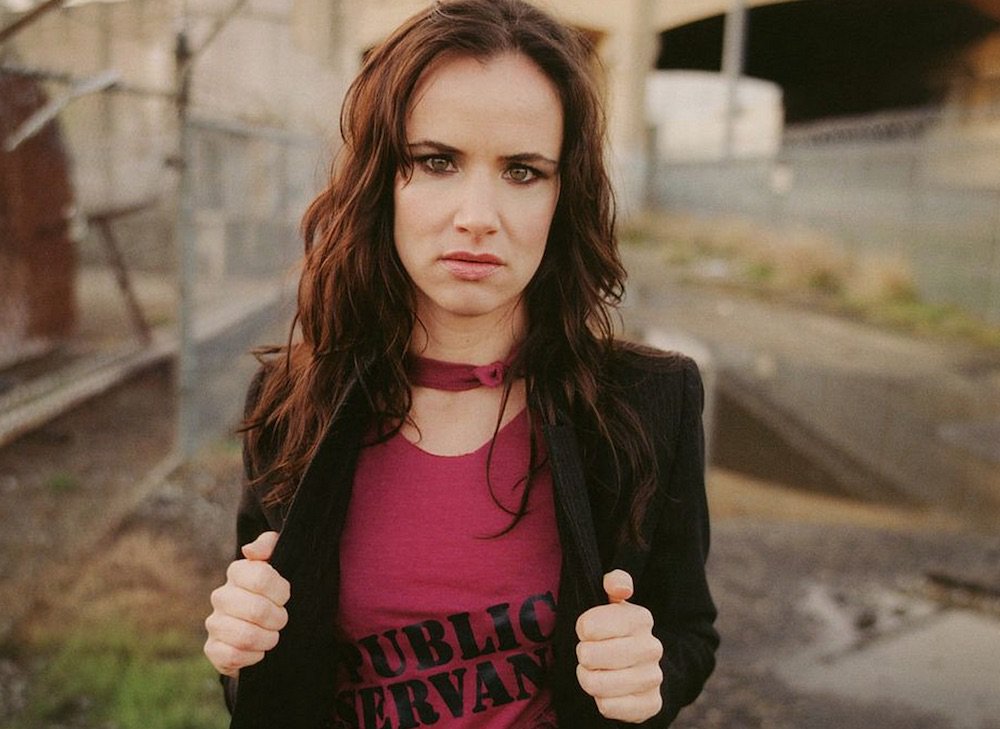
Juliette Lewis’ new EP, Future Deep, is out this weekend and, clocking in at 25 minutes, this deadly dagger of an album is absolutely superb, unleashing a furious blast of both highly satisying and highly innovate rock and roll.
Tracks 1 and 5, “Any Way You Want” and “Hello Hero,” were released as singles earlier this year, in September and April, respectively. Juliette also played these two tracks on her live tour this year. I was fortunate enough to catch the sold out show at the end of her tour (on September 14, 2016) in Vancouver, British Columbia, Canada, where she also played the same two tracks live.
Canadian guitar god Rik Emmett’s new release Res 9 contains two songs with fellow Canuck Alex Lifeson: “Human Race” and “End of the Line.”
James LaBrie also sings with Rik on two tracks: “Sing” and “End of the Line.”
There’s also a bonus track where Rik reunites with his old bandmates from Canada’s classic metal band Triumph, Gil Moore and Mike Levine: “Grand Parade.”
You can watch the album trailer below, as well as both of the songs with Lifeson in their entirety.
Lifeson takes the third guitar solo on “End of the Line.” He also plays a Rickenbacker 12-string on “Human Race.”
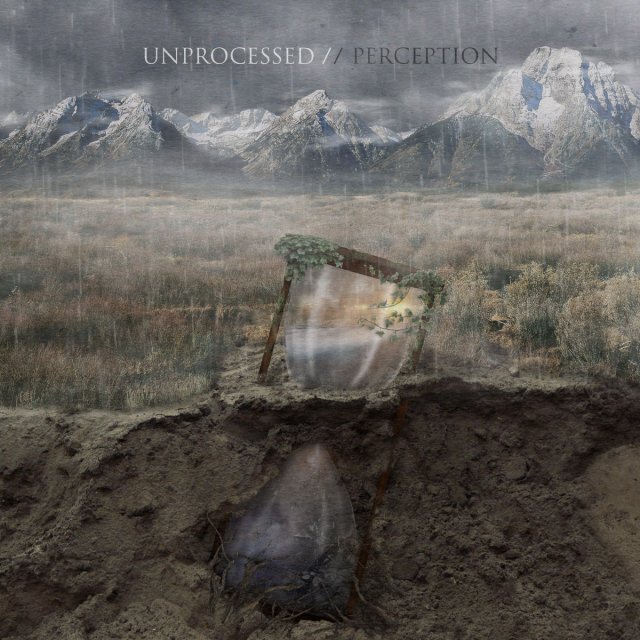
Hailing frrom Wiesbaden in Germany, Unprocessed have been around since 2013, and for the period of these three years they managed to put two releases: 2014’s full-length “In Concretion,” and last month’s brand new EP “Perception.”
Unprocessed play a brand of djent/progressive metal, combining ambient elements and delicately played clean layers over top of the stuttering and stabbing rhythms set in place by Meshuggah and SikTh. The difference is, the music feels much more lush and organic, setting themselves apart from the very mechanical sounding contemporaries who follow a similar formula. While the melodic djent thing isn’t new, Unprocessed manage to sound unique and fresh, thanks to the atmospheres and singing.
The vocal work, courtesy of Manuel Gardner Fernandes, on “Perception” is superb, sounding like a much more competent and versatile Chester Bennington (meaning no disrespect, I absolutely love his singing voice.) The soaring vocal melodies and lyrics will definitely embed themselves in your memory. The screaming vocals are few and far between, but when they show up, they are in the right place and sound, once again, like Chester Bennington and maybe a touch of Chad Gray back when he could still scream worth a damn.
The guitar work is split between the dry and low polyrhythmic chugs and clean and melodic layering for ambiance. These two styles fit together in perfect harmony and create some wonderful soundscapes and textures. The bass is also very present in the mix, which is an added touch of brilliance. You can hear it slapping and popping along throughout the EP, even taking a few moments here and there to be the focal point of the music from time to time. Listen to numbers like “Ocean of Silence” or “Perspective,” and you’ll catch it. Oh, and the drumming is actually real, which is a nice change of pace for a genre that likes to program everything or play it through an electronic kit. This is one of the contributing factors for the EP not sounding like an overproduced machine.
As for the musical composition, “Perception” does feel like one song and flows through tracks logically when things take a change in pace or theme. Unprocessed can definitely demand the attention of the listener without having to drop a solo every few minutes. These guys know what they’re doing.
With the release of “Perception,” Unprocessed have moved out of the periphery (no pun intended) and into focus. If Unprocessed can come up with this great music in the course of a half-an-hour EP, we are in for a treat when their next full-length is out.
Get a copy of “Perception” from Bandcamp here. Unprocessed are on Facebook, give them a like.
My favorite person in U.S. government–the only man who understands the Constitution and the American Founding. We already knew he loved Rush, but now we find out he also loves Pink Floyd. Thank you to Rob Olson for sending this to me. God bless, prog. God bless, Rand Paul!
Resurrection is the second studio album of Geoff Tate’s project named Operation: Mindcrime, and is also part two of a trilogy story. The music is very catchy rock and metal, alternated with more progressive moments and twists, and contains the recognizable voice of mister Tate. The production isn’t too good sadly. Most of time it […]
Bob Dylan is the rare artist who, at 75, retains the power, energy, and restlessness that distinguished his early work. As both a recording and performing artist, his electricity is unabated, and he continues to make vibrant contributions to the post-folk culture he virtually created. That he has achieved this is astounding; for those of us who have followed his career and know something of its roots and evolution, it is not surprising. He constantly recasts his song catalogue, the depth of which by 1965 (let alone 2016) was unrivaled in the rock/folk/singer-songwriter genre he invented, to match his current sound, and commands a fluidity of vision in his writing that sees beyond the trees and perhaps the forest as well. Witness “High Water,” a tribute to Charley Patton (whose “High Water Everywhere” is a stone cold delta blues barking, howling, classic), from 2001’s Love and Theft. This is a blues about love and the water that rises, that has picked up some oldtime, some drone, shaking and breaking and name-checking muscle cars and evolutionary philosophers. The thing is that it works because when Dylan sings “the cuckoo is a pretty bird” that’s a kind of referenced code that he’s hollering back to Patton. He’s writing a blank check to freely associate (find and listen to a version of “The Cuckoo” and you’ll get what I mean), to make the rhyme work and throw meaning to the wind and to the listener. Harder than it sounds because it’s about the sound, what music is, what makes its power inexplicable. To make that warble on the 5th day of July, and trace your absurd and beautiful melody: it takes courage and a resolution that comes at a price only Dylan, and maybe Patton, knows.
Liner notes are a genre refinement that is now outrageously neglected in the age of digital downloads. Despite the planet-ranging power of Google’s trivia collection, there is still nothing like a really good set of well-written liner notes that are specially commissioned for an album release and then packaged with it.
Here’s a perfect example of what you miss out on if you can only buy the digital download.
Rock historian Dawn Eden supplied these first-class liner notes to “The First Sessions,” a CD reissue of Warren Zevon’s early work with Lyme & Cybelle that also contains some solo studio recordings and unreleased demos:
Warren Zevon The First Sessions
In this reissue-saturated age, it is rare indeed to discover an album that can truly be called a lost chapter in rock history. Yet that is what this collection is: the first career phase—most of it never-before heard—of Warren Zevon, one of the most original voices to emerge from the golden era of West Coast singer-songwriters. Moreover, many of these songs display a vulnerable, even delicate side of Zevon that is a revelation for those who only know his trademark cynicism.
We take you back to early 1965, when the teenage Warren Zevon, after being shunted from one school to another as his family moved around California, finally found himself finishing his senior year at Fairfax High School in Los Angeles. It was on the lawn at that school one day, during a break, that, as he sat with his guitar, he was spotted by fellow senior Violet Santangelo.
Like Zevon, Santangelo was also a recent Los Angeles transplant, having moved from Chicago. And, like him, she felt out of place among the school’s very L.A. student body. (Instead of cigarette breaks, students took “nutrition periods,” where they snacked on apples.) The shy girl noticed the boy with the guitar, and somehow picked up the courage to push her long red ringlets out of her eyes and approach him.
The guitar was a new instrument for Zevon; he’d only just left off playing classical piano. But he wasn’t about to let on to his new friend, as she discovered when he took her for a ride in his expensive yellow Stingray (his father was fairly well off). The former Violet Santangelo—today known as Laura Kenyon—recalls, “I remember I turned the radio on and it was romantic classical music. And he said, ‘Turn that off! I can’t stand that shit!’”
The two outsiders developed a close platonic friendship. Zevon would often visit Santangelo’s home, where they would go into her room and sing Beatles songs. They quickly discovered that they had a natural vocal chemistry. “We had a sound,” Kenyon says.
The previously-unreleased demo of the duo’s version of The Beatles’ “I’ve Just Seen a Face,” which Kenyon says was recorded in her bedroom on a borrowed two-track deck, captures the purity and innocence of their vocal blend. Kenyon says that their eventual producer, Bones Howe, described their voices as sounding like “clean white snow that had just fallen.”
Soon, the duo was singing for Santangelo’s parents and friends, including the former child actor Michael Burns (“Wagon Train”), whose mother worked for Lee Lasseff, one of the owners of the White Whale label. One thing led to another and the duo were offered a contract with the Los Angeles indie, whose most successful act was The Turtles.
At about the same time as White Whale expressed interest in Zevon and Santangelo, the pair wrote the song that would be their lone chartmaker—“Follow Me”—and came up with a group name: Lyme & Cybelle. (Zevon originally envisioned the name to be written e.e. cummings-style, with no capitals, a convention which White Whale observed in its label copy, but which has not lasted into this era of spellcheck.)
Zevon thought of the Lyme half of the name; Bones Howe recalls that it was inspired by a green-hued cologne of the time called Old Lyme. Cybelle was taken from one of Santangelo’s favorite films, the French movie Sundays with Cybele.
Lyme & Cybelle’s greatest song began one day in late 1965 in Santangelo’s bedroom, with Santangelo sitting on her antique brass bed, which was covered with red and green velvet, and Zevon sitting with his guitar on a chaise lounge.
“I remember Warren had this riff,” Kenyon says. “He called it ‘raga-rock,’ but it was before raga-rock [existed].
“He said, ‘Go ahead,’ with a little bit of an edge. ‘Go ahead. Sing something.’
“I started singing, ‘Stars are hidden ‘neath my lids…’ and so we dove into it.”
The White Whale owners assigned Bones Howe to produce the group. Howe—who would later earn acclaim for his work with The Association, The Fifth Dimension, Tom Waits, and others—was then a proven hitmaker for the label, having helmed The Turtles’ smashes.
Although Kenyon recalls that Zevon played guitar with her when they practiced, Howe recalls Zevon first played him “Follow Me” on the piano. Perhaps Zevon felt more confident playing before a member of the industry on the instrument he knew best. At any rate, Howe was taken with the song from its initial riff. (“I was always an intro freak,” he admits.)
Howe introduced Zevon to arranger Bob Thompson, and Zevon described to Thompson the sound he wanted for “Follow Me.” Thompson then wrote the musical charts for the players, all L.A. session greats.
Bones Howe came up with the unusual idea of adding a jawbone, a little-used percussion instrument that heightened the song’s exotic feel. “I remember Warren being so excited [about that],” says Kenyon. “He thought that was the hippest thing.”
During the same four-week period of sessions that resulted in “Follow Me,” Lyme & Cybelle also recorded the Jimmy Reed classic “Peeping and Hiding” (chosen by Zevon, who was heavily into the blues), and two gorgeous ballads that they wrote together, “Like the Seasons” (later covered by The Turtles as the B-side of “Happy Together”) and “I’ll Go On,” which would be the B-side of their next two singles.
The resulting recording was unusual, compelling, and yet undeniably commercial. Howe notes that “Follow Me” is “almost a psychedelic record.” Certainly, in March 1966, it was ahead of its time. It is telling that the record did best in California, where it hit the Top 10 in many markets and was almost certainly an influence on the San Francisco scene (which had yet to break out into the mainstream).
Although “Follow Me” showed that Lyme & Cybelle had commercial promise, White Whale did not immediately grant the duo license to begin recording an album. Instead, the label took the same pragmatic approach that it had used with The Turtles, insisting that the duo first record a second single. That single was “If You Gotta Go, Go Now,” a Bob Dylan song that had been a hit the previous year in England for Manfred Mann.
Laura Kenyon has an interesting story about “If You Gotta Go, Go Now,” which is similar to the experiences of other artists of the era who released songs that were thought to have sexual, drug-related, or politically unacceptable content.
“As soon as they released [the single], it was really moving,” she says. Then, she alleges, the powerful radio industry figure Bill Gavin put out the word that “If You Gotta Go, Go Now” was unacceptable due to sexual content. “Our song got taken off right away. And that just scotched that, totally.”
With the failure of “If You Gotta Go, Go Now,” the close working relationship of Zevon and Santangelo began to falter. Zevon, who was signed to White Whale’s publishing company, began to focus on developing his individual songwriting and performing talents, recording demos with Bones Howe. One of those demos was the buoyant “You Used to Ride So High,” on which Zevon and Howe (an experienced session percussionist who had played drums on The Grass Roots’ early recordings) played all the instruments. Zevon hoped that the recording would be released, and even came up with a name for the “group”: The Motorcycle Abeline.
Another song Howe produced for Zevon, “Outside Chance,” became a single for The Turtles, who closely copied the demo’s arrangement. Howe recalls, “The thing that everybody liked about ‘It Ain’t Me Babe’ was the kind of stomping thing that happened in the chorus, the pounding quarter-notes, and I think that was one of the things that everybody liked about ‘Outside Chance,’ that it had that feel all the way through it.”
Other Zevon demos from the period, such as “If I Had You,” had a plaintive, even crystalline feel. If Zevon’s later work was Lennonesque, these ballads were much more like McCartney. “He did have that quiet, sweet quality when he sang softly,” Howe says. “It just all began to change, I think, when he finally found his voice. I think the Wanted Dead or Alive record that he made for Imperial [Zevon’s first album, released in 1969] was the beginning of his really wanting to rip into songs. That sweet quality in his voice kind of went away after the Lyme & Cybelle period.”
Despite Zevon’s undeniable promise as a songwriter, his relationship with White Whale faltered, as his uncompromising attitude clashed with the label owners’ single-minded pursuit of hit records. It was, after all, only 1966; The Turtles were still doing Sloan-Barri compositions, and White Whale, like most labels, had yet to discern that there was money to be made from the underground. The failure of “If You Gotta Go, Go Now” was enough to prompt the label to drop Zevon, although it retained Violet Santangelo and the Lyme & Cybelle name.
While Zevon continued to record demos with Bones Howe—the producer taking on the role of publisher as well—White Whale paired Santangelo with a new “Lyme”: guitarist and songwriter Wayne Erwin, who had sung backup on The Monkees’ early recordings. Although the songs on what would be the last Lyme & Cybelle single, “Song #7″ b/w “Write if You Get Work,” were credited to one “Joe Glenn,” Kenyon recalls that they were in fact Erwin compositions.
The “Song #7″ 45 was produced by Curt Boettcher, hot off his production of The Association’s first album, who placed his unmistakable stamp on it. It was recorded at the site of The Association recordings, Gary Paxton’s studio, the control room of which was in a bus parked in Paxton’s driveway (quite a comedown from the Bones Howe sessions, Kenyon recalls). The musicians on it are almost certainly the same as on The Association’s album.
The Erwin Lyme & Cybelle stayed together until 1967, when Erwin, who had expanded the duo to a full band, fired Santangelo from her own group. She then left the music business for the world of musical theater, earning a talent scholarship to the University of Southern California. As Laura Kenyon, she remains a successful singer and actress, appearing on Broadway in Nine and other shows, as well as in the touring versions of Broadway musicals.
The latest recording on this collection is the demo “A Bullet for Ramona,” which Zevon recut for Wanted Dead or Alive. “It’s the beginning of that dark side to his songwriting that showed up much later, in ‘Lawyers, Guns, and Money’ and all those other things,” Howe observes.
Howe, who helped Zevon obtain his deal with Imperial for Wanted Dead or Alive and also worked with him on a second, unreleased Imperial album, continued to publish Zevon until the early 1970s, when his old friend David Geffen expressed interest in the songwriter.
“I said, ‘You know, David, I really can’t get him off the ground, so, if you want to sign him, I’ll be happy to turn the contract over to you,’” Howe recalls. “Because I knew that David would take good care of him.”
Although Lyme & Cybelle provided Warren Zevon with the springboard he needed to enter the music business, Howe is confident that “no matter what area of music he got into, he would have been successful. So it was really his choice to make.
“He always had vision. He was a guy who had extremely good vision, even when he was young, he could see what was coming, he could see forward.”
1 Follow Me • Lyme & Cybelle
(Warren Zevon-Violet Santangelo)
White Whale single 228; Pop #65, 1966
Recorded December 17, 1965-January 14, 1966
Produced by Bones Howe
Conducted by Bob Thompson
2 Like The Seasons • Lyme & Cybelle
(Warren Zevon-Violet Santangelo)
White Whale single 228(B); 1966
Recorded December 17, 1965-January 14, 1966
Produced by Bones Howe
Conducted by Bob Thompson
3 I’ve Just Seen A Face • Lyme & Cybelle
(John Lennon-Paul McCartney)
Previously unreleased demo recording
4 Peeping And Hiding • Lyme & Cybelle
(Jimmy Reed)
Previously unreleased demo recording
Recorded December 17, 1965-January 14, 1966
Produced by Bones Howe
Conducted by Bob Thompson
5 If You Gotta Go, Go Now • Lyme & Cybelle
(Bob Dylan)
White Whale single 232; 1966
Recorded April 24-May 3, 1966
Produced by Bones Howe
Conducted by Bob Thompson
6 I’ll Go On • Lyme & Cybelle
(Warren Zevon-Violet Santangelo)
White Whale single 232(B); 1966
Recorded December 17, 1965-January 14, 1966
Produced by Bones Howe
Conducted by Bob Thompson
8 (You Used To) Ride So High • The Motorcycle Abeline
(Warren Zevon)
Previously unreleased demo, recorded July 22-24, 1966
Produced by Bones Howe for Mr. Bones Productions
10 I See The Lights • Warren Zevon
(Warren Zevon)
Previously unreleased demo recording
11 And If I Had You • Warren Zevon
(Warren Zevon)
Previously unreleased demo recording
12 A Bullet For Ramona • Warren Zevon
(Warren Zevon)
Previously unreleased demo recording
Produced by Warren Zevon for Mr. Bones Productions
Bonus Lyme & Cybelle Tracks (Male vocal Wayne Erwin):
13 Song 7
(Joe Glenn)
White Whale single 245; 1966
Produced by Curt Boettcher
14 Write If You Get Work
(Joe Glenn)
White Whale single 245(B); 1966
Produced by Curt Boettcher
Musicians:
“Follow Me”
“Peeping And Hiding”
“I’ll Go On”
Guitars: Tommy Tedesco, Dennis Budimir
Piano & Organ: Larry Knechtel
Fender Bass: Lyle Ritz
Drums: Hal Blaine
Percussion: Bones Howe
“Like The Seasons”
Guitars: Tommy Tedesco, Dennis Budimir
Piano & Organ: Larry Knechtel
Fender Bass: Lyle Ritz
Drums: Hal Blaine
Percussion: Bones Howe
Violin: Lenny Malarsky
Vila: Joe DiFiore
Celli: Joe Saxon, Jessie Erlich
“(You Used To) Ride So High”
Guitar & Bass Guitar: Warren Zevon
Drums & Percussion: Bones Howe
“If You Gotta Go, Go Now”
Guitars: Tommy Tedesco, Dennis Budimir
Piano & Organ: Larry Knechtel
Fender Bass: Joe Osborn
Drums: Hal Blaine
Trumpets: Ollie Mitchell, Jules Chaiken
Trombones: Dick Leith, Lou Blackburn
Personnel info for Song #7 and Write If You Get Work is believed to be Mike Deasy and Ben Benay on guitar, Jerry Scheff on bass, and Jim Troxell or Toxie French on drums. The backing vocalists most likely included Curt Boettcher, Lee Mallory, Michele O’Malley, Sandy Salisbury, and Jim Bell.
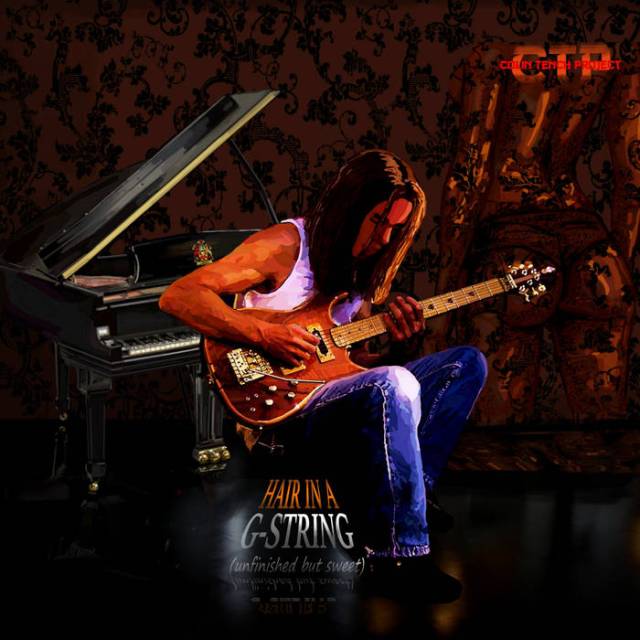
Hair In A G-String album by the Colin Tench Project
“In short for me, the new CTP album is one of my all time favorites,”says Prog fan and collector, Robert Len Stallard. “I could go into extreme detail here because as a guitarist-composer myself, I have a special appreciation for Colin’s craft. “
High praise indeed from one of the lucky ones who has heard Colin’s new album, ‘Hair In A G-String (Unfinished but Sweet).’ “I was introduced to Colin and his music through mutual friends on Facebook,” Robert continues. “When I listened to his music for the first time I was blown away by his very unique music and guitar stylings that I had to listen to everything he had out there. The more I listened, the more I was entranced by it. So when I discovered he was creating a new album with featured musicians that I admire very much I was very excited.”
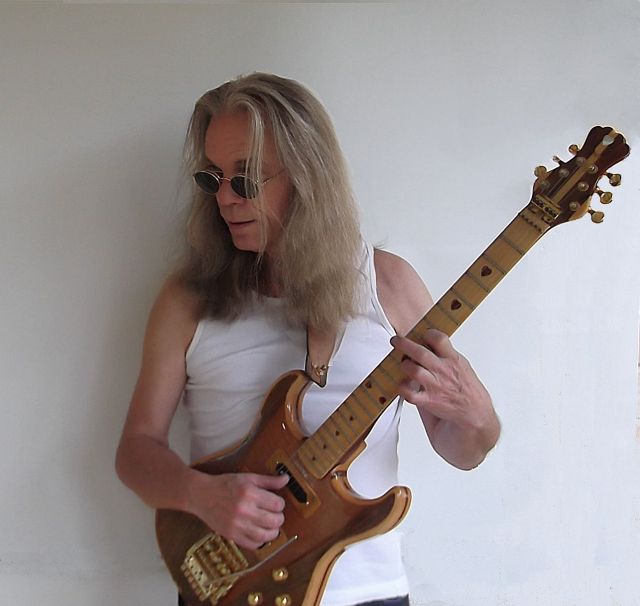
CORVUS STONE’s guitarist, COLIN TENCH is cautiously philosophical about his new album. “The COLIN TENCH PROJECT is not a designer album. It is melodic, much of it instrumental music and almost classical in areas; then suddenly a bit mad for fun.” He’s got that right. It really is hard to really define this album within a safe harbour of genres. Take your pick really. One minute you’ve got a musical play with all its dramatic flair Freddie Mercury would tip his hat at, and the next there’s an almost a solo Spanish guitarist caught in the beam of a stage spotlight. There’s touches of Prog with a handful of AOR, and a dab of Metal, and back around for a sweet ballad or three. If anything, something for everyone. As Colin has stated, “I love music. I hate music by numbers. If there is one album I consider to be a template of how to do things – The BEATLES White Album would be it. Something I realized recently, is that I am not a fan of the genre we call Prog. If I list every piece of music I love, all of it falls in to that genre tho’! There is a reason. Almost none of my favourite music was aimed at a prog market. It didn’t exist! Did GENESIS, ZAPPA, STEVEN WILSON, BEETHOVEN, PINK FLOYD design prog albums? Nope! Neither will I ever want to.”
Colin has handed some amazing and talented musicians known to a lot of us for their various projects and recordings. In my very own top five current Progressive Rock singers of all time is PETER JONES (now in Camel) and he provides for me, IMO, the jewel in the crown, the track “And So, Today,” a sad but respectful homage to a number of artists we’ve lost oh too soon. Peter’s own album under the band name of Tiger Moth Tales is one I would highly recommend you listen to and purchase. Peter’s also provided vocals for the band Red Bazar recently. worth checking out his work.
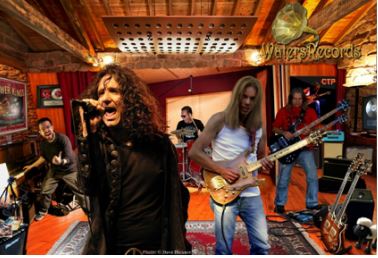
The album’s recordings also include:
– Phil Naro / vocals
– Gordon Bennett / orchestra, string section, horns, basses, triangle, thing that goes boing
– Steve Gresswell / piano, keyboards, orchestration
– Petri Lindström / bass guitar
– Jay Theodore McGurrin / drums
– Sonia Mota / artwork
With:
– Gary Derrick / bass guitar
– Marco Chiappini / keyboards
– Victor Tassone / drums
– Stef Flaming / keyboards
– Oliver Rusing / drums
– Angelo Hulshout / fretless bass
– Robert Wolff / drums
– Pasi Koivu / synthesisers, organ
– Ian Beabout / Flute
– Gary Hodges / drums
– Kelly Brown / keyboards
– Tina Sibley / violin
– Kirsten Weingartner / violin
– Ned Horner / violin
– Aleksis Zarins / violin
– Stephen Speelman / stunt bass guitar
All instruments and arrangements on Lisa’s Waltz by Gordon Bennett based on the original Lisa’s Waltz by Colin Tench.
As you can see – quite a turnout, and you’re not short for the structure and depth of sound. As music fan, Robert Len Stallard puts it: “In general, the mix production is such that it provides the listener (well, me at least) with a very satisfying immersive experience. It feels as if you are in the middle of the stage. It’s very refreshing to listen to this music that is not over-compressed and squashed for loudness sake.”
” The instrument arrangements and sound production are amazing and very creative. The sound quality and clarity (tonal balance, EQ, effects, etc.) were excellent in all playback and listening devices (computer, mobile devices, studio monitors, headphones, etc.). The sound stage and spatial aspects (stereo image/spread, instrument placement/panning, reverberation, etc.) are spot on and well distributed. The dynamic range (amplitude span, quietness, loudness, wide, narrow, etc.) is exceptional without clipping or excessive compression/limiting. So in conclusion I can state that in my very humble opinion, this album is close to perfection and is an audiophile’s and prog music aficionado’s dream. The entire album is soul-touching and mesmerizing, transporting me to a happy place of sonic wizardry.”
Thanks and well said, Robert. Given the buzz on Colin’s social media pages there is a lot of positive feedback coming through and approval. A link to check out the album and also purchase is provided below.
In the meantime, here’s an interview I did with Colin recently on his new project and album.
INTERVIEW WITH COLIN TENCH ON HIS NEW ALBUM
PAUL:What inspired you to pick up the guitar?
COLIN: I suddenly had time on my hands. I had just emigrated to Australia. Prog was in its death throws in 1977, so I had a go. I quickly joined a band who weren’t all that good but we were dedicated and we improved. That band inspired me to not give up. We were attempting to play Santana, Beatles, Alex Harvey. All of it could be labeled prog.
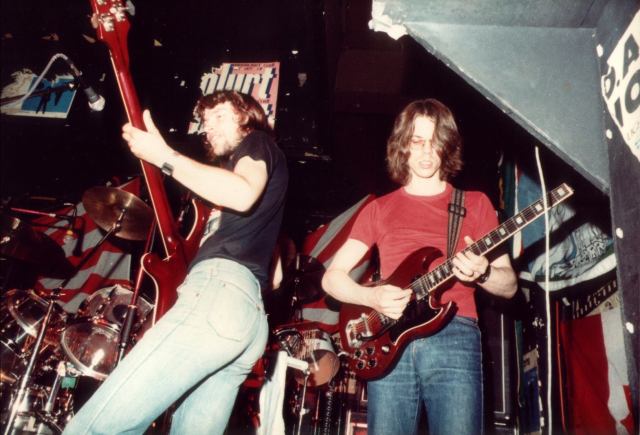
Colin in Sydney in 1978 at ‘The Battle Of The Bands.’ “The drummer in this pic appears on drums on two tracks on “Corvus Stone Unscrewed [2015]”
PAUL:Do you recall hearing your first Prog Rock album and what it was?
COLIN: Prog didn’t exist as a term. Underground music was what we called it. It started with The Beatles of course. They brought it in to the mainstream, so we all heard it on radio and I learned to expect a lot from music from then on. I never really was attracted to straight pop, rock or blues etc. They all sounded boring to me.
PAUL:‘Hair in a G-String’ (Unfinished But Sweet) could almost be considered a double entendre in some circles. Is the origins around the title an inside joke? What’s the meaning around the album title?
COLIN: Bach’s “Air on the G String”! What I started with on this album, was very slightly orchestral, and unfinished (suite?). All of that stuck and became the title. Maybe the Beatles’ habit of not being obvious, stuck with me. So I like a good laugh and if the titles or the music raise a smile, all the better!
PAUL:Why a solo album now? Why not another Corvus Stone album?
COLIN: This time I wanted to make an album that is totally melodic, with surprising turns. Corvus Stone is almost the opposite. So this is quite different. It made sense for me to write most of the music this time and even lyrics. I have a love of simple music that has a lot going on. orchestrated in a way. This album is like that.
PAUL:How was the idea of doing a solo album received by your bandmates?
COLIN: I think they all like that I did this. In fact, Corvus Stone’s Petri Lindström is the main bass player on this.
PAUL: If this is a solo album why bring on some of your fellow Corvus Stone band members to play on this?
COLIN: I don’t even describe this as a solo album. It is a band but the band members vary throughout. I don’t even like solo albums. Ha! I love real bands that all have an input to the song they are playing on. That is the case here. All of the main players are on this but Petri is on most of it.
PAUL:You stated in your notes, “The album structure could be labelled Prog before there was Prog.” That would take you back to the mid to late 60’s in what got to be called Proto-Prog around various psychedelic and Space Rock type bands experimenting with sound and mood to compliment the times. Can you cite any musical influences you may have drawn from while you were writing these songs?
COLIN: Most of what was done from 1966 to about 1974 has influenced me. Outside of that time, prog was kept well clear of mainstream radio. The combination of incredible playing, comedy, uniqueness, song writing and arrangements was everywhere. Music that doesn’t make people switch it off but still has content that is unexpected, tho’ never losing the melodies. That’s what I wanted to do. It isn’t prog, it’s just fairly simple music with no rules.
“That was ‘Odin’ gigging in London when I was 28 in 1984. That’s Gary Derrick who is also playing bass on two tracks on this album.“
PAUL:Certainly you can pick up the vibe within some of these tracks that early Prog is very important to you. Did it ever occur to you the irony of bands in the 21st century trying to get out of the shadow of their bigger brother (70’s Prog Rock) and at the same time paying attention to it through the concept of this album?
COLIN: I wonder if a lot of bands are starting to think the way I do. Prog is doomed if it can be defined. Prog was just a term that contained anything not quite definable. It can wander from rock to pop to jazz. It can be long, short, have singing or not. Ian Anderson came up with “Thick as a Brick” to poke fun at the concept album idea. He says “I’ll give you the mother of all concept albums” because reviews said Aqualung was a concept, which it wasn’t. Thick as Brick is now considered the best concept album ever, by many prog fanatics and it was just a joke. I think that says a lot about the difference between fans a bands. This album is not a concept at all. It flows musically (Part 1,2,3, And so Today, The Sad Brazilian & Part 4b) Then I stuck loads of other songs in between them.
PAUL: You’ve kind of mixed up the song order with both vocals and instrumental, not to mention a number of musical styles such as recognising Progressive Rock moments and well Classic rock if not a touch of Metal as well as Classical guitar here and there and to top it all off you’ve thrown in the odd Musical Play moments. So I guess you had all these ideas for a number of projects it would appear that you’ve fashioned into one album. Was this intentional to begin with all did it just work out that way?
COLIN: I only had a few bits before I started this. I like all different kinds of music, so there are influences of all of that in here. As I said, the “Hair in a G-String” parts, are very simple. It may not sound that way because of the arrangements that keep changing but you do start to think you recognise something as it goes along. It actually isn’t from some old album, it is from the early part of THIS album. “And so, Today” is pretty much 2 chords most of the time, except for a very short part that Peter’s Clarinet appears in. They come back for most of Part 4b. Nobody seems to have spotted that though. The voice is an instrument. It was never the most important thing in music to me. When it is used like an instrument, all other instruments can be removed but the song remains the same (I think someone said that once). Our band isn’t a backing band. The guitar also is not the main thing. Nothing is.
PAUL:What do you consider as the essential elements of this album?
COLIN: Tunes and melodies. Also a great deal of fun. Some of the lyrics are supposed to make you smile but they don’t get in the way of the tunes. You can listen to the album in different ways. Ignore the lyrics and it is still great (IMHO). Next time, listen to the lyrics and get a different feel. It can be played at low volume when your mum is round for dinner, or as loud as hell and it still works. Maybe that is my version of good music and is now seen as 60s/70s Prog.
PAUL:First impression for me is that with both this album and what you do with Corvus Stone; collaborating with others is more of an important side to creating and playing music for you personally rather than just being in a band?
COLIN: Exactly. Like a recipe. That only happens with real band. I know that Yes would throw loads of their own bits at one song. It would be stitched together and then arranged to become a special and unique piece of music. Whole albums were that way back then. Every time someone went solo, no matter how much I liked them, the magic just wasn’t there. Soy sauce maybe amazing but not all that much good drunk neat. Ha ha! If someone on a song on this album, did something I loved and didn’t expect, that could change the course of the song. Stay flexible and it is a lot of fun.
PAUL: Sonia Mota is known to a lot of us who spend a lot of time inside social media for her positive and very hands on efforts within the Prog Rock fan community. How did she become involved in this project?
COLIN: Sonia has been the artist for Corvus Stone and Oceans 5 from the start. More than that, she named Corvus Stone and critiques everything we all do. If she says it sounds wrong, I know it does! We all have friends that say all the mixes are wonderful but that doesn’t help. You need someone who is honest and has an uncanny appreciation of music. Sonia has that. She says things like “It’s boring”, “You’ve ruined it”, “That’s horrible!” “OMG” and as much as I want to hit her with a big stick, in the end, we arrive at the album we wanted. Also, she paints while listening to the early mixes as we go along. The artwork is incredible and totally unique. Even the booklets with the CDs are her work.
PAUL: ‘And So Today’ and you have Peter Jones singing lead vocals on this song. This for me personally is the highlight of the album in relation to the vocal track. Not only does it have a superb melody, but also some great lyrics that Prog and Classic Rock fans will easily identify with. Did you have him in mind while you were writing or was Peter bought in later into the process?
COLIN: There you go! A great melody. Simple in a good way. I knew Pete would be singing it. I only wrote what I did because I knew he would feel the same way I do about the characters it refers to. Also that he sings like an actor. He makes you feel it. All the lyrics I wrote, were for Peter. It made it easy to write funny or serious. He can also make funny lyrics sound serious and that can be tricky.
PAUL:Looking back, and I guess it wasn’t that long ago, but for you personally – what was the highlight of creating a solo album? Did you have any challenges in the process of getting this made?
COLIN: The mixing finished the day I released it! Mixing never really finishes. You just stop, wait a few days and listen at low volume. Nothing sounds off, it’s done. So this isn’t looking far back at all. Mostly all the challenges were good ones. Everyone is busy, so it’s an honour that they put so much thought and care in to what they did. So many people involved but for good reasons. it would be easier to have a small band and do an album. Then it would not be THIS album. I go about this being simple melodic music but I did throw in quite a few WTF moments and they can be a bit difficult for someone to play to or figure out what the hell to do. Challenging but loads of fun for us all (I hope). In the end, the mixing is the nightmare, then the technical difficulties of producing everything correctly for the CD makers. We have to do everything these days!
PAUL: Are you playing to release a music video in conjunction with any of these tracks?
COLIN: So far only, “Part 4b” and “The Brazilian” have short videos that I made during the recording. There will be more but I never promise anything that may not happen. Something will tho!
PAUL:With the release of ‘Hair on a G-String’ have you made any plans to play the album live in concert?
COLIN: That is impossible. We are all over the world. There is always a hope that “And so, Today” will get attention in the mainstream. Or “A Beautiful feeling”. That could trigger all kinds of possibilities.
Thanks to Colin for providing input into this article on his new album. Also to Robert for his thoughts on the album. For me, I really got into it last Sunday when sitting back and relaxing in the warm evening with the album playing in the background. It really is a mood setter and one I’d recommend for yourself and as a gift for a friend or relative.
Hair In A G-String (Unfinshed But Sweet) can be purchased either as a digital download or on CD at this link:
The CDs are in and even on their way to the really early birds already. It takes quite a bit of work to get to this for any band. Our band is rather a big one!
Colin will talk as little as possible about it with Tony this Saturday and maybe others will join us too.
The album will get played of course!
If there are any free albums knocking around, that will happen only in the chat room
1. Hair in a G-String part 1 (The opening) [6.25]
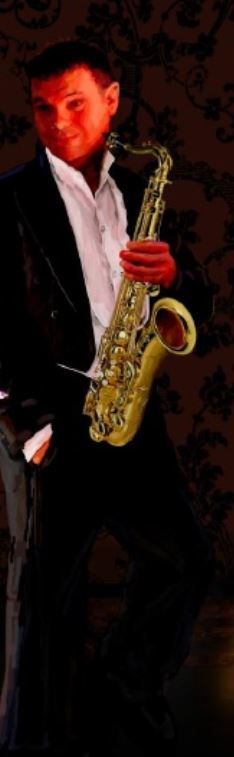
Peter Jones: Vocals, Saxophone
Colin Tench: Guitars, Piano
Steve Gresswell: Piano, Keyboards, Percussion
Petri Lindström: Bass guitar
Stef Flaming: Percussion
2. Can’t see it any other way [4.36]
Colin Tench: Guitars, Synths
Phil Naro: Vocals
Gary Derrick: Bass guitar
Marco Chiappini: Piano
Victor Tassone: Drums
3. Hair in a G-String part 2 (The Hairy Part) [6.04]
Colin Tench: Guitars, Synthesisers, Drum programming
Phil Naro: Vocals
Steve Gresswell: Keyboards
Stef Flaming: keyboards
Oliver Rüsing: Drums, Percussion
Petri Lindström: Bass guitar
Stephen Speelman: Stunt bass
4. The Mad Yeti [2.54]
Colin Tench: guitars
5. The Sad Brazilian [7.19]
Colin Tench: Guitars, Piano
Gordon Bennett: Orchestra, Shaving cream
Petri Lemmy Lindström: Bass guitar
6. And so, Today [4.12]
Pete Jones: Vocals, Clarinet
Colin Tench: Guitars, Piano, Percussion
Gordon Bennett: Orchestra
Petri Lindström: Bass guitar
Jay Theodore McGurrin: Drums
7. Hair in a G-String part 3 (I’m Going Down) [10.09]
Peter Jones: Vocals
Colin Tench: Guitars, Synthesisers, Piano
Gordon Bennett: Orchestra
Petri Lindström: Bass guitar
Oliver Rusing: Drums
Steve Gresswell: Keyboards
Angelo Hulshout: Fretless Bass
Sonej Retep: Sciryl lanoitidda
8. Lisa waltzes back in with no G-String [3.53]
Colin Tench: Guitars
Gordon Bennett: String Section, Horns, Basses
Petri Lindström: Bass Guitar
Robert Wolff: Drums
Pasi Koivu: Synthesisers, Organ
Sean Filkins: Tamborine
9. Lisa’s Entrance Unplugged [3.09]
Colin Tench: Guitars, Synthesisers
Ian Beabout: Flute
10. Something Old, Something New, Something Borrowed, Something Screwed [7:32]
Colin Tench: Guitars, vocals, Percussion, Piano
Gary Derrick: Bass guitar
Marco Chiappini: Keyboards, Piano
Victor Tassone: Drums, Percussion
11. La Palo Desperado [5.54]
Colin Tench: Guitars, Annoying noises
12. A Beautiful Feeling [5.58]
Phil Naro: Vocals
Colin Tench: Guitars, Piano, Percussion
Petri Lindström: Bass guitar
Gary Hodges: (Buckingham Nicks): Drums
Kelly Brown: (Ozark Mountain Daredevils): Keyboards
Vic Tassone: Percussion
Violins: (String Section) http://www.springfieldmosymphony.org/
Tina Sibley (Springfield Symphony)
Kirsten Weingartner (Springfield Symphony)
Ned Horner (Springfield Symphony)
Aleksis Zarins (Springfield Symphony)
13. Dnieper Summer Day [1.38]
Colin Tench: acoustic guitars
David Knokey: Rhythm Guitar
Stef Flamming: Bass guitar
14. Part 4b [7.56]
Peter Jones: Lead Vocals
Phil Naro: Lead Vocals
Colin Tench: Guitars
Gordon Bennett: Orchestra, Percussion, Triangle, Thing that goes boing
Petri Lindström: Bass guitar
Angelo Hulshout: Fretless bass
Jay Theodore McGurrin: Drums (We fired Neil Peart)
15. Part 4b Redux [0.23]
Peter Jones: Piano
Peter Jones: Main vocal
Peter Jones: Backing vocals
Peter Jones: Foley guy
Peter Jones: Production
Colin Tench: Bugger all
:
BONUS TRACK: Liza’s Waltz with full orchestral arrangements [4.23]
All instruments, arrangements & Production by Gordon Bennett
Based on the original Lisa’s Waltz by Colin Tench



 Bob Dylan is the rare artist who, at 75, retains the power, energy, and restlessness that distinguished his early work. As both a recording and performing artist, his electricity is unabated, and he continues to make vibrant contributions to the post-folk culture he virtually created. That he has achieved this is astounding; for those of us who have followed his career and know something of its roots and evolution, it is not surprising. He constantly recasts his song catalogue, the depth of which by 1965 (let alone 2016) was unrivaled in the rock/folk/singer-songwriter genre he invented, to match his current sound, and commands a fluidity of vision in his writing that sees beyond the trees and perhaps the forest as well. Witness “High Water,” a tribute to Charley Patton (whose “High Water Everywhere” is a stone cold delta blues barking, howling, classic), from 2001’s Love and Theft. This is a blues about love and the water that rises, that has picked up some oldtime, some drone, shaking and breaking and name-checking muscle cars and evolutionary philosophers. The thing is that it works because when Dylan sings “the cuckoo is a pretty bird” that’s a kind of referenced code that he’s hollering back to Patton. He’s writing a blank check to freely associate (find and listen to a version of “The Cuckoo” and you’ll get what I mean), to make the rhyme work and throw meaning to the wind and to the listener. Harder than it sounds because it’s about the sound, what music is, what makes its power inexplicable. To make that warble on the 5th day of July, and trace your absurd and beautiful melody: it takes courage and a resolution that comes at a price only Dylan, and maybe Patton, knows.







 Progarchy