

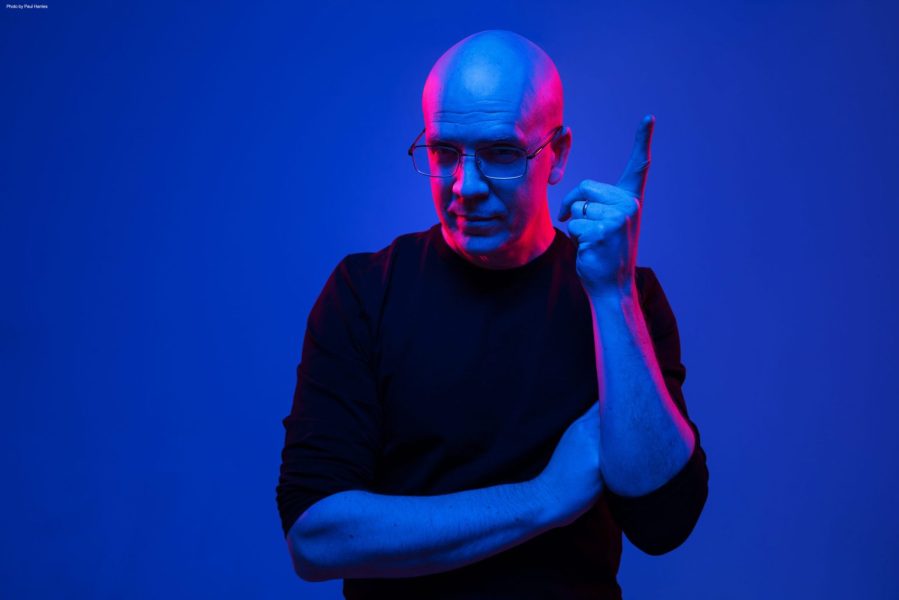
Devin Townsend Lights the Night – “Lightwork” and “Nightwork”
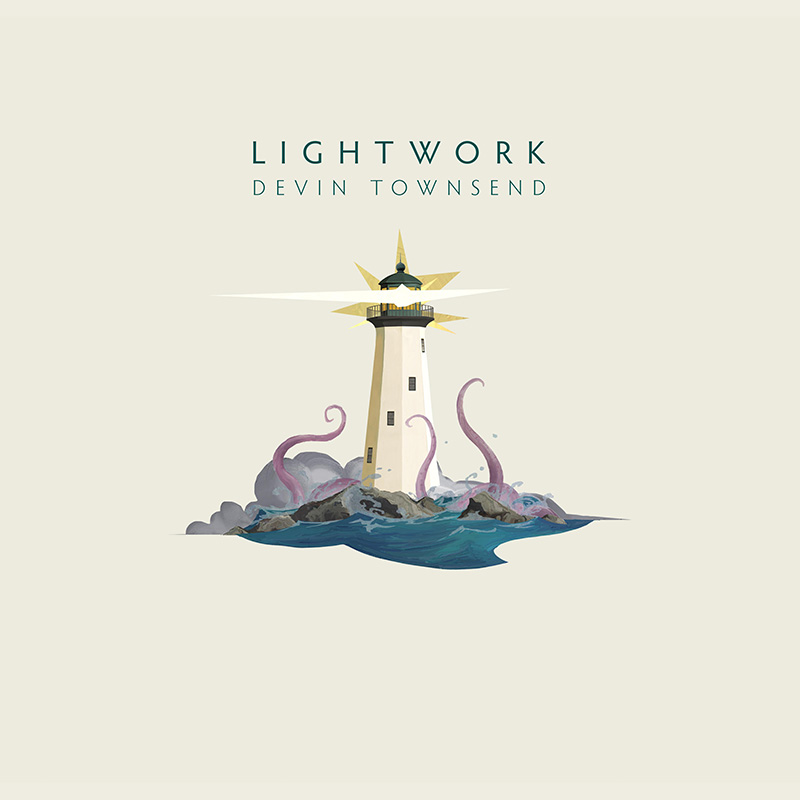
Devin Townsend, Lightwork, 2022, Inside Out Music/Hevy Devy Records
Lightwork Tracks: Moonpeople (4:44), Lightworker (5:29), Equinox (4:39), Call of the Void (5:53), Heartbreaker (7:00), Dimensions (5:23), Celestial Signals (5:12), Heavy Burden (4:23), Vacation (3:10), Children of God (10:06)
Nightwork Tracks: Starchasm, Pt. 2 (4:34), Stampys Blaster (0:38), Factions (5:13), Yogi (3:57), Precious Sardine (10:14), Hope is in the World (4:16), Children of Dog (6:45), Sober (4:37), Boogus (3:33), Carry Me Home (4:04)
Devin Townsend seems to be the most eclectic artist operating in what could broadly be called the progressive music scene. He’s most well known for his work as a metal artist, having some of the finest clean and distorted vocals in the business. He’s also a stellar guitarist and an even better producer. Beyond the metal, he’s long dabbled in ambient music, and as of late he’s been blending the two together to marvelous effect. 2019’s Empath was a masterpiece demonstrating that extreme metal, musical theater, opera, and ambient music can blend into a powerful and moving epic.
Last year he released The Puzzle, a minor release that is primarily ambient with vocals serving more of an instrumental role, meaning it was more about the sound than the actual lyrics. That record reflected Devin’s mind as he processed the Covid-19 pandemic, especially the early phases of it. At the same time he released Snuggles, a shorter ambient album whose goal was to calm and soothe the listener. I can state from personal experience that it does just that. It’s a great antidote to anxiety and depression.
Last month found Devin releasing his latest “major” release, Lightwork, along with its slightly heavier companion album, Nightwork. His intention was to go lighter on this record, although the metal elements still pop up now and again, especially in the vocals, which vary from clean to distorted depending on what the songs need. It’s a very different record than Empath. I hesitate to call it “pop,” as that might conjure up images of Steven Wilson’s The Future Bites. I think there are some interesting parallels between Townsend and Wilson that are worth exploring in a future article, but Townsend’s approach to pop (for lack of a better word) is far more introspective than Wilson’s. Wilson often wears his influences on his sleeve, while still creating a signature sound. Townsend creates his own sound, incorporating elements from myriad genres to make music that sounds like no one else. If Lightwork can be called pop, it is because it is more accessible than some of Townsend’s other work. It still remains complex in its layering, lyrical themes, and overall sound.
Lightwork has less of a flow to it, with the focus being more on the actual songs. With the wall of sound approach Devin is known for, there is some blending together between tracks, so it never feels disjointed. There is a loose overall theme to the record of love and light – a port in the storm, as it were. Musically it ebbs and flows. “Lightworker” has some epic soaring vocal moments with orchestral layers and backing vocals, not dissimilar from bits of Empath. Devin holds nothing back vocally.
“Equinox” sees Devin delving into his more atmospheric rock side while incorporating memorable melodies. The use of distorted vocals in parts of the song is a contrast to the spacier elements of the music, but since Devin’s distorted vocals are easy to understand (one of the reasons he’s my favorite metal vocalist), it works really at conveying the emotion of the lyrics.
The world is gonna turn without you baby
Don’t worry about a thing it’s all a gameJust as it’s falling apart, I’ve fallen for you
Just as I tear it apart, I’ve fallen for youThough we try to pretend that it’s not the end
“Equinox”
It keeps us calm now babe
This is easily my favorite song on the record. It’s relatively simple, but the intricate layers and vocal work draw me in every time. I feel like I’m standing in a giant open space surrounded by stars and a dancing aurora as the music swells over my head. Perhaps that’s a testament to Devin’s unmatched skill on the mixing board.
From the very beginning going back to his Strapping Young Lad days, Townsend has always been blisteringly brutal and honest in his lyrics. Those lyrics reflected his emotional state at the time. His lyrics today are equally emotional and honest, but they’re so much more uplifting and hopeful. “Call of the Void” calls the listener to maintain composure in the face of the world’s insanity. Devin’s voice leads the charge with soulful grit.
Cause whеn you see the world’s insane reactionTo follow your hеart, the worst reaction is to freak outSo don’t you freak outCause when you feel the urge to feign reactionJust follow your heart, the worst reaction is to freak outSo don’t you freak outYou want them to see the world the same as you andTo feel the pain the same as youBut everybody in the world’s different point of viewCan never see the world the same
“Call of the Void”
“Dimensions” is a heavier track with an industrial sound. The bass, courtesy of Jonas Hellborg, dominates. The song is metal, but not in a traditional sense. It’s closer to a band like Rammstein than Iron Maiden. The screamed section is sung over a quieter section of music, and when his vocals step into the background, the music gets louder. An interesting back and forth. The song also features a guitar solo from Mike Keneally.
“Celestial Signals” follows it with a much larger and more open sound, flinging us back amongst the stars in swirling guitars and swelling vocals from both Devin, the choir and Ché Aimee Dorval and/or Anneke van Giersbergen (both sing on both records, and usually it’s easy to tell the difference, but the backing vocals on this track are set pretty deep into the mix).
The final track, “Children of God,” is the longest at just over ten minutes. It also has a large and open sound with lyrics dancing on a cliff of blended sounds, with drums being the most distinct.
Lightwork is hard to nail down as any one “thing.” There’s so much going on. “Vacation” is in direct opposition to “Heavy Burden,” and yet somehow it works. Devin’s quirkiness keeps you on your toes.
While Nightwork may be a companion album, it’s every bit as good, or maybe better. As the name may imply, the album is heavier than Lightwork. It opens with a more straightforward “Devin” metal track. Blasting drums (thanks Morgan Ågren), crunching guitars, and both Devin and Anneke on vocals. Steve Vai also contributes “additional instrumentation” to “Starchasm, Pt. 2.” For those curious about “Pt. 2,” “Starchasm” is a track on last year’s The Puzzle. “Stampys Blaster” picks right up with a 38 second bit of uplifting heavy metal bordering on extreme metal with intense blast beats, all while Devin sings “I love you all.”
“Factions” is another blistering metal track with brilliantly complex drumming and Devin’s signature crunchy guitars and vocals. It’s lightyears away from Lightwork, yet it’s right at home in the Devin universe. The atmospheric screams of “Sorry… I’m sorry…” over a wall of drums is eminently relatable. The song has two neoclasslical style shredding guitar solos that sound different from Devin’s playing, but the album notes don’t say they were played by anyone else, so…
Nightwork does bounce around in style, though, with “Yogi” being a different animal entirely. Quirky, bouncy, not metal at all, but still definitely Devin. “Precious Sardine” reminds me of The Puzzle, with various musical styles and vocals acting more like background instruments. “Hope is in the World” and “Children of Dog” (a reworking of “Children of God”) are more upbeat tracks like Lightwork. They retain metal elements, but they’re brighter songs.
“Sober” is my favorite track off both albums. It is atmospheric, spacey, and intensely emotional. The backing sound of waves add to the ebb and flow of the song. The lyrics are profoundly moving, reflecting the confusion and desperation of addiction as it relates to relationships:
How can you want me, if I can’t stay sober?
And how could you leave me in this state?I can’t help these feelings that have come into my life
I can’t seem to be the one I used to want to fightHow can you want me, if I can’t stay over?
And how could you leave me in this place?Time is falling into silence
I’m already tired
All the dreams we had are dying
You’re not even trying
It’s alrightHow can you want me, if I can’t stay sober?
“Sober”
And how could you leave me in this state?
How could you leave me?
It’s a very reflective song, which is slightly disturbed by the next song, “Boogus.” “Boogus” is a very fun song made in a distinctly 1960s style reminding me of The Munsters sound track. It’s very fun, and not a style you hear much anymore. But, I think it should have been placed somewhere else on the album, with “Carry Me Home” following “Sober” to close the record. “Carry Me Home” is a peaceful track reflecting the realities of a couple’s love after many years into a relationship:
But oh, I hope you understand
“Carry Me Home”
I still love you now the way I did back then
Mental health has been a prominent theme in Devin’s lyrics in the past, especially in more recent years with his positivity seemingly meant to uplift his listener’s spirits.
‘Cause it’s so hard to give when it’s hard enough to live
“Carry Me Home”
And you wanna die, defeat flat on the floor
Well, the nights go by, and still we try to keep some sense of this
Give me hope
Home, on the way home
And I wonder why I ever left at all
Carry me home, all the way home
Let’s simplify and get right back to it all
Carry me home…
Sometimes life is just hard, and we need someone to carry us home.
In many ways, Nightwork is my favorite of the two records, despite it being a companion. Perhaps the heaviness of the first few tracks is more my speed, or the atmospheric brilliance and honesty of “Sober” and “Carry Me Home” keep running through my head. I find it hard to separate the two albums. I bought the fancy special edition in a vinyl gatefold-sized package (2 CDs, 1 blu-ray) with colorful artwork for days, and my iTunes automatically put Nightwork as disc two of the deluxe edition of Lightwork, rather than a separate album.
The variety of musical sounds on these albums might not be for everyone, but I appreciate the art Townsend is making. He’s making the music he feels like making, even if he knows (and worries) that it may upset some people. His sensitivity shines through, and if you keep an open mind, you’ll find a lot to enjoy while broadening your musical horizons. For those turned off in the past to Devin’s heavier side, Lightwork is a must-listen. I think you’ll find it much more accessible, and perhaps you too can come to more fully appreciate the brilliance of Devin Townsend. He is, after all, one of the most interesting artists in music. Everything he makes is worth paying attention to. As such, I recommend you get one of the editions that includes both albums, rather than just Lightwork.
https://hevydevy.com
Merch: https://www.omerch.com/shop/devintownsend

VENTIFACTS’ Mixture of Unconventional and Catchy on “Chronic Town” is a Rewarding Experience
“Chronic Town” by Brattleboro, Vermont-based Ventifacts is an experimental rock album that explores the world of microtonal music. The band’s use of unconventional tunings and scales creates a sound that is both familiar and alien, with each track taking the listener on a journey through a variety of musical landscapes.
The record opens with “Wolves, Lower,” a track that sets the tone for the rest of the album with its blend of pounding drumwork, courtesy of Connor Reilly, and intricate microtonal melodies by guitarists (and also singers) Damon Waitkus and Been Spees, as well as bassist Oliver Campbell. The band’s use of unconventional tunings and scales is particularly noteworthy, with each track featuring a unique and distinct sound.
One of the standout tracks on the album is “1,000,000,” which showcases the band’s ability to create complex and dynamic compositions that incorporate elements of microtonal music. Ventifacts’ use of unconventional chord progressions and dissonant intervals adds a layer of tension and unease that is truly unique.
The production on “Chronic Town” is excellent, with each instrument and vocals given a clear and distinct place in the mix. The use of unconventional tunings and scales is also well-executed, with each track featuring a unique and distinct sound which works extraordinarily well in the song format.
Overall, “Chronic Town” is an outstanding album that showcases Ventifacts’ mastery of the experimental rock genre and their approach to microtonal music. It is a must-listen for fans of “non-regular” and experimental music, and anyone looking for an intellectually stimulating and musically challenging listening experience. The band’s ability to blend elements of microtonal music into a cohesive and enjoyable rock album is truly impressive.
“Chronic Town” is available on Bandcamp.
Chronic Town by Ventifacts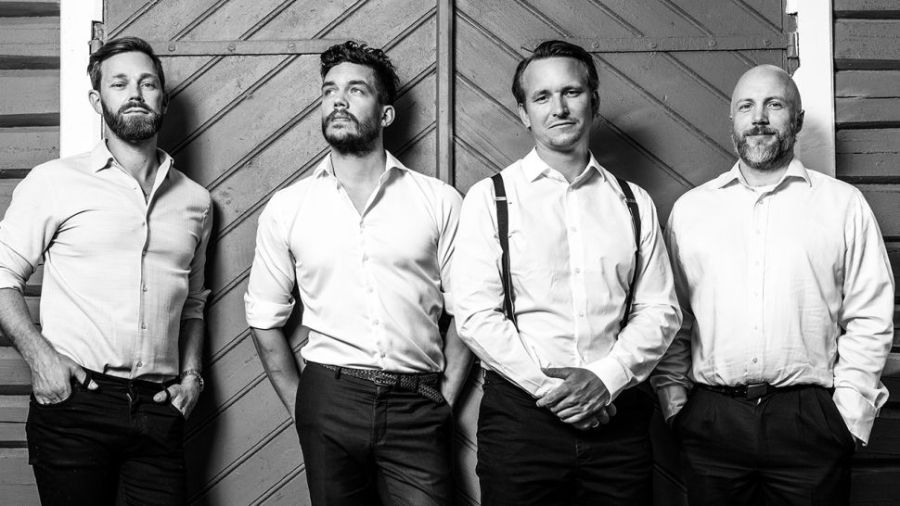
Oak’s Third Masterpiece – “The Quiet Rebellion of Compromise”
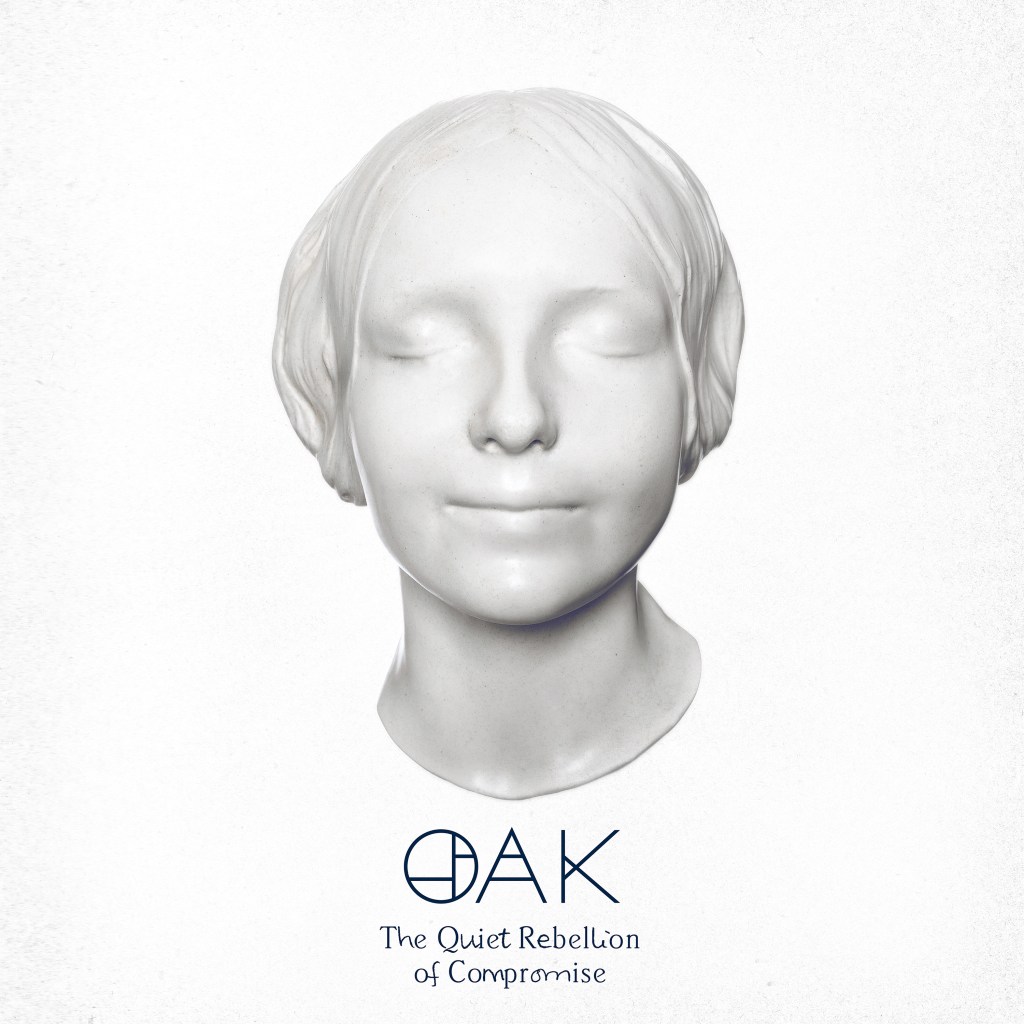
Oak, The Quiet Rebellion Of Compromise, 2022, Karisma Records,
Tracks: Highest Tower, Deepest Well (5:57), Quiet Rebellion (4:51), Dreamless Sleep (5:37), Sunday 8 AM (5:54), Demagogue Communion (6:16), Paperwings (13:52), Guest of Honour (7:03)
Oslo’s Oak have been my favorite “new” band since I discovered them in 2016 when they released their 2013 album, Lighthouse, on CD. The album blew me away. I had never before heard rock, classical, and atmospheric music synthesized with such precision and in such a beautiful way. I was equally if not more stunned with their 2018 follow-up, False Memory Archive. It continued their sound, and it saw the band mature as they developed their wall of sound, their compositions, and their arrangements.
In November the band released The Quiet Rebellion of Compromise, a masterpiece standing toe-to-toe with both their previous releases and any release from the giants of the genre (I’m looking at you Marillion, Porcupine Tree/Steven Wilson, Big Big Train). Upon first listen I thought perhaps this record didn’t live up to its predecessor, but that was based upon my mild shock at some of the new elements the band added to their sound. After a few listens, their brilliance convinced me. I don’t typically rate albums for my Progarchy reviews, but in this case I give it a 10 out of 10.
This record includes the atmospheric overtones, the piano, the swelling rock sounds, singer Simen Valldal Johannessen’s deep brooding vocals and his evocative lyrics – everything the previous albums contained. But they’ve included more of the electronic influence to their sound on this record. While always there, it is more pronounced, especially on “Paperwings.” Typically not a genre I listen to, I wasn’t sure how to respond to the electronic elements at first, but after careful listens, I came to appreciate how it fit into the music and into the band’s sound.
Another element I did not expect was the introduction of black metal-style distorted vocals. I don’t listen to black metal, but I’m familiar with the unique form of distortion those vocalists use. It’s different from the type of metal I typically listen to, which tends to use either a grittier distortion (Meshuggah) or a higher-end distortion (Devin Townsend). Black metal vocals are low and smooth, befitting Johannessen’s natural singing voice. To be clear, he uses it on four lines on “Paperwings,” and considering the lyrical content of the album, it fits perfectly. The album covers intense themes of mental health and suicide, with the font used on the album cover based upon handwriting from actual suicide notes. Chilling, to say the least. But the band did their research, consulting scholars and mental health professionals. All that to say, the distorted vocals, while new to Oak’s sound, are used sparingly and to great effect when you consider these lyrics in the light of suicidal thoughts:
One thought takes hold
Oak – “Paperwings”
Seeps out rules all
Lights fade, time bends
One step so it ends
It took me over ten listens before I picked up on distorted growls deep in the mix on other tracks, not singing any particular lyrics – just adding to the band’s wall of sound. I think it appears in two places, and it’s very subtle. I’ll let you listen for it.
I appreciate how the band reach back into their previous work and pull in brief lyrical and musical excerpts, tying this record to those others and creating a sense of continuation. In doing so, Oak create their own mystique – a musical world you can fall into and feel like you’re somewhere else. Interestingly, it makes me feel connected to potential future albums as well.
Musically Oak blows me away. Whether its Johannessen’s soothing piano, Sigbjørn Reiakvam’s intricate drumming, Stephan Hvinden’s atmospheric guitars, or Øystein Sootholtet’s basswork (as well as acoustic and electric guitar and keyboards) – this band stands out. Steinar Refsdal adds some wonderful saxophone, which dances nicely atop the wall of sound created in the swelling instrumental passages that have become a signature part of Oak’s sound.
One of my favorite parts on the album is the bassline in the second half of “Sunday 8 AM.” The first half of the song is a bit of slow burn for me, but when it hits the instrumental part halfway through, I’m in musical heaven. The drums sing, the piano and keyboards build gently, and then that deep bassline comes in – wow. The musical highlight of the year for me. Even when the saxophone comes in on top of that, it’s the bass that steals the show with a memorable line that makes you want to skip back to the beginning of the instrumental passage once the song ends. I can’t even imagine how amazing this would be live.
I’ve mentioned the “wall of sound” a couple of times. What I mean by that is the way the band layer and gradually add (or subtract) musical elements to create a sound more majestic and powerful than any of the parts taken in isolation. Devin Townsend and Steven Wilson are masters of this sound, and I would place Oak up with them in terms of quality and its prominence on their records. It also helps that the album is mixed very well. There is a lot of dynamic range, with the record sounding very clear. They’ve also played a bit with the stereo mix, with some of the programmed sounds or percussion dancing around the mix.
The band use a variety of sounds, some of which have become staples in their music – percussion sounds I haven’t heard other bands use, thus making Oak’s music instantly identifiable for me. By including them on this record, I feel a sense of nostalgia to when I first started listening to Oak five years ago, even if the band have begun to include other elements in their sound. It still sounds unmistakably like them. They also include spoken tracks, probably from other sources like movies, which help add to the mystique. “Paperwings” has a passage with a hypnotist speaking to a patient over a calm musical section, which immediately proceeds a heavier and more chaotic section that eventually includes the distorted vocals. Musically we are drawn into the hypnosis with the subject.
Oak know how to end an album like few bands. “Psalm 51” off False Memory Archive may be one of the best album closers I’ve ever heard. The musical build-up to end the song is absolutely perfect. You’re left completely satisfied. I don’t think “Guest of Honour” is quite that good, but it was a high bar to match. Nevertheless, it’s a great song. The lyrics, “Walking blind through damp corridors / Piercing sounds, of footsteps or guns / Racing heart – I’m wearing you out” have particularly stuck with me, especially that last line.
The physical CD comes in a digipack, making it the nicest of their physical releases thus far. I’m sure the vinyl is even more stunning. I liked the album art from their first two albums a lot more than this, because I felt those fit the band’s aesthetic better. With that said, there’s something very unsettling about the expression on the face of the female bust on the cover, which given the subject matter on the album seems entirely the point. Suicide and mental health concerns are inherently unsettling.
It didn’t take long for The Quiet Rebellion of Compromise to blow everything else out of the way at the top of my best albums of the year list. It’s an album I can listen to over and over again, finding new bits to enjoy and investigate after many listens. That’s one of the things I’ve loved about their previous records. I can keep listening and never grow tired of them, and it appears this record has that same quality. Oak are a criminally under-appreciated band that deserve widespread attention. They’re one of the most imaginative bands in the genre right now, and they aren’t to be missed. Everything they have done is worth paying attention to. It isn’t often that a band like this comes around. Don’t let the close of the year pass without diving into this record.
https://www.oakinoslo.com
https://oakinoslo.bandcamp.com/album/the-quiet-rebellion-of-compromise
Facebook
Instagram
Album Review – Fearful Symmetry’s “The Difficult Second”
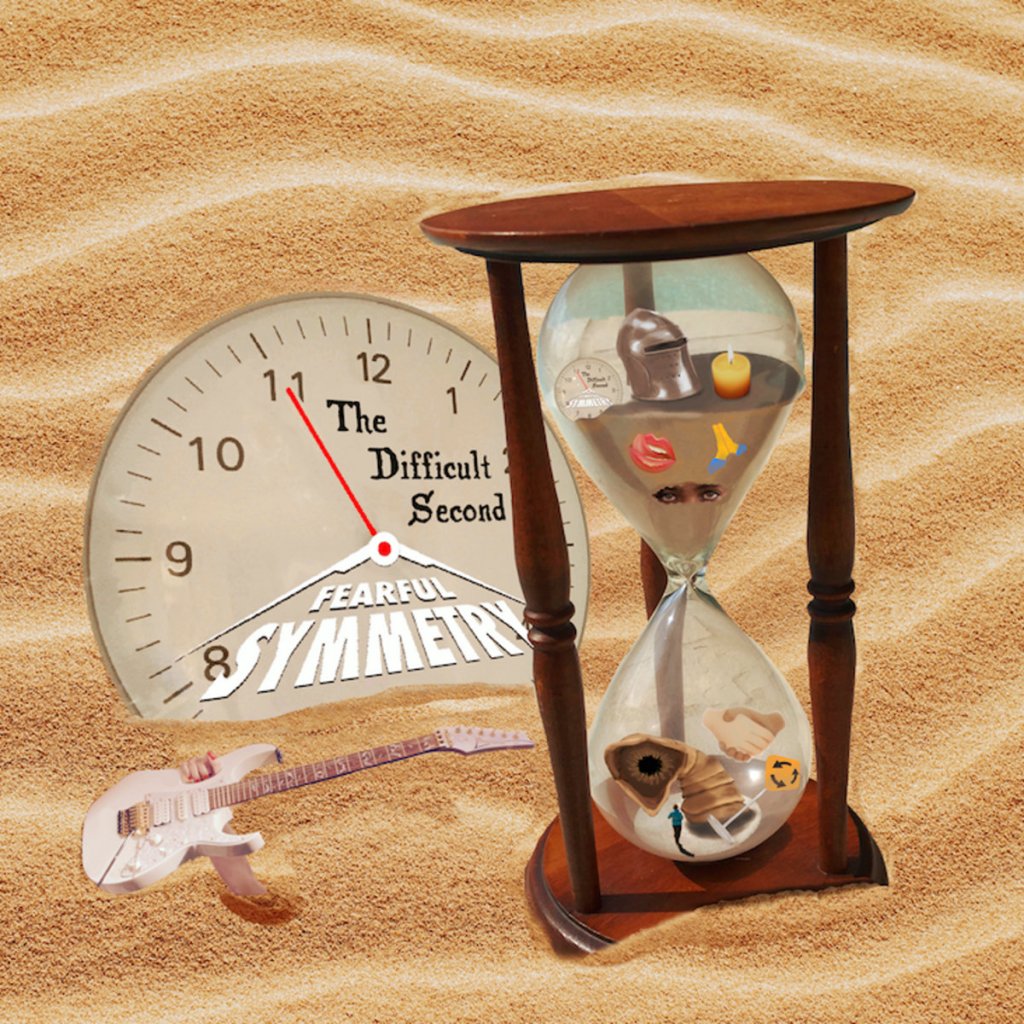
Fearful Symmetry, The Difficult Second, 2022
Tracks: Mood Swings and Roundabouts (6:00), The Difficult Second (3:56), Light Of My Life (5:39), Shifting Sands (4:07), Eastern Eyes (5:15), The Song Of The Siren (4:57), Hope (5:35), Sandworm (6:37), Shukraan Jazilaan (3:23), Warlords (14:45)
Fearful Symmetry is the brainchild of Suzi James, a UK-based multi-instrumentalist. working with Yael Shotts (vocals) and Sharon Petrover (drums, arrangements), along with Jeremy Shotts, who helped write the album’s epic, “Warlords.” James plays guitars, bass, all manner of keyed instruments, and various other stringed instruments… and based on the emojis used in the booklet to indicate what instruments she plays, she also plays a camel. Prog has always been about pushing boundaries, I suppose. Ha.


The opening track is clearly an intentional nod to Yes, and I have to say it’s done very well. Yael Shotts’ vocals are close enough to Jon Anderson’s to make it work, and the instrumentation is classic 70s prog. A strong bass line, a clear and prominent electric guitar, keyboards and organs galore – it’s a fun throwback. “Time and a Word” even gets a nod in the lyrics.
Catchy melodies abound on the record, such as the chorus on “Light Of My Life.” “Sandworm” has another catchy melody, with a vintage organ sound to match. In addition to the classic prog takes, jazz has a strong influence on the record, particularly on “The Song of The Siren.” The drums especially take on a jazz edge.
There are Middle Eastern influences on the record, like “Shifting Sands,” an instrumental with Middle Eastern vocalization done in a more traditional western style of singing. There’s a moment when the melody is played with violin, and it reminded me a bit of Kansas, despite the different style of music being played. The Middle Eastern themes are repeated in “Eastern Eyes,” although they aren’t quite as pronounced, and they remain rooted in rock music with shredding guitars and bass. I’m usually wary of artists pulling the Middle Eastern influences into progressive rock because it can quickly become corny, but it feels very natural on this record, perhaps because it was done through a more western interpretation rather than simply plugging a sitar into the mix.
“Warlords” is the epic on the album, at just under fifteen minutes in length. The intro overture has a swelling sound with guitars and bass working together to create an epic feel. It narrows in with a more gently keyboard driven section before expanding back out into a guitar solo. The song, divided up into five parts, is a story about a grand battle – very proggy indeed. As the song moves along, the Yes influence remains the most prominent, although thematically I’m also reminded of Genesis. But even so, the variety of instruments that Suzi plays keeps the track sounding particularly modern. Despite the song being about a battle, the music remains very bright.
“The Difficult Second” is an enjoyable throwback album that doesn’t feel oppressively tied to the past. The album is upbeat, with good melodies, solid instrumentation and vocals, and clever lyrics. The guitar solos are especially worth checking out.
https://www.fearfulsymmetry.rocks
https://fearfulsymmetry.bandcamp.com/album/the-difficult-second
Big Big Train Release Live Video For “Snowfalls”
Big Big Train have released a live video of the current lineup performing deep cut, “Snowfalls,” at De Boerderij in the Netherlands a few months ago. The song was the B-side for the band’s Christmas song, “Merry Christmas,” released in 2017. It’s a great track, and the band did a great job with it at this show. It’s nice to see new singer Alberto Bravin in action.
Progrock.com Picks Their Best of 2022
Progrock.com Radio presenters Richard Reyes (ProgPhonic) and Chuck Simons (Progrock for Beginners) have teamed up to present the best progressive rock of 2022. Multiple categories such as Best Albums of the Year, Best Debut Albums, Best Epics, Best Veteran Albums, and more have been announced through the 24 hour live streaming radio channel Progrock.com.

Along with the nomination announcements, Reyes and Simons, aired songs selected from each band or artist. Several hours of music and a list of nominees for each category can now be downloaded/ streamed at the links listed below.
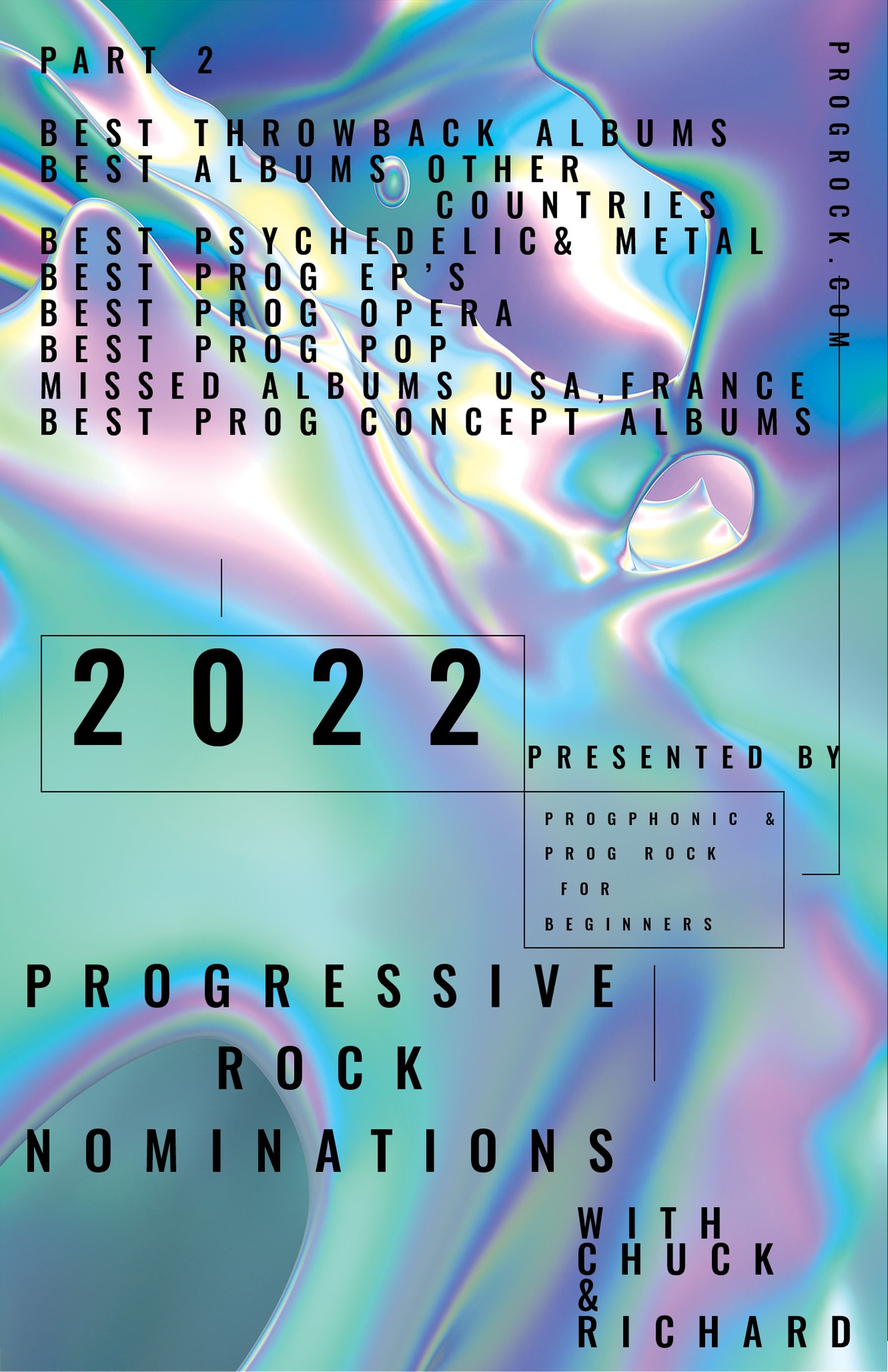
BEST ALBUMS- ALL OTHER COUNTRIES
BEST PSYCHEDELIC AND METAL ALBUMS
BEST EP, PROG OPERA, PROG POP, MISSED ALBUMS, POSTHUMOUS
Chose your favorite from the nominations in each category by sending an email to chuck@progrock.com. Votes will be counted until the end of the year.
The Progarchy Interview: Aaron Emerson and Chris Welch on Keith Emerson
Rocket 88’s new biography of prog pioneer keyboardist Keith Emerson has been getting a lot of attention in these parts. Last week it was my privilege to talk with Chris Welch (the venerated British music journalist who assembled the new book) and Keith’s oldest son Aaron. Their reminiscences of the man and their insight into putting together a unique kind of biography made for an animated, engaging, enjoyable conversation! A full transcription follows the video.
So, it’s great to talk to Chris Welch, legendary music journalist, and Aaron Emerson, son of the even more legendary keyboardist Keith Emerson, regarding the new book that Rocket 88 is putting out! I’m waiting for my hard copy, but I’ve also seen a preview copy, and it’s just a sumptuous book, with so much wonderful insight and information. So, my first question is: how did this new book come about, and where did each of you become involved in the process of putting it together?
Chris Welch [CW]: Shall I start, Aaron?
Aaron Emerson [AE]: Go ahead, yeah.
CW: Great. I was approached by the publisher last year, Rocket 88, and they told me about – they do some wonderful other books on rock music; you’ve probably seen them. And the format they wanted was interviews with all the family and fellow musicians. And the idea was to do a real portrait of Keith’s life. And that was the best way to do it, in the words of the people that knew him best. My job was to assemble the interviews, do all the talking and recording the interviews, and that took a long time, actually.
And of course, it’s quite emotional talking to family members about their loss, about their husband, their father, grandfather and friend. So was quite an emotional process, I have to say. But I was glad I did it; I was very proud and pleased to see the result, actually.
Aaron, do you have anything to add to that?
AE: Many years ago, my dad released a biography called Pictures of An Exhibitionist. And it was up to that point. And I know he was always wanting the story to continue. And when we were going through, selling things like – in the attic there was so much of pictures and newspaper clippings that he’d kept all these years, and all stored up. And when the idea was brought up, I thought it was a great idea to put it all together like a coffee table book. So, it’s like a biography, but everyone gets a chance to talk about their experience with Dad, and how his life effected them.
So, you hear many stories, and put together with many pictures not seen before, which I thought was a nice thing to do.
Yes, the results, as I said – it’s a gorgeous book. Aaron, you and I talked a bit about who you talked to, and who you may have inadvertently missed talking to. But my other question is, what was the range of reactions when you asked people about Keith Emerson?
AE: Everyone jumped to do it! Everybody wanted to join; everybody wanted to have a chat and talk. There was just too many people; we got everyone in there, and everyone’s got lovely things to say. Go ahead, Chris.
CW: I was very surprised to talk to Jeff “Skunk” Baxter in particular, who obviously was famous for his work with Steely Dan. I remember interviewing him years ago. And it was great to know that he formed a friendship, a relationship with Keith when they formed a band [The Best] that played — only in Tokyo, I think it was. A great sort of a supergroup that they’d got together.
And he was full of praise for Keith, and called him the greatest keyboard player in the world! Coming from someone from his background, his reputation, that was a great tribute, I thought. It was great to hear an American musician praising a British musician, because American musicians tend to be the groundsetters, the pacesetters, and the best in the world anywhere. But for him to say Keith was one of the best is really nice! I was very impressed.
I remember at the tribute concert I have the video of, and Jeff “Skunk” Baxter did this amazing chicken-pickin’ solo on “Hoedown”, which was absolutely perfect for the context! But as you say, the worldwide respect [Keith] had as a musician is so core to, I think, his long-lasting appeal.
Chris, you got to know Keith beginning in the 1960s as I understand, just as the progressive tendencies on that British rock scene were accelerating. What, in your view, was his ultimate influence on that scene? What kind of role did he carve out for himself?
CW: In that era, the early rock scene in the 60s — there were a lot of keyboard players in that stage in London, where I was based. There were bands like the Graham Bond Organisation and Brian Auger’s Trinity, Georgie Fame and the Blue Flames. So, the Hammond organ was very popular, but mainly as a kind of jazz instrument, rhythm and blues. When Keith came along, he introduced so many different facets to using the Hammond organ to introduce classical music. He was a master of all of that!
So, the combination of his feeling for rock and roll, jazz, blues and classical music, this was quite new and refreshing, I thought. And it came to a head with The Nice, which I saw in its very early days, actually.
I could tell you a quick story about the first time I met Keith. Whenever you’d meet Keith, he always had a piano somewhere near him! Surrounded by keyboards and pianos. The piano was the central point of his life. When I first met him, it was in a flat in Earls Court in London — in David O’List’s flat, he wasthe guitar player in The Nice. The first time I met him, he didn’t say anything; he just sat down at the piano and played [Dave Brubeck’s] “Blue Rondo a La Turk”. That was the introduction; that’s the way he talked to people was through the piano!
Of course, he was quite shy, actually, a quite shy person. Hard to believe when you saw him leaping about onstage. But he could be quiet. But we always got so very well! That was our first meeting; he played me the piano.
Let me ask one more quick follow-up. From The Nice, he moved on to Emerson, Lake and Palmer, which was probably, at least in terms of worldwide fame and impact – I guess to call it the height of his career is the best I can come up with, though I don’t think it’s adequate. Did that period, especially the early 70s where it seemed like ELP could do no wrong – did that period change him at all? How did he cope with what I imagine was a great deal of added pressure?
CW: In a funny way, I think ELP gave Keith more confidence. He was growing frustrated with The Nice, because he had all these ideas. And they were great musicians and all friends. Keith hated the idea of breaking up The Nice, but it was something he felt he had to do, if only to express all the ideas. He wanted to be a composer as well as a man famed for jumping about with knives and a dagger! [Laughs]
That wasn’t Keith at all really – he was really into composing, writing, creating music, tackling ideas that other people had. He had great respect for the great classical composers. Eventually they accepted him, the ones that were still alive! Living composers like Aaron [Copland], the man who wrote “Fanfare [For the Common Man]”.
Yes, to have the respect of Copland and [Alberto] Ginastera, I’m sure was incredibly fulfilling for him.
CW: Yes, so, that’s what Keith wanted.
AE: “Creole Dance” [by Ginastera] is one of my favorites. When I saw him play that, it was a fantastic song!
Yes, I heard him do that live with [Greg] Lake and [Cozy] Powell and it was mind-blowing. Aaron, you had a very different experience. Your first impression of your dad, well, was as your dad! I guess I have to ask you overall, what was he like as a father?
Continue reading “The Progarchy Interview: Aaron Emerson and Chris Welch on Keith Emerson”Album Review – Babal’s “Who Will I Be When I Leave?”

Babal, Who Will I Be When I Leave?, 2022
Tracks: 3 Minutes (7:12), Sitting Pretty (6:54), Corkscrew Rider (8:22), Dead End Friends (4:35), The Wolf Slips Up Quickly (6:17), Made Without Instructions (5:00), Baby Wants Freedom (7:59), Doors (12:10), Who Will I Be When I Leave? (3:52)
On the inside cover of the digipack for UK band Babal’s “Who Will I Be When I Leave?”, vocalist, composer, and lyricist Karen Langley describes this record as “a fluid, living train of music” that she and guitarist Rob Williams got on together. Well, this album is certainly a “trip.” The album is overbearingly quirky, which sometimes works and other times doesn’t.
At points the songs offer glimpses of enjoyable melody and interesting guitar tones. “Sitting Pretty” opens in such a way, along with interesting synth motifs throughout, but Langley’s vocals and vocal delivery really leave a lot to be desired. So much of her singing sounds more like talking, with often grating vocal melodies. This unsurprisingly distracts from the music itself. The vocals could perhaps be tolerated if it weren’t for various repeated vocal lines that get rather grating. On “Baby Wants Freedom,” the line, “Baby wants freedom, baby wants a ride” gets really old really quickly.
And yet, at other points, Langley’s voice reminds me of Adrian Belew, with a passionate talk-singing of hearfelt lyrics. There’s a passage in the last two minutes of “Sitting Pretty” that features this, and it almost works, but then a disjointed vocal line follows that’s out of sync with the music, leaving me more annoyed than interested. Langley’s voice reminds me a lot of Tim Bowness – very similar tone. If you’re a fan of Bowness’ voice, then you’ll probably not have the same opinion of this as I do. Personally, I’ve struggled to enjoy Bowness’ voice, to the point that I usually don’t give his albums more than a passing listen. The way he sings, the tone – it just doesn’t work for me. I have a ton of respect for him, and I spend more money than I care to admit at his store, Burning Shed. But his voice is still a barrier to entry for me to his music.
Babal’s music walks a fine line between traditional rock and avant-garde, and taken by itself, the music is rather pleasant. The opening 45 seconds of “Corkscrew Rider” has a smooth jazz vibe with swirling guitars and synths. Even if the vocals distract from it for me, I find a lot to enjoy in the guitar work throughout the rest of the song, much of it reminding me of Robert Fripp and King Crimson at their more sedate. I do find the vocals on “Doors” to be smoother and less irritating, the the Frippiness in the guitars is amped up even more, making this a fun listen. And at over 12 minutes in length, it’s the proggiest song on the record.
The lyrics are a big part of this record, and while I don’t particularly enjoy their delivery (and I think there’s too much repetition at points), they are well thought out. Apart from “The Wolf Slips Up Quickly” (written Lee Henderson), Langley wrote all of the lyrics. There’s a lot to digest in them, but they remind me a lot of modernist imagist poetry, with various short scenes created in words that work together to tell a bigger picture. Sure, this isn’t Eliot, but I appreciate the approach.
The album is long, and being heavy on vocals that don’t do much for me, I found it dragged on a bit. Perhaps if the instrumental passages had been longer, it would have given me more of an opening to really get into the record. With that said, Langley’s vocals might not bother you as much. If you like Tim Bowness, I’d say definitely check Babal out because his vocal and musical work and this record share a lot of similarities.
Listening past what I disliked into the music itself, I found much to appreciate in the guitar soundscapes, the bass, the synths, and the drums. They work together to create a spacey and experimental landscape, including elements of heavier rock and jazz when needed. The few brief instrumental passages and guitar solos piqued my interest, demonstrating the promise found in this record. Because of the vocals, however, I don’t think this will be one I return to frequently.

Immutable
My gun metal grey MESHUGGAH t-shirt invokes two types of responses – one is an awe-inspiring nod of approval and the other a curious grin. First reaction is from musicians and the second from older gentlemen who knows Hebrew. One is aware of the crazy genius of the band and the other knows meshuggah pretty much means crazy in Yiddish. Along with crossing genre boundaries, seems like even the typical demographic boundaries are blurred with this band.
The new album Immutable is pretty much signature MESHUGGAH, but mutating their unique mold in slightly new directions. Instead of the usual assault of mathematical precision riffs and polyrhythms, constantly slicing and exploding, we get blunt hammering of industrial tones, they are bordering on atmospheric. Even though these elements were always present, now they are shaping whole compositions. In short, while not completely immutable, they sound more or less settled in their ways. The band which discovered alien lifeforms like djent is now comfortable with their marginal revolutions.
Mark of a great genre or band is that ability to constantly chisel at the margins, and continuously evolve in surprising ways. Often illustrating layers and polycentric qualities. From that perspective MESHUGGAH has left their influence, obviously visible from their fanatic following. Then the question might be, can the world truly comprehend their crazy genius, can their disciples match and evolve the framework, even beyond the already dizzying benchmark set by the band.
Andreas Lawen, Fotandi, CC BY-SA 4.0 https://creativecommons.org/licenses/by-sa/4.0, via Wikimedia Commons
 Progarchy