Welcome Back My Friends: The Return of Emerson, Lake and Palmer 50th Anniversary Tour Penn’s Peak, Jim Thorpe, Pennsylvania November 20, 2022 Concert Review By Bob Turri
Having never seen Emerson, Lake and Palmer during their peak of popularity in the 70s, I jumped at an opportunity to see Carl Palmer billed with Emerson and Lake holographically on a special tour. Carl Palmer is one of the greatest rock drummers still playing today. At 72 years of age my mouth dropped for most of the concert watching his polyrhythmic attacks take place. The show I witnessed was at Penn’s Peak, a really nice venue in Jim Thorpe, Pennsylvania. For those of you who have never been there or maybe never been to PA, Jim Thorpe is a mountainous northeast Pennsylvania town, known today for numerous shops and tourists from New York and elsewhere coming to enjoy a small-town vibe in an idyllic setting. There are nature trails and mountains everywhere. The town has an extensive history like a lot of northeastern Pennsylvania towns but now mostly relies on the tourist trade and small business owners.
Penn’s Peak, the concert venue, sits high on a mountaintop, hence its name, and has an interior wooden structure that reminds one of being in huge log cabin. The show was scheduled for 8 pm and looking around the crowd was mostly male, not surprising, but a fair number of women were in attendance as well, hopefully not against their will. The show started pretty much on time, with some interesting and funny video clips of the Simpsons, Cheers, and one other. A little humor is a good thing.
The images of Keith Emerson and Greg Lake were projected onto the screens, not holographically, but real video images, and “ELP” broke into their first song. The guitarist and bass player in Carl Palmer’s band also joined the stage and the night began. Carl Palmer played the MC as well as in my estimation one of rock’s all-time great drummers, and they played a handful of ELP songs, some quirky some consistently challenging, such as a rousing rendition of “Tarkus” for most of the evening.
Early on Carl explained as he left the drum throne after every song to address the audience, that the idea of representing Keith Emerson and Greg Lake holographically really didn’t work and instead they had decided to use live concert footage of the two performers from a Royal Albert Hall concert performance. You could tell as he reiterated a few times that this tour was very near to his heart, and he was able to evoke the memory of his bandmates in a touching way. One couldn’t help feeling at various times during the show though a feeling of being frozen in time with only one third of these three musical giants still with us.
My original interest in ELP was developed listening to the Pictures at an Exhibition album about a thousand times during my high school days. I was struck by Keith Emerson’s excellent arrangement of the Mussorgsky classic, which more than likely having never have heard the original, I was spellbound. The band didn’t play anything from that album. I was expecting this, but the rendition of “Tarkus” was stunning. Palmer’s drumming was frenetic but controlled, and he never broke a sweat! Not sure how he does it, but it might have something to do with his English blood. The two musicians who accompanied him were also excellent, and each got a chance to step out and play a solo tune on their own.
Simon Fitzpatrick was on bass and the Chapman stick. I had never seen anyone play the Chapman stick before, and I didn’t realize the range of tones and beautiful sounds that could come out of it. He played “Take a Pebble,” and it was majestic. The guitar player and vocalist, Paul Bielatowicz, also shined, and he also contributed an Emerson Lake and Palmer song on solo guitar. He displayed a very cool smile for most of the show which made you realize how much fun these guys were having. The bass player also had a unique style and some of his facial expressions were hilarious.
When it came down to it, the interplay between live onstage Carl Palmer and via video Keith Emerson and Greg Lake was uncanny, leaving you wondering what was this like when the three of them played together. Palmer had his moment to shine with a very interesting drum solo that utilized his entire kit, different shapes and sizes of cymbals and even at one point played his sticks, which I had never seen before! All in all, it was a master class on drums. No dry ice, no smoke, very little or no smell of pot anywhere, an incredible night for all.
Nemo – Les Nouveaux Mondes – 2022 Tracks: Abysses (10:03), Dr Fergusson Et Les Caprices Du Vent Vol. 1: Au dessus des toits (6:39), Danse du diable (2:48), Tempête (7:18), Dans la lune encore (6:23), Dr. Fergusson Et Les Caprices Du Vent Vol. 2: Au dessus des pyramides (5:58), Phileas (20:41): a. Départ/Europe (4:57), b. Les fleuves sacrés (3:16), c. Luna (5:54), d. Nouveau monde (6:34) Bonus Tracks (CD/LP only): Africa (5:51), Bataille Navale (11:05)
A few months ago I favorably reviewed the third album in a trilogy by French guitarist and singer Jean Pierre Louveton (JPL). JPL is better-known for his work with Nemo, one of the bigger names in French progressive rock. The band has been around for twenty years now, and although they have essentially been on hiatus since 2015, they decided to re-record and re-release their first album (2002), Les Nouveaux Mondes, a couple months ago. I haven’t heard the original recording, but I can say this new version certainly sounds fresh.
This new version features the band’s classic lineup of Jean Pierre Louveton (guitar, lead vocals, bass, virtual instruments), Guillaume Fontaine (keyboards, vocals), Lionel B. Guichard (bass), Jean Baptiste Itier (drums), along with Benoît Gaignon (bass) and Pascal Bertrand (drums) on the final bonus track.
The guitars really stand out to me on this record, with intricate riffing and shredding backed by detailed layers of drums, piano, and bass. I’m reminded a bit of Rush with the guitar-work. JPL’s rhythm playing really drives the album. His style borders on both jazz and metal, with a little middle-eastern flair on “Au dessus des pyramides.” The bass seems to shine most during the guitar solos, oddly enough. Perhaps because some of the synths are pulled back during the solos, allowing the bass to be heard more clearly.
The 20-minute final track, “Phileas,” is divided into four parts, and it grabs you from the get-go with its fast pace, driving drums, and riffing guitar. The organ gives it a retro vibe without making it sound lost in time. The second and third parts move into more unique territory, with “Luna” featuring what I think is a xylophone. This is balanced by heavier guitars that definitely have a bit of early 2000s prog metal influence.
The album’s story (sung in French) relates to history, exploration, and travel. The album leans on the instrumental side, however. The new album artwork also features the “Nautilus” – Captain Nemo’s ship from “20,000 Leagues Under the Sea,” which gives a bit of a hint to the lyrical content.
The CD/LP-only bonus tracks are worth picking up the CD or vinyl. The guitar riffing on “Africa” makes for an enjoyable listen, and the mellotron in the second half was an unexpected but welcome surprise. The percussion in this part of the song also has some unique flavor to it. “Bataille Navale” is a live track with a very 70s retro vibe. Heavy hard rock guitars, bass, and drums with prominent organ dripping with Deep Purple and Focus influence. JPL’s guitar solo has a very bluesy feel, which is rather different than his playing on this album. It shows the range of his playing and how he excels in various styles.
This re-recorded record was my intro to Nemo, and I have to say I’m impressed. I don’t know if it means the band plans on making more music together in the future, but this fresh take on the band’s first album definitely piqued my interest in them. The French prog scene clearly has much to offer, both in the present and past. Les Nouveaux Mondes offers a little bit of both.
Gabriel Keller – Clair Obscur, 2022 Tracks: Tumulte (3:29), Time (5:01), Train To Resolution (4:27), Open Arms (5:13), Melancholia (3:50), Sonate Au Clair Obscur (6:42), Nothing Human (5:35), Out Of My Life (6:51), Honey (4:45), Acclamie (2:59)
We’re back into our mini series of reviews of French progressive rock albums, and today’s album has been my favorite of the batch. Gabriel Keller’s Clair Obscur has a range of influences, from the Beatles and Pink Floyd to Porcupine Tree and Opeth. The album features four different vocalists, each of whom wrote their own lyrics in their language of choice (English and French). There are three different guitarists and a host of stringed and blown instruments as well.
The first half of the album leans more on the pop influences, much influenced by Emi B’s smooth and clear vocals. The lyrics touch on struggles of love in difficult circumstances. The melodies on these tracks (“Time,” “Train to Resolution,” and “Open Arms”) are very catchy and very memorable. The melancholic pop of “Open Arms” makes a nice transition to Charlotte Gagnor’s appropriately entitled track, “Melancholia.” The French lyrics and Gagnor’s voice create a haunting atmosphere that is beautifully supported by strings and the occasional Gilmour lick from Keller’s guitar.
As the album moves along, it gradually gets heavier until it is solidly in progressive metal territory by “Honey.” One might think the differences in style across one album would be jarring, but the gradual shift as it goes makes it work really well. Even though there are four different singers with four different styles of writing, and thus varying lyrical themes, the album feels very cohesive. That’s a testament to Gabriel Keller as a musical writer.
The instrumental opening track sets the stage nicely, giving the listener a flavor of what’s to come: guitar-driven rock with spacey backgrounds and layered sounds with varying levels of heaviness. Similarly, the instrumental closing track helps the listener decompress after the album gradually ascended the mountain of rock.
The variety of instrumentation also set this album apart. “Sonate au Clair Obscur” demonstrates the layers to be found on this record. It’s a longer primarily instrumental piece complete with stringed quartet, piano, and varying styles of guitar. It starts off quieter before gradually moving into heavier and more complex territory. The strings take on a more abrupt pace, complementing the growing heaviness of the guitar tone. There are some lyrics in the song, but they are more like backing vocal tracks with the music taking center stage. This track is really about the music.
“Nothing Human” is the closest to Porcupine Tree that we get on the record. The mournful guitar playing in the back of the mix behind Maïté Merlin’s vocals. The guitars have a heavy crunch throughout, especially in the chorus. My only beef in this song comes from pronunciation on a particular vowel in the word “winner,” which repeats in the chorus. In French and English, the letters “i” and “e” are pronounced opposite from each other. As such, the way Merlin pronounces this word in English comes out a bit differently than intended. I’m immature so I found it funny, which clearly isn’t the intent of the song. Honestly, that is the only complaint I have with the record – I’m grasping at straws for that. The song is great. The heaviness is well-balanced by Merlin’s vocals.
This record has certainly grabbed my attention over the several months I’ve had it (yes, yes, I know, I’m slow at reviewing and I have a backlog), so much so that Clair Obscur will find its way into my year-end best of list. The songs are memorable, and they draw you in with each listen. The stylistic variety on the album works well because of how the album is arranged. It gradually builds by the end leaving you wondering how you got to where you ended up. If you’re looking for an album to take you on a journey through realms of melancholic pop and hard rock crunch, put Clair Obscur on your list.
Cruise to the Edge 2024, also known as Cruise to the Edge Awakening takes place from March 8 – 13, 2024.
Sailing on the Norwegian Pearl, which some might remember from the Progressive Nation at Sea Cruise, ports out of Miami and will visit Ocho Rios, Jamaica and George Town.
Big Big Train, Summer Shall Not Fade: Big Big Train Live At Loreley, 2022 (concert recorded July 13, 2018), Blu-Ray/2CD Tracks: The First Rebreather, Folklore, A Mead Hall In Winter, Kingmaker, Summer’s Lease, Brave Captain, Prelude and Fugue, Judas Unrepentant, The Transit of Venus Across the Sun, The Permanent Way, East Coast Racer, Drums and Brass, Wassail
Big Big Train never cease to amaze me. While this release has been out for a couple weeks now, I’ve just gotten time to sit down and enjoy the band’s latest live recording, Summer Shall Not Fade. The live show marks the band’s first time playing in Europe, at the prestigious Night of the Prog festival in Loreley, Germany on July 13, 2018. It also marks a closing of the curtain for what I consider to be the band’s “classic” lineup. Sadly, David Longdon passed away just under a year ago, and Dave Gregory, Danny Manners, and Rachel Hall all left the band in 2020. With everyone present, this show really finds the band at their peak.
Musically, this show sounds good enough to be a studio recording. There may be a few hiccups, but they are indeed few and far between. Be it Nick D’Virgilio’s intricate and soulful drumming, Rikard Sjöblom’s rocking Hammond and guitar, Dave Gregory’s shredding… I could go on. They all sound great.
One of the things that really stands out to me in this performance is how David Longdon really came into his own as a frontman. Since the show was at an outdoor festival, the stage was pretty big, allowing this Big Big Band to spread out more than in their other live recordings. There is also a small runway, which allowed Longdon to get out closer to the audience. Rachel Hall even used it at one point during “A Mead Hall In Winter.”
An example of Longdon’s showmanship appears during the first track, “The First Rebreather,” when he breaks into maniacal laughter after the lyrics, “This man will walk into darkness / Without fear of what lurks in the shadows.” The editor of the Blu-Ray zooms the view in on David’s face, which is lit with red light. It also appears like his head gets bigger, exaggerating the impact of his disturbing laughter. It’s a small moment, but it brought a whole new element to the song, bringing the terror of the darkness to the forefront.
The performances themselves are stellar. D’Virgilio is ever the champ on the drum kit, as well as with his backing vocals. Danny Manners shined on the instrumental “Prelude & Fugue” leading up to “Judas Unrepentant.” It’s a nice way to remember his time in the band. Dave Gregory, who also left the band in 2020, shines throughout with his guitar-work. His work will certainly be missed moving forward, although I have full faith in Rikard Sjöblom and Dave Foster.
Speaking of Rikard, he was so much fun to watch. His Hammond solo in “A Mead Hall in Winter” demonstrates his importance in this band, and watching him headbang during “East Coast Racer” was total fun. Since Longdon’s tragic passing, I’ve come to see that the new core of the band moving forward is Greg Spawton, Nick D’Virgilio, and Rikard. Obviously the others will (and already have) contribute, but these will be the mainstays (I hope).
Rachel Hall also really came into her own as a performer in this show. She was connecting really well with the audience, and her vocals and violin added a lot to the overall sound.
The visuals on the recording are quite good. At the beginning of the show, the stage was poorly lit by the passing light of day (I know, I know, wrong band reference), causing the camera-work and editing to look somewhat amateurish. This went away a few minutes in after the sun fully set, allowing the stage lighting to bring a professional feel to the performance. The editor also made good use of cuts and split screens without making the show feel overworked. It all felt natural, especially with how they were able to include shots of the large screen of images behind the band.
The audio is stellar, especially for an outdoor venue. That’s either a credit to the mixing crew during the show or to Rob Aubrey in the mixing booth in preparation for this release – or both as I believe Aubrey handles mixing for their live shows as well. I haven’t heard the 5.1 mix since I sadly don’t have that setup, but the stereo mix sounds great. Both Gregory Spawton’s intricate deep end and the crystal-clear high end of the brass sound wonderful, and most importantly, they sound clear.
Summer Shall Not Fade is an excellent performance from the definitive and now lost lineup of one of the most important bands in the progressive music scene today. Any progressive rock fan should certainly give this a look, but fans of well-composed and expertly performed music should also take note. While it’s sad to say goodbye to Longdon, as well as the other members of the band who have left, I’m happy we get this live album to remember this chapter in the band’s memorable history.
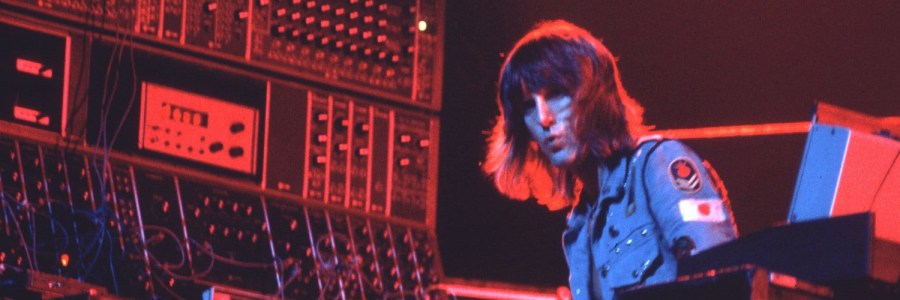
Keith Emerson was one of my most lasting musical heroes. His swashbuckling performance style, his virtuosic playing and his remarkable compositional mix of aggression and lyricism turned my head at the tender age of 16, sending me headlong into the vintage highlights of Emerson Lake and Palmer’s catalog, along with their numerous attempts to recapture lightning in a bottle over the decades. So when Emerson committed suicide on the eve of a Japanese tour in early 2016, it hurt — and none of the tributes to the musician and the man that followed could completely take away the sting.
Emerson’s career in and contributions to ELP have been well served in print throughout the years – there’s the fan-based band bio The Show That Never Ends, Edward Macan’s in-depth musical analysis Endless Enigma and Emo’s own bawdy, devil-may-care memoir Pictures of an Exhibitionist. Now, the British publishers Rocket 88 (who issued an “as-told-by” ELP book last year) are about to release Keith Emerson,“A lavish, fully illustrated book in which family, friends, colleagues, and fans talk to author Chris Welch about [his] life, work, and legacy.”
Rocket 88, whose fine books on Porcupine Tree and Talk Talk already grace my shelves, have done a first-class job. Scoff at the coffee table book format if you choose, but the mouthwateringly rich treasury of images — ranging from family and early professional snaps of a young Keith to widescreen shots of him in his pomp onstage — turns out to be utterly essential to the story told here. Long-standing rock journalist Welch, who knew Emerson throughout his career, proves a strong enough focal figure for the narrative to hold its own; without putting himself forward, he’s consistently able to coax out both the outline of Emo’s life and the raw material behind his myth through interviews with his partners, children and grandchildren (two of whom have followed in his footsteps as piano players), relatives, colleagues and peers in the music industry.
The tale told here is one of a life lived with bracing gusto and deep devotion to the muse — but also a life into which shadows fell, then gathered. In the wake of ELP’s late-1970s meltdown, Emerson bounced from project to project — solo albums, film soundtracks, a joint project with Greg Lake and drummer Cozy Powell (who I caught live in 1986), the trio 3 with Carl Palmer and Robert Berry — none of which gained lasting traction. The ELP reunion in the early 1990s (which I saw in concert in 1993) showed promise; but brought down by the rise of grunge and cumulative nerve damage to Emerson’s right hand from years of driven playing, it shrank to opening act status for Jethro Tull and Dream Theater, with the plug pulled after the trio disagreed on production credits for a comeback album.
Here’s where the book becomes most revealing, especially as Emerson’s later partners, guitarist/vocalists Dave Kilminster and Marc Bonilla, detail their experiences. Briefly reviving his innovative late-60s band The Nice, then manfully working to re-establish himself as a solo artist, Emerson’s stars refused to align; first Kilminster (who I saw with Emerson opening for Scorpions and Tesla in 2004) was poached by Pink Floyd’s Roger Waters, then Emo’s follow-up tour with Bonilla (promoting an excellent 2008 album) was cut short by focal dystonia in his right hand. From out of the blue, ELP pulled together one more time for a London festival show in 2010, winning acclaim despite Emerson’s physical problems and growing stage fright. But in the wake of Palmer’s refusal to continue and unexpected major illness for Emerson, nothing further followed.
There were alternatives afoot, as Emerson began an intriguing transition to orchestral conducting. And he continued to be loved and valued by the musical community in Los Angeles, where he’d settled with longtime partner Mari Kawaguchi. His spontaneous sense of fun, his love for his family, and his constant flow of new musical ideas all remained. But growing depression poorly treated, an increasing aversion to demanding Internet-based fans, and a hectic schedule with little to show for it all took their toll — and on March 11, 2016, a final spiral of despair led to tragedy in the classic sense. Keith Emerson, brought low by the thought of the heights he’d once scaled and his inability to live up to the standards he’d previously set, took his own life.
The impact of that tragedy still lingers, and it undeniably colors the final chapter of Keith Emerson, as his family and friends struggle to make sense of life without Emerson and remember the joy he brought into their lives as a musician and a human being. Their reminiscences and their mourning, as much as anything in this compelling book, bring the man out from behind the shadows of the myth, where he ultimately wins our respect and empathy. In the end, it’s this eyewitness testimony of Emerson’s triumphs and struggles — the highs and lows of a regular guy thrust into a larger than life story — that make the book well worth reading for fans of ELP in particular and of progressive rock in general.
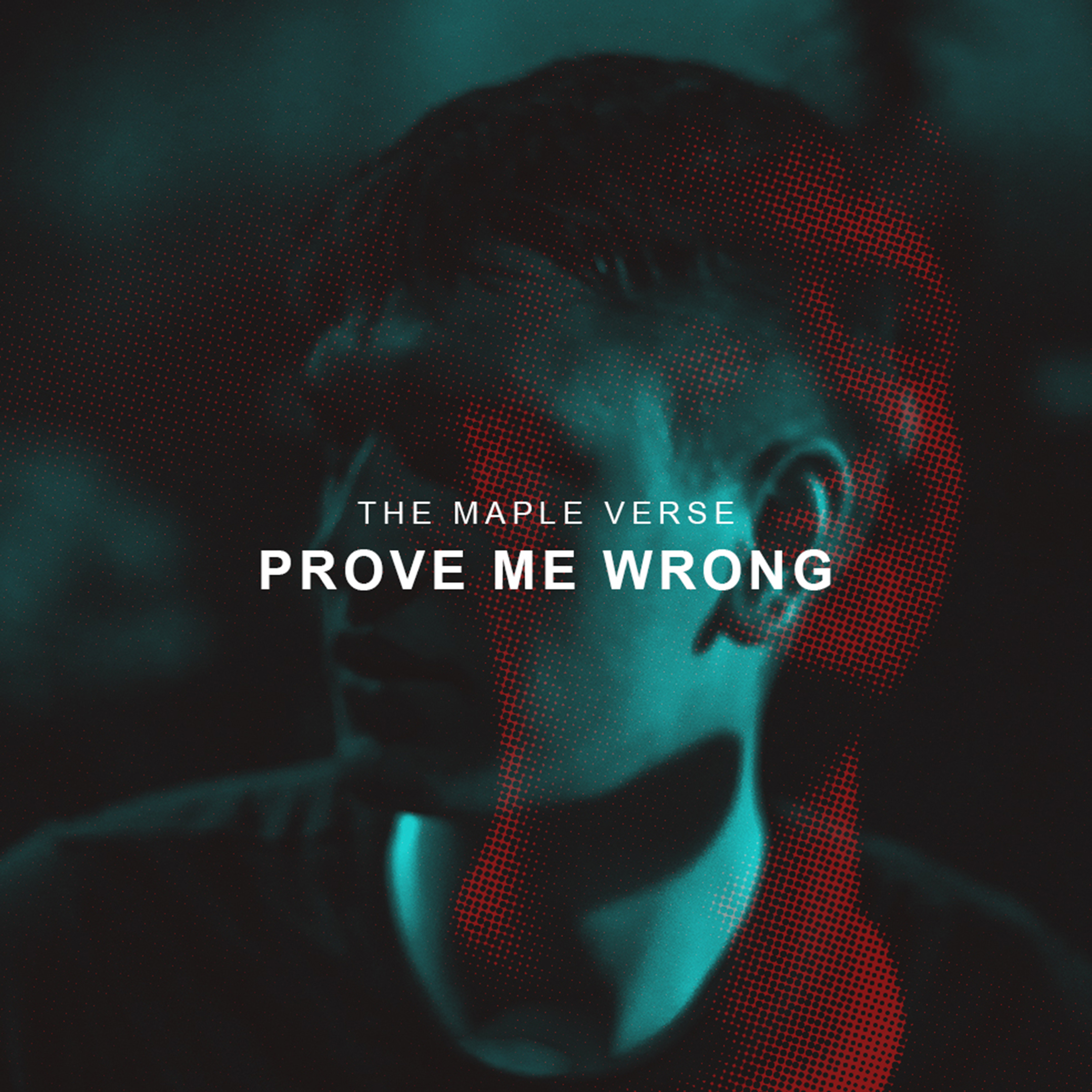
Listening to the debut album by UK project The Maple Verse entitled “Prove Me Wrong” ultimately brings a thought to one’s mind that Bartek Kosinski’s brainchild is one of the most promising acts in the alternative rock today. With The Maple Verse, Kosinski has a knack for soaring, glowing mixture of genres thanks to passionate musicianship and directness, but also a tender, intimate delivery in the vocals and guitar as well as an ability to venture into various emotions, even if sonically not much changes.
“Sounds and Voices” kicks this thing off being sunny but ghostly with floating strings that just wander, like they and the ethereal vocals are lost in the world creating a wide-eyed outlook. Towards the middle the guitar/bass combination becomes more direct, making for a liberating sensation. “A Midnight Contemplation” is just an extra level of bombast this time around in the thick, punchy chords, but the overall vibe remains serene. “Just a Bit” is like having your legs in the shallow end of the ocean, the way the reverb-drenched guitars and almost spoken vocals wash over you like you’re in a life-affirming scene in a film and the lavish keyboard bends truly make it cinematic.
Album closer “Human Ways” on the other hand is more comatose with brooding, sparse notes at the start. However, the song gradually ascends with more direct, pouring playing thrown in and its flourishing sneaks up on you due to how close the whole track is. One minute you’re being put to sleep with aesthetic for an operation and the next you’ve woken up repaired. Before that “Fall and Ascend” however injects some liveliness with more swift picking and stompy moments combined with the glimmering tone that defines much of the record.
“Prove Me Wrong” sees The Maple Verse carrying the beauty and skill, and a huge dose of talent. That is to say, this album certainly makes for one of the prettiest records put out in 2022. Grab it from Bandcamp.
For your ease and reading pleasure, I decided to compile all the links to Progarchy’s 10th anniversary posts into one post. We had a lot of fun writing them, and I hope you have enjoyed this look back at the last ten years in prog. Here they are in the order they appeared:
Progarchy’s Artists of the Decade: Neal Morse and Mike Portnoy (This one had the most views over the course of a couple days that we’ve had in years, thanks to Mr. Portnoy sharing it on his social media. It’s a great rundown at the sheer volume of music these gentlemen have produced over the last ten years.)
As we wind down our month-long celebration of Progarchy’s tenth birthday, we bring you our pick for the band of the decade – Big Big Train. For long term readers, this pick should come as no surprise. The original inspiration for this website came from a love and appreciation for Big Big Train and what they were doing.
To celebrate this Big Big Band, Progarchy’s editors (Chris Morrissey, myself, and Rick Krueger) have each written short essays that we hope touch on the band’s brilliance and importance in the progressive music scene today.
Chris Morrissey A Grand Decade of Big Big Train: Reflections from Progarchy’s Resident Time Lord
It was the band’s freely offered download of “The Underfall Yard” that exercised a magnetic pull on so many potential listeners to Big Big Train. And then, once the track was downloaded and digested, those explorers were hooked for life.
That was back in 2009. For me, it was the magic of David Longdon, now added to the band, that pushed their work into the upper echelon of prog artistry.
And then, for me especially, “The Wide Open Sea” track on the Far Skies, Deep Time EP (2010) offered further proof that this was a band destined for eternal greatness.
And then the grand decade of Big Big Train ensued, from 2012 to 2022, which saw them soar ever higher. No wonder, then, that Progarchy.com came into co-existence, and rode along as prog passengers, chronicling this glorious time in prog music history
Big Big Train has been the engine drawing us all forward. It’s been an honor to track their musical arc here at Prograchy.com for the past ten years of glory.
Thank you, everyone, for celebrating this, during our site’s anniversary month of Progtober, which has included celebration of the decade’s top albums, and also its top artists: Hackett; Wilson; and Morse & Portnoy.
I urge you now to kick back, take time off, and play through BBT’s back catalogue.
To help further your enjoyment of these happy musical memories, I point you to the wide collection of commentary which I have authored that resides here in the Progarchy archives:
As you can infer from the above, The Underfall Yard (2009), Far Skies Deep Time (2010), English Electric Part One(2012), English Electric Part Two (2013), Folklore (2016), and Grimspound (2017) are the six albums that will always be my favorite BBT albums.
I was mildly annoyed when BBT again reworked material on The Second Brightest Star (2017) since it seemed to confirm some of my earlier misgivings. In retrospect, I see my complaints did not adequately take into account the sheer generosity of the band, a band which was being kind enough to admit us into the inner sanctum of the artist’s musical process. Musical excellence is always a work in progress—by constantly being workshopped and refined. I see now that BBT’s superabundant dynamism was something to celebrate, rather than quibble too much about.
I confess I took them for granted in the past few years, only to be shocked by David Longdon’s untimely death. Now I find myself returning to their superb recent albums that I didn’t appreciate enough to write about adequately on Progarchy.com: Grand Tour (2019), Common Ground (2021), and Welcome to the Planet (2022).
Over the past decade, if I had to pick a “top ten” list of ten albums that we editors of Progarchy could collectively designate as our officially designated and editorially endorsed canon, then I would simply gesture to the ten BBT albums I have just named above. I suspect my bandmates would agree.
—Chris “Time Lord” M. (on drums), who dedicates these BBT-focused musings on the grand decade (2012–2022) with gratitude to: Bryan M. (on lead guitar); Rick K. (on organ and keyboards)
Bryan Morey “Following a Dream of the West”
I discovered Big Big Train back in 2013 with English Electric: Full Power. I was blown away, and I still am. A bit later I dug into The Underfall Yard, and then Folklore came out and I was really hooked. Ever since, their albums – both live and studio – have been at or near the top of my yearly best-of lists. They have always remained true to the nature of progressive music by mixing in splashes of folk, pastoral themes, haunting brass, and even pop.
We’ve talked about all that at length over the years here at Progarchy. I want to talk briefly about why I think Big Big Train matters so much, beyond merely the brilliance of their music and lyrics.
Big Big Train stand for something much bigger. They stand, to steal from their own lyrics, for “science and art / And beauty and music / And friendship and love.” In a world that shuns anything connected to the past or tradition, Big Big Train have managed to embrace both that and hope for the future. They recognize the need for both, which is what the Western tradition has always been about. We take what is good from the past and use it to guide our steps forward. And we also learn from the mistakes of the past to influence our way forward.
Big Big Train recognize that “The poets and painters and writers and dreamers” matter. Without them, the world becomes a dull, dreary, and despotic place. Big Big Train represent the poets, painters, writers, and dreamers in their work.
The lyrics of Gregory Spawton and David Longdon are poetry of the finest order. The paintings of Jim Trainer and Sarah Louise Ewing have been some of the finest album artwork of the last twenty years.
As writers, of course their lyrics, but also the liner notes they have included with some of their albums. The original issue of English Electric: Full Power is particularly wonderful in this regard, in addition to having some of the finest packaging of any CD released in the last decade. They showed us how even the humble CD could be presented in a beautiful form one would be proud to display on their shelf.
And dreamers… how could a band that writes about everything from King Alfred the Great to a hero carrier pigeon be anything but dreamers of the highest order?
In doing all this, Big Big Train have inspired us listeners to do the same. I’m inspired to be a better writer when writing about them or any other band. I’m inspired to practice watercolor painting. I’m inspired to dream about the good, true, and beautiful. Few other bands draw me into the sublime the way Big Big Train routinely does. For that, I name them the finest band of not just the decade, but this century.
Rick Krueger
Despite Prog Magazine’s consistent championing of Big Big Train, I managed to resist their appeal until 2016. Searching for a musical mood enhancer one afternoon at work, I came across From Stone and Steel on Spotify.
Any number of things about that set were appealing: the bracing tightness of the band, David Longdon’s adventurous vocals, the scenarios and soundscapes BBT conjured up. But it was the brass that got me. When they slammed into the choruses of “The Underfall Yard” and the lead trumpet soared heavenward at the end of “Victorian Brickwork”, I was hooked! I had to hear more.
Folklore was just out, so I grabbed it ASAP and loved it. Ditto for the back catalog, including my favorite to this day, English Electric: Full Power. And to cap it all off, I ordered the Stone and Steel Blu-Ray via BBT’s website.
Only when I got it, the thing wouldn’t play – due to technical issues with my Blu-Ray player that had already caused fellow fans in the USA headaches aplenty. What to do? Enter Big Big Train’s amazing Facebook group, better known as the Passengers. With an enthusiastic welcome and all the kindness in the world, they steered me toward both a downloadable version of the video and a Blu-Ray player that would play S&S. I was so moved, I figured out how to burn the download version to DVD and shared instructions for doing so with the group – gathering kudos even from band members!
This was a band and a fandom where you could feel at home, and I started proclaiming the wonders of BBT to anyone who would listen. When a friend saw Sarah Ewing’s Folklore-era band portrait functioning as my laptop’s background screen, he said, “I need to introduce you to another friend of mine – he writes for this website called Progarchy.”
Which is how I started here, five years ago. Since then, I’ve followed the ups and downs of Big Big Train’s career with all of you. I’ve delighted in hearing them break new musical ground with every release; my wife and I were thrilled to get BBT tickets in early 2020, then disappointed when that trek became The Tour That Never Was; I had the privilege of interviewing the late David Longdon in the summer of 2021, as he touted Common Ground and eagerly anticipated the long-delayed Stateside tour. In the wake of his death, even as that interview reached a worldwide audience via a link from The Guardian, all of these thrills , ever so briefly, seemed completely hollow.
But in line with Longdon’s wishes, Big Big Train perseveres, and we are the better for it. Their unique blend of pastoral atmosphere, historical narrative, mellifluous harmony and hypermodern groove is moving forward, with Alberto Bravin fronting the band onstage this fall and new music promised for 2023. Saluting them as Progarchy’s Band of the Decade, I can only say, long may their journey continue!


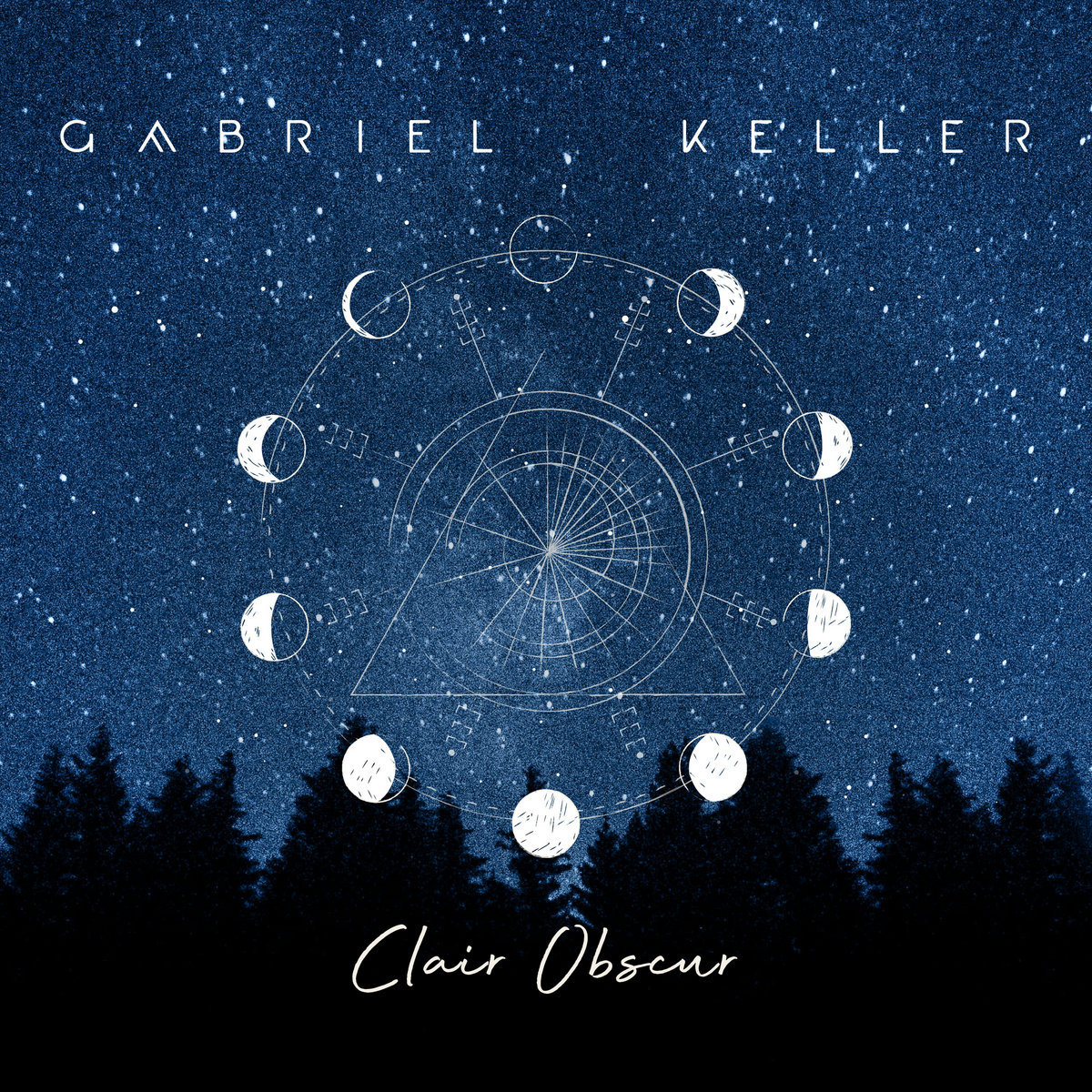 Gabriel Keller – Clair Obscur, 2022





 Progarchy