
It’s not everyday that a Big Big Train album appears in my mailbox. An immense thanks to Kathy Spawton and Greg Spawton for sending it, and to the band for signing it!

Continue reading “Big Big Train’s FOLKLORE Arrives in Michigan”
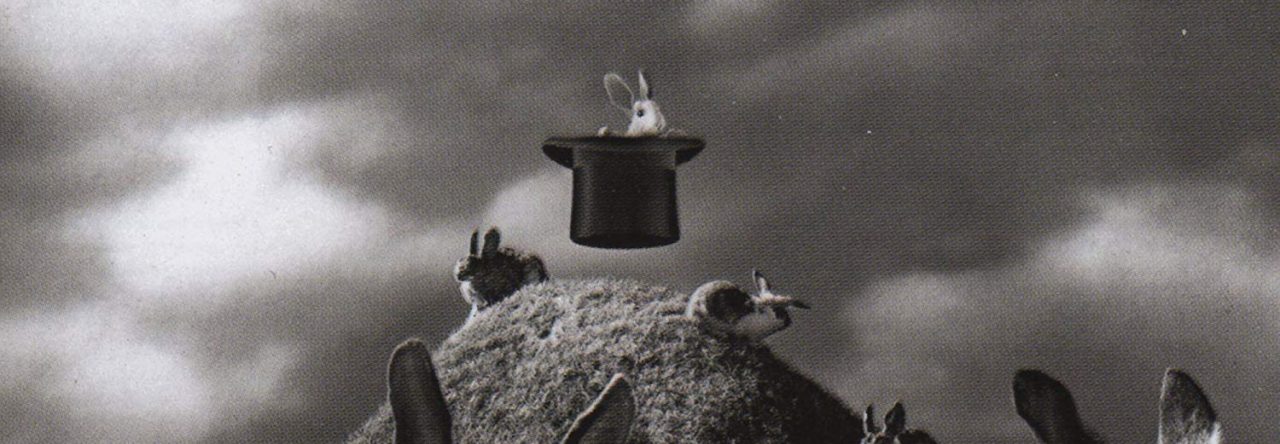
It’s not everyday that a Big Big Train album appears in my mailbox. An immense thanks to Kathy Spawton and Greg Spawton for sending it, and to the band for signing it!
Continue reading “Big Big Train’s FOLKLORE Arrives in Michigan”
What are the ingredients of a truly great album?
Well there’s the songwriting, of course: that’s a given. Likewise the performances of the players. But what else?
The overall sound that a band produces is important, for sure – the choice of instruments and how they’ve been employed in service of the songs, and how well the different qualities of those instruments have been balanced. And let’s not overlook other aspects of the production: the overdubs, the mixing, the mastering and so forth. (I’m sure we can all think of good albums that have suffered from a lack of attention to the latter.)
I think there’s one other underrated ingredient, however. For want of a better word, I call it flow: the way in which the different tracks on the album fit together and contribute to the experience of listening to an album as a whole. Note that I’m not talking particularly of concept albums here (although flow is a highly desirable quality of these). An album can flow well even if there is no story or common themes to link its songs together.
Continue reading “Flow & Balance: The Exquisite Beauty of Folklore”
MAY 31ST, 2016
Review of Airbag, DISCONNECTED (Karisma, 2016). Tracks: Killer; Broken; Slave; Sleepwalker; Disconnected; Returned.
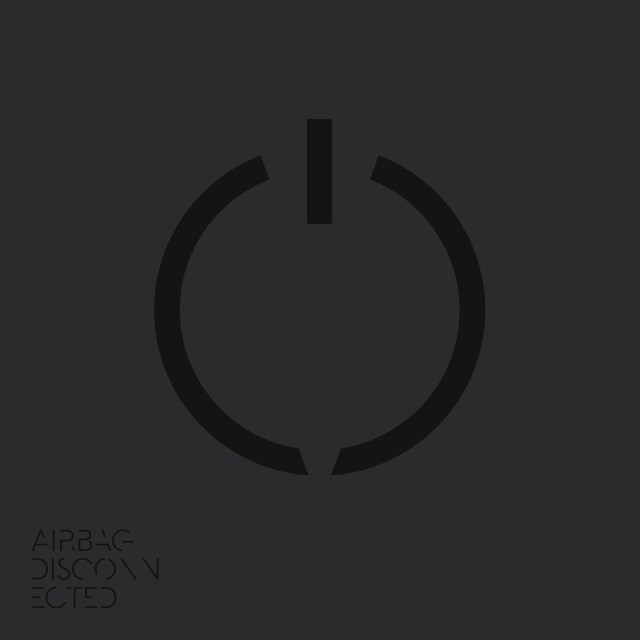
When Airbag first appeared on the prog scene with their extraordinary album, IDENTITY (2008-2009), they seemed a fascinating cross between Pink Floyd and Talk Talk, at least in their influences. Or more accurately, perhaps, imagine Pink Floyd performing Talk Talk songs. Even the cover of IDENTITY looked like something James Marsh would’ve painted. The atmosphere the band created—at least in the studio—was nothing short of astounding. Moody, driven, and meaningful. One might be tempted to call their music prog shoe-gaze.
Their first and only (as far as I know) live release, LIVE IN OSLO, proved just how amazingly talented the four members of Airbag are. After hearing them live, no one could dismiss them as a studio band merely. As much as I liked IDENTITY, it was the 24 minutes of LIVE IN OSLO that utterly blew me away. Upon my first listen to this short album, I knew this band was something special.
Continue reading “Airbag’s DISCONNECTED: The Spirit of Mark Hollis and Rick Wright”
A new video from Frost*’s just-released album Falling Satellites went live this morning, and pretty cool it is too!

Their last trip to the Portland, OR area came more than a decade ago and it’s been nearly as long since they released an album of new material but regardless the 15,000 strong who packed the Sunlight Supply Amphitheater in Ridgefield, WA on Saturday definitely know the Cure. The Robert Smith fronted group played 34 […]
via Concert Review: Portland Finds The Cure in Ridgefield — Drew’s Reviews

The members of BBT have graciously made the CD/vinyl booklet available for free.
Link to BBT’s dropbox: https://www.dropbox.com/sh/zdn1hnnqmme9s26/AAAKvUmF4PfxSfkGIMQXmaIYa/Folklore%20album%20booklet.pdf?dl=0
Or, a direct down load here: Folklore album booklet
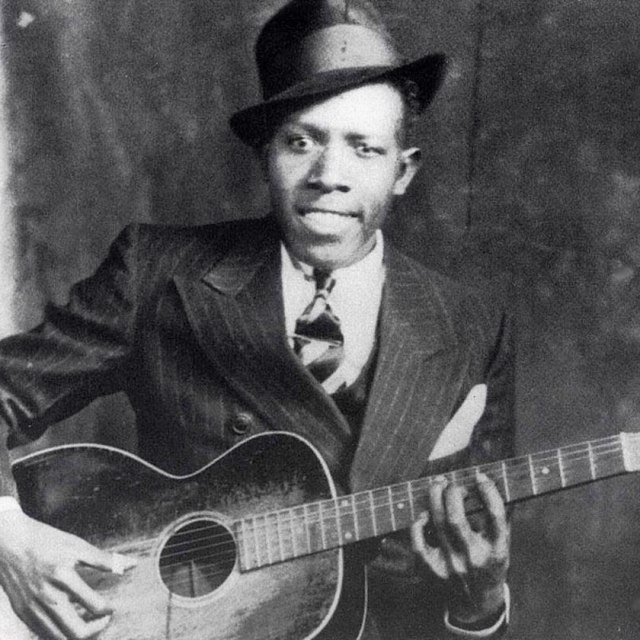 On the heels of Benny Goodman’s concert at Carnegie Hall in January 1938, promoter/producer John Hammond (Billie Holliday, Bessie Smith, Count Basie, Bob Dylan, Bruce Springsteen, Stevie Ray Vaughan…unbelievable) conceived of a concert that would further acknowledge the debt American music owed its roots, within the hallowed walls of the Hall. Race relations being what they were, so risky was Hammond’s venture that it took the American Communist Party to finance the show. “From Spirituals to Swing” showcased, along again with Goodman and Basie, blues and boogie artists like Big Bill Broonzy, Sonny Terry, Big Joe Turner, Helen Humes, James P. Johnson, and Meade Lux Lewis. Absent, although invited by Hammond, was Robert Johnson, an obscure Delta blues guitarist and singer who had been getting some buzz via a minor regional hit called “Terraplane Blues.” Hammond came to learn that Johnson had been murdered that summer, and replaced Johnson with Broonzy, and for all of Broonzy’s subsequent influence on the blues revival of the 1960s, it would be Robert Johnson whose legend would grow (particularly after Hammond et al. produced the first compilation of Johnson’s work in 1960), a ubiquitous ghost, as the bluesman who sold his soul to the devil at the crossroads in exchange for a phenomenal talent. This perception of Johnson may have actually originated with him, and songs like “Hellhound on My Trail, “Me and the Devil Blues,” and “Crossroads Blues,” don’t dispel the self-made myth; yet Johnson’s talent speaks to years of real work, occupying a liminal space in an environment hostile to almost everything he was, and equating this with a meeting with Satan at the crossroads isn’t a stretch: how much would you sacrifice to be the best at the thing you love the most? Johnson gave it his life; what might have appeared from the outside, by those who knew him, as supreme self-involvement that transcended any sustained relationships, and led to his poisoning at the hands of a lover’s jealous husband, was the ultimate tribute to his own self-made gift. He had more to get done on this earth than most, and that had to be a kind of hell as well as a kind of ecstasy. You can hear both in every one of his 42 existing recordings. And the “centennial edition” issued in 2011 offers the set with noise reduction deftly applied, so that the surface pops and scratches from the original master discs are scrubbed without loss or distortion of content. You can hear Johnson shifting in his chair, and, in the length of echoes, the subtle changes in his position relative to the corner that he faced while recording — he is made human, and what he produces in that corner, alone with his guitar, is all the more remarkable. Johnson’s technical ability allowed him to play a rhythm and a lead simultaneously, but while much has been made of his guitar playing, and his odd and varied tunings, he used his voice to equal effect, in service to his songs, here a vibrato, there a growl, here a moan or high-pitched yawp. He employed a handful of templates for many of his songs, but brought to them a loose approach and lyrical dexterity. There is also a strong sense of performance in the tunes. Where Charley Patton was screaming and hollering his blues, and Blind Willie Johnson may have been truly possessed, Robert Johnson was the first post-Delta blues singer, a polished showman using affectation in an almost punk-ish way. It is maybe this that caught the attention of Bob Dylan, Keith Richards, Billy Gibbons, Jimmy Page, Eric Clapton — who had the nerve, in one form or another, to take on Johnson’s “Stop Breaking Down,” “Sweet Home Chicago,” “Come on in My Kitchen,” “Ramblin’ on My Mind,” “Traveling Riverside Blues,” “Dust My Broom,” “Four Until Late,” “Crossroads Blues,” “Love in Vain” — and what made it even conceivable that such songs could be covered or transformed or influential. Because in a sense Johnson was covering them himself, replaying that ride to the crossroads. Choosing the trip, feeling the night. It is the essence of all rock and roll.

 Progarchy