10 Years of PARADOX HOTEL (Flower Kings)

In just two days, one of my all-time favorite albums will turn 10-years old.  Happy birthday, PARADOX HOTEL (Insideout Music, 2006).
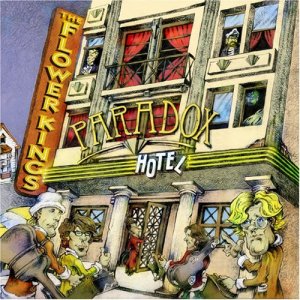
Paradox_hotel_cover
Insideout, 2006.

I still remember well the day it arrived from amazon.com.  I had thought the previous album, ADAM AND EVE, outstanding, but I was looking for something a bit more expansive in terms of music as well as lyrical scope.  Given that this new album would be a return to a two-disk format, I’d assumed that Roine and Co. would not disappoint.

Not only did the band NOT disappoint, but they soared.

If forced to rank this cd within the Flower Kings’ discography, PARADOX HOTEL would sit very comfortably in the second best position, just below their best album, SPACE REVOLVER.
IMG_0001
Expansive.

Interestingly enough, when PARADOX HOTEL came out, Stolt expressed some concern.  Usually, a band hypes its latest album as its best (well, “hype” it too strong, as bands earnestly believe this to be true, as they should), but Stolt argued that he had thought the music of ADAM AND EVE more interesting and complex.  Yet, the fans had not responded to ADAM AND EVE as the band had hoped, so they had returned to a poppier sound with PARADOX HOTEL.

As is always the case with The Flower Kings, the band alternates between incredibly complicated and tight jazz-fusion-esque music to more loose and open progressive-pop and rock.  If ADAM AND EVE tended toward the former, PARADOX HOTEL certainly embraces the latter.

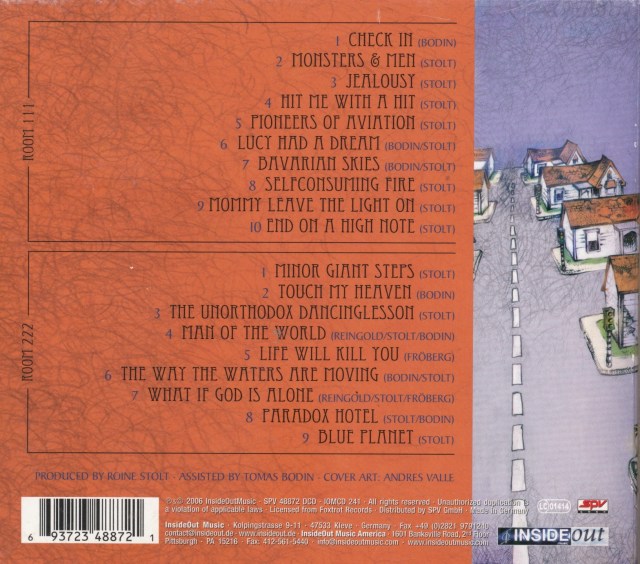
And, yet, while the complexity might not exist track by track, it does overall.  It contains some of the darkest music the band has ever written, such as track seven on the first disk, “Bavarian Skies,” but it also reveals the most expansive and joyous the band has ever been with tracks such as “End on a High Note.”

This is a fascinating album in terms of its flow and its story.  Though I do not know exactly what the album is about, I have interpreted it—from my first listen to it a decade ago—as a rather Dantesque examination of some form of purgatory.  The Paradox Hotel is not quite the Mansion with Many Rooms of Heaven, but it is certainly a way station between this world and the next.  After all, immediately upon checking in we meet monsters, men, U2 (I think, in “Hit Me With a Hit”), aviators, the young, Nazis, moms, the jealous, the violent, and the egotistical avaricious.  Yet, through all of this, hope remains.  Dreams and lights keep us centered on the end of the journey.

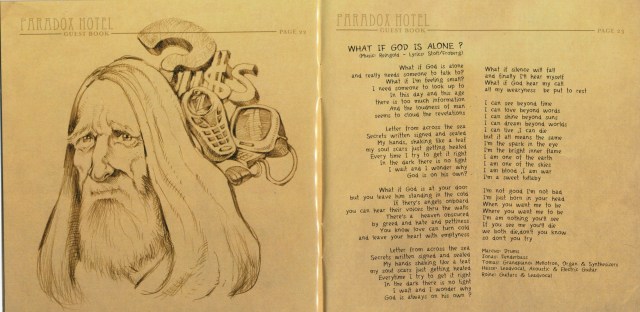
Disk two, by far the more experimental of the two disks, gives us even more glimpses of heaven, allowing us to touch, step toward, and dance in anticipation.  Further, we learn that life will kill us and come to the nearly penultimate doubts in asking the most theological existential question ever offered: what if God is alone?
IMG
Definitely the most theologically existential song in the history of prog.

Finally, on track eight of disk two, we meet many of the dead who have moved through the hotel from time to time (or time to eternity, more likely), and we end with the glorious “Blue Planet,” seeing what voyages yet remain as we get caught in the revolving hotel doors.

It really could get no more C.S. Lewis and The Great Divorce or J.R.R. Tolkien and “Leaf by Niggle” than this.  Indeed, if the Inklings had made prog albums, they would’ve made PARADOX HOTEL.

Or, maybe it really is a Swedish meditation on Dante’s Purgatorio.
Truly, this is some of the most satisfying, thought-provoking, and comforting music I have encountered in my own 48 years in this world.  Yet one more reason to praise Stolt and Co. for the glories they see and reveal to all of us.
Fieldwork: Alan Lomax online

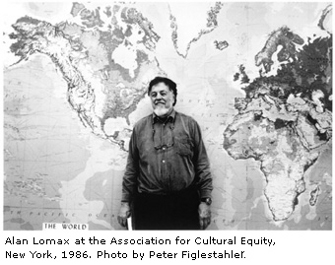
alan_at_archiveWhen Alan Lomax initially envisioned his freely available Global Jukebox, a project that would bring together the recordings of vernacular music and stories he and others made around the world, it was a far off dream that the advent of the internet could only hint at.  The 17,000+ recordings he had made since the 1940s (and these, by the way, don’t include the recordings he made for the Library of Congress in the 1930s and 1940s) would need conservation work, digitization, and a robust search and delivery platform.  Recently that work has been completed by the Association for Cultural Equity, a nonprofit founded by Lomax in 1983 “to explore and preserve the world’s expressive traditions with humanistic commitment and scientific engagement.”

Progarchistas should be aware of this archive because — in addition to its contents being at the root of much rock, including progressive rock, music — the work of Lomax, probably the best known and most prolific of field collectors, represents recorded evidence of how people, in the pre-internet era and often in conditions where even a radio was a luxury, lived day-to-day with the music and dances and stories they and their ancestors created, for entertainment and for their own cultural identity.  What can this body of work mean to us, and how does it reflect, or not, constants in the way we experience and participate in music across cultures? The richness of this archive, and of Lomax’s endeavor, is endless food for such thought.

http://research.culturalequity.org/home-audio.jsp

Novembre – Ursa – Album Review

Artist: Novembre Album Title: Ursa Label: Peaceville Records Date Of Release: 1 April 2016 This album has proved to be one of the most difficult to write during 2016 so far. And the reason for this is the simple fact that this album has had me torn in two for such a long time. However, […]

https://manofmuchmetal.wordpress.com/2016/03/31/novembre-ursa-album-review/

To celebrate 40th anniversary of 2112, Rush will release full comic-book suite

http://cache.vevo.com/assets/html/embed.html?video=USUV71600543

http://cache.vevo.com/assets/html/embed.html?video=USUV71600819

Rolling Stone says:

Today marks the 40th anniversary of the release of Rush‘s prog-epic masterpiece 2112. To celebrate, the band is releasing a digital comic book telling the story of the LP’s titular rock opera. It begins with the “Overture,” which Rolling Stone is hosting exclusively. The entire 20-plus-minute suite, will then be available on Rush.com 21 hours and 12 minutes from the time of this post (Saturday at approximately 6 a.m. PST) and will be available for fans to watch for free until Monday at 6 a.m. PST.

The Incomparable Gift of Excellence: Big Big Train’s STONE AND STEEL

Big Big Train, STONE AND STEEL (GEP, 2016), blu-ray; and Big Big Train, FROM STONE AND STEEL (GEP, 2016), download.

stone_and_steel cover
The band’s first blu-ray.

Twelve stones from the water. . . .

Yesterday, thanks to the fine folks at Burning Shed, the first blu-ray release from Big Big Train, STONE AND STEEL, arrived safely on American soil.  Then, today, thanks to the crazy miracle of the internet, Bandcamp allowed me to download FROM STONE AND STEEL.

In a span of twenty-four hours, my musical world has been thrown into a bit of majestic ecstasy.

2016 might yet be the best year yet to be a fan/devotee/admirer/fanatic (oh, yeah: fan) of the band, Big Big Train.  I’ve proudly been a Passenger since Carl Olson first introduced me to the band’s music around 2009.  And, admittedly, not just A fan, but, here’s hoping, THE American fan.  At least that’s what I wanted to be moments after hearing THE UNDERFALL YARD for the first time.

Continue reading “The Incomparable Gift of Excellence: Big Big Train’s STONE AND STEEL”

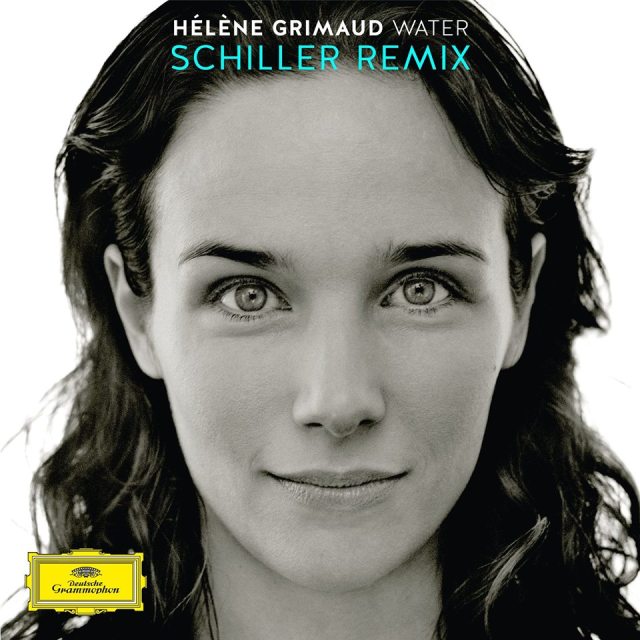
Hélène Grimaud — Water — Schiller Remix @HeleneGrimaud

Prog fans should note that Hélène Grimaud has collaborated again with German electronic artist and composer Schiller.

Schiller has done a remix of Debussy’s Préludes, L117 from Hélène’s new album Water.

The transmogrified classical track is released today and available right now at https://DG.lnk.to/WaterRemix

water

Big Big Train — Folklore

David Longdon writes about the first track on Folklore:

Folkore [the album and the track] starts off where most of our ancestral stories most likely began. Around the cracking flames of the campfire. Stories told after sunset, with no daylight reassurances or distractions. The cold dark night forcing us to huddle closer together, among the security of the ‘pack’, beside the warm glow of the flames. The night focusses us in. Our minds become much more open to suggestion. Our imaginations are susceptible, impressionable and pliant. It is at these very moments, when the unbelievable can all too easily be believed.

The moment is right and the stage is set. Firelight makes the shadows dance. Flickering light contorts the animated features of the storyteller – transforming them into something other than they are.

Women and men, young and old – rapt listeners all. Although the older listeners have heard these stories many times before and they know what is to unfold. They too delight in the engrossed faces of the youngsters. Open mouthed and spellbound as they listen to wondrous tales. Or recoiling in fright to the comforting arms of their mothers. Caught up in the drama of the moment. Hanging on each word and every plot twist.

These tales Ignite and fan the flames of our fertile imaginations. These are our stories of love, words of wisdom, cautionary tales. Heroic adventurers featuring fantastical creatures and conniving villains. Supernatural tales, stories involving the incredible luck of particular individuals. Stories that reveal the fate of their many characters and the consequences of their actions. It is an integral part of who we are and who we think we are.  Forming the bedrock of our cultures.

Passed down by word of mouth from generation to generation – the fine details and factual information sometimes abandoned and exaggerated in favour of the drama within the story as these tales are reinterpreted from storyteller to storyteller. Country to country, each adding something of themselves to embellish the tale.

“The pen is mightier than the sword, the music of the word is scored”

Each development further enhancing the power of the word. The emergence of the written word, the development of the ink press, the incredible technological advancements of the 21st century – all fuel to our fire and grist to the mill. We are still making out own cultural folklore to this day – the addition of the press and social media allows our stories to be told at a terrific rate.

Folklore is a deliberate companion/bookend piece to Wassail. It shares the same chord sequence and it uses the same mandolin/violin/flute riff. The instrumental play out at the end of the piece features members of the band taking a short solo section then passing it on to the next player and so on until the piece concludes.

In addition to Folklore being the first track on the album and the title track of the album, it will also be the first ‘single’ taken from the album. A short film (music video ) has been shot to accompany it, featuring a cast of extras drawn from our fantastic ‘passengers’ on the BBT Facebook forum.

My friend and fellow band mate Greg Spawton will post a blog next week in which he writes about the next track on Folklore.

“…so put another dime in the jukebox, baby”

rock_rollBoston’s mega public broadcasting treasure trove, WGBH, has added to its Open Vault the interviews that went into the making of its epic 1995 documentary, Rock and Roll. Those of us who remember this 10-hour landmark from those foggy, hoar-bitten pre-Wikipedia days may think fondly of it as the only long-form documentary to take on the genre as a whole, from a reasonable distance from Rock’s genesis but while many of its prophets were still alive and interview-able. While the finished programs are not as yet available (no doubt due to copyright on the songs used in the film), video and transcripts of the interviews are here:

http://openvault.wgbh.org/collections/rock_roll/interviews
Of particular interest to progarchists (but who’s to say, since this is all gold), Derek Taylor’s interview: http://openvault.wgbh.org/catalog/V_5477939234A04D638139ECAD0FD8CC5B

The Top Ten Yes Albums

Yes Logo

Inspired by fellow Progarchist Erik Heter to post a “Top Ten” list, here are what I believe to be the ten best Yes albums. Whether you agree or disagree with my choices, feel free to add your two cents’ worth in the comments!

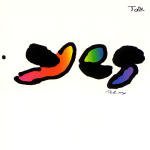
Yes Talk

10. Talk

An album by the Rabin/Anderson/Squire/Kaye/White configuration that never got the respect it deserved. I’ve always had a soft spot for it, particularly “The Calling” and “Endless Dream”. It strikes a nice balance between the full-on pop of 90125 and the prog of the band’s glory days. Check out Time Lord’s essay on this album here.


yes 90125

9. 90125

Speaking of 90125, the charm and attractiveness of its songs cannot be denied. It won Yes a new generation of fans, and when I need a dose of classic ’80s rock, it’s the album I go to.


545488_YES_Progeny_LP_Jacket_Cover_13630.indd8. Progeny

Before this recent release of seven concerts from 1972, I would have placed Yessongs here. But the raw sound of these recordings makes them a really fun listen. Hear Rick Wakeman’s keyboards channel a local jazz DJ! Hear Jon Anderson tout a local vegetarian restaurant! And hear a young band at the peak of their powers playing the entire Close to the Edge album.

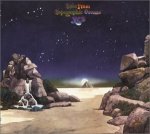
Tales_from_Topographic_Oceans_(Yes_album)

7. Tales From Topographic Oceans

In the rock world at large, this was considered the epitome of self-indulgence. I think Yes were ahead of their time. Nowadays, it’s normal for a prog band to record a 30-minute epic. In this album, there are some truly beautiful passages of music.


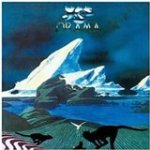
Yes Drama

6. Drama

Probably a controversial choice for this slot, but I love this album. It’s notorious for having Trevor Horn and Geoff Downes instead of Jon and Rick, but “Machine Messiah” and “Run Through The Light” are excellent songs. Chris Squire’s playing on this album is some of his best, as well.


Yes Fragile


5. Fragile

“Roundabout”, “Long Distance Runaround”, “Heart of the Sunrise”, no self-respecting fan of prog music can be without this classic.


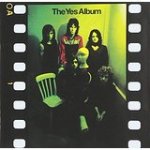
Yes Album

4. The Yes Album

This is the one where all the disparate elements of Yes first gelled. “Starship Trooper” and “I’ve Seen All Good People” defined early-70s FM radio in America. I still get chills listening to it.


relayer

3. Relayer

The harsh sound of the original mix of this album turned me off, but Steven Wilson’s new one is a revelation. It’s a shame the Patrick Moraz edition of Yes didn’t record more. They made some wonderfully challenging and exciting music.


Yes-close


2. Close To The Edge

The pinnacle of the classic lineup (and Bill Bruford’s finest hour). A contemporary symphony that will endure for a very long time.


Yes Going

1. Going For The One

The punk explosion of the mid-70s lit a fire under Yes, and the opening title track features some of Steve Howe’s most aggressive guitar. “Parallels” rocks unbelievably hard, while “Awaken” is my favorite long-form Yes song. For a much better and comprehensive appreciation of this album, read Erik Heter’s review here.


Agree with the list or disagree? Was I wrong to leave out Tormato or Magnification? Let us know in the comments!