
The new Megadeth looks — and sounds — like it is going to be a tremendous album.
Can’t wait.
Jan 22.
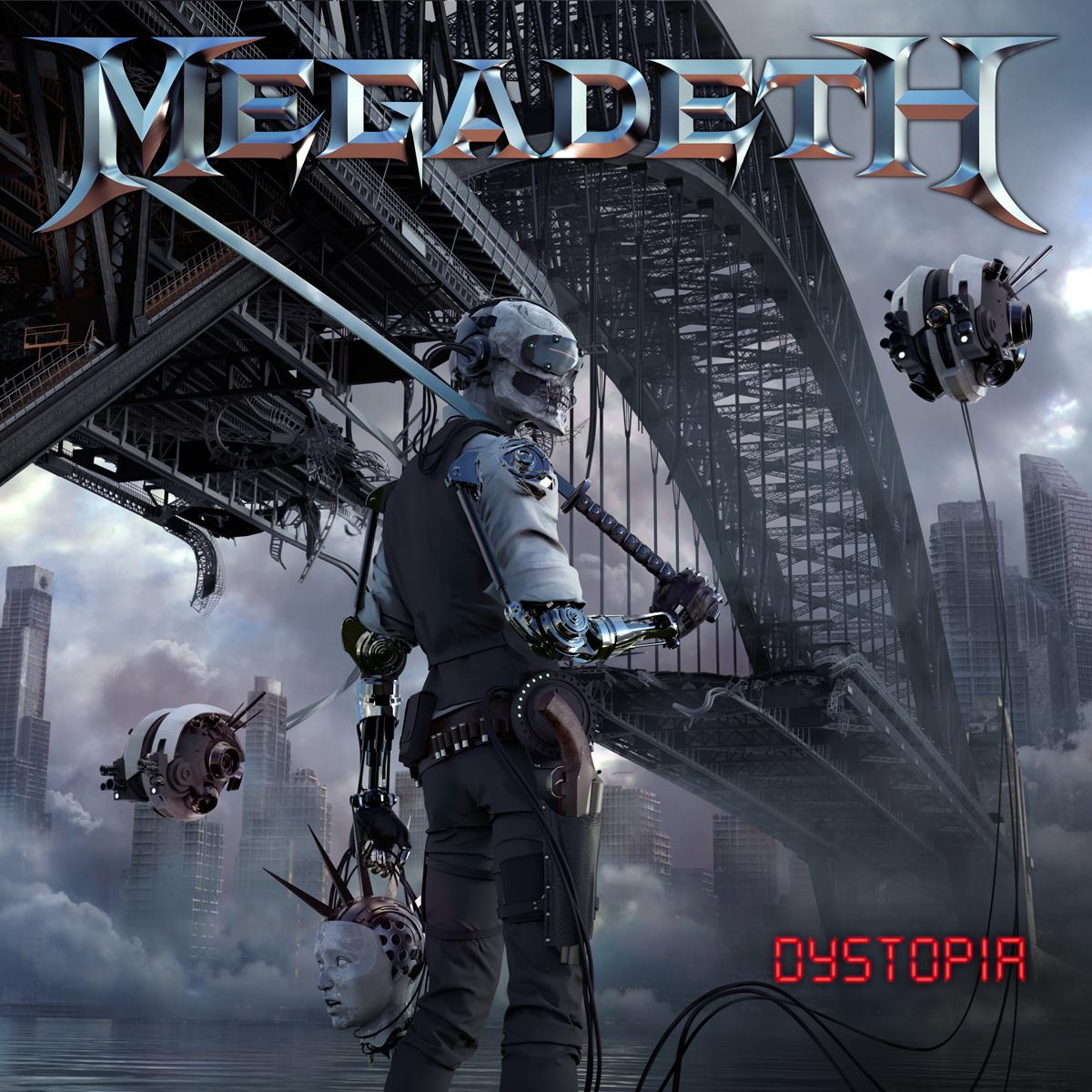

The new Megadeth looks — and sounds — like it is going to be a tremendous album.
Can’t wait.
Jan 22.
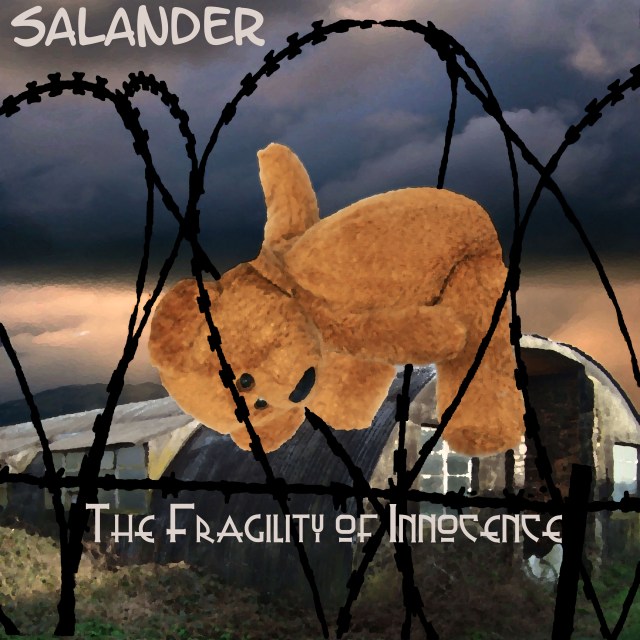
Great news from Dave Smith of Salander:
Salander are re-releasing The Fragility Of Innocence on November 20th. The album has been totally remastered and will contain three extra tracks that date back to 2005. These were the first tracks recorded by Dave Smith and Dave Curnow and sowed the seed of ideas that would later find the two Dave’s forming Salander. These tracks too have been remastered. Two are instrumentals and the other came about when Dave C discovered a Jon Anderson Lyric generator on the internet. All he had to do was enter a name, a place and a general item onto the site. He chose Floppsy The Bunny,Osnabruch, and a Pot Noodle. Thus, the words spat back to us became the song.
The Fragility Of Innocence will be available from www.salander.bandcamp.com as a name your price in order for people who bought the original to download the remastered version with bonus tracks for free.
There are no plans for any new Salander music in the near future as Dave Smith is now living and working in Lanzarote in The Canary Islands but he hopes to start writing in the new year.
Let me (Brad) just state: this is one of the single most powerful albums I have ever heard. I loved the first two Salander releases–CRASH COURSE FOR DESSERT and STENDEC–but this is even superior to those two. I’ve had a review copy for a while now, but I simply have not been able to write about FRAGILITY as it simply moves me so much, I can’t express my views in words. Strange, I suppose, but true. I’m going to keep trying, however.
Regardless, you need to BUY this album, and now.–BB
Excellent news from Rhys:
|
Chief Boden’s new neighbor asks him for a favor, while tension escalates between Severide and Captain Patterson. Meanwhile, Mouch and Herrmann receive tickets to see Rush.
Available without sign-in until: November 25, 2015
Sign in to watch until: July 7, 2016


Props to Adele for keeping the album alive.
Every musical artist has at least one killer single inside them, but it takes real talent to pull off a totally killer album.
And everybody wants to own a totally killer album.
Say what you want about Adele, she is at least keeping the album alive in an age of pop music decadence that is streaming us to death.
Is that prog enough for y’all?
Even as $10-a-month streaming services multiply, YouTube’s free offerings proliferate and record sales flag—to 257 million albums in the U.S. last year from 785 million albums at their peak in 2000—Adele’s fans don’t appear to have gotten the memo. They have snapped up 14 million copies of her albums in the U.S., according to Nielsen, and 33 million of her digital singles. Her debut album, “19,” sold 2.7 million copies and her sophomore blockbuster, “21,” sold 11.2 million—the only album ever to be the biggest seller two years in a row.
With such massive sales, the conventional wisdom has been that the singer appeals to all types. But a Nielsen analysis of her fans reveals a distinct profile: They are 62% female, most between 25 and 44 years old, with children.
…
Adele’s full album won’t be available immediately on streaming services, streaming companies say, and they don’t know if or when it might be. Stars such as Beyoncé and Ms. Swift have held albums from streaming to spur sales.
While Adele’s older, female-leaning fan base likely boosts her CD sales, given their music-buying habits, Music Watch managing partner Russ Crupnick said that their deep “emotional engagement”with her sentimental ballads probably matters as much. They think: Adele’s music “is important enough for me that I want to own it. Even though I may be able to stream it or watch it on YouTube, I want to possess it,” Mr. Crupnick said.”
When we were young, we bought albums.
A review of Glass Hammer, DOUBLE LIVE (deluxe edition, Sound Resources, 2015).
2 CDs/1 DVD. Tracks: Nothing, Everything; So Close, So Far; Mythopoeia; Third Floor; The Knights of the North; If the Stars; and Time Marches On. The DVD consists of the 1.5 hours of the show at RosFest, May 3, 2015.
Glass Hammer: Steve Babb; Susie Bogdanowicz; Carl Groves; Aaron Raulston; Kamran Alan Shikoh; and Fred Schendel.
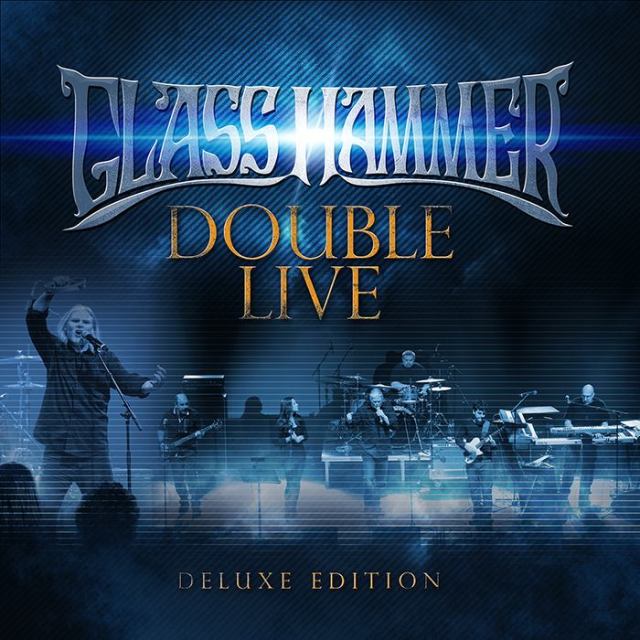
For a band that specializes in writing studio masterpiece after studio masterpiece, it’s somewhat surprising to find that Glass Hammer has released six live albums (albums defined as CDs and/or DVDs): LIVE AND REVIVED; LEX LIVE; LIVE AT NEARFEST; LIVE AT BELMONT; LIVE AT THE TIVOLI; and, now, DOUBLE LIVE. Two live songs also appear on 2007’s COMPILATIONS. The band doesn’t even tour that much, but, when it does, it’s something mightily special.
Additionally, the band has over twenty years of material to choose from. Not surprisingly, three of the seven live tracks on DOUBLE LIVE come from the band’s last album, but the selections reach all the way back to 1995. “Nothing, Everything,” “Mythopoeia,” and “Third Floor” come from THE BREAKING OF THE WORLD (2015). “If the Stars” from IF (2010). “The Knight of the North” from INCONSOLABLE SECRET (2005). “So Close, So Far” from SHADOWLANDS (2004). And, “Time Marches On” from PERELANDRA (1995). I was a bit surprised by the last selection as it appears three other times on Glass Hammer releases. Still, of the four versions, this is by far the best.
Coming off what is arguably their best album to date, THE BREAKING OF THE WORLD, the six members on stage look as happy and as confident as can be. It’s an absolute joy to watch them perform on stage even though the camera work is a bit stiff compared to, say, the visually fluid LEX LIVE. Clearly, they love each other, their music, and their ability to perform their art together and for others. Joy simply exudes from the screen. Babb grooves, Schendel glides, Raulston pounds, and Shikoh soars. And, sheesh, are these guys tight. I could probably watch the interaction of bass, drums, guitar, and keys in “Time Marches On”—especially beginning at the the 1:23:34 mark. Holy Moses, these guys are amazing. All of them. I’d love to just tell each one of them individually—”you are doing what you were meant to do on this Earth!!!!”
Though I adamantly love the Glass Hammer albums fronted by Carl Groves and Susie Bogdanowicz (CULTURE OF ASCENT, ODE TO ECHO, and THE BREAKING OF THE WATER), I had no idea what kind of a frontman Groves would prove to be on a live stage. I had no worries about Bogdanowicz.
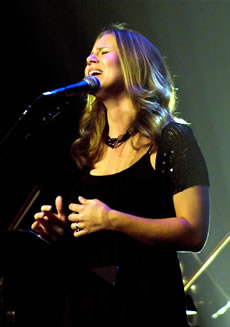
She possesses one of the two best voices in rock today, and I’ve said this and written this repeatedly. She’s also gorgeous (her all black outfit makes her look like a superhero), and it’s quite clear that she gives every aspect of her soul to this music. Unlike so many in the world of music, she also conveys all of this power on stage as a person and an artist with a clearly good and gentle soul. It’s a fascinating paradox.
Groves, though, clearly proves his mettle on this live album. He’s absolutely fun to watch. I wish I had better descriptives coming to my tired mind at the moment, but the word that keeps coming to me is “fun.” And, I mean this in the best sense. He’s playful and mischievous, but not at all self centered. He’s the front man, but he leads as one of equals not as the cock on parade.
While I noted above that this is one very tight band, I also have to say this: while the band celebrates its friendship and art, we, too, should be celebrating. It’s an honor, a privilege, and an inspiration to look at what Babb and Schendel have accomplished over the past two decades. I could never even count how many hours of sheer pleasure they’ve given me, how many times they’ve inspired me, and how often they’ve demonstrated that good and light can exist in a world of darkness and chaos.
 THE PINEAPPLE THIEF FRONTMAN BRUCE SOORD TO RELEASE SELF-TITLED SOLO ALBUM THIS JANUARY ON KSCOPE
New track “Familiar Patterns” streaming online
|
|
ENGLAND – Kscope is set to release the first solo album from Bruce Soord, the frontman and creative force behind The Pineapple Thief, on January 22, 2016.
The self-titled album was recorded during the summer of 2015 at Bruce Soord’s U.K. studio. All the tracks were written and performed by Soord with Darran Charles (Godsticks) playing additional guitar.
Fans can here the first track “Familiar Patterns” on YouTube at: https://www.youtube.com/watch?v=IYBB2iHfutE&feature=youtu.be and SoundCloud at:
Having wanted to make a solo album for many years, Soord found himself taking surprising paths to create this record; here he has explored the softer, dreamier side of his song-writing – more acoustic in nature, while retaining depth in its arrangement.
Revisiting his life to find inspiration for the songs, this record is a celebration of the past as much as it is an epitaph of times past. While the songs describe a sense of the past that has been lost, it is also a celebration of Soord’s wonderful and artistically decaying childhood town.
Soord recently premiered the songs live with a U.K. tour supporting label mates Sweet Billy Pilgrim.
 1. Black Smoke
2. Buried Here
3. The Odds
4. A Thousand Daggers
5. Willow Tree
6. Born In Dilusion
7. Field Day Part 1
8. Field Day Part 2
9. Familiar Patterns
10. Leaves Leave Me
Soord’s mainstay band The Pineapple Thief, which he founded in 1999, has continued to evolve and refine its sound and is seen by many as one of the most interesting and innovative rock bands the U.K. has produced in recent years. Albums like Magnolia(2014), All the Wars (2012) and Someone Here Is Missing (2010) have made the band’s reputation and fan base stronger, gathering interest from a wider spectrum of alternative rock followers. Bruce Soord also collaborates with other Kscope artists, joining forces with Katatonia’s Jonas Renkse on the 2013 Wisdom of Crowds project and joining Katatonia on its Dethroned & Uncrowned Unplugged acoustic European tour. Soord is also working on various other projects creating 5.1 mixes, including the new TesseracT album Polaris and remixing Opeth’s album Deliverance.
Stay tuned for more information on Bruce Soord and his upcoming self-titled solo album, out next year on Kscope.
-###-
|
|
|
|
Bruce Soord online…
Kscope online…
|
One of my favorite websites, Power Windows had a great writeup and description of the new RUSH R40 LIVE DVD/CD. Enjoy! And, as always, thank you, Eric Hansen, editor extraordinaire.
Vanden Plas, “Chronicles of the Immortals: Netherworld Path 2” (Frontiers Music)
Tracks: 1. Vision 11even *in My Universe (6:26), 2. Vision 12elve *Godmaker’s Temptation (5:05), 3. Vision 13teen *Stone Roses Edge (6:38), 4. Vision 14teen *Blood of Eden (*All Love Must Die)[*the Rite][*This Is the Night] (13:18), 5. Vision 15teen *Monster (7:41), 6. Vision 16teen *Diabolica Comedia (6:38), 7. Vision 17teen *Where Have the Children Gone (4:42), 8. Vision 18teen *the Last Fight (7:34), 9. Vision 19teen *Circle of the Devil (7:59)
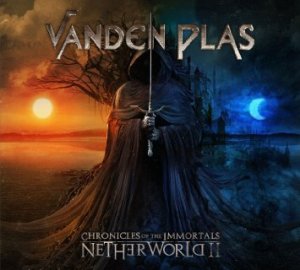 German prog metal outfit Vanden Plas recently released part two of their masterpiece, “Chronicles of the Immortals: Netherworld.” Part 1, released last year, was one of my top albums of 2014, and Part 2 has already promised to be high on this year’s list as well. Since the release of Part 1, I have had the chance to delve more deeply in to this amazing band, and I have not been disappointed. Everything I have heard by Vanden Plas has been stunning. They take their work very seriously, and they put their all into everything they do.
So who is Vanden Plas? Stephan Lill on guitars, Torsten Reichert on bass guitar, Andy Kuntz on vocals, Andreas Lill on drums, and Günter Werno on keyboards. Every member of this band is at the top of their game. Stephan Lill’s shredding on the guitar is mind-blowing, and Werno’s keyboards rank with the best efforts of any of Dream Theater’s outstanding keyboardists. Above all, however, soars Andy Kuntz’s spectacular vocals. In my opinion, he has the best voice in progressive metal, by a wide margin. He is smoother than James Labrie (who often fails to recognize his own limits), and he brings more power and clarity to the lyrics than any other metal vocalist I have heard. He fully recognizes his range and ability, and he does not try to exceed it, which may explain why his voice still has such power after years of singing metal. Also, the fact that he doesn’t scream probably helps too.
Truth be told, after being blown away by Part 1, I was a little apprehensive about hearing Part 2. I wasn’t quite sure that Vanden Plas could equal Part 1. Thankfully, I had nothing to worry about. Part 2 is every bit as good, maybe even better. It picks up right where Part 1 left off, with a few seconds of quiet followed by roaring and driving metal riffs, symphonic epic-ness mixed with choral beauty, and continued female vocals from someone whose name I can’t find anywhere. She sang on Part 1 as well, and her voice matches Andy’s perfectly. When they sing together, the angels themselves stop to listen. Vanden Plas perfectly straddle the zone between heavy metal, prog metal, and progressive rock. They can be heavy one minute and hauntingly beautiful the next. The way in which they do that is simply breathtaking.
The story itself (since this is a concept album, after all), is based off of the highly successful novels written by German author, Wolfgang Hohlbein, who helped write the lyrics for both albums. He happens to be a big fan of Vanden Plas. The story itself is really difficult to nail down. I’ve been listening to Part 1 regularly since it first came out, and I still struggle to figure out what the heck is going on. That fact is remarkable, considering how catchy their music is. I’ve probably annoyed the crap out of my roommate by singing along to these albums. The whole story is about a vampire and his cohorts traveling through Europe in an attempt to discover the truth of their origins. I feel I am doing you a disservice by not detailing the story a little more, but I’m having trouble finding a clear narrative, likely since it is a German band. The lyrics are in English, but I don’t think the books have been translated. Nevertheless, the vagueness of the story (for me, at least) makes listening to the albums that much more interesting because I discover something new with every listen.
Obviously, Part 2 picks up where Part 1 left off, with the numbering of the protagonist’s “visions” picking up at eleven. This is another long album, but it never drags on. In fact, like at the end of Part 1, I am left wanting more at the end of Part 2. The crunch of the guitars, the wail of the bass, the skill of the drums, and the atmosphere of the keyboards, all layered with Andy’s voice, as well as choral and orchestral additions, makes “Chronicles of the Immortals: Netherworld” a joy to listen to. These two albums just don’t seem to get old.
I’ll warn you, if you have never listened to Vanden Plas, start with Part 1, and then listen to the new album. Musically, it will make more sense, since the band reintroduces motifs in Part 2 that were developed in Part 1. While I have yet to hear a bad album from this band, the Chronicles of the Immortals saga takes their playing and storytelling to a whole new level. Unlike some metal bands, who often try to experiment with too many different sounds, Vanden Plas have firmly discovered/created their sound, and they don’t deviate from it. This ensures that they don’t have catastrophic failures when experimenting with a new sound. After all, why mess with a sure thing.
If you are a fan of progressive metal, symphonic prog, metal, or just amazing music, check out Chronicles of the Immortals, parts 1 and 2. It is well worth your time. I don’t normally rate albums here on Progarchy, but I am giving this one a solid 10/10.
A review of ARCADE MESSIAH II (Stereohead Records, 2015). Release date: November 27.
I’m honestly not sure that John Bassett is 1) capable of doing anything only part way; and 2) capable of doing anything that is not masterful and perfect.
The evidence is rather clear for the above two claims.
Kingbathmat reached the highest heights of progressive metal with their last two albums, offering a full-bodied Rush-like sound, and absolutely scathing (and true) lyrics. This was especially true of 2013’s OVERCOMING THE MONSTER, one of the ten or so best albums of the last twenty years. While it could have been the follow up to Snakes and Arrows, it was decidedly Bassett-esque, especially in its longest and finest piece, “Kubrick Moon.”
When Bassett decided to release a solo album, UNEARTH, he gave us the best singer-songwriter album of 2014, another scathing (and true) critique of mass society.
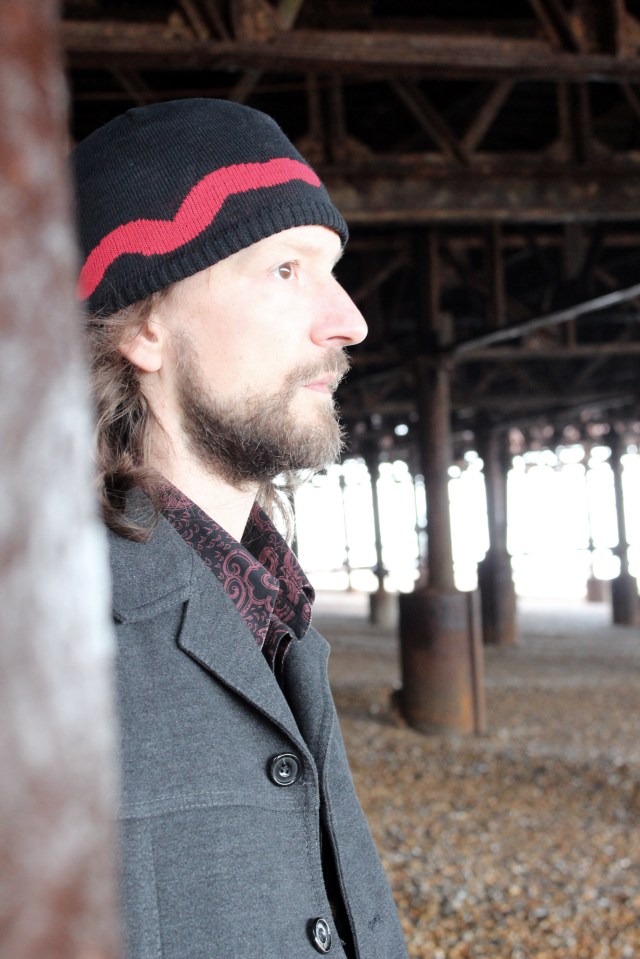
When I asked him how he came up with such witty social criticism, he merely answered, “I don’t know, Brad, I’m really just a Muppet.” Far from it, Mr. Bassett. Far from it.
When it comes to real and deep criticism in the rock world, Bassett rivals the master himself, Andy Tillison.
Now, Bassett has found an entirely new voice, the instrumental only act, Arcade Messiah. Some of have described this as instrumental progressive metal, and I suppose this is as good a label as any, should a label be needed. ARCADE MESSIAH I came out last year and received rave reviews. Just now, Bassett has released ARCADE MESSIAH II.
For better or worse, I’m generally worthless when it comes to reviewing music without lyrics. Lyrics always have been and will almost certainly always remain my focus and my passion. Please stay with me. . .
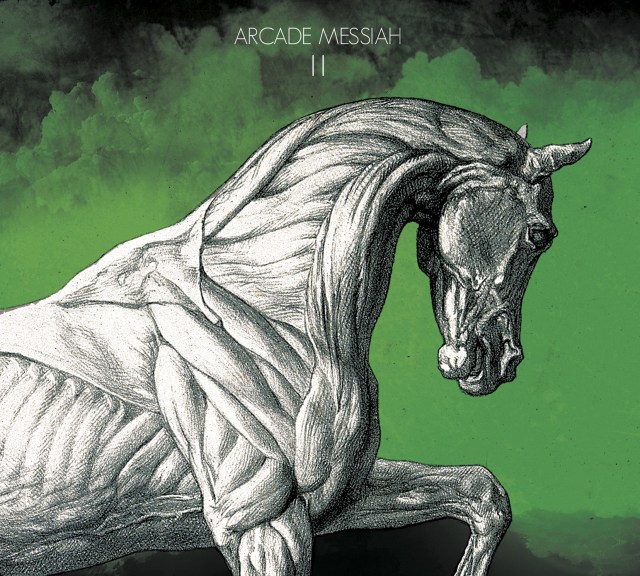
ARCADE MESSIAH II is a thing of glory. Bassett may not be employing his magnificent voice and mind to promote his usual social criticism lyrically, but I can still hear his voice in the music itself. A look at the titles reveals that while I might call this album a thing of glory, it probably belongs as much to a Johannine apocalypse as to an Easter morning. The cover reveals a muscular horse, deprived of skin and hair. Though beautiful in its own way, it looks like what I might think of as a horse being ridden by one of the four riders of the Apocalypse. And, lo and behold, track no. 9, the extra track, is entitled “The Four Horsemen.” (And, surprisingly enough, it does include vocals–which sent me into heaven.) Other titles, however, such as “Red Widow,” “Black Dice Maze,” “Gallows Way,” “Fourth Quarter,” “Via Occulta,” and “Start Missing Everybody” seem to suggest an ending–a big one–of some kind.
With an instrumental album, the artist must pay extra special attention to the overall flow of the album, hitting the highs, recovering from the lows, and allowing a certain amount of lingering for the listener to breath. Bassett provides all of this and with intensity and intelligence.
So, while I miss hearing John’s views of the world, I can still hear him in there–somewhere next to the guitar, above the bass, within the drums, and behind every beautiful and eerie note of this work of perfection.
To order, please go here: https://arcademessiah.bandcamp.com/album/ii


